TOP-TIER TRAVEL中/EN

Australia

12 hidden gems in Australia

An opera house, red ranges & beachside wildlife. We picked 12 places in this region — some well known, some few visitors find. Browse at your own pace, then take the quiz when something catches your eye.

TOP-TIER TRAVEL › All hidden gems › Australia

Not sure which to pick? Take the 4-minute travel-personality quiz and find the one that suits you.

Take the quiz
Sydney Opera House
First time? Sydney, Melbourne and a dose of nature are the classics

Australia is huge — flying from Sydney to Perth takes about five hours — so you won't see it all at once. A common first trip is Sydney and Melbourne plus one nature stop, such as Phillip Island's little penguins or Tasmania; around ten days is comfortable. Seasons are the reverse of the northern hemisphere: December to February is summer. The place below suits you best.

Spot details checked: November 2026

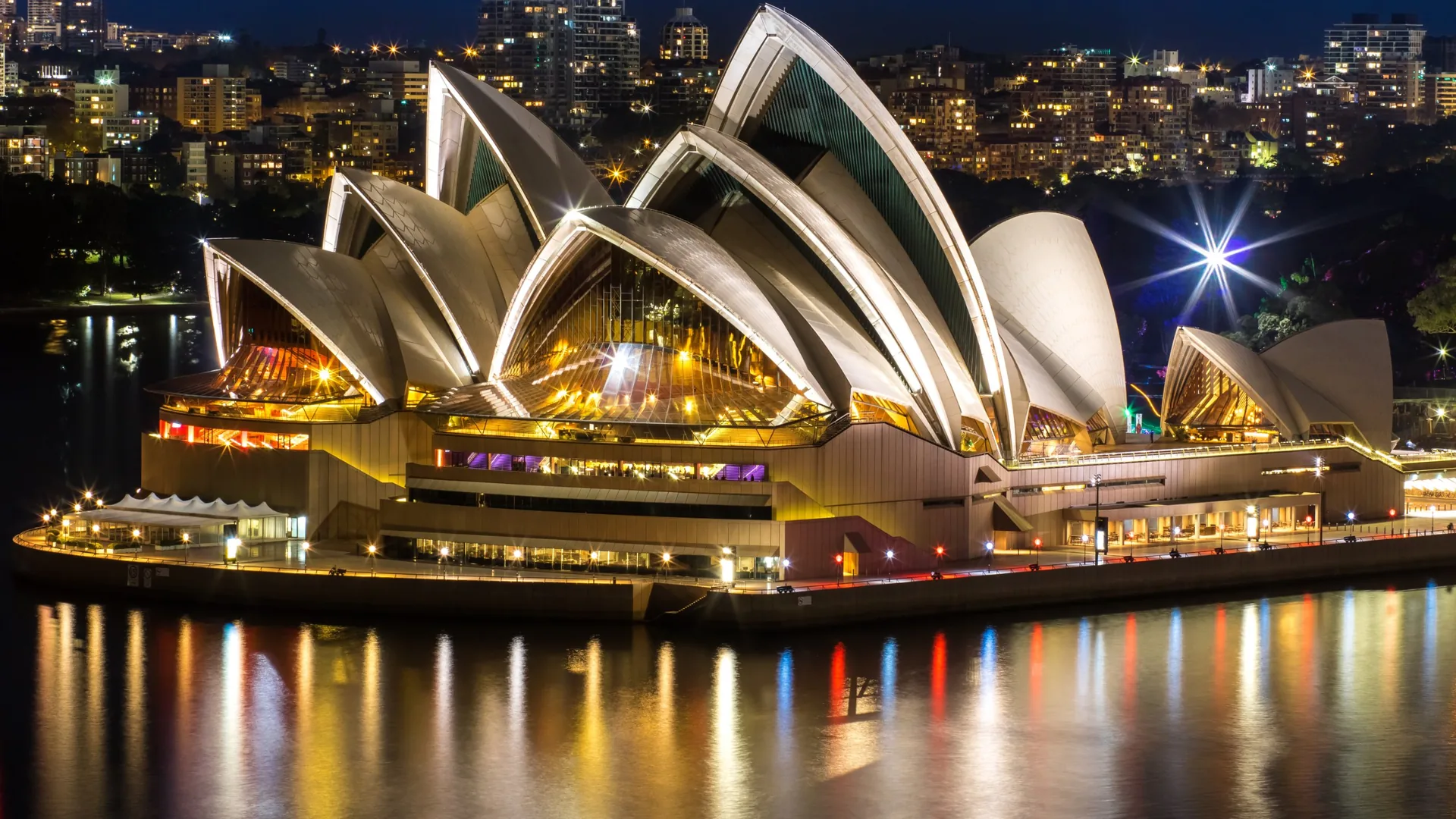
Sydney Opera House at nightSydney, New South Wales

Sydney Opera House at nightThomas Adams / CC BY-SA 4.0 / cropped

Sydney Opera House

White sails stacked one on another, moored at the edge of Sydney Harbour.

Getting there●○○○○Very easy on your own: walk or take the train to Circular Quay from central Sydney and it's right there.

Best timeGood all year

Australia's signature building, World Heritage-listed in 2007.

The Sydney Opera House was designed by the Danish architect Jørn Utzon, completed in 1973 and inscribed as World Heritage in 2007. The roof looks like stacked sails but is built from precast concrete shells covered in more than a million white and cream tiles — white by day, blushing pink at sunset. The photo is a night view from the Harbour Bridge. To go inside, join one of the guided tours of the halls, or book a performance and spend the evening there. Circular Quay next door is the main ferry terminal: a ferry to Manly, looking back at the Opera House and the bridge from the water, is Sydney's best-value sightseeing.
GETTING THEREWalk from central Sydney, or take the train or a ferry to Circular Quay and stroll 5–10 minutes along the water.
GOOD TO KNOWTours and performances need tickets; check times on the official site. Around New Year's Eve it's extremely crowded, with many road closures.
SAFETYCircular Quay and The Rocks are busy, so keep bags in front. UV is strong in summer: bring a hat and sunscreen.
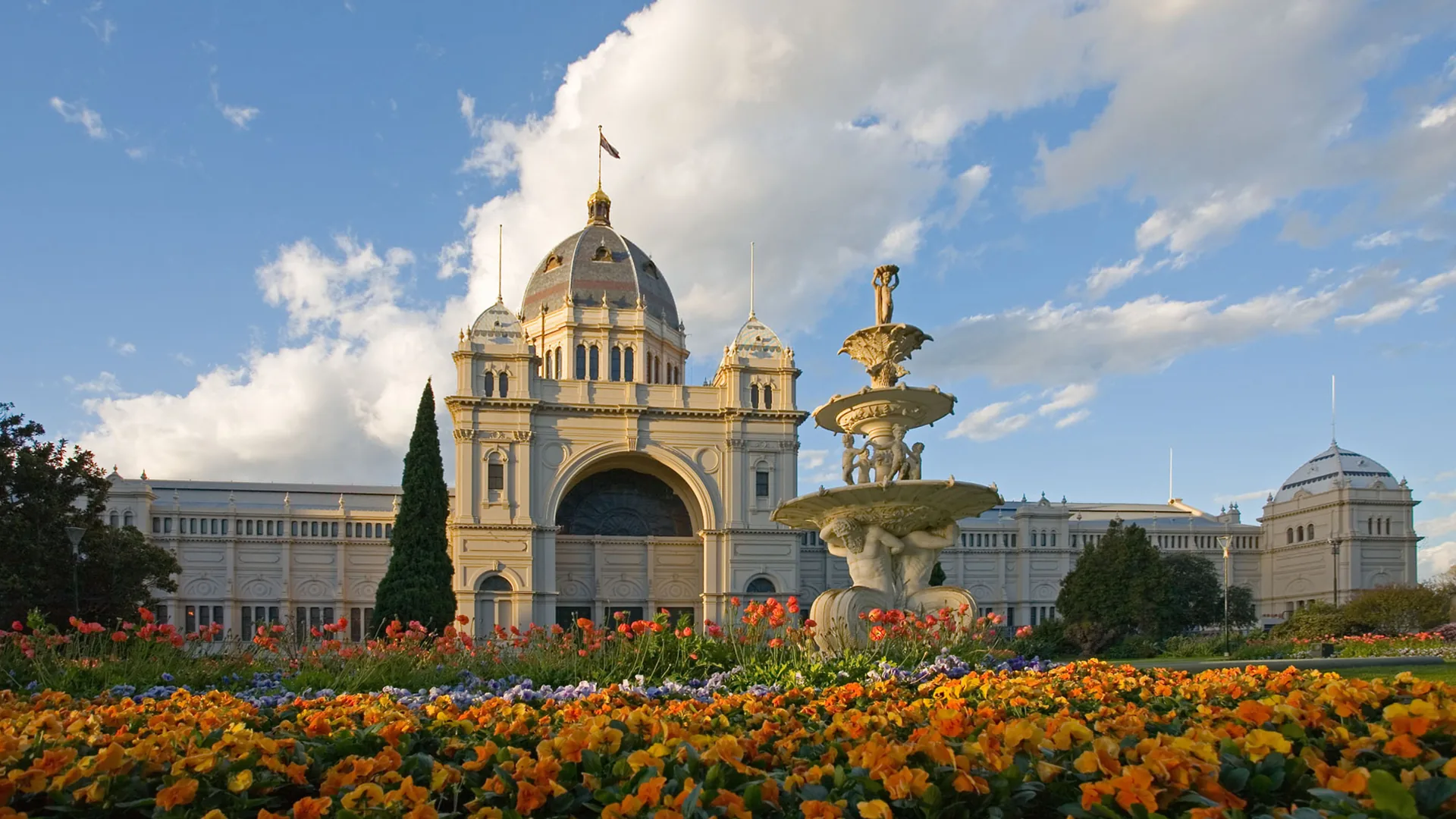
The Royal Exhibition Building and spring flower bedsCarlton, Melbourne, Victoria

The Royal Exhibition Building and spring flower bedsDiliff, retouched by Ian Fieggen / CC BY 2.5 / cropped

Royal Exhibition Building, Melbourne

A world's-fair hall from the 1880s, where Australia's first parliament opened.

Getting there●○○○○Very easy on your own: the free tram or a 15-minute walk from central Melbourne.

Best timeGood all year

The first building in Australia to be inscribed as World Heritage.

The Royal Exhibition Building was built for the 1880 Melbourne International Exhibition, and its dome, arches and towers are still as they were. When the Australian federation was born in 1901, the first federal parliament opened here. In 2004 it was inscribed as World Heritage together with the surrounding Carlton Gardens — the first building in Australia on the list. The photo shows the spring flower beds; the fountain in front also dates from the exhibition. Melbourne Museum stands right beside it, and a few minutes west is Lygon Street's Italian quarter, perfect for a slow day.

GETTING THERETake a tram to Carlton Gardens from central Melbourne, or walk 15–20 minutes.
GOOD TO KNOWThe interior usually opens only for guided tours or events; check Melbourne Museum for tour times. Flower beds change with the seasons.
SAFETYMelbourne can have four seasons in a day, so carry a jacket. Trams share the road with cars, so look carefully when crossing.
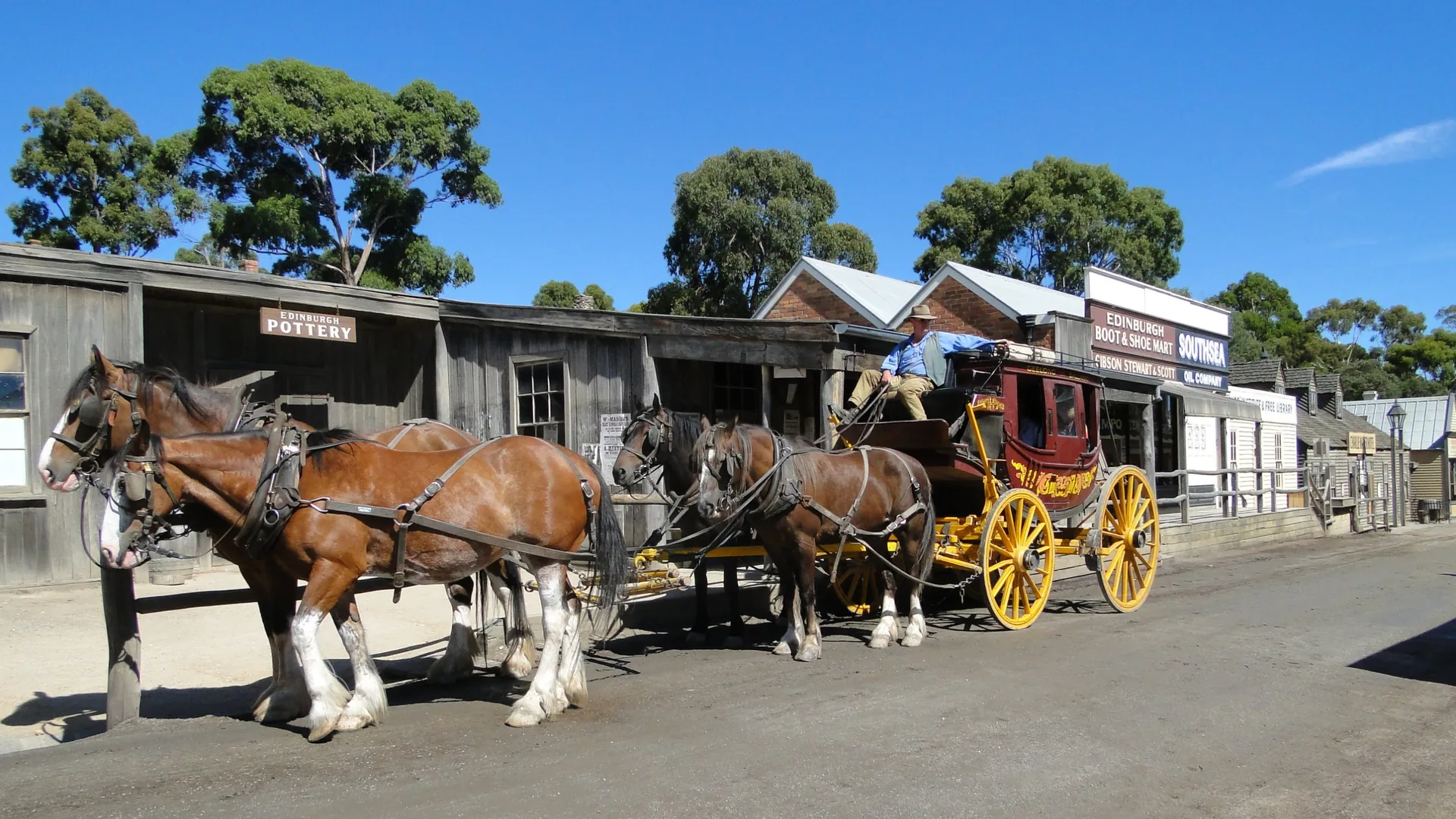
A stagecoach at Sovereign HillBallarat, Victoria

A stagecoach at Sovereign HillPeterdownunder / CC BY-SA 3.0 / cropped

Sovereign Hill gold-rush town

A stagecoach rolls down a dirt street and shopkeepers greet you in 1850s dress.

Getting there●●○○○Easy on your own: about 1.5 hours by train from Melbourne to Ballarat, then 10 minutes by bus or taxi.

Best timeGood all year

An outdoor museum recreating the 1850s gold rush.

Gold was found around Ballarat in 1851, and people poured in from all over the world to seek their fortune, many of them from China. Sovereign Hill rebuilds the whole gold-rush town: dirt streets, timber shopfronts, a blacksmith and a lolly shop, with staff in period dress. Pan for gold in the creek — with luck you'll see real flecks — ride the stagecoach, or follow a guide into an underground mine to see how miners worked. The photo is the stagecoach waiting on the main street.

GETTING THEREAbout 1.5 hours by train from Southern Cross Station in Melbourne to Ballarat, then 10 minutes by bus or taxi; day tours run from Melbourne too.
GOOD TO KNOWCheck tickets, hours and the day's activity times on the official site; the stagecoach and mine tours may cost extra or need booking.
SAFETYThe mine is dark with uneven ground, so wear good shoes. There's little shade by the panning creek at midday in summer.
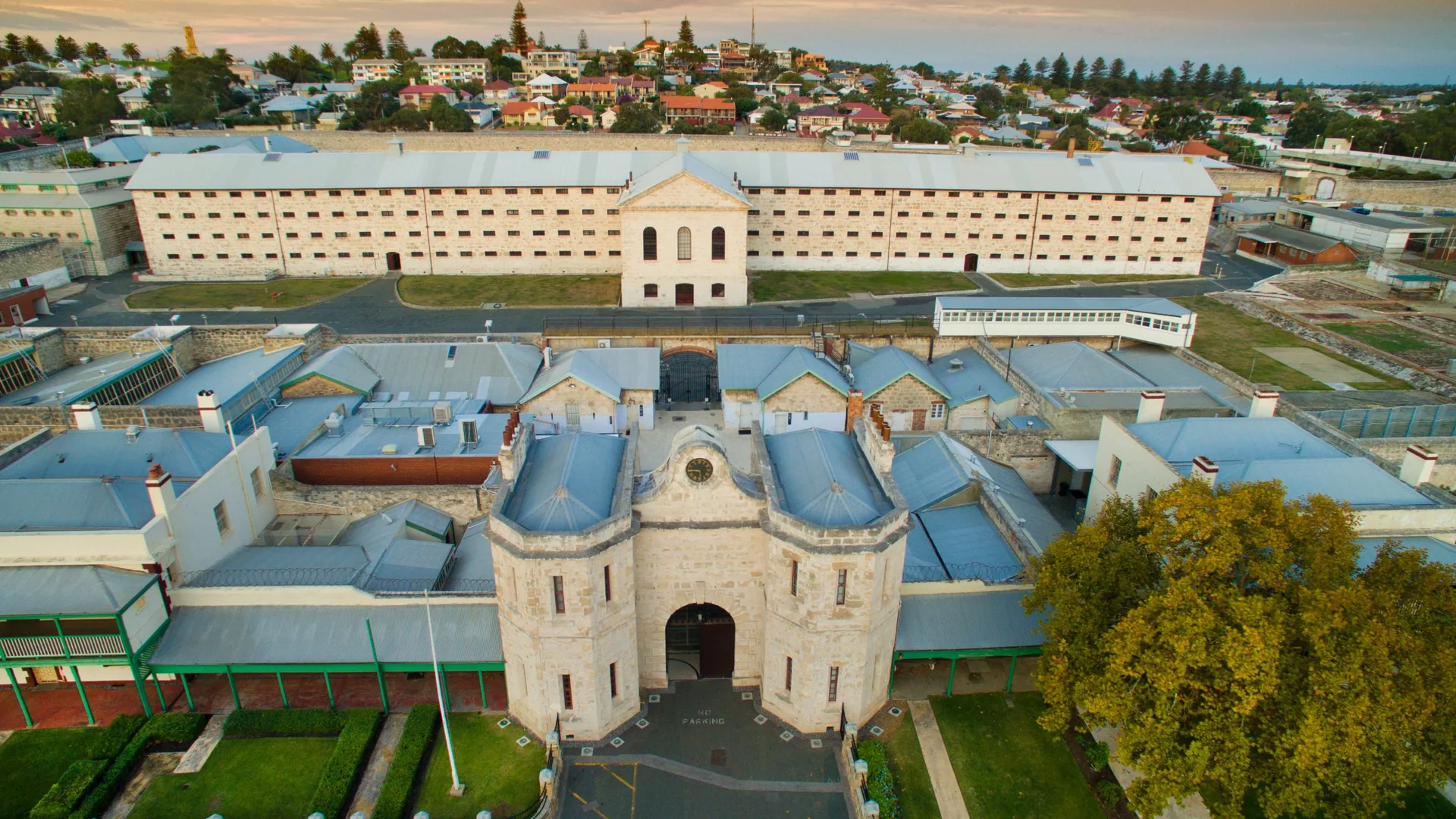
Fremantle PrisonFremantle, Western Australia

Fremantle PrisonMarc Russo / CC BY-SA 4.0

Fremantle

A prison built by convicts with their own hands, in use until 1991.

Getting there●○○○○Very easy on your own: about 30 minutes by train from Perth.

Best timeGood all year

Western Australia's old port; its prison is World Heritage.

Fremantle is Perth's old port town, its streets still lined with nineteenth-century stone buildings. In the 1850s Britain shipped convicts to Western Australia, and they built this prison themselves from local limestone; it stayed in use until 1991. In 2010 it was inscribed as World Heritage with Australia's other convict sites. Guided tours take you into the cells and daily life of the time, and the brave can join the underground tunnels tour. The photo shows the gatehouse and main block. Afterwards, browse the century-old Fremantle Markets, then the cappuccino strip and the fishing boat harbour.

GETTING THEREAbout 30 minutes by train from central Perth to Fremantle, then a 10-minute walk to the prison; ferries also run from Perth.
GOOD TO KNOWThe prison is visited on guided tours; check times and prices on the official site. The tunnels tour has age and fitness limits. The markets open mainly on weekends and public holidays.
SAFETYMidday in summer is hot, so drink plenty of water. The tunnels are narrow — think twice if you dislike confined spaces.
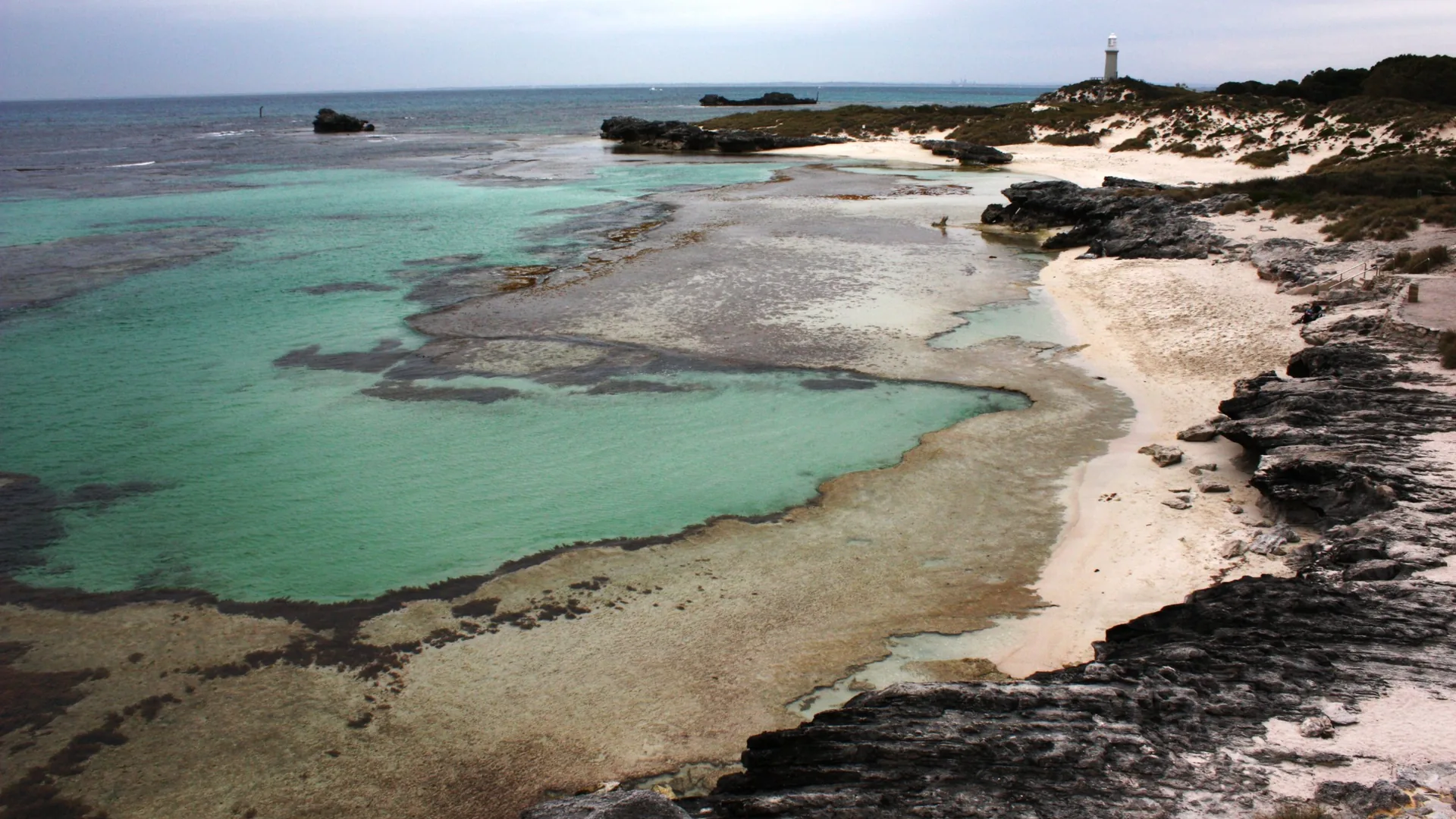
The Basin, Rottnest IslandRottnest Island, Western Australia

The Basin, Rottnest IslandHesperian / CC BY 3.0 / cropped

Rottnest Island

An island with no private cars — cycle all the way round.

Getting there●●○○○Easy on your own: about 30 minutes by fast ferry from Fremantle, 1.5 hours from central Perth.

Best timeSep–May

An island off Perth, home of the quokka, the world's smiliest animal.

Rottnest Island lies just off Perth, and private cars aren't allowed — everyone cycles or uses the island bus. More than sixty beaches and coves ring the island, the water clear enough to see the reef below; the photo is the popular Basin, where a shallow reef forms a natural pool. The island is home to many quokkas, cat-sized marsupials whose upturned mouths make them look like they're smiling, and they often wander right up to people.

GETTING THEREAbout 30 minutes by fast ferry from Fremantle, or about 1.5 hours from central Perth; hire a bike or take the island bus once there.
GOOD TO KNOWThe ferry ticket includes the island admission fee; book ahead in peak season. Supplies are limited, so bring water and sunscreen.
SAFETYTouching or feeding quokkas is not allowed and can be fined. There are plenty of hills, so wear a helmet. Watch for waves and boats when snorkelling.
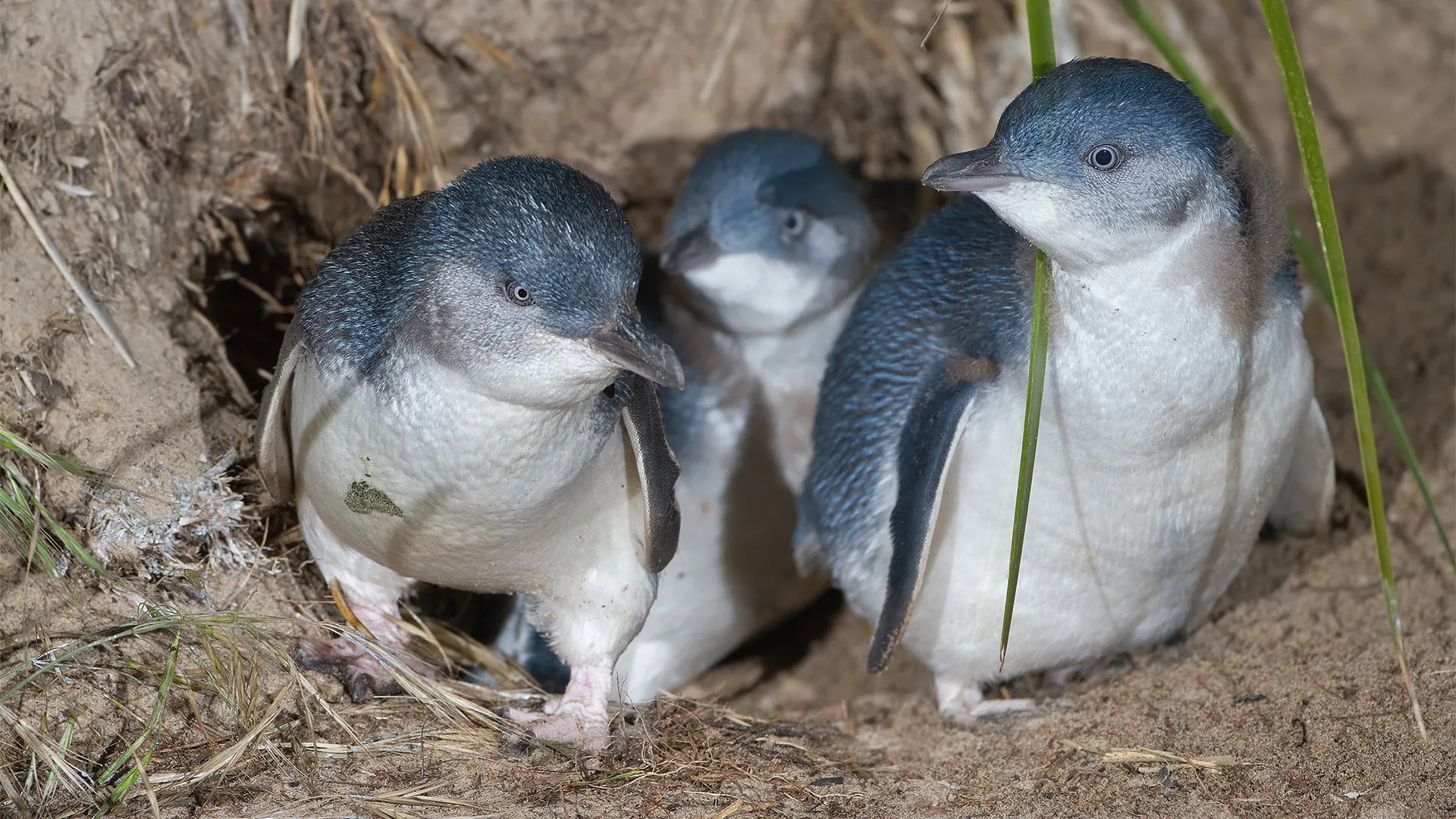
Little penguinsPhillip Island, Victoria

Little penguinsJJ Harrison / CC BY-SA 3.0 / cropped

Phillip Island Penguin Parade

As the sun goes down, little penguins waddle home from the sea.

Getting there●●○○○Easy with a tour: about 2 hours' drive from Melbourne, with no direct public transport; most people join a day tour.

Best timeGood all year

The world's smallest penguins, coming ashore in groups every evening.

Little penguins are the world's smallest penguins, standing about 30 centimetres tall, with blue-grey feathers that also earn them the name blue penguins. They fish at sea during the day and come ashore in groups after sunset, crossing the beach to their burrows in the dunes. Phillip Island's Penguin Parade is Australia's best-known place to watch: there are stands on the beach and seats closer to the penguins' paths, where you can hear them calling at their burrows. The island also has a koala reserve and coastal boardwalks, making a good afternoon-and-evening trip.

GETTING THEREAbout 2 hours' drive from Melbourne. There's no direct public transport; most people join an afternoon tour from Melbourne that returns after the parade.
GOOD TO KNOWTo protect the penguins, photography and filming are not allowed at the Penguin Parade. There are several seating options; book ahead in peak season. Arrival times follow sunset; check the official site.
SAFETYIt's cold and windy by the sea at night even in summer, so bring a jacket. Check under your car before leaving the car park — penguins sometimes hide there.
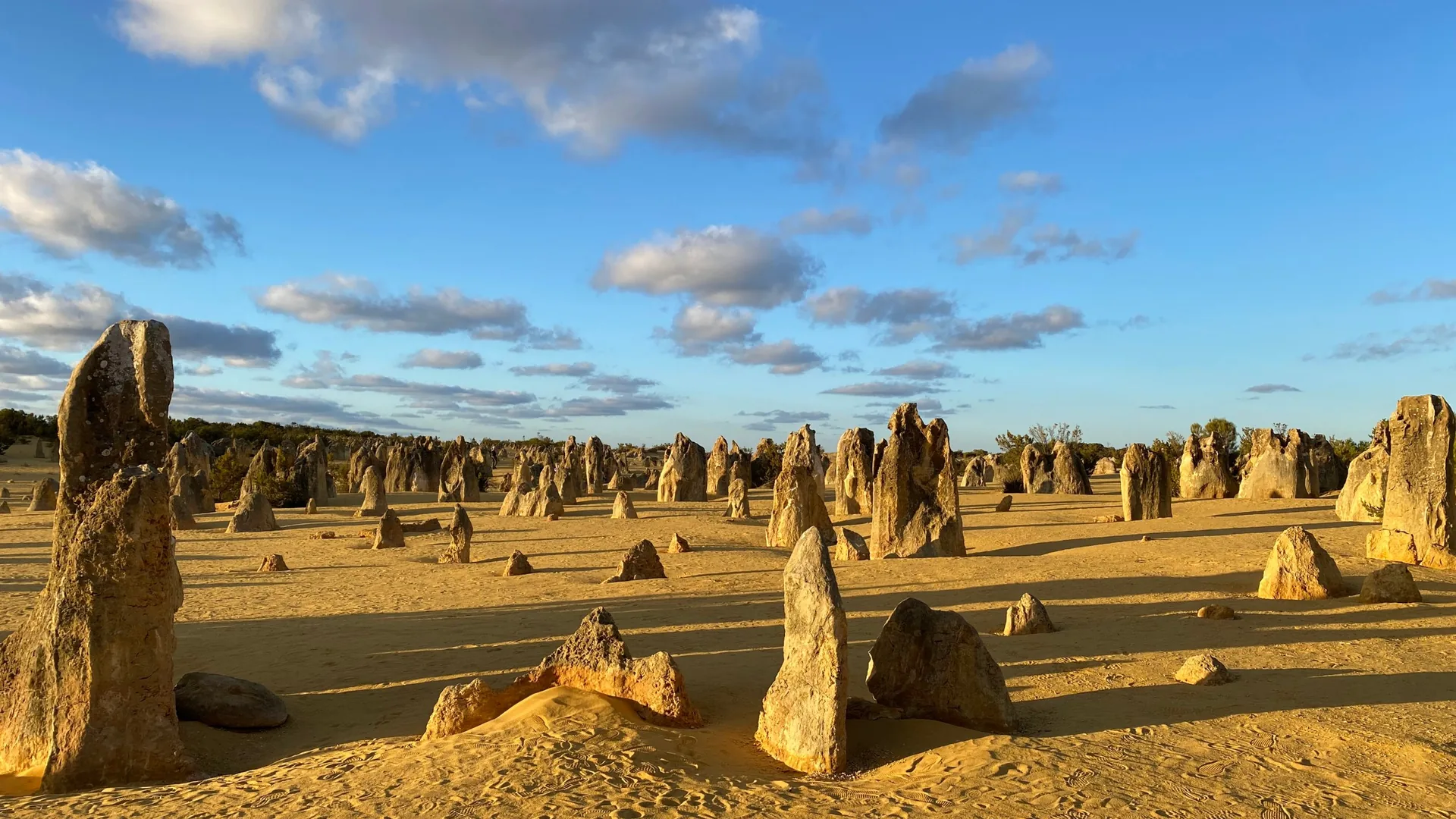
The Pinnacles in late afternoonNambung National Park, Cervantes, Western Australia

The Pinnacles in late afternoon-wuppertaler / CC BY 4.0 / cropped

The Pinnacles

Thousands of stone pillars rising from yellow sand, like another planet.

Getting there●●●○○Doable on your own, but slow: about 2.5 hours' drive from Perth, no public transport; day tours run too.

Best timeApr–Oct

Thousands of limestone pillars standing in Western Australia's yellow sand.

The Pinnacles stand in Nambung National Park north of Perth: thousands of limestone pillars rising from yellow sand, some knee-high, others several metres tall. They formed over a very long time as rain dissolved and cemented shell-rich coastal sand, and wind then blew the loose sand away to expose them. A loop drive runs through the park, and you can park and walk among the pillars. The photo was taken in late afternoon, when low sun stretches the shadows and the colours are at their best. Nearby Cervantes is a rock-lobster town, good for a meal.

GETTING THEREAbout 2.5 hours' drive from Perth along the Indian Ocean Drive to Cervantes, then 10 minutes to the park. No public transport; day tours run from Perth.
GOOD TO KNOWA park entry fee applies. Summer days are hot with lots of flies, so go early or late. There's no lighting at night — bring a torch for stargazing.
SAFETYDon't climb the pillars; the limestone is fragile. Snakes are occasionally about, so stay on paths. Kangaroos often cross the road back to Perth after dark.
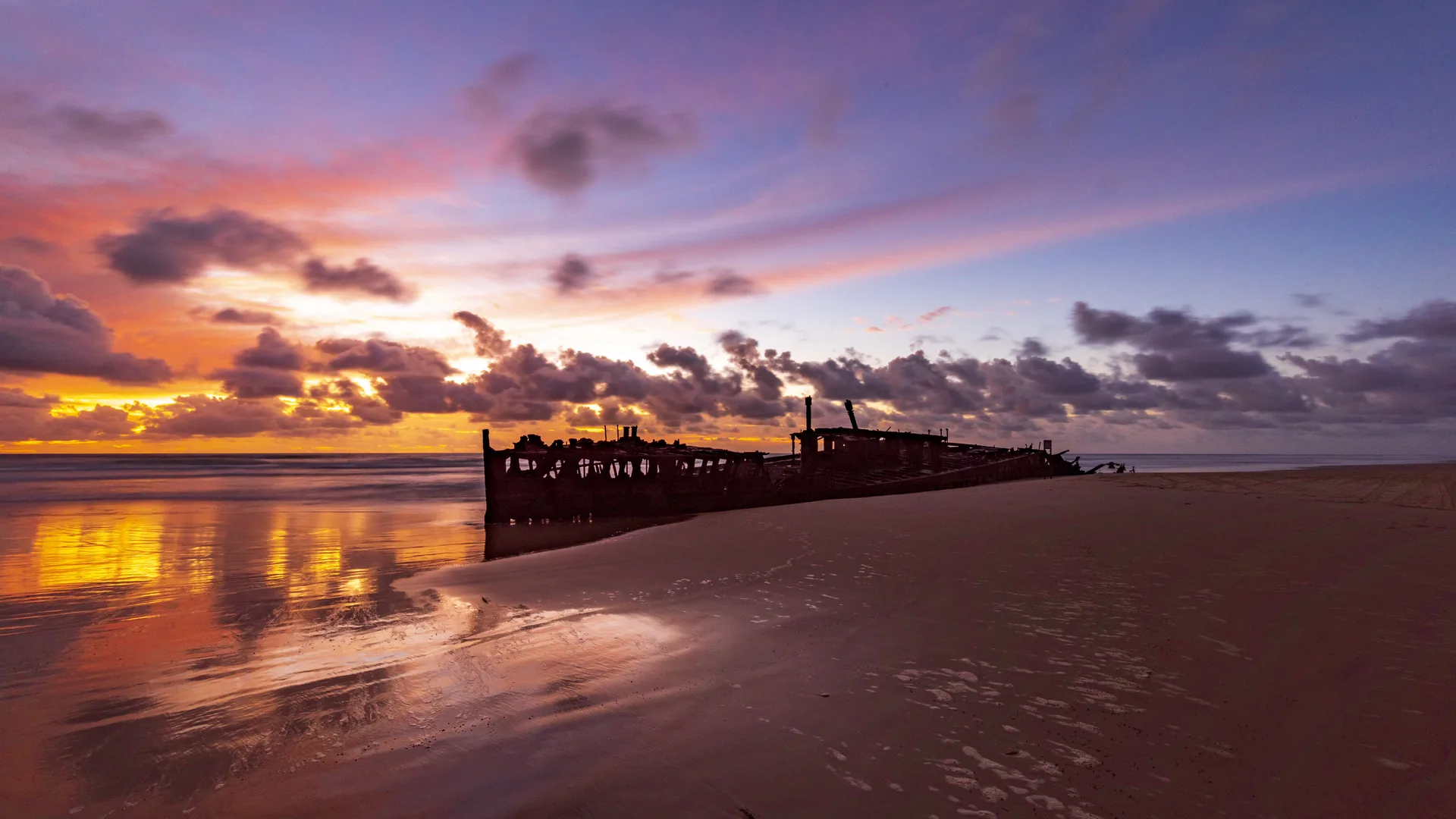
The Maheno shipwreck at sunriseK'gari, Queensland

The Maheno shipwreck at sunrisePoidabro / CC BY-SA 4.0 / cropped

K'gari

A rusting ship stranded on the beach for nearly a hundred years.

Getting there●●●●○Very hard to reach; a tour is best: about 4 hours' drive from Brisbane to the ferry, and only 4WDs on the island.

Best timeApr–Nov

The world's largest sand island, World Heritage since 1992.

K'gari is the world's largest sand island, about 120 kilometres long, yet this pile of sand supports rainforest and around a hundred freshwater lakes. Formerly called Fraser Island, it officially took back its Butchulla name K'gari, 'paradise', in 2023. There are no sealed roads: the long eastern beach is the highway, and only 4WDs can drive it. The photo shows the Maheno on the beach; in 1935 it was being towed to Japan for scrap when a cyclone drove it ashore, and it has stayed ever since. Lake McKenzie in the middle of the island, with clear water over white sand, is the reason many people come.

GETTING THEREAbout 4 hours' drive from Brisbane to River Heads near Hervey Bay, or to Inskip Point near Rainbow Beach, then a car ferry. Without a 4WD, a tour from Hervey Bay or Rainbow Beach is easiest.
GOOD TO KNOWDriving yourself needs a vehicle permit and an eye on the tides; hire a 4WD that's allowed on the island. Never feed or approach the island's wild dingoes.
SAFETYDingoes can attack: walk in groups and keep children within arm's reach. Beach traffic is fast. Strong rips off the eastern beach make swimming in the sea dangerous.
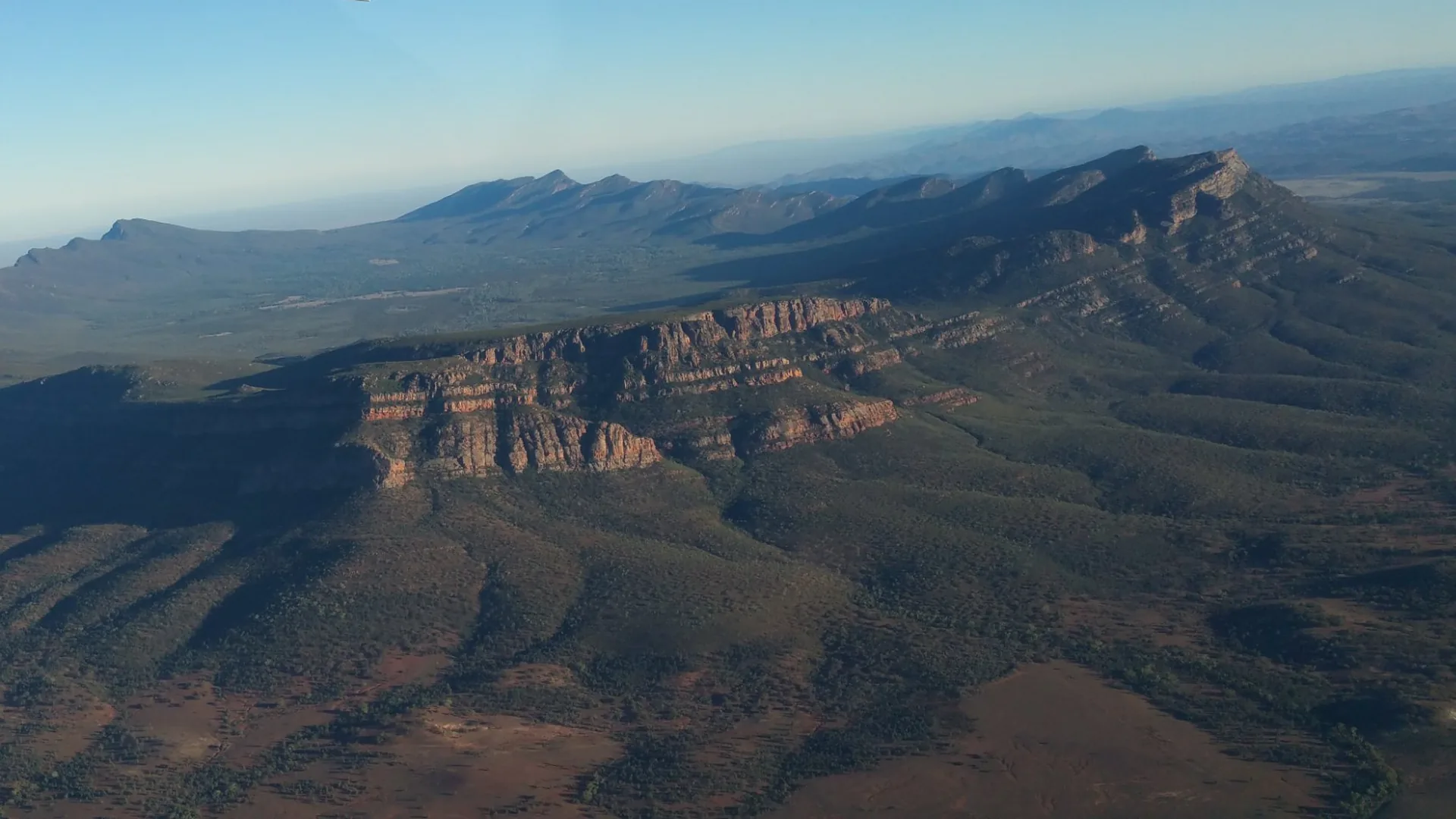
Wilpena Pound from the airIkara-Flinders Ranges National Park, South Australia

Wilpena Pound from the airCathcartw / CC BY-SA 4.0 / cropped

Wilpena Pound, Flinders Ranges

A ring of mountains forms a giant bowl, clearest from the air.

Getting there●●●●○Hard to reach; a car is best: about 5 hours' drive from Adelaide, with no public transport.

Best timeApr–Oct

South Australia's red ranges, where a ring of mountains forms a natural bowl.

The Flinders Ranges are among Australia's oldest mountains, their red rock layers tilted up in ridges. Wilpena Pound is a natural basin enclosed by a ring of ridges; the Adnyamathanha people call it Ikara, 'meeting place'. From the ground you see only one wall of it — you need to take a small plane up to see it's a complete bowl, as in this photo from the air. Nearby Brachina Gorge reveals ancient fossils in its rock layers, and you may spot the rare yellow-footed rock-wallaby. The area was nominated for World Heritage in 2026.

GETTING THEREAbout 5 hours' drive from Adelaide to the Wilpena Pound visitor centre. No public transport; multi-day tours run from Adelaide.
GOOD TO KNOWScenic flights leave from Wilpena; check times and prices with the operator, and expect cancellations in bad weather. A park entry fee applies.
SAFETYSummer days often top 40°C: avoid hiking at midday and carry plenty of water. Much of the area has no phone signal, so tell your accommodation your plans.
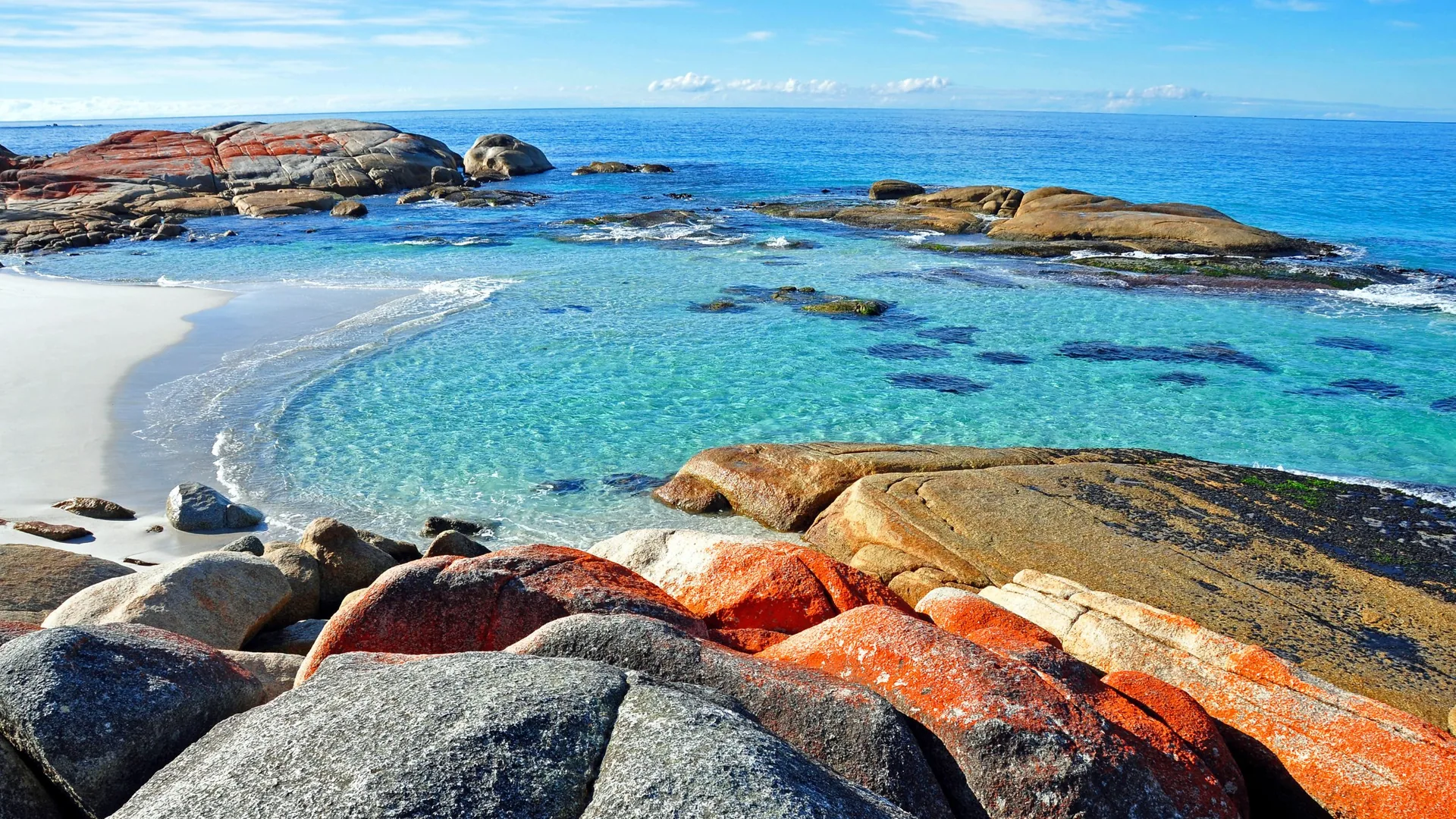
Orange lichen-covered boulders, Bay of FiresSt Helens, Tasmania

Orange lichen-covered boulders, Bay of Firesandy hos / CC BY 2.0 / cropped

Bay of Fires

White sand, turquoise sea and boulders splashed with orange.

Getting there●●●○○Doable on your own, but slow: about 2.5 hours by car from Launceston, with no public transport.

Best timeNov–Apr

Tasmania's northeast coast: white beaches and orange-splashed granite.

The Bay of Fires is a stretch of Tasmania's northeast coast running for tens of kilometres: white sand, turquoise water and scattered granite boulders. The orange on the rocks isn't the stone itself but lichen growing on it. The name has nothing to do with the colour: in 1773 a British ship sailing past saw many Aboriginal fires along the shore and called it the Bay of Fires. There are no big resorts here; Binalong Bay at the southern end is the busiest spot, and the further north you drive the fewer people you'll meet — often you'll have a whole beach to yourself.

GETTING THEREHire a car in Launceston or Hobart; it's 2–3.5 hours to St Helens and 10 more minutes to Binalong Bay. No public transport.
GOOD TO KNOWTasmanian water is cold even in summer, and there are no lifeguards — stay out when the surf is big. The road north is gravel, so drive slowly.
SAFETYLichen and seaweed make the rocks slippery, so don't rock-hop barefoot. Wildlife comes onto country roads at dusk; avoid driving after dark.
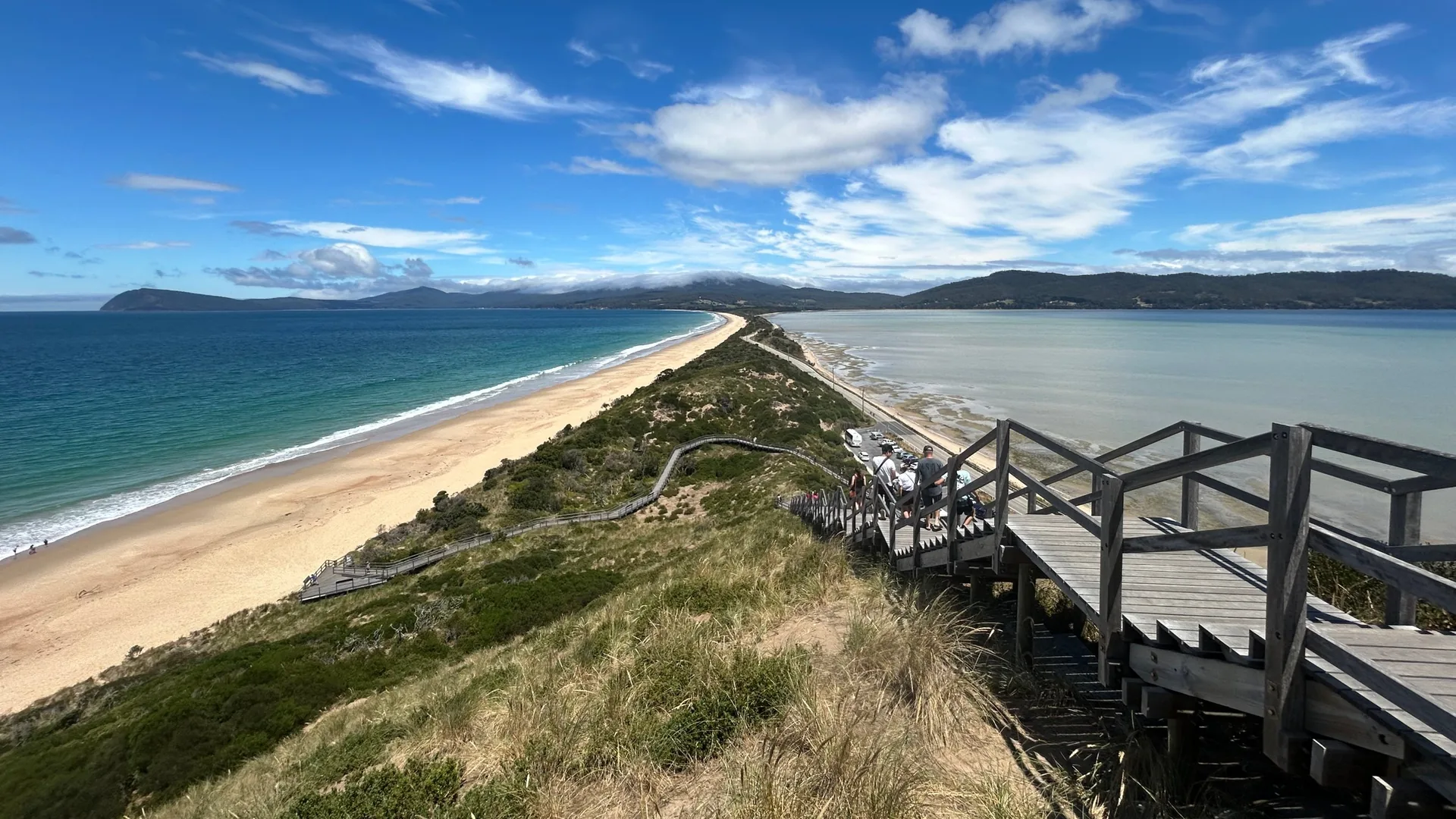
Looking south from The Neck lookoutBruny Island, Tasmania

Looking south from The Neck lookoutChuq / CC BY-SA 4.0 / cropped

Bruny Island

A thin sandy neck joins two islands, with completely different seas on either side.

Getting there●●●○○Doable on your own, by ferry: 35 minutes' drive from Hobart to the terminal, then a 20-minute car ferry; you'll need a car on the island.

Best timeNov–Apr

A small island near Hobart, with oysters, cheese and penguins coming ashore at dusk.

Bruny Island is really two islands joined only by a thin strip of sand that locals call The Neck. From the lookout at the top of the dunes, one side is ocean turquoise and the other the pale water of the bay — the photo looks south from there. Few people live here, but there's plenty to eat: oysters shucked straight from the farm, small producers making cheese and growing berries. On summer evenings, little penguins come ashore below The Neck to their burrows, and there's a path and platform for watching quietly.

GETTING THEREDrive about 35 minutes from Hobart to Kettering and take the 20-minute car ferry. There's no public transport on the island, so drive or join a day tour from Hobart.
GOOD TO KNOWBook the ferry in peak season. Many island roads are gravel, so check your hire-car contract. Don't shine torches or use flash on the penguins.
SAFETYThe steps up The Neck are steep and windy. There are no streetlights and plenty of wildlife on the roads after dark, so drive slowly.
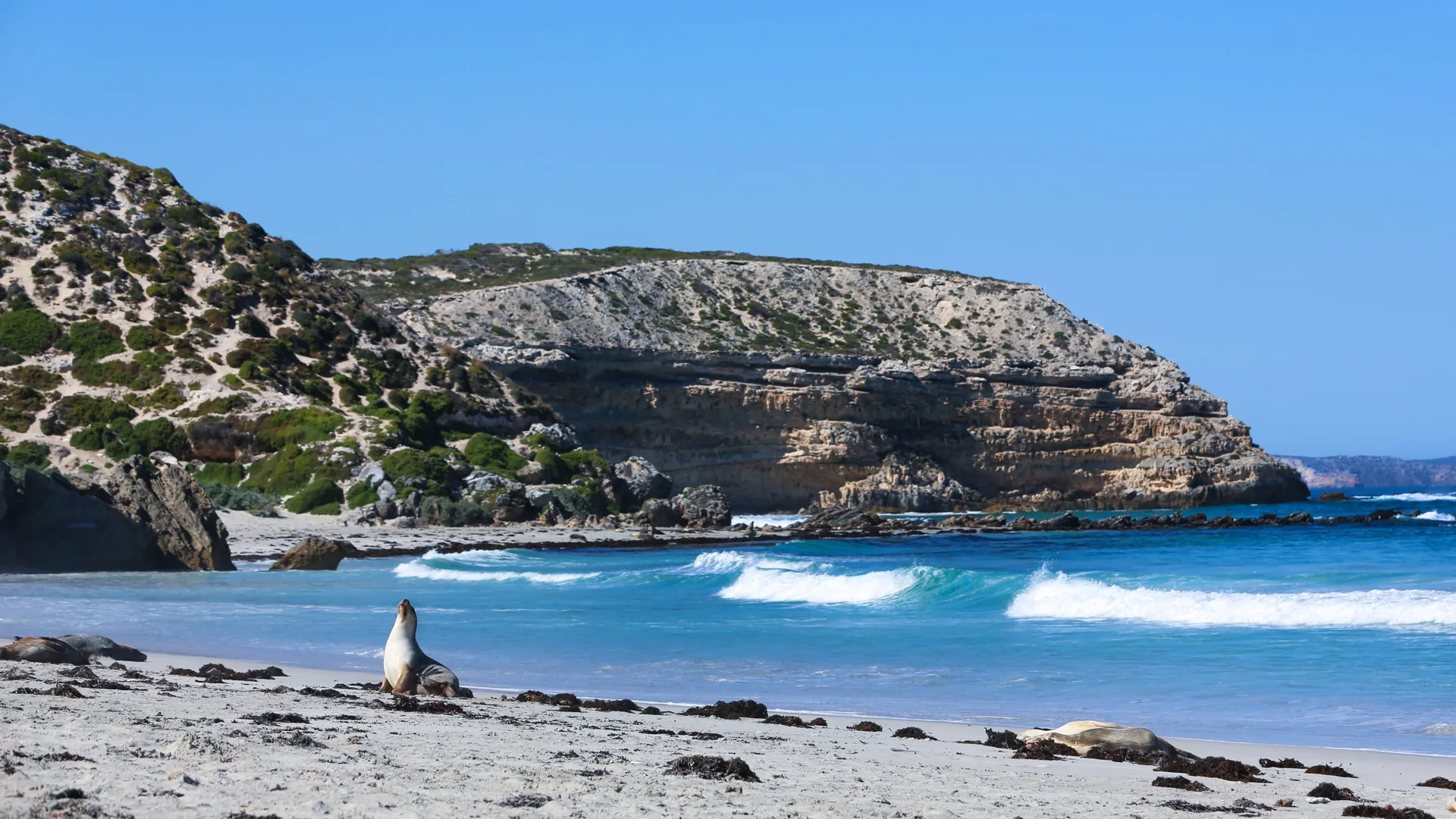
Australian sea lions on the beach at Seal BayKangaroo Island, South Australia

Australian sea lions on the beach at Seal BayJianShi / CC BY-SA 4.0 / cropped

Seal Bay, Kangaroo Island

Wild sea lions sleep on the sand while you walk a few metres away.

Getting there●●●○○Doable on your own, by ferry: 2 hours' drive from Adelaide to the terminal, then a 45-minute ferry; you'll need a car on the island.

Best timeGood all year

Australia's third-largest island, with more wildlife than people.

Kangaroo Island is Australia's third-largest island, and much of it is protected: kangaroos, koalas and birds are everywhere. Despite the name, Seal Bay is home to a colony of Australian sea lions, a rare species found only in Australia. Walk down to the beach with a ranger and you can watch them sleep, play and haul out of the surf from a few metres away; boardwalks and paths also give views from above. The photo shows sea lions resting on the sand. The 2019–20 bushfires burned a large part of the island, and the vegetation is slowly recovering.

GETTING THEREDrive about 2 hours from Adelaide to Cape Jervis, take the 45-minute car ferry to Penneshaw and drive about an hour to Seal Bay; small planes also fly from Adelaide.
GOOD TO KNOWThe beach is visited with a ranger; the boardwalk and paths can be done on your own. Check tickets and times on the official site, and book the ferry in peak season.
SAFETYDon't approach or feed the sea lions; keep the distance the rangers ask. Wildlife is on the roads after dark, so drive in daylight.

Things to do

Add these experiences to your time in Australia. Full details are in the Things to do section of your quiz results.

  • Lavender fields in Tasmania: Purple rows roll to the foot of the hills, and every breeze smells of lavender.
  • New Year's Eve fireworks in Sydney: At midnight the fireworks burst across the Harbour Bridge.
  • Sydney to Hobart Yacht Race: Dozens of yachts charge out of Sydney Harbour, heading south for Tasmania.
  • Climb the Sydney Harbour Bridge: Clip on and climb step by step to the top of the arch, with the harbour below.
  • Pick your own cherries: Pick and eat under the trees until the bucket is full of dark-red cherries.
  • Tasmanian devils: Only Tasmania still has them in the wild, and their screech really does sound devilish.
  • Wild kangaroos on the beach: At sunrise, kangaroos hop out of the bush onto the sand.
  • Sandboarding the Stockton dunes: Climb a giant dune and slide all the way down on a board.
  • Learn to surf: The first few seconds standing on a wave are hard to forget.
  • Spot koalas in the wild: Look up into the gum trees for a grey ball of fur fast asleep.

Not sure which to pick? Take the 4-minute travel-personality quiz and find the one that suits you.

Take the quiz