TOP-TIER TRAVEL中/EN

Austria

10 hidden gems in Austria

Lakes, abbeys & the Alps. We picked 10 places in this region — some well known, some few visitors find. Browse at your own pace, then take the quiz when something catches your eye.

TOP-TIER TRAVEL › All hidden gems › Austria

Not sure which to pick? Take the 4-minute travel-personality quiz and find the one that suits you.

Take the quiz
Salzburg
First time? Start with Vienna's classics

Schönbrunn Palace, St. Stephen's Cathedral, the Hofburg and Vienna's old coffee houses — do these first and you can't go wrong. Austria's trains are easy: Vienna to Salzburg takes about 2.5 hours. Then save two or three days for the place below that's truly yours.

Looking for a place to stay in this area? Start here:

Spot details checked: October 2026

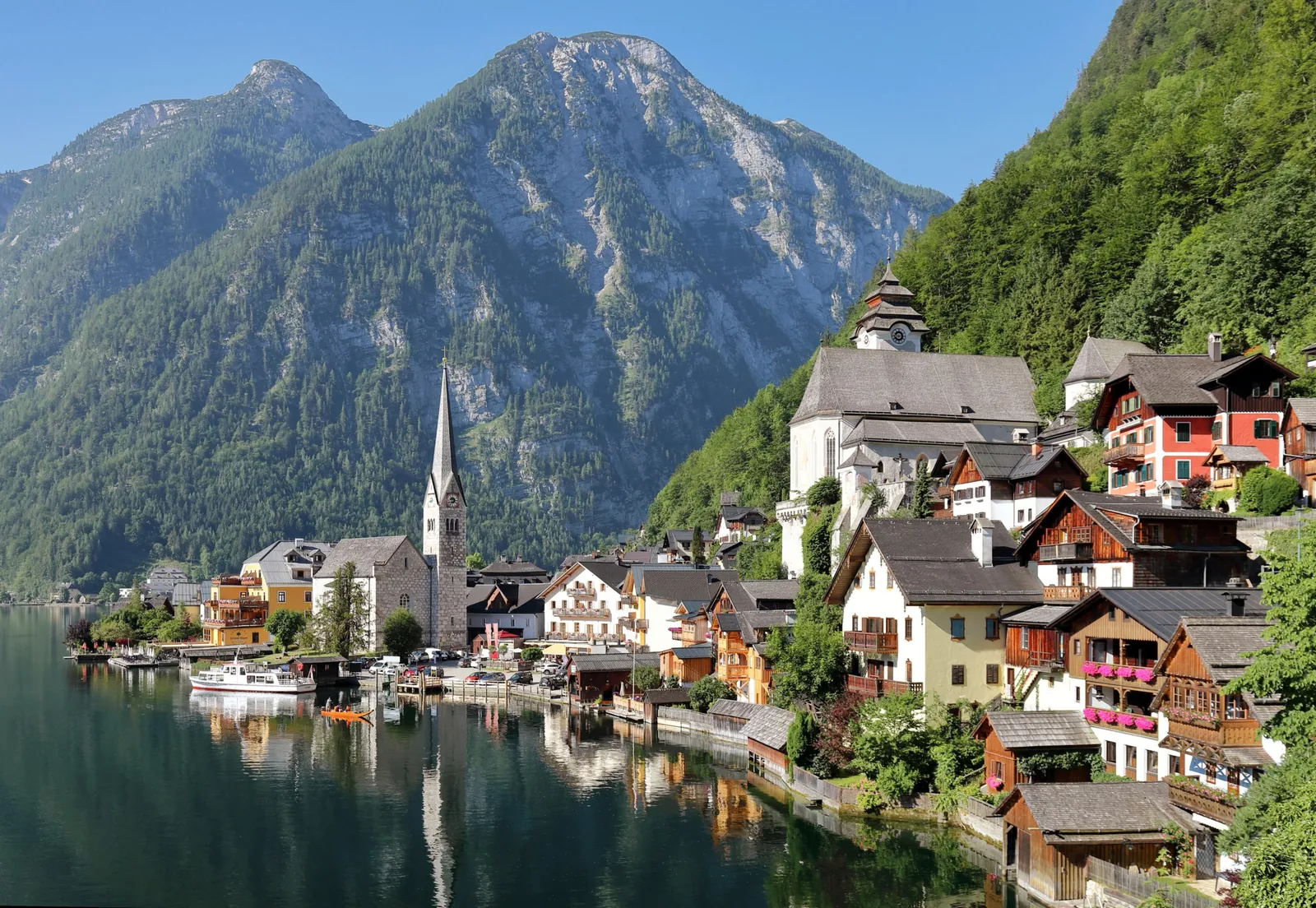
Hallstatt's lakeside villageSalzkammergut, Upper Austria

Hallstatt's lakeside village© C.Stadler/Bwag / CC BY-SA 4.0

Hallstatt

Lake, church spire and wooden houses — the view the whole world wants to photograph.

Getting there●●●○○Doable on your own: about 2.5 hours by train from Salzburg; the station is across the lake, so you finish by ferry.

Best timeGood all year

Many people come to Austria just to see Hallstatt with their own eyes.

The lake lies still as a mirror, reflecting the church spire and house after house built so tightly against the steep slope that they look ready to slide into the water. Hallstatt is a village in the Salzkammergut, where salt has been mined for some 7,000 years, making it one of the oldest salt mines in the world; the whole area is a World Heritage site. Ride up the mountain to tour the salt mine, where wooden miners' slides carry you deep into the tunnels. The village is tiny, but huge numbers of visitors pour in every day. Come early in the morning or in the evening — or better, stay the night: only after the day-trippers leave does Hallstatt truly go quiet.
GETTING THEREFrom Salzburg, take the train (changing at Attnang-Puchheim) to Hallstatt station, about 2.5 hours, then a ferry of about 10 minutes to the village; buses also run from Bad Ischl. Ferry times vary by season — check the official site.
GOOD TO KNOWEarly morning, before the day-trippers arrive, is the best time — the lake is still and reflections are clearest; the village under winter snow is magical too. People live here, so keep your voice down, don't block doorways or enter private gardens, and take turns at the small classic viewpoint.
SAFETYThe lakeside path is narrow — watch out for crowds. Paths can be icy in winter.
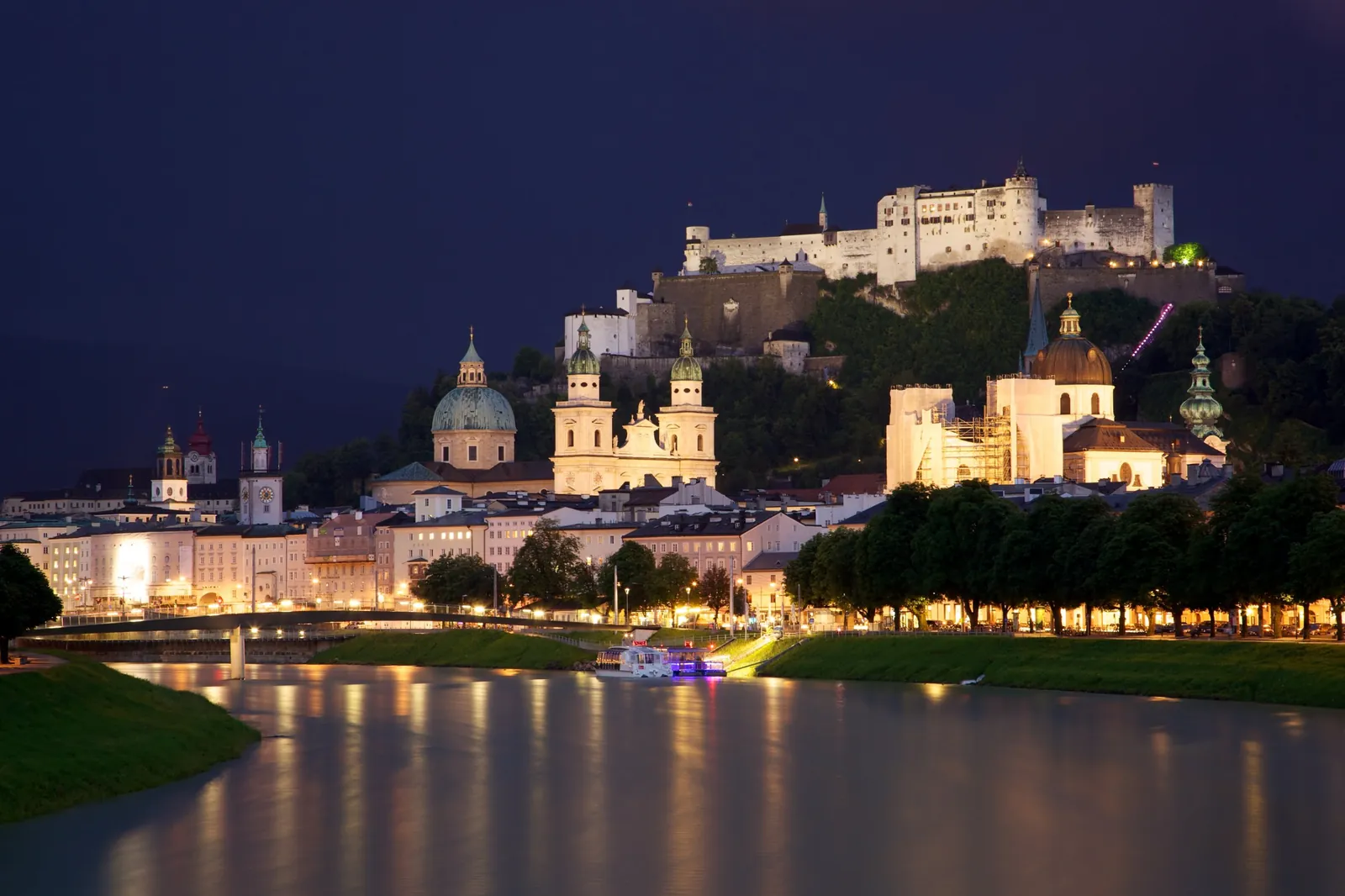
Salzburg at night with Hohensalzburg FortressSalzburg

Salzburg at night with Hohensalzburg FortressJiuguang Wang / CC BY-SA 3.0

Salzburg

Mozart's hometown — when the fortress lights come on, the whole old town wakes up.

Getting there●○○○○Very easy on your own: about 2.5 hours by train from Vienna, and the old town is walkable.

Best timeGood all year

On any Austria trip, don't miss Mozart's hometown, Salzburg.

As night falls, the fortress on the hill lights up and the domes and spires of the old town are reflected in the Salzach. Salzburg is Mozart's hometown — the yellow house where he was born stands in an old-town lane — and the whole historic centre is a World Heritage site. Hohensalzburg Fortress, begun in the 11th century, is one of the largest and best-preserved castles in Central Europe; ride the funicular up for a view over the city to the Alps. This is also where The Sound of Music was filmed, and many people instantly recognize the steps and fountains of the Mirabell Gardens. Every summer the Salzburg Festival is a highlight for classical music lovers worldwide.

GETTING THEREAbout 2.5 hours by train from Vienna, or 1.5 to 2 hours from Munich. From Salzburg Hauptbahnhof it's about 10 minutes by bus or a 20-minute walk to the old town.
GOOD TO KNOWThe highlight of the year is the Salzburg Festival — in 2026, July 17 to August 30; 2027 dates aren't out yet but it usually runs mid-July to end of August. The winter Christmas markets are lovely too. Rooms fill up early during the festival, so book ahead, and wear good shoes for the cobbles. Check the official site.
SAFETYOld-town cobbles get slippery in the rain; watch for pickpockets on busy streets and at the station.
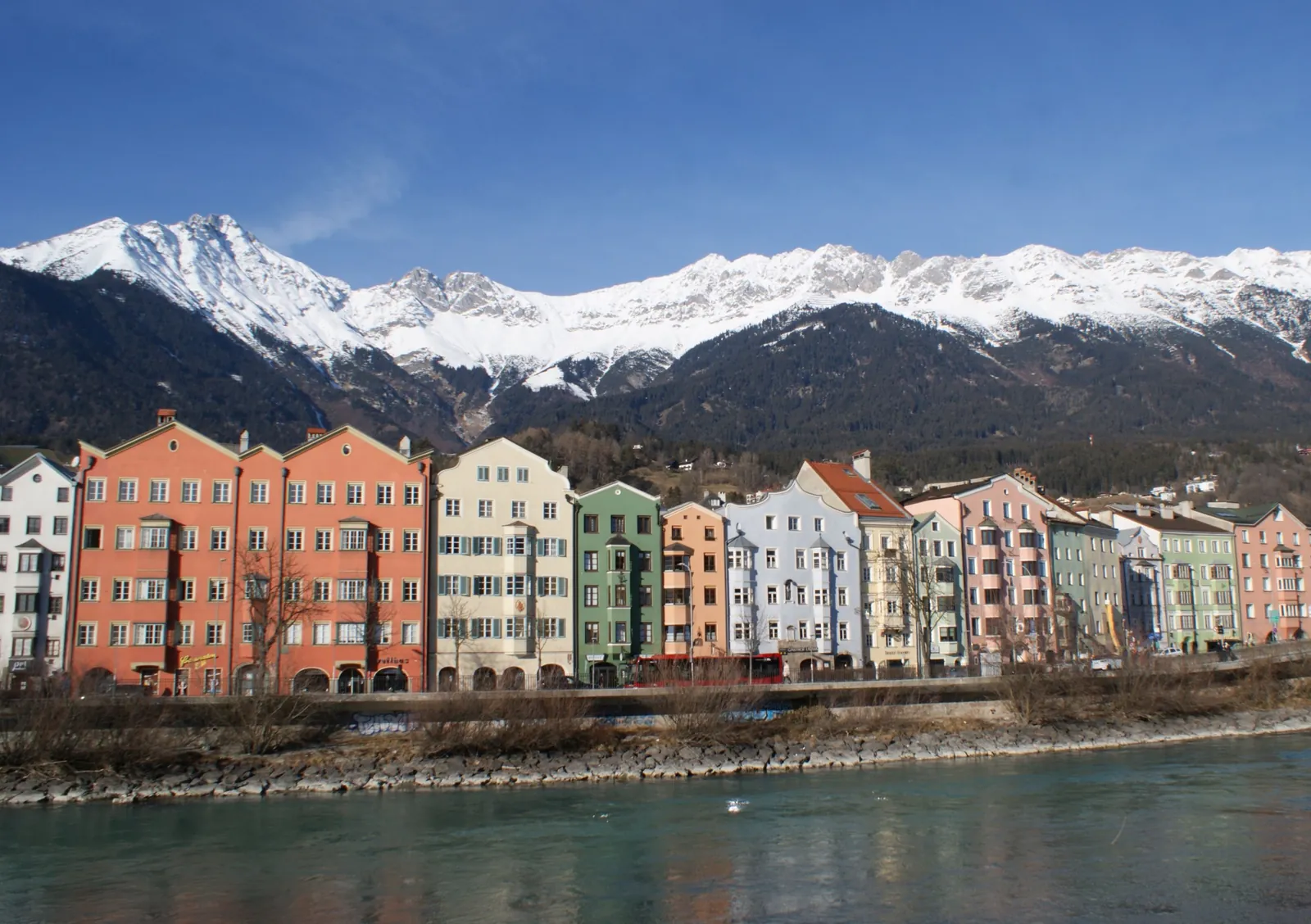
Colourful houses on the Inn with the Nordkette rangeInnsbruck, Tyrol

Colourful houses on the Inn with the Nordkette rangeAsurnipal / CC BY-SA 4.0

Innsbruck

Colourful houses line the river, with snowy peaks right behind.

Getting there●○○○○Very easy on your own: about 2 hours by train from Salzburg, or 4 hours 15 minutes from Vienna.

Best timeGood all year

A city in the middle of the Alps — see Innsbruck's colourful houses and snowy peaks.

Along the Inn, a row of pink, coral and pale-green old houses stands shoulder to shoulder, with the Nordkette range rising over 2,000 metres behind them — city and mountains as close as on a postcard. Innsbruck is the capital of Tyrol and has hosted the Winter Olympics twice. In the old town, the Golden Roof glitters in the sun: a balcony built at the end of the 15th century so the emperor could watch events in the square below. From the city centre, cable cars take you up above the snow line in under half an hour — something very few cities can offer.

GETTING THEREAbout 2 hours by train from Salzburg, 4 hours 15 minutes from Vienna, or about 1 hour 50 minutes from Munich. The colourful houses are on the riverbank opposite the old town — just walk across the bridge.
GOOD TO KNOWOn a clear day, riding up the Nordkette for views over the city and Alps is unforgettable, and in winter you can go from town to snow in minutes. It's much colder up top, so bring a jacket even in summer. Check cable car times and weather on the official site.
SAFETYMountain weather changes fast, so bring warm layers up the Nordkette and stay on marked paths.
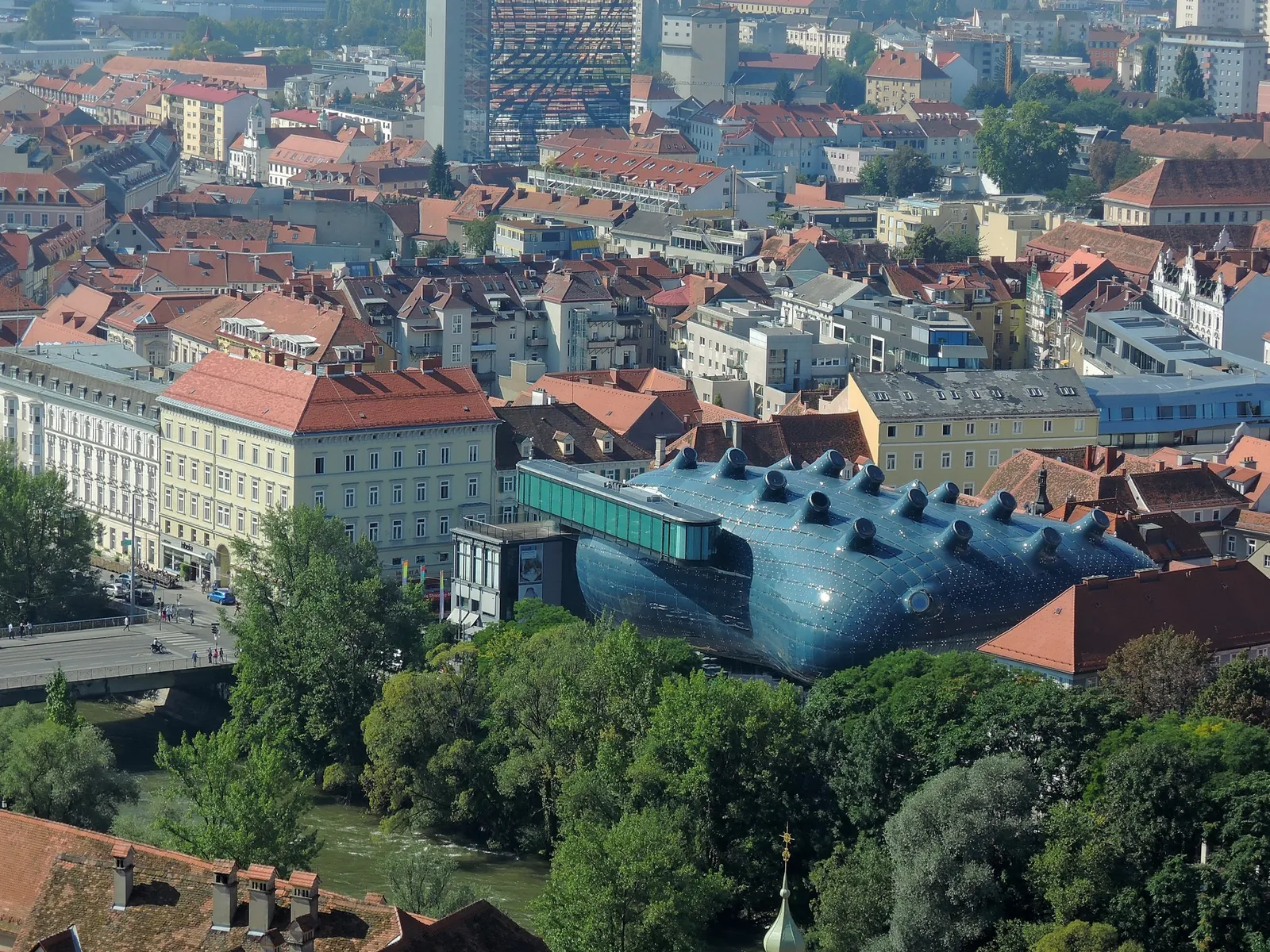
Kunsthaus Graz seen from the SchlossbergGraz, Styria

Kunsthaus Graz seen from the SchlossbergIlya Kuzhekin / CC BY 3.0

Kunsthaus Graz

A blue alien has landed among the red roofs of the old town.

Getting there●●○○○Easy on your own: about 2.5 hours by train from Vienna; the museum is in the city centre.

Best timeGood all year

Graz, Austria's second city, has a museum that looks like an alien.

Among a sea of red roofs, a round blue building crouches by the river, nozzle-like skylights poking out of its top like tentacles. Kunsthaus Graz was completed in 2003, the year Graz was European Capital of Culture, and locals call it the Friendly Alien. At night its skin lights up with moving images. Across the river, the old town is a World Heritage site, its narrow lanes hiding the courtyards of old houses; climb the Schlossberg for a view of all the red roofs and the blue alien below. Graz is a university town, full of students, cafés and lively markets.

GETTING THEREAbout 2.5 hours by train from Vienna to Graz Hauptbahnhof, then about 10 minutes by tram to the centre.
GOOD TO KNOWAt night, when the facade lights up, it looks most like an alien spaceship — a great riverside walk. Exhibitions change, so check closed days and dates on the official site. Seeing the building from outside is free.
SAFETYThe centre is generally safe; mind your belongings at tram stops and in busy squares.
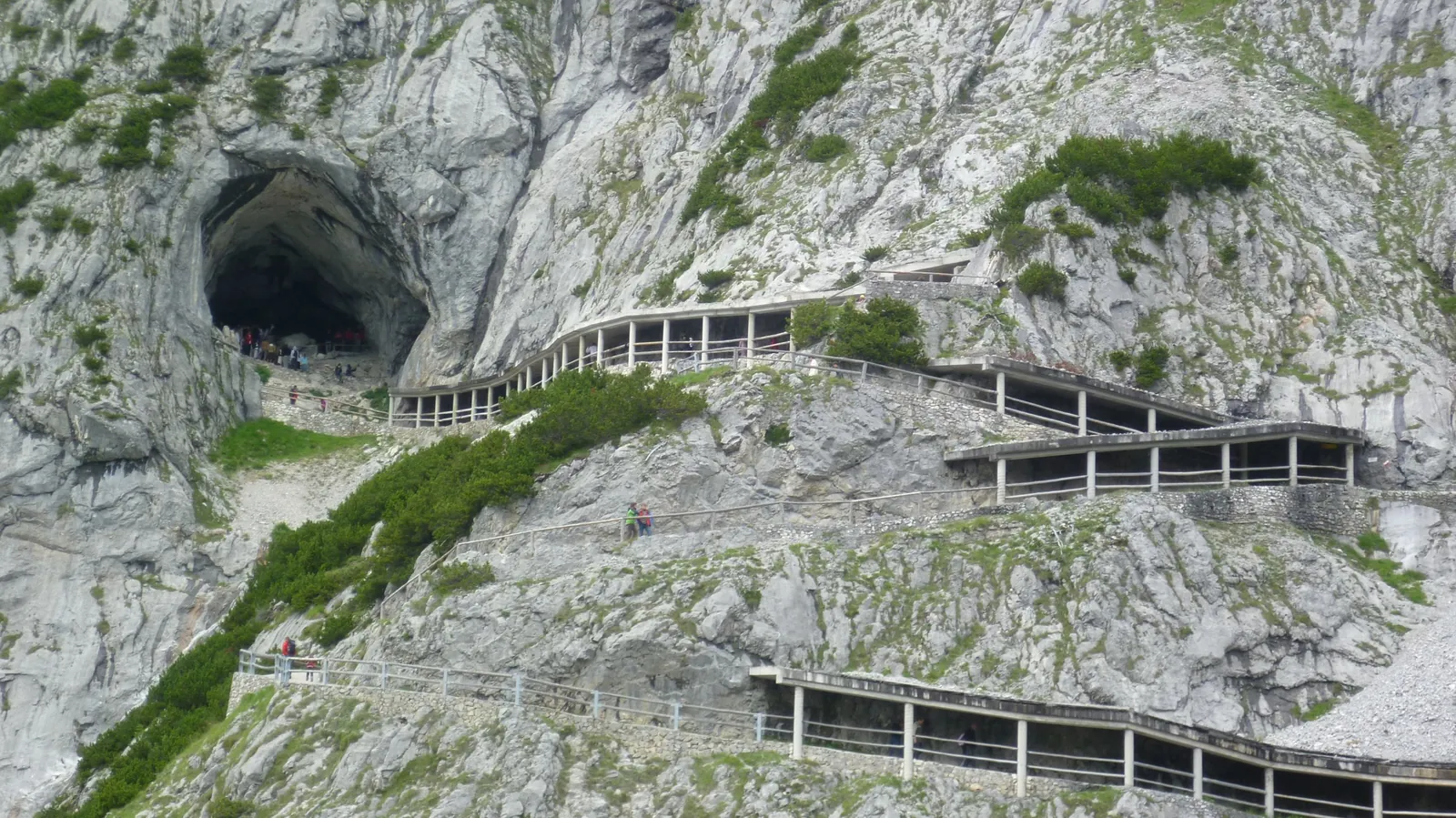
The Eisriesenwelt entrance and cliffside pathWerfen, Salzburg

The Eisriesenwelt entrance and cliffside path© Freak-Line-Community / CC BY-SA 4.0

Eisriesenwelt

Below freezing even in summer — one of the largest ice caves in the world.

Getting there●●●●○For fairly fit travelers: about 40 minutes by train from Salzburg plus a shuttle bus; then an uphill walk, a cable car and many steps inside the cave.

Best timeJun–Sep

South of Salzburg, walk into one of the largest ice caves in the world.

Halfway up a cliff, a huge cave mouth gapes open, with a path zigzagging up the rock face. Eisriesenwelt is one of the largest ice caves in the world, over 40 kilometres long; the part open to visitors is the ice-filled section near the entrance. Follow your guide inside: there's no electric lighting, so visitors carry lamps, and frozen waterfalls and ice columns glow blue-white in the light. Even in summer the cave is below freezing, and there are many steps up and down — a height difference of about 134 metres, roughly 40 storeys. Getting there involves an uphill walk, a cable car and a cliffside path to the entrance.

GETTING THEREFrom Salzburg, take the train to Werfen (about 40 minutes), then the shuttle bus to the visitor centre. It's about a 20-minute uphill walk to the cable car, then about 20 minutes more on foot from the top station to the cave.
GOOD TO KNOWIt only opens in the warmer months — in 2026, May 1 to November 1 — and the contrast of summer heat outside and ice inside is the thrill. No photos inside. Bring a jacket, hat and gloves and wear non-slip shoes; it's very cold, and children under 3 or 4 often struggle. Check the official site.
SAFETYThe many steps inside are wet and slippery — take care if you have knee, heart or lung problems. Always stay with your guide.
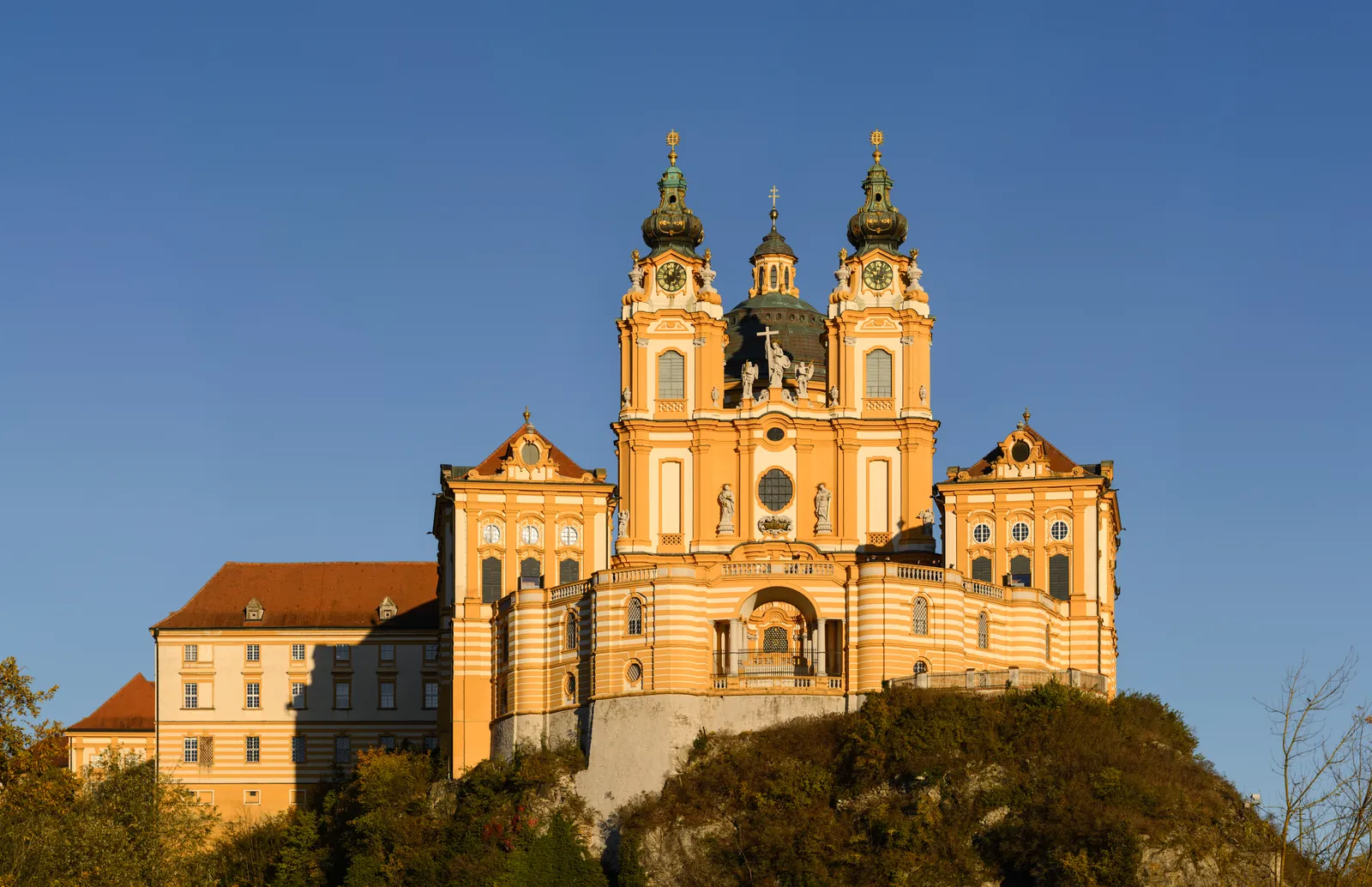
The west side of Melk AbbeyMelk, Lower Austria

The west side of Melk AbbeyUoaei1 / CC BY-SA 4.0

Melk Abbey

A golden baroque abbey on a cliff above the Danube.

Getting there●●○○○Easy on your own: 1 hour to 1 hour 15 minutes by train from Vienna, then about 15 minutes uphill on foot.

Best timeGood all year

West of Vienna, don't miss this golden abbey above the Danube.

On a cliff above the Danube, a golden baroque abbey looks down over the town. Melk is a Benedictine abbey where monks have lived for more than 900 years; the buildings you see today were rebuilt in the first half of the 18th century. Inside, the Marble Hall's ceiling is covered in frescoes, the library's old books rise from floor to ceiling, and finally the abbey church dazzles with gilded decoration. From the terrace, the Danube bends below you — this is the start of the Wachau valley, a World Heritage site.

GETTING THERE1 hour to 1 hour 15 minutes by train from Vienna to Melk station, then about 15 minutes uphill on foot.
GOOD TO KNOWAutumn, when the Wachau vineyards turn gold, is loveliest, and a Danube cruise shows the abbey from the river. Monks still live here and the church is in use — stay quiet and dress modestly. Some areas ban photos; follow the signs.
SAFETYThe walk up from the station is uphill, so wear good shoes; stone steps get slippery in the rain.
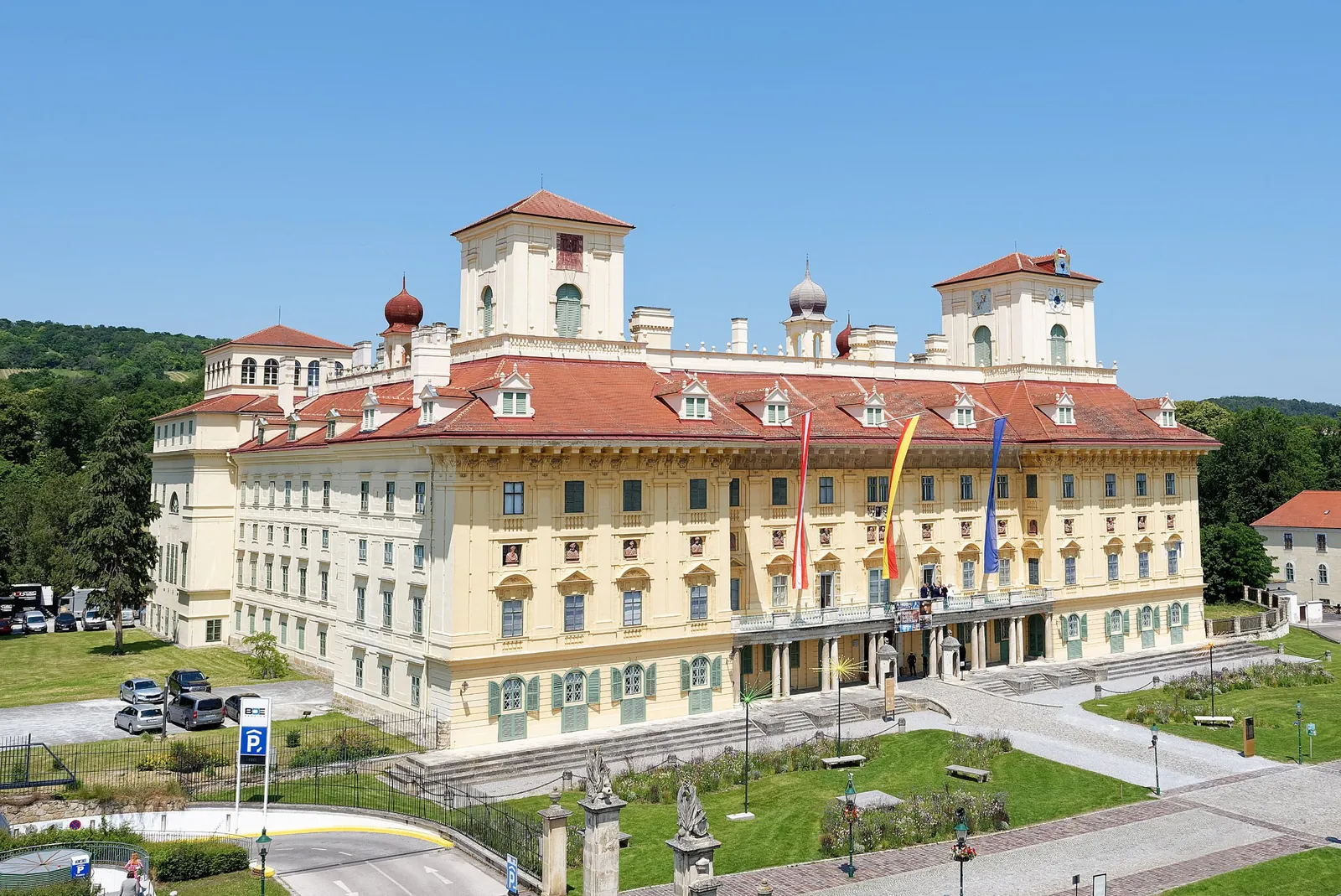
Esterházy PalaceEisenstadt, Burgenland

Esterházy PalaceRobert Heilinger / CC BY-SA 4.0

Esterházy Palace

Haydn wrote music for this palace's owners for nearly thirty years.

Getting there●●○○○Easy on your own: 1 hour to 1 hour 15 minutes by train or bus from Vienna; the palace is in the town centre.

Best timeGood all year

Love classical music? Head east from Vienna to the palace where Haydn worked.

A golden baroque palace stands in the heart of the small town of Eisenstadt. It belongs to the Esterházy family, Hungarian nobles for whom the composer Joseph Haydn worked for nearly thirty years from 1761, and many of his works premiered here. The palace's Haydn Hall is famous for its acoustics and still hosts concerts today. Eisenstadt, the capital of Burgenland, is small enough to explore on foot, and Haydn's house and the church where he is buried are nearby. Vineyards surround the town — this is one of Austria's red wine regions.

GETTING THERE1 hour to 1 hour 15 minutes by train or bus from Vienna to Eisenstadt; the palace is a short walk from the centre.
GOOD TO KNOWHearing Haydn performed here is the experience to remember. The interior is visited by set route or guided tour — check the official site — and book concert tickets early.
SAFETYThe town is generally safe; check the last train or bus back to Vienna.
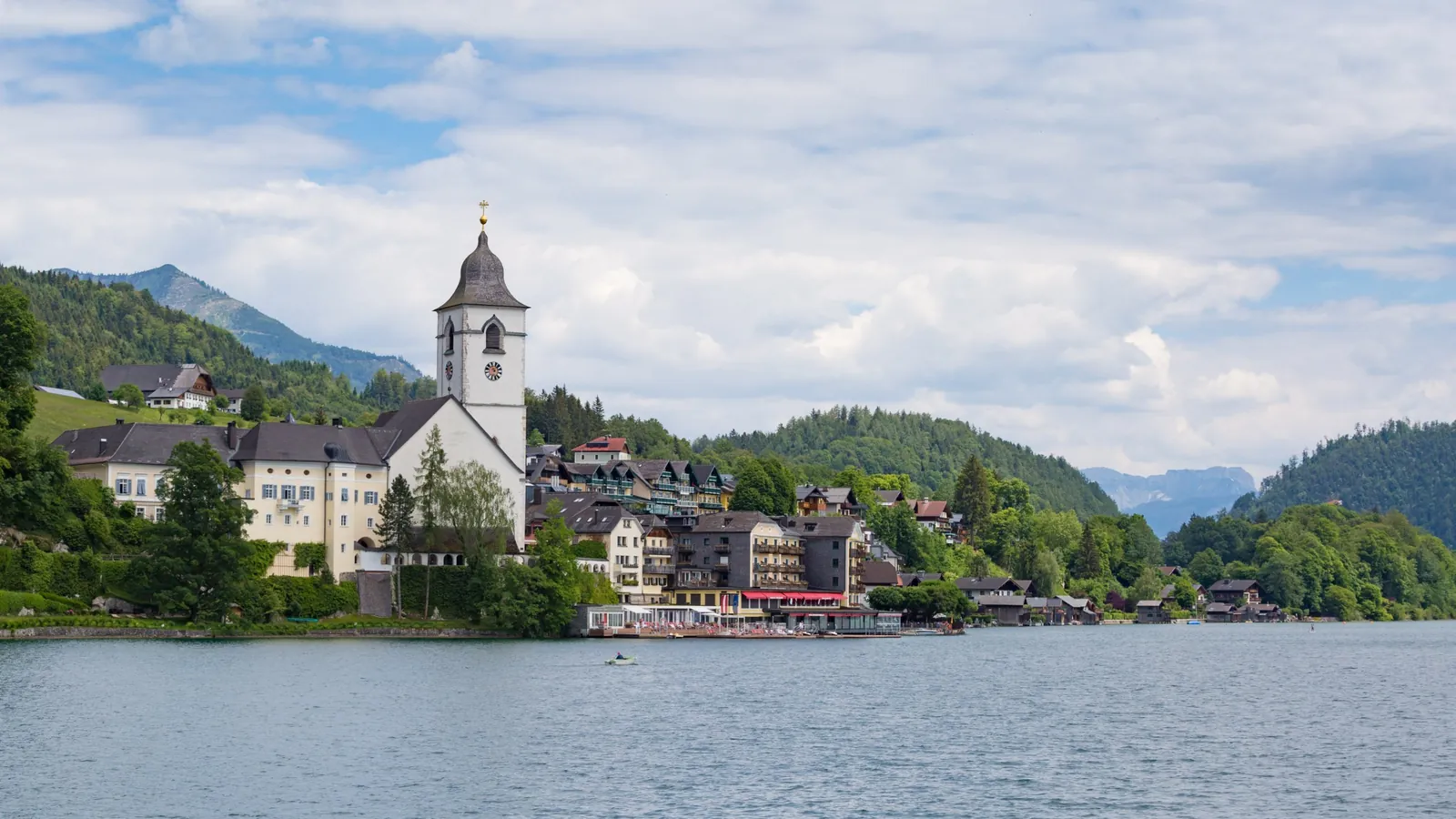
St. Wolfgang's pilgrimage church on the WolfgangseeWolfgangsee, Upper Austria

St. Wolfgang's pilgrimage church on the WolfgangseeDmitry A. Mottl / CC BY-SA 4.0

St. Wolfgang

A white church by the lake, best approached slowly by boat.

Getting there●●●○○Doable on your own: about 1 hour by bus from Salzburg, then another bus or a boat.

Best timeMay–Sep

From Salzburg, head to the lakeside village of St. Wolfgang.

The lake is deep blue, and a church with a white bell tower stands on the shore among old houses with wooden balconies. St. Wolfgang is a pilgrimage village on the Wolfgangsee. Inside the church is a late-15th-century Gothic carved altarpiece, one of Austria's greatest treasures, its gilded woodwork so intricate you'll want to linger. From the village a cog railway climbs the Schafberg, where the summit looks out over lake after lake in the Salzkammergut. The best way to arrive is by boat, watching the village slowly come closer across the water.

GETTING THEREFrom Salzburg, take the bus to St. Gilgen or Strobl (about 1 hour), then another bus or a boat. Lake boats and the Schafberg railway run only in the warmer months — check the official site.
GOOD TO KNOWEarly summer to autumn brings the bluest water, and the December lakeside Christmas market is famous too. Summer weekends crowd the lakeside path. The church is in use — please keep quiet.
SAFETYWatch for bikes on the busy lakeside path; paths can be icy in winter.
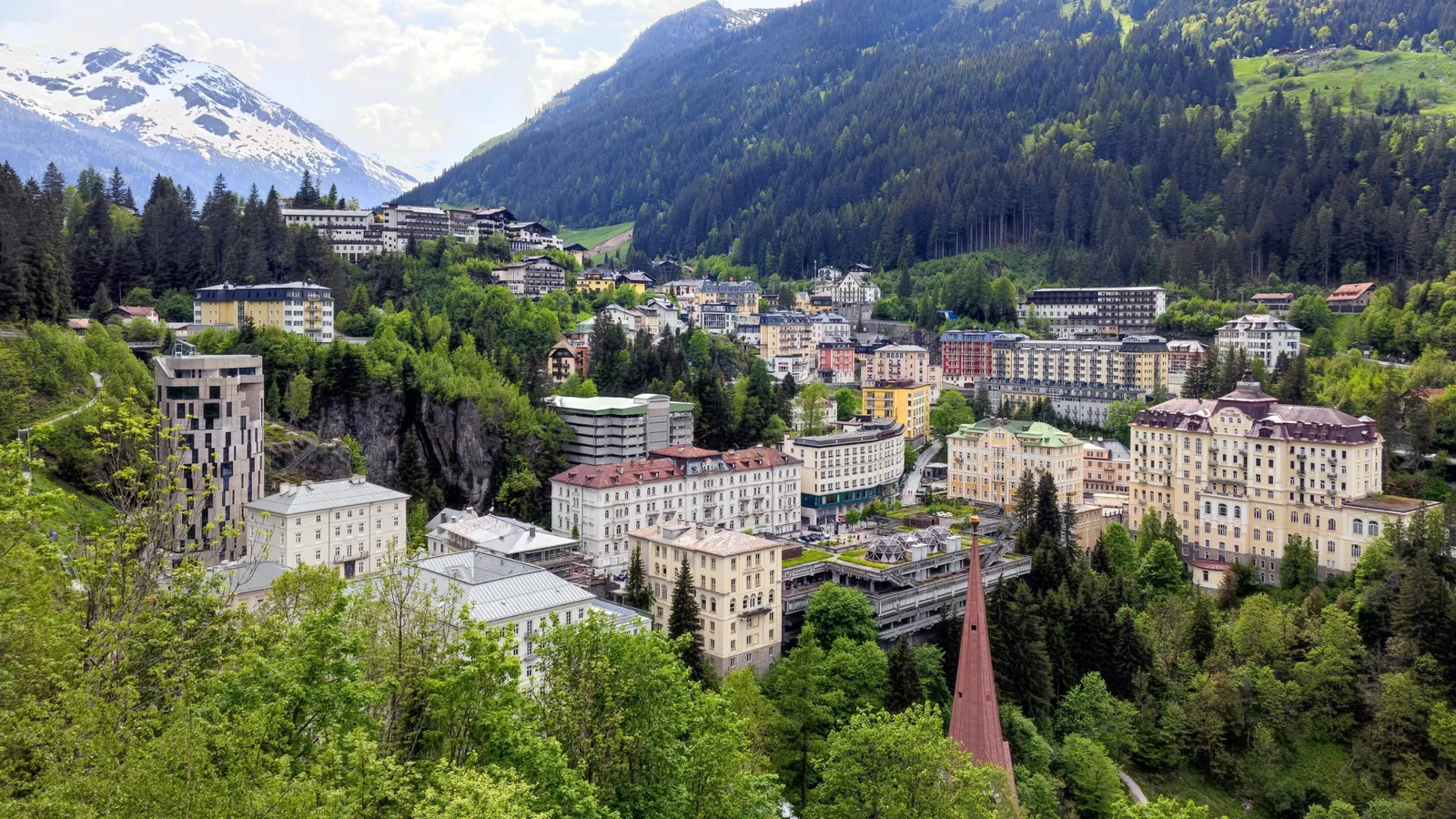
The mountain town of Bad GasteinGastein Valley, Salzburg

The mountain town of Bad GasteinHelmlechner / CC0

Bad Gastein

A mountain spa town built around a waterfall.

Getting there●●○○○Easy on your own: about 1.5 hours by train from Salzburg.

Best timeGood all year

For hot springs in Austria, head to Bad Gastein in its mountain valley.

Among the mountains, a town climbs a steep slope in tiers, grand hotels from the late 19th century standing one after another as if time stopped a century ago. Right through the middle of town, a waterfall plunges down, its roar filling the valley. Bad Gastein has long been a spa resort, visited by European royalty and nobility. Today you can soak in its thermal baths or walk the hillside trails, and in winter it's a ski destination. Some old hotels stood empty for years and are now being restored one by one — that mix of old and new is part of its charm.

GETTING THEREAbout 1.5 hours by train from Salzburg, or 4.5 to 5 hours from Vienna with a change.
GOOD TO KNOWSoaking with a view of snowy peaks is best in winter, with the waterfall right in the middle of town. The streets are steep — wear good shoes. Check each spa's rules and dress code (mostly swimwear) on its official site.
SAFETYSlopes are steep and icy in winter, so wear shoes with grip; stay behind the railings on the wet paths by the waterfall.
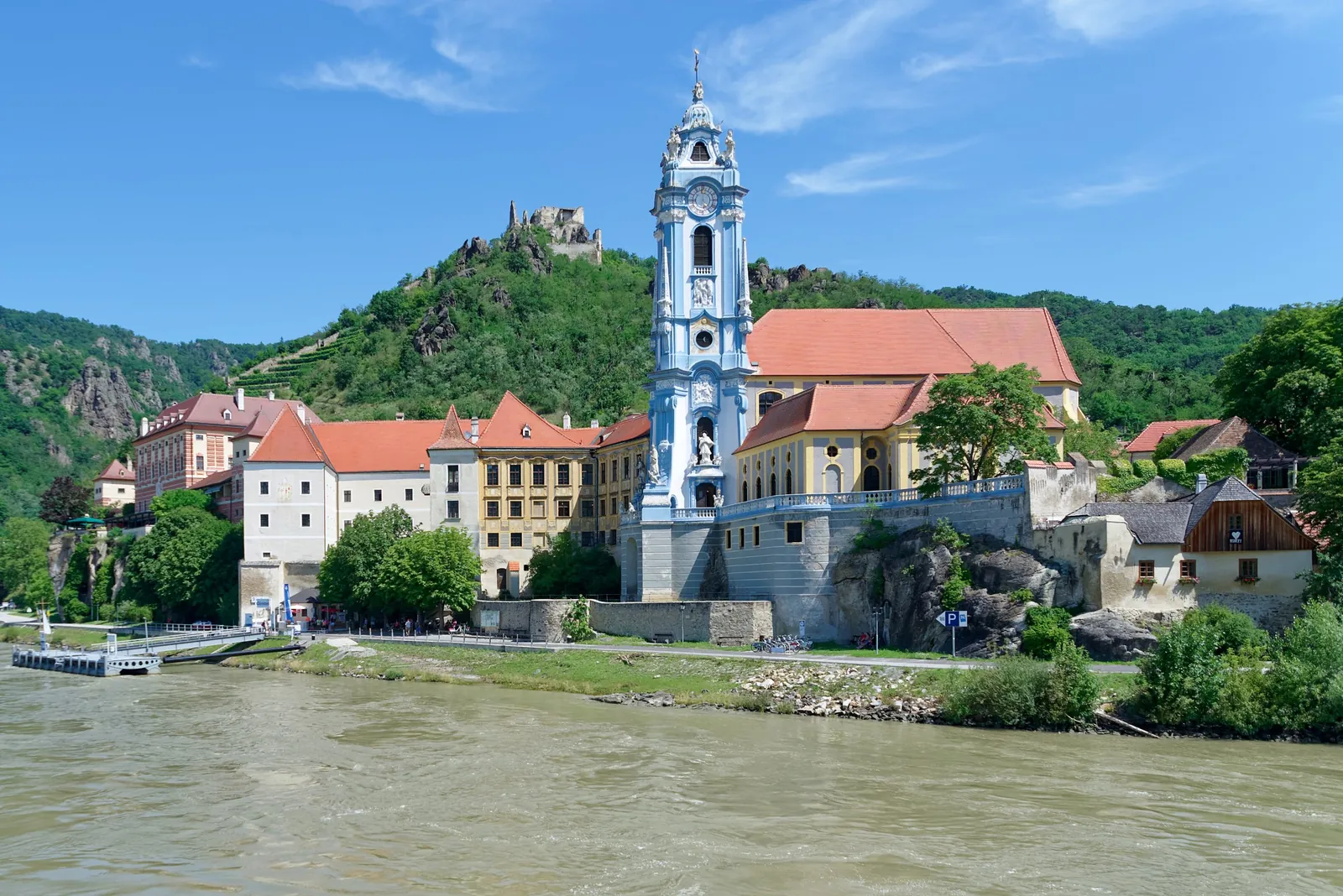
Dürnstein's blue abbey tower and hilltop castleWachau Valley, Lower Austria

Dürnstein's blue abbey tower and hilltop castleJakub Hałun / CC BY-SA 4.0

Dürnstein

A blue-and-white tower, and a hilltop castle that once held Richard the Lionheart.

Getting there●●○○○Easy on your own: about 1 hour by train from Vienna to Krems, then about 15 minutes by bus.

Best timeApr–Oct

Head down the Danube to Dürnstein, the prettiest village in the Wachau.

Where the Danube bends, a blue-and-white baroque tower stands quietly by the river — the symbol of Dürnstein's abbey church. The village has a single cobbled main street lined with old houses and wine taverns. Look up and you'll see a ruined castle on the hilltop: at the end of the 12th century, England's King Richard the Lionheart was held prisoner here on his way home from the Crusades. The path up takes 20 to 30 minutes, and the vineyards and valley spread out below. The Wachau is known for white wine and apricots; in summer you can try apricot jam and desserts.

GETTING THEREAbout 1 hour by train from Vienna to Krems, then about 15 minutes by bus. In the warmer months you can also cruise down the Danube from Melk — check the official site for schedules.
GOOD TO KNOWSeptember–October harvest season is the loveliest, and mornings or evenings, before and after the cruise crowds, are quietest. The path up to the ruins is rocky and a bit steep — wear good shoes. Summer weekends get busy when boats dock.
SAFETYMuch of the castle ruin has no railings — don't climb the walls.

Winter ski areas & events

Coming in winter? The region also has these. Full details (lessons, lodging, transport) are in the winter corner of your quiz results.

Ski areas

  • St. Anton am Arlberg: A birthplace of modern ski teaching, famous for steeps and après-ski
  • Lech Zürs: Quietly luxurious, with the White Ring circuit in a day
  • Ischgl: Ski across the border to a duty-free Swiss village
  • Saalbach Hinterglemm: Ski a full loop around the valley and over into Tyrol
  • Sölden: Two glaciers and a James Bond filming location
  • Stubai Glacier: Austria's largest glacier ski area, a bus ride from Innsbruck
  • Zell am See · Kaprun: Lakeside town plus a glacier: two ways to ski in one trip
  • Mayrhofen · Hintertux Glacier: Austria's only year-round glacier ski area
  • Schladming: Four linked mountains and a World Cup night race in town
  • Obertauern: A snow village on a mountain pass, slopes right outside the door
  • Obergurgl: Austria's highest parish village, with a long, quiet season
  • Kitzbühel: A medieval town and the world's scariest downhill
  • Flachau: Home of an Austrian ski legend, with wide, smooth runs
  • Bad Gastein: An old spa town: ski by day, soak by night
  • Dachstein West: The closest ski area to Hallstatt and Upper Austria's largest

Winter events

  • Vienna Christmas Market: Vienna's biggest Christmas market, in front of the Gothic City Hall
  • Salzburg Christmas Market: A Christmas market in Mozart's hometown, with the cathedral as backdrop
  • Innsbruck Old Town Christmas Market: A market under the Golden Roof, with snowy Alps behind
  • Schönbrunn Palace Christmas Market: A Christmas market before an imperial palace, open into the New Year
  • Advent in Graz: A dozen-plus markets in the old town, and a nativity carved from ice
  • Rattenberg Advent: Austria's smallest town, lit only by candles and torches on weekends
  • Achensee Christmas Boat: A boat linking three country Christmas markets on the lake
  • Krampus Runs: Pre-Christmas 'devil parades', an old Alpine tradition

Not sure which to pick? Take the 4-minute travel-personality quiz and find the one that suits you.

Take the quiz