TOP-TIER TRAVEL中/EN

Korea · Busan & Gyeongnam

10 hidden gems in Busan & Gyeongnam

Port city & festivals. We picked 10 places in this region — some well known, some few visitors find. Browse at your own pace, then take the quiz when something catches your eye.

TOP-TIER TRAVEL › All hidden gems › Korea › Busan & Gyeongnam

Not sure which to pick? Take the 4-minute travel-personality quiz and find the one that suits you.

Take the quiz
Jagalchi Market
First time? Start with the classics

You can't go wrong doing a first lap of Haeundae, Seomyeon, Nampo-dong and Jagalchi Market — pick seafood on Jagalchi's ground floor and a restaurant upstairs will cook it for you. Central Busan is easy by subway, while Gyeongnam's sights are another hour or two by bus, so save one day for the place below that's truly yours.

Looking for a place to stay in this area? Start here:

Spot details checked: October 2026

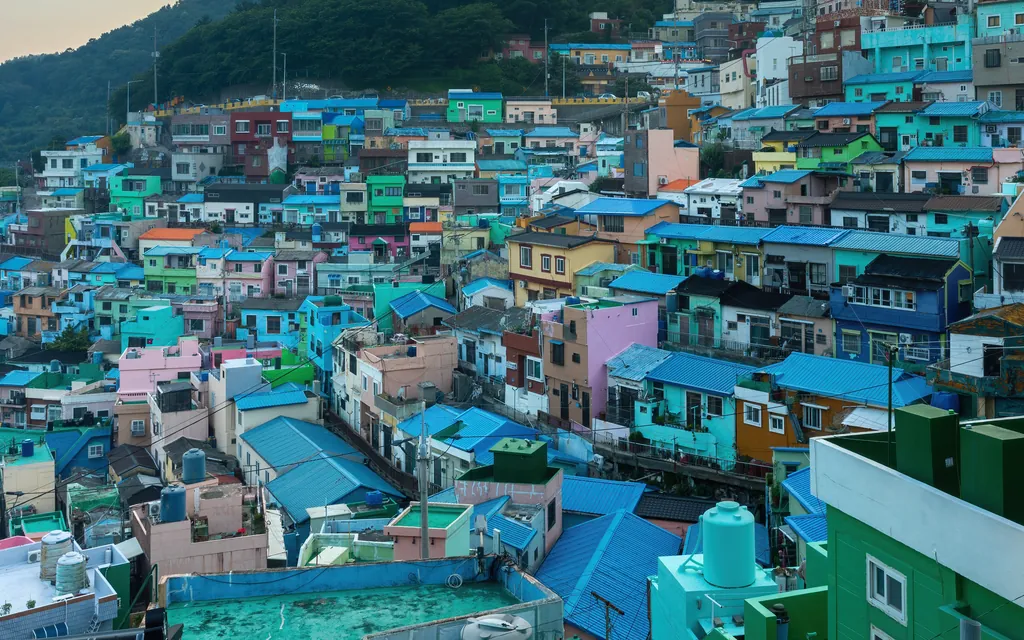
Colourful houses stacked up the hillside in GamcheonSaha-gu, Busan

Colourful houses stacked up the hillside in Gamcheon

Gamcheon Culture Village

Colorful rooftops tumbling down the hill, all the way to the port.

Getting there●○○○○Very easy on your own: from Toseong Station on the Busan subway, about 10 minutes by village minibus.

Best timeGood all year

On your first trip to Busan, spend half a day in the colorful hillside village.

Climb the narrow steps, turn a corner, and suddenly there's a whole hillside of colorful rooftops, pink, sky blue, pale yellow, tumbling layer by layer down the slope all the way to the distant port, a sea breeze blowing up the lanes. Gamcheon-dong is a settlement that refugees fleeing to Busan during the Korean War built house by house up the hillside, the homes stacked in layers following the slope. From 2009, artists and residents turned empty houses and lanes into artworks, and the village gradually became one of Busan's signature sights; wander the lanes and an artwork waits around every corner. The best moment is looking down from the top. It's easy to pair with Nampo-dong and Jagalchi Market on the same day. A refugee village turned into a hillside town of color: a story worth walking through yourself.
GETTING THERETake Busan Subway Line 1 to Toseong Station, then a village bus (maeul-bus) up the hill for about 10 minutes; or take a taxi from the Nampo-dong area.
GOOD TO KNOWMorning light is soft and crowds are thin — the best time for the colourful hillside. People still live here, so keep your voice down and don't enter or photograph into homes. There are many steps — wear good shoes.
SAFETYLanes are narrow and steep, and the stairs get slippery after rain. Village buses and cars squeeze past on narrow roads — watch for traffic while taking photos.
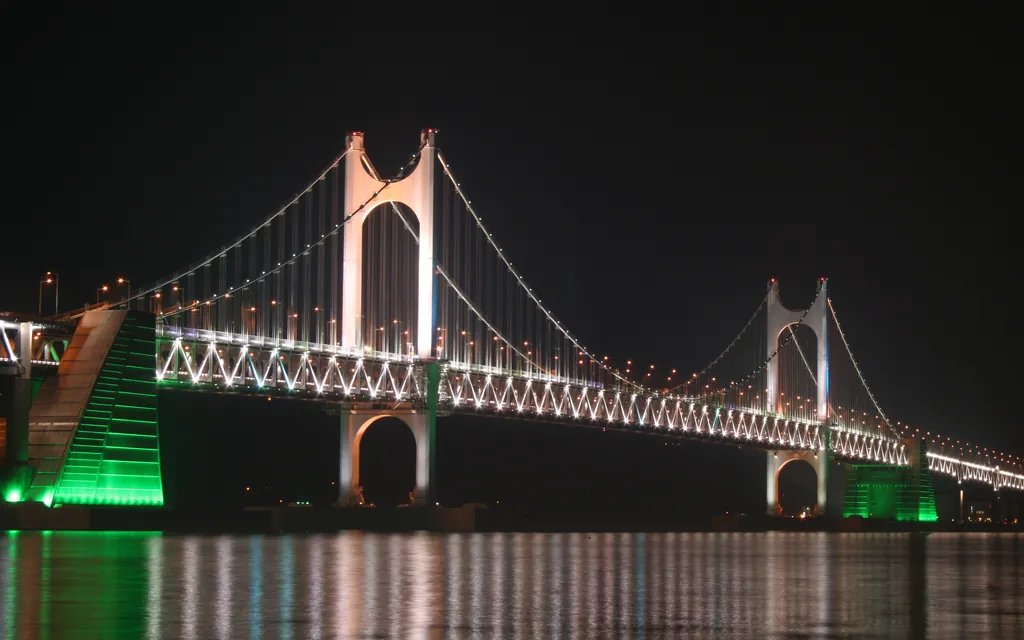
Gwangan Bridge lit up at nightSuyeong-gu, Busan

Gwangan Bridge lit up at night

Gwangan Bridge at Night

When the bridge lights up, Busan's night begins.

Getting there●○○○○Very easy on your own: about 10 minutes' walk from Gwangan or Geumnyeonsan Station on the Busan subway.

Best timeGood all year

On a Busan evening, save an hour or two for Gwangalli beach.

Sit on Gwangalli's sand as waves roll in, laughter and music drifting from the restaurants and bars behind you, and when darkness falls the bridge over the sea lights up end to end, its colors shifting section by section and mirrored on the black water. Gwangan Bridge spans Suyeong Bay, linking Haeundae and Nam-gu. About 7.4 km long, it's Korea's iconic double-deck sea bridge, opened in 2003. After dark the bridge lights up, and together with the restaurants, cafés and bars lining Gwangalli Beach, it creates Busan's most famous night view. There are often drone light shows on Saturday nights, and every autumn the Busan Fireworks Festival uses Gwangan Bridge as its stage, one of Korea's biggest fireworks events; when the fireworks burst over the bridge, the whole beach cheers. In Busan, save one evening to sit on the sand and watch this bridge.

GETTING THERETake Busan Subway Line 2 to Gwangan or Geumnyeonsan Station, then walk about 10 minutes to the beach; about 15–20 minutes by taxi from Haeundae.
GOOD TO KNOWThe year's showstopper is the Busan Fireworks Festival — the 21st edition was November 7, 2026, from 7 pm for about an hour. Paid beach seats (R and S) sell out, and the day brings huge crowds and road closures. On regular weekends there's a drone light show, with times that change yearly. The photo is from 2008; the bridge lighting has since been updated. Check official notices before you go.
SAFETYLots of people drink on the beach at night — don't go swimming. In big crowds, agree on a meeting point with your group in case you get separated.
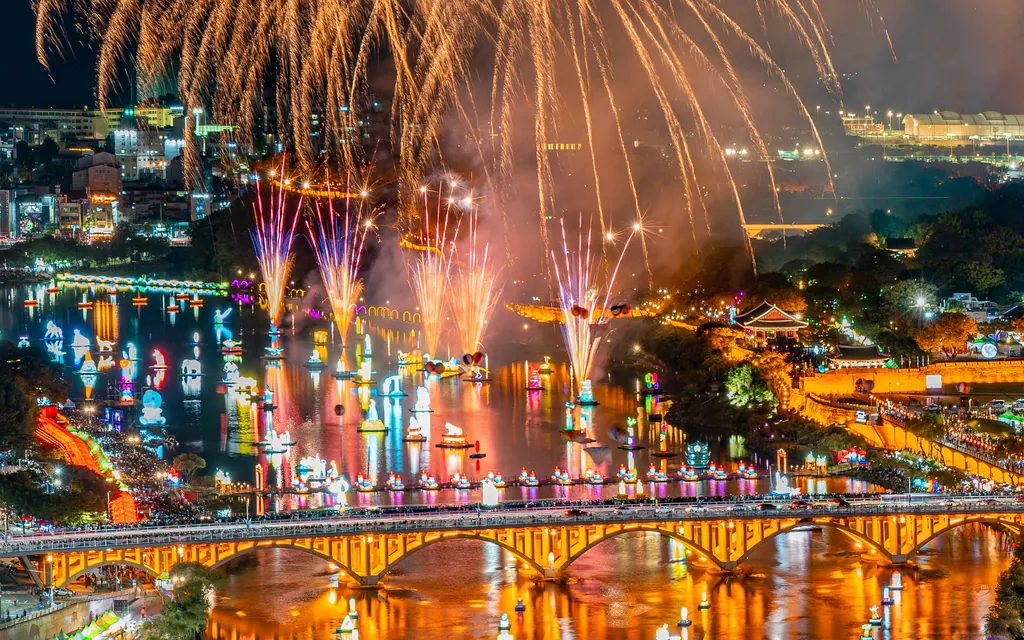
Fireworks and floating lanterns on the Namgang during the festival, with a lit bridge in frontJinju, Gyeongnam

Fireworks and floating lanterns on the Namgang during the festival, with a lit bridge in front

Jinju Namgang Lantern Festival

Lanterns from four centuries ago still float on the Namgang.

Getting there●●○○○Easy on your own: about 1.5 hours by bus from Busan to Jinju; the venue is walkable from the bus terminal.

Best timeOct

If you're in Busan in October, add a day in Jinju for a river full of lanterns.

As darkness falls, lanterns light up across the Namgang River, lanterns of every shape drifting quietly on the water, their reflections trembling, as fireworks burst overhead and light the whole river red. During the Imjin War in 1592, the defenders of Jinju Fortress floated lanterns on the river to send signals and stop enemy troops crossing, the origin of the lantern custom. Today the Namgang Yudeung (lantern) Festival is held every October; you can walk out on floating bridges for a close look and set your own wish lantern on the water, watching it drift slowly away. The photo shows fireworks during the festival. Next door, Jinju Fortress, the old battlefield, is lively at night during the festival too. It only comes once a year in October: set a lantern afloat and let your wish drift with a story over four centuries old.

GETTING THEREAbout 1.5 hours by bus from Busan's Seobu Intercity Bus Terminal (next to Sasang Station on Subway Line 2) to Jinju; you can also take the KTX from Seoul to Jinju Station. The venue is around Jinju Fortress and the Namgang River, walking distance from Jinju Intercity Bus Terminal.
GOOD TO KNOWJust two weeks each autumn, when thousands of lanterns float on the Namgang — in 2026, October 3–18; dates change yearly. Weekend nights are packed, so book a room early, and check the last bus if returning to Busan. Check this year's dates on the official site.
SAFETYThe floating bridges and riverbanks get crowded — follow staff instructions, line up, and keep children close.
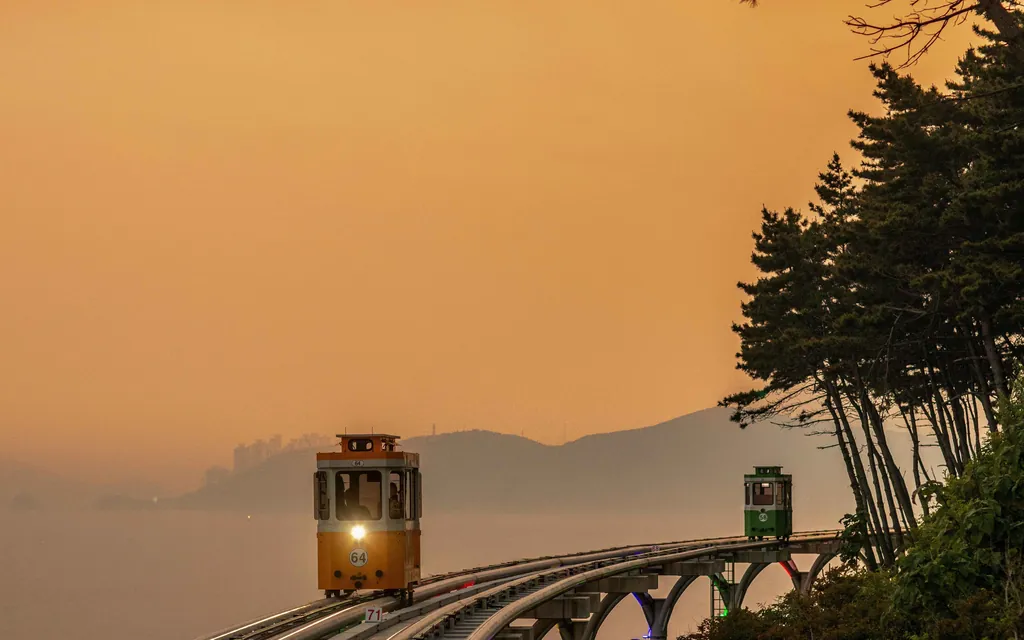
Sky Capsules on the coastal track at duskHaeundae-gu, Busan

Sky Capsules on the coastal track at dusk

Haeundae Blueline Park

Climb into a colorful little capsule and sway slowly along the sea.

Getting there●○○○○Very easy on your own: about 15 minutes' walk from Haeundae Station on the Busan subway to Mipo Station.

Best timeGood all year

When you're in Haeundae, ride a stretch of the seaside capsule train.

Colorful little cars creep along an elevated track with nothing but sea outside the windows, waves breaking on the rocks, the capsule gently swaying; at dusk the sky turns orange and the water glitters. Blueline Park turned the disused Donghae Nambu Line between Mipo in Haeundae and Songjeong into a coastal sightseeing route. On the ground, the Beach Train runs along about 4.8 km of old track, with stops such as Cheongsapo; on an elevated track above, the Sky Capsule, little colorful cars seating up to 4, moves slowly along about 2 km between Mipo and Cheongsapo, like a private cabin just for you. The photo shows the Sky Capsule at dusk; the orange sky depends on the day's weather. Squeeze into a little capsule with the people who matter most, sway slowly along the sea, and this ride becomes a treasured memory.

GETTING THERETake Busan Subway Line 2 to Haeundae Station, then walk about 15 minutes to Mipo; at the other end, Songjeong is close to Songjeong Station on the Donghae Line.
GOOD TO KNOWA sky capsule ride along the coast at sunset is the most romantic — and sells out fastest, so book online. Both the capsules and the beach train are paid, with seasonal hours, and may stop in strong wind or rain.
SAFETYSome sections of the coastal path run close to rocky shore — don't cross the railings to take photos on the rocks.
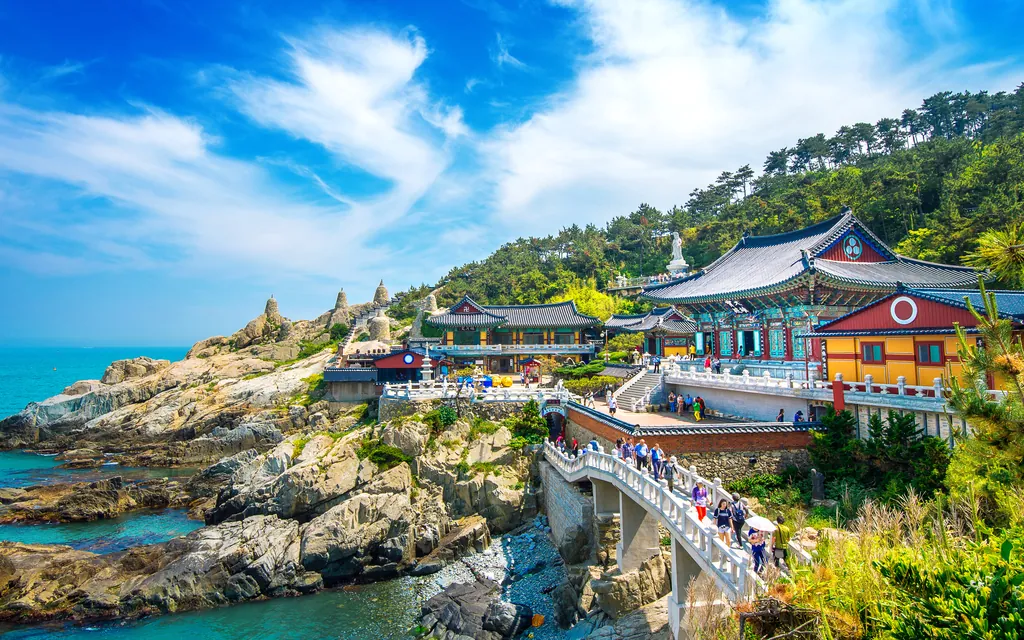
Haedong Yonggungsa temple on the rocky shoreGijang-gun, Busan

Haedong Yonggungsa temple on the rocky shore

Haedong Yonggungsa Temple

Other temples hide in the mountains. This one stands by the sea.

Getting there●●○○○Easy on your own: about 30 minutes by bus from Haeundae, or the Donghae line plus a short connection.

Best timeGood all year

Just north of Haeundae, see a temple built by the sea.

Walk down the stone steps as the sound of the waves grows closer, cross an arched stone bridge, and before you is a temple built right against the rocky shore, spray bursting on the rocks below, chanting mingling with the surf. Most Korean temples are built deep in the mountains, but Haedong Yonggungsa sits on rocks along the East Sea coast; legend says it was founded by the monk Naong at the end of the Goryeo dynasty. The main hall is built against the rocks, and the Haesu Gwaneum Buddha gazes quietly out over the East Sea. On clear mornings you can watch the sunrise over the sea here, golden light spreading across the water; around Buddha's Birthday the temple fills with lanterns, and with crowds. Prayer to the sound of the waves: there's no other temple like it in Korea.

GETTING THEREAbout 30 minutes by bus from Haeundae, or take the Donghae Line to OSIRIA Station and then a bus or a 20-minute walk.
GOOD TO KNOWEarly morning, as the sun rises over the sea onto the temple, is the most striking and the quietest. Weekends and holidays get busy with queues on narrow steps. It's a place of worship — keep your voice down near worshippers and don't block paths.
SAFETYThe rocks by the shore are slippery — don't cross the railings, and keep away from the sea in big waves.
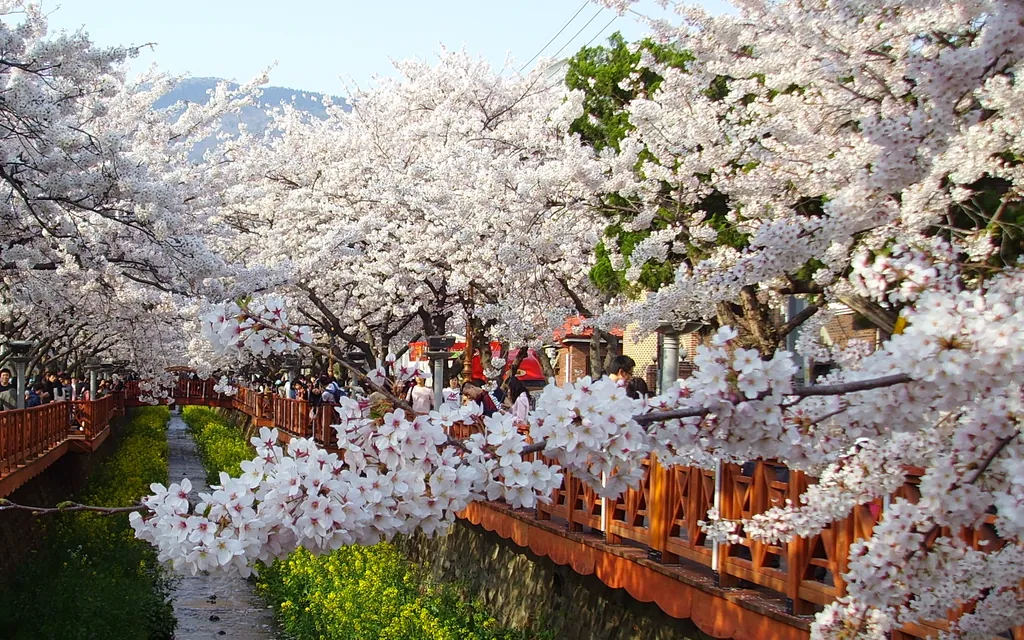
Cherry blossoms along the Yeojwacheon stream and its wooden walkwayJinhae-gu, Changwon, Gyeongnam

Cherry blossoms along the Yeojwacheon stream and its wooden walkway

Yeojwacheon Cherry Blossoms, Jinhae

Cherry branches meet from both banks to form a tunnel of flowers.

Getting there●●○○○Easy on your own: about an hour by bus from Busan to Jinhae; during the festival you'll mostly walk or use shuttle buses.

Best timeApr

In early April in Busan, add a day in Jinhae for cherry blossoms.

Walk along the stream as cherry branches from both banks meet overhead, sunlight falling through the petals, and when the wind blows the petals drift like snow into the water and float slowly away. Jinhae is a naval port city filled with cherry trees, and its spring Gunhangje (Military Port Festival) is one of Korea's biggest cherry blossom festivals. Yeojwacheon is the most famous spot: along the roughly 1.5 km stream, branches from both banks meet in the middle to form a tunnel of flowers, and it has appeared in Korean dramas. Another favorite is the disused Gyeonghwa Station railway, with blossoms along both sides of the tracks; walk the rails and it feels like stepping into a film. The blossoms last only a few days a year; miss them and you wait for next spring.

GETTING THEREAbout 1 hour by bus from Busan's Seobu Intercity Bus Terminal (Sasang) to Jinhae; during the festival there are traffic controls downtown, so you'll mostly walk or use shuttle buses.
GOOD TO KNOWJust two weeks a year, late March to early April, the blossoms form a tunnel over Yeojwacheon. The 2026 Gunhangje festival ran March 27 to April 5; 2027 dates aren't out yet, and bloom timing varies. Weekends are packed, so go on a weekday or early. Check the official site.
SAFETYDon't linger on the boardwalk for photos when it's crowded, and watch the steps. Don't break branches off the trees.
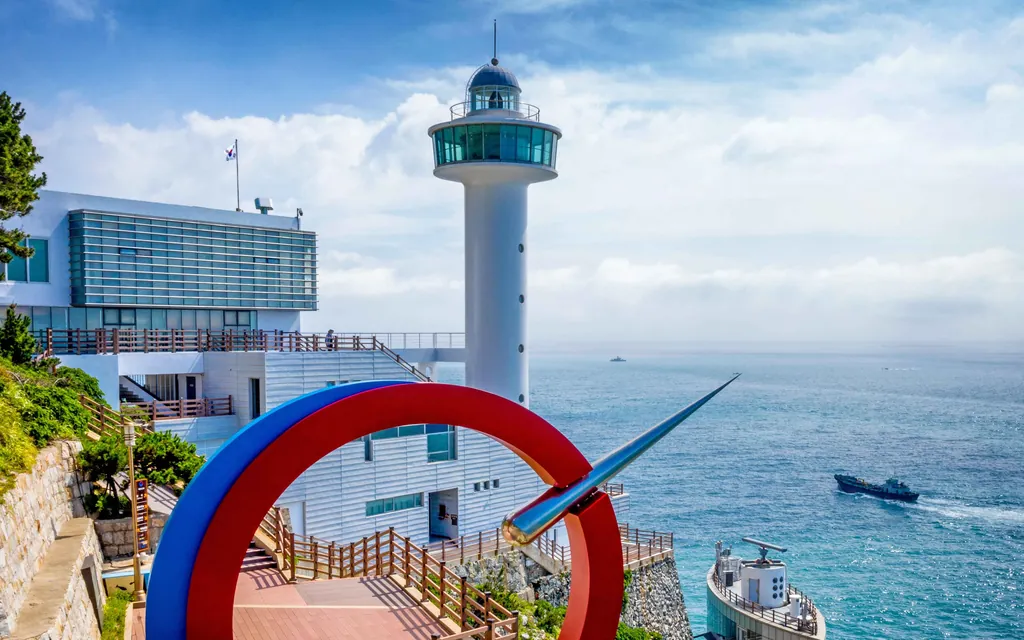
Taejongdae's white lighthouse, with the red-and-blue ring artwork in frontYeongdo-gu, Busan

Taejongdae's white lighthouse, with the red-and-blue ring artwork in front

Taejongdae, Yeongdo

Stand on the Rock of the Gods and look up at the cliffs.

Getting there●○○○○Very easy on your own: about 30 minutes by city bus from Nampo-dong or Busan Station.

Best timeGood all year

Cross the bridge from Nampo-dong to Yeongdo and walk the seaside cliffs.

Walk down to the shore below the lighthouse and there's a flat rock beneath your feet, waves rushing up and drawing back, and when you look up, sheer cliffs tower above you, pines leaning out from the top. Taejongdae is a pine-covered headland at the southern tip of Yeongdo. Legend says King Taejong Muyeol of Silla once practiced archery and admired the view here, giving it its name. A loop road runs around the park, and you can ride the Danubi sightseeing train, getting off at the observatory, Yeongdo Lighthouse and other stops. That flat rock below the lighthouse is Sinseonbawi (Rock of the Gods), and from there the cliffs look spectacular. The red-and-blue rings in front of the lighthouse in the photo are public art. Even a king stopped here to take in the view; you deserve to linger a while too.

GETTING THEREAbout 30 minutes by city bus from Nampo-dong or Busan Station to the last stop, “Taejongdae,” then walk into the park.
GOOD TO KNOWOn a clear day the cliffs and sea are at their grandest, and with luck you'll see Tsushima. The Danubi train has set hours, stops in bad weather and has long holiday queues; on foot, the loop road is about 4 km with hills. Check the official site.
SAFETYSinseonbawi and the shore rocks have no fences — keep away from the water when waves rise, and don't cross the railings at the cliff edge for photos.
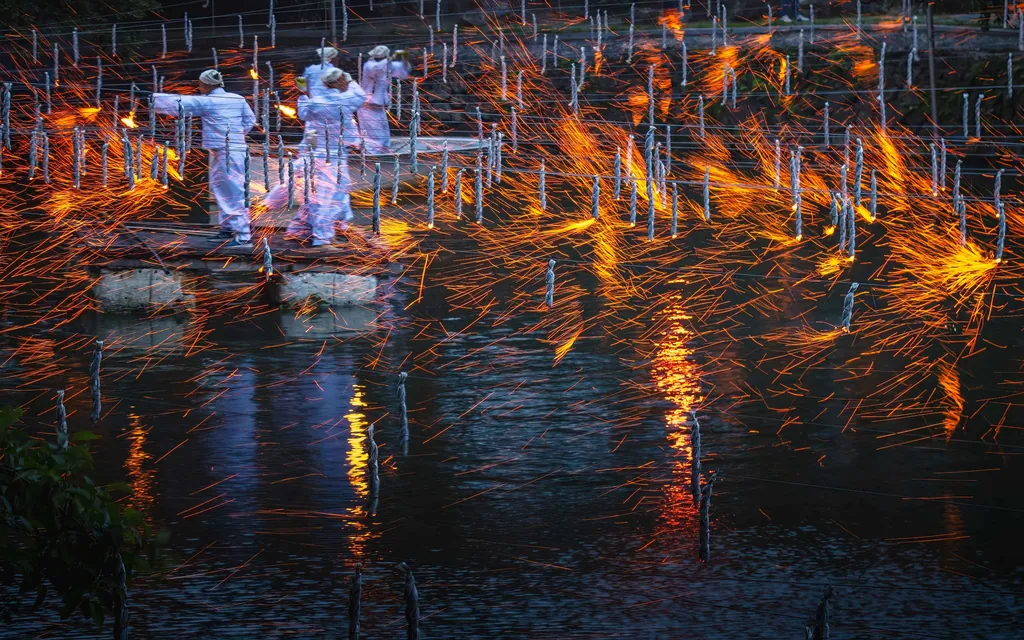
Sparks raining onto the water as white-clad participants light the NakhwaHaman-gun, Gyeongnam

Sparks raining onto the water as white-clad participants light the Nakhwa

Haman Nakhwa Fire Festival

Sparks fall like rain into a pond at night.

Getting there●●●○○Some planning: bus from Busan to Haman, then a taxi; shuttle buses run on the day of the event.

Best timeMay

If you're in Busan around Buddha's Birthday, a special trip to Haman for a rain of fire is worth it.

In the dark, the nakhwa sticks along the ropes are lit, and sparks begin drifting down, swaying on the breeze before falling onto the black surface of the pond like a golden rain of fire, so quiet you can hear their faint crackle. Nakhwa-nori is a traditional fire game handed down in Haman. Ropes are strung over the pond in front of Mujinjeong pavilion and hung with nakhwa sticks, charcoal powder rolled in hanji paper; lit after dark, the sparks drift on the wind onto the water. It's said to date back to the Joseon era and is now an intangible heritage of Gyeongnam, held every year on Buddha's Birthday (the 8th day of the 4th lunar month); after lighting, it burns for about two hours. One night a year, just two hours: miss it, and you wait a whole year.

GETTING THERETake a bus from Busan's Seobu Intercity Bus Terminal (Sasang) to Haman, then a taxi; on festival day there are temporary parking lots and shuttle buses.
GOOD TO KNOWJust one night a year, on Buddha's Birthday, when sparks rain onto the water like a waterfall — in 2026, May 24. It now needs advance online booking with limited spots, entry by QR code. The date follows Buddha's Birthday and may change for weather or fire safety; it ends late, so arrange transport back. Check Haman County's official notices.
SAFETYSparks fall at the venue — wear non-flammable clothing and tie long hair back. It's crowded, so follow staff instructions.
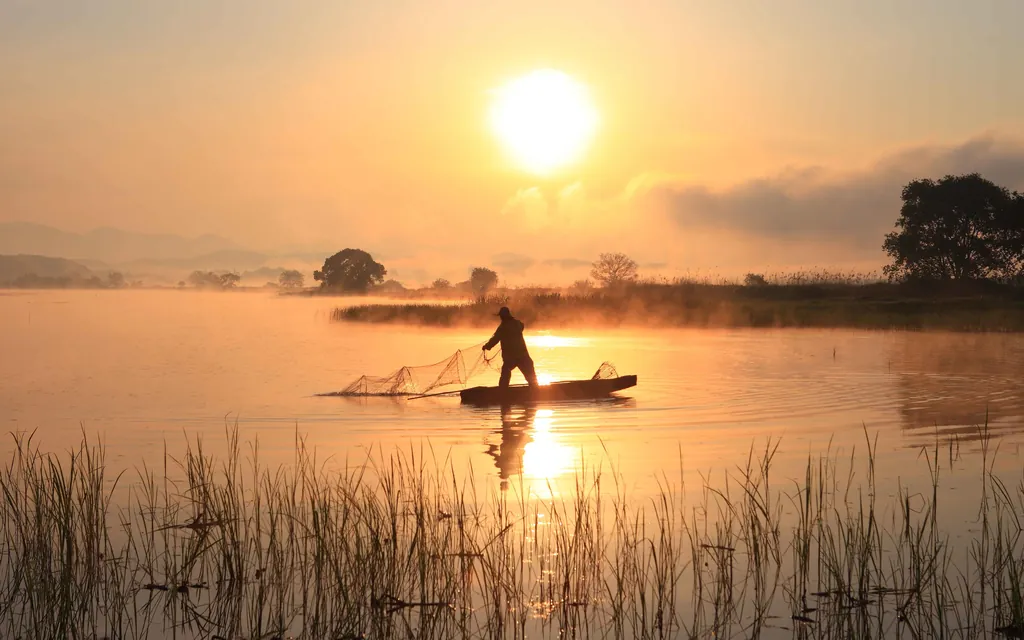
A fisherman casting a net from a small boat in the golden hazeChangnyeong-gun, Gyeongnam

A fisherman casting a net from a small boat in the golden haze

Upo Wetland, Changnyeong

In the morning mist, a small boat casts its net.

Getting there●●●○○Some planning: 1–1.5 hours by bus from Busan or Daegu to Changnyeong, then about 20 minutes by taxi; a car or private driver saves time.

Best timeOct–Nov

To see Korea's largest natural wetland, save a morning for Upo.

In the early morning a white mist hangs over the wetland, water plants standing still on the surface, a small boat paddling slowly in the distance as a fisherman casts his net and startled waterbirds flap off into the haze. Upo Wetland (Upo-neup) is Korea's largest inland natural wetland, made up of four connected marshes, and became a Ramsar wetland in 1998. Many migratory birds winter here, and Korea is restoring the crested ibis here too. Flat walking and cycling paths circle the wetland, which is most beautiful on misty mornings. The photo shows a local fisherman casting a net from a small boat; ordinary visitors can't fish or go boating on the water. Walk the paths slowly or cycle the loop, and in this ancient wetland you'll hear your own breathing slow down.

GETTING THEREAbout 1–1.5 hours by bus from Busan's Seobu Intercity Bus Terminal or Daegu to Changnyeong, then about 20 minutes by taxi to the wetland entrance. Public transport is inconvenient; driving or hiring a car saves time.
GOOD TO KNOWAutumn and winter dawns give the best chance of mist — mornings and evenings are chilly, so layer up. Bikes can be rented near the entrance. Few people speak English or Chinese, so download a translation app and Naver Map.
SAFETYDirt paths get muddy after rain — don't leave the paths for the water's edge. There are lots of insects in summer, so bring repellent.
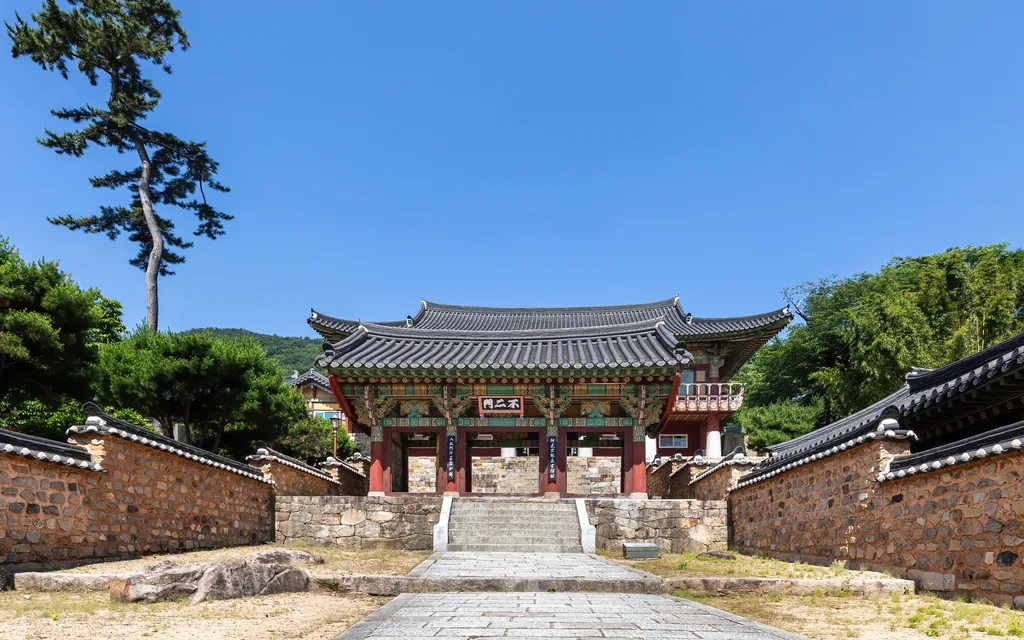
Beomeosa's Buri-mun gateGeumjeong-gu, Busan

Beomeosa's Buri-mun gate

Beomeosa Temple, Geumjeongsan

Gate after gate, slowly drawing closer to the main hall.

Getting there●○○○○Very easy on your own: from Beomeosa Station on the Busan subway, about 10 minutes by bus.

Best timeMay

Within Busan itself, find a thousand-year-old temple in the mountains.

Wind rustles through the pines as the stone steps climb one by one; through one gate, then another, and with every step it grows a little quieter, a temple bell sounding in the distance. Beomeosa is on Geumjeongsan in northern Busan. It's said to have been founded in 678 in the Silla era by the monk Uisang, and it's one of the important temples of Korean Buddhism. Most buildings burned during the Imjin War; the current main hall was rebuilt in the early 17th century. On the way in you pass through the Iljumun, the Cheonwangmun and the Burimun gate in the photo, each bringing you one step closer to the main hall. Dense pine and bamboo forests surround the temple, and from here you can hike up to Geumjeongsanseong fortress. In bustling Busan, give one morning to this mountain temple, and your mind will grow still.

GETTING THERETake Busan Subway Line 1 to Beomeosa Station, then about 10 minutes by bus to the temple entrance, or walk up the slope for about 30 minutes.
GOOD TO KNOWAround Buddha's Birthday, when lanterns fill the grounds, is the most beautiful — and the busiest; autumn colour is peaceful too. It's an active monastery, so keep quiet near worshippers and monks and check signs before photos inside. Templestay needs advance booking.
SAFETYThe temple is on a hillside with lots of steps and slopes, slippery after rain. If you hike up to Geumjeongsanseong, bring plenty of water and wear hiking shoes.

Not sure which to pick? Take the 4-minute travel-personality quiz and find the one that suits you.

Take the quiz