TOP-TIER TRAVEL中/EN

Central Vietnam

10 hidden gems in Central Vietnam

Imperial Hue, Hoi An & giant caves. We picked 10 places in this region — some well known, some few visitors find. Browse at your own pace, then take the quiz when something catches your eye.

TOP-TIER TRAVEL › All hidden gems › Central Vietnam

Not sure which to pick? Take the 4-minute travel-personality quiz and find the one that suits you.

Take the quiz
Hoi An
First time? Start with Da Nang and Hoi An

Most first-timers fly in and out of Da Nang: the Golden Bridge on Ba Na Hills, a lazy day on My Khe Beach, and Hoi An’s lanterns at night. With an extra day, add the imperial city in Hue. It’s fun and easy — but if you want the Vietnam others haven’t seen, the place below is yours.

Spot details checked: November 2026

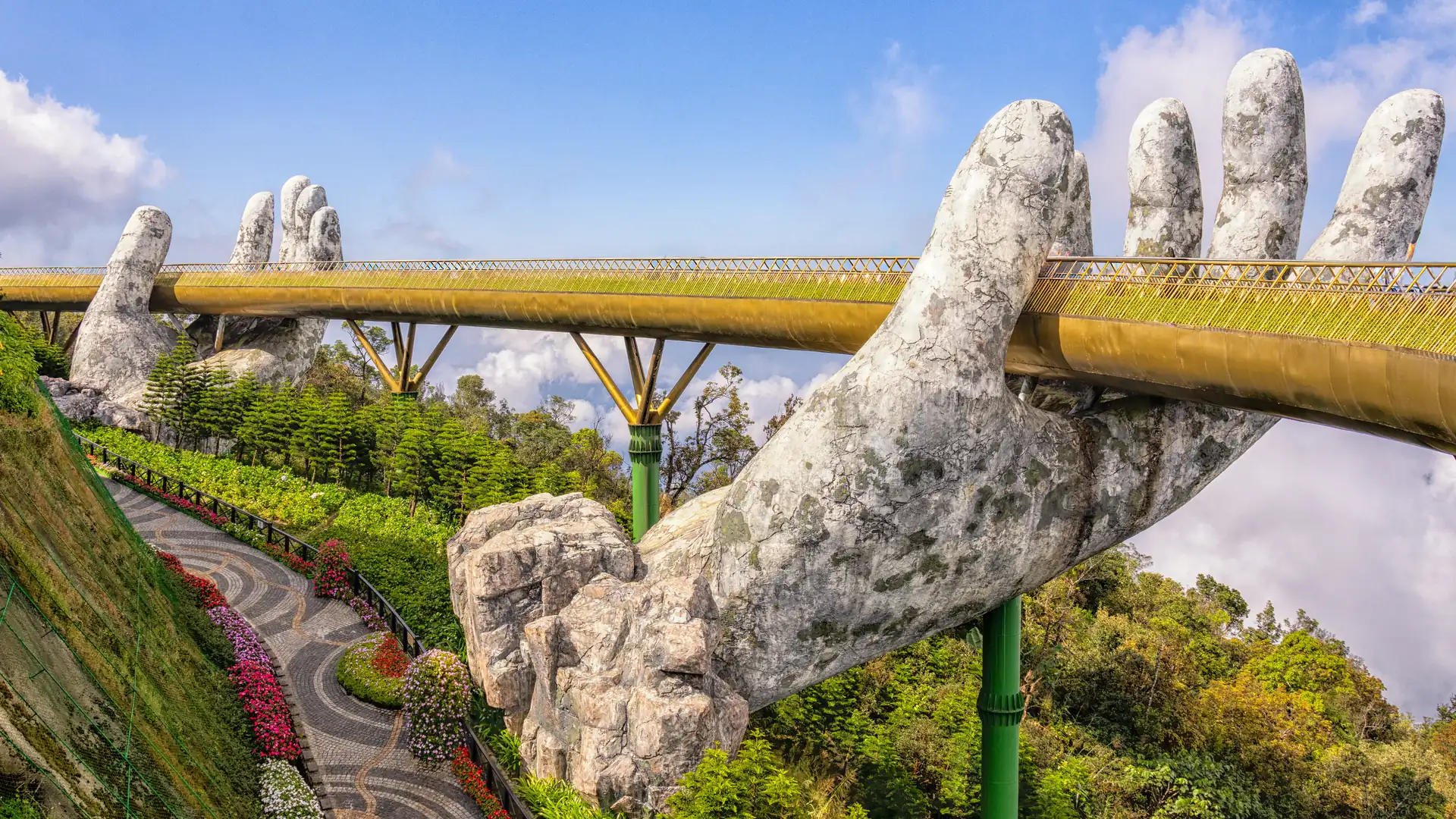
Golden Bridge, Ba Na Hills, Da NangDa Nang · Ba Na Hills

Golden Bridge, Ba Na Hills, Da NangRay in Manila / CC BY 2.0 / cropped

Golden Bridge, Ba Na Hills

Two giant stone hands hold a golden bridge up in the air.

Getting there●○○○○Very easy on your own: about 1 hour from central Da Nang to the cable car.

Best timeFeb–Aug

The bridge everyone in Vietnam wants a photo of, right by the cable car.

The cable car climbs to about 1,400 metres on Ba Na Hills, clouds sliding under your feet, to a golden walkway held up by two huge weathered stone hands. The photo happens to be empty, but this is one of Vietnam’s busiest photo spots and the bridge is often packed by day — take the first cable car for a clear shot. There’s also a mock French village, gardens and rides on top, and it’s much cooler than the city. Half a day to a full day is plenty.
GETTING THEREAbout 1 hour by car from central Da Nang to the cable-car station; about 1½ hours from Hoi An.
GOOD TO KNOWFebruary to August is the most stable; September to December is rainy and foggy. Go at opening time for the fewest people. It’s cooler on top, so bring a light jacket. Tickets and hours per the official site.
SAFETYWatch your belongings and children in the crowds. The cable car can stop in strong winds.
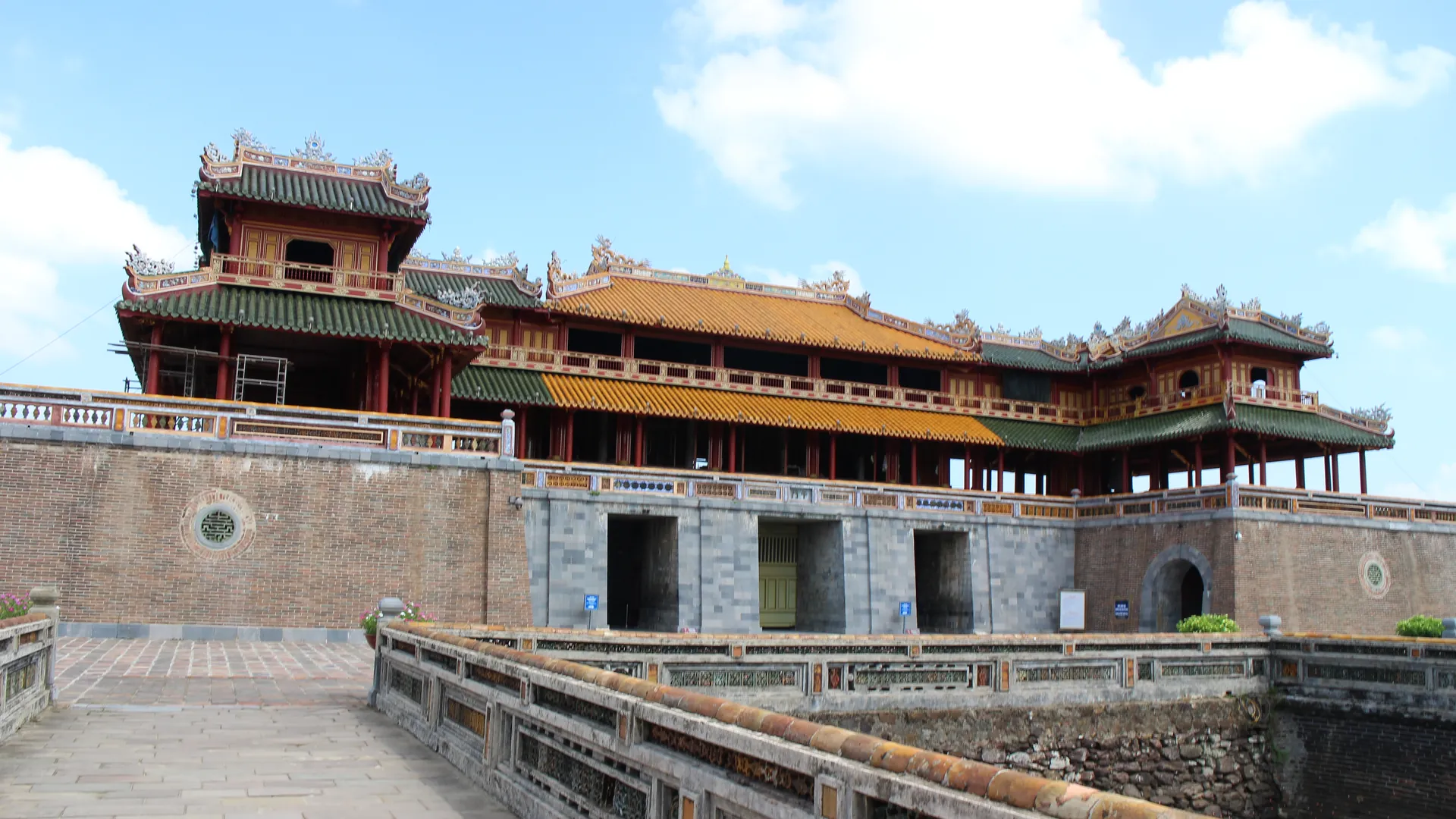
Hue Imperial City · the Meridian GateHue

Hue Imperial City · the Meridian GateSuicasmo / CC BY-SA 4.0 / cropped

Hue Imperial City

Vietnam’s last dynasty built its Forbidden City on the Perfume River.

Getting there●○○○○Very easy on your own: 2–3 hours from Da Nang by train or bus.

Best timeFeb–Apr, Aug

Capital of the Nguyen dynasty, with UNESCO-listed palaces and tombs.

Through the thick citadel walls, the two-storey Meridian Gate shines with yellow glazed tiles. From 1802 to 1945 the Nguyen dynasty ruled Vietnam from Hue and built this citadel in the image of Beijing’s Forbidden City, with moats, the Thai Hoa Palace and long galleries. War destroyed much of it, and restoration goes on while you visit, the scars still visible. Royal tombs dot the Perfume River, and Khai Dinh’s is a dazzle of mosaic. Add a dragon boat on the river and the seven-storey tower of Thien Mu Pagoda.

GETTING THERE2–3 hours from Da Nang by bus or train, and the train over the Hai Van Pass is beautiful. Hue also has Phu Bai Airport.
GOOD TO KNOWFebruary to April is best; May to August is very hot; September to December is rainy, with possible floods in October–November. Allow at least half a day for the citadel. The tombs are spread out, so a car helps.
SAFETYIt’s exposed and hot inside the citadel, so bring a hat and water. Dress modestly at temples and tombs.
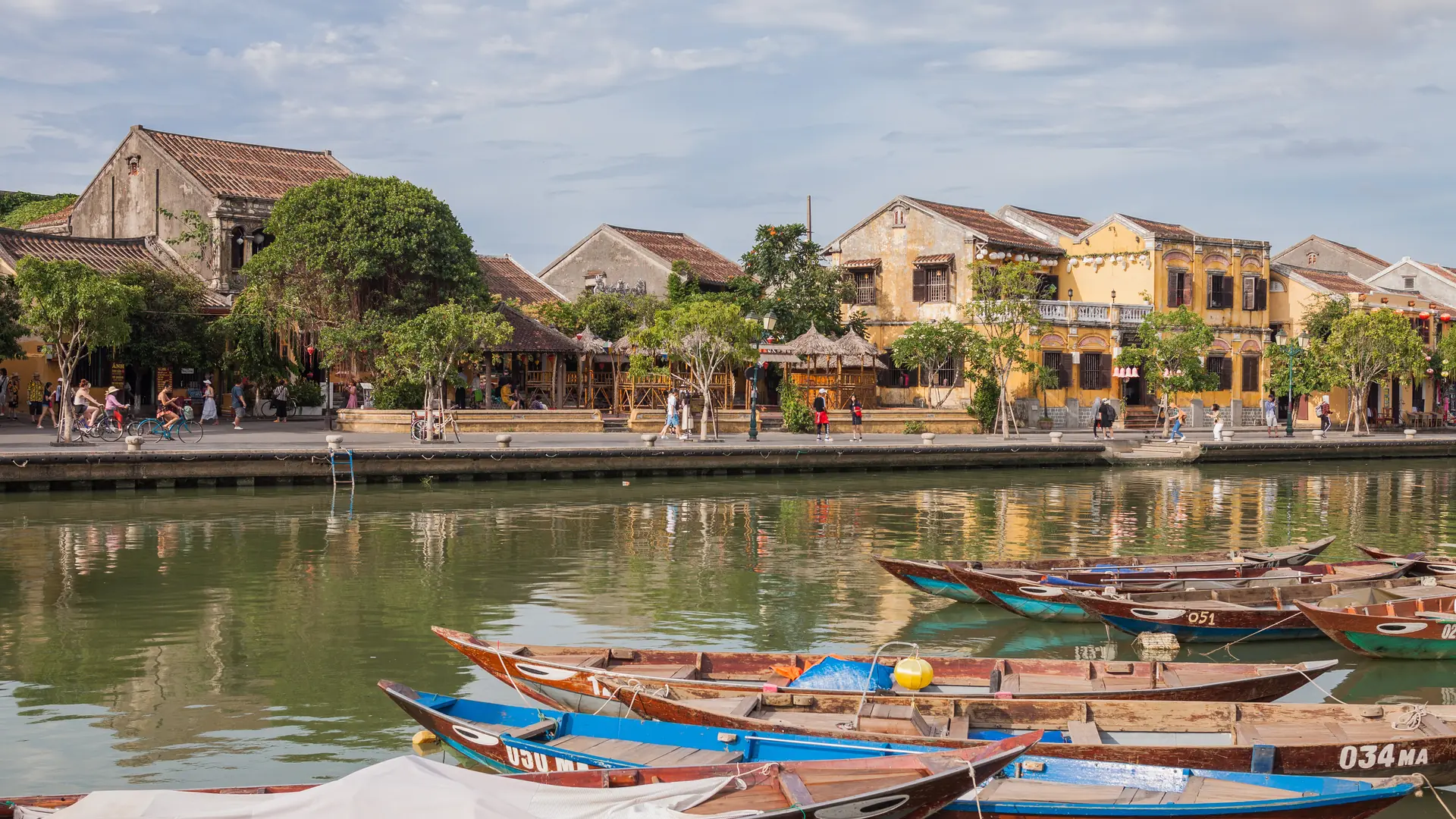
Hoi An · yellow old houses along the Thu Bon RiverDa Nang (formerly Quang Nam) · Thu Bon River

Hoi An · yellow old houses along the Thu Bon RiverSupanut Arunoprayote / CC BY 4.0 / cropped

Hoi An Ancient Town

Yellow walls, little boats, and lanterns lighting up the street at dusk.

Getting there●○○○○Very easy on your own: about 45 minutes by car from Da Nang Airport.

Best timeFeb–May

A centuries-old trading port with its old houses and Japanese Bridge intact.

A row of yellow houses lines the Thu Bon River. Centuries ago this was among Southeast Asia’s busiest ports, drawing Japanese, Chinese and European merchants, and the old streets still hold their assembly halls and the covered Japanese Bridge. Afternoon light slants across the walls, then after dark the lanterns come on and little boats carry people out to float candles. Outside town you can ride a round bamboo basket boat in the coconut palms while the rower spins it. Getting clothes tailored and taking a cooking class are Hoi An classics too.

GETTING THEREAbout 45 minutes by car from Da Nang Airport; Hoi An has been part of Da Nang city since 2025. Motorbikes are banned in the old town at set times, so walk.
GOOD TO KNOWFebruary to May is best, June to August very hot, and rains in October–November can flood the old town. On the 14th of each lunar month, some electric lights go off and lanterns take over. Old-town ticket rules per local notice.
SAFETYThe river is crowded at night; wear the life jacket on small boats. Basket boats wobble, so keep your phone secure.
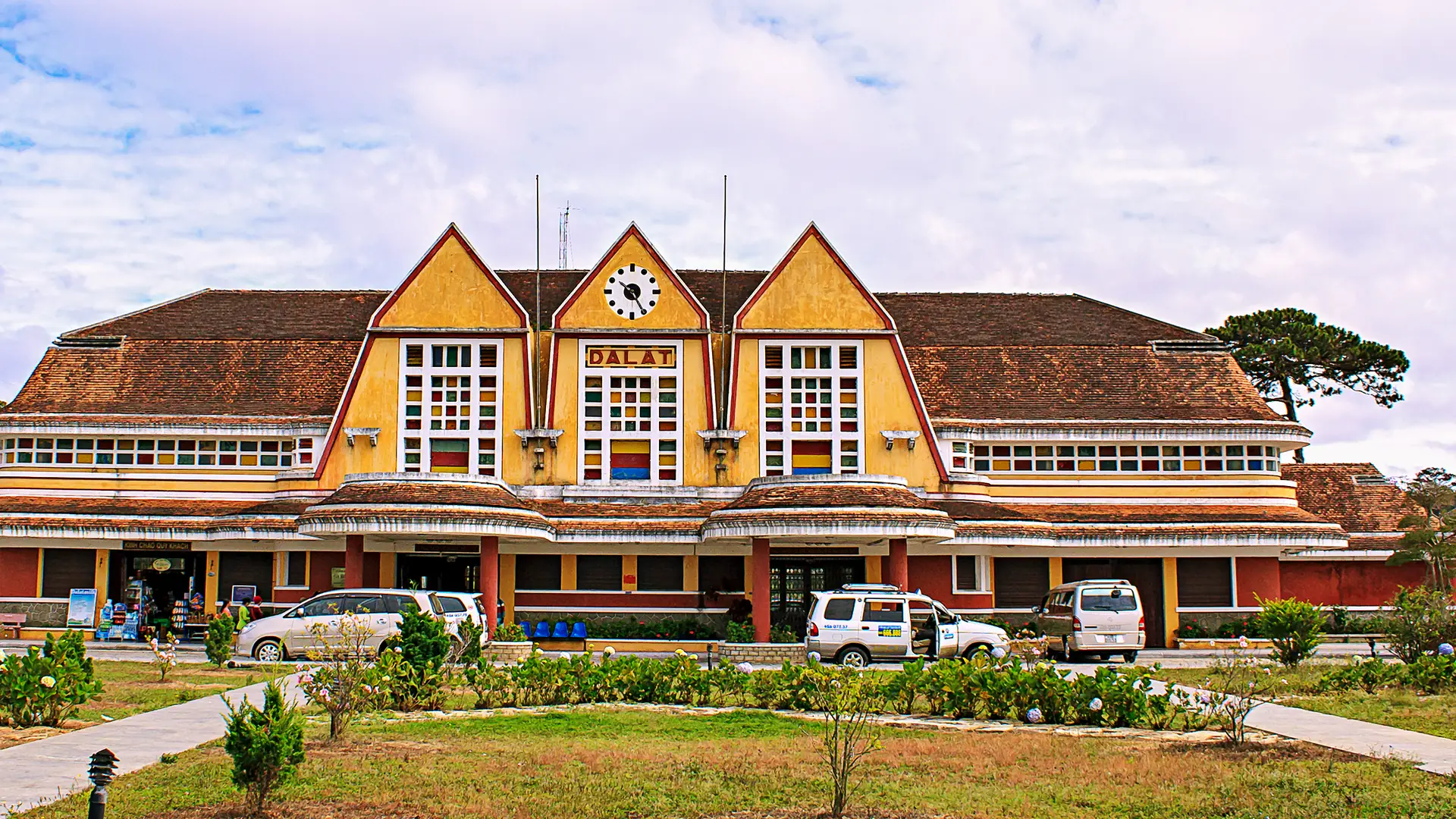
Da Lat · the French-era railway stationLam Dong · Da Lat

Da Lat · the French-era railway stationBùi Thụy Đào Nguyên / CC BY-SA 4.0 / cropped

Da Lat Railway Station

A highland town in tropical Vietnam, its station still looking French.

Getting there●●○○○Easy on your own: about 1 hour’s flight from Ho Chi Minh City or Da Nang; about 7 hours by bus from HCMC.

Best timeNov–Apr

At about 1,500 metres, the cool little town where Vietnamese couples honeymoon.

Three pointed roofs, yellow walls and coloured glass: Da Lat station dates from French rule, finished in the 1930s. The French built this town on the plateau to escape the heat, and villas, churches and pine woods remain. From the station a tourist train runs a few kilometres to a village and Linh Phuoc Pagoda, covered in broken porcelain. At about 1,500 metres you need a jacket morning and night. The market sells strawberries and artichoke tea, and with hot soy milk at the night market it hardly feels like Vietnam.

GETTING THERELien Khuong Airport is about 1 hour’s flight from Ho Chi Minh City, then about 40 minutes by airport bus. By bus on the highland road it takes about 7 hours.
GOOD TO KNOWNovember to April is the dry season; May to October brings afternoon rain. The little train runs only a few times a day — check the timetable on site.
SAFETYThe highland roads wind, so take something for motion sickness. Watch your things at the night market.
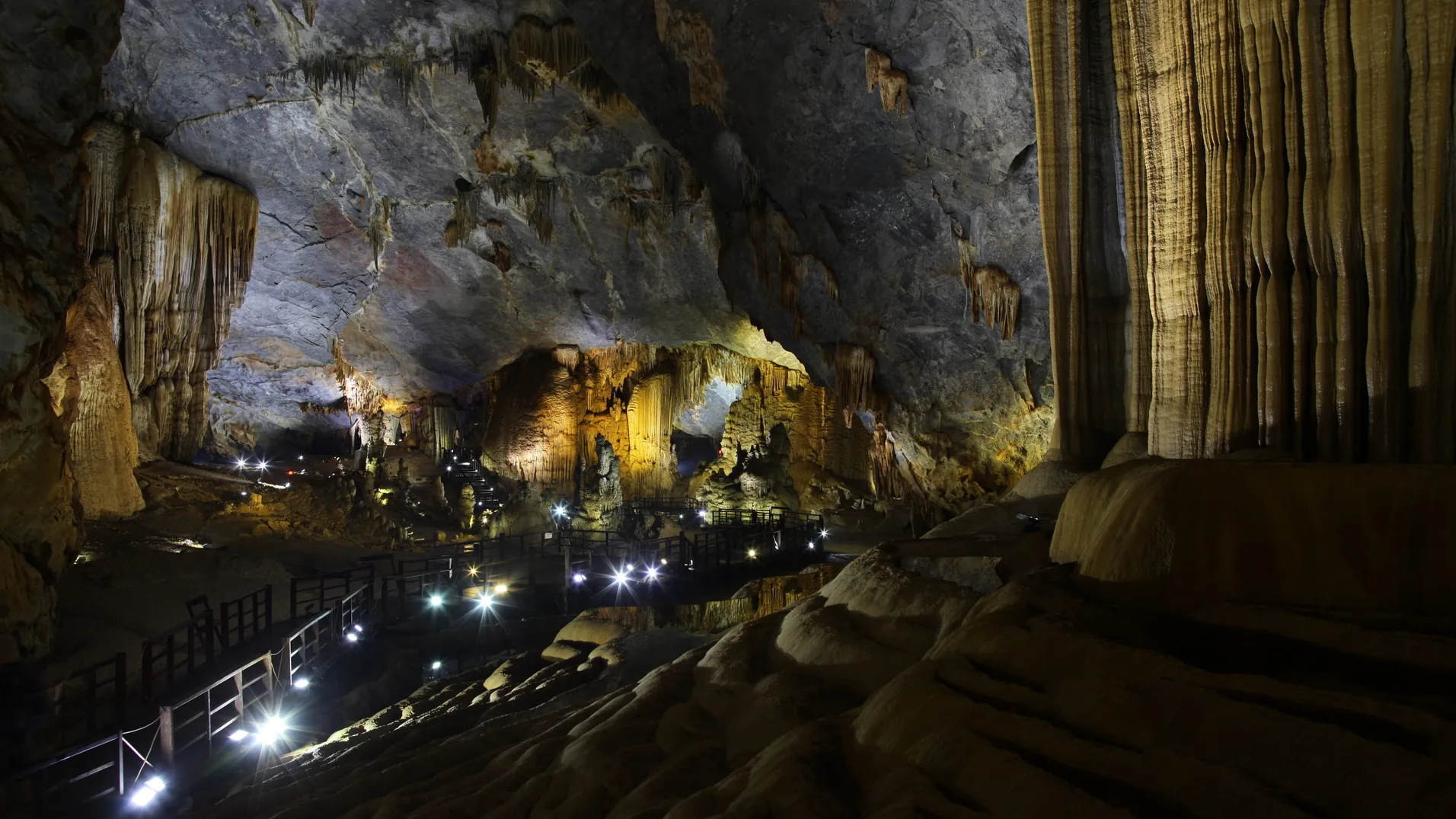
Paradise Cave, Phong Nha-Ke BangQuang Tri (formerly Quang Binh) · Phong Nha-Ke Bang National Park

Paradise Cave, Phong Nha-Ke BangTycho (shansov.net) / CC BY-SA 3.0 / cropped

Phong Nha-Ke Bang · Paradise Cave

Inside the mountain, the boardwalk runs on and you still can’t see the end.

Getting there●●●○○Some planning: 4–5 hours by road from Da Nang or Hue; hire a car between caves.

Best timeMar–Aug

A UNESCO cave system — the world’s largest cave is in these mountains.

Down the steps and through the entrance, the space opens into an underground cathedral, stalactites hanging like melted wax and a boardwalk stretching into the lights without end. Paradise Cave runs about 31 km; visitors walk the first kilometre or so. Phong Nha-Ke Bang is a World Heritage Site, also home to Son Doong, the world’s largest cave (specialist expeditions only), and Phong Nha Cave, entered by boat. Few places let you walk into a cave this size so easily.

GETTING THEREDong Hoi Airport is closest, about 1 hour from Phong Nha village. Buses and trains run to Dong Hoi from Hue and Da Nang. The caves are far apart, so hire a car or scooter driver.
GOOD TO KNOWMarch to August is most stable. September to November brings high water and some closures; around February it’s chilly. Caves are cool, so bring a light jacket. Expeditions have few places — book early.
SAFETYCave steps are slippery. Stay on the boardwalk and never climb the rails. Adventure routes must be with licensed operators.
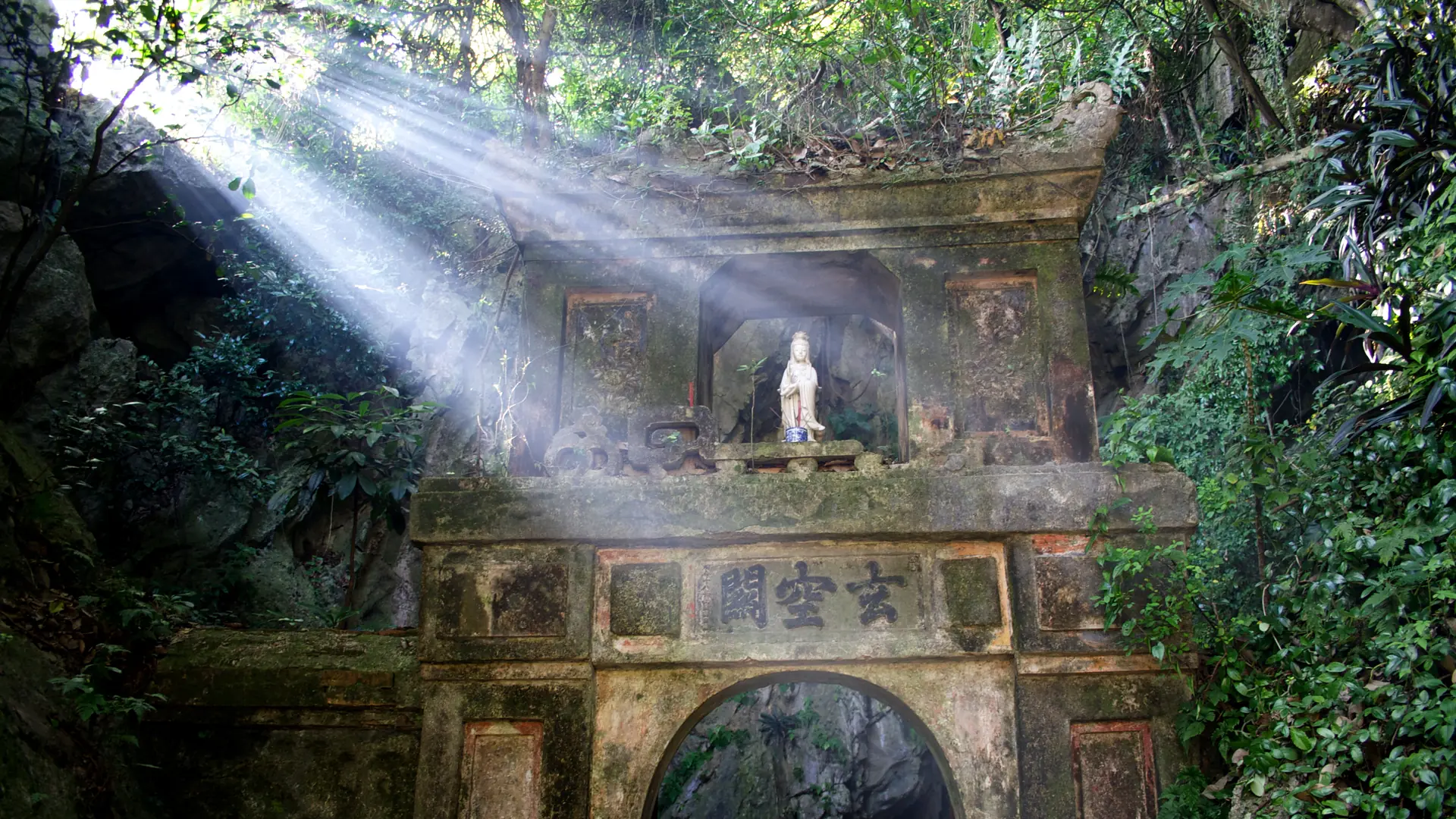
Marble Mountains · the Huyen Khong gateDa Nang · Marble Mountains

Marble Mountains · the Huyen Khong gateNam-ho Park / CC BY 2.0 / cropped

Marble Mountains, Da Nang

A shaft of light falls through a cave roof onto an ancient stone gate.

Getting there●○○○○Very easy on your own: about 20 minutes from central Da Nang, 30 from Hoi An.

Best timeFeb–Aug

Five marble hills between Da Nang and Hoi An, hiding caves and pagodas.

The Marble Mountains are five small hills of marble and limestone, named after metal, wood, water, fire and earth. Climb the stone steps of the largest, Water Mountain, past temples and into the caves, and light falls through gaps in the roof onto mossy old gates and Buddha statues. Huyen Khong Cave is the most famous, with beams of light around midday drifting through mist and incense. The village at the foot is lined with stone carvers’ statues. It’s a short visit, perfect between Da Nang and Hoi An.

GETTING THEREAbout 20 minutes by car from central Da Nang, 30 from Hoi An. Water Mountain has steps and a lift partway up.
GOOD TO KNOWGo in the morning or around midday for the light. February to August is drier. Open areas per the site.
SAFETYSteps and caves are steep and slippery, so wear shoes with grip. This is a Buddhist site: dress modestly and keep quiet in the caves.
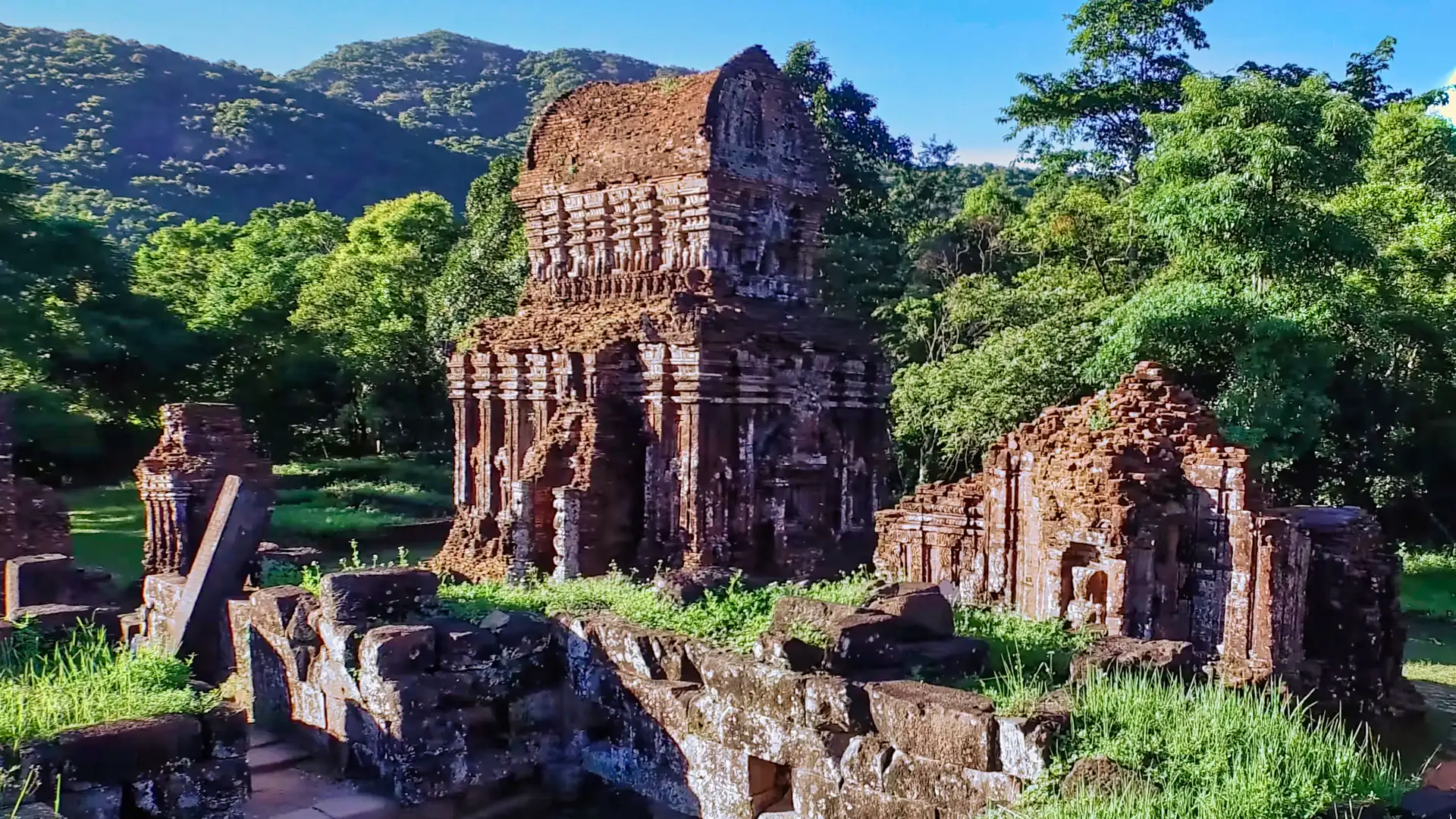
My Son Sanctuary · Groups B, C and DDa Nang (formerly Quang Nam) · My Son

My Son Sanctuary · Groups B, C and DMs Sarah Welch / CC0

My Son Sanctuary

Red-brick towers in the jungle, centuries older than Angkor Wat.

Getting there●●○○○Easy on your own: about 1 hour from Hoi An by half-day tour or car.

Best timeFeb–May

The Champa kingdom’s holy land, a World Heritage Site far less visited than Angkor.

In a jungle valley stand red-brick towers wrapped in moss and grass, the bricks fitted so tightly you can barely see the joins. From the 4th to the 13th century the Champa kingdom worshipped Shiva here, earlier than Angkor. Many towers were destroyed by bombing during the Vietnam War; craters are still visible and restoration continues. Groups B, C and D are the best preserved, with carved dancers above the doors and stone lingas close enough to study. Early morning brings valley mist and few people.

GETTING THEREAbout 1 hour from Hoi An by car or half-day tour; about 1½ hours from Da Nang.
GOOD TO KNOWFebruary to May is best. Midday is fierce in summer, so arrive at opening. Paths get muddy in the rains. Traditional dance shows run on site — times per notice.
SAFETYThe ruins are fragile: don’t climb or sit on the towers, and keep to the paths.
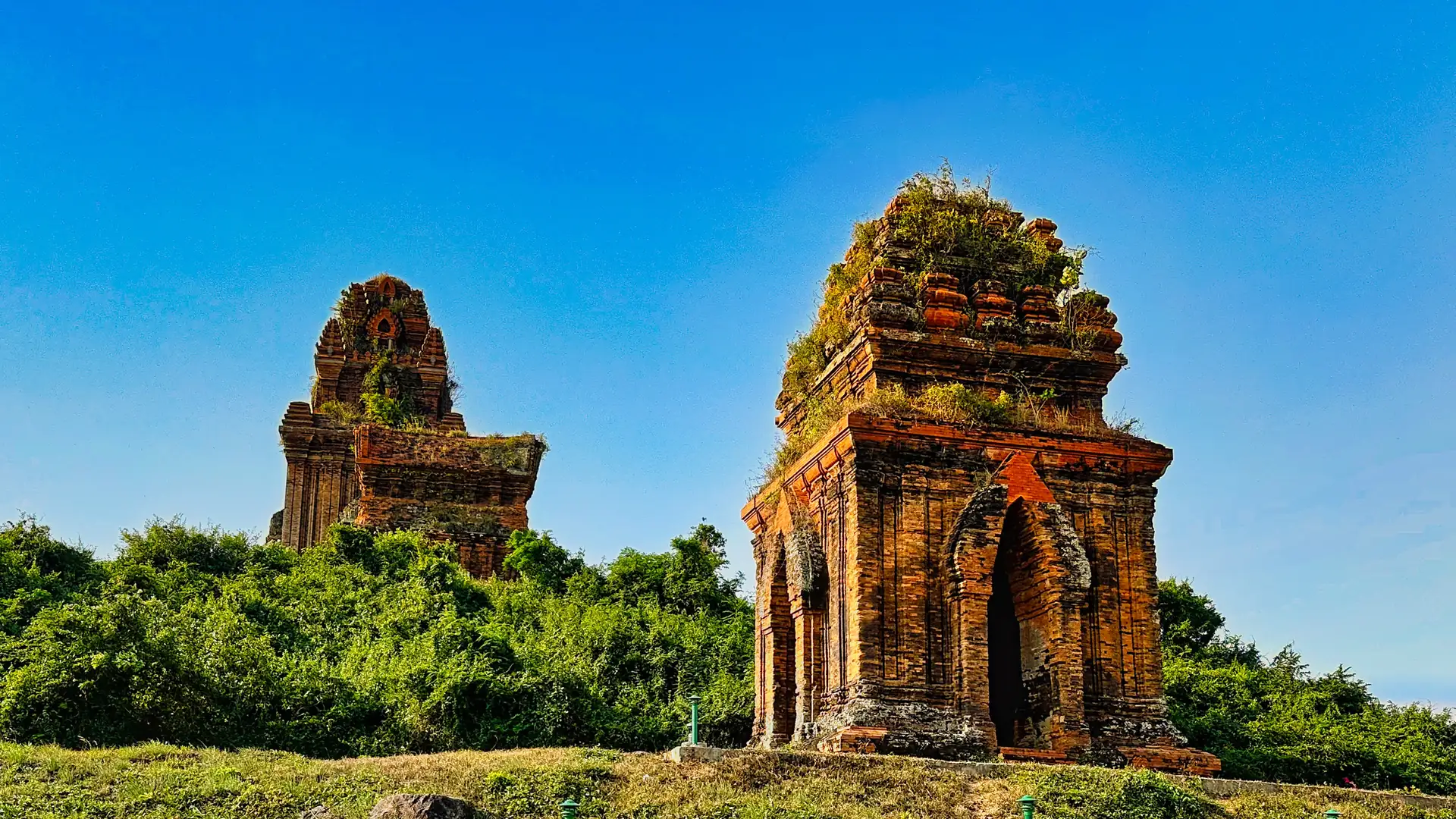
Quy Nhon · the Champa towers of Banh ItGia Lai (formerly Binh Dinh) · near Quy Nhon

Quy Nhon · the Champa towers of Banh ItMs Sarah Welch / CC0

Banh It Towers, Quy Nhon

Champa red towers on a hilltop, with empty paddies below.

Getting there●●●○○Some planning: about 1 hour’s flight from HCMC, then about 40 minutes by car.

Best timeFeb–Aug

A little-known coastal city in central Vietnam, whose Cham towers see almost no visitors.

Banh It stands on a small hilltop: four red-brick towers left by the Cham people around the 12th century, their carving sharp against the blue sky, with paddies and a distant river below. The Quy Nhon area was once a Champa capital, and the Twin Towers in town are an easy add-on. This city doesn’t live on tourism: the beaches are quiet and the seafood cheap and fresh. Further south, wind has carved strange patterns into the coastal rocks. If you’ve already done Da Nang and Hoi An, this is a lovely next stop.

GETTING THEREPhu Cat Airport has flights from HCMC and Hanoi, about 40 minutes from town. The north–south railway also stops nearby. Binh Dinh province merged into Gia Lai in 2025.
GOOD TO KNOWFebruary to August is best; October to December is rainy. There are few facilities, so bring water and a hat. Little English is spoken — use a translation app and Grab.
SAFETYThe hillside steps are steep, so take care in rain. Don’t swim when wind and waves are up.
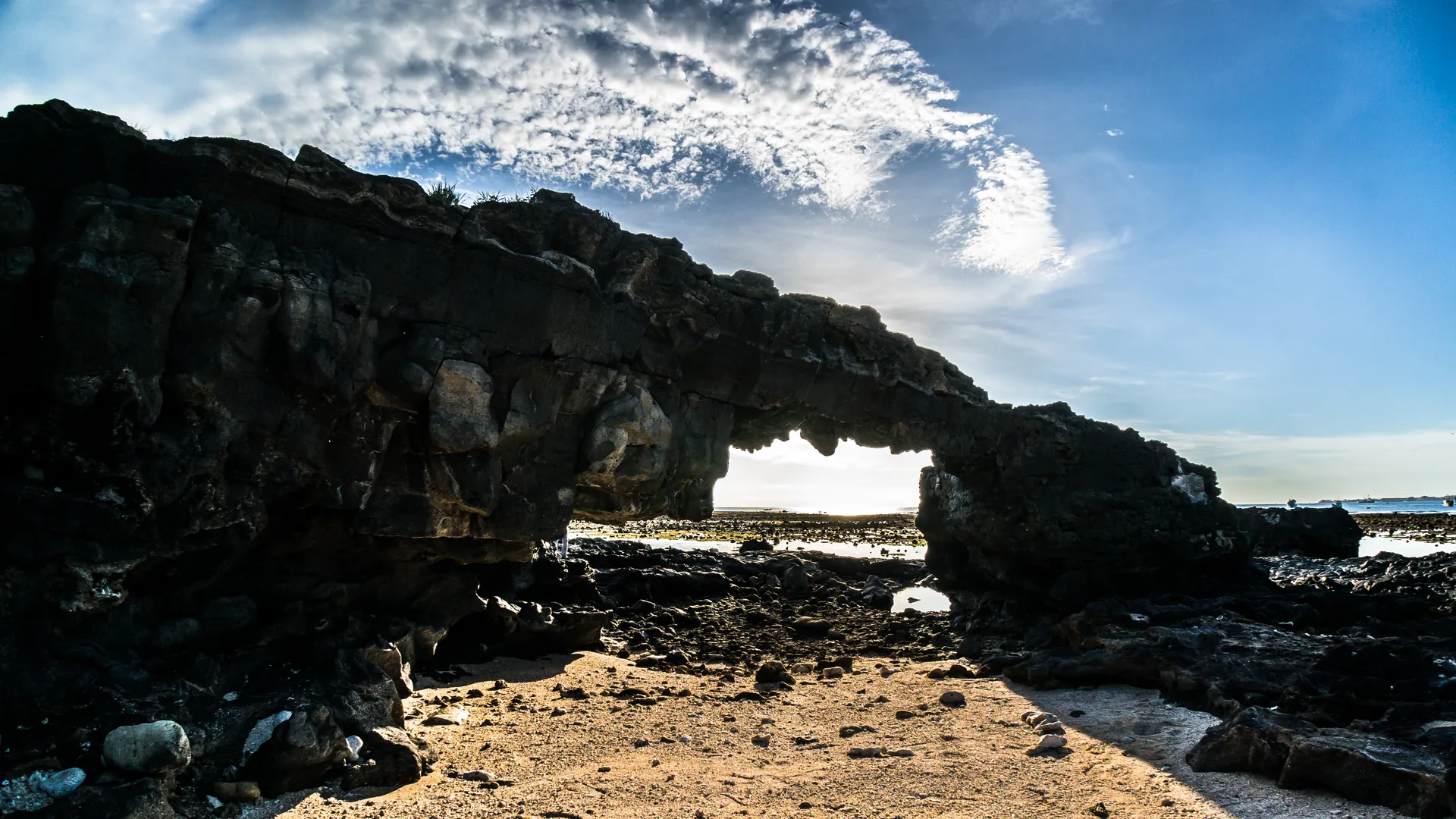
Ly Son Island · the stone archQuang Ngai · offshore

Ly Son Island · the stone archminhphuc_99kdd / Public domain

Ly Son Island

A black stone arch on a volcanic island, with the sea wind blowing through.

Getting there●●●●○Challenging: about 3 hours from Da Nang to Sa Ky port, then under an hour by speedboat.

Best timeMar–Aug

Vietnam’s little volcanic island of green seas, still rarely reached by foreigners.

Waves break on black volcanic rock as a natural stone arch frames the sea beyond. Ly Son is an ancient volcanic island where you can climb a crater for the view. Its famous garlic grows in fields spread with sea sand, a landscape unlike anywhere else in Vietnam. An hour or two by motorbike takes you round the island, and at dusk you sit on the shore with fresh-caught seafood in the cool wind. Plenty of Vietnamese come here but few foreigners, which is part of the appeal.

GETTING THEREAbout 3 hours by road from Da Nang to Sa Ky port in Quang Ngai, then a speedboat. Boats stop in bad weather, so leave a spare day for the return.
GOOD TO KNOWMarch to August has the calmest seas; from October to January the northeast monsoon often cancels boats. Little English is spoken, so carry cash and download offline translation. First-timers might join a local tour; independent travellers should allow a day or two’s buffer.
SAFETYCoastal rocks are slippery and sharp; stay away from the waves. Wear a helmet and check local licence rules before riding. Medical care on the island is limited.
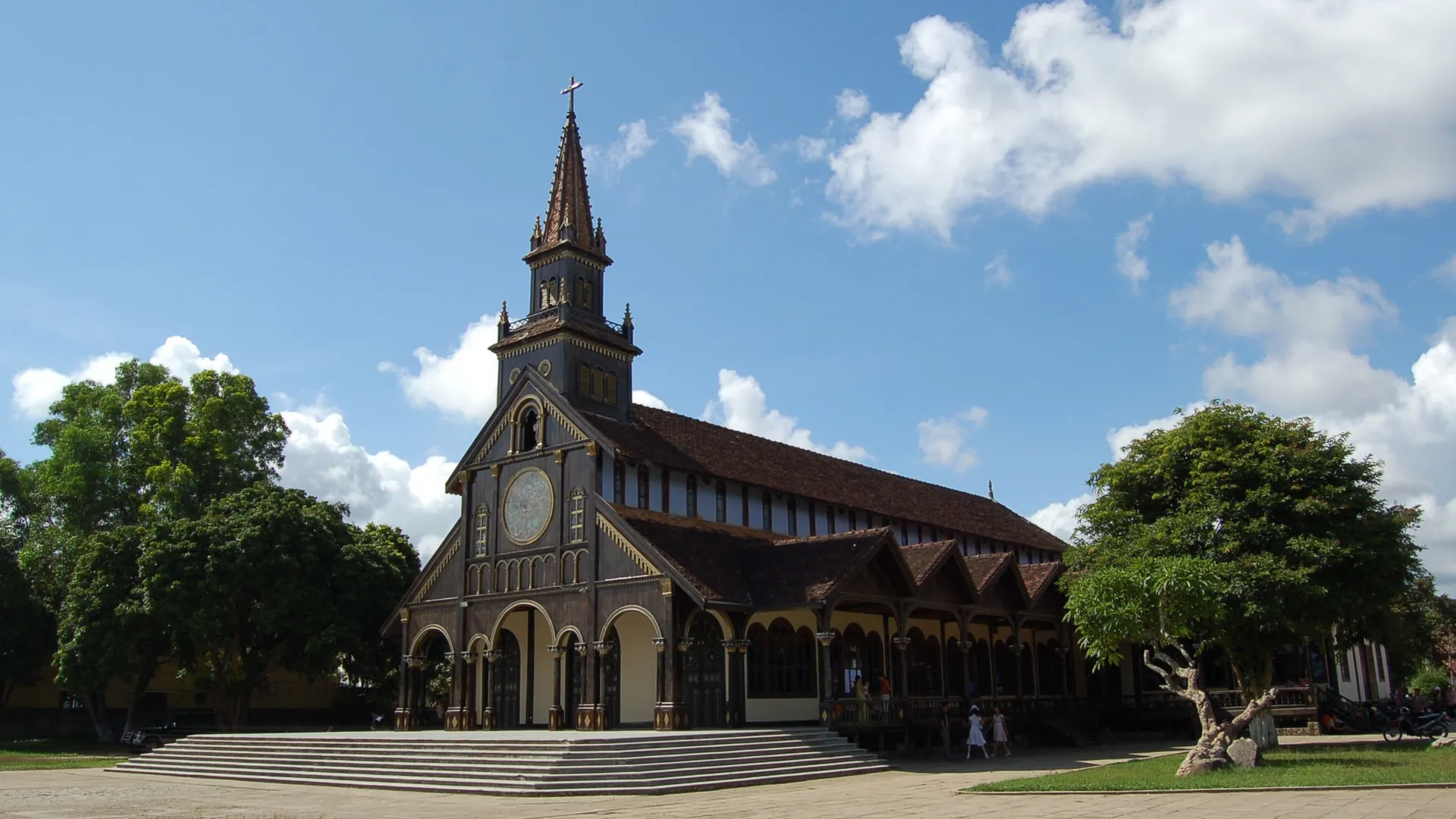
Kon Tum · the wooden Catholic churchQuang Ngai (formerly Kon Tum) · Kon Tum

Kon Tum · the wooden Catholic churchRdavout / CC BY-SA 3.0 / cropped

Kon Tum Wooden Church

A century-old wooden church built with old techniques on the Central Highlands.

Getting there●●●●○Challenging: fly to Pleiku, then about 1 hour by road; little public transport.

Best timeNov–Apr

A French-era church on the highlands, rarely on any tour route.

Dark ironwood walls and a sharp bell tower: this church was built in 1913 by French missionaries and local people, mainly from local ironwood, and it’s still solid a century on. The windows, wooden pillars and pews reward a closer look, and the orphanage and small display next door tell the story of the Jarai and other highland peoples and Catholicism here. Kon Tum is a slow little town on the Central Highlands, with traditional communal houses nearby.

GETTING THEREFly to Pleiku, then about 1 hour by road; long-distance buses from Da Nang take 7–8 hours. Kon Tum province merged into Quang Ngai in 2025.
GOOD TO KNOWNovember to April, the dry season, is most comfortable. The church is in use, so stay quiet during Mass; opening per the site. Little English is spoken — join a local tour or use a translation app.
SAFETYDress modestly in church and ask before photographing people. Highland roads have heavy trucks, so travel long distances by day.

Not sure which to pick? Take the 4-minute travel-personality quiz and find the one that suits you.

Take the quiz