TOP-TIER TRAVEL中/EN

Japan · Chubu

11 hidden gems in Chubu

Mountains & old streets. We picked 11 places in this region — some well known, some few visitors find. Browse at your own pace, then take the quiz when something catches your eye.

TOP-TIER TRAVEL › All hidden gems › Japan › Chubu

Not sure which to pick? Take the 4-minute travel-personality quiz and find the one that suits you.

Take the quiz
Higashi Chaya District
First time? Start with the classics

You can't go wrong doing a first lap of Nagoya, Kanazawa, Shirakawa-go, Takayama and the Tateyama Kurobe Alpine Route. Chubu is a big region, and getting between Hokuriku, Hida and Shinshu often takes several connections, so save just a day or two for the place below that's truly yours.

Looking for a place to stay in this area? Start here:

Spot details checked: October 2026

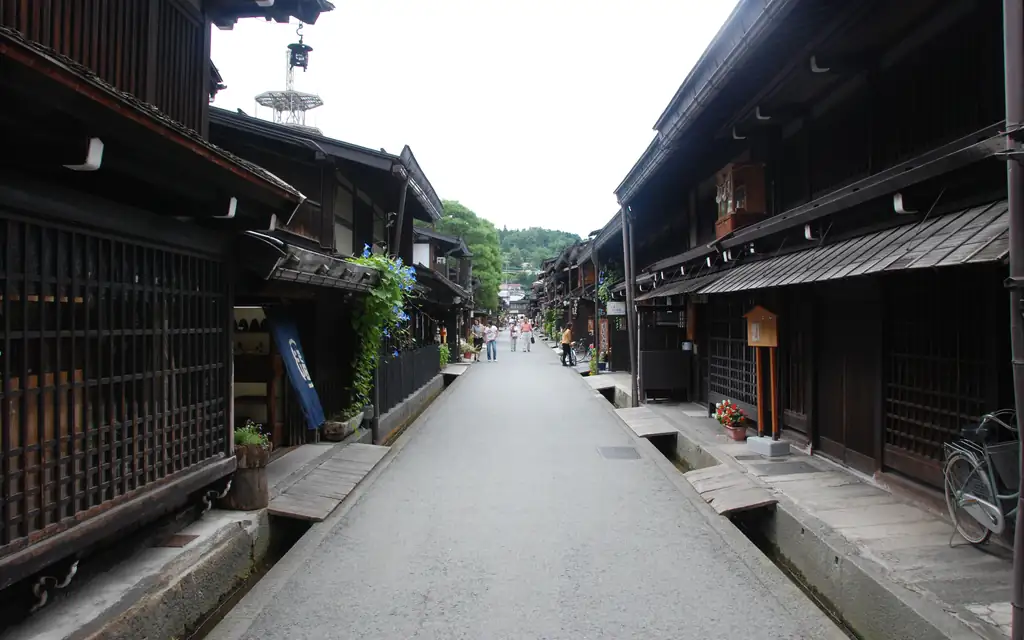
Wooden merchant houses along an old street in TakayamaTakayama, Gifu

Wooden merchant houses along an old street in Takayama

Hida-Takayama Old Town

Hida's old streets wake up to the morning market.

Getting there●●○○○Easy on your own: about 2.5 hours by JR limited express from Nagoya, then a 10-minute walk to the old streets.

Best timeApr, Oct

For a beautifully preserved Edo-era street, add a stop in Hida-Takayama.

First thing in the morning, the market along the Miyagawa River is already set up, stalls of local vegetables, pickles and snacks, sellers calling out one after another as the river flows quietly by. Takayama is a castle town in the Hida region. The Sanmachi area preserves Edo- to Meiji-era townhouses, their dark wooden lattice windows lining the streets and clear water running in the gutters under the eaves; the whole area is a national preservation district for traditional buildings. There's also a morning market in front of the Jinya. Several sake breweries line the streets, each with a sugidama ball of cedar leaves hanging at the door, and a faint smell of sake drifts out as you pass. In spring and autumn, the Takayama Festival parades ornate yatai floats. Shirakawa-go, a World Heritage Site, is about 50 minutes away by bus, making an easy day trip. Morning market, then Shirakawa-go in the afternoon: a day in Hida will make you want to stay one more night.

GETTING THEREAbout 2.5 hours from Nagoya by the JR Hida limited express to Takayama Station; Sanmachi is about a 10-minute walk from the station.
GOOD TO KNOWThe Takayama Festival happens twice a year — April 14–15 and October 9–10 — and the ornate floats are well worth it; rooms are scarce then, so book early. The morning markets start early and pack up before noon. Check the official site before you go.
SAFETYWatch for cars on the old streets when crowded. Takayama gets snow in winter, and icy roads can be slippery.
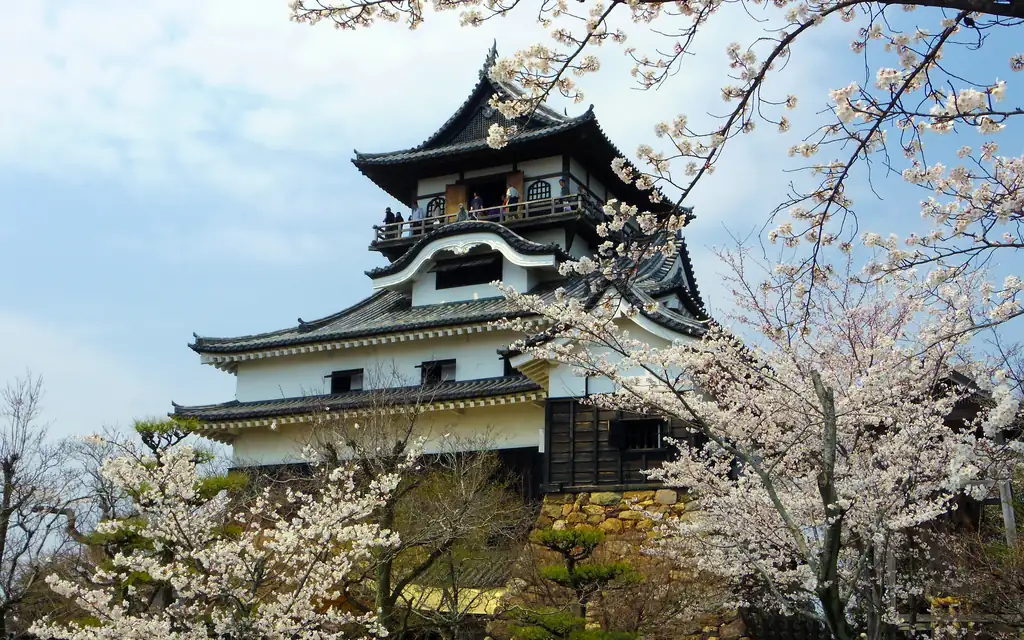
Inuyama Castle's keep framed by cherry blossomsInuyama, Aichi

Inuyama Castle's keep framed by cherry blossoms

Inuyama Castle

Circle the balcony of Japan's oldest keep above a great river.

Getting there●○○○○Very easy on your own: about 25 minutes on the Meitetsu line from Nagoya, then a 20-minute walk.

Best timeGood all year

Spend half a day out of Nagoya at Japan's oldest castle keep.

Climb the wooden stairs, push open the door on the top floor and step out onto the balcony, and the wind hits you at once, the Kiso River below and the whole Nobi Plain spread out before you. Inuyama Castle stands on a hill on the south bank of the Kiso River. It's one of the five castle keeps in Japan designated National Treasures, and its keep is thought to be the oldest surviving; walk all the way around the balcony and every direction offers a different view. Back down, the old castle town keeps its streets of townhouses, lined with snacks to eat your way up the hill. From summer to autumn (roughly June to mid-October), traditional ukai cormorant fishing takes place on the Kiso River after dark, firelight shimmering on the water. A river view from the keep by day, firelight on the water by night: Inuyama deserves a whole day of its own.

GETTING THEREAbout 25 minutes from Nagoya on the Meitetsu line to Inuyama Station, then about a 20-minute walk to the castle town and castle.
GOOD TO KNOWIt's prettiest in cherry blossom season, and from summer into autumn you can watch cormorant fishing on the Kiso River (reservation needed). The castle stairs are very steep — wear good shoes and travel light. Expect queues on holidays and in blossom season, and it closes for a few days at year-end. Check the official site.
SAFETYThe railing on the top-floor balcony is very low — don't lean out or rest against it for photos.
Japanese macaques soaking in the hot springYamanouchi, Nagano

Japanese macaques soaking in the hot spring

Jigokudani Monkey Park

Snow settles on a monkey's head. It just keeps soaking, eyes closed.

Getting there●●●○○Some planning: train and bus from Nagano, then about 30 minutes on foot along a forest trail.

Best timeDec–Feb

In winter in Nagano, make a special trip to see monkeys in the hot springs.

Snowflakes settle one by one on a monkey's head as it sits in a steaming hot-spring pool, eyes closed, perfectly still, as if nothing in the world concerns it. Jigokudani Monkey Park lies in a valley in Nagano Prefecture, home to a troop of wild Japanese macaques. When it gets very cold in winter, some of them get into the hot-spring pool to warm up, the famous “snow monkeys.” The monkeys are wild, not caged, so you can watch them eat, groom and bathe up close. From the entrance it's a forest walk of about 30 minutes, and as you crunch through the snow into the valley, the steam of the hot spring appears first. The nearby Shibu and Yudanaka hot-spring towns are good places to stay: watch the monkeys soak, then take your turn. This is a sight you have to see with your own eyes at least once.

GETTING THEREFrom Nagano Station, take the Nagano Electric Railway to Yudanaka (about 45 minutes to 1 hour), then a bus to the trailhead and about a 30-minute walk. Some buses also run from Nagano Station to near the park.
GOOD TO KNOWThe monkeys bathe mainly in winter — January and February, when the snow is deepest, are your best chance; other seasons they may not, and it's never guaranteed. Open all year with shorter winter hours. No feeding, and no food allowed in. Check hours and trail conditions on the official site.
SAFETYThe winter trail is snowy and icy — anti-slip shoes are essential. Don't touch the monkeys or stare into their eyes, and don't carry plastic bags in your hands.
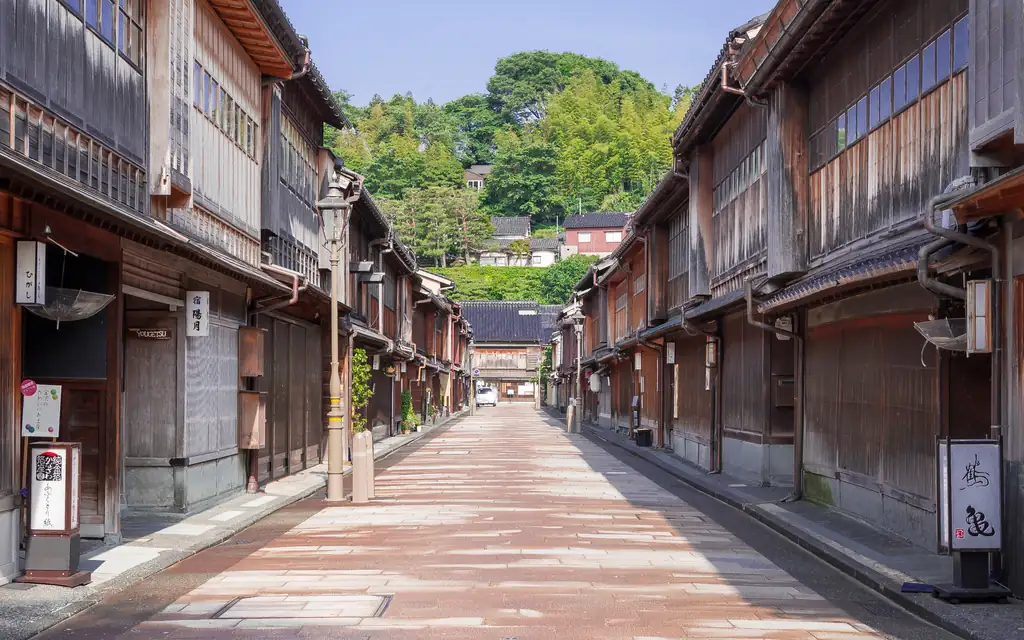
Latticed teahouses lining Higashi Chaya in KanazawaKanazawa, Ishikawa

Latticed teahouses lining Higashi Chaya in Kanazawa

Higashi Chaya District, Kanazawa

Stone paving, wooden lattices, and the glint of gold leaf.

Getting there●○○○○Very easy on your own: about 10 minutes by bus from Kanazawa Station, or a 25-minute walk.

Best timeGood all year

When you're in Kanazawa, save an afternoon for a slow walk through the teahouse district.

Walk the stone-paved street between two-story townhouses with fine wooden lattice windows, and at dusk, as lamplight seeps through the slats, it's easy to believe you've slipped back two hundred years. Higashi Chaya is a teahouse district established in 1820; “chaya” were where geisha performed and entertained guests. The area is a national preservation district for traditional buildings. Some old teahouses are open to visitors, and many buildings are now cafés and craft shops. Kanazawa is Japan's main producer of gold leaf, and gold-leaf crafts glint in the sunlight everywhere you look. To escape the crowds, the nearby Kazue-machi and Nishi Chaya districts are smaller and quieter. Spend an afternoon behind those lattice windows, and Kanazawa's elegance slowly seeps into your trip.

GETTING THEREAbout 10 minutes by bus from Kanazawa Station, or about a 25-minute walk. It pairs well with Kenroku-en on the same day.
GOOD TO KNOWEarly morning and dusk are the most atmospheric — come at first light for empty streets. Snow on the teahouse eaves in winter is especially lovely. Some teahouses still operate, so don't wander into private houses.
SAFETYThe stone paving gets slippery after rain — wear good shoes.
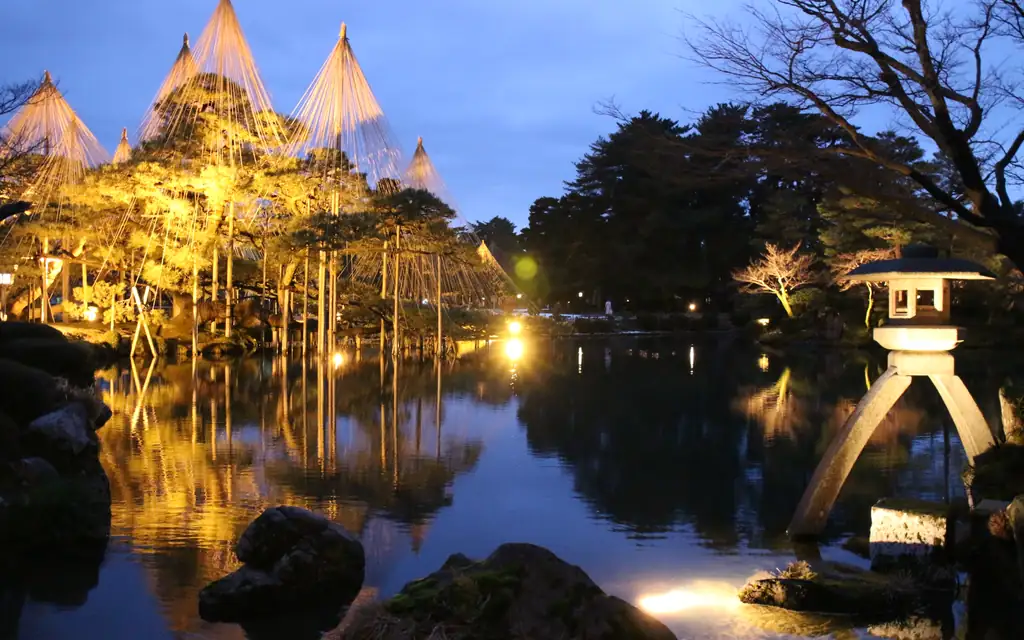
Kenrokuen lit up at dusk, with rope-braced pines on the left and the Kotoji lantern on the rightKanazawa, Ishikawa

Kenrokuen lit up at dusk, with rope-braced pines on the left and the Kotoji lantern on the right

Kenroku-en, Kanazawa

One garden, six kinds of beauty.

Getting there●○○○○Very easy on your own: about 15 minutes by bus from Kanazawa Station.

Best timeApr, Nov, Jan–Feb

In winter in Kanazawa, pick an illumination night to walk Kenroku-en.

Pine shadows float on the pond, a stone lantern stands quietly with one leg in the water and one on the bank, and the murmur of a stream comes from somewhere nearby. Kenroku-en is the daimyo garden the Maeda family of Kaga spent generations creating, and it's counted among Japan's three great gardens. Its name means “combining six attributes”: spaciousness, seclusion, artifice, antiquity, water and views. That lantern, the Kotoji lantern with one leg longer than the other, is its most famous sight. In winter, to keep heavy snow from breaking the pine branches, gardeners tie them up with ropes into conical yukitsuri, Kanazawa's signature winter scene. Spring brings cherry blossoms and autumn brings red leaves; every season looks different. Whatever the season, Kenroku-en gives you a reason to come back.

GETTING THEREAbout 15 minutes by bus from Kanazawa Station. Higashi Chaya and Kanazawa Castle Park are within walking distance.
GOOD TO KNOWFrom November to March the snow ropes (yukitsuri) give the garden its signature winter look. The 2027 winter illumination runs February 6–10, 13, 20 and 27, 18:00–20:45 — lights on snow are magical. Dates can change, so check the Kenrokuen tourism association site.
SAFETYIn winter the paths are snowy and icy, so walk carefully. The lanterns and garden stones are cultural assets — don't climb or lean on them.
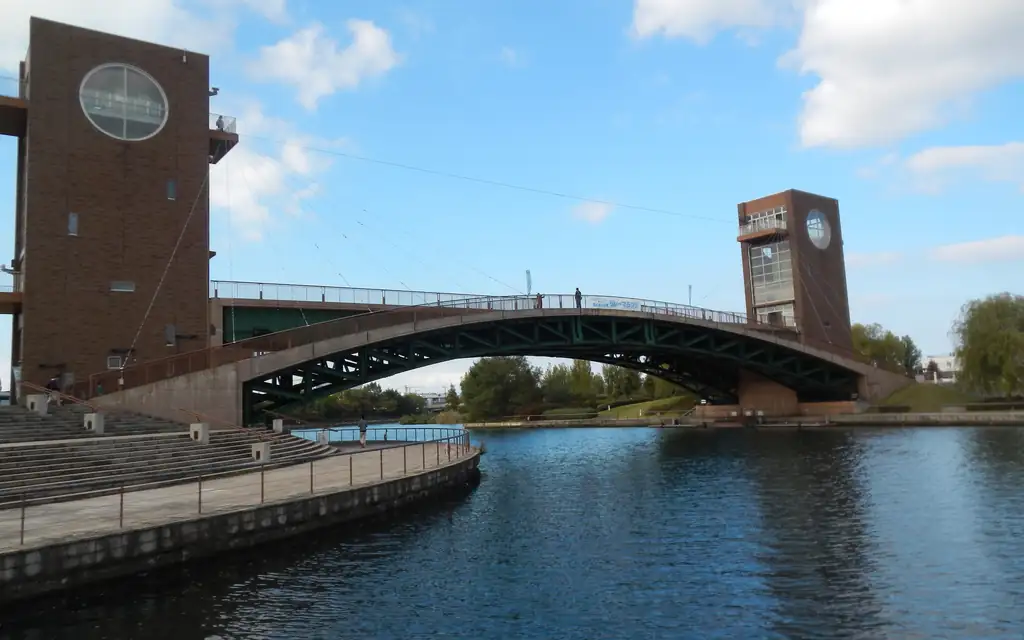
Tenmon Bridge and its two towers at Kansui ParkToyama, Toyama

Tenmon Bridge and its two towers at Kansui Park

Fugan Canal Kansui Park, Toyama

A string telephone over the canal, with the Tateyama peaks beyond.

Getting there●○○○○Very easy on your own: about a 10-minute walk from Toyama Station's north exit.

Best timeGood all year

When you're in Toyama, take an evening walk in the canal-side park.

From the observation tower the canal glitters below you, and on a clear day the whole Tateyama range floats along the horizon. Fugan Canal Kansui Park is a waterside park built on an old canal port, less than 10 minutes' walk from Toyama Station. Tenmon Bridge spans the canal with an observation tower at each end, and between the two towers runs a “red string telephone”: pick up the receiver and someone on the other tower can hear your voice. At night the park is lit up with seasonal illuminations reflected in the canal, and the roof of the Toyama Prefectural Museum of Art next door is free to walk on. Toyama is also the starting point for the Tateyama Kurobe Alpine Route and the Yuki-no-Otani snow walls. Before you set off for the snow walls, whisper a secret to your travel companion here.

GETTING THEREAbout a 10-minute walk from the north exit of Toyama Station. Toyama Station is about 2 hours 10 minutes from Tokyo on the Hokuriku Shinkansen, or about 20 minutes from Kanazawa.
GOOD TO KNOWIt's most atmospheric from dusk into the evening lights. The park is open all day; the observation tower has set hours. If you're adding the Tateyama Kurobe route, it opens roughly mid-April to November, and the snow walls are visible about April to June — check opening dates first.
SAFETYSome parts of the canal edge have no high railings — watch your step at night and keep children close.
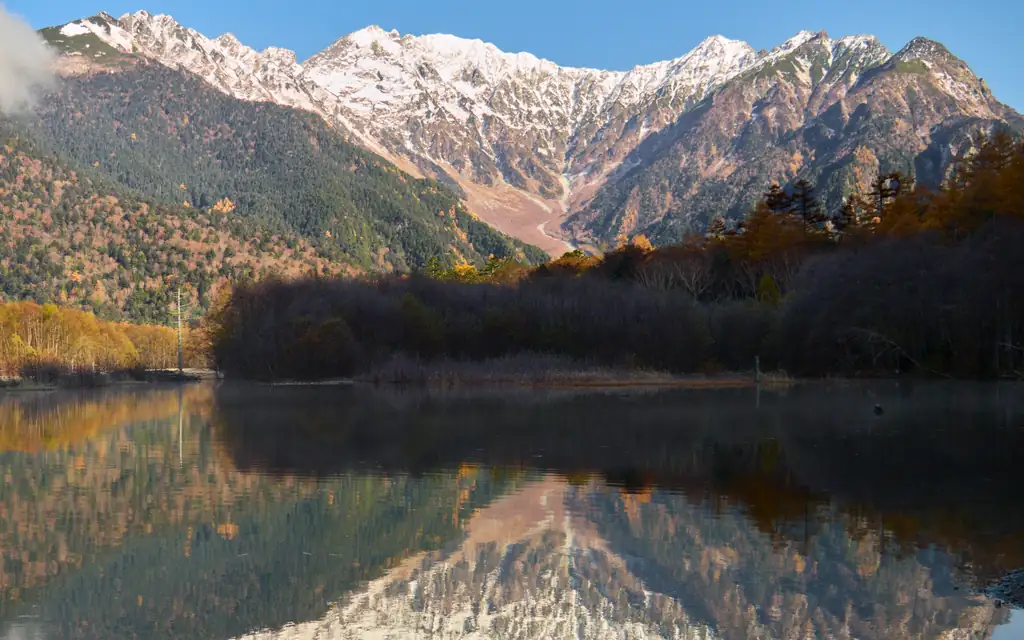
Taisho Pond in autumn, mirroring the snowy peaks beyondMatsumoto, Nagano

Taisho Pond in autumn, mirroring the snowy peaks beyond

Taisho Pond, Kamikochi

Stroll along the Azusa River, the Northern Alps right before you.

Getting there●●●○○Some planning: private cars are banned; 1.5–2 hours from Matsumoto by train and bus.

Best timeJun–Oct

If you're willing to get up early, Kamikochi's morning reflections are worth the trip.

The clear Azusa River runs beside your feet with a soft rushing sound, and when you look up, the Hotaka peaks are right in front of you, their ridgelines sharp against the sky. Kamikochi is a highland valley at about 1,500 m at the foot of the Northern Alps, part of Chubu-Sangaku National Park. When Mount Yake erupted in 1915, a mudflow dammed the Azusa River and formed Taisho Pond, the distant mountains reflected on its surface. From Taisho Pond, walk upstream along the Azusa past Kappa Bridge; the path is gentle the whole way and needs no climbing gear, with views of the Hotaka range and Mount Yake, and if you're lucky, wild monkeys. Walking into the heart of the Northern Alps without climbing a mountain: there aren't many places like this.

GETTING THEREPrivate cars are banned from Kamikochi year-round. From Matsumoto Station, take the Matsumoto Electric Railway to Shin-Shimashima, then a bus — about 1.5–2 hours in total. Buses also run from Takayama. If you're driving, park at Sawando or Hirayu and take a shuttle bus or taxi in.
GOOD TO KNOWIt's only open about half the year — in 2026, April 17 to November 15. Fresh greens in May–June and golden larches in early-to-mid October are the highlights, and the early-morning reflections at Taisho Pond are worth waiting for. The 2027 opening date isn't out yet; it's usually mid-April. Stay overnight for the reflections, take an early bus on busy weekends, and check the official site.
SAFETYMountain weather changes fast — bring a windproof jacket. Bears and wild monkeys are around; keep food packed away and never feed wildlife.
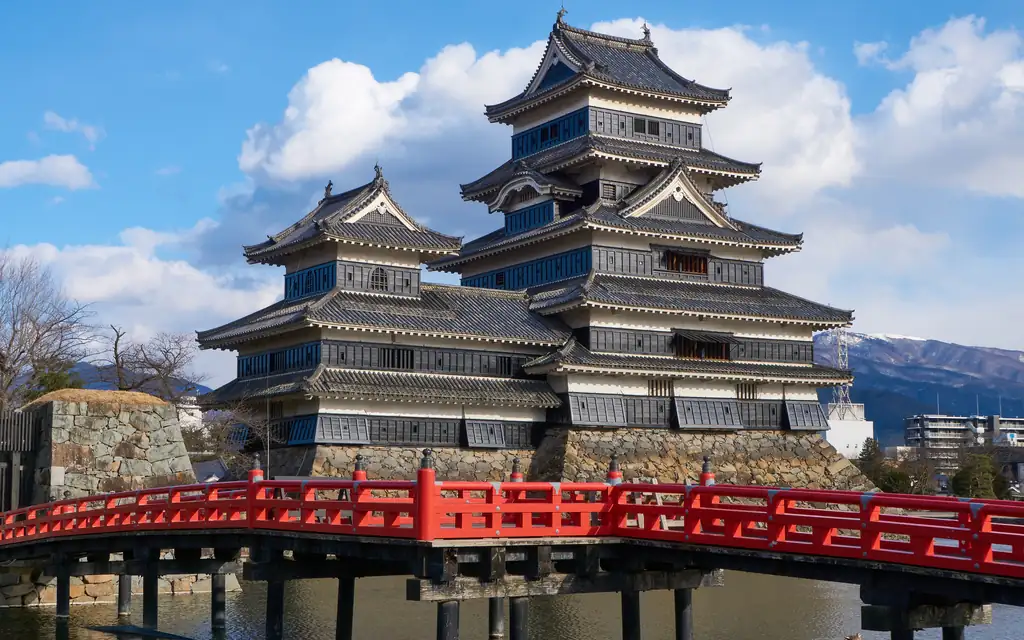
Matsumoto Castle and the red Uzumi BridgeMatsumoto, Nagano

Matsumoto Castle and the red Uzumi Bridge

Matsumoto Castle

The black Crow Castle hides a floor you can't see.

Getting there●○○○○Very easy on your own: about 20 minutes' walk from Matsumoto Station, which is about 2.5 hours from Shinjuku by limited express.

Best timeApr

When you're in Nagano, spend half a day at this black national-treasure castle.

Stand by the moat on a clear day and the black-lacquered keep is mirrored in the water, the distant Northern Alps behind it, as still as a painting. Matsumoto Castle is one of Japan's five national-treasure castle keeps, and its black-lacquered walls earned it the nickname “Crow Castle.” Its five-tier, six-level keep is the oldest surviving of its kind: from outside it looks five stories tall, but inside there are six, the extra one a hidden floor for wartime concealment. Inside, you climb the original wooden stairs, every step on centuries-old wood, past the old gun ports in the walls. Matsumoto is also the gateway to Kamikochi. Climb those old stairs, find the hidden floor, and you'll share a secret with this castle.

GETTING THEREAbout 2.5 hours from Shinjuku by the JR Azusa limited express, or about 2 hours from Nagoya by the JR Shinano; the castle is about a 20-minute walk from the station.
GOOD TO KNOWIn cherry blossom and autumn leaf season, the black keep reflected in the moat is at its best. Inside, the stairs are steep; expect queues on holidays, and it closes for a few days at year-end. The red Uzumi Bridge in the photo is closed to walking — photos from beside it only. Check the official site.
SAFETYThe stairs inside are steep and narrow — hold the handrails both ways and wear good shoes.
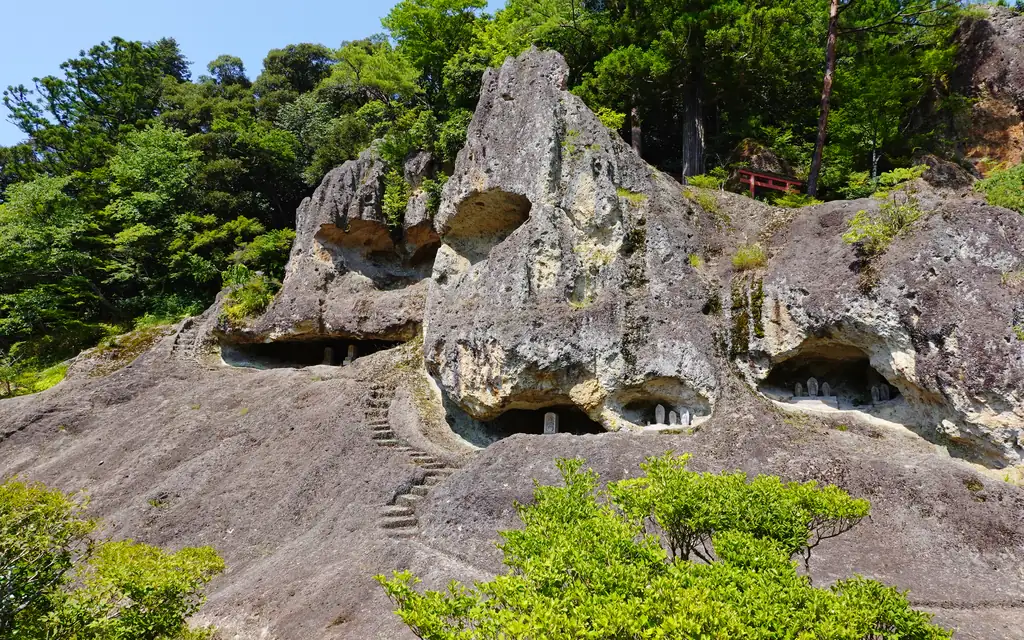
Natadera's weathered grey rock face, dotted with cavesKomatsu, Ishikawa

Natadera's weathered grey rock face, dotted with caves

Natadera Temple

Little caves hidden in pale gray cliffs.

Getting there●●○○○Easy on your own: just over 20 minutes by shinkansen from Kanazawa to Kaga-Onsen, then about 40 minutes by loop bus.

Best timeNov

When you're in Kanazawa or the Kaga hot springs, add half a day for Natadera.

Follow the approach and a pale gray rock face suddenly rises before you, dotted with caves holding small stone Buddhas, little vermilion torii on top, and nothing to hear but the wind in the trees. Natadera is said to have been founded by the monk Taicho in 717. It fell into ruin during the Warring States period and was rebuilt in the Edo period by Maeda Toshitsune, lord of Kaga. This Kigan Yusenkyo was formed by long years of wind and rain, and it's a national Place of Scenic Beauty. The main hall is built into a rock cave, and the light drops the moment you step inside; the three-story pagoda and several other buildings are Important Cultural Properties, and the poet Matsuo Basho also left a haiku here. Autumn foliage season is the most popular time; red leaves against pale gray rock, no wonder even Basho was moved to write.

GETTING THERETake the Hokuriku Shinkansen from Kanazawa to Kaga-Onsen Station (just over 20 minutes), then about 40 minutes on the loop bus. Alternatively, take a bus from Komatsu Station and walk about 20 minutes.
GOOD TO KNOWNovember's autumn colour is the peak, when the strange rock faces frame the leaves like a painting. Weekends then are busy, so come on a weekday morning for quiet. Open all year until late afternoon — check the hours on the official site.
SAFETYThe stone steps in the rock area are steep and narrow and slippery in the rain — wear good shoes and don't climb the rocks.
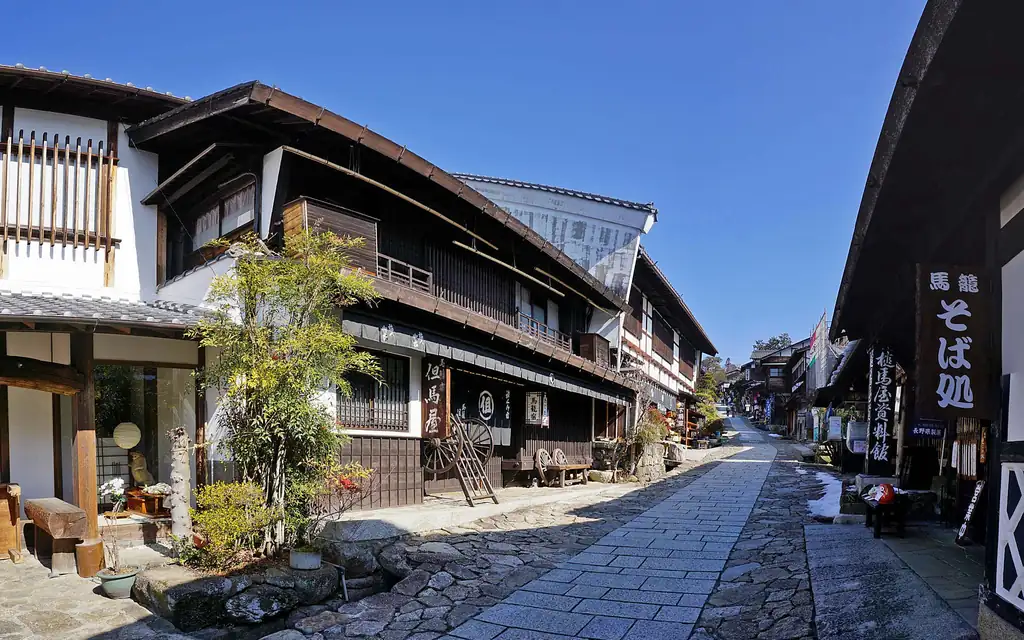
Old houses along Magome's stone-paved slopeNakatsugawa, Gifu

Old houses along Magome's stone-paved slope

Magome-juku

Walk from one post town to the next, along a road out of Edo.

Getting there●●○○○Easy on your own: about an hour by JR from Nagoya to Nakatsugawa, then about 25 minutes by bus.

Best timeApr–Nov

To walk a stretch of Edo-era highway, come to Magome-juku.

The stone path climbs the hillside between wooden houses that keep their old look, water wheels turning slowly out front to the soft sound of running water. Magome-juku was a post town on the Nakasendo, the Edo-period highway linking Edo and Kyoto, and the whole street climbs the hill; it's also the hometown of writer Shimazaki Toson. From Magome you can follow the old Nakasendo north for about 9 km, 2.5 to 3 hours, to Tsumago-juku, another well-preserved post town, passing forests, waterfalls and small villages along the way; it's a very popular hike. Walk the same mountain road travelers walked centuries ago, and when you reach Tsumago, you'll feel you've completed an old journey of your own.

GETTING THEREAbout 1 hour from Nagoya on the JR Chuo Line to Nakatsugawa Station, then about 25 minutes by bus to Magome.
GOOD TO KNOWFor the Nakasendo walk to Tsumago, late March to the end of November is ideal — that's also when luggage forwarding runs, so you can send big bags to the other end. In winter the trail may be snowy and isn't recommended. Check the forwarding times before you go.
SAFETYBears may be around on the Nakasendo trail — you can rent bear bells at the tourist office. The stone paths are slippery after rain.
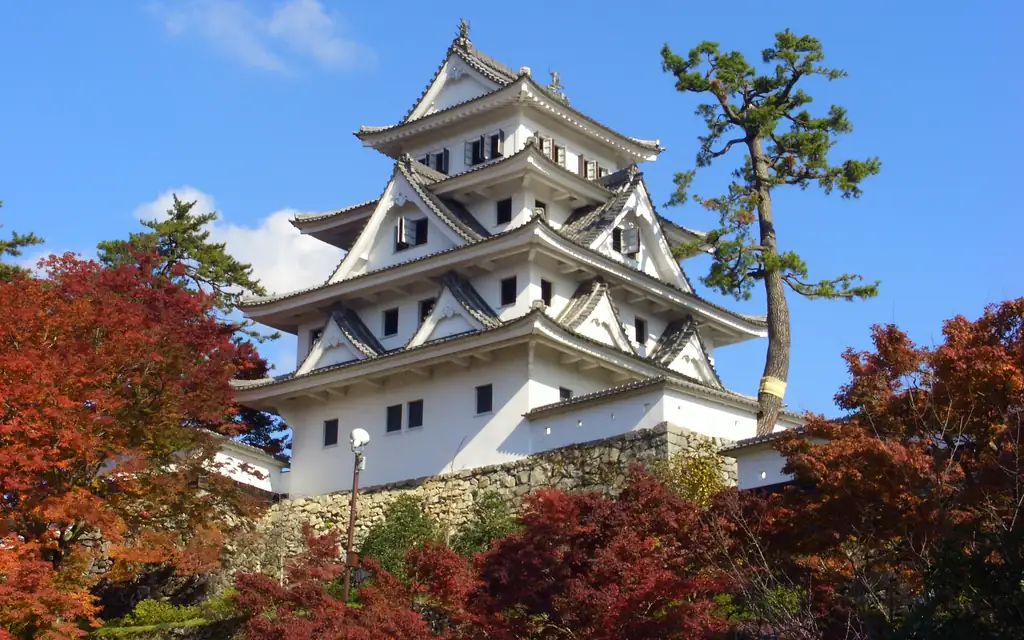
Gujo Hachiman Castle among autumn maplesGujo, Gifu

Gujo Hachiman Castle among autumn maples

Gujo-Hachiman

Water flows through town, and the dancing goes on till dawn.

Getting there●●○○○Easy on your own: about 1.5 hours by highway bus from Nagoya.

Best timeJul–Aug

To find a quiet little town surrounded by clear water, come to Gujo-Hachiman.

Walk Gujo-Hachiman's lanes with water rushing in the channel at your feet, someone crouched by a spring-fed mizubune trough washing vegetables, and the cool sound of water follows you everywhere. This castle town is embraced by the Yoshida and Nagara rivers, with water channels crisscrossing it, and it's called the “town of water.” Look up and Gujo-Hachiman Castle stands on the hilltop, a wooden keep rebuilt in 1933 and thought to be Japan's oldest wooden reconstructed castle, most beautiful framed by autumn leaves. Every summer, the Gujo Odori dance goes on for over a month, with all-night dancing around the Obon holidays. Dancing till dawn on a summer night between the sound of water and the beat of the steps: not every place can give you a memory like that.

GETTING THEREAbout 1.5 hours from Nagoya by highway bus. You can also take JR to Mino-Ota and change to the Nagaragawa Railway, which takes longer. The castle is about a 20-minute walk up from the town.
GOOD TO KNOWThe Gujo Odori dances only happen in summer — in 2026, 30 nights from July 11 to September 5, with all-night dancing August 13–16, when rooms are very hard to find. Gujo Hachiman Castle has shorter winter hours. Check the official schedule before you go.
SAFETYThe road up to the castle is fairly steep — wear good shoes. Some channels by the river have no railings; watch your step at night.

Winter ski areas & events

Coming in winter? The region also has these. Full details (lessons, lodging, transport) are in the winter corner of your quiz results.

Ski areas

  • GALA Yuzawa: The Shinkansen station is at the ski area
  • Akakura Onsen: A classic hot spring ski area in Myoko
  • Hakuba 47: Runs link to neighboring Goryu
  • Nozawa Onsen: A hot spring village joined to the slopes
  • Madarao Kogen: Popular for tree skiing
  • Shiga Kogen: One of Japan's largest ski areas, with many linked resorts

Not sure which to pick? Take the 4-minute travel-personality quiz and find the one that suits you.

Take the quiz