TOP-TIER TRAVEL中/EN

Greece

10 hidden gems in Greece

Blue domes, Aegean islands & stone villages. We picked 10 places in this region — some well known, some few visitors find. Browse at your own pace, then take the quiz when something catches your eye.

TOP-TIER TRAVEL › All hidden gems › Greece

Not sure which to pick? Take the 4-minute travel-personality quiz and find the one that suits you.

Take the quiz
Oia, Santorini
First time? Athens plus an Aegean island or two are the classics

The usual first trip is two or three days in Athens for the Acropolis and old town, then a ferry or flight to Santorini and Mykonos; about ten days is right. Island ferries run often in summer and rarely in winter, so a winter trip works better as Athens plus the stone villages and ski areas of the northern mountains. The place below suits you best.

Spot details checked: November 2026

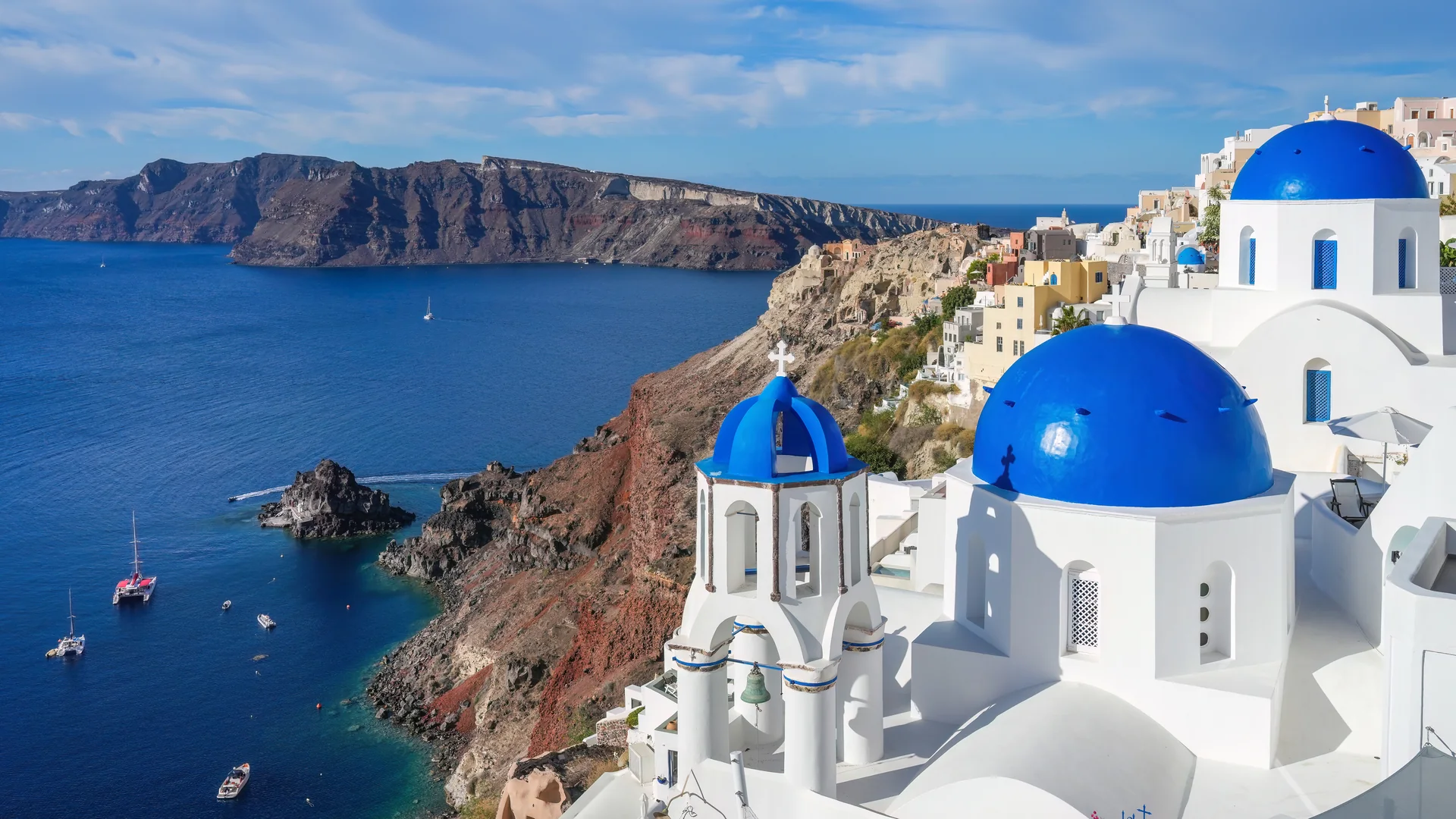
Oia’s blue domes and white houses above the calderaSantorini, Cyclades

Oia’s blue domes and white houses above the calderaGiles Laurent / CC BY-SA 4.0 / cropped

Oia, Santorini

Blue dome after blue dome, above a sea that fills a volcano.

Getting there●○○○○Very easy on your own: about 45 minutes’ flight from Athens, then a bus or taxi to Oia.

Best timeApr–Jun, Sep–Oct

Greece’s postcard view: blue domes and white houses on a cliff.

Santorini is an island blown apart by a volcano; the sunken crater filled with seawater, and the villages line the edge of its cliffs. Oia sits at the island’s northern tip, its white houses stacked down the rock with blue domes dotted between them, the Greece many people picture. The bay in the photo is the caldera, with another island across the water. Oia’s sunsets are famous, turning the whole cliff gold, and steps lead down to a small fishing harbour by the sea.
GETTING THEREFly from Athens to Santorini in about 45 minutes, or take a ferry from Piraeus in about 5–8 hours; from Fira, the bus to Oia takes about 25 minutes.
GOOD TO KNOWSummer and sunset are the busiest times; popular viewing spots fill up an hour or two ahead. Most houses are lived in, and many roofs and terraces are private, so don’t climb onto them for photos.
SAFETYOia’s lanes and steps are narrow and slippery, so take care going down. The cliff-edge walls are low; don’t sit or stand on them for photos. The summer sun is strong, so drink water and use sunscreen.
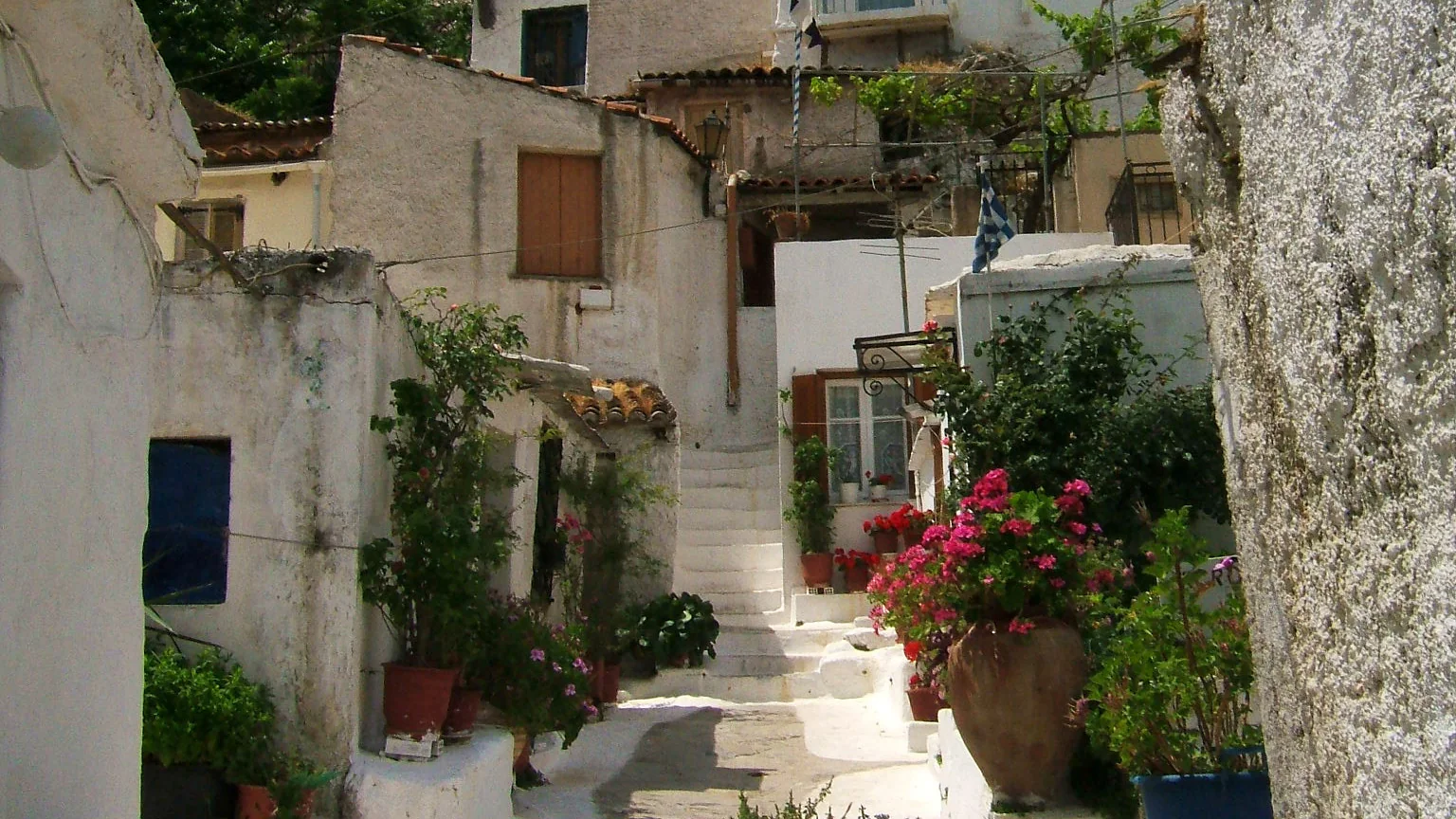
A white lane in AnafiotikaPlaka, Athens

A white lane in AnafiotikaStephanie Costa / CC BY 2.0 / cropped

Anafiotika, Plaka, Athens

Up a hillside in central Athens hides a lane of white houses like an island village.

Getting there●○○○○Very easy on your own: 10–15 minutes’ walk from Syntagma or Monastiraki metro.

Best timeMar–Jun, Sep–Nov

An island village tucked into old Athens: white walls, blue windows and bougainvillea.

Plaka is Athens’ oldest neighbourhood, right at the foot of the Acropolis. Climb the northern slope of the Acropolis and you suddenly step into a cluster of white lanes: Anafiotika, built in the nineteenth century by builders from the Aegean island of Anafi, who came to work in Athens and built homes like the ones back home. The photo shows a white stepped lane with blue windows, potted plants and bursts of flowers, more like a small island than a capital city. Carry on up and you reach the entrance to the Acropolis.

GETTING THEREWalk 10–15 minutes from Syntagma or Monastiraki metro to Plaka, then up the northern slope of the Acropolis.
GOOD TO KNOWPeople still live in Anafiotika and the lanes are narrow: keep your voice down, don’t linger on doorsteps and stairs, and don’t photograph into homes. The Acropolis needs a separate ticket and time slot; see the official site.
SAFETYPickpockets work Plaka, Monastiraki and the metro, so keep your bag in front. The stone steps are slippery, and midday in summer is very hot, so go in the morning or evening.
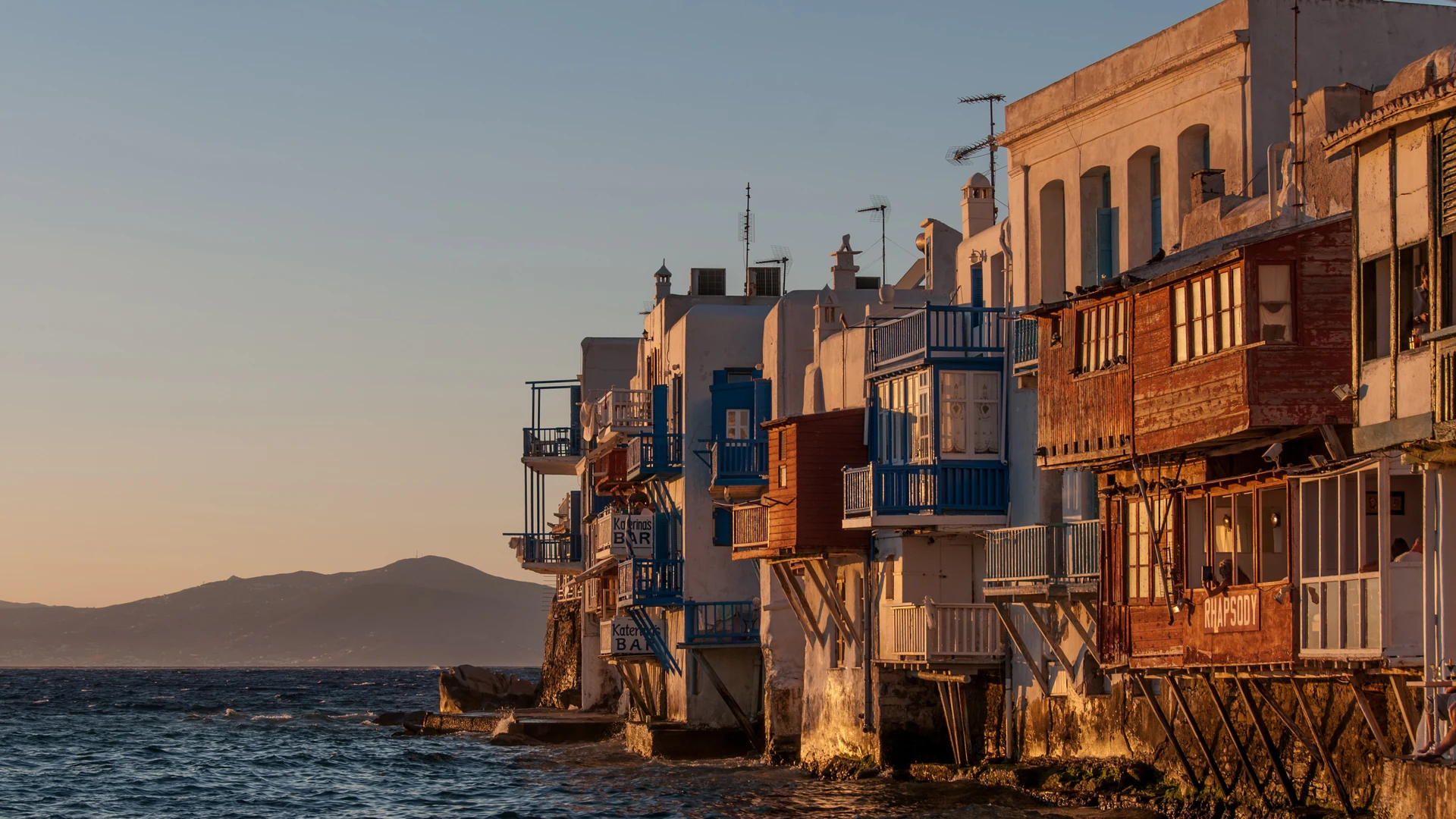
Little Venice, Mykonos, at sunsetMykonos, Cyclades

Little Venice, Mykonos, at sunsetRoberto Faccenda / CC BY-SA 2.0 / cropped

Little Venice, Mykonos

Houses built right on the water, waves beneath the balconies, the sun setting opposite.

Getting there●○○○○Very easy on your own: 40 minutes’ flight from Athens, or a ferry; Little Venice is in the main town.

Best timeMay–Jun, Sep–Oct

One of the Aegean’s liveliest islands, with houses standing over the waves.

Mykonos is one of the Aegean’s liveliest islands. The main town’s lanes twist like a maze, said to have been designed to confuse pirates. On its western side, a row of old houses stands right at the water’s edge with wooden balconies hanging over the sea; when the waves are up, they splash beneath them. This is Little Venice. The photo was taken at sunset, with the sun going down over the sea and the houses glowing orange. Look up the hill from Little Venice and you’ll see Mykonos’ famous row of white windmills.

GETTING THEREFly from Athens in about 40 minutes, or take a ferry from Piraeus or Rafina in about 2½–5 hours; Little Venice is a walk from the main town.
GOOD TO KNOWSummer and sunset are the busiest times, so find your spot by the water early. In winter many hotels, restaurants and ferries close or cut back, so check first.
SAFETYThe waterfront path in Little Venice is narrow and gets wet and slippery in big waves, so keep children close. The town’s lanes get packed at night; watch your wallet and phone.
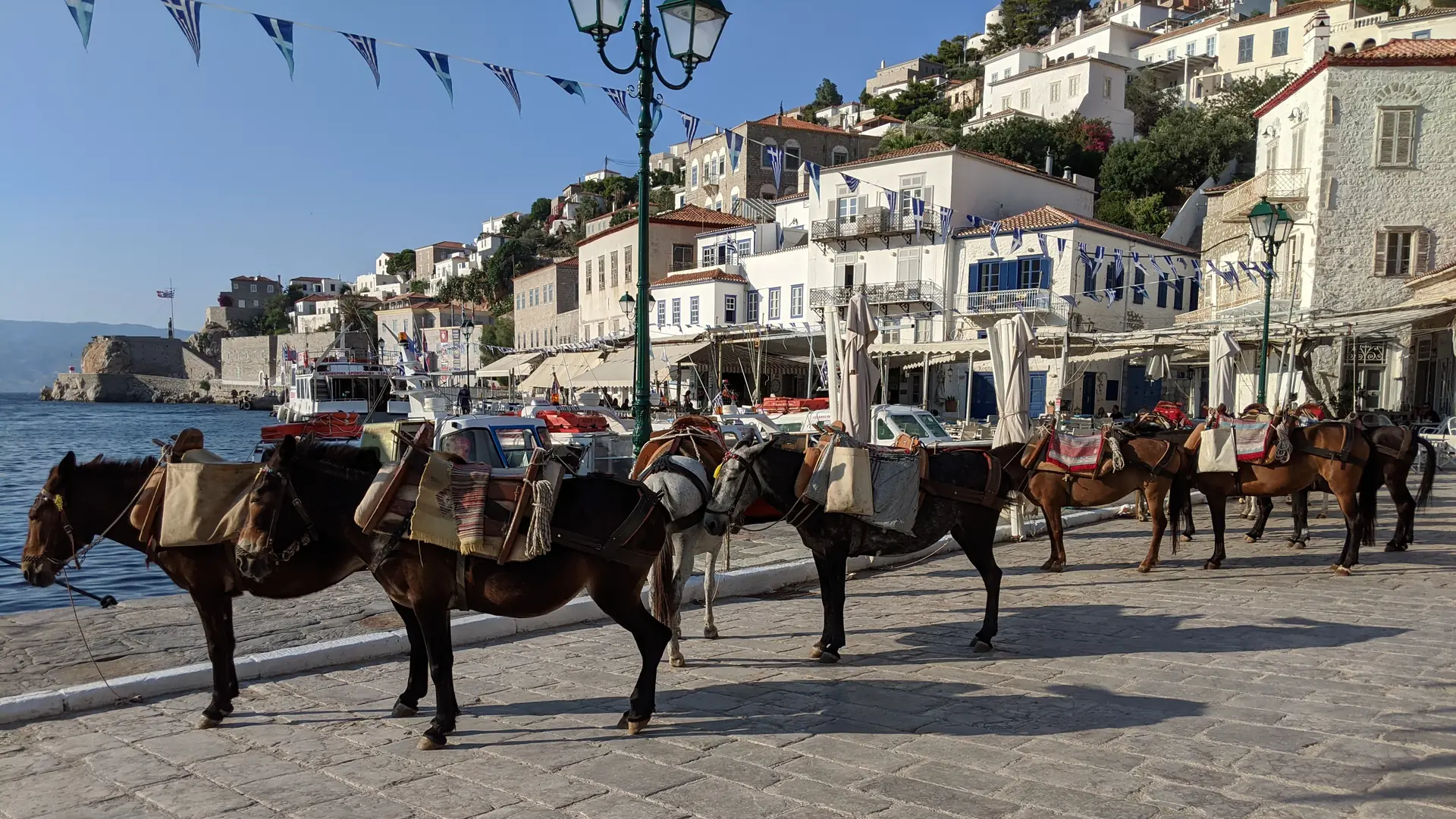
Donkeys waiting to carry goods on Hydra’s harbourHydra, Saronic Gulf

Donkeys waiting to carry goods on Hydra’s harbourMagnus Manske / CC BY-SA 3.0 / cropped

Hydra

An island with no cars, where donkeys wait by the harbour.

Getting there●○○○○Very easy on your own: about 1½–2+ hours by fast ferry from Piraeus.

Best timeApr–Jun, Sep–Oct

An island with no cars: just walking, donkeys and boats.

Hydra isn’t far from Athens, but there are almost no cars on the island. The lanes are stone steps, goods are carried by donkeys and mules, and you reach the further beaches by small boat. The photo shows the harbour, where donkeys wait to carry luggage and goods up the hillside. Around the port stand stone mansions that once belonged to shipowners and captains, many now hotels and galleries. Along the coastal path are rocky coves where you can swim, a good place to spend an unhurried day.

GETTING THEREFast ferries from Piraeus take about 1½–2+ hours; schedules change by season, so check with the ferry company.
GOOD TO KNOWWith no cars, you’ll carry your bags up the steps yourself or ask your hotel to arrange help, so pack light. Donkeys and mules are working animals: we don’t recommend riding them, and please don’t feed or hit them.
SAFETYThe stone steps are slippery and steep, so wear good shoes. There are no lifeguards in the rocky coves; check the sea before swimming.
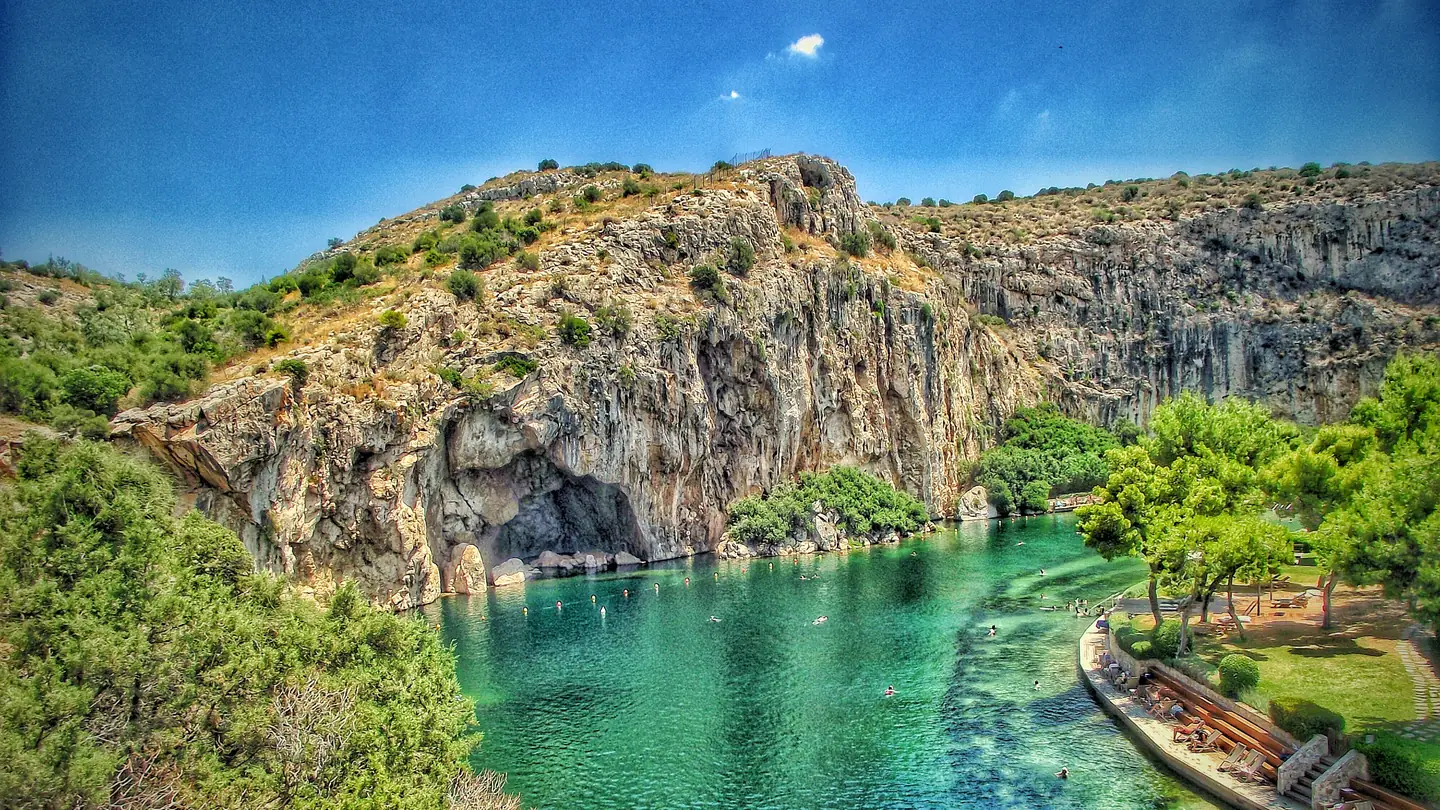
Lake Vouliagmeni and the cliff behindVouliagmeni, south of Athens

Lake Vouliagmeni and the cliff behindGeorgeBRAINiac / CC BY-SA 4.0 / cropped

Lake Vouliagmeni

A green pool beneath a cliff, warm enough to swim in all year.

Getting there●○○○○Very easy on your own: 40 minutes to an hour by bus or taxi from central Athens.

Best timeGood all year

A natural lake south of Athens, never cold whatever the season.

Lake Vouliagmeni lies by the sea on Athens’ southern edge, with a steep limestone cliff on one side and emerald water. It’s fed through underground caves connected to the sea, so the water stays mild all year, and people swim here even in winter. The photo was taken in summer; the source of the lake lies beneath the cliff behind. There are loungers and changing facilities, and you need a ticket to enter. Afterwards, the coast road south passes one bay and small beach after another.

GETTING THEREAbout 25 km from central Athens; take a bus or taxi to Vouliagmeni, 40 minutes to an hour depending on traffic.
GOOD TO KNOWEntry is paid and hours change by season; see the official site. The lake is deep, so non-swimmers should stay in the shallow area.
SAFETYThe rocks around the lake are slippery; don’t climb the cliff to jump in. Summer weekends are crowded, so don’t leave valuables on your lounger.
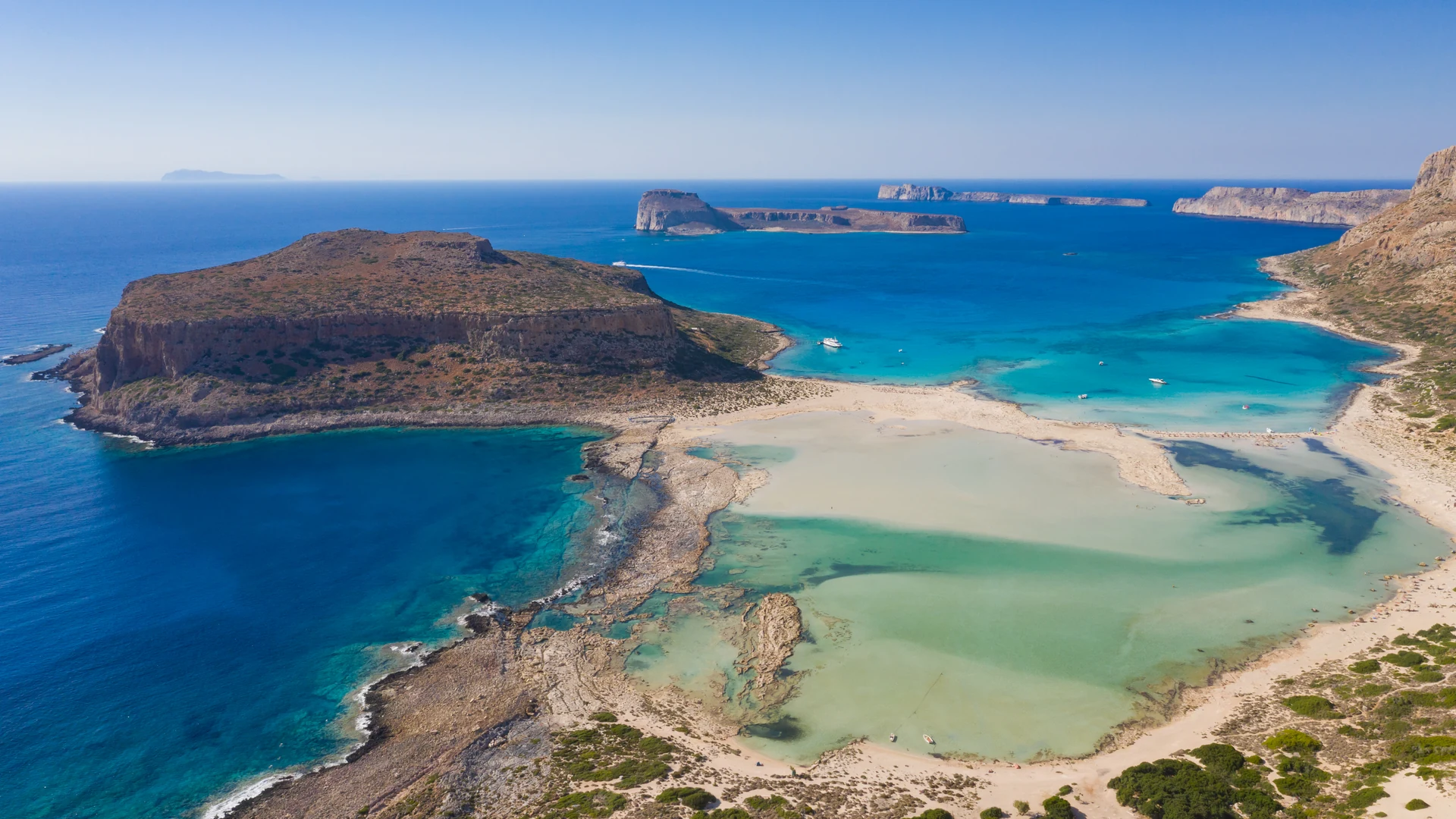
Balos Lagoon and the islet offshore, from the airNorthwest Crete

Balos Lagoon and the islet offshore, from the airdronepicr / CC BY 2.0 / cropped

Balos Lagoon, Crete

A shallow lagoon shading from green to deep blue.

Getting there●●○○○Fine on your own: a summer boat from Kissamos, or a dirt road by car then a walk down.

Best timeMay–Oct

Crete’s most famous lagoon: shallow water, pale sand, layers of colour.

Balos sits at the tip of a peninsula in Crete’s far northwest, a very shallow lagoon between two seas, only calf-deep, with pale pinkish sand and water shading from light green through turquoise to deep blue. The photo was taken from the air, with the lagoon and sandbar in front and, offshore, an islet topped by the ruins of an old fortress. The best view is from the slope as you walk down from the car park, when the whole lagoon opens up at once.

GETTING THEREIn summer, boats run from Kissamos port and stop at the islet on the way. By car, it’s about 8 km of dirt road from Kissamos to the car park (small fee), then about 25 minutes’ walk downhill.
GOOD TO KNOWBoats run only in summer; check the ferry company for times. The dirt road is rough, so check your rental contract first. This is a protected area: don’t take sand or shells, and carry out your rubbish.
SAFETYThe path has no shade and summer middays are fierce, so bring water and a hat. The way back is uphill; allow time if you’re not very fit.
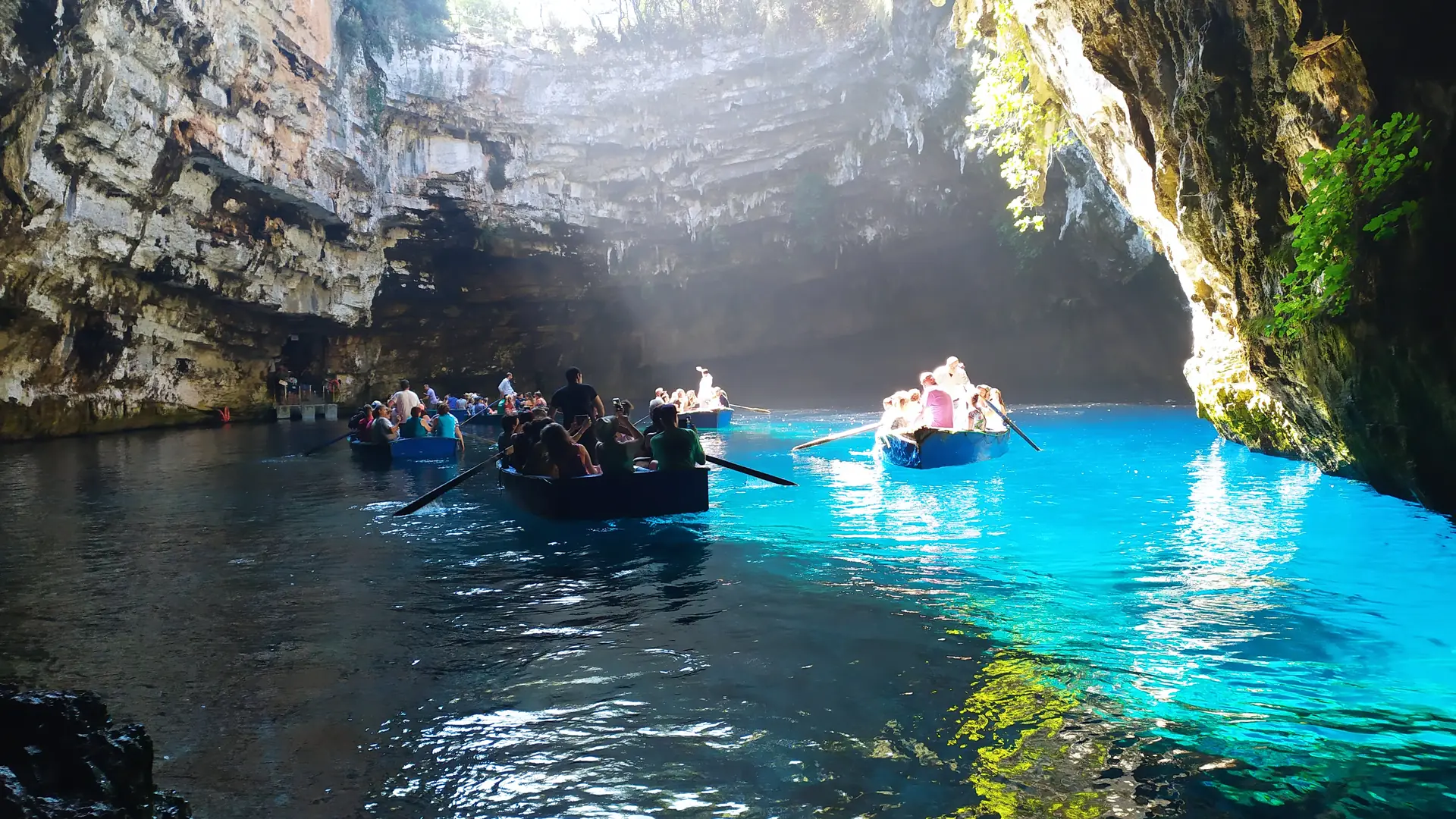
The lake inside Melissani Cave, with rowing boatsKefalonia, Ionian Islands

The lake inside Melissani Cave, with rowing boatsChristina Karamolegkou / CC BY-SA 4.0 / cropped

Melissani Cave, Kefalonia

Part of the cave roof collapsed, and the midday sun shines straight into the lake.

Getting there●●○○○Fine on your own: about an hour’s flight from Athens, then a drive to near Sami.

Best timeMay–Oct

An underground lake under a collapsed roof, explored by rowing boat.

Melissani is a cave lake on Kefalonia; long ago part of its roof collapsed, and the sunlight pouring in turns the water a brilliant clear blue. You go in on a small wooden boat, rowed by a boatman around the lake and through a darker section of cave before returning to the light. The photo shows the inside, with light falling from the opening onto the water. The sun is most direct, and the colour brightest, around midday.

GETTING THEREFly from Athens to Kefalonia in about an hour, or take a ferry from the Peloponnese; drive to near Sami on the east coast, where the entrance is by the road.
GOOD TO KNOWBoat trips run daily from about May to October and may be reduced or stop in winter, so check first; tickets per notices on site. Expect queues around midday in summer.
SAFETYThe boat rocks as you get on and off, so hold the rails and follow the boatman. Steps and the landing inside are wet and slippery.
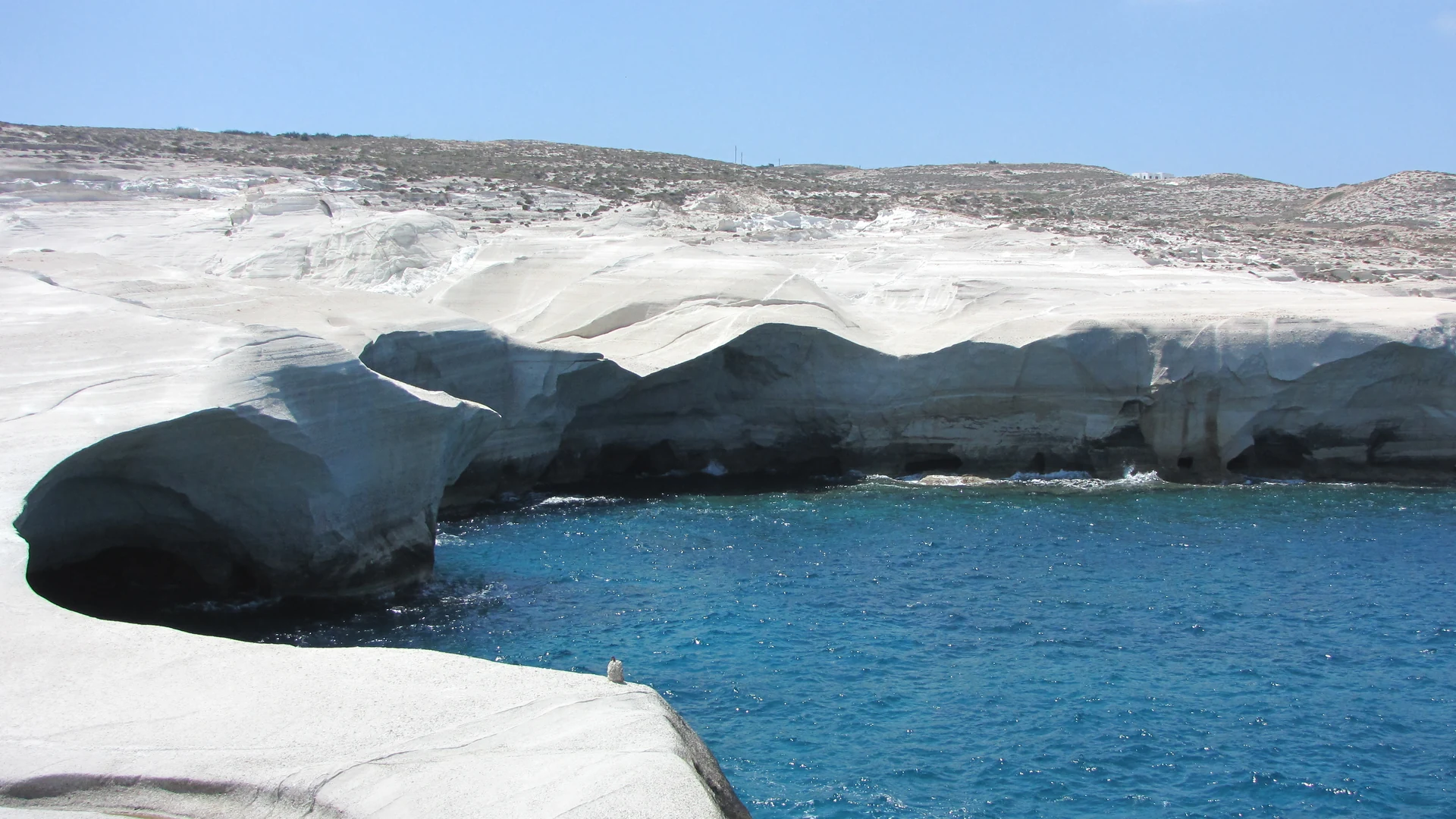
Sarakiniko’s white rocks and the seaMilos, Cyclades

Sarakiniko’s white rocks and the seaNicolas Hadjidimitriou / CC BY-SA 4.0 / cropped

Sarakiniko, Milos

White rock like the surface of the moon, beside a deep blue sea.

Getting there●●○○○Fine on your own: 3–7 hours by ferry from Piraeus, then a short drive or ride on the island.

Best timeMay–Oct

White rock sculpted by wind and waves, like walking on the moon.

Sarakiniko lies on Milos’ north coast, a stretch of white volcanic rock smoothed by sea and wind into rolling waves, like a lunar landscape beside deep blue water. The photo shows the white rock around a small inlet. This is a protected natural area, and the rock is fragile as well as beautiful, so please take only photos. Milos is much quieter than Santorini or Mykonos, ideal if you want to slow down.

GETTING THEREFerries from Piraeus take about 3–7 hours (depending on the boat) to Adamas port, and there’s a small airport; from Adamas it’s about 10 minutes to the beach by car or scooter.
GOOD TO KNOWThis is a protected natural area: don’t take stones or carve the rock. Ferries change by season and are few in winter.
SAFETYThe white rock is dazzling and has no shade, so bring a hat, sunglasses and water. The edges are high: don’t jump from them, and stay out of the water in rough seas.
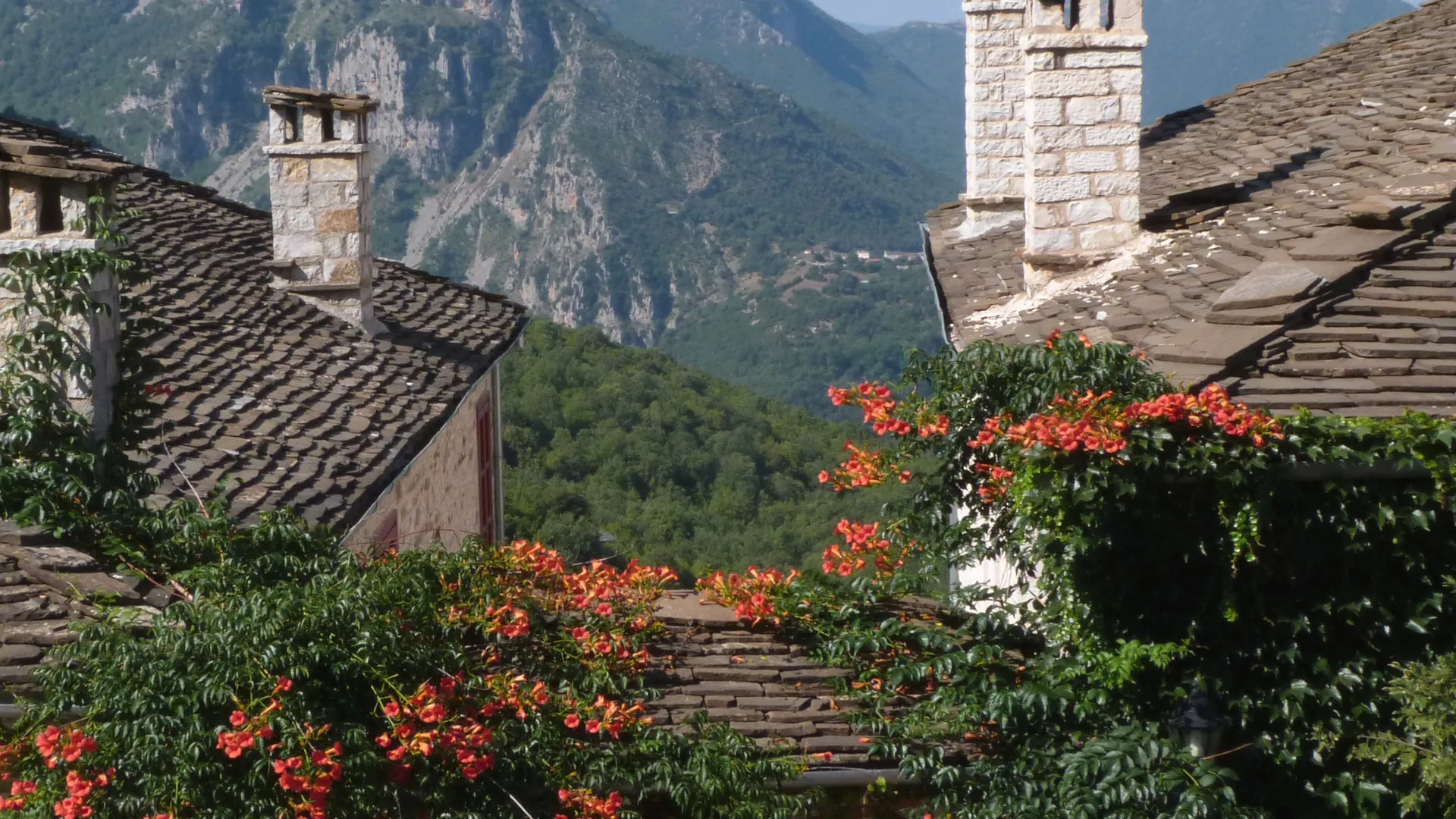
Papigo’s stone roofs and the mountain behindZagori, Epirus

Papigo’s stone roofs and the mountain behindZiegler175 / CC BY-SA 3.0 / cropped

Zagori stone villages

Stone roofs, stone lanes, and a wall of mountain behind.

Getting there●●●○○Best with a car or driver: about an hour’s drive from Ioannina, with little public transport between villages.

Best timeMay–Jun, Sep–Oct

Stone villages in Greece’s northwest mountains: roofs, walls and paths all of stone.

Zagori lies in the Pindus mountains of northwest Greece, more than forty villages scattered through the hills, their houses, roofs, squares and the paths between them almost all built of local stone. The photo shows Papigo, with its slate roofs in front of a sheer mountain wall. The area also has many old arched stone bridges and the Vikos Gorge, one of the deepest in the world, with trails leading down into it. It’s a completely different Greece: no sea, just mountains, forests and stone villages.

GETTING THEREFly from Athens to Ioannina in about an hour, or drive from Athens in about 5 hours; Ioannina to Papigo is about an hour by car. There’s little public transport between villages, so rent a car or hire a driver.
GOOD TO KNOWMountain weather changes fast: take plenty of water and warm layers for the gorge trails, and check the forecast. In winter there can be snow, and some roads need chains.
SAFETYMountain roads are narrow and winding, so drive slowly. Stone paths and bridges have no railings and get slippery in the rain.

Winter ski areas & events

Coming in winter? The region also has these. Full details (lessons, lodging, transport) are in the winter corner of your quiz results.

Ski areas

  • Parnassos: Greece’s biggest ski area, about 2½ hours’ drive from Athens
  • Kaimaktsalan: Greece’s highest ski area, right on the border with North Macedonia
  • Kalavryta: The Peloponnese’s biggest ski area, above a town with a story
  • Anilio: A small, newer ski area, with the stone town of Metsovo just below

Winter events

  • Patras Carnival: Greece’s biggest carnival, with tens of thousands dancing through the streets in matching costumes.
  • Christmas and New Year in Athens: The square in front of parliament lights up with a giant tree and balloon-shaped lanterns.
  • Pelicans on Lake Kerkini: Huge birds spread their wings and scramble for fish, splashing up to the boat.
  • Olive harvest in Crete: Spread the nets under the trees and knock the olives from the branches.
  • A snowy day in Metsovo: A stone town built on a hillside, its roofs white in winter.

Not sure which to pick? Take the 4-minute travel-personality quiz and find the one that suits you.

Take the quiz