TOP-TIER TRAVEL中/EN

Korea · Gyeongbuk & Daegu

10 hidden gems in Gyeongbuk & Daegu

Silla capital & old villages. We picked 10 places in this region — some well known, some few visitors find. Browse at your own pace, then take the quiz when something catches your eye.

TOP-TIER TRAVEL › All hidden gems › Korea › Gyeongbuk & Daegu

Not sure which to pick? Take the 4-minute travel-personality quiz and find the one that suits you.

Take the quiz
Donggung Palace and Wolji Pond
First time? Start with the classics

You can't go wrong doing a first lap of Gyeongju's Bulguksa, Daereungwon and Hwangridan-gil, plus Daegu's Seomun Market. Central Gyeongju is easy by bus, while Andong, Yeongju and Cheongsong are another hour or two away, so save just a day or two for the place below that's truly yours.

Looking for a place to stay in this area? Start here:

Spot details checked: October 2026

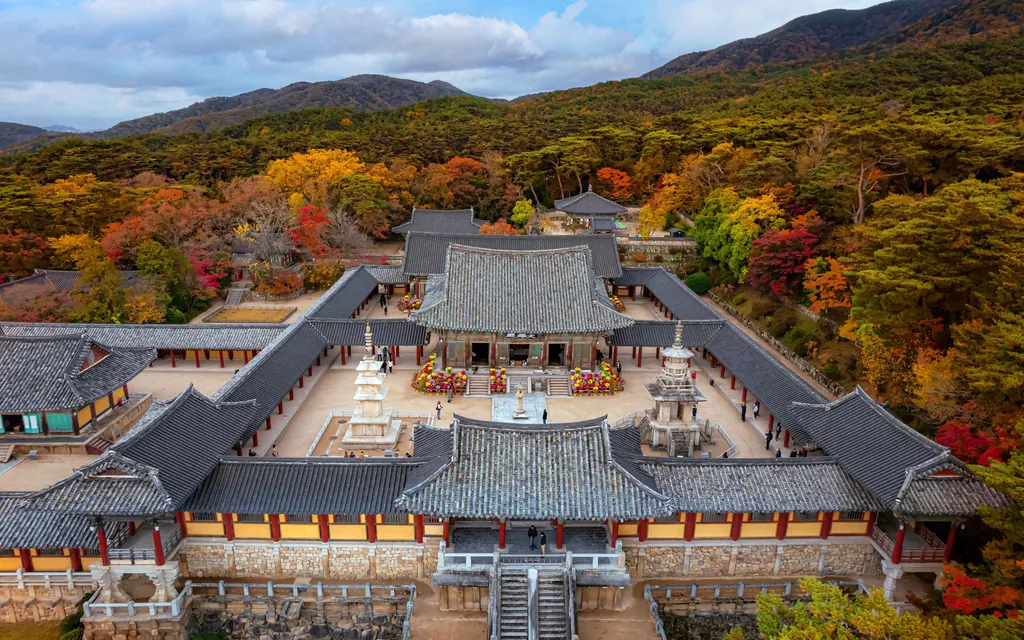
Bulguksa from above in autumn, with the Dabotap and Seokgatap pagodas in the courtyardGyeongju, Gyeongbuk

Bulguksa from above in autumn, with the Dabotap and Seokgatap pagodas in the courtyard

Bulguksa Temple, Gyeongju

The wood burned and was rebuilt; the stone is still Silla.

Getting there●●○○○Easy on your own: just over 2 hours by KTX from Seoul to Gyeongju, then 30–40 minutes by bus.

Best timeApr, Oct–Nov

In Gyeongju, Bulguksa is a must.

Step through the gate and a long stone stairway rises before you tier by tier, its stone worn smooth by more than a thousand years of weather, low chanting and wind chimes drifting from inside. Bulguksa is a Silla-era temple whose expansion was completed in the mid-8th century; together with Seokguram grotto on the mountain above, it became a World Heritage Site in 1995. Its most famous features are the stone stairway-bridges Cheongungyo and Baegungyo and the two stone pagodas in front of the main hall, the ornate Dabotap and the simple Seokgatap, all national treasures. Most of the wooden buildings burned in wars and were rebuilt, but the stone platforms and pagodas still look as they did in Silla times. Look at that stone, and you're seeing the craftsmanship of Silla masons from over twelve centuries ago.

GETTING THEREAbout 30–40 minutes by bus from central Gyeongju or Gyeongju Station; Gyeongju Station is just over 2 hours from Seoul by KTX.
GOOD TO KNOWAutumn foliage framing the stone bridges is the classic view; it's busy then and on holidays, so go in the morning. You can take the bus up to Seokguram on the same trip.
SAFETYThere are lots of stone steps and slopes inside — wear good shoes.
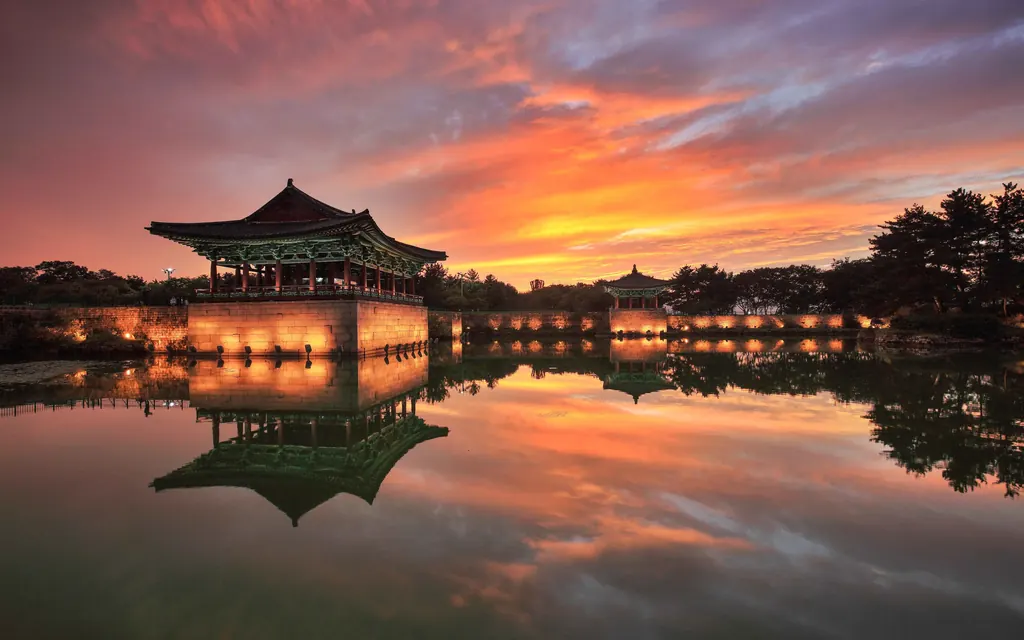
Donggung Palace and Wolji Pond under a fiery skyGyeongju, Gyeongbuk

Donggung Palace and Wolji Pond under a fiery sky

Donggung Palace and Wolji Pond, Gyeongju

The lights come on, and the Silla banquet begins again.

Getting there●○○○○Very easy on your own: about 10 minutes by bus or taxi from central Gyeongju, or a 20-minute walk from Daereungwon.

Best timeGood all year

On a Gyeongju evening, go see the Silla palace lit up.

As night falls the pavilions by the pond light up one by one, their golden reflections laid perfectly on the water, the pond as still as a mirror except when an evening breeze sets the lights trembling. Donggung and Wolji are the detached palace and artificial pond of the Silla kingdom, once known as Anapji, where Silla royals entertained guests. When the pond was cleared in the 1970s, a huge number of Silla artifacts were found; several pavilions have since been rebuilt by the water. The area is part of the World Heritage Gyeongju Historic Areas, and its night illumination is Gyeongju's most popular night view. Stand by the water watching the reflections and you can picture a royal banquet over a thousand years ago, held in this same glow. In Gyeongju, save one evening for Wolji.

GETTING THEREAbout 10 minutes by bus or taxi from central Gyeongju, or about a 20-minute walk from the Daereungwon area.
GOOD TO KNOWArrive around sunset to watch the sky darken and the pavilions light up in the pond's reflection — the most beautiful moment, and the busiest. Check entry times on the official site.
SAFETYThe pondside path is dim at night — watch your step.
The Space Walk lit up at nightPohang, Gyeongbuk

The Space Walk lit up at night

Space Walk, Pohang

Climb a twisting track, like walking in space.

Getting there●●○○○Easy on your own: about 2.5 hours by KTX from Seoul to Pohang, then 20–30 minutes by bus or taxi.

Best timeGood all year

In Pohang, climb the staircase that looks like a roller coaster.

Step onto the steel stairs and climb, step after step, as the track beneath you twists and loops, sea wind blowing in from every side; look out, and Pohang's sea and port spread out before you as your heart beats a little faster. Space Walk is a large walk-on installation completed in 2021 on a hill in Pohang's Hwanho Park. About 333 m long, it's made of 717 steel steps shaped like a twisted track. By day you see the sea, and at night it's lit up, the whole track glowing against the dark sky; it's one of Pohang's most popular photo spots. For those few minutes up in the air, you'll feel you really are walking in space.

GETTING THEREAbout 20–30 minutes by bus or taxi from Pohang Station or central Pohang; Pohang Station is about 2.5 hours from Seoul by KTX.
GOOD TO KNOWWalk it on a clear evening for the sea and sunset. It closes in rain, strong wind or ice, and some sections are steep — know your limits with heights. Check opening hours on the official site.
SAFETYThe steps are narrow and steep — wear good shoes and don't run or push on the stairs.
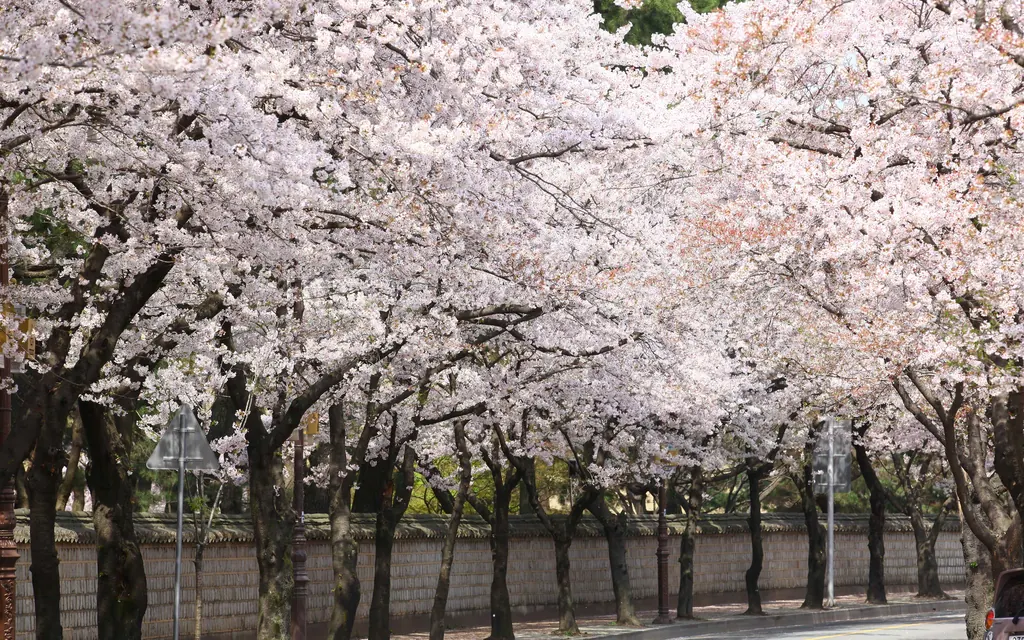
Cherry trees in full bloom along Daereungwon's stone wallGyeongju, Gyeongbuk

Cherry trees in full bloom along Daereungwon's stone wall

Daereungwon Cherry Blossom Road, Gyeongju

Beneath grassy mounds in the city center, Silla royalty sleeps.

Getting there●○○○○Very easy on your own: right in central Gyeongju, within walking distance.

Best timeMar–Apr

In early April in Gyeongju, walk the cherry blossom road beside the tombs.

Walk into Daereungwon and round grassy mounds roll before you, the grass swaying gently in the wind, the rooftops of Gyeongju beyond; it's hard to believe these little hills are tombs over a thousand years old. Daereungwon is a group of tombs of Silla royals and nobles, scattered right in the city center. The most famous is Cheonmachong, where the Heavenly Horse painting was found, and you can go inside it. Come in spring and the stone-walled road around Daereungwon is in full cherry blossom, pale petals falling on the stone, one of Gyeongju's signature cherry blossom spots; central Gyeongju and Bomun Lake have many more cherry-lined roads. A stroll between ancient tombs and cherry blossoms: a spring like that only Gyeongju can give.

GETTING THEREWalking distance from central Gyeongju; Gyeongju Station is just over 2 hours from Seoul by KTX, then about 20 minutes by bus.
GOOD TO KNOWCherry blossoms peak around late March to early April — just two weeks a year to see them over the tombs. Timing varies yearly and weekends are packed. Check the bloom forecast and the official entry times.
SAFETYThe cherry blossom road runs right beside traffic — watch for cars while taking photos.
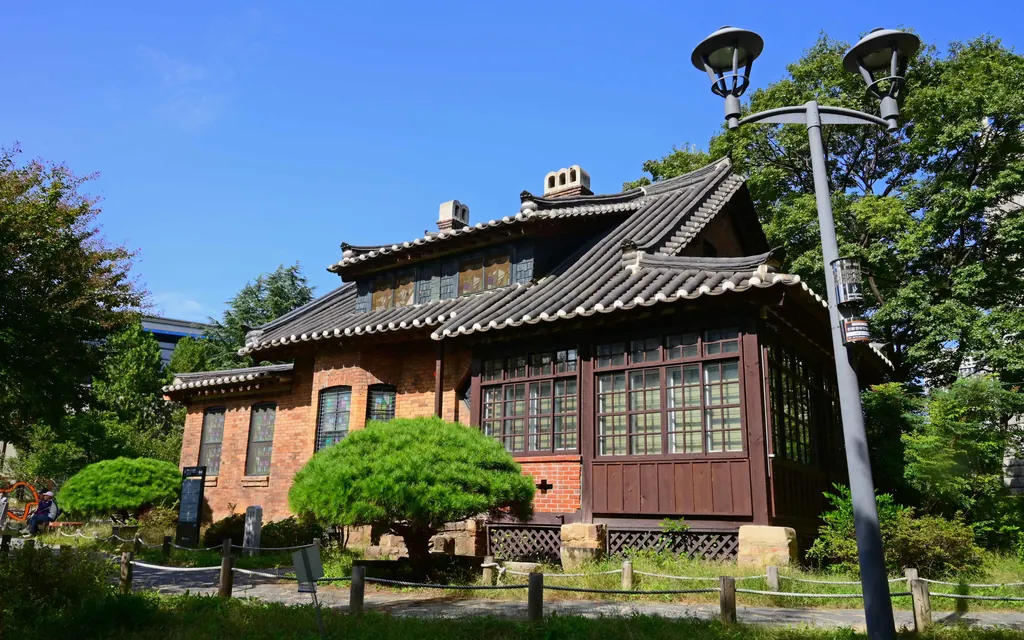
One of the missionary houses on Cheongna HillJung-gu, Daegu

One of the missionary houses on Cheongna Hill

Cheongna Hill, Daegu

Walk down ninety steps into Daegu's modern past.

Getting there●○○○○Very easy on your own: right outside Cheongna Hill Station on the Daegu subway.

Best timeGood all year

In Daegu, walk the city center's modern-history trail.

It's quiet on the hill, three missionary houses wrapped in trees, wind rustling the leaves; follow the “90 Steps” down and the sounds of the city return little by little as you walk into Daegu's old alleys. Cheongna Hill is where Western missionaries settled in Daegu in the early 20th century, leaving three missionary houses; the one in the photo is now a small museum. The 90 Steps below the hill lead into Daegu's modern-era alleys, passing an old cathedral, the herbal medicine street and colonial-era houses, and along the herbal medicine street the air carries a faint scent of herbs. It's part of the city's “Modern Road” walking route. One morning, from missionary houses to the herbal medicine street, and you'll find Daegu has more stories than you imagined.

GETTING THERERight outside Cheongna Eondeok Station on Daegu Subway Line 2 or 3; get to central Daegu from Dongdaegu Station by subway.
GOOD TO KNOWFrom spring to autumn, when ivy covers the missionary houses, it looks its best. The houses have set hours and closed days. Walk on to Seomun Market for street food afterward. Check opening times first.
SAFETYThere are lots of steps on the hill, slippery in the rain.
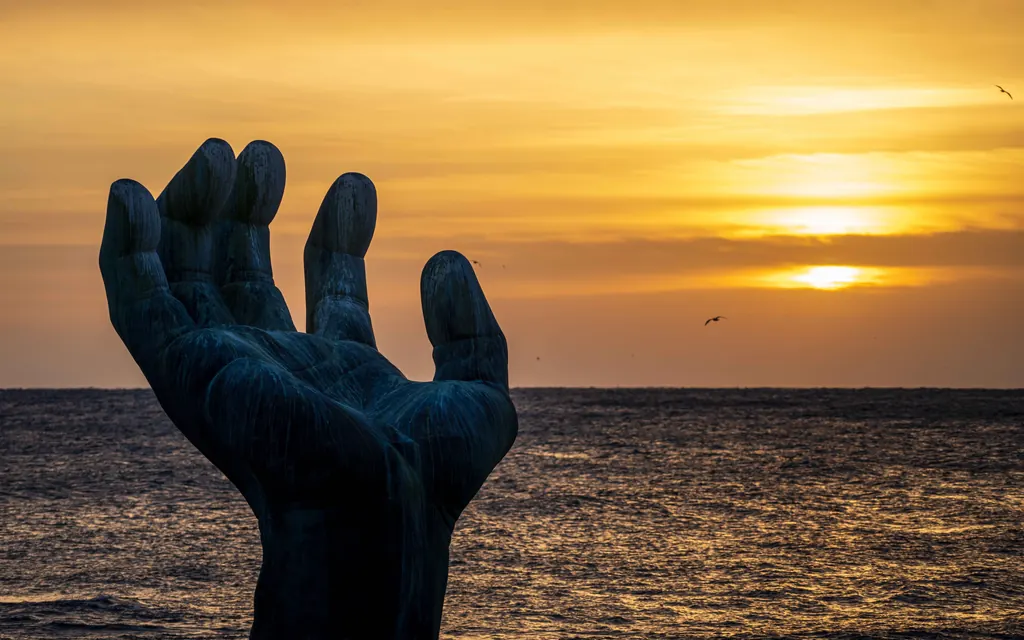
The Hand of Harmony sculpture against the sunrisePohang, Gyeongbuk

The Hand of Harmony sculpture against the sunrise

Homigot, Pohang

A hand rising from the sea to catch the first light.

Getting there●●●○○Some planning: about an hour by bus from central Pohang, with few departures; for sunrise you'll need a taxi or car.

Best timeJan

For the first sunrise on mainland Korea, go to Homigot in Pohang.

Before dawn the sea wind blows cold, waves roll in one after another, and people wait in silence; then the horizon brightens and the sun rises behind the fingertips of the bronze hand in the sea. Homigot sits at the southeastern tip of the Korean Peninsula, shaped like a tiger's tail, and is one of mainland Korea's most famous sunrise spots, with a big New Year's Day sunrise festival. On the plaza, the Hands of Harmony, a pair of bronze hands, one in the sea and one on land, symbolize people helping each other and have become Homigot's signature image. After the sunrise, the National Lighthouse Museum is nearby. Get up early once, watch the sun settle into that palm, and your day starts beautifully.

GETTING THEREAbout 1 hour by bus from central Pohang; buses are infrequent, so for sunrise you'll need a taxi or car.
GOOD TO KNOWSunrise beside the giant hand sculpture in the sea is the moment to see — check the sunrise time. Around New Year it's extremely crowded with traffic controls.
SAFETYThe sea wind is freezing in winter, so dress warmly. Don't climb the shore rocks or the sculptures.
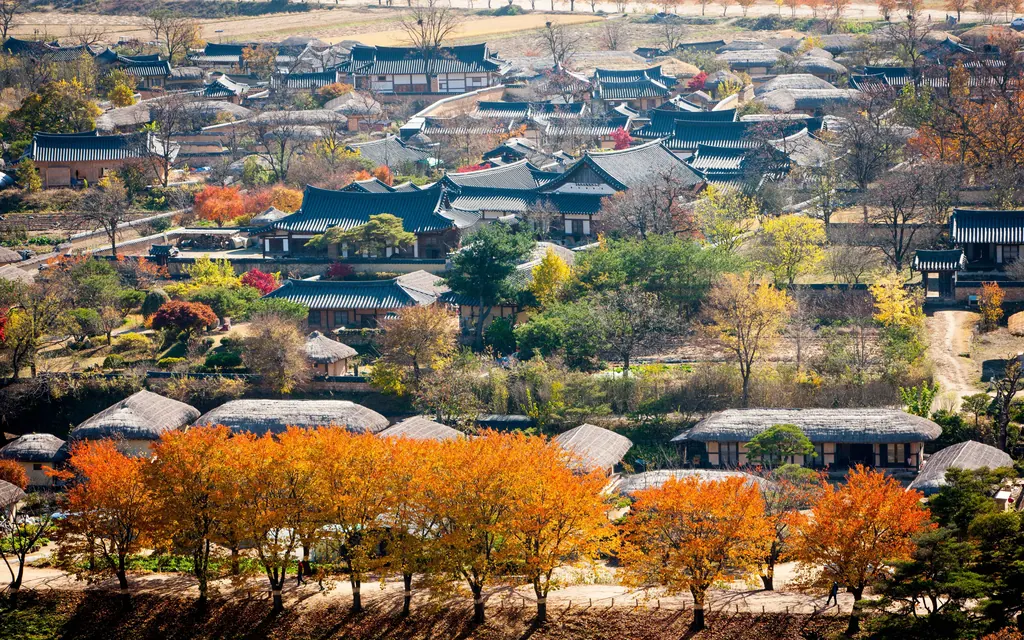
Hahoe Village in autumn, seen from Buyongdae CliffAndong, Gyeongbuk

Hahoe Village in autumn, seen from Buyongdae Cliff

Hahoe Village, Andong

A river curls into an S and holds the village close.

Getting there●●○○○Easy on your own: about 40 minutes by bus from Andong Station, which is about 2 hours from Seoul by KTX-Eum.

Best timeApr–May, Sep–Nov

To see a Joseon village where people still live, go to Andong.

Look down from Buyongdae cliff across the river and the Nakdong curls into a great S, holding the whole village gently in its embrace, tiled and thatched houses scattered among green trees, faint sounds of life drifting across. Hahoe is a clan village where the Pungsan Ryu family has lived for generations, keeping Joseon-era tiled and thatched houses; people still live here, and it became a World Heritage Site in 2010. “Hahoe” means the river turning around. The photo shows the view from Buyongdae. It's also home to the Hahoe Byeolsingut mask dance, often performed on weekends, when the drums sound and dancers in wooden masks take the stage. Walk through the village, then climb the cliff to look again, and you'll understand why the Ryu family never wanted to leave.

GETTING THEREAbout 40 minutes by bus from Andong Station or central Andong; Andong Station is about 2 hours from Seoul's Cheongnyangni by KTX-Eum.
GOOD TO KNOWThe liveliest time is the Andong International Mask Dance Festival — in 2026, September 24 to October 4, with performances in the village and town. Buyongdae cliff is across the river, reached by ferry or a detour; the ferry depends on season and water level. Check the official site for regular mask-dance dates.
SAFETYThe Buyongdae cliff edge has no high railings — don't get too close to the edge.
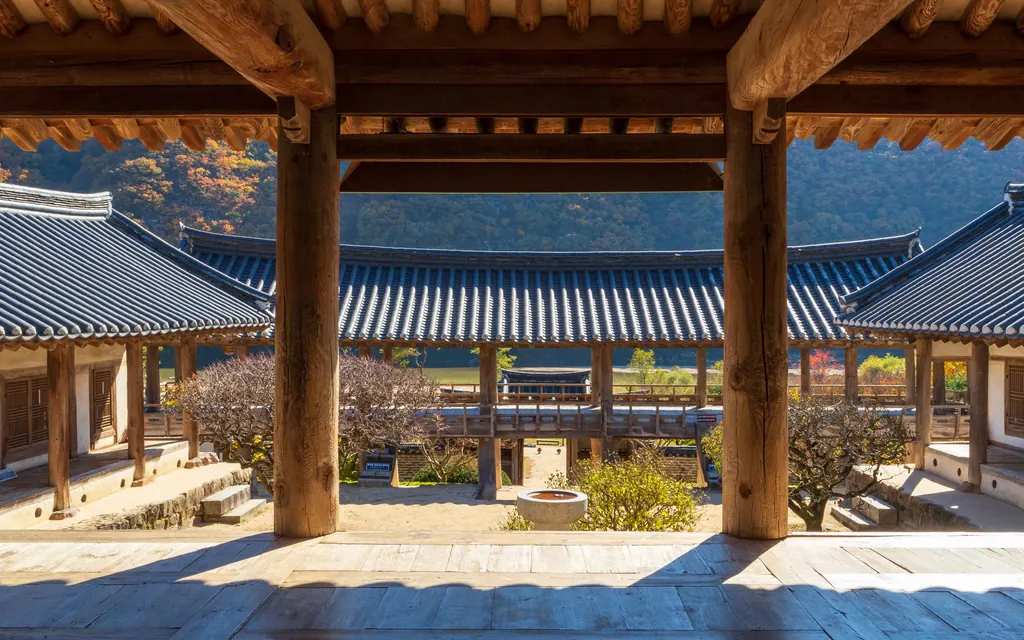
Byeongsan Seowon's courtyard and roofs, seen between wooden pillarsAndong, Gyeongbuk

Byeongsan Seowon's courtyard and roofs, seen between wooden pillars

Byeongsan Seowon, Andong

Before Mandaeru, watch the same river the scholars watched.

Getting there●●●●○Harder: public transport is poor; just over an hour on a dirt road from Hahoe Village, or take a taxi.

Best timeGood all year

When you visit Hahoe Village, go a little farther to Byeongsan Seowon.

Stand before Mandaeru, its long row of pillars framing the Nakdong River and Mount Byeongsan into picture after picture, a river breeze drifting beneath it, nothing to hear but wind and birds. Byeongsan Seowon is a Confucian academy honoring the Joseon statesman Ryu Seong-ryong; seowon were the private schools and shrines of the provinces at the time. Its great pavilion, Mandaeru, faces the river and the mountain and is considered a masterpiece of seowon architecture; together with eight other academies it's a World Heritage Site as the “Seowon, Korean Neo-Confucian Academies.” It's much quieter than Hahoe Village, the kind of place to do nothing but watch the river. The view scholars gazed at centuries ago is yours today, from the very same place.

GETTING THEREJust over 1 hour on a dirt road on foot from Hahoe Village, or take a taxi; public transport is inconvenient.
GOOD TO KNOWIn autumn, the view from Mandaeru over the river and layered hills is at its best. The pavilion is a heritage site and climbing may be restricted — follow on-site rules. There are no shops nearby, so bring water and snacks.
SAFETYCars use the dirt road to the academy and there are slopes — wear good shoes.
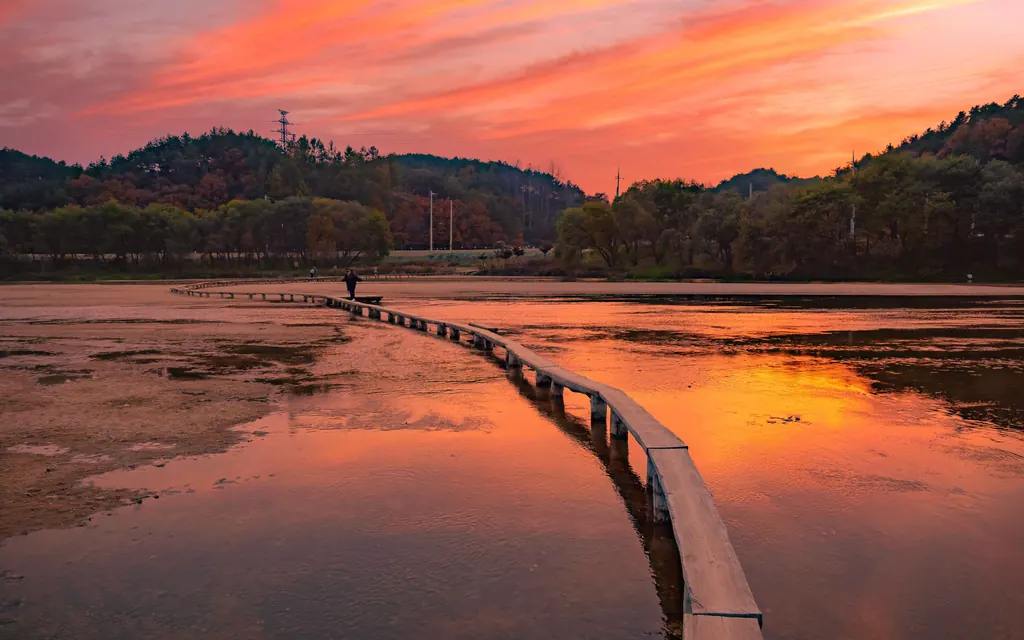
Museom's single-plank bridge across the river under a red skyYeongju, Gyeongbuk

Museom's single-plank bridge across the river under a red sky

Museom Village, Yeongju

A narrow log bridge to a village on the water.

Getting there●●●○○Some planning: about 30 minutes by taxi from Yeongju Station; public transport is rare.

Best timeApr–Oct

To cross a bridge only one person wide, go to Yeongju.

A narrow log bridge winds across the shallow stream, and you slow your steps on it as the water slips quietly beneath; on the far side, tiled and thatched houses stand in quiet rows, like an island floating on the water. Museom Village is wrapped on three sides by the Naeseongcheon stream and keeps late-Joseon tiled and thatched houses; it's a National Folklore Cultural Heritage. Before there was a road bridge, villagers came and went on this narrow log bridge, the oenamudari. It has since been rebuilt and is the village's most famous sight, at its best at sunset, when the bridge turns gold, or on misty mornings, when its far end vanishes into the white. Cross that bridge and you'll feel you've stepped into another era.

GETTING THEREAbout 30 minutes by taxi from Yeongju Station; public transport is very limited. Yeongju Station is about 1 hour 40 minutes from Seoul's Cheongnyangni by KTX-Eum.
GOOD TO KNOWAutumn, with shallow clear water and golden fields around the single-log bridge, is the most photogenic. In summer high water may close the bridge. Few people speak English or Chinese, so download a translation app.
SAFETYThe log bridge is narrow with no handrail — cross one at a time, and don't go on it in rain or ice.
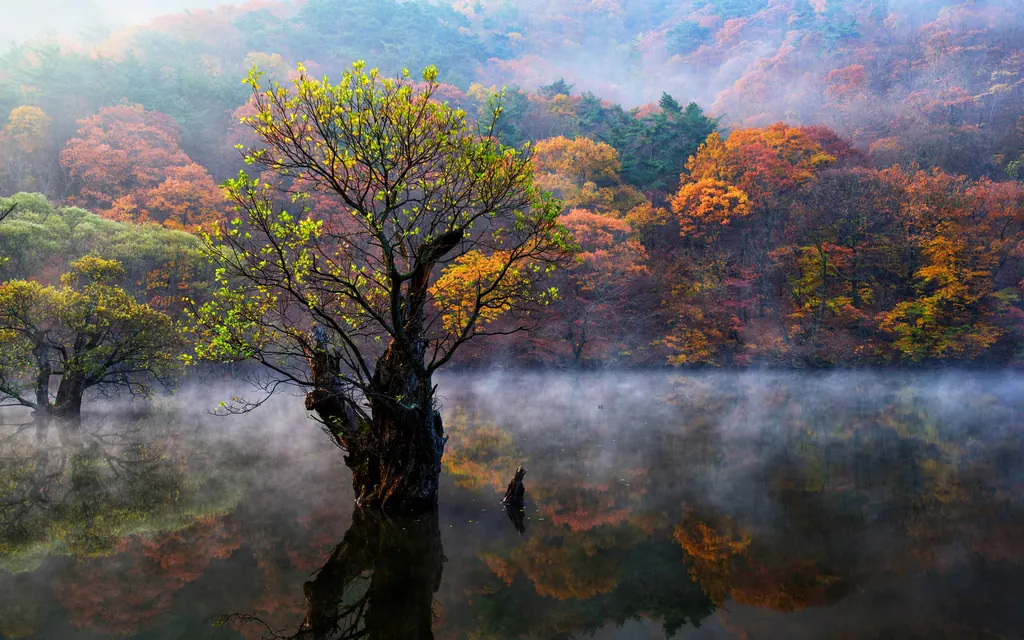
Old willows in the misty water of Jusanji, with autumn hills behindCheongsong, Gyeongbuk

Old willows in the misty water of Jusanji, with autumn hills behind

Jusanji Pond, Cheongsong

In the morning mist, willows standing in the middle of the water.

Getting there●●●●○Harder: public transport is very limited, with a bus and then a taxi; a car or private driver is more practical.

Best timeOct–Nov

In autumn in Gyeongbuk, go to Jusanji Pond at dawn for the mist.

Before dawn a layer of white mist slowly rises off the water, a few old willows standing in the middle of the pond, their reflections blurring in the haze, so quiet you hear only distant birds and the click of the photographers' shutters around you. Jusanji is a reservoir built around 1720 in the Joseon era for farming, inside Juwangsan National Park. Several wangbeodeul willows grow in the water, dreamlike when the morning mist rises; the Korean film Spring, Summer, Fall, Winter… and Spring was shot here, and photographers often wait here before dawn. Juwangsan National Park is also part of a UNESCO Global Geopark. Get there early, wait for the mist to rise, and you'll feel you've walked into a film.

GETTING THERETake a bus from Dong Seoul or Daegu to Cheongsong or Juwangsan, then a taxi. Public transport is very inconvenient; driving or hiring a car is more realistic.
GOOD TO KNOWAutumn and winter dawns give the best chance of mist around the old willows in the water, and autumn colour is lovely — weather permitting. Transport is sparse and few people speak English or Chinese, so first-timers may want a private car.
SAFETYDawn is very cold, so dress warmly, and don't wade into the pond.

Not sure which to pick? Take the 4-minute travel-personality quiz and find the one that suits you.

Take the quiz