TOP-TIER TRAVEL中/EN

Korea · Gyeonggi & Gangwon

9 hidden gems in Gyeonggi & Gangwon

Mountains & sea. We picked 9 places in this region — some well known, some few visitors find. Browse at your own pace, then take the quiz when something catches your eye.

TOP-TIER TRAVEL › All hidden gems › Korea › Gyeonggi & Gangwon

Not sure which to pick? Take the 4-minute travel-personality quiz and find the one that suits you.

Take the quiz
Suwon Hwaseong Fortress
First time? Start with the classics

You can't go wrong doing a first lap of Nami Island, Suwon Hwaseong, Gangneung's seaside café street and Seoraksan. Gyeonggi is reachable from Seoul by subway, while Gangwon takes two or three hours by KTX or bus, so save just a day or two for the place below that's truly yours.

Looking for a place to stay in this area? Start here:

Spot details checked: October 2026

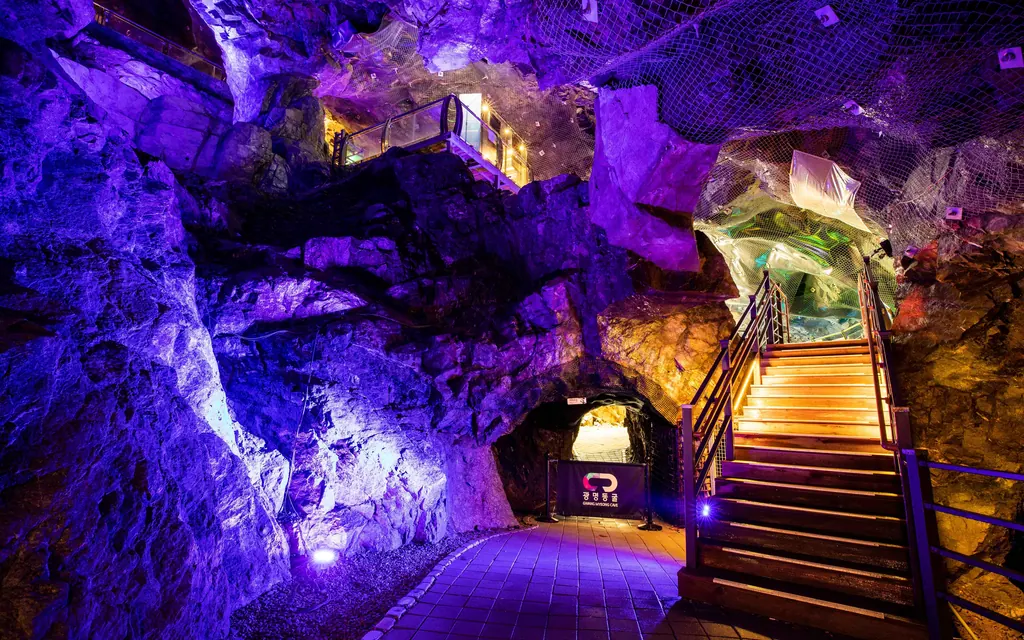
Lit passages and stairs inside Gwangmyeong CaveGwangmyeong, Gyeonggi

Lit passages and stairs inside Gwangmyeong Cave

Gwangmyeong Cave

Walk into an old gold mine, a glowing world underground.

Getting there●○○○○Very easy on your own: KTX or subway from Seoul to Gwangmyeong Station, then about 20 minutes by bus.

Best timeGood all year

An hour from Seoul, step into an old mine that glows.

Step into the tunnel and cool air rushes at you; however hot it is outside, it stays around 12°C in here, lights shifting color across the rock walls and dripping water echoing in the dark. Gwangmyeong Cave was a gold mine dug during the Japanese colonial period. After it closed in 1972 it was used as a warehouse, and from 2011 the city turned it into a cave theme park. The tunnels keep the old mine shafts and an underground lake that glows quietly under the lights, with added lighting, exhibits and a wine cellar; turn around and everything is a different color. It's not far from Seoul, perfect for escaping summer heat or winter cold. From a sleeping gold mine into a glowing underground world: it's a contrast worth experiencing for yourself.
GETTING THERETake the KTX or subway from Seoul to Gwangmyeong Station, then about 20 minutes by bus; buses also run from around Cheolsan Station on Subway Line 7.
GOOD TO KNOWSummer is the best time — hot outside, cool inside, though bring a light jacket. Closed Mondays, with queues on holidays. The steps inside are many and damp, so wear good shoes. Check the official site.
SAFETYIt's dim and the floor is wet — stay on the paths and don't cross the railings.
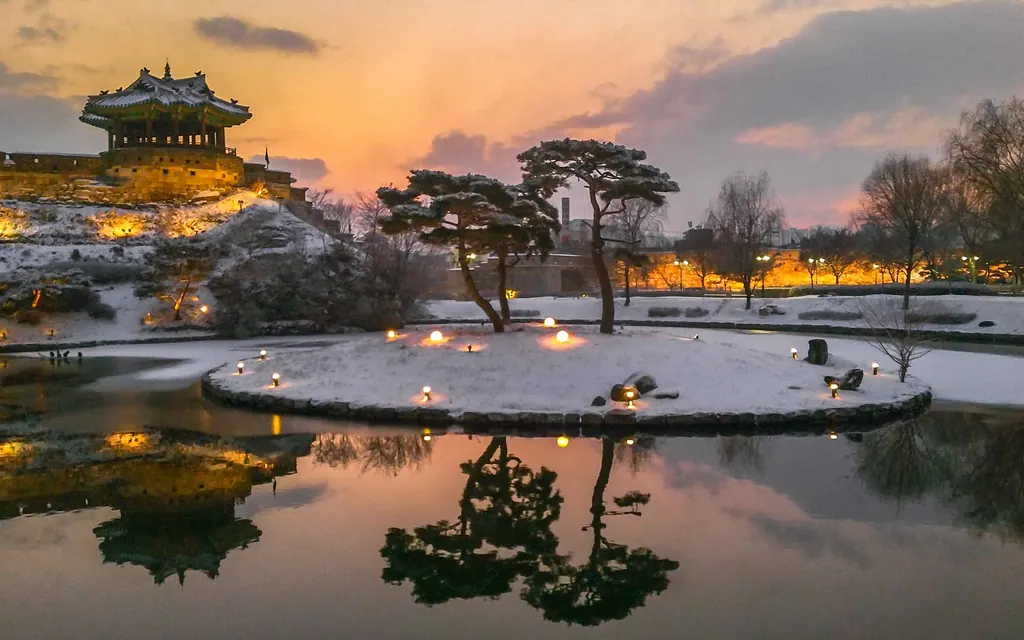
Yongyeon Pond lit up after snow, with the Banghwasuryujeong pavilion behindSuwon, Gyeonggi

Yongyeon Pond lit up after snow, with the Banghwasuryujeong pavilion behind

Suwon Hwaseong Fortress

Walk the king's walls as a pavilion lights up after snow.

Getting there●○○○○Very easy on your own: about an hour on the Seoul subway to Suwon Station, then about 15 minutes by bus.

Best timeApr–May, Sep–Nov

An hour from Seoul by subway, walk a World Heritage fortress wall.

Climb along the walls as the stone follows the rise and fall of the hills, gate towers one after another, wind whistling through the battlements and the city spread out below. Hwaseong is the fortress King Jeongjo of Joseon completed in 1796. Its walls run about 5.7 km and combine Eastern and Western fortification techniques of the time; it became a World Heritage Site in 1997. The photo shows Banghwasuryujeong pavilion at the fortress's northeast corner, especially beautiful lit up after snow, when snow, lights and the pavilion's reflection all settle on Yongyeon Pond below. Inside the walls is Hwaseong Haenggung palace, and when you're tired, the Haenggung-dong area outside the walls is full of small shops and cafés. On a snowy night, wait beneath Banghwasuryujeong for the lights to come on, and you'll feel you came at exactly the right time.

GETTING THEREAbout 1 hour from Seoul on Subway Line 1 to Suwon Station, then about 15 minutes by bus to the Paldalmun or Janganmun area.
GOOD TO KNOWAutumn is the best season to walk the walls, and they're lovely lit up at dusk; Hwaseong Haenggung also opens on certain summer and autumn evenings. The full loop takes 2–3 hours with plenty of slopes. Check closed days and night-opening dates on the official site.
SAFETYSome sections of the wall have no high railings; watch your step on night walks.
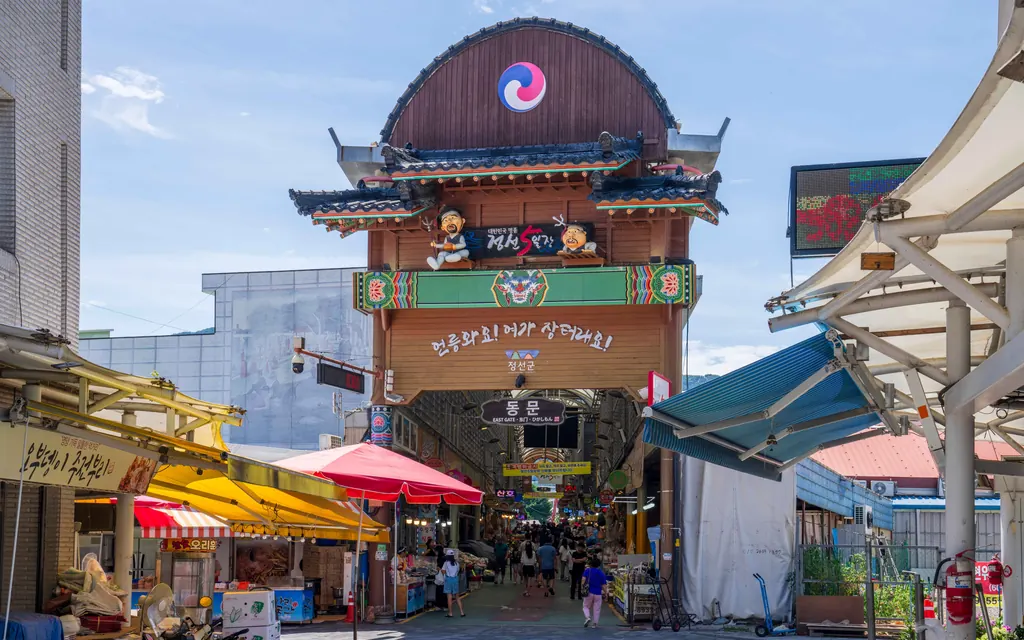
The entrance to Jeongseon's five-day marketJeongseon, Gangwon

The entrance to Jeongseon's five-day market

Jeongseon Five-Day Market

On days ending in 2 or 7, a mountain market in Arirang's homeland.

Getting there●●●○○Doable on your own, but it's a long way: about 3 hours by train or bus from Seoul.

Best timeGood all year

To see a real mountain-town market in Korea, go to Jeongseon on a market day.

When the market opens, pancakes sizzle on the griddles, the smell of buckwheat and potato fills the street, sellers' calls rise over one another, and wild greens and herbs gathered from the mountains are laid out basket by basket. Jeongseon is a small town deep in the Gangwon mountains and one of the key birthplaces of the folk song Arirang. Its five-day market has run for decades, opening on days ending in 2 or 7 (the 2nd, 7th, 12th, 17th, 22nd and 27th), selling wild greens, medicinal herbs, and Gangwon specialties like buckwheat and potato pancakes. Shops in Arirang Market, where it's held, are also open on other days. If your dates line up with a market day, don't miss it: there are only six a month, and if you miss one, you wait for the next 2 or 7.

GETTING THERETake a train from Seoul's Cheongnyangni Station to the Jeongseon area, or a bus from Dong Seoul Bus Terminal — about 3 hours.
GOOD TO KNOWThe market only runs on dates ending in 2 or 7, when it's full of mountain greens and snacks — plan your date around it. Transport is sparse, so check return times. Few people speak English or Chinese; download Papago.
SAFETYThe market is crowded — keep an eye on your belongings.
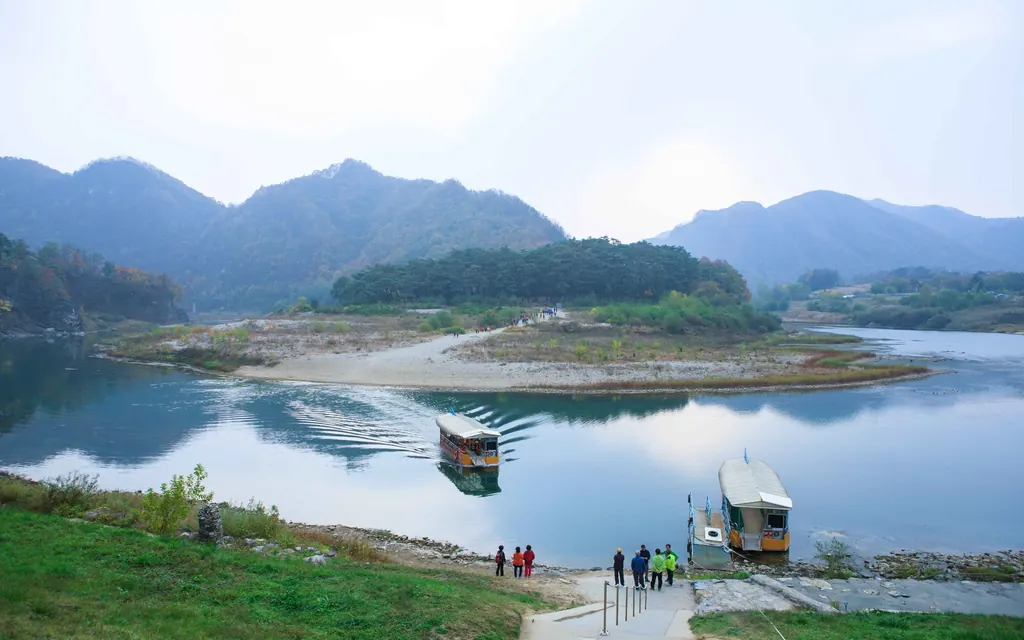
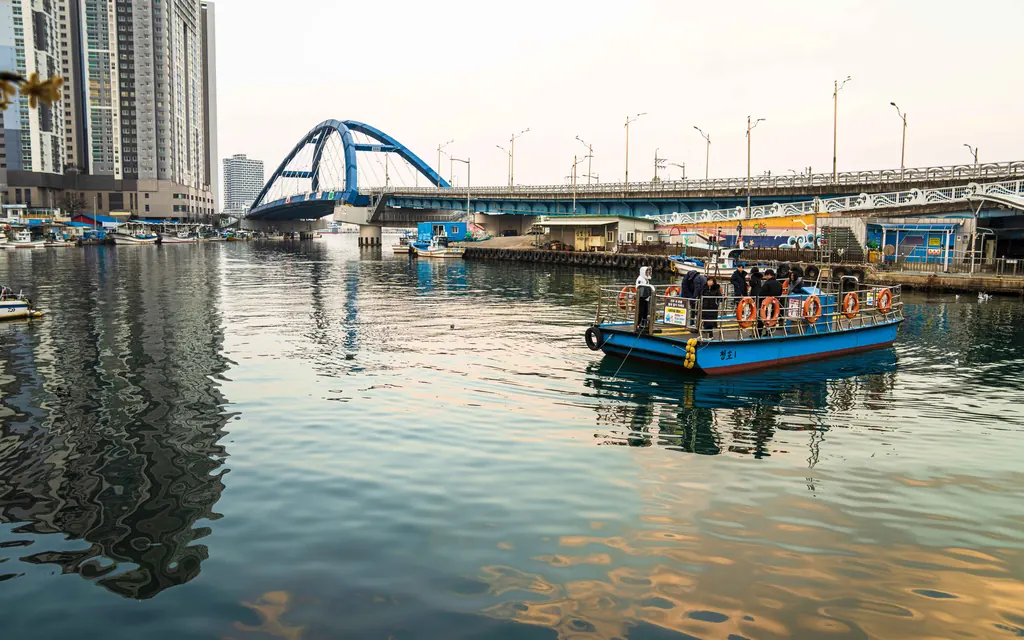
The small ferry crossing the harbour, with a blue arch bridge behindSokcho, Gangwon

The small ferry crossing the harbour, with a blue arch bridge behind

Abai Village, Sokcho

Ride a cable ferry to a refugees' seaside village.

Getting there●●○○○Easy on your own: 2.5–3 hours by bus from Seoul to Sokcho, then a walk to the ferry crossing.

Best timeMay–Oct

In Sokcho, ride the hand-pulled ferry across the channel.

The flat ferry inches along its cable toward the far bank, gulls crying overhead and the air smelling of sea and squid sundae. Abai Village grew up on Sokcho's shore when refugees from the north settled here during the Korean War; “abai” means an older man in northern dialect. It's known for Hamgyeong-style squid sundae and cold noodles. A channel separates the village from central Sokcho, and residents cross on a cable-pulled flat ferry called the gaetbae, which visitors can ride too; ride it once and you've truly arrived. The Korean drama Autumn in My Heart was filmed here. Taste the flavors of the north, think of the people who could never go home, and this little village leaves something warm in your heart.

GETTING THEREAbout 2.5–3 hours by bus from Dong Seoul or Seoul Express Bus Terminal to Sokcho, then walk from central Sokcho to the ferry.
GOOD TO KNOWCrossing on the little hand-pulled ferry and eating Abai sundae is the classic experience. The ferry is paid and may pause in bad weather. The village is small — pair it with Sokcho Central Market and Seoraksan over one or two days.
SAFETYHold the railings getting on and off, and keep children close.
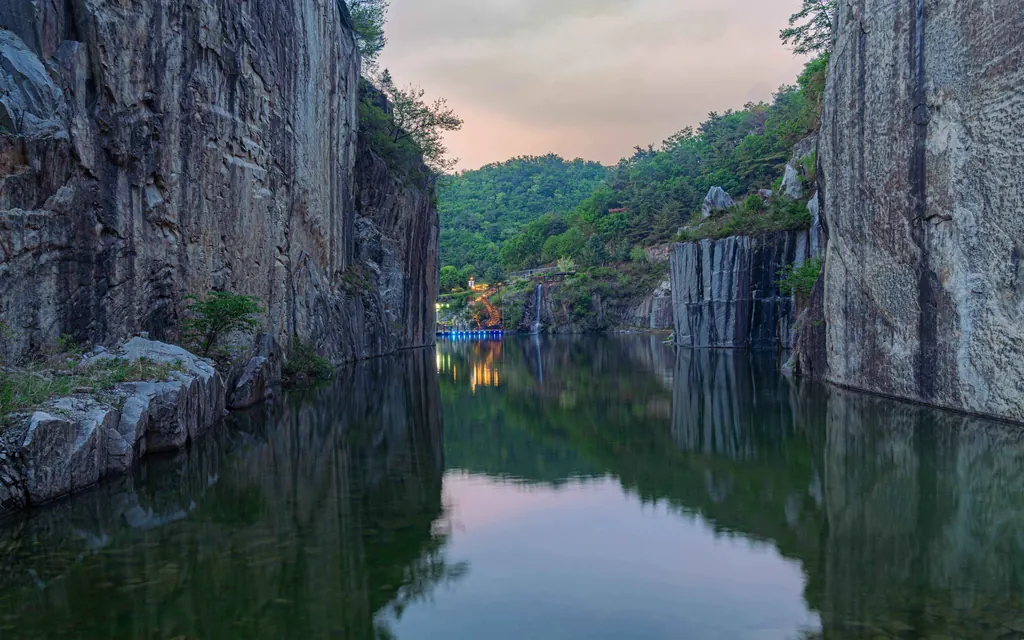
The lake between sheer granite cliffs at Pocheon Art ValleyPocheon, Gyeonggi

The lake between sheer granite cliffs at Pocheon Art Valley

Pocheon Art Valley

An old quarry hiding a perfectly still lake.

Getting there●●●○○Some planning: just over an hour by bus from Seoul, then a local bus with few departures; a private driver or car is easier.

Best timeApr–Oct

An hour or so north of Seoul, see a quarry turned into a lake.

At the top of the slope a huge rock wall suddenly rises before you, cut perfectly smooth, and below it lies a still lake so clear it mirrors the cliff, with nothing to hear but the wind. This was once a granite quarry. After mining stopped, the pit filled with water to form Cheonjuho lake, and in 2009 it reopened as an art park with exhibitions and outdoor performances. The park is also part of the Hantangang River UNESCO Global Geopark. You can ride the park's small monorail up or take your time on the slope. A mountain once hollowed out has become an art park, and standing by the lake, you'll be moved by its stillness.

GETTING THEREJust over 1 hour by bus from Seoul to central Pocheon, then a city bus. Public transport is infrequent, so a hired car or driving is easier.
GOOD TO KNOWSummer and autumn are greenest, when the lake against the quarry walls is most photogenic. The park has closed days and the monorail may pause in bad weather — check the official site.
SAFETYStay on the paths by the lake and cliffs, and don't cross the railings.
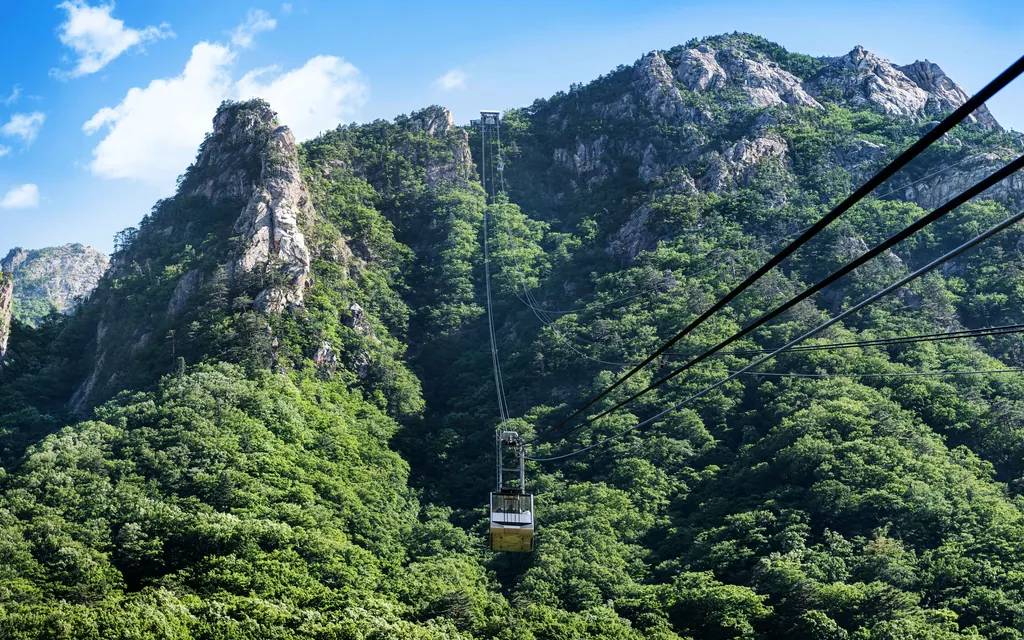
The Seoraksan cable car rising towards rocky peaksSokcho, Gangwon

The Seoraksan cable car rising towards rocky peaks

Gwongeumseong, Seoraksan

Ride up Seoraksan and stand on the rock where generals took refuge.

Getting there●●○○○Easy on your own: 30–40 minutes by bus from Sokcho to the Seoraksan entrance, then up by cable car.

Best timeOct

When you're in Sokcho, ride the cable car up Seoraksan for the rock formations.

The cable car climbs past a whole range of pale gray granite peaks; step off, scramble up a rock slope as the wind picks up, and at the top the peaks line up all around you with the blue East Sea beyond. Seoraksan is one of Korea's most iconic mountains, within Seoraksan National Park and a UNESCO Biosphere Reserve. From the small park at Seorak-dong, ride the cable car up and walk a rock slope to the site of Gwongeumseong, a fortress legend says two Goryeo generals named Gwon and Kim built to take refuge. From there you look over the surrounding peaks to the East Sea. Autumn foliage season is the busiest, when the mountains turn red and gold. Standing atop Seoraksan without a hike: this view is worth a special trip.

GETTING THEREAbout 30–40 minutes by bus from central Sokcho to the Seoraksan entrance (Seorak-dong), then walk to the cable car station.
GOOD TO KNOWMid-to-late October brings the best foliage, with whole mountainsides turning red below Gwongeumseong. The cable car queue can be very long on autumn holidays, so go early; it stops in strong wind. Check the national park site for access and trail status.
SAFETYThe rock slope above the cable car station is steep with many unfenced sections — don't go up in rain or ice, and wear non-slip shoes.
The ferry crossing to the pine-covered bank at CheongnyeongpoYeongwol, Gangwon

The ferry crossing to the pine-covered bank at Cheongnyeongpo

Cheongnyeongpo, Yeongwol

Water on three sides, the last place of a sixteen-year-old king.

Getting there●●●○○Doable on your own with changes: about 2.5 hours by bus from Seoul to Yeongwol, then a taxi or bus to the ferry point.

Best timeGood all year

To see a tragedy of the Joseon dynasty, cross the river in Yeongwol.

The ferry touches the bank and you walk into a grove of old pines, the ground soft with needles, your footsteps hushed, the wind murmuring low in the branches as the river flows quietly on three sides. Cheongnyeongpo is a spot enclosed by a bend in the Seogang River, with water on three sides and a steep ridge on the fourth, like a natural prison. In 1457, King Danjong of Joseon, whose throne had been seized by his uncle King Sejo, was exiled here and soon ordered to die, aged just 16. Today you reach it by ferry; in the pine forest are a memorial stone for Danjong and an old pine, Gwaneumsong, said to have heard him weeping. It's a national Scenic Site. Stand beneath that pine, listen to the wind, and you'll think of the boy who never returned to his palace. That silence stays with you a long time.

GETTING THEREAbout 2.5 hours by bus from Dong Seoul Bus Terminal to Yeongwol, then a taxi or bus to the ferry point; you can also take the train to Yeongwol Station.
GOOD TO KNOWAutumn is when the pine grove is most serene, and the short boat crossing feels like stepping into the story. The boat stops in high water or bad weather, so check first. Public transport in Yeongwol is sparse — check return times.
SAFETYThere are drops in the pine forest, so stay on the paths and keep away from the cliff edge.
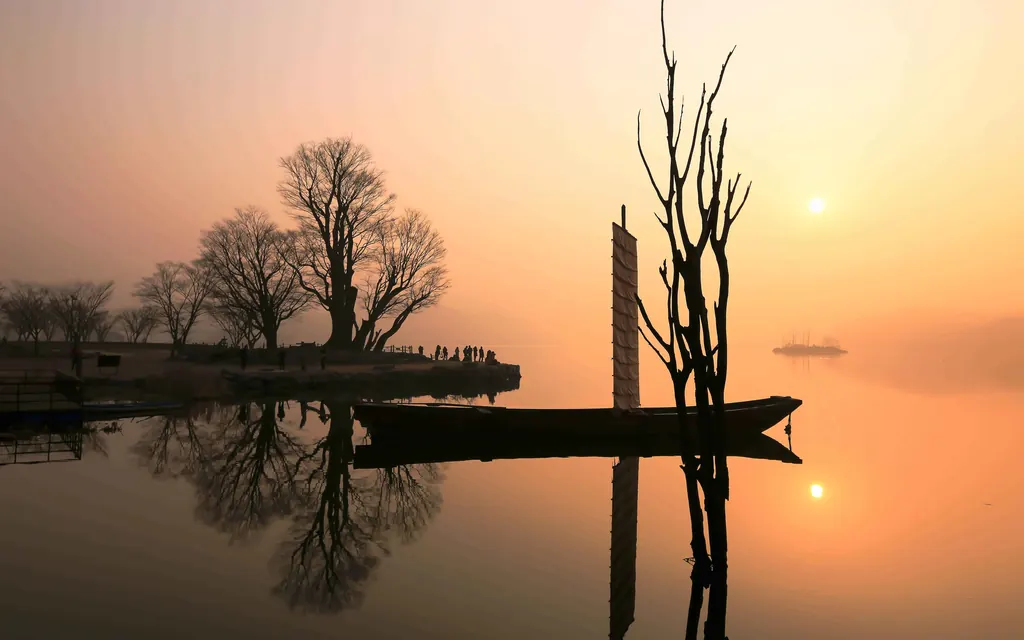
Silhouettes of old trees and a wooden boat at DumulmeoriYangpyeong, Gyeonggi

Silhouettes of old trees and a wooden boat at Dumulmeori

Dumulmeori, Yangpyeong

Where two rivers meet, the morning mist is at its loveliest.

Getting there●○○○○Very easy on your own: Gyeongui–Jungang line from Seoul to Yangsu Station, then a 20-minute walk.

Best timeOct–Dec

To see a river in the mist near Seoul, go to Dumulmeori at dawn.

At first light a layer of white mist rises from the water, the old zelkova drifting in and out of view, a wooden boat resting quietly by the bank, nothing to hear but waterbirds as the photographers hold their breath. Dumulmeori means “where two waters meet”: the Bukhangang and Namhangang rivers join here to form the Han. It was once a ferry crossing; today a zelkova tree around 400 years old and a simple wooden boat by the water make it a favorite spot for photographers waiting for the dawn mist. Once the mist lifts, take a walk at the nearby lotus garden Semiwon. One early morning buys you two rivers meeting in the mist, and it's worth it.

GETTING THERETake the Gyeongui–Jungang Line from Seoul to Yangsu Station, then walk about 20 minutes.
GOOD TO KNOWAutumn and winter dawns give you the best chance of mist over the river, weather permitting. Weekends get busy by day, so come early for quiet.
SAFETYThe riverside path has no high railings — watch your step in heavy morning mist.
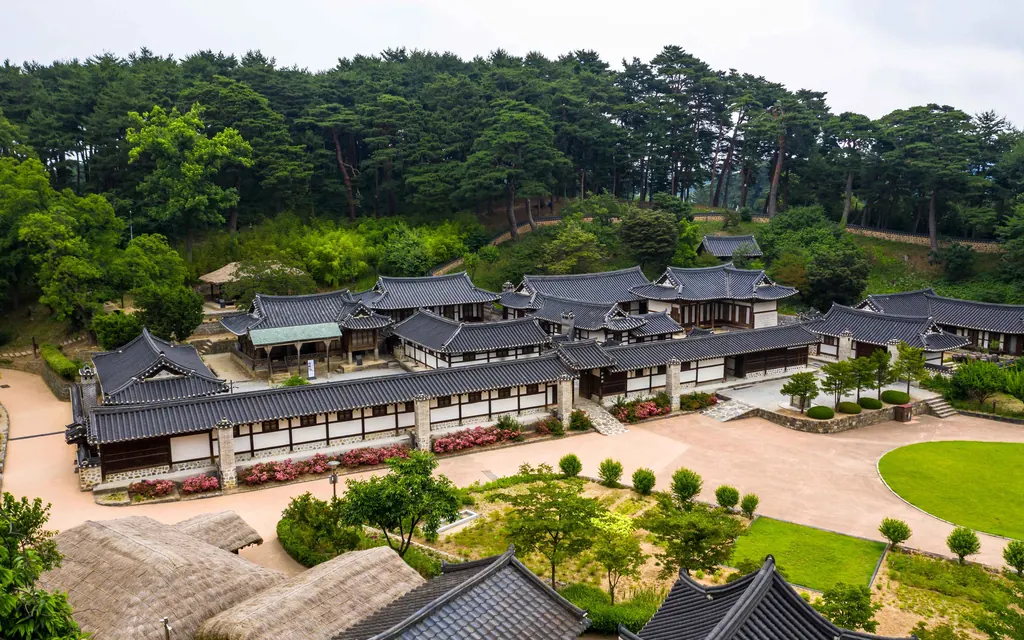
Seongyojang's hanok buildings from aboveGangneung, Gangwon

Seongyojang's hanok buildings from above

Seongyojang, Gangneung

A noble estate you once had to reach by boat.

Getting there●●○○○Easy on your own: about 2 hours by KTX from Seoul to Gangneung, then about 15 minutes by bus or taxi.

Best timeGood all year

When you're in Gangneung, save an afternoon for a Joseon aristocrat's home.

Push open the wooden gate and the eaves of house after house overlap in layers, the courtyards perfectly quiet; by the lotus pond a pavilion is mirrored in the water and the lotus leaves sway in the breeze. Seongyojang was begun in the early 18th century by descendants of the late-Joseon nobleman Yi Nae-beon, and it's still managed by the family today; it's a National Folklore Cultural Heritage. The name comes from the fact that you once had to cross Gyeongpo Lake by boat to get here. The estate has around a hundred rooms and the Hwallaejeong pavilion beside a lotus pond, and it's one of Korea's best-preserved aristocratic homes. Some rooms now offer hanok stays: sleep a night in a three-hundred-year-old estate and open the door in the morning onto a noble's courtyard. An experience like that doesn't come along often.

GETTING THEREAbout 2 hours by KTX from Seoul or Cheongnyangni Station to Gangneung Station, then about 15 minutes by bus or taxi.
GOOD TO KNOWThe hanok are most atmospheric in autumn or after snow, and the lotus pond is lovely in summer. Hours vary by season, so check the official site. Pair it with Gyeongpo Lake and Gangneung's coffee street.
SAFETYHanok have lots of thresholds and steps — watch your footing.

Winter ski areas & events

Coming in winter? The region also has these. Full details (lessons, lodging, transport) are in the winter corner of your quiz results.

Ski areas

  • Yongpyong: One of Korea's biggest ski resorts
  • Alpensia: Gentle slopes, good for beginners and families
  • Phoenix Pyeongchang: The Olympic snowboard venue
  • Welli Hilli: A Gangwon ski area closer to Seoul
  • High1: Long runs all the way down from the top

Not sure which to pick? Take the 4-minute travel-personality quiz and find the one that suits you.

Take the quiz