TOP-TIER TRAVEL中/EN

Japan · Hokkaido

9 hidden gems in Hokkaido

Snow country & open land. We picked 9 places in this region — some well known, some few visitors find. Browse at your own pace, then take the quiz when something catches your eye.

TOP-TIER TRAVEL › All hidden gems › Japan › Hokkaido

Not sure which to pick? Take the 4-minute travel-personality quiz and find the one that suits you.

Take the quiz
Lake Toya
First time? Start with the classics

You can't go wrong doing a first lap of Sapporo, Otaru and Hakodate. Hokkaido is huge — getting between cities often takes two or three hours — so save just a day or two for the place below that's truly yours.

Looking for a place to stay in this area? Start here:

Spot details checked: October 2026

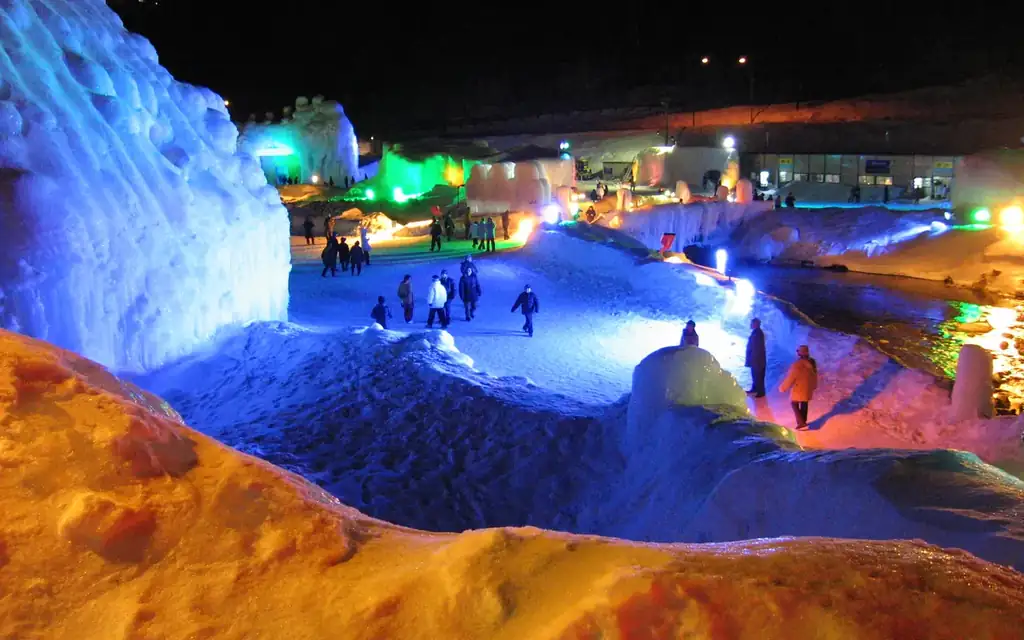
The Sounkyo Ice Waterfall Festival under coloured lights at nightKamikawa, Hokkaido

The Sounkyo Ice Waterfall Festival under coloured lights at night

Sounkyo Ice Fall Festival

In a sub-zero gorge, the ice glows.

Getting there●●●○○Doable on your own with changes: about 1.5 hours by limited express from Sapporo to Asahikawa, then about 2 hours by bus.

Best timeJan–Mar

In winter in Hokkaido, save a night for a festival made of ice.

On a night of minus ten degrees, your breath frosts on your eyelashes, giant ice pillars, ice tunnels and ice houses glow blue, purple and green, and the snow creaks underfoot. Sounkyo is a gorge cut through the Daisetsuzan mountains by the Ishikari River, lined with towering columnar cliffs; in summer and autumn it's a place for fall colors. Winter's highlight is the Sounkyo Onsen Ice Fall Festival: river water is sprayed to build structures of ice, lit up in color after dark, so one loop feels like wandering a maze made of ice. The hot-spring town is right next door — when your fingers are numb, go straight back to your inn and sink into the hot water, and in that moment you simply melt.
GETTING THEREAbout 2 hours by Dohoku Bus from Asahikawa Station, or JR to Kamikawa Station then about 30 minutes by bus. From Sapporo, first take a limited express to Asahikawa (about 1.5 hours).
GOOD TO KNOWYou can only see this in winter: the 2027 Ice Fall Festival runs January 23 to March 7, and the ice sculptures are most magical when lit at night. Check the Kamikawa town or Sounkyo tourism association site before you go.
SAFETYNight temperatures are often below minus 10°C — bring a hat, gloves and anti-slip shoes. The ground is icy, so walk slowly.
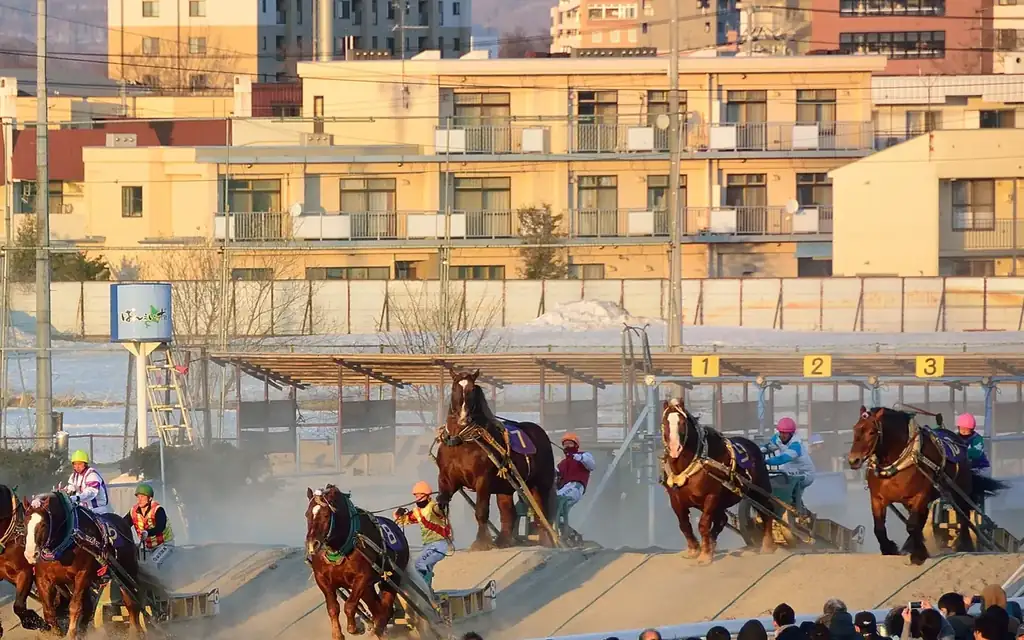
Draft horses hauling sleds out of the starting gateObihiro, Hokkaido

Draft horses hauling sleds out of the starting gate

Ban'ei Horse Racing, Obihiro

One-ton horses hauling iron sleds up a dirt slope.

Getting there●●○○○Easy on your own: about 2.5 hours by JR limited express from Sapporo to Obihiro, then a 10-minute bus ride or a walk.

Best timeGood all year

To see a race that exists only here in the world, come to Obihiro.

The horses' breath steams white, heavy iron sleds grind up the dirt slope, jockeys shout, and the cheers from the stands rise wave after wave. Ban'ei racing exists only in Obihiro: draft horses weighing about a ton haul weighted iron sleds along a straight track with two dirt slopes, testing strength and stamina. It grew out of the farm horses of Hokkaido's pioneer era and has been named a Hokkaido Heritage. Races run in winter too, so you can watch in the snow. After dark, walk over to the Kita-no-Yatai food-stall village near Obihiro Station, where tiny stalls crowd together serving local Tokachi ingredients, and the steam and laughter fill the winter night.

GETTING THEREAbout 2.5 hours from Sapporo on the JR Tokachi or Ozora limited express to Obihiro Station. The racecourse is west of the station, about 10 minutes by bus, or you can walk. Kita-no-Yatai is near the station, so you'll travel separately between the two.
GOOD TO KNOWThe year's biggest race, the Ban'ei Kinen, is the most thrilling day — in 2026 it was March 22, and the photo is from that race. Regular races are much less crowded, and many race days run into the evening. There aren't races every day, so check the Ban'ei Tokachi official schedule. You must be 20 or older to bet in Japan.
SAFETYObihiro winters are very cold, and standing still to watch can chill you fast — dress warmly. The roads between the racecourse and the stalls may be icy.
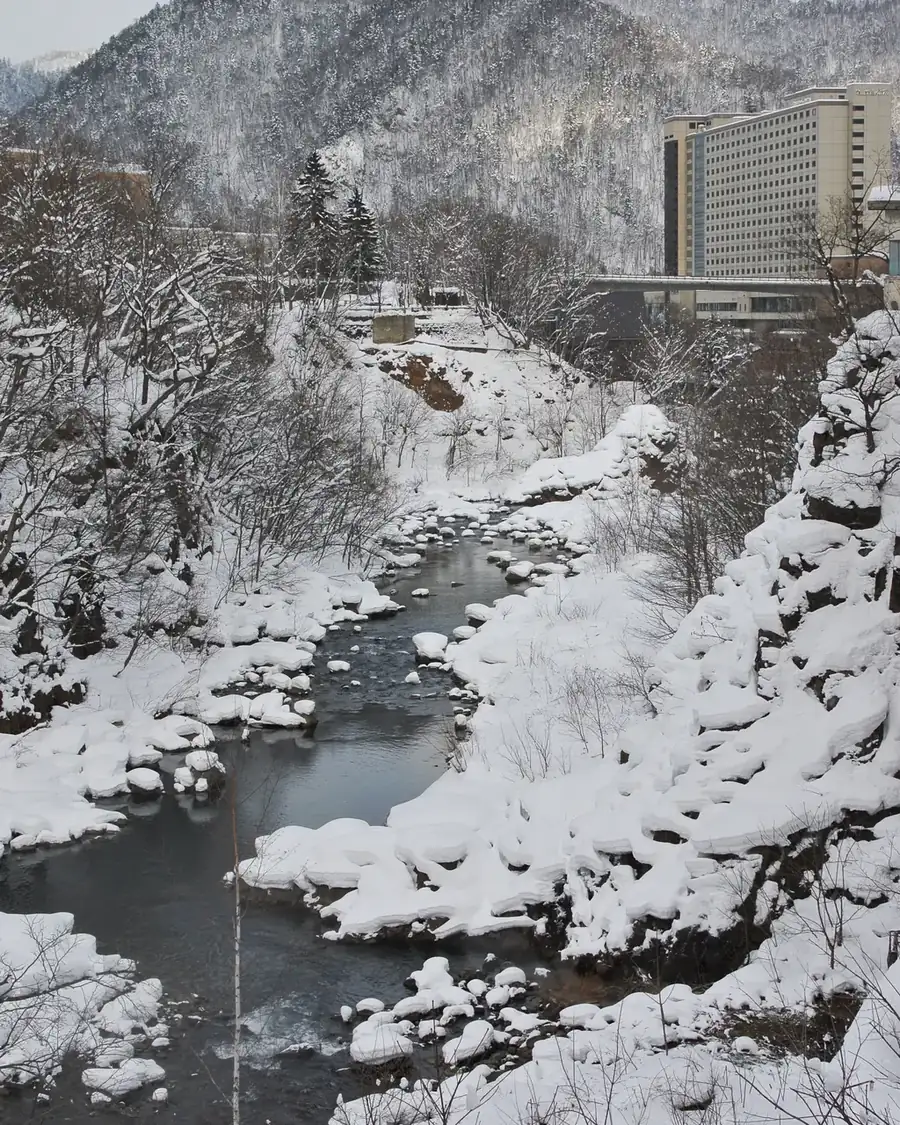
Jozankei's snowy gorge, with a hot-spring hotel beyondMinami-ku, Sapporo, Hokkaido

Jozankei's snowy gorge, with a hot-spring hotel beyond

Jozankei Onsen

An hour from Sapporo, soak in a world of snow.

Getting there●○○○○Very easy on your own: 1 hour to 1 hour 20 minutes by bus from Sapporo Station.

Best timeOct–Nov, Jan–Feb

Even with just half a day, you can get from Sapporo to a snowy hot spring.

Snowflakes land on the surface of an open-air bath and vanish the moment they touch the hot water, and all you can hear in the valley is the river. Jozankei Onsen lies in the Toyohira River valley in Sapporo's Minami Ward; legend says it was founded in 1866 by the ascetic monk Miizumi Jozan, and it's called “Sapporo's back garden.” The hot-spring town stretches along the valley — a famous spot for fall colors in autumn, and in winter the whole valley is buried in snow, with many inns offering open-air baths with snow views. When you need a break, there are free foot baths along the street; sit down, soak your feet and watch the snow drift down. You don't have to go far to give an afternoon to snow and hot water.

GETTING THEREAbout 1 hour to 1 hour 20 minutes by Jotetsu bus from Sapporo Station, or take the Namboku subway line to Makomanai and then a bus for about 40 minutes.
GOOD TO KNOWUnder an hour from Sapporo, it's most atmospheric in October's autumn colours and in winter, soaking while snow falls. In winter the streets are icy, so walk carefully. Rooms fill up on weekends and during foliage season — book early.
SAFETYDrink water before and after bathing. The temperature difference at open-air baths in winter is big — don't stay in long if you feel unwell.
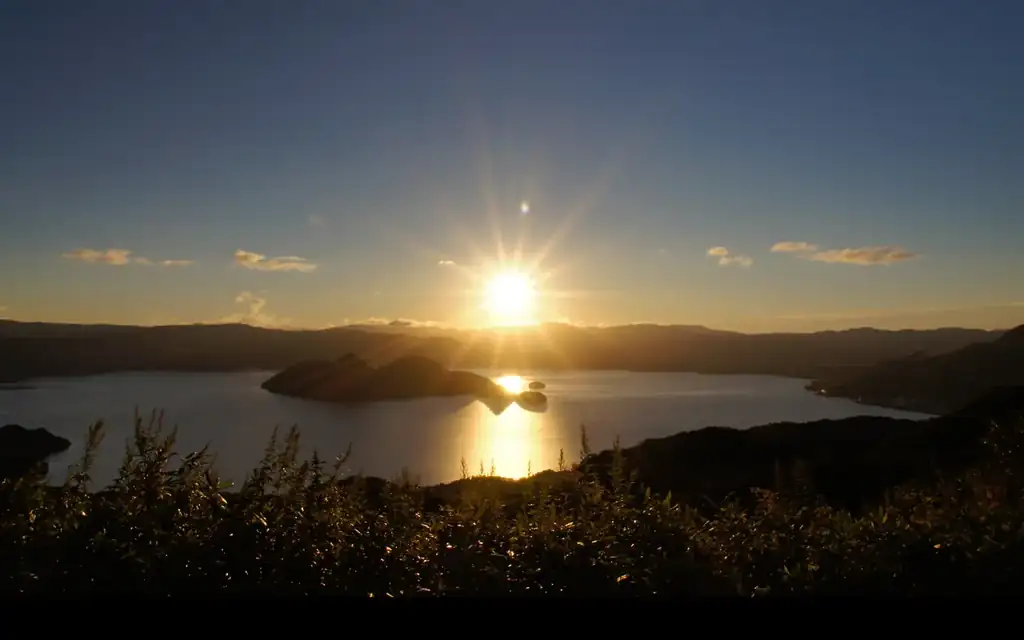
Low sun over Lake Toya and its islandToyako, Hokkaido

Low sun over Lake Toya and its island

Lake Toya

Hot springs, a volcano and fireworks over the lake every night.

Getting there●●○○○Easy on your own: about 2 hours by JR limited express from Sapporo to Toya Station, then about 20 minutes by bus; direct buses also run.

Best timeMay–Oct

Want a hot-spring night and fireworks? Lake Toya is a great fit.

Boom — fireworks burst over the water, their reflections painting Lake Toya in color as people in yukata stand on the shore, faces turned up. Lake Toya is a caldera lake formed by a volcano, with Nakajima island in the middle. Nearby Mount Usu is still active, and the craters and buckled roads left by its 2000 eruption are now walking trails; the whole area was among the first in Japan certified as a UNESCO Global Geopark. By day, walk the lakeshore and see the power of the earth up close. From late April to the end of October, fireworks go off over the lake every night, visible from the shore of the hot-spring town. Step out of your bath just in time for the first burst, and the day feels complete.

GETTING THEREAbout 2 hours from Sapporo by JR limited express to Toya Station, then about 20 minutes by bus to Toyako Onsen. Direct buses from Sapporo to Toyako Onsen also run.
GOOD TO KNOWFrom spring to autumn there are fireworks over the lake every night — in 2026, April 28 to October 31, starting at 20:45 for about 20 minutes. There's also a short winter run, February 3–12 in 2026. The Mount Usu crater trail closes in winter. Dates shift slightly each year, so check the official site.
SAFETYStay on the marked trails around the craters and don't cross the fences.
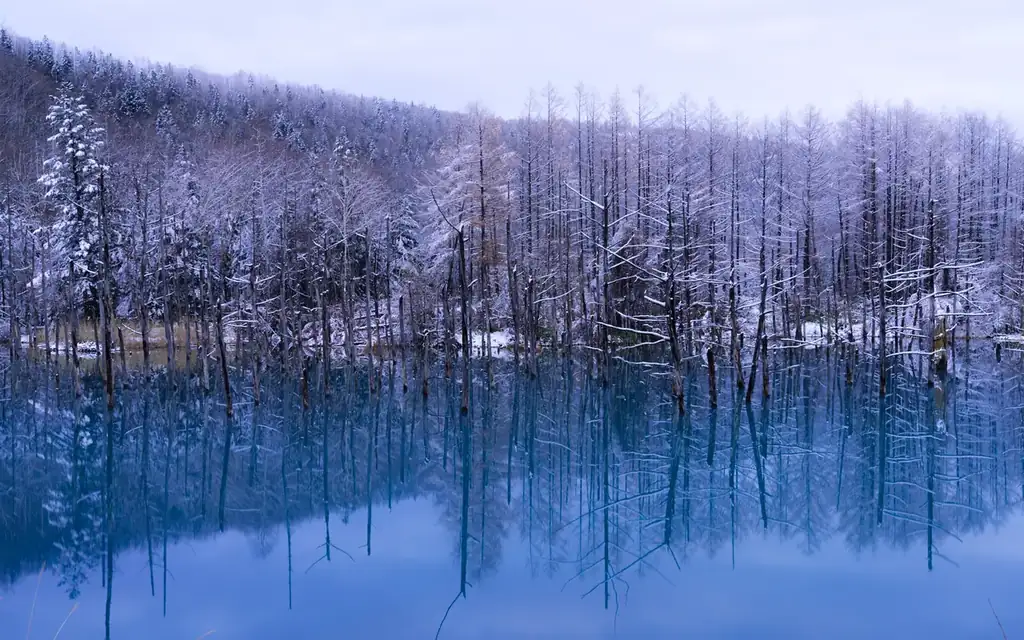
Shirogane Blue Pond in winter, with snow-dusted bare treesBiei, Hokkaido

Shirogane Blue Pond in winter, with snow-dusted bare trees

Shirogane Blue Pond, Biei

A pond so blue it doesn't look real.

Getting there●●●○○Doable on your own with changes: limited express from Sapporo to Asahikawa, JR to Biei, then about 20 minutes by bus; 2.5–3 hours one way.

Best timeJun–Oct

To see a pond so blue it doesn't look real, add a stop at Biei's Blue Pond.

Through the trees, a pool of almost unreal blue suddenly appears, snow-white dead trees standing in the water, so quiet you can hear your own breath. The Shirogane Blue Pond lies at the foot of Mount Tokachi. After the 1988 eruption, a dam built to hold back mudflows filled with water and accidentally created the pond; aluminum in the water scatters light into blue, and the trees standing in it are dead larches. Its color changes with the season, weather and time of day, so no two visits look the same. In winter the surface is mostly frozen and snow-covered, and after the first snows there are evening illuminations — a completely different look. Take a photo, and even you will find it hard to believe it's real.

GETTING THEREFrom Sapporo, about 1.5 hours by limited express to Asahikawa, then about 35 minutes on the JR Furano Line to Biei Station, then about 20 minutes by Dohoku Bus toward Shirogane Onsen.
GOOD TO KNOWThe blue reflection only shows when the pond isn't frozen — the first snows are your best chance. There's also an evening illumination, October 22, 2026 to April 21, 2027, until 9 pm, though once the pond freezes the blue water is hidden. Winter buses are few, so check return times and the latest updates.
SAFETYThe pond-side path gets snowy and icy in winter — wear anti-slip shoes. Brown bears live in the surrounding mountains; stay on the path.
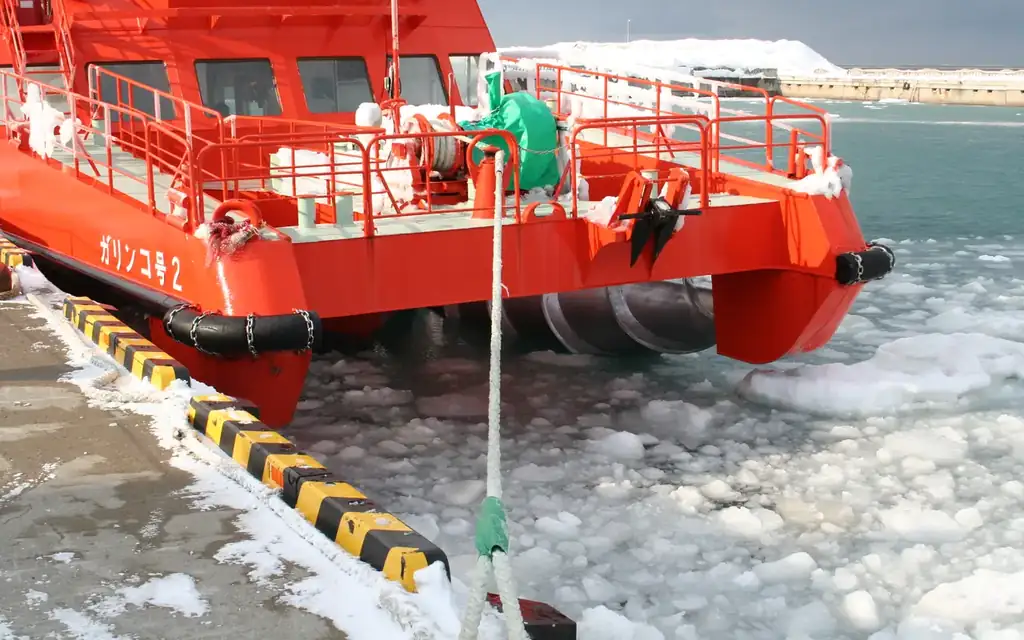
The Garinko II icebreaker moored among drift iceMonbetsu, Hokkaido

The Garinko II icebreaker moored among drift ice

Monbetsu Drift-Ice Icebreaker

The whole sea is white, and the ship is drilling through the ice.

Getting there●●●●○Remote: over 4 hours by highway bus from Sapporo to Monbetsu; plan to stay a night.

Best timeFeb

In winter in Hokkaido, it's worth a special overnight trip to see drift ice once.

Crunch, crunch — the drills at the bow crush the drift ice, thick blocks tumble beside the ship, and as far as you can see, the sea is white. Every winter, drift ice from the Sea of Okhotsk packs Hokkaido's northern coast, and Monbetsu is one of the best places to see it. Monbetsu's icebreaker, the Garinko-go, has giant drills at the bow that crush the ice as it moves forward, so you can watch ice blocks tumbling right beside the ship. The photo shows the Garinko-go II, which retired in March 2025; the new Garinko-go IV now sails in its place. Standing on deck with the cold wind on your face and the sound of breaking ice in your ears, this is a scene only winter, and only this sea, can give you.

GETTING THEREOver 4 hours by highway bus from Sapporo to Monbetsu, or fly from Tokyo Haneda to Okhotsk-Monbetsu Airport. Staying a night in Monbetsu is recommended.
GOOD TO KNOWIce-breaking cruises through the drift ice are winter-only, roughly late January to early March. When and how long the ice comes in varies each year, but February is usually the best bet. Book early and check the Garinko official site for sailings and ice conditions.
SAFETYThe deck is very cold and may be icy — dress warmly head to toe, wear anti-slip shoes, and hold the handrails.
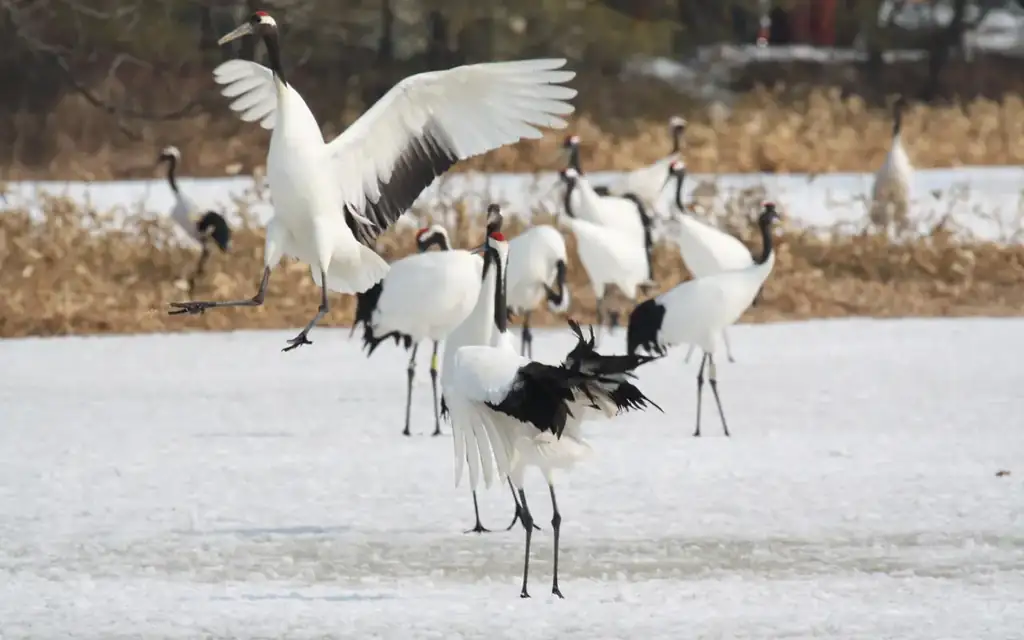
Red-crowned cranes spreading their wings on the snowEastern Hokkaido

Red-crowned cranes spreading their wings on the snow

Red-Crowned Cranes, Tsurui

On the snow, a pair of red-crowned cranes begins to dance.

Getting there●●●●○Remote: about 4 hours by JR limited express from Sapporo to Kushiro, then about an hour by bus; plan to stay a night.

Best timeDec–Feb

In winter in eastern Hokkaido, get up early to watch cranes dance on the snow.

The morning snowfield is pure white, the wind bites, and a clear crane call rings out in the distance. A pair of red-crowned cranes spread their wings and begin to dance on the snow, and the whole world seems to shrink to just them. With a dab of red on their heads, red-crowned cranes are a Special Natural Monument of Japan and live year-round around the Kushiro Wetlands in eastern Hokkaido. Tsurui Village is one of the best places to see them: in winter, when food is scarce, the cranes gather at observation sites where they're fed, and you may see them spreading their wings, calling and dancing in pairs. Wait a little in the cold — that dance will make you forget it.

GETTING THEREAbout 4 hours from Sapporo on the JR Ozora limited express to Kushiro Station, then about 1 hour by Akan Bus toward Tsurui. Staying a night in Kushiro or Tsurui is recommended.
GOOD TO KNOWMid-December to February is the best time to see the red-crowned cranes dancing in the snow. The winter feeding season at the observation sites runs roughly mid-November to early March (it can change each year). Buses are few, so check return times and the latest updates.
SAFETYWatch only from the designated areas at the observation site; keep quiet, don't feed them, and don't approach the flock. Early mornings are very cold — dress warmly.
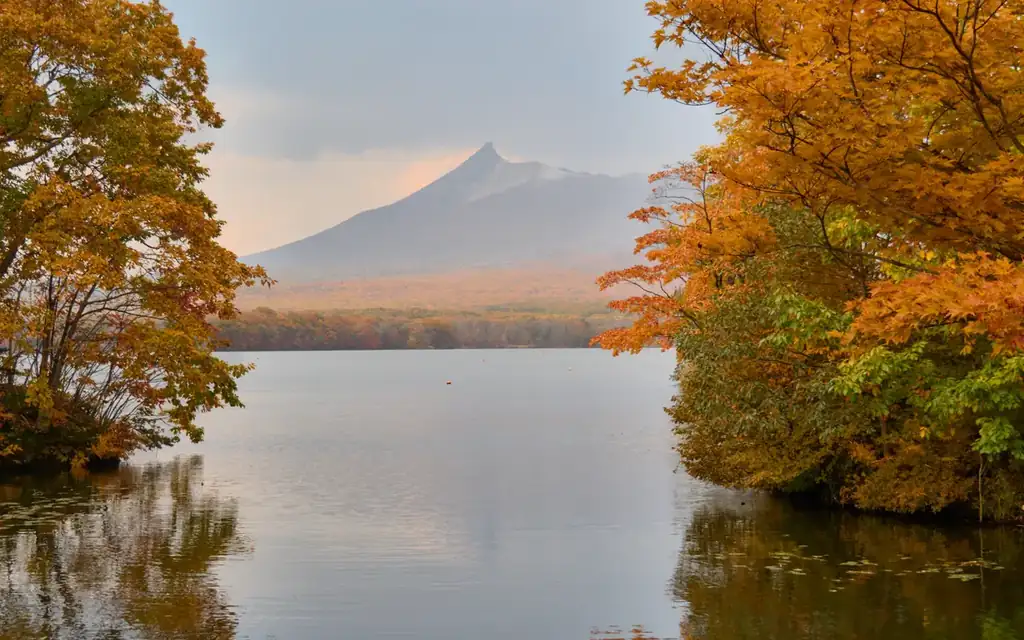
Onuma in autumn, with Mount Komagatake beyondNanae, Hokkaido

Onuma in autumn, with Mount Komagatake beyond

Onuma

Little islands on the lake, and Komagatake's sharp peak beyond.

Getting there●○○○○Very easy on your own: 20–30 minutes by JR limited express from Hakodate, then a few minutes' walk to the lake.

Best timeMay–Oct

When you're in Hakodate, save half a day for an easy walk at Onuma.

In the early morning, a thin mist lies on the water, little islands float quietly on the lake, the sharp peak of Komagatake is mirrored in the surface, and the only sound on the wooden bridges is your own footsteps. Onuma formed when debris from an eruption of Hokkaido-Komagatake dammed a river; together with Konuma and Junsainuma, it makes up Onuma Quasi-National Park. Many small islands dot the lake, linked by bridges you can stroll across on the walking paths. Autumn is the most beautiful, with red leaves and their reflections; in winter the lake freezes, and when the ice is thick enough you can try ice fishing for smelt. Walk once around the shore, and your mind goes as still as the water.

GETTING THEREAbout 20–30 minutes from Hakodate Station by JR limited express to Onuma-Koen Station; the lake is a few minutes' walk away.
GOOD TO KNOWIn winter, when the ice is thick enough, you can go ice fishing for smelt — it may be cancelled in a warm winter. In summer, rent a canoe or bike to circle the lake; each season has its own charm. Always check the official site before going ice fishing.
SAFETYIn winter, only use the designated areas on the ice. Always wear a life jacket when canoeing.
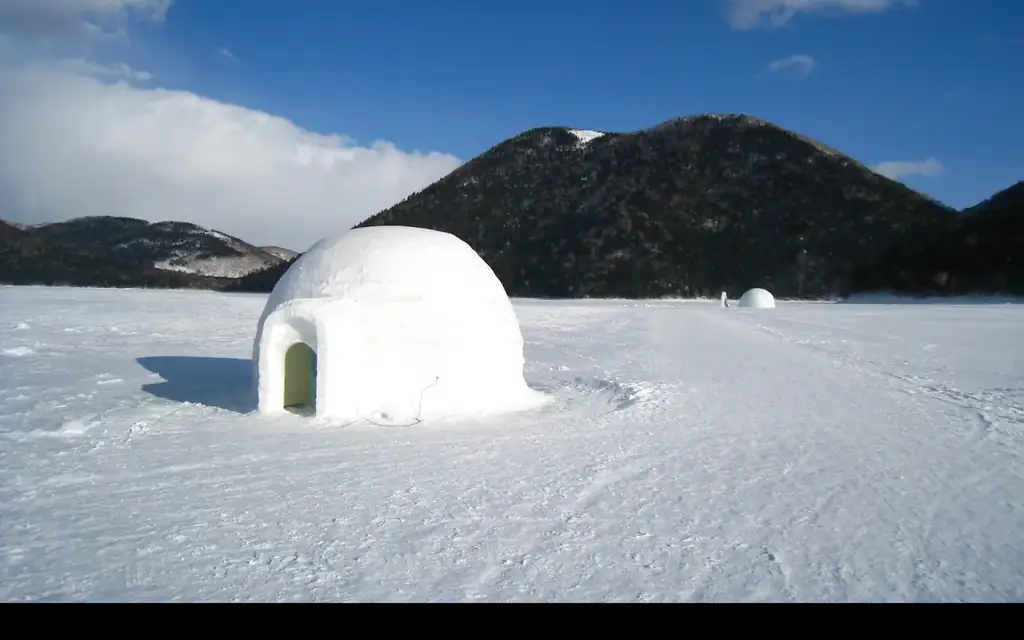
A snow igloo on the frozen lakeShikaoi, Hokkaido

A snow igloo on the frozen lake

Lake Shikaribetsu Ice Village

A village on the ice that exists only in winter.

Getting there●●●●○Remote: about 2.5 hours by limited express from Sapporo to Obihiro, then about 1.5 hours by an infrequent bus; plan to stay a night.

Best timeFeb

To see a village that only appears in winter, come to Lake Shikaribetsu.

On the frozen lake, little houses made of ice glow warm yellow, snow crunches underfoot, and the virgin forest around you is as quiet as if it were asleep. Lake Shikaribetsu is one of Hokkaido's highest natural lakes, at the southern end of Daisetsuzan National Park and surrounded by virgin forest. Every winter, once the lake freezes, the Shikaribetsu Kotan ice village is built on it, with houses of ice, an ice bar and an open-air bath on the ice; the village exists for only about two months, vanishing as soon as the snow melts. In summer it's a calm mountain lake for canoeing. Holding a hot drink inside an ice house, knowing it will all be gone by spring, makes every moment feel more precious.

GETTING THEREAbout 2.5 hours from Sapporo by limited express to Obihiro, then about 1.5 hours by Hokkaido Takushoku Bus toward Lake Shikaribetsu. Buses are very rare; staying a night at the lake is recommended.
GOOD TO KNOWAn ice village that exists only in winter — in 2027 it's scheduled for January 28 to March 14, with the open-air ice bath running again. Actual dates depend on the lake freezing, so check the official site before you go.
SAFETYOnly use the designated areas on the ice; don't walk out onto other parts of the lake on your own. It's very cold at this altitude — dress warmly.

Winter ski areas & events

Coming in winter? The region also has these. Full details (lessons, lodging, transport) are in the winter corner of your quiz results.

Ski areas

  • Niseko: Famous powder and the most international crowd in Japan
  • Rusutsu: Three linked mountains, one resort for days
  • Kiroro: In the mountains near Otaru, with reliable snowfall

Not sure which to pick? Take the 4-minute travel-personality quiz and find the one that suits you.

Take the quiz