TOP-TIER TRAVEL中/EN

Hungary

10 hidden gems in Hungary

Thermal baths, castles & wine country. We picked 10 places in this region — some well known, some few visitors find. Browse at your own pace, then take the quiz when something catches your eye.

TOP-TIER TRAVEL › All hidden gems › Hungary

Not sure which to pick? Take the 4-minute travel-personality quiz and find the one that suits you.

Take the quiz
Budapest
First time? Do the Budapest classics first

The Parliament, Fisherman’s Bastion and Buda Castle Hill on either side of the Danube, an evening stroll as the river lights up, and a soak in one of the old thermal baths — do these classics first and you can’t go wrong. Hungary isn’t big: Eger is about 2 hours from Budapest by train, Pécs about 3. Then save two or three days for the place below that’s truly yours.

Spot details checked: October 2026

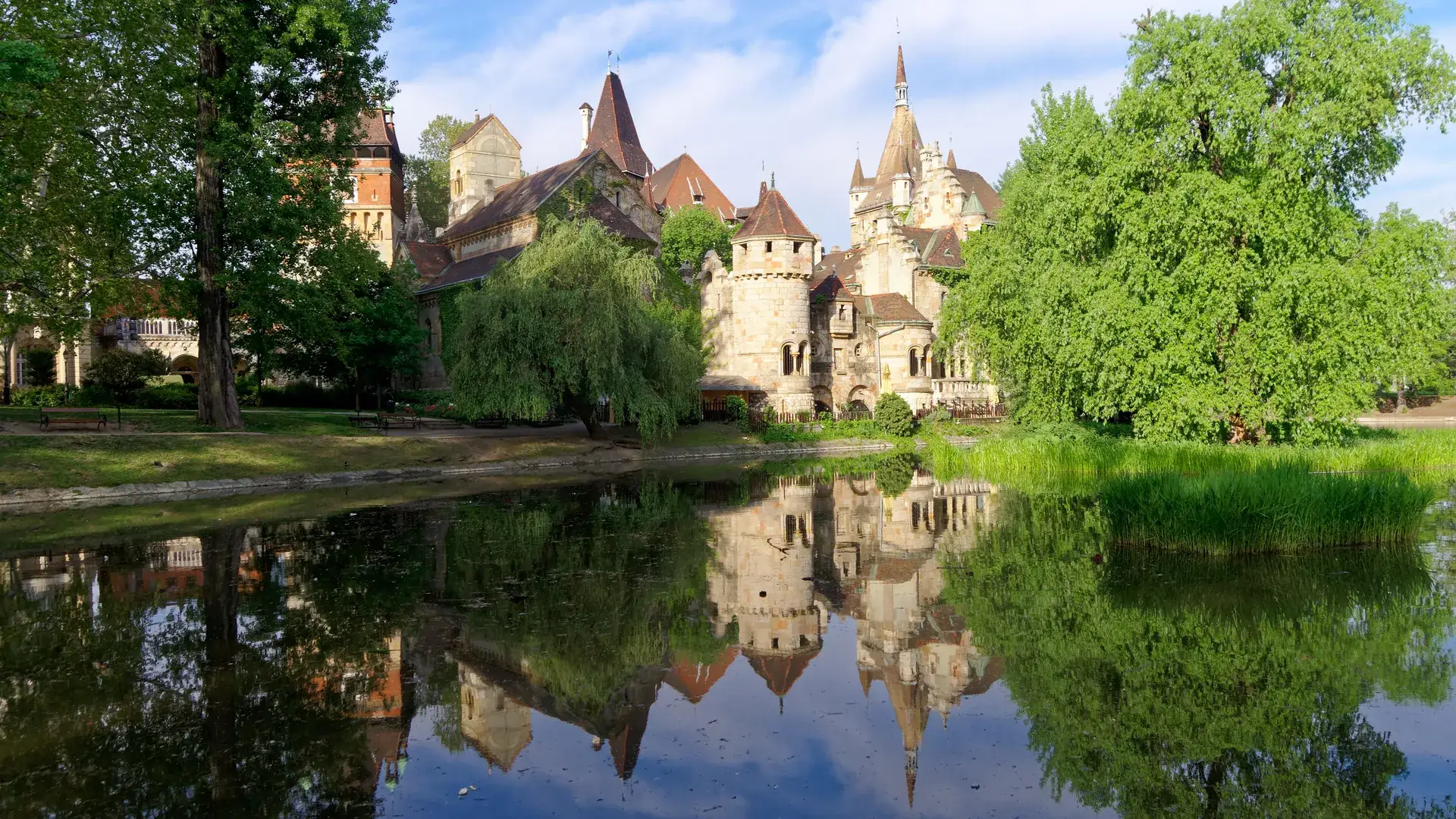
Vajdahunyad Castle by the City Park pond in springBudapest · City Park

Vajdahunyad Castle by the City Park pond in springJakub Hałun / CC BY-SA 4.0 / cropped

Vajdahunyad Castle, Budapest

A fairy-tale castle reflected in a pond — actually a museum that shrinks all of Hungary into one building.

Getting there●○○○○Very easy on your own: metro line M1 to Széchenyi fürdő, then a 5-minute walk.

Best timeApr–Oct

Budapest’s most fairy-tale corner, a short walk from the baths.

Vajdahunyad Castle was built for Hungary’s 1896 millennium exhibition — at first as a temporary structure of wood and cardboard, then rebuilt in stone because people loved it. Its architect stitched together castles, churches and manor houses from across Hungary and from different eras, part of it modelled on Hunyad Castle in today’s Romania, so one walk around it is a lesson in Hungarian architecture. Inside is the Hungarian Museum of Agriculture, and in the courtyard sits the hooded, faceless statue of “Anonymous”. In winter the pond in front becomes an open-air ice rink.
GETTING THEREMetro M1 (yellow line) to Széchenyi fürdő, then a 5-minute walk; it’s also a few minutes on foot from Heroes’ Square.
GOOD TO KNOWApril–October is most pleasant, with the willows by the pond at their greenest in spring. You can walk around the outside any time; check the museum’s official site for opening hours. From about mid-November to February the pond becomes an ice rink — worth adding to a winter trip.
SAFETYCity Park is poorly lit at night — go with others; watch for pickpockets on the metro and at busy sights.
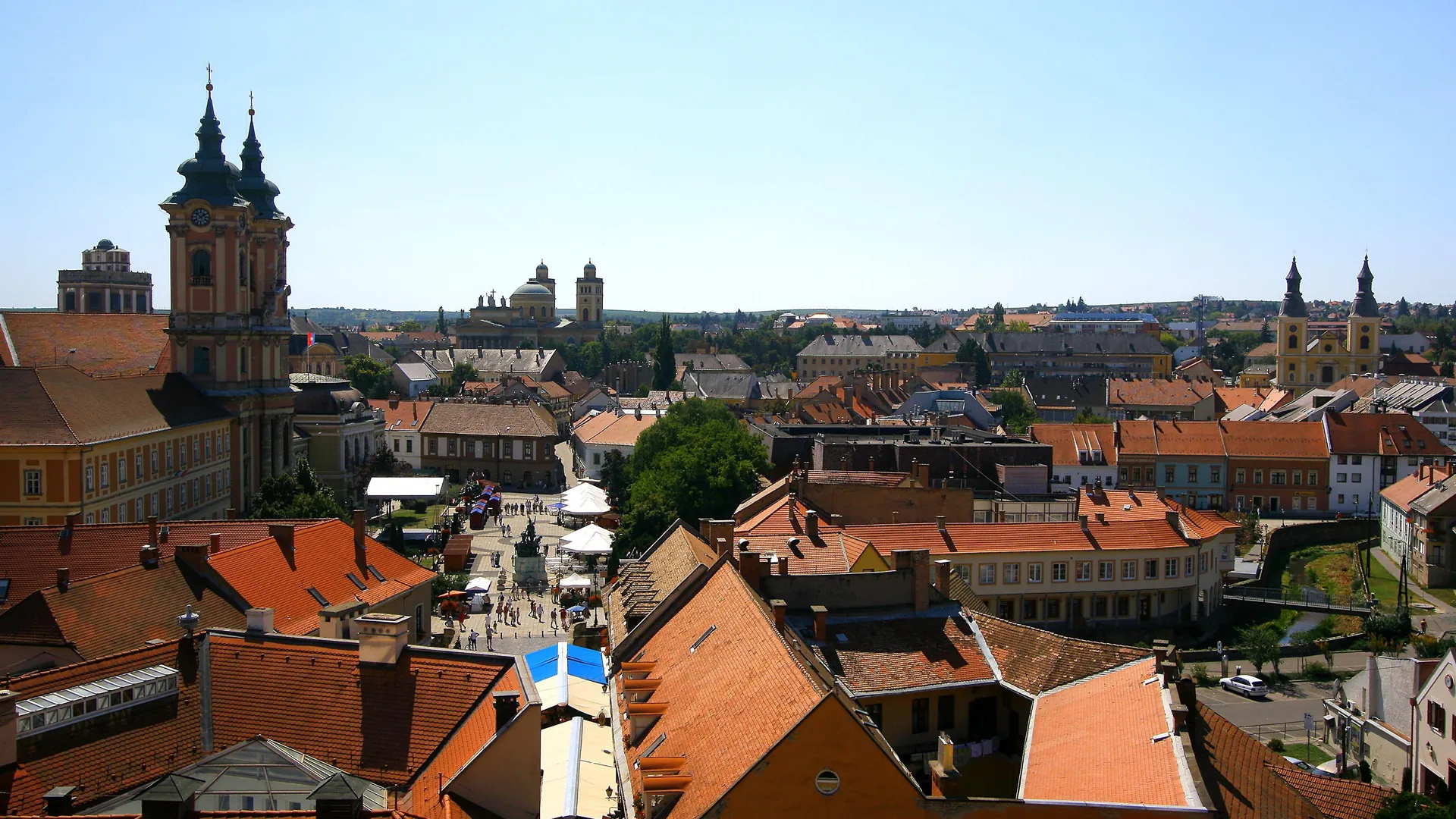
Eger’s Baroque old town from the castleHeves · foot of the Bükk hills

Eger’s Baroque old town from the castleMichal Gorski / CC BY-SA 3.0 / cropped

Eger

A siege legend, a minaret and a valley of wine cellars — all in one small town.

Getting there●○○○○Very easy on your own: about 2 hours by direct train from Budapest.

Best timeApr–Oct

Hungary’s most heroic little town — with famous wine to match.

In 1552 some two thousand defenders held Eger Castle against an Ottoman army many times their size — a story that made Eger Hungary’s most celebrated hero town. The castle is now a museum, and from its walls you see the whole Baroque old town; the twin towers in the photo belong to the Minorite church. The Ottomans did later rule here for nearly a century, leaving a slender minaret — one of the northernmost Ottoman minarets in Europe. Outside town, the Valley of the Beautiful Women (Szépasszony-völgy) has dozens of cellars dug into the hillside, best known for the red “Bull’s Blood”.

GETTING THEREAbout 2 hours by direct train from Budapest Keleti to Eger; the station is about 20 minutes’ walk from the old town. The wine valley is about 20 minutes’ walk from the centre, or take the tourist train.
GOOD TO KNOWBest April–October, with the grape harvest in autumn; check castle and museum hours on the official site. There’s also a thermal bath in town to add on.
SAFETYThe road back from the wine valley is poorly lit at night — walk in company or take a taxi after drinking.
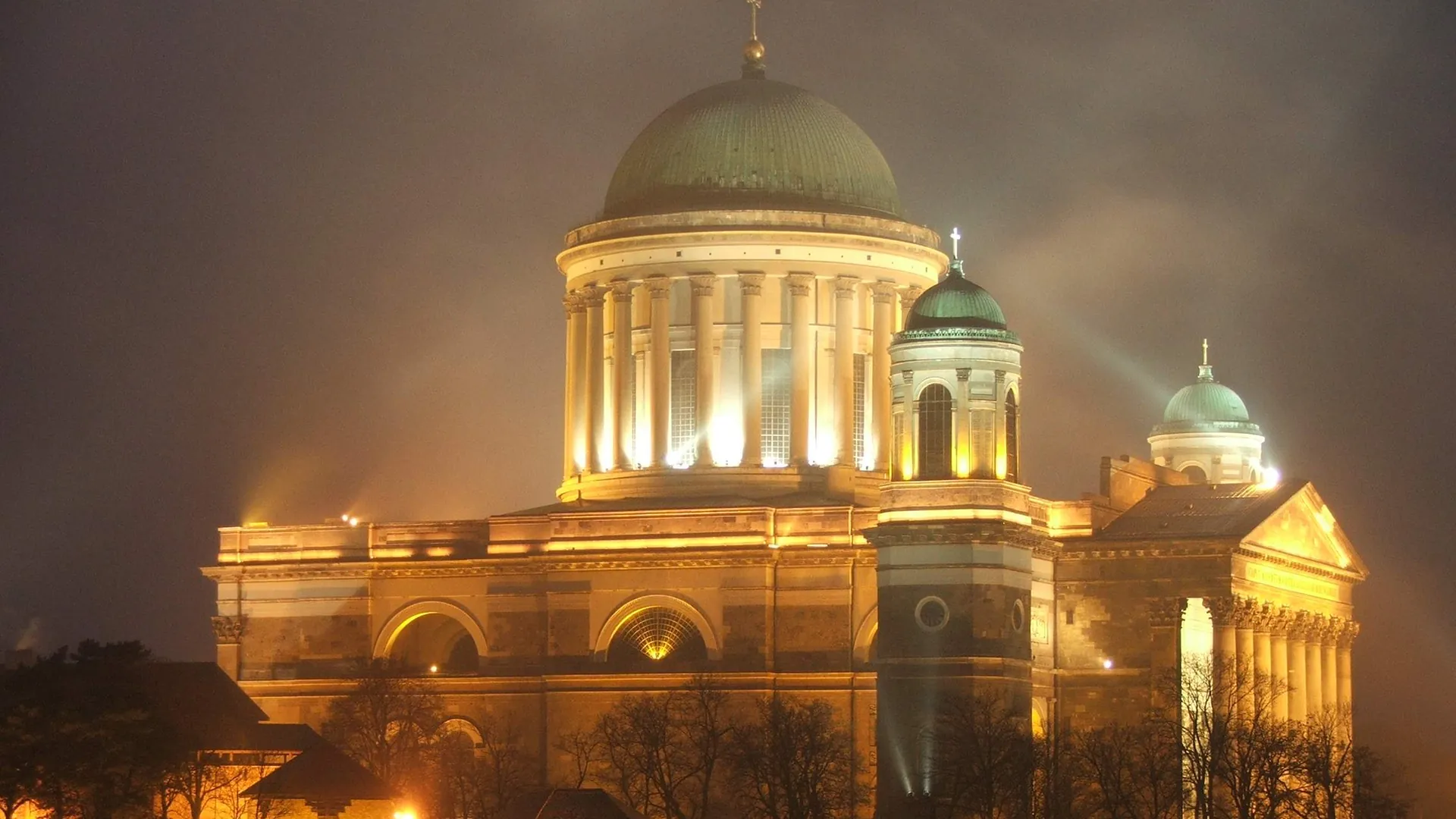
Esztergom Basilica lit up at nightKomárom-Esztergom · Danube Bend

Esztergom Basilica lit up at nightVilly / Public domain / cropped

Esztergom Basilica

Hungary’s largest church, glowing above the Danube at night.

Getting there●●○○○Easy on your own: 1–1½ hours by train from Budapest, plus summer boats.

Best timeApr–Oct

Where Hungary’s first king was crowned — and one bridge from another country.

Esztergom was Hungary’s first capital; around the year 1000, St Stephen, the first king of Hungary, was crowned here. The basilica on the hill is Hungary’s largest church, finished in the 19th century, its huge dome visible from far along the Danube Bend. You can climb to the dome’s viewing gallery or visit the crypt and treasury. Below it, the Mária Valéria Bridge crosses to the Slovak town of Štúrovo — a few minutes’ walk across a border.

GETTING THERE1–1½ hours by train from Budapest Nyugati, or by bus; summer Danube sightseeing boats too. About 30 minutes’ walk from the station to the basilica, or take the local bus.
GOOD TO KNOWBest April–October; the dome gallery may close in winter — check the official site. Pair it with Visegrád the same day, or stay a night for the basilica lit up.
SAFETYThe dome stairs are narrow and steep — go at your own pace if you dislike heights; dress modestly in the church.
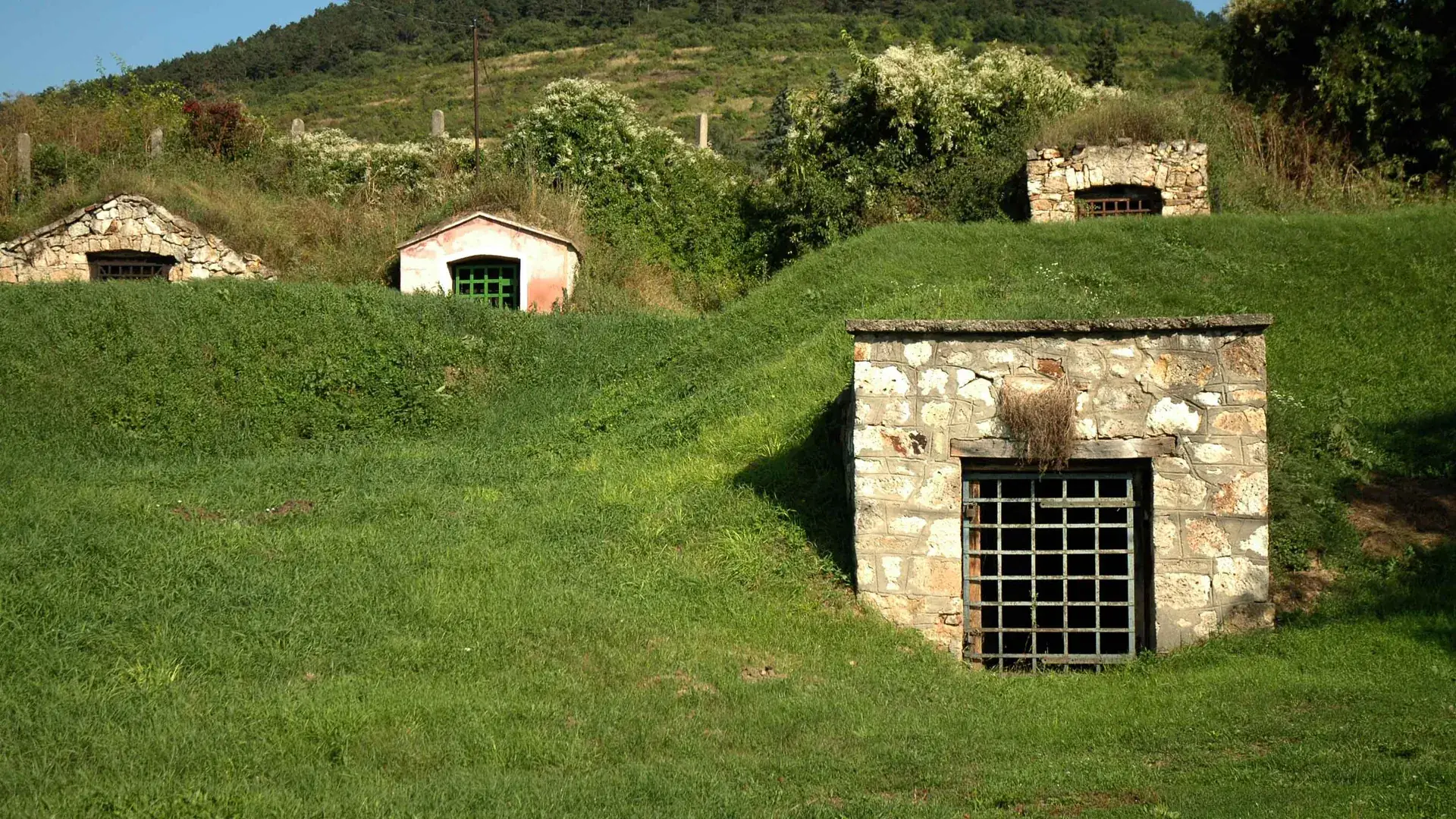
A row of cellar doors in a Tokaj-region hillsideBorsod-Abaúj-Zemplén · Tokaj region

A row of cellar doors in a Tokaj-region hillsideVerita / CC BY-SA 3.0 / cropped

Tokaj Wine Region

Behind each of these little stone doors in the hillside lies a centuries-old wine cellar.

Getting there●●●○○Fine on your own but slow: about 2½–3 hours by train from Budapest to Tokaj.

Best timeMay–Oct

Home of the sweet wine Louis XIV supposedly called “the wine of kings, the king of wines”.

These little doors set into the hillside aren’t houses or tombs — they’re the entrances to wine cellars. Tokaj is an old wine region in northeastern Hungary, its vineyards and cellars listed together as a UNESCO World Heritage cultural landscape in 2002. It’s famous for Tokaji Aszú: in autumn the grapes are left to catch noble rot, which shrivels them and concentrates the sugar into a golden sweet wine — legend says Louis XIV called it “the wine of kings, the king of wines”. Kilometres of cellars run under the hills, their walls furred with black mould, and wineries take you inside to taste.

GETTING THEREAbout 2½–3 hours by train from Budapest to Tokaj (some services change at Miskolc or Nyíregyháza). The cellars are spread over several villages — without a car, book a local winery’s tasting tour.
GOOD TO KNOWBest May–October, with harvest in September–October; many wineries need tastings booked ahead. If you drink, don’t drive — Hungary’s drink-drive limit is zero.
SAFETYUnderground cellars are damp, slippery and low-ceilinged — wear good shoes and mind your head.
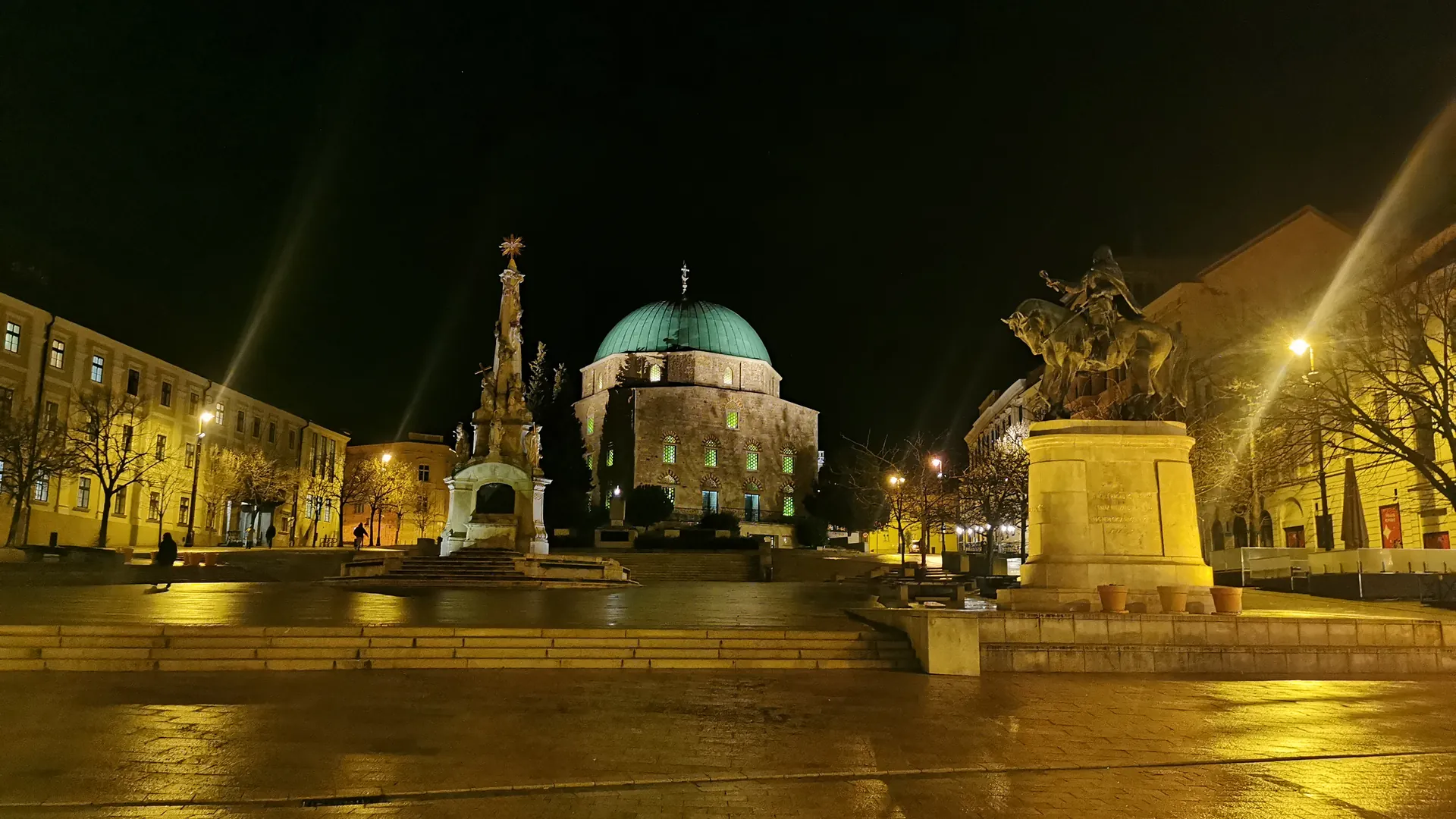
Pécs’s main square at night, the green-domed mosque-church in the middleBaranya · southern Hungary

Pécs’s main square at night, the green-domed mosque-church in the middleElekes Andor / CC BY 4.0 / cropped

Pécs

A green-domed mosque stands in the main square — and inside, it’s a Catholic church.

Getting there●●○○○Easy on your own: about 3 hours by direct train from Budapest.

Best timeApr–Oct

Hungary’s most southern-European city — European Capital of Culture in 2010.

Pécs, in southern Hungary, has a mild climate and is often called the country’s most Mediterranean city. The green-domed building on its main square was built as a mosque by the Ottomans in the 16th century and later became a Catholic church — you can still see the prayer niche and Arabic script inside. The town’s late-Roman Early Christian burial chambers became a UNESCO World Heritage Site in 2000, and the Zsolnay Cultural Quarter to the east fills a century-old ceramics factory with shimmering metallic-glazed tiles. Pécs was European Capital of Culture in 2010.

GETTING THEREAbout 3 hours by direct train from Budapest; then a bus or 20-minute walk to the main square. It’s also a good base for the Mohács Busójárás in February.
GOOD TO KNOWBest April–October; in winter, combine it with the February Busójárás carnival. Check the Early Christian necropolis and museums’ official sites for hours.
SAFETYThe centre is generally safe; mind your belongings on the busy bar streets at night.
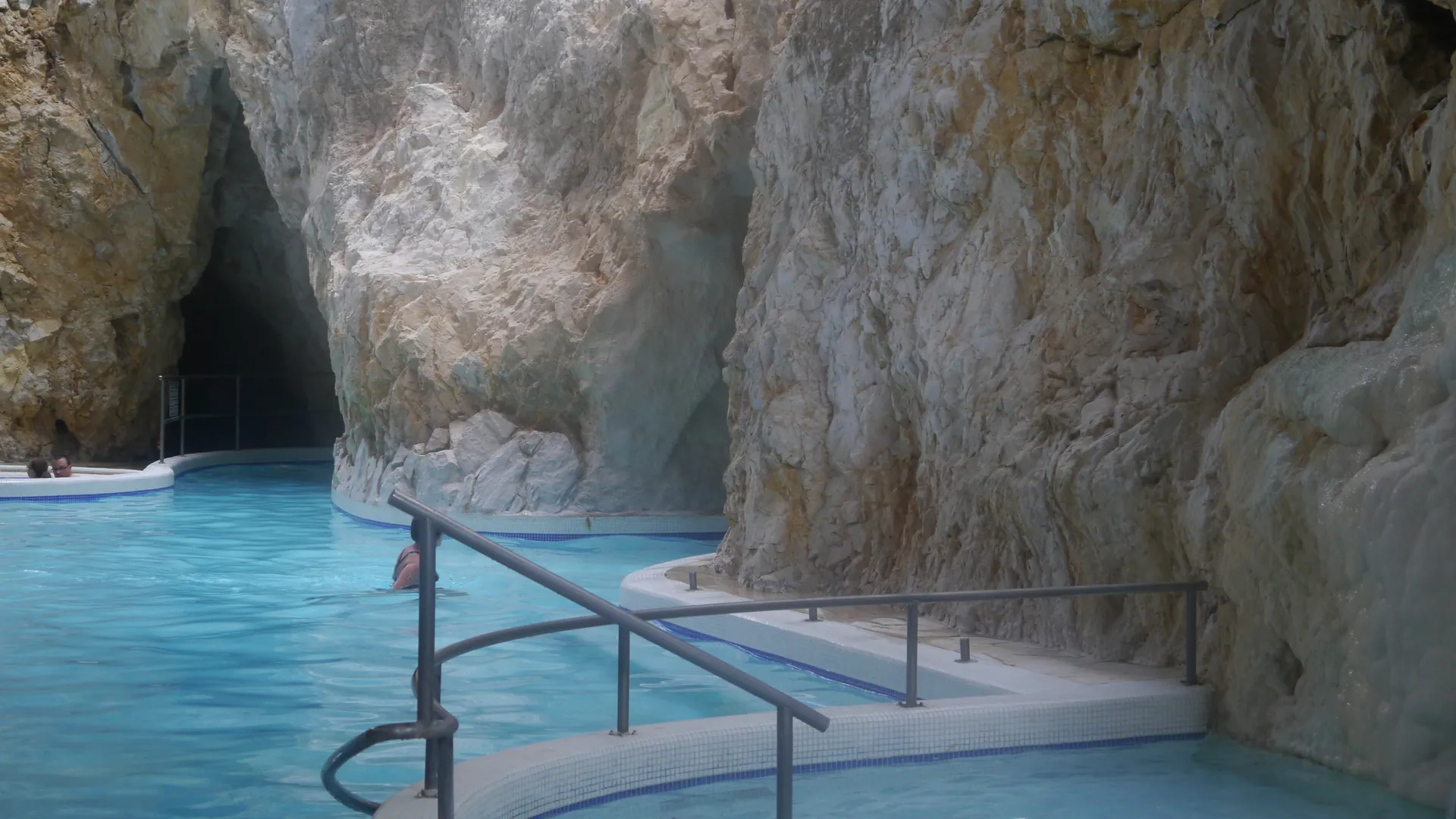
The rock passages and pools of the Miskolctapolca cave bathBorsod-Abaúj-Zemplén · Miskolctapolca

The rock passages and pools of the Miskolctapolca cave bathZairon / CC BY-SA 3.0 / cropped

Miskolc Cave Bath

The thermal water doesn’t flow into an open-air pool — it fills a natural limestone cave.

Getting there●●○○○Easy on your own: about 2 hours by train from Budapest to Miskolc, then about 30 minutes by bus.

Best timeGood all year

A rare natural cave bath in Europe, little known to most visitors.

The Miskolctapolca Cave Bath is built inside a natural limestone cave: thermal water wells up from cracks in the rock and flows through winding cave passages, so you float with bumpy rock walls overhead and dimly lit corners around you. The water in the cave is around 30°C — more like a warm swimming pool — and there are outdoor pools and saunas too. Nearby Lillafüred has a forest lake, a waterfall and a castle-like old hotel to fit into the same day.

GETTING THEREAbout 2 hours by train from Budapest to Miskolc (Miskolc-Tiszai), then bus 2, about 30 minutes, to Miskolctapolca.
GOOD TO KNOWGood year-round — snow outside and warmth in the cave makes winter special. Bring a swimsuit; towels and sandals can be hired. Weekends and holidays are crowded, so weekdays are nicer. Check opening hours on the official site.
SAFETYThe cave floors are slippery — walk slowly; if you have heart or blood-pressure problems, don’t soak too long.
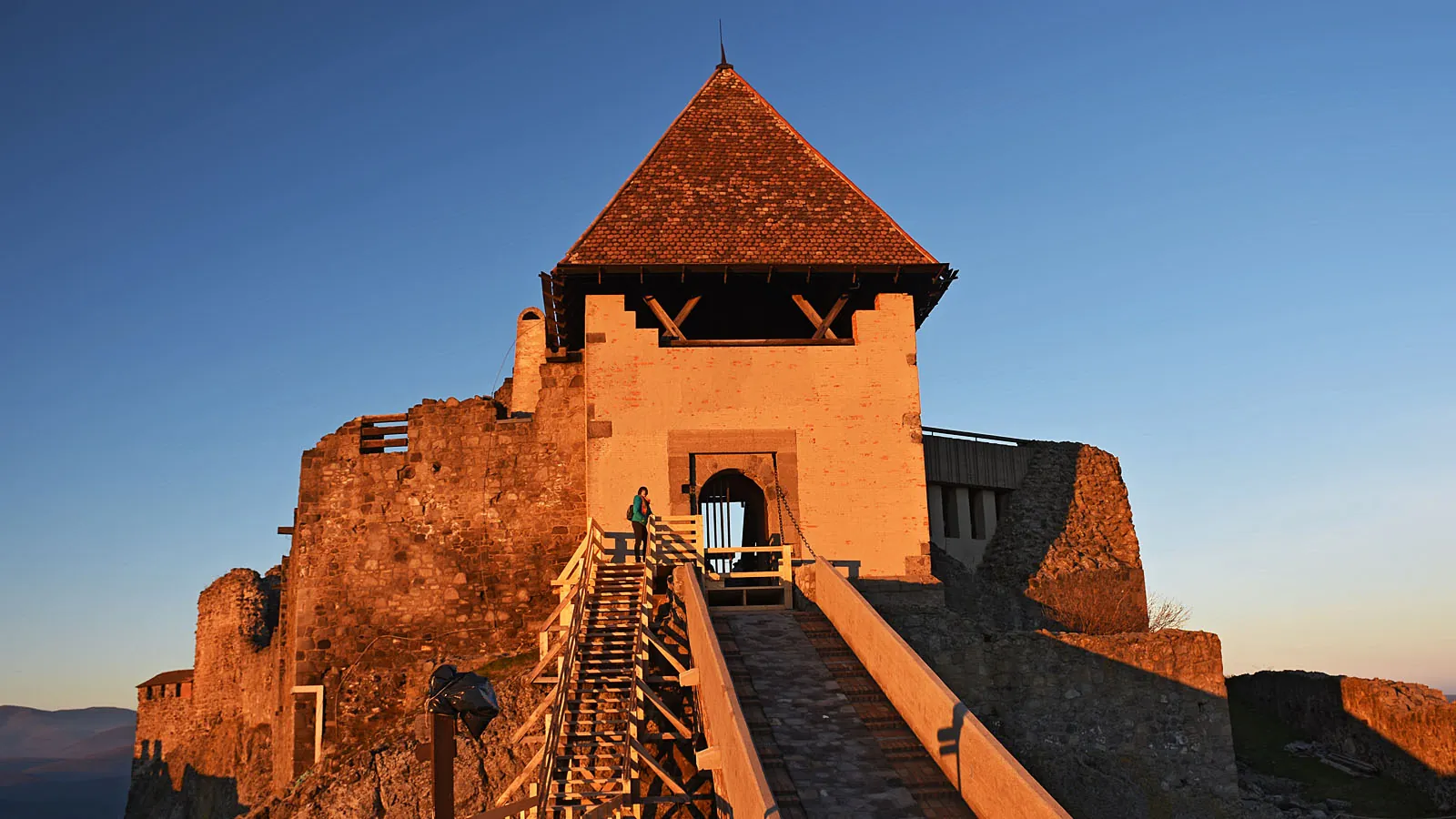
Sunset on the gate tower of Visegrád’s upper castlePest · Danube Bend

Sunset on the gate tower of Visegrád’s upper castleVid Pogacnik / CC BY-SA 4.0 / cropped

Visegrád Castle

Climb to the hilltop castle and watch the whole Danube make a great bend below.

Getting there●●○○○Easy on your own: about 1½ hours by bus from Budapest, or train to the opposite bank and ferry across.

Best timeApr–Oct

The best viewpoint over the Danube Bend, far quieter than Budapest.

North of Budapest the Danube meets the hills and swings round in a great curve — the Danube Bend. After the 13th-century Mongol invasion, Hungary’s kings built this upper castle on the hilltop above it, and in the Middle Ages the Holy Crown of Hungary was once kept here. Below are the ruins of a Renaissance royal palace. From the upper castle the river loops through the valley in a U — one of Hungary’s most famous river views.

GETTING THEREAbout 1½ hours by bus from Budapest’s Újpest-Városkapu station to Visegrád; or train to Nagymaros on the opposite bank and take the ferry. From town it’s about 40 minutes uphill to the upper castle, or take a shuttle minibus.
GOOD TO KNOWBest April–October, when summer Danube boats can be combined; the castle opens on fewer days in winter — check the official site.
SAFETYSome trail sections are steep — wear good shoes; keep back from unfenced edges of the walls.
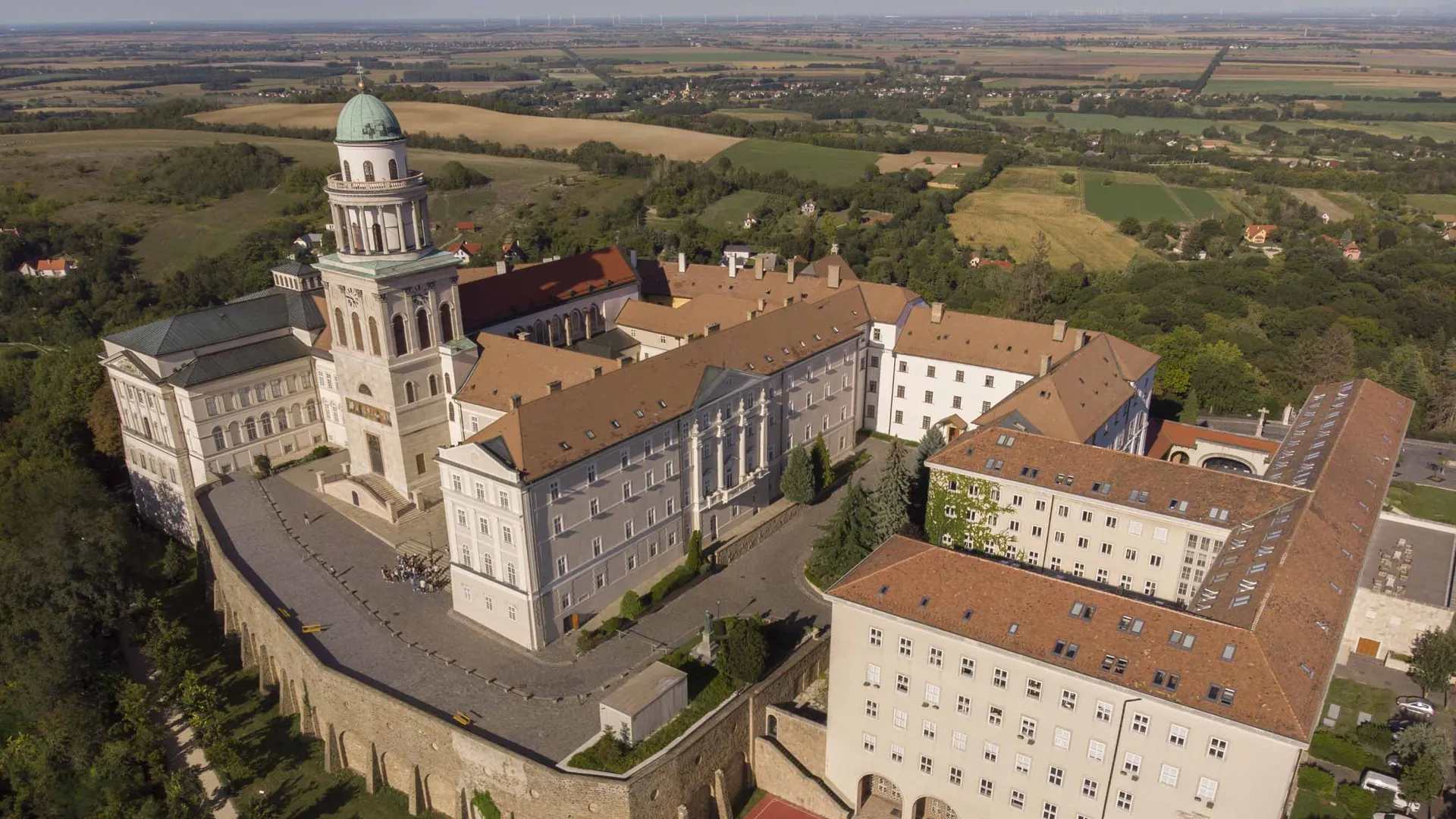
Pannonhalma Archabbey on its hilltop, from the airGyőr-Moson-Sopron · near Győr

Pannonhalma Archabbey on its hilltop, from the airHallabalint / CC BY-SA 4.0 / cropped

Pannonhalma Archabbey

A hilltop abbey over a thousand years old, where monks still pray and make wine.

Getting there●●●○○Fine on your own but slow: about 30 minutes by bus from Győr; about 1½ hours by car from Budapest.

Best timeApr–Oct

An abbey slightly older than the Hungarian kingdom itself — still little known to most visitors.

Founded in 996, Pannonhalma is one of Hungary’s oldest monasteries; Benedictine monks have lived on this hilltop for over a thousand years, and it became a UNESCO World Heritage Site in 1996. Inside are a medieval basilica, a grand neoclassical library holding hundreds of thousands of volumes, and a winery and lavender fields run by the monks — in June and July the hillside turns purple. The photo is taken from the air; the library is inside and seen on a guided tour.

GETTING THEREAbout 1½ hours by train from Budapest to Győr, then about 30 minutes by bus to Pannonhalma and a 15–20-minute uphill walk; about 1½ hours by car from Budapest.
GOOD TO KNOWBest April–October, with lavender in June–July; fewer visiting times in winter. Visits are mainly by guided tour — check the official site for English tours. Sunday-morning Mass may close some areas.
SAFETYIt’s a working religious site: dress modestly and keep quiet during services.
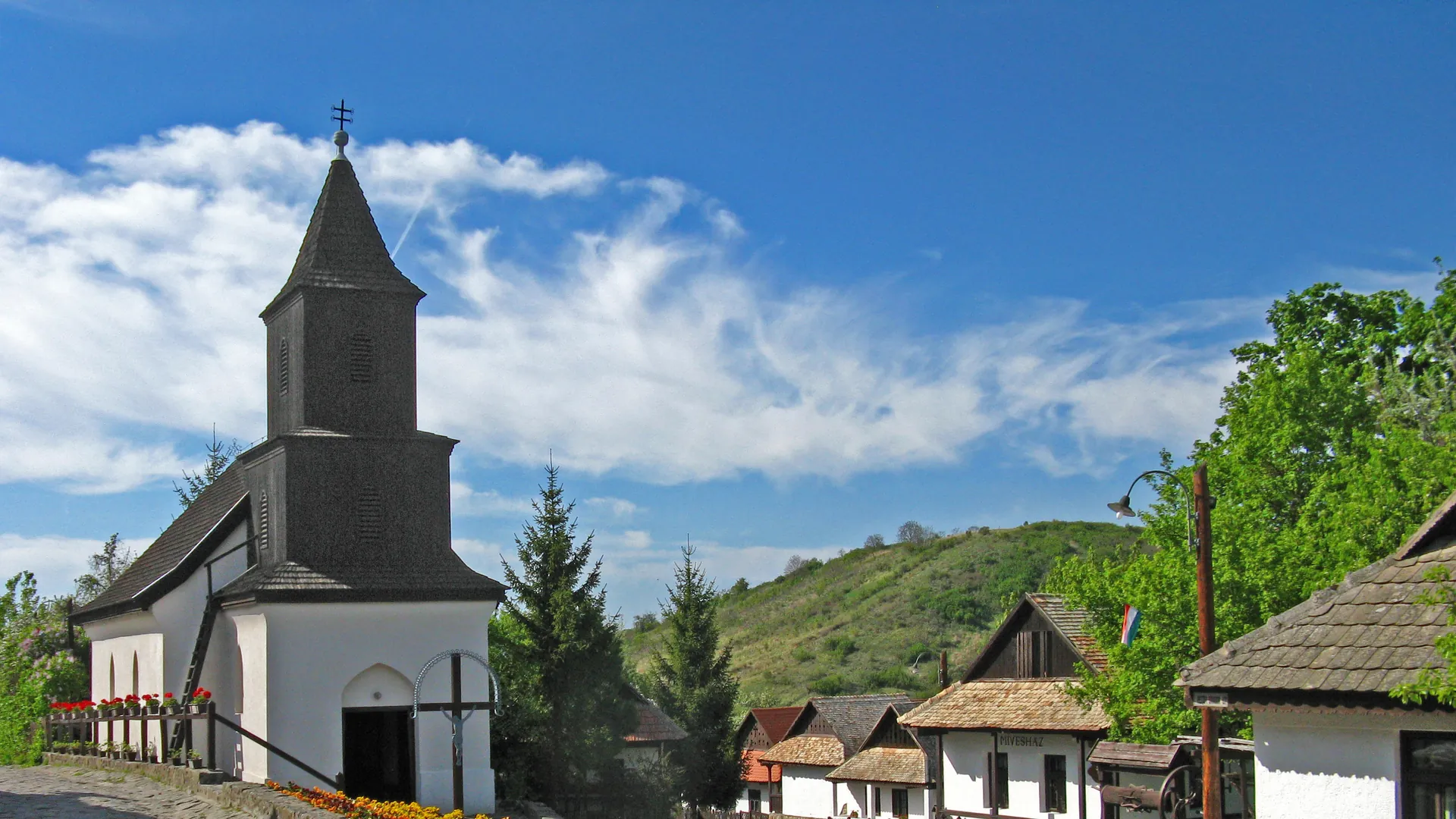
Hollókő’s main street and its wooden-towered churchNógrád · northern hills

Hollókő’s main street and its wooden-towered churchBatomi / CC BY-SA 3.0 / cropped

Hollókő

A little white church with a wooden tower, and a whole old village people still live in.

Getting there●●●○○Fine on your own but slow: about 2 hours by bus from Budapest, few departures; about 1½ hours by car.

Best timeApr–Oct

One of Hungary’s best-preserved villages, on the UNESCO list since 1987.

Hollókő is home to the Palóc people of northern Hungary. Its old village of timber-framed farmhouses — white walls, dark wooden eaves — became one of the first living villages on the UNESCO World Heritage list in 1987, and people still live here. At its heart is a small church with a wooden bell tower; several houses are now a doll museum, a postal museum and craft workshops. A 13th-century castle ruin crowns the hill above, about 20–30 minutes’ walk, with views over the whole valley. At Easter the villagers wear their embroidered folk costumes — the liveliest time of year.

GETTING THEREDirect buses from Budapest’s Stadion bus station take about 2 hours, with only a few a day — plan your return. About 1½ hours by car. The village is small and walkable.
GOOD TO KNOWApril–October is most pleasant; the Easter festival is the highlight, dates per local announcements (Easter 2027 is 28 March). Most houses are private homes — look from outside and don’t enter the yards.
SAFETYThe path to the castle is loose gravel and slippery after rain — wear good shoes. The village is very quiet at night and shops close early, so sort out dinner in advance.
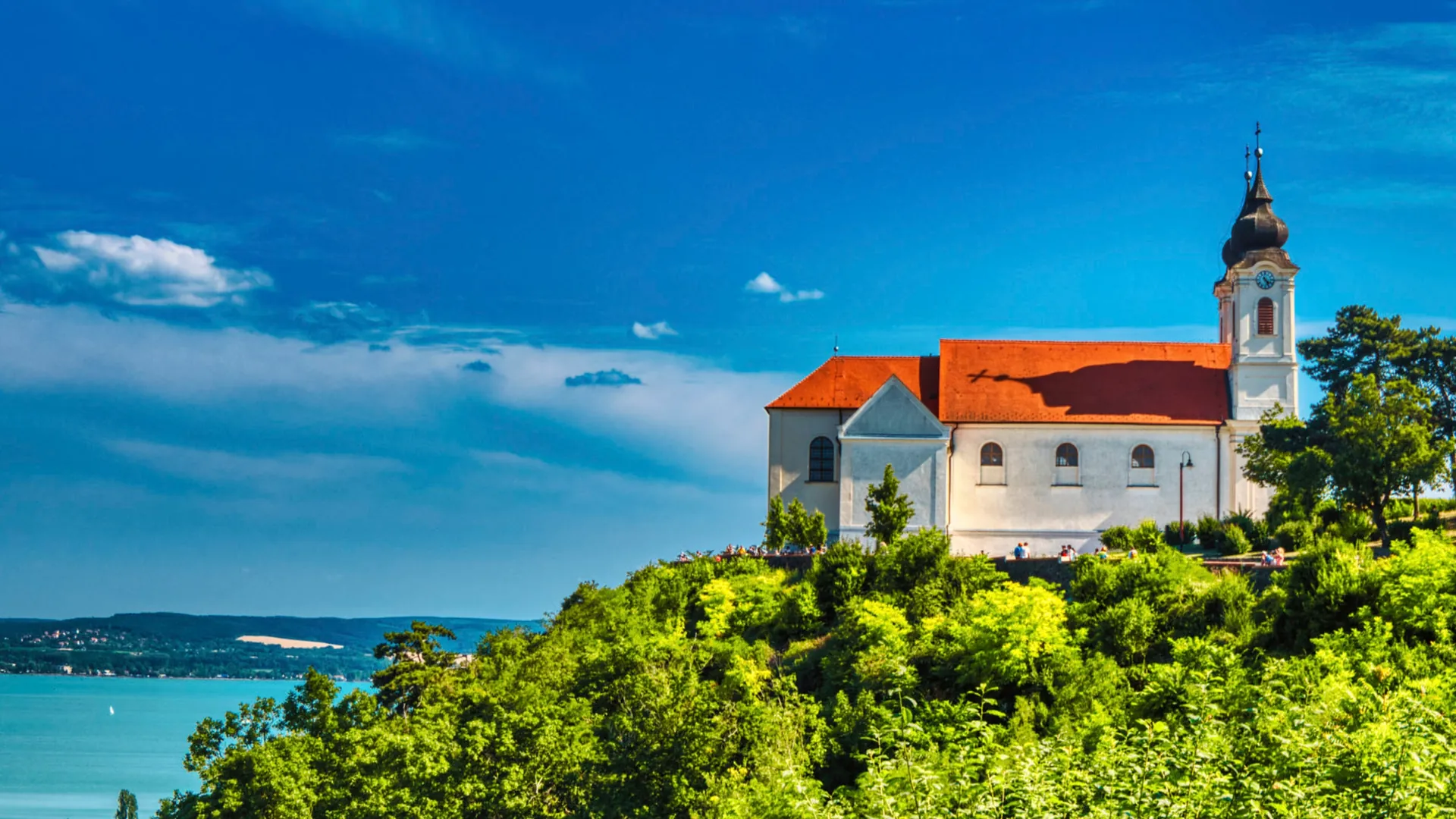
Tihany Abbey above Lake BalatonVeszprém · north shore of Lake Balaton

Tihany Abbey above Lake BalatonIsis Horus Seth / CC BY-SA 4.0 / cropped

Tihany Peninsula

Stand on the abbey hill with the whole turquoise sweep of Lake Balaton below.

Getting there●●○○○Easy on your own: about 2 hours by train or bus from Budapest to Balatonfüred, then about 15 minutes by bus.

Best timeMay–Sep

Central Europe’s largest lake — Hungarians call it the “Hungarian sea”.

Lake Balaton is Central Europe’s largest lake and Hungary’s favourite summer escape — the “Hungarian sea”. Tihany is a small peninsula jutting into it. The Benedictine abbey on its hilltop was founded in 1055 by King Andrew I; its founding charter is one of the oldest surviving documents with Hungarian words in it, and Andrew I himself lies in the abbey crypt. The peninsula also has two inner lakes, lavender fields, hiking trails and an “Echo Hill” said to throw your voice back.

GETTING THEREAbout 2 hours by train or bus from Budapest to Balatonfüred, then about 15 minutes by bus to Tihany; in summer you can also cross by ferry. 1½–2 hours by car.
GOOD TO KNOWBest May–September, when the water is warm enough to swim; lavender blooms from late June into July. Lake boats and ferries mostly run spring to autumn, with very few in winter. Check the abbey’s official site for visiting hours.
SAFETYSummer storms can blow up on the lake — when the shore storm-warning lights flash, get out of the water at once.

Winter ski areas & events

Coming in winter? The region also has these. Full details (lessons, lodging, transport) are in the winter corner of your quiz results.

Ski areas

  • Mátraszentistván: Hungary’s most popular ski area, about 2 hours’ drive from Budapest
  • Eplény: A small ski area north of Lake Balaton, about 1½ hours from Budapest
  • Nagy-Villám, Visegrád: The closest small slopes to Budapest — good for a first go on snow
  • Zemplén Adventure Park, Sátoraljaújhely: A chairlift, ski runs and an adventure park — good with kids

Winter events

  • Budapest Christmas Market: The whole centre strung with lights, the air full of chimney cake and mulled wine
  • A Day on Ice in Budapest: Skate in front of a fairy-tale castle, then walk five minutes to an open-air thermal pool
  • A Cave-Bath Day in Miskolc: Snow outside, warm water inside the cave
  • Lake Hévíz Thermal Lake: A whole lake of thermal water, steaming in winter
  • Busójárás Carnival, Mohács: Horned, wooden-masked busós drive winter away with noise

Not sure which to pick? Take the 4-minute travel-personality quiz and find the one that suits you.

Take the quiz