TOP-TIER TRAVEL中/EN

Thailand · Isan

6 hidden gems in Isan

Plateau & Khmer ruins. We picked 6 places in this region — some well known, some few visitors find. Browse at your own pace, then take the quiz when something catches your eye.

TOP-TIER TRAVEL › All hidden gems › Thailand › Isan

Not sure which to pick? Take the 4-minute travel-personality quiz and find the one that suits you.

Take the quiz
Phimai Historical Park
First time? Take Isan slowly

Isan is Thailand's biggest region and its least touristy, with long distances between towns. On a first visit, don't try to see it all — pick one or two towns to stay in, and give two or three days to the place below that's truly yours.

Looking for a place to stay in this area? Start here:

Spot details checked: October 2026

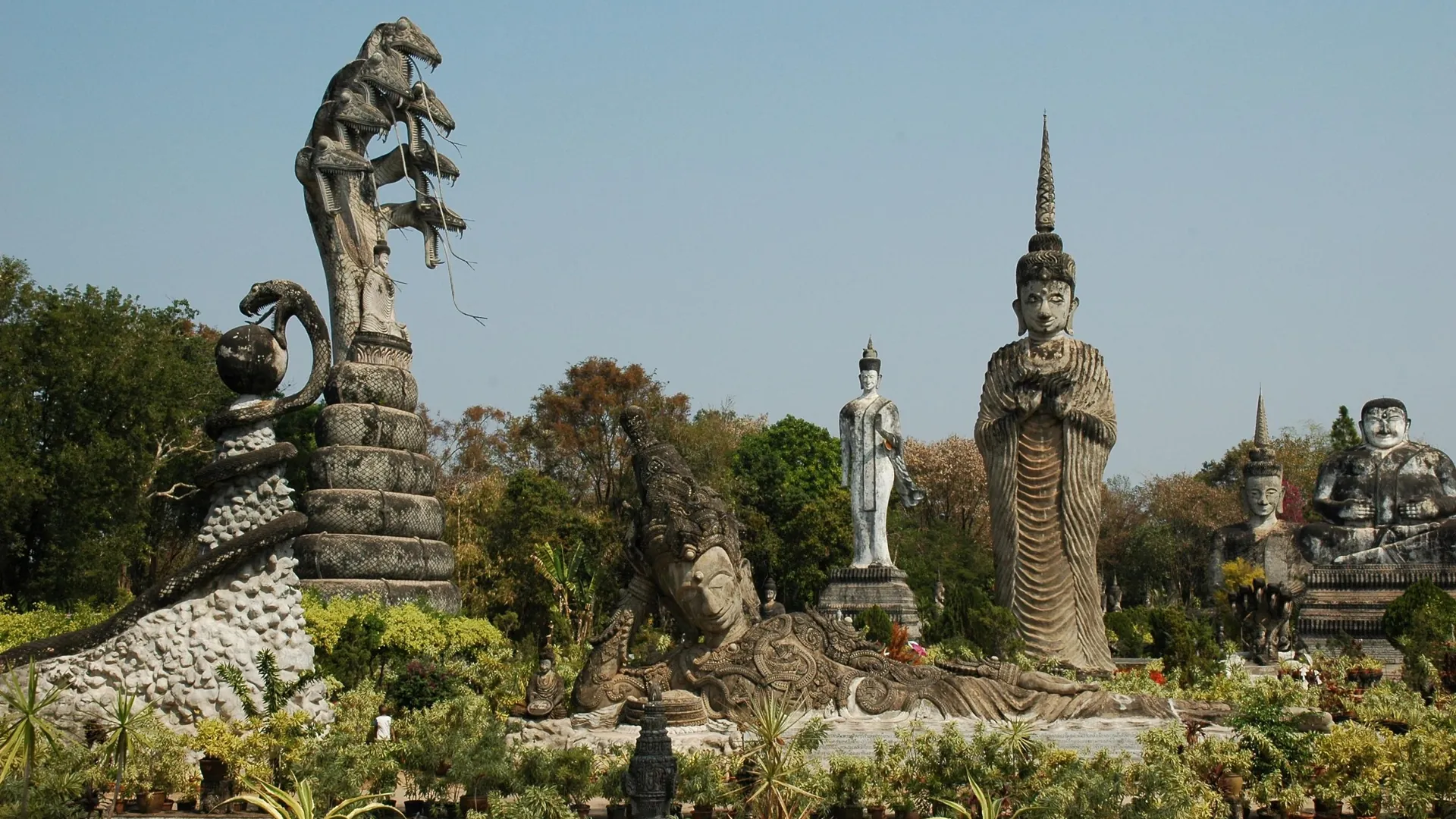
Giant naga and Buddha sculptures at Sala Kaew KuNong Khai

Giant naga and Buddha sculptures at Sala Kaew Ku

Sala Kaew Ku Sculpture Park

A garden full of giants.

Getting there●●●○○Doable on your own: about 1 hour by road from Udon Thani Airport to Nong Khai, then a short tuk-tuk ride.

Best timeNov–Feb

Everyone who goes to Nong Khai comes to see this garden of giant sculptures.

Step into the garden and giant concrete figures rise to meet you: a seven-headed naga reaching skyward, Buddhas and mythical beings each taller than the last. Sala Kaew Ku was built from 1978 by a spiritual teacher who blended Buddhist and Hindu ideas, creating the figures one by one with his followers. They tell stories of rebirth, karma and myth, so a walk through feels like reading a three-dimensional book of parables. Late afternoon light falls across the grey figures and stretches their shadows long — the most atmospheric time.
GETTING THEREAbout 1 hour by road from Udon Thani Airport or city to Nong Khai; about 10 minutes by tuk-tuk from central Nong Khai.
GOOD TO KNOWIn soft late-afternoon light, the giant sculptures cast the most dramatic shadows. Midday is very hot with little shade, so come morning or late afternoon.
SAFETYDon't climb or sit on the sculptures for photos.
Chiang Khan · Mekong riverside walkwayChiang Khan, Loei

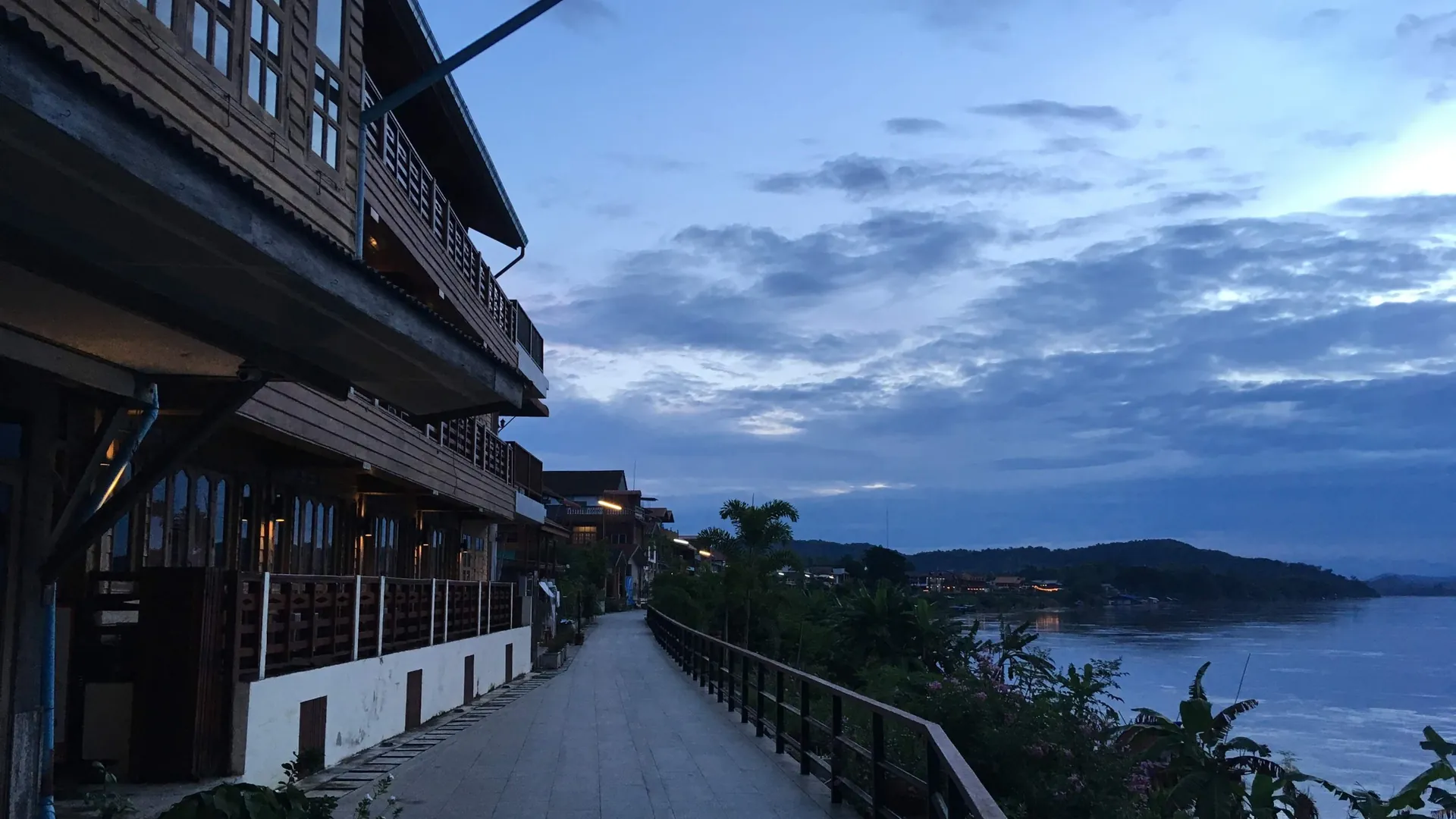
Chiang Khan · Mekong riverside walkway

Chiang Khan Old Town

An old street on the Mekong: alms at dawn, lanterns at night.

Getting there●●●●○Doable on your own, but it's a long way: fly from Bangkok to Loei, then about 1 hour by road.

Best timeNov–Feb

To spend a few slow days by the Mekong, choose Chiang Khan.

At first light, monks walk the old street collecting alms as locals kneel by the road and place sticky rice gently in their bowls. By day Chiang Khan is quiet, its two-storey teak houses lined up one after another, many now small cafés and guesthouses; at dusk, stroll the walkway along the Mekong, with the hills of Laos just across the water. After dark the old street becomes a walking market of grilled fish, coconut ice cream and handmade goods. On cool-season mornings, the hills nearby are often wrapped in a sea of mist.

GETTING THEREAbout 1 hour by domestic flight from Bangkok to Loei Airport, then about 1 hour by road to Chiang Khan; overnight buses also run direct from Bangkok.
GOOD TO KNOWThe cool season, November to February, is the best — morning mist on the Mekong and evenings on the wooden old street. Weekends and the cool season get busy, so book early. During the dawn alms round, stay quiet and don't disturb the monks.
SAFETYLaos is just across the Mekong — don't wade in or cross on unofficial boats.
Phra That Phanom lit up at duskThat Phanom, Nakhon Phanom

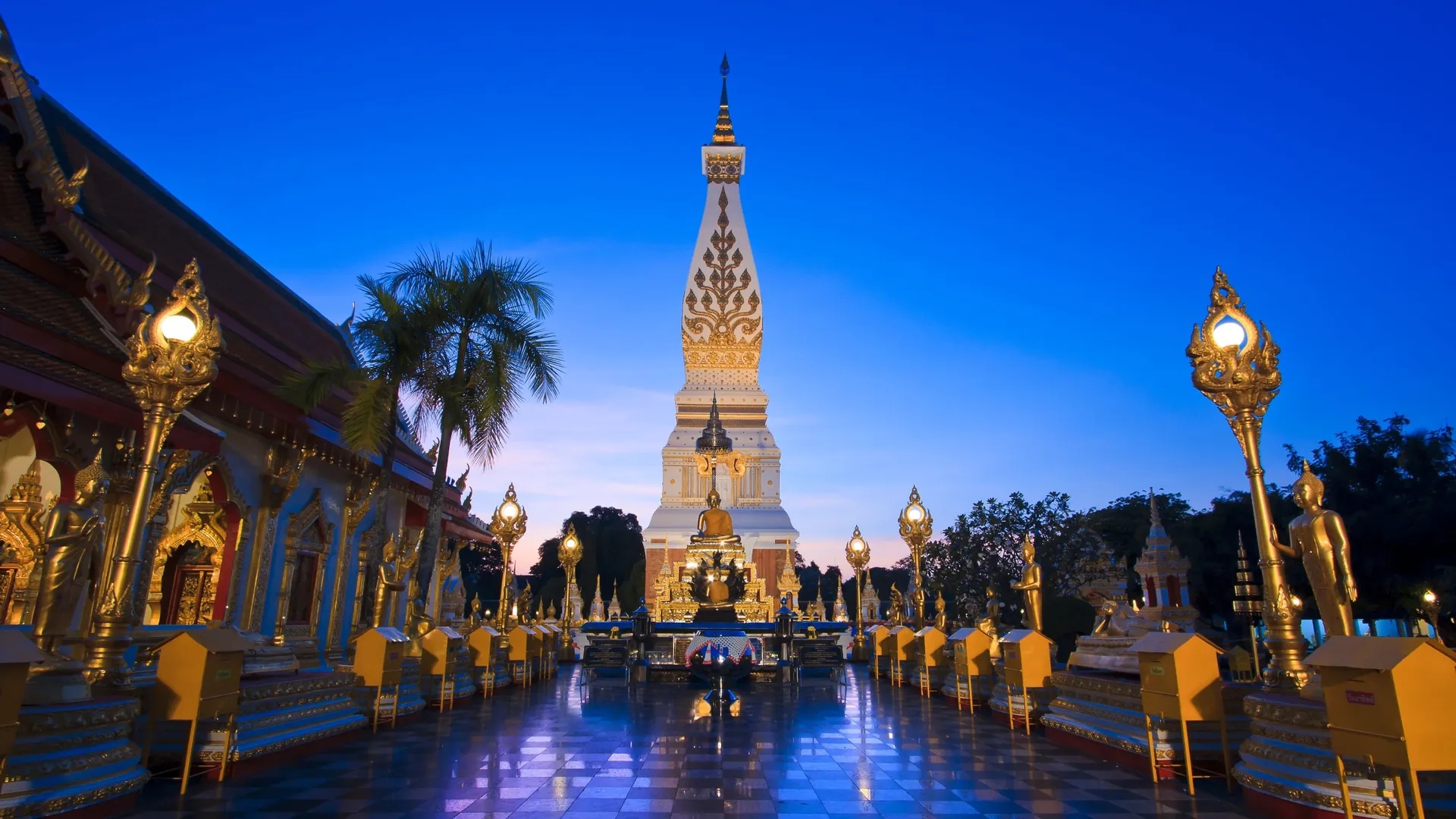
Phra That Phanom lit up at dusk

Phra That Phanom

As the sky turns blue, the stupa lights up.

Getting there●●●●○Doable on your own, but it's a long way: fly from Bangkok to Nakhon Phanom, then about 1 hour by road.

Best timeNov–Feb

In eastern Isan, stay at Phra That Phanom until dark.

The moment the sky turns deep blue, the golden patterns on the white stupa light up, and the golden lamp posts on either side glow one by one. Phra That Phanom is one of the most revered stupas in Isan, believed to enshrine relics of the Buddha. In 1975 heavy rain brought it down, and local people rebuilt it — which only made it more cherished. Late afternoon into night is most beautiful. By the nearby Mekong there's a morning market where you can try Lao-style baguettes.

GETTING THEREAbout 1 hour by domestic flight from Bangkok to Nakhon Phanom, then about 1 hour by road to That Phanom.
GOOD TO KNOWThe year's biggest event is the Phra That Phanom festival after Lunar New Year — nine days and nights, January 26 to February 3 in 2026, drawing pilgrims from Thailand and Laos; it gets very crowded. It's an important sacred site, so dress modestly (no sleeveless tops or short shorts/skirts) and remove shoes. Check this year's dates.
SAFETYCrowds are huge during the festival, so watch your belongings and children; take care on wet floors when barefoot.
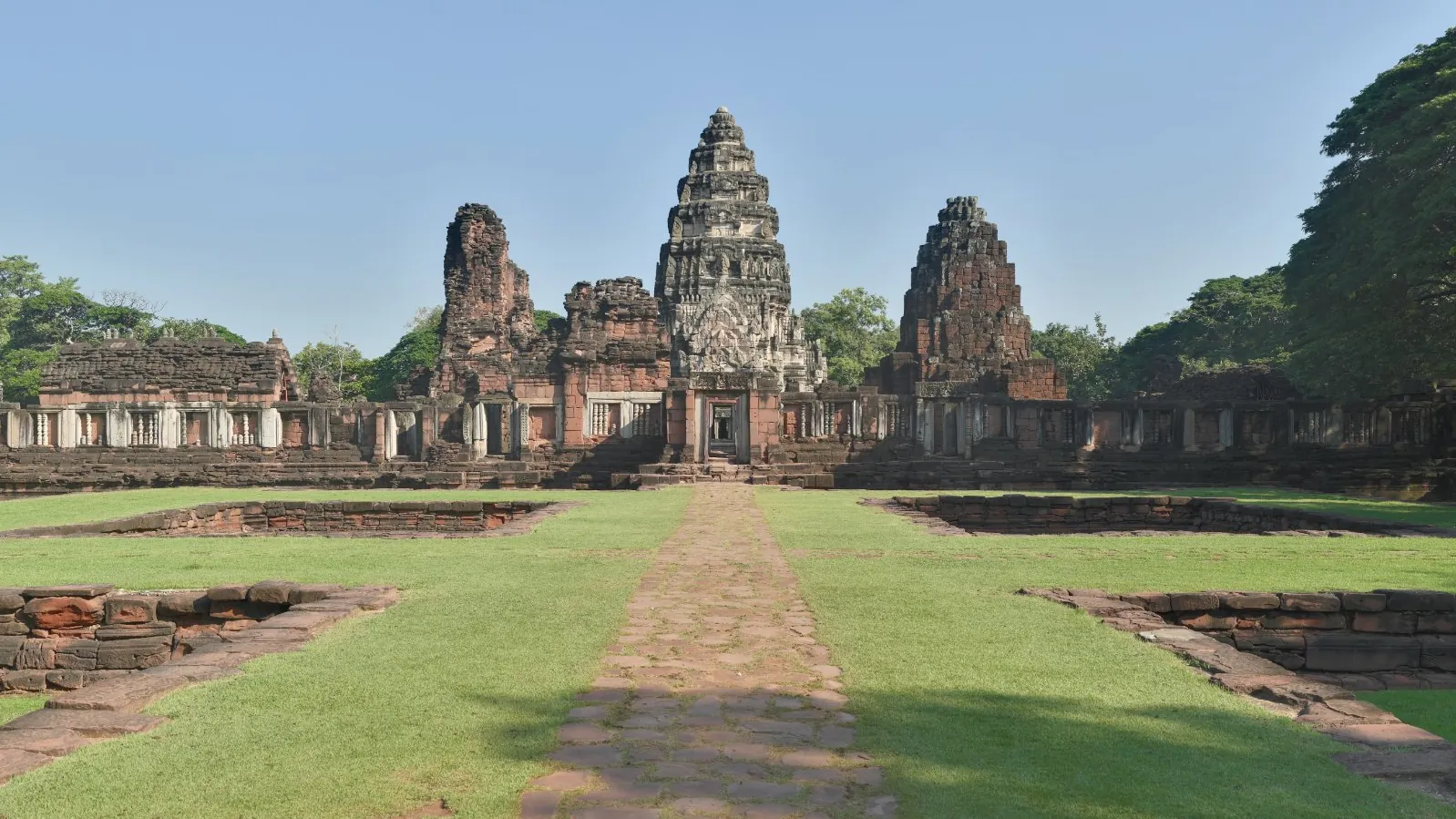
The Khmer sanctuary towers of Phimai and the path leading to themPhimai, Nakhon Ratchasima

The Khmer sanctuary towers of Phimai and the path leading to them

Phimai Historical Park

A Khmer temple older than Angkor Wat.

Getting there●●●○○Doable on your own: take a train or bus from Bangkok to Nakhon Ratchasima (Korat), then about 1 hour by bus.

Best timeNov–Feb

You don't need to go to Cambodia to see a Khmer temple — Isan has one.

Walk the stone causeway inward past the remains of ancient ponds, and the further you go, the quieter it gets. Phimai is one of the largest Khmer temples in Thailand, built roughly in the late 11th to early 12th century — a little earlier than Angkor Wat — when a road ran all the way to Angkor. The main tower is built of pale sandstone, its lintels carved with Buddhist and Hindu stories whose lines are still sharp a thousand years on. Mornings, with soft light and few visitors, are best for taking your time.

GETTING THEREAbout 3–4 hours by train or bus from Bangkok to Nakhon Ratchasima, then about 1 hour by bus to Phimai.
GOOD TO KNOWMornings bring good light and few people, when the Khmer prang looks most majestic. Midday is scorching, so come early, and please don't climb the ruins.
SAFETYStone steps are uneven, so watch your step; noon is fierce, so bring water and a hat.
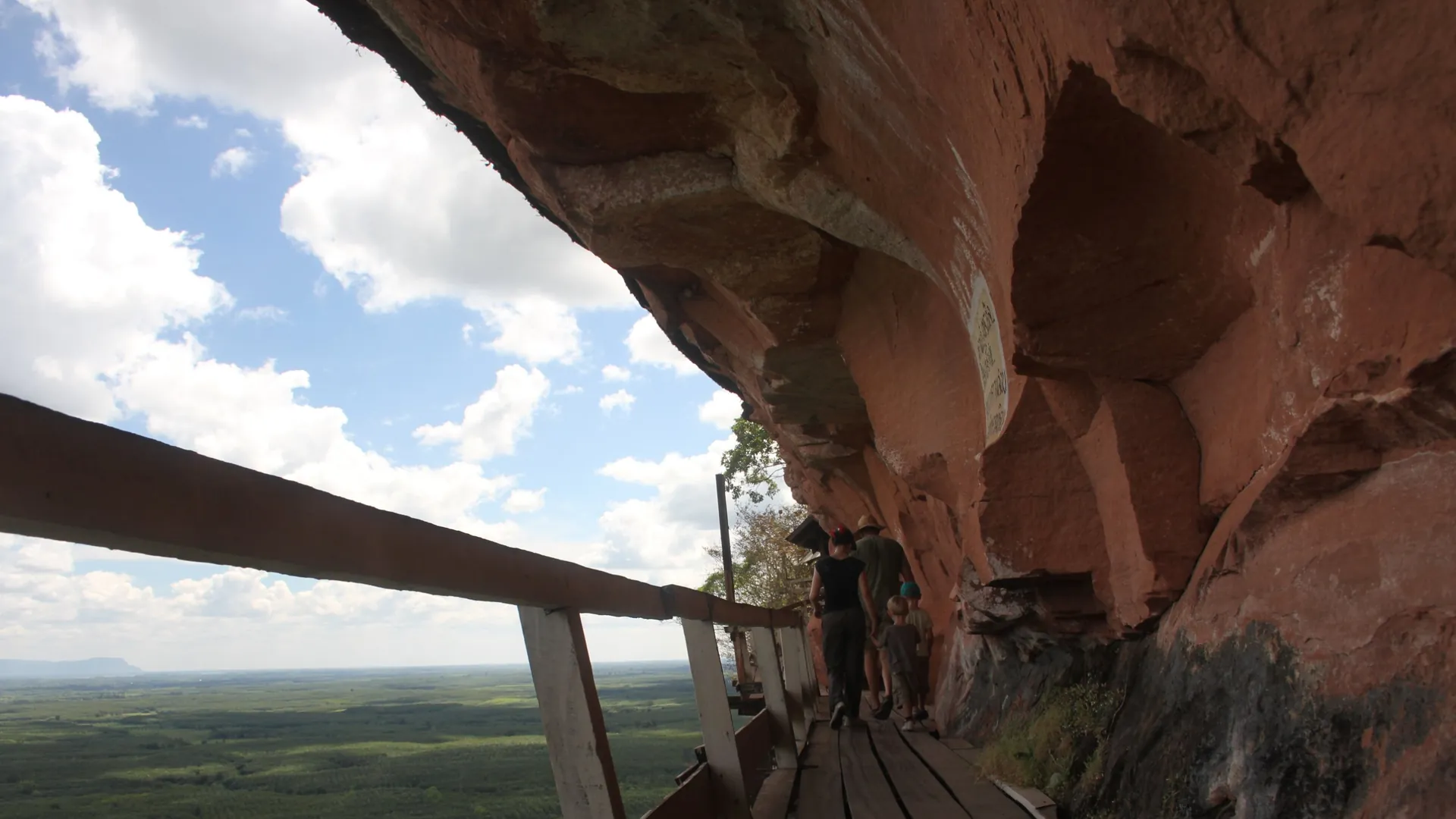
The wooden walkway clinging to Wat Phu Tok's red sandstone cliffSi Wilai, Bueng Kan

The wooden walkway clinging to Wat Phu Tok's red sandstone cliff

Wat Phu Tok

Level by level, practice climbs the cliff.

Getting there●●●●○For fairly fit travelers, but transport is limited: about 30–40 minutes by car from Bueng Kan town, and many people hire a driver.

Best timeNov–Feb

For a true mountain temple in Isan, go to Wat Phu Tok.

This is a temple of practice, built on a solitary sandstone mountain. A revered monk and his followers spent years fixing wooden walkways and stairs to the rock, section by section. The mountain has seven levels representing the stages of practice, with meditation huts and shrines along the way. Most moving is the sixth level: a plank walkway circles the mountain right against the cliff, red rock on one side and an endless plain on the other, the wind rising from below. Allow about two hours up and down — and every step is a quiet one.

GETTING THEREAbout 30–40 minutes by car from Bueng Kan town. Bueng Kan is around 3–4 hours by road from Udon Thani Airport, so most people hire a driver and combine it with Three Whale Rock.
GOOD TO KNOWCool mornings are best for climbing the wooden walkways, the plains opening up below with each level. It's an active meditation temple — wear long trousers and sleeves, keep quiet and don't disturb meditating monks.
SAFETYThe planks are uneven and some sections have no railing; the upper stairs are steep, almost ladder-like. Wear non-slip shoes, don't take photos at the edge, and know your limits if you're afraid of heights.
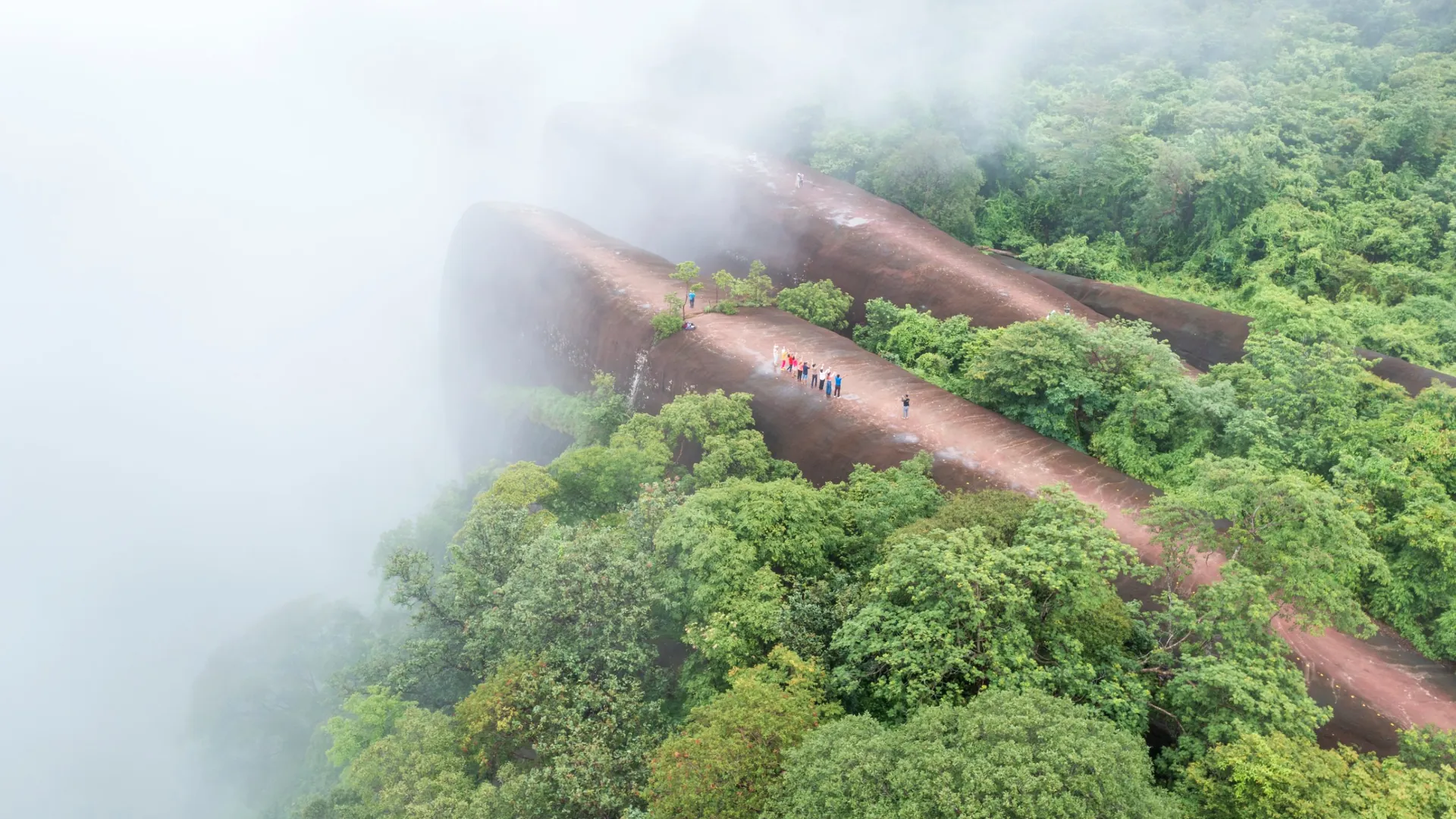
An aerial view of Three Whale Rock in the mist, with visitors on topPhu Sing Forest Park, Bueng Kan

An aerial view of Three Whale Rock in the mist, with visitors on top

Three Whale Rock (Hin Sam Wan)

Three whales, swimming in a sea of cloud.

Getting there●●●●○Doable on your own, but transport is limited: about 40 minutes from Bueng Kan town, then a local 4×4 up the hill; many people hire a driver.

Best timeNov–Jan

If you're in Bueng Kan, climb Three Whale Rock at dawn for the sea of mist.

At dawn, standing on the summit rocks, you watch mist rise from the forest below and slowly blanket the plain. Three Whale Rock is a trio of huge sandstone boulders on a hilltop in Phu Sing Forest Park; from the air they look like a family of three whales swimming through a sea of cloud. Standing on the rock itself you can't see the shape, which is why most photos are from drones. On clear days you can see the hills of Laos. The mist depends on the weather and isn't there every day — but the morning you catch it, you'll remember for a long time.

GETTING THEREAbout 40 minutes by road from Bueng Kan town to the foot of the hill, then a local 4×4 up, followed by a short walk onto the rocks.
GOOD TO KNOWDawn from the end of the rainy season into the cool season, roughly November to February, gives the best chance of a sea of mist below the rocks — set off very early. The forest park has set hours, so check first.
SAFETYThe edge of the rocks drops about 200 metres with no railing. The rock is very slippery after rain — keep away from the edge and hold on to children.

Not sure which to pick? Take the 4-minute travel-personality quiz and find the one that suits you.

Take the quiz