TOP-TIER TRAVEL中/EN

Italy

12 hidden gems in Italy

Old towns, coastlines & the Dolomites. We picked 12 places in this region — some well known, some few visitors find. Browse at your own pace, then take the quiz when something catches your eye.

TOP-TIER TRAVEL › All hidden gems › Italy

Not sure which to pick? Take the 4-minute travel-personality quiz and find the one that suits you.

Take the quiz
Colosseum
First time? Rome, Florence and Venice are the classics

The usual first trip flies into Rome and out of Milan or Venice, linking Rome, Florence and Venice by high-speed train in about ten days. It’s busy, but every stop earns its place. For a different Italy, head south to Puglia or north to the Dolomites. The place below suits you best.

Spot details checked: November 2026

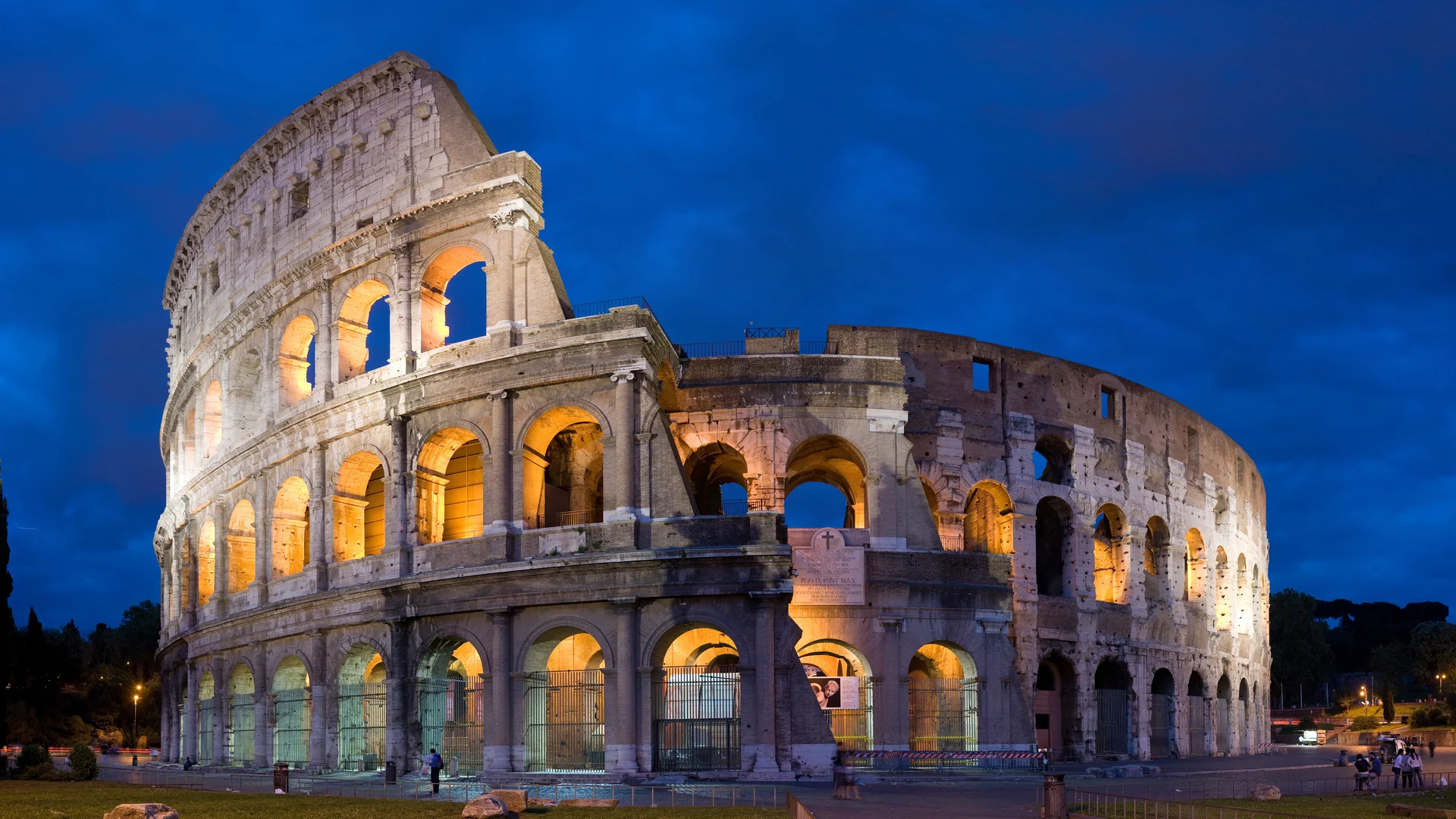
The Colosseum · the outer wall lit after darkCentral Rome, Lazio

The Colosseum · the outer wall lit after darkPhoto by DAVID ILIFF. License: https://creativecommons.org/licenses/by-sa/2.5/

Colosseum

After dark, two-thousand-year-old arches light up tier by tier.

Getting there●○○○○Very easy on your own: Colosseo station on Metro line B is right outside.

Best timeApr–May, Sep–Oct

The world’s most famous Roman ruin — impressive even from the outside.

Save your first look for the evening. As the sky darkens the arches light up ring by ring, and you see why this building has been the face of Rome for almost two thousand years. Come back by day for the other side of it: the floor has gone, exposing tier upon tier of tunnels where wild beasts and stage scenery once waited to be hoisted into the arena. Regular tickets are for daytime only and evening visits run only on special dates, so the night view is really one to enjoy from outside. The photo dates from 2007, so today’s lighting may look a little different.
GETTING THEREColosseo station on Metro line B is right outside; about 10 minutes by metro from Termini.
GOOD TO KNOWEntry is by timed reservation. The official site, ticketing.colosseo.it, opens sales 30 days ahead and popular slots go fast. Tickets are in your name and ID is checked at the entrance, so the names must match. The underground needs a specific ticket type. Winter hours are shorter (8:30–16:30 from 25 October 2026 to 28 February 2027, last entry 15:30); check the official site.
SAFETYIt’s crowded here, so watch for pickpockets on the metro and in the queues and keep your bag in front of you. Ignore anyone outside selling tickets or tours; the official site is the safest place to buy.
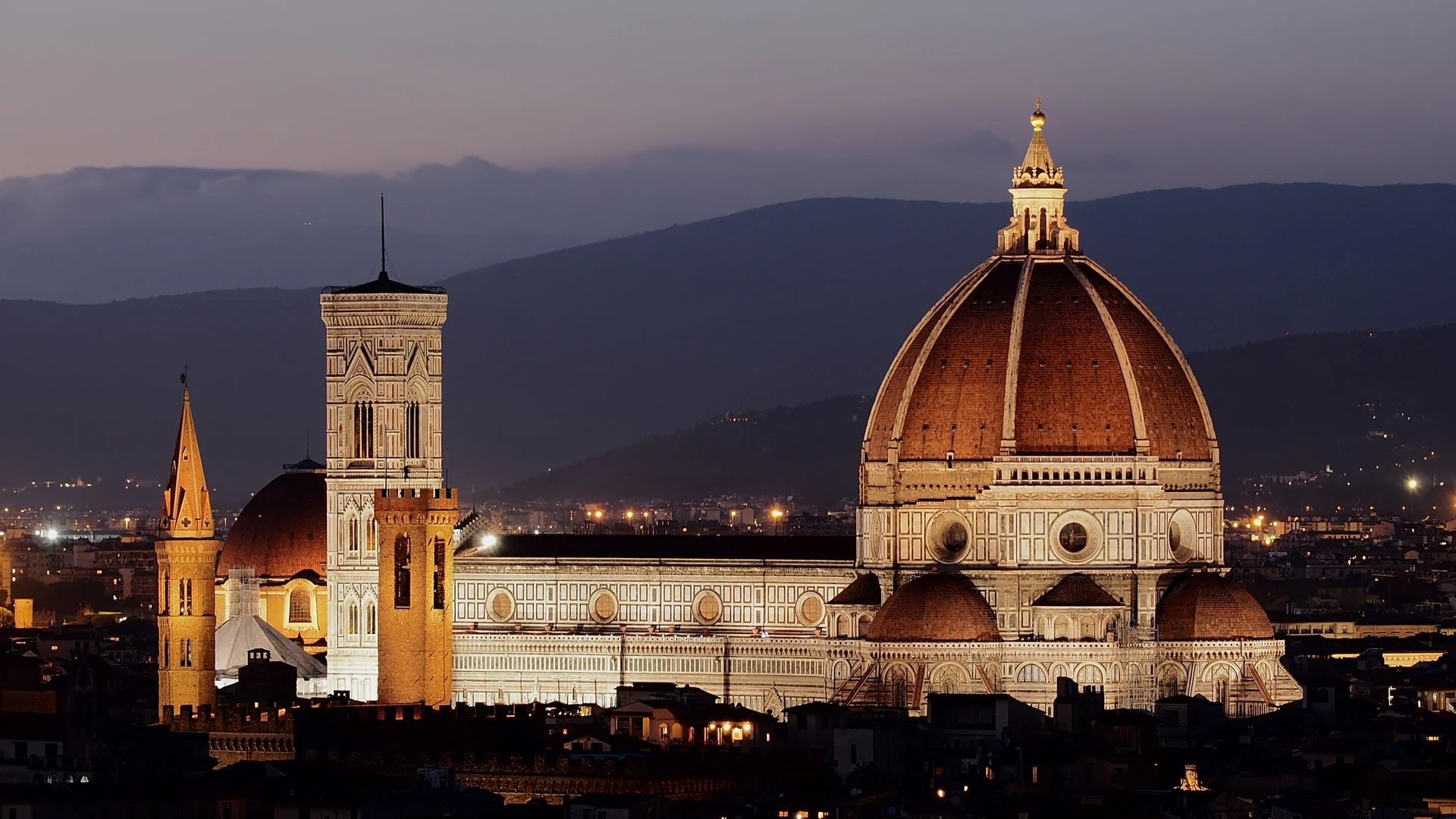
Florence Cathedral seen from Piazzale MichelangeloFlorence, Tuscany

Florence Cathedral seen from Piazzale MichelangeloPetar Milošević / CC BY-SA 4.0 / cropped

Florence Cathedral

At dusk, stand on the hill across the river and watch the city light up.

Getting there●○○○○Very easy on your own: about 1½ hours by high-speed train from Rome, and the old town is walkable.

Best timeApr–Jun, Sep–Oct

Where the Renaissance began: a whole city that works as a museum.

The red dome rises above everything in the city. When Brunelleschi built it six hundred years ago, nobody knew how a dome that size could stand up. The photo was taken from Piazzale Michelangelo across the Arno, so the ideal plan is to cross the river in the early evening and watch the cathedral and bell tower light up as the sky darkens. By day, walk into the old town: the cathedral, Giotto’s bell tower and the Baptistery share one square, and the Uffizi and Ponte Vecchio are minutes away.

GETTING THEREAbout 1½ hours by high-speed train from Rome to Firenze S.M.N., then a 10-minute walk to the cathedral. For Piazzale Michelangelo take a bus, or cross the river and walk uphill for about 20 minutes.
GOOD TO KNOWThe free part of the cathedral has long queues; the dome climb needs a timed booking on the official site and modest dress. Book the Uffizi ahead too — it closes on Mondays, but check the official site. The piazzale gets crowded at dusk, so arrive early for a front spot.
SAFETYWatch for pickpockets around the station, the markets and the cathedral. The way up to the piazzale has little cover, and it will be dark on the way back, so stick to main roads.
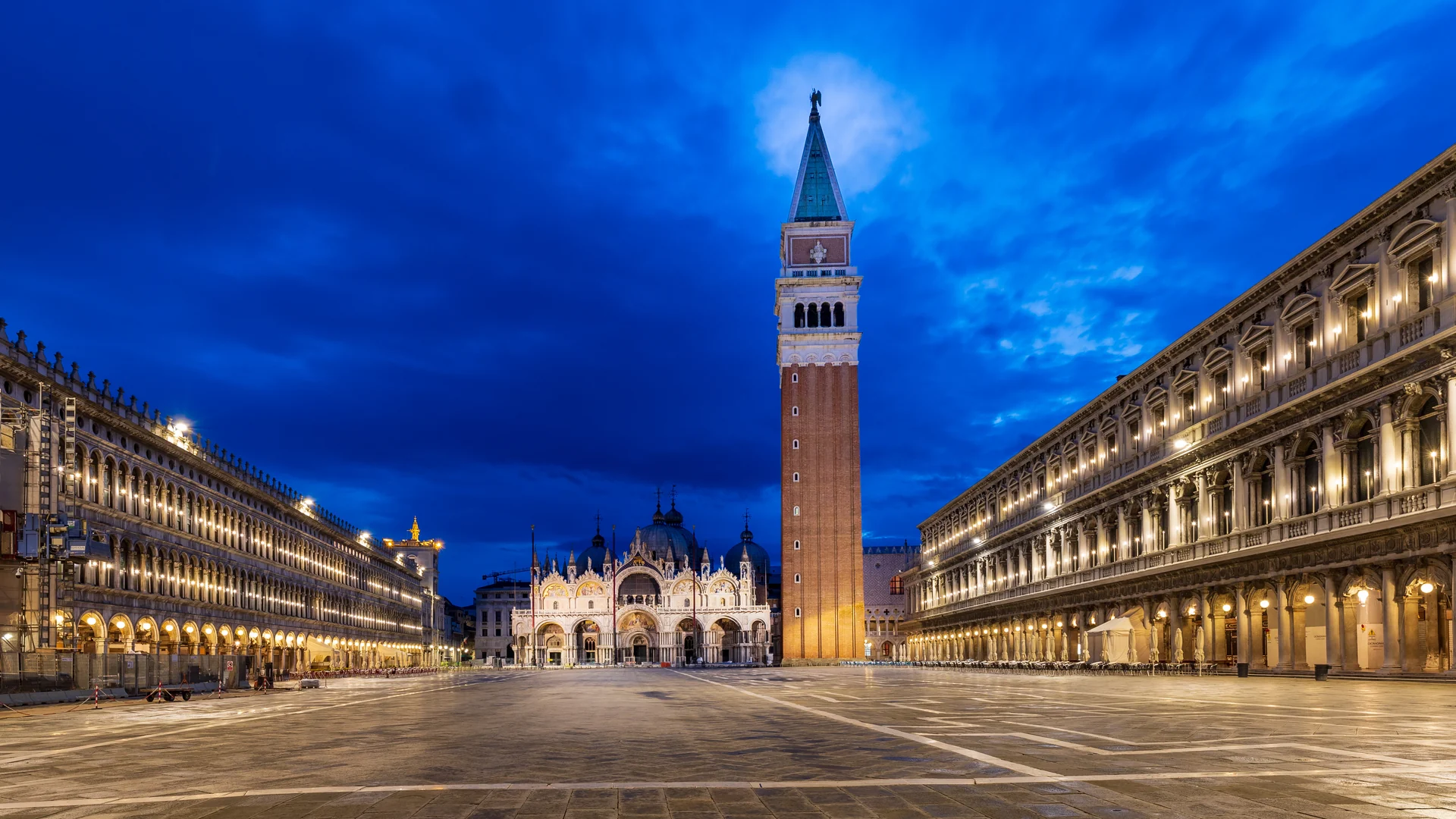
St Mark’s Square · the bell tower and arcades as the sky turns blueVenice, Veneto

St Mark’s Square · the bell tower and arcades as the sky turns blueImage: Matthias Süßen (matthias-suessen.de) / Licence: license CC BY-SA / via Wikimedia Commons

St Mark’s Square, Venice

Packed all day, the square falls silent as the sky turns blue.

Getting there●○○○○Very easy on your own: direct trains to Venice, then a water bus or a 30-minute walk.

Best timeApr–May, Sep–Oct

A city on water with no cars, and this square is its living room.

The square in the photo is almost empty, a view only people staying on the island get to see. As the sky turns blue, the lights come on along both arcades, the bell tower stands straight in the middle, and the domes of St Mark’s close off the far end. The day-trippers haven’t arrived and all you hear is footsteps. When the crowds pour in, head to the basilica and the Doge’s Palace, or duck into the lanes and get lost among canals and stone bridges, which is the real fun of Venice. There are no cars here: everything moves by boat or on foot.

GETTING THERETake a train to Venezia S. Lucia; the Grand Canal is right outside. A water bus to San Marco takes 30–40 minutes, or walk for about 30. From Marco Polo Airport, take a bus to Piazzale Roma, then a water bus.
GOOD TO KNOWVenice has been charging day-trippers an access fee on some dates: in 2026 it covered selected daytime slots from April to July, with advance registration on the official Venezia Unica platform. Overnight guests don’t pay but still register for a free pass. Check the official site for 2027 dates. Book the basilica and Doge’s Palace ahead.
SAFETYWater buses and the Rialto area get packed, so watch for pickpockets. Lanes are dark at night and bridges have steps, so take care with big suitcases. Many canals have no railing; watch your step.
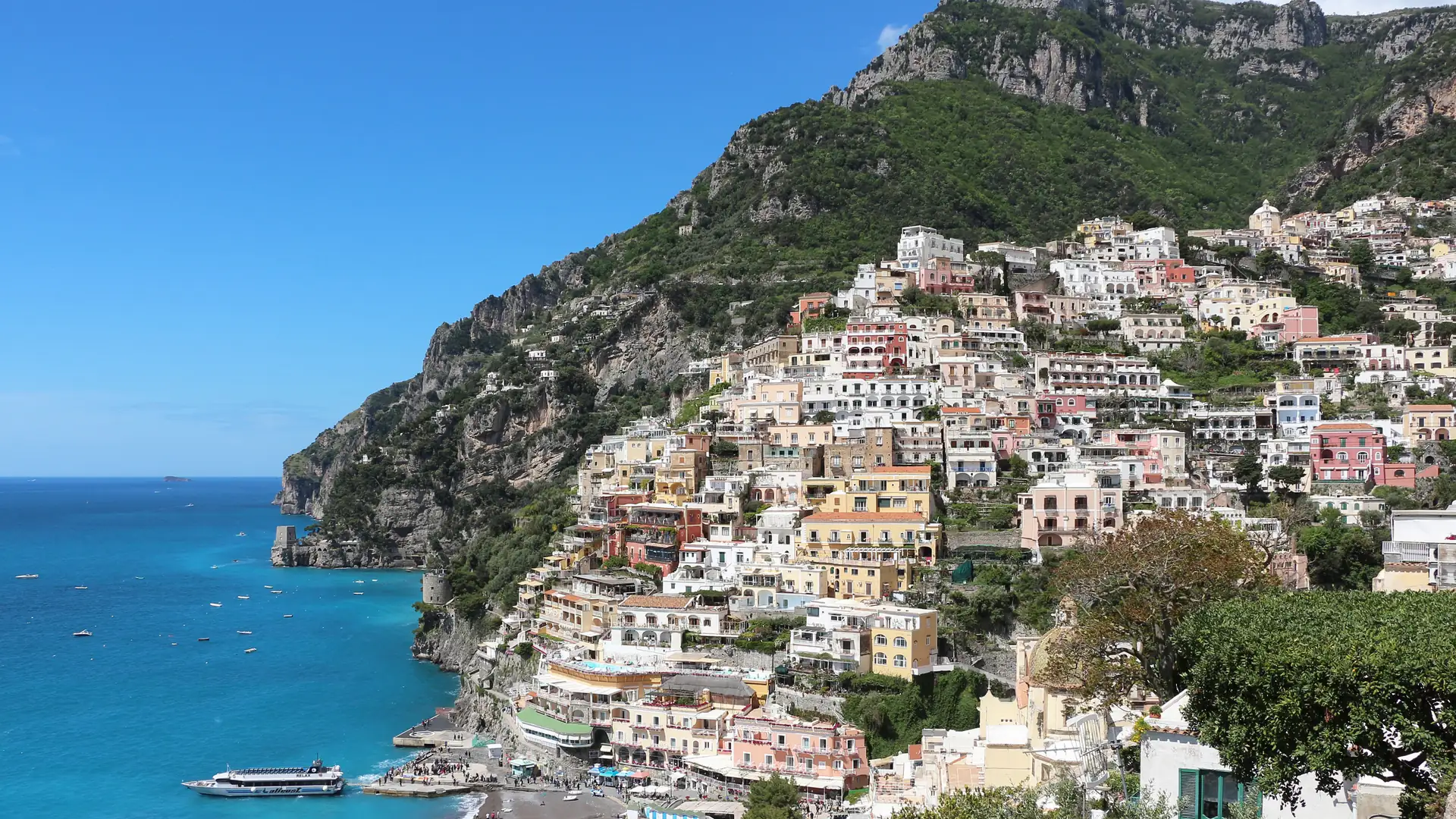
Positano · coloured houses stacked from hillside to shoreSorrento Peninsula, Campania

Positano · coloured houses stacked from hillside to shoreBernard Gagnon / CC BY 4.0 / cropped

Amalfi Coast · Positano

A whole hillside of coloured houses sliding down into the sea.

Getting there●●●○○Some planning: a bus or ferry from Naples or Sorrento, on a narrow, winding road.

Best timeMay–Jun, Sep

Italy’s most famous coastal town, straight off a postcard.

There’s nothing to rush for here: the town is the sight. Houses stack up from the shore to the top of the hill, pink, yellow and white squeezed together, on lanes so narrow you can only walk, and almost all of them steps. When your legs give out, stop for a lemon drink; the lemons here are absurdly big. The Amalfi Coast is a road hung along the cliffs, and from Positano you can carry on by boat or bus to Amalfi and Ravello. The photo shows Positano.

GETTING THEREAbout 1 hour by train from Naples to Sorrento, then about 1 hour by SITA bus along the coast. Ferries run in the warmer months and skip the bends. Driving isn’t recommended: narrow roads, heavy traffic, very little parking.
GOOD TO KNOWMay, June and September are most comfortable; July and August are hot and crowded. From November to March some shops, restaurants and boats cut back or close. The town is all steps, so pack light, and think twice with a pushchair or limited mobility. Ferries depend on the weather, so keep some slack.
SAFETYSteps and the coast road are narrow and steep, so walk on the inside. Hold on when buses are full. Check the signs before swimming and stay out when the sea is rough.
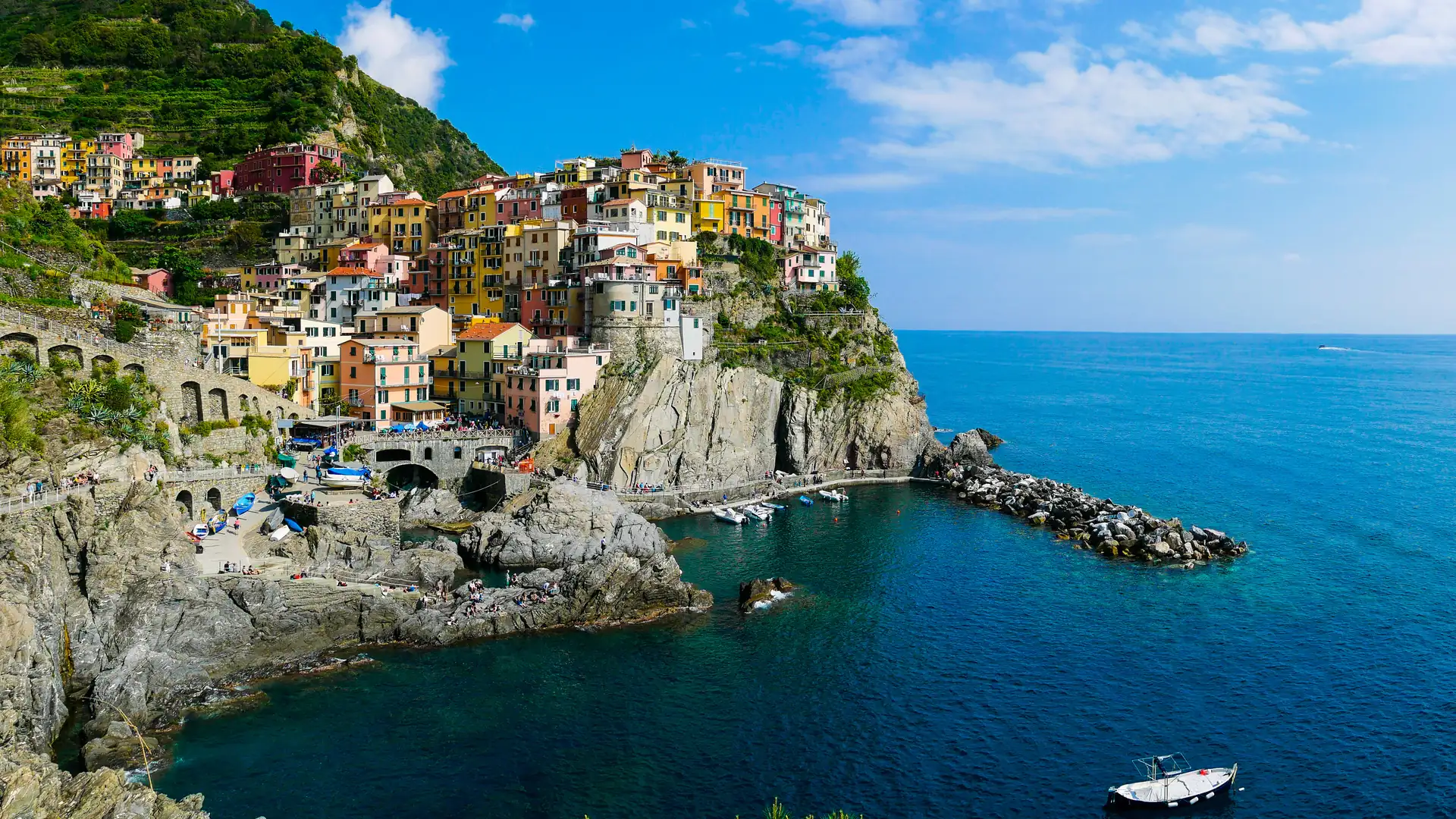
Manarola, one of the Cinque Terre villagesLa Spezia, Liguria

Manarola, one of the Cinque Terre villagesSchwingi / CC BY-SA 4.0 / cropped

Cinque Terre · Manarola

Coloured villages on the cliffs, linked one stop at a time by train.

Getting there●●○○○Easy on your own: about 10 minutes by regional train from La Spezia.

Best timeApr–Jun, Sep–Oct

Five villages clinging to the cliffs, all reachable without a car.

The Cinque Terre are five small villages squeezed between cliffs and sea. They were once reached only by boat or mountain path; now a railway tunnels through and links them, a few minutes per stop. The photo shows Manarola, one of the five, its coloured houses piled on dark rock above a harbour so small the boats get hauled ashore. It’s a different trip from the Amalfi Coast: no cliff hotels needed, just a train ticket to hop villages and a stretch of coastal path. The Via dell’Amore between Riomaggiore and Manarola reopened in 2024 and needs a timed booking.

GETTING THEREAbout 10 minutes by regional train from La Spezia. Florence to La Spezia takes about 2–2½ hours, Pisa about 1 hour. All five villages have stations and regional trains are frequent.
GOOD TO KNOWThe Cinque Terre Card covers regional trains and paid paths; card types and open sections are on the national park site. The Via dell’Amore needs a timed booking and its hours change with the seasons. Some paths close after heavy rain or rockfall, so check before you set out. Trains and platforms are packed in July and August.
SAFETYCoastal paths have steep, slippery stone steps: wear shoes with grip, carry water and skip them after heavy rain. Keep away from the rocks when the sea is rough.
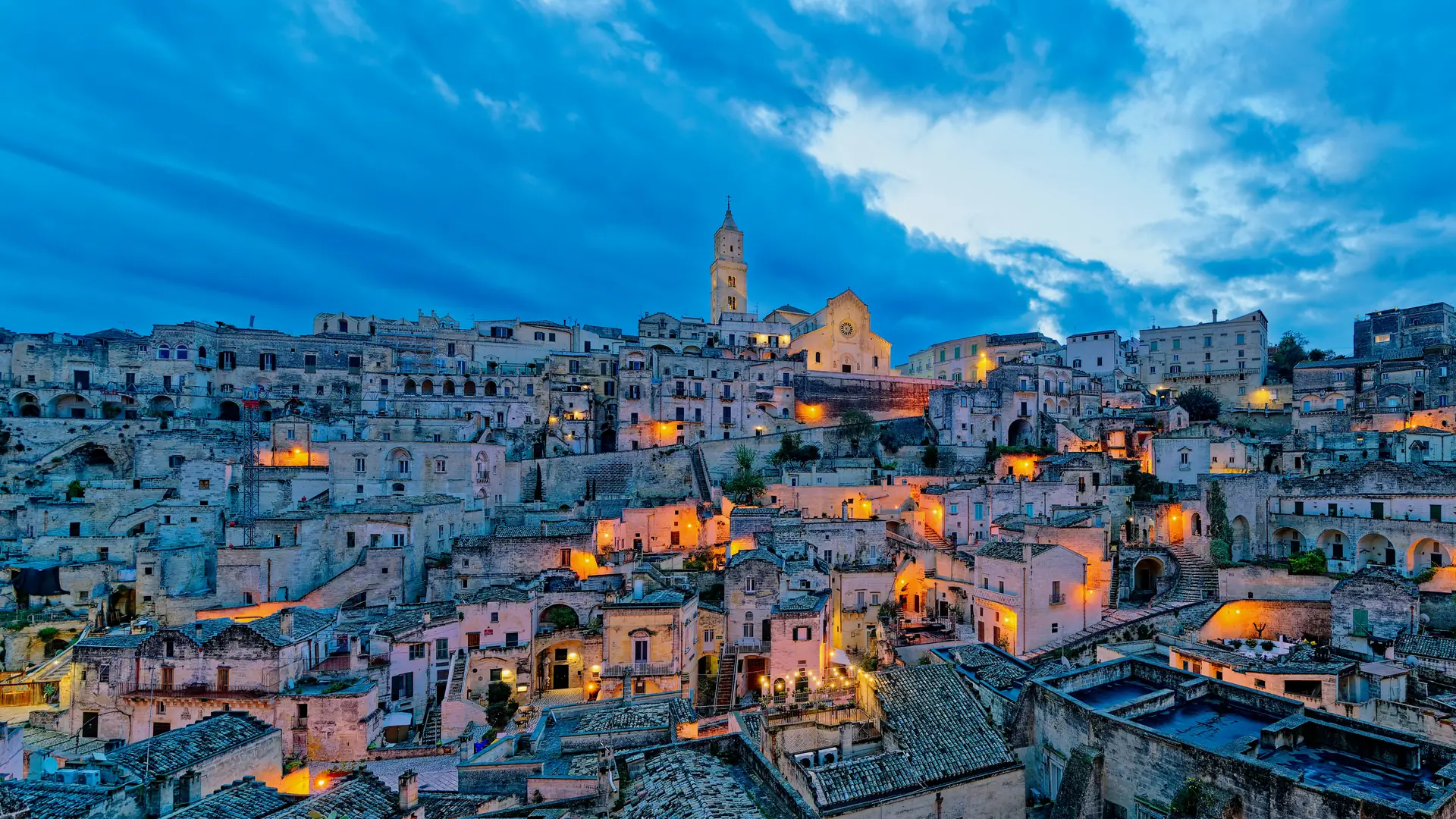
Matera · the stone town as the sky turns blue and the lights come onMatera, Basilicata

Matera · the stone town as the sky turns blue and the lights come onHolger Uwe Schmitt / CC BY-SA 4.0 / cropped

The Sassi of Matera

As the sky turns blue, the stone houses light up one by one.

Getting there●●●○○Some planning: about 1½ hours by private railway or bus from Bari; no direct state-railway line.

Best timeApr–Jun, Sep–Oct

A cave city lived in for thousands of years, now a World Heritage Site.

This city was dug out of the rock. In Matera’s old quarter, the Sassi, many houses are caves in the hillside with a wall built across the front, and one family’s roof is often the next family’s street. A few decades ago it was seen as a symbol of poverty and residents were moved out; today it’s a World Heritage Site. As the sky turns blue and the lights come on, the pale stone town looks like a quiet stage. By day, step into rock churches and preserved old homes; by night, sleep in a converted cave.

GETTING THEREAbout 1½ hours by FAL private railway or bus from Bari. Matera has no direct state high-speed line, so from Rome you’ll normally change. Cars can’t enter the old quarter, so ask your hotel how to get there.
GOOD TO KNOWThe old town is all stone steps and slopes: wear good shoes and pack light. Rock churches and old houses each have their own hours and tickets; check on site or online. Summer noons are fierce.
SAFETYSteps are uneven and lighting is dim at night, so watch your feet. Paths along the cliff edge aren’t fully railed, so keep back. For the ravine opposite, wear hiking shoes and carry water.
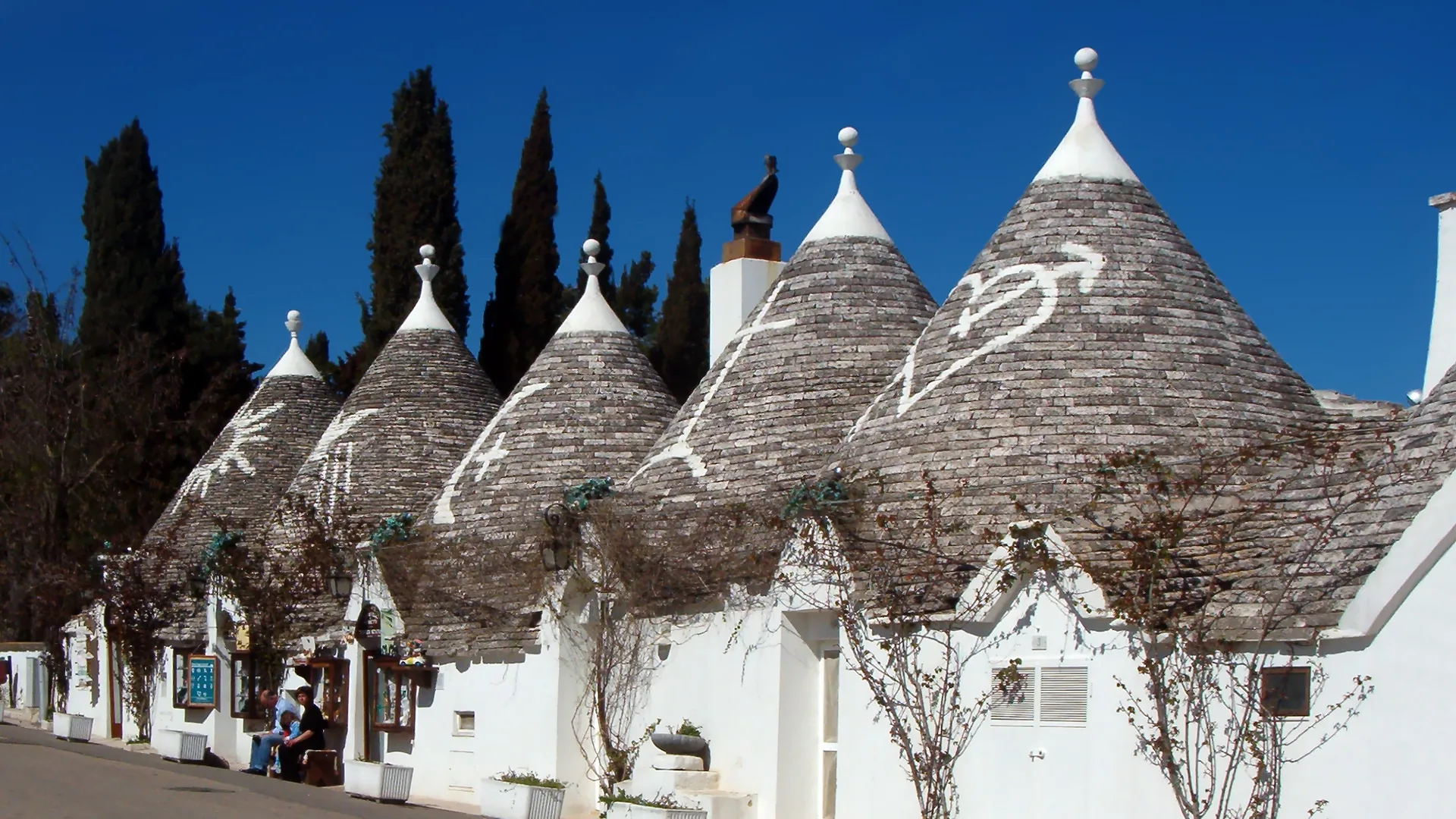
Trulli, the conical stone houses of AlberobelloNear Bari, Puglia

Trulli, the conical stone houses of AlberobelloMarcok di it.wiki / CC BY 2.5 / cropped

Trulli of Alberobello

A whole quarter of white walls and grey cones, straight out of a fairy tale.

Getting there●●●○○Some planning: about 1½ hours by regional train from Bari, with few Sunday services.

Best timeApr–Jun, Sep–Oct

The most unusual village in southern Italy, a whole World Heritage quarter.

These Puglian stone houses are called trulli: white walls under grey conical roofs of stacked stone slabs, traditionally laid without mortar. Walk the slopes of the Rione Monti and the whole lane feels built for gnomes. Some roofs carry white symbols; those were added after restoration in the 1980s and 90s, so they aren’t an ancient tradition. There are plenty of visitors by day, but the village goes quiet after dusk, so a night here is well worth it.

GETTING THEREAbout 1½ hours by FSE regional train from Bari, then a 15-minute walk to the trulli. Services are thin on Sundays and holidays, so check the timetable. A private driver or rental car can link this with Matera.
GOOD TO KNOWRione Monti has most of the shops; Aia Piccola and the surroundings are quieter, and mornings are best for photos with fewer people. Some trulli are private homes, so don’t walk in. Summer noons are hot, and many small shops close early in winter.
SAFETYThe stone lanes get slippery in the rain, so wear shoes with grip. Please don’t climb on roofs or low walls.
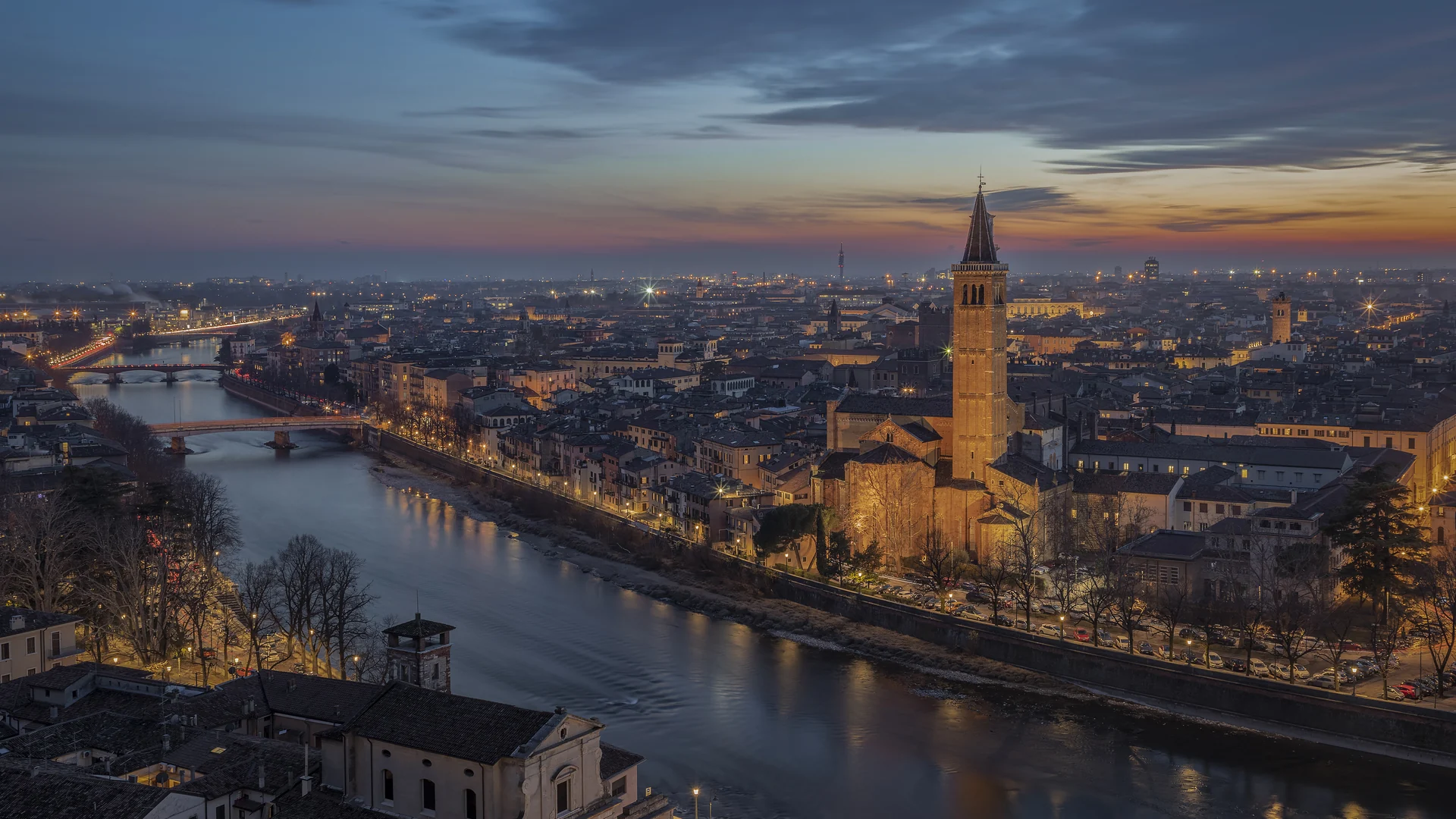
Verona · the old town lit along the Adige after darkVerona, Veneto

Verona · the old town lit along the Adige after darkMaurizio Moro5153 / CC BY-SA 4.0 / cropped

Verona

After dark, the Adige glows all the way to the old town’s tower.

Getting there●○○○○Very easy on your own: a little over an hour by high-speed train from Milan or Venice.

Best timeApr–Jun, Sep–Oct

Juliet’s city, and it’s more than a love story.

Many come for Juliet’s house, but Verona’s real charm is its river. The Adige loops around the old town in a great bend, and after dark the lights along both banks throw towers and old houses onto the water. By day, cross Piazza delle Erbe to see the Roman arena, then Castelvecchio and its bridge. Juliet’s balcony sits in a small crowded courtyard; one look is enough. Walking the river is the real rhythm of this city.

GETTING THEREAbout 1¼ hours by high-speed train from either Milan or Venice to Verona Porta Nuova, then a bus or 20-minute walk to the old town.
GOOD TO KNOWThe summer opera season at the arena fills hotels early; dates are on the official site. Juliet’s courtyard can have a queue, and the balcony needs a separate ticket. The old town is walkable; save the river for dusk.
SAFETYThe river paths are not well lit at night, so go with someone and keep back from the edge. Watch your belongings in busy squares.
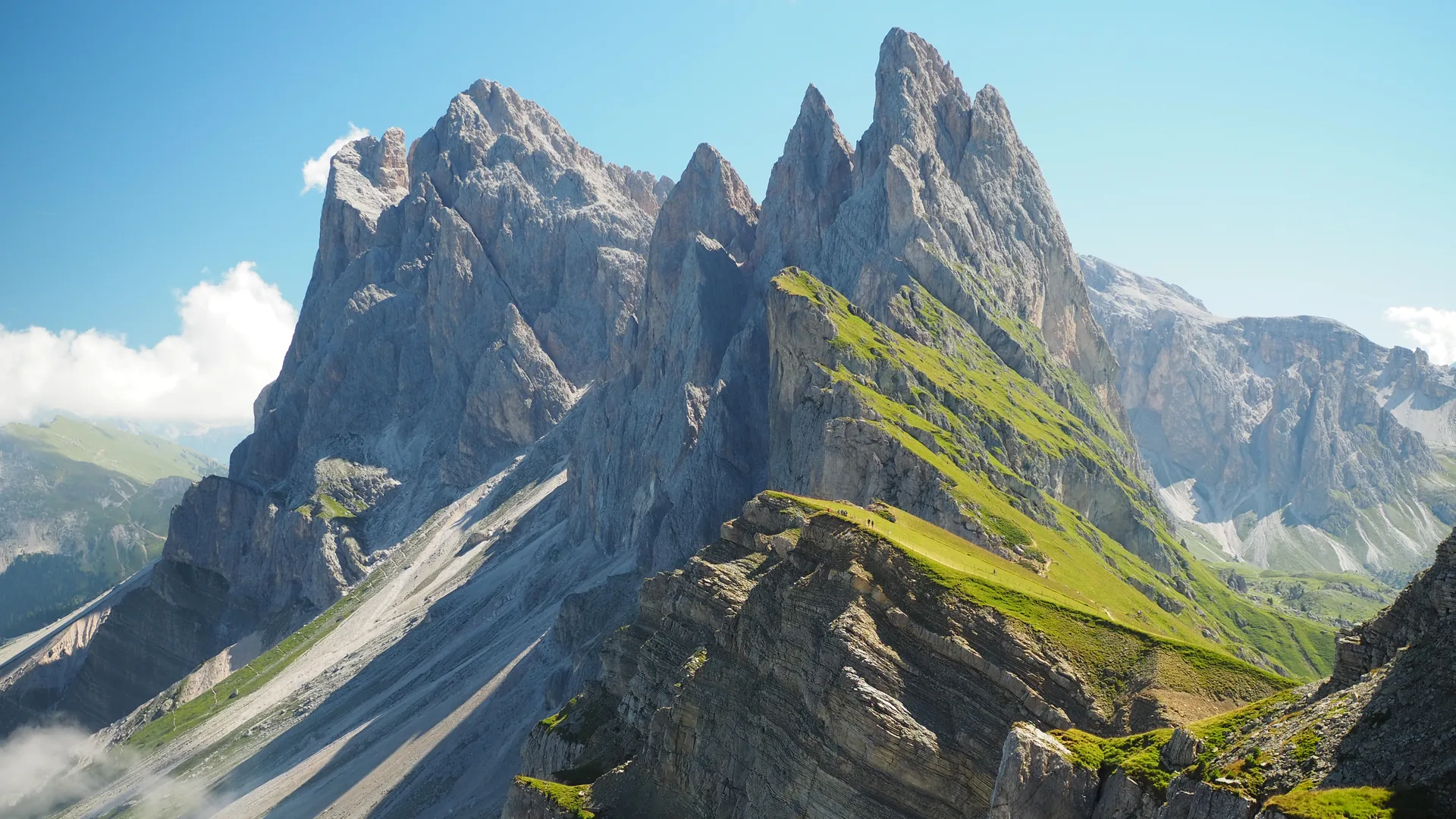
Seceda ridge · green summer slopes and rock peaksDolomites, South Tyrol

Seceda ridge · green summer slopes and rock peaksDmitry Djouce / CC BY 2.0 / cropped

Seceda Ridge

A meadow tilts up into the sky, then stops dead at a cliff.

Getting there●●●○○Some planning: about 1 hour by bus from Bolzano to Ortisei, then a lift up.

Best timeJun–Sep

The Dolomites’ most famous view: green grass on one side, a sheer drop on the other.

This ridge makes no sense. One side is a gentle green meadow that simply ends, dropping into hundreds of metres of rock wall. The Dolomites are a World Heritage Site, and Seceda is among their easiest high viewpoints: two lifts from Ortisei take you to about 2,500 metres. In summer a short walk along the ridge brings you to the view in the photo, and keen walkers can continue down to a hut for lunch. This entry is about the summer visit.

GETTING THEREAbout 1 hour by bus from Bolzano to Ortisei, then two lifts up. In summer 2026 the lifts ran from 22 May to 2 November; check the official site for 2027. Parking is limited, so public transport is better.
GOOD TO KNOWFrom summer 2026 you need to book a 30-minute time slot on the lift’s site, seceda.it, ahead of time, and early in high season. Tickets generally can’t be refunded or changed. June to September is best; it’s much colder up top than in the valley, even in summer. Lift hours change yearly, so check the official site.
SAFETYMountain weather turns fast and summer afternoons often bring storms, so head down early. There’s a sheer drop beside the ridge: don’t cross fences or go near the edge for photos. Wear hiking shoes and take it slowly at altitude.
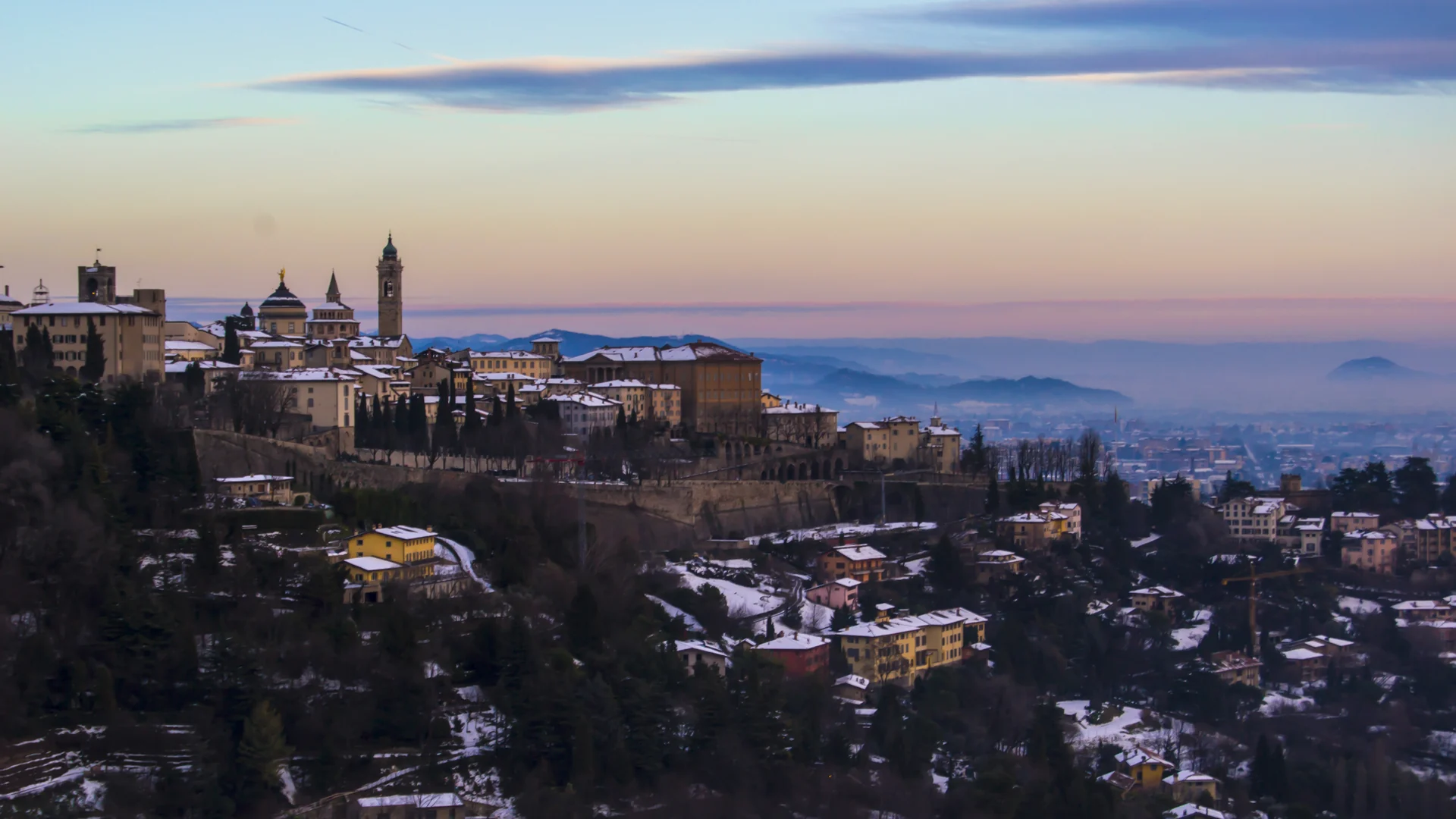
Bergamo’s upper town at dusk on a winter dayBergamo, Lombardy

Bergamo’s upper town at dusk on a winter dayLuca Serazzi / CC BY 2.0

Bergamo Città Alta

Ride the funicular up to an old town walled in on its hilltop.

Getting there●○○○○Very easy on your own: about 1 hour by train from Milan, with an airport just outside town.

Best timeApr–Jun, Sep–Oct

Milan’s most underrated neighbour, an hour away.

Plenty of people land at Bergamo Airport and head straight to Milan, but the upper town is worth a trip of its own. A funicular lifts you from the lower town into an old town enclosed by walls: cobbles, old squares, churches and bell towers, with few cars. The walls date from the Venetian Republic and are now a World Heritage Site. At dusk, walk to the edge and look down on the lights of the plain. The photo was taken at dusk in February, with a little snow on the roofs. You won’t see that every day, but it’s just as lovely without.

GETTING THEREAbout 1 hour by train from Milano Centrale to Bergamo, then a bus to the funicular, which takes a few minutes up. Airport buses run from Bergamo Airport to town.
GOOD TO KNOWAllow half a day to a full day; weekends are busier. Check the local operator for funicular times. Winter evenings come early, so go up in good time for dusk.
SAFETYCobbles get slippery in the rain, so wear good shoes. There are drops along the walls, so don’t sit on them for photos.
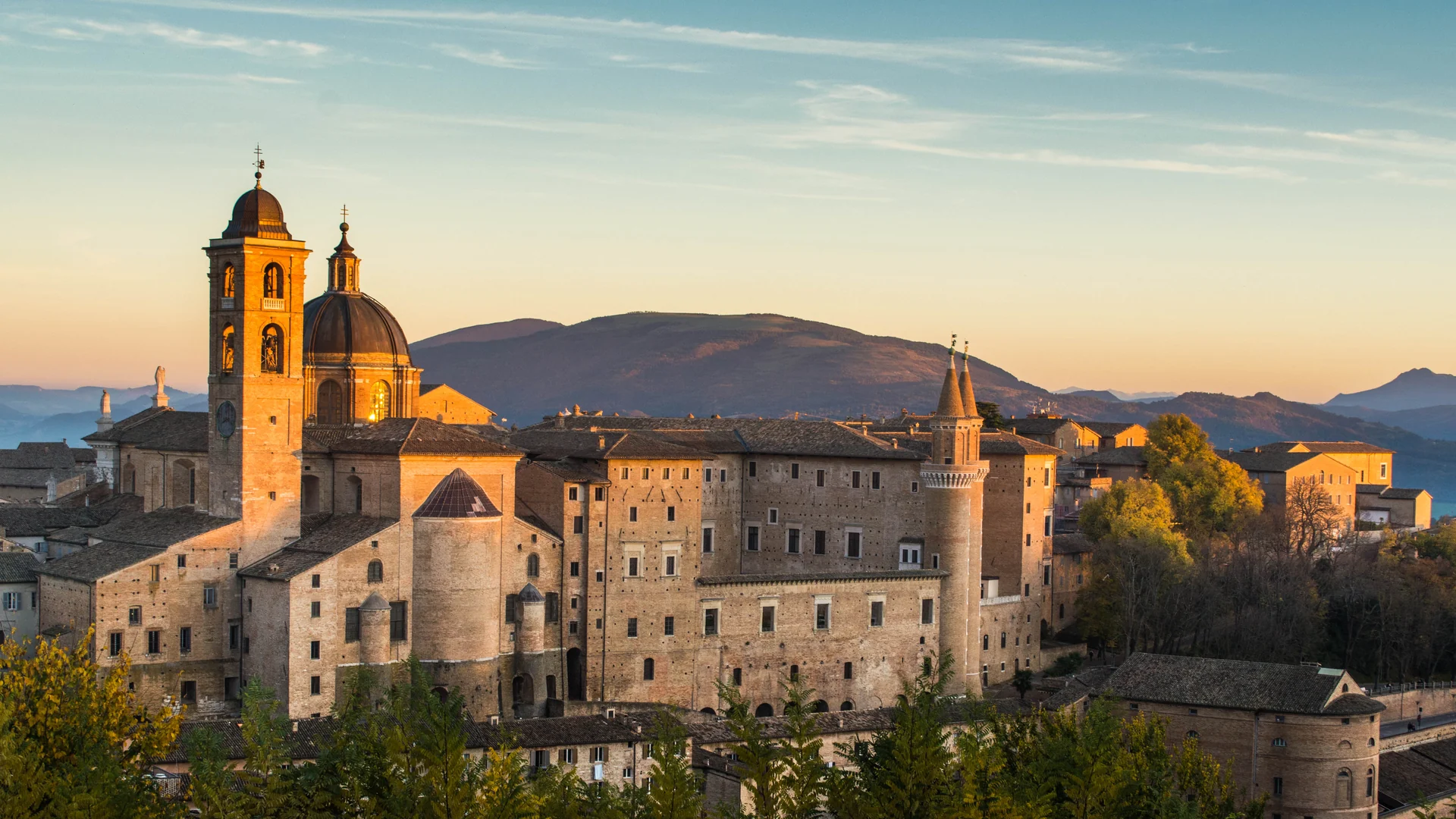
Urbino · a Renaissance hill town in autumnPesaro-Urbino, Marche

Urbino · a Renaissance hill town in autumnSandro Viro / CC BY-SA 4.0 / cropped

Urbino

The hill town where Raphael was born, still living in the Renaissance.

Getting there●●●●○Harder: no railway; about 1 hour by bus from Pesaro.

Best timeApr–Jun, Sep–Oct

A Renaissance hill town with few visitors, and a World Heritage Site.

If Florence feels too crowded, come here. In the 15th century this hill town held one of Italy’s most cultured courts: its duke brought painters, mathematicians and architects up the hill, and left behind the Ducal Palace, now the National Gallery of the Marche. Raphael was born here and his family home still stands. The town spreads over two hills with steep brick streets, and there are more students than tourists. Sit in the square at dusk and you’ve stepped into another age.

GETTING THEREThere’s no railway to Urbino. Take a train to Pesaro on the Adriatic, then a bus of about 1 hour. Buses thin out at weekends, so check first.
GOOD TO KNOWThe Ducal Palace usually has reduced hours on Mondays; check the official site. The streets are very steep, which is hard work with a wheelchair or pushchair. Allow one or two days.
SAFETYSteep brick streets get slippery in the rain, so wear shoes with grip. Snow and ice sometimes come in winter, so take care.
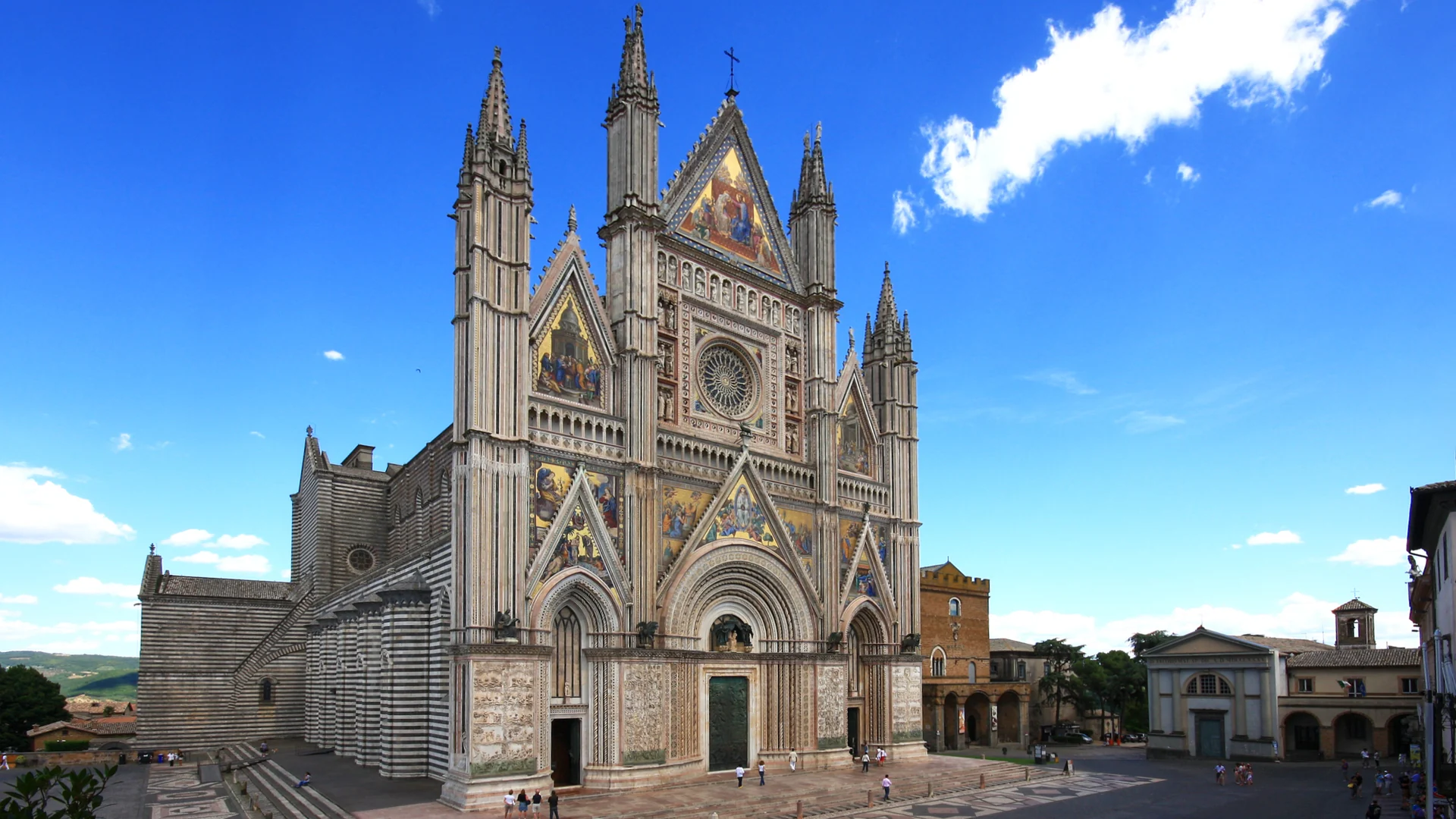
The façade of Orvieto CathedralTerni, Umbria

The façade of Orvieto CathedralBruschi alberto / CC BY-SA 4.0 / cropped

Orvieto Cathedral

A town on a cliff top, hiding a cathedral that glitters.

Getting there●●○○○Easy on your own: a little over an hour by train from Rome, then a funicular up.

Best timeApr–Jun, Sep–Oct

A cliff-top town between Rome and Florence, an easy stop on the way.

On the train between Rome and Florence, a town built on a volcanic rock cliff suddenly appears outside the window. That’s Orvieto. It’s small, and at the end of it stands the cathedral, its striped black-and-white walls and gold mosaics flashing in the sun. Inside, the Chapel of San Brizio has Signorelli’s frescoes, which many come especially to see. There’s another town below this one: the Etruscans and later residents dug well over a thousand caves into the rock, and you can visit on a guided tour.

GETTING THEREA little over an hour by train from Rome, about 2 hours from Florence. From Orvieto station take the funicular, then walk or ride a minibus to the cathedral.
GOOD TO KNOWIt makes a great stop between Rome and Florence; ask at the station or your hotel about leaving bags. The underground is guided only; check times on site or online. The cathedral is a place of worship, so dress modestly.
SAFETYThe caves are dark and cool with plenty of steps, so wear good shoes. The town sits on a cliff, so keep back from the edge of the walls.

Winter ski areas & events

Coming in winter? The region also has these. Full details (lessons, lodging, transport) are in the winter corner of your quiz results.

Ski areas

  • Cortina d’Ampezzo: A 2026 Winter Olympics venue, with slopes ringed by pale rock walls
  • Madonna di Campiglio: One of Italy’s most elegant ski towns, with runs reaching the village
  • Breuil-Cervinia: The Matterhorn from the Italian side, with runs reaching into Switzerland
  • Bormio: An Olympic downhill stage, with Roman-era thermal baths after skiing
  • Livigno: A high-altitude duty-free town with a long season
  • Alta Badia: The Sellaronda loop starts here, and the food is exceptional
  • Val di Fassa: Ride up, and the Dolomite walls are right in front of you

Winter events

  • Venice Carnival mask day: Masked figures in grand costume stand silently by the canals, letting you look.
  • Bolzano and Merano Christmas market day: Two German-flavoured mountain markets in one day, with mulled wine and cinnamon in the air.
  • A day in the snow on Mount Etna: Snow under your boots, white smoke above your head. This volcano is alive.
  • Milan Christmas arcade day: Under a glass dome, one great tree lights the whole arcade.
  • Lake Como Christmas lights day: Como Cathedral by the lake lights up for Christmas.
  • Viareggio Carnival parade day: Dancers come down the seafront avenue, moving to the music.
  • Watching Ivrea’s Battle of the Oranges: A square full of flying oranges, the air thick with citrus and shouting.

Not sure which to pick? Take the 4-minute travel-personality quiz and find the one that suits you.

Take the quiz