TOP-TIER TRAVEL中/EN

Korea · Jeolla & Chungcheong

11 hidden gems in Jeolla & Chungcheong

Food & hanok. We picked 11 places in this region — some well known, some few visitors find. Browse at your own pace, then take the quiz when something catches your eye.

TOP-TIER TRAVEL › All hidden gems › Korea › Jeolla & Chungcheong

Not sure which to pick? Take the 4-minute travel-personality quiz and find the one that suits you.

Take the quiz
Jeonju Hanok Village
First time? Start with the classics

You can't go wrong doing a first lap of Jeonju Hanok Village, Yeosu's night view and Suncheon Bay. Jeolla and Chungcheong cover a lot of ground — cities are mostly linked by KTX or bus, and remote islands and mountains need another connection — so save just a day or two for the place below that's truly yours.

Looking for a place to stay in this area? Start here:

Spot details checked: October 2026

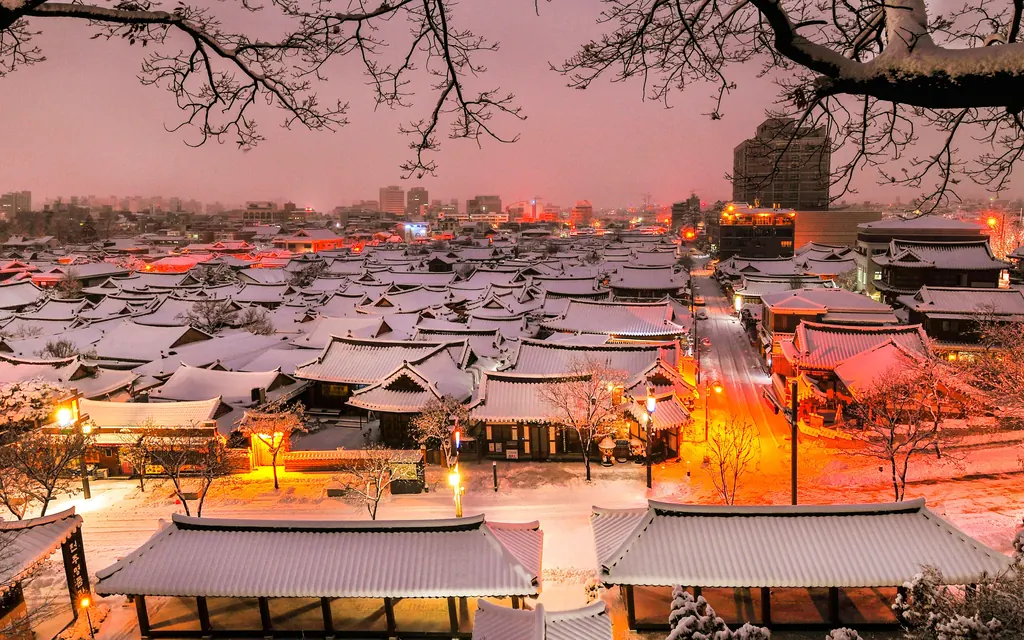
Snow-covered rooftops of the Jeonju Hanok Village at dawnJeonju, Jeonbuk

Snow-covered rooftops of the Jeonju Hanok Village at dawn

Jeonju Hanok Village

Over 700 hanok, waking up in the snow.

Getting there●●○○○Easy on your own: 1.5–2 hours by KTX from Seoul, then about 20 minutes by bus.

Best timeGood all year

On your first trip to Jeolla, put Jeonju Hanok Village on the list.

Morning snow settles quietly on row upon row of black tiled roofs, the lanes still empty, the only sound your own footsteps in the snow, and under distant eaves white steam from hot soup slowly rises. Jeonju Hanok Village is a large cluster of traditional houses preserved in the city center, over 700 buildings, one of Korea's best-known hanok villages. Jeonju is also the ancestral home of the Joseon royal Yi clan: beside the village is Gyeonggijeon, which enshrines the portrait of King Taejo Yi Seong-gye, and Jeondong Cathedral, one of Korea's earliest Western-style churches. When you're tired, have a bowl of bibimbap or steaming bean-sprout soup with rice; UNESCO has named Jeonju a Creative City of Gastronomy, and one bite tells you why. The photo shows a snowy morning. A walk through hanok in the snow, then a hot bowl of soup to warm you up: a Jeonju morning you'll remember a long time.
GETTING THEREAbout 1.5–2 hours by KTX from Seoul's Yongsan Station to Jeonju Station, then about 20 minutes by bus; express buses from Seoul take about 2.5 hours.
GOOD TO KNOWCome early for empty lanes, and spend a night in a hanok to feel the old town's quiet. Holidays are crowded.
SAFETYCars come and go in the lanes — watch for traffic while taking photos.
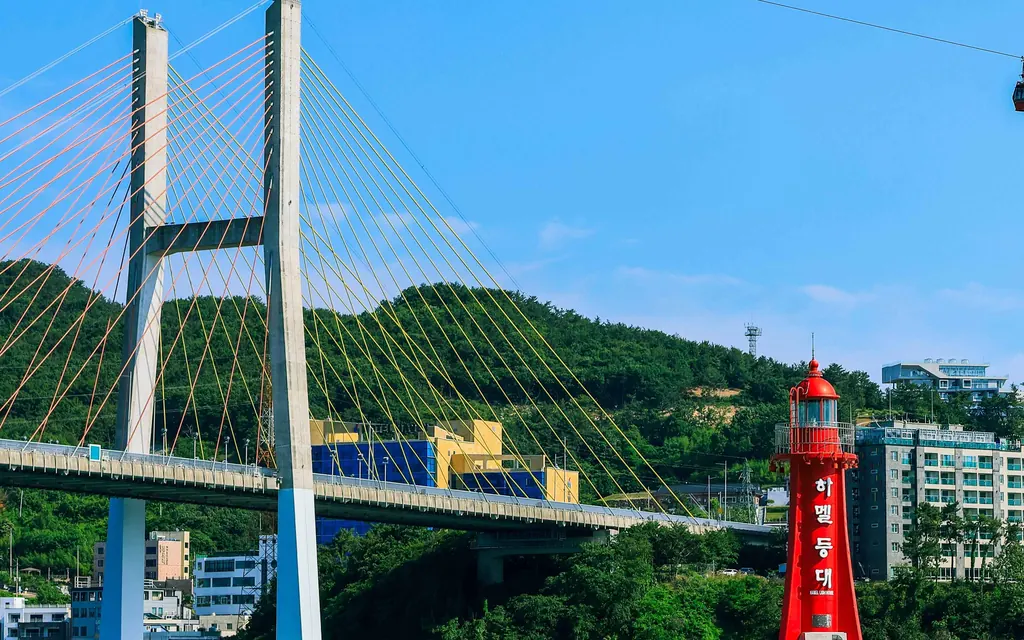
The red Hamel Lighthouse and Dolsan Bridge behind itYeosu, Jeonnam

The red Hamel Lighthouse and Dolsan Bridge behind it

Yeosu Maritime Cable Car

One song made all of Korea long to see this night sea.

Getting there●●○○○Easy on your own: about 3 hours by direct KTX from Seoul to Yeosu EXPO Station.

Best timeGood all year

On the Jeonnam coast, ride a cable car across the sea.

The cable car glides out and through the glass floor there's nothing but sea, the breeze gently rocking the cabin; as darkness falls, the harbor lights come on one by one and a red lighthouse stands out against the night. Yeosu is a port city in South Jeolla that hosted the 2012 World Expo. The Yeosu Maritime Cable Car links the city with Dolsando island and was Korea's first cable car over the sea, with glass-floored cabins available. The red lighthouse in the photo is the Hamel Lighthouse, honoring Hendrick Hamel, a Dutchman who was shipwrecked in Joseon in the 17th century and later wrote the first Western account of Korea. The song “Yeosu Night Sea” made the view famous across Korea, and walking by the water you can almost hear the melody. In Yeosu, wait until dark, and let this night sea write you into the song.

GETTING THEREAbout 3 hours by KTX from Seoul's Yongsan Station to Yeosu EXPO Station; get around town by bus or taxi.
GOOD TO KNOWRiding the cable car as sunset turns into night views is the most romantic time — and the busiest. It stops in strong wind; check the operating hours on the official site.
SAFETYThe seaside promenade is dim at night — watch your step.
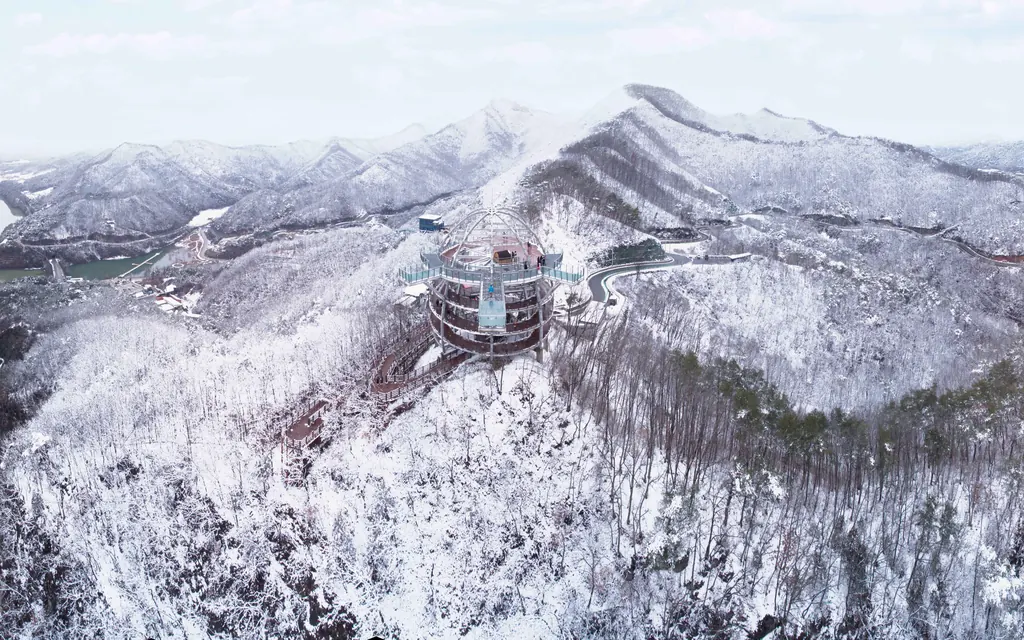
An aerial view of the Mancheonha observation tower in the snowDanyang, Chungbuk

An aerial view of the Mancheonha observation tower in the snow

Mancheonha Skywalk, Danyang

Walk to the end of the glass, and the river is beneath your feet.

Getting there●●○○○Easy on your own: about 2 hours by train from Seoul to Danyang, then a taxi or shuttle up the hill.

Best timeGood all year

In Danyang, step onto the glass walkway on the cliff edge.

Climb to the top of the observation tower as the wind grows stronger, step out onto a glass walkway, look down, and the Namhangang River is flowing right beneath your feet, the town of Danyang laid out like a model, your knees giving a little wobble. Mancheonha Skywalk is a round observation tower built on a cliff above the river, with three glass walkways jutting out from the top over the river and the town. The park also has a zip line and an alpine coaster if you want more thrills. Danyang is known for its limestone landscape, with several limestone caves nearby. The photo is an aerial shot of the tower in snow. Standing on the glass above the river, your heart races, and still you don't want to step back.

GETTING THEREAbout 2 hours by train from Seoul's Cheongnyangni Station to Danyang Station, then a taxi or shuttle up the hill.
GOOD TO KNOWOn a clear day the Namhangang winds below your feet, and autumn colour is the highlight. It has closed days and shuts in bad weather; shuttles may stop when winter roads ice up. Check operating hours on the official site.
SAFETYFollow the on-site rules on the glass walkways; if you're afraid of heights, go at your own pace.
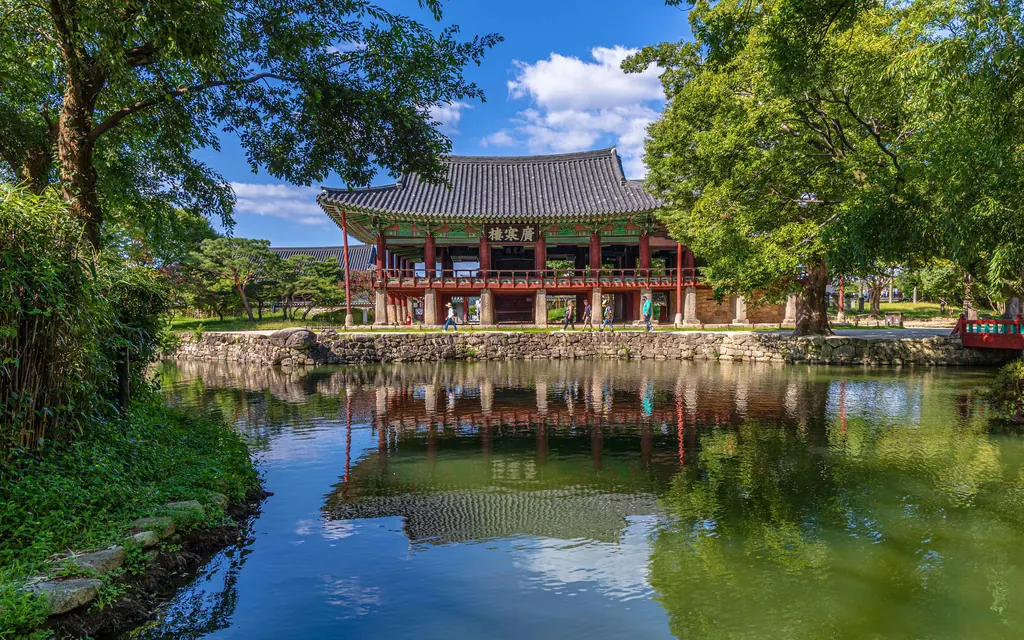
Gwanghallu Pavilion reflected in the pondNamwon, Jeonbuk

Gwanghallu Pavilion reflected in the pond

Gwanghallu Garden, Namwon

Chunhyang and Mong-ryong first met before this pavilion.

Getting there●●○○○Easy on your own: just over 2 hours by KTX from Seoul to Namwon; it's walkable from the town centre.

Best timeMay

To see where the Tale of Chunhyang happened, go to Namwon.

The pond mirrors the pavilion, a stone bridge crosses the water, and willow branches sway in the breeze; it's easy to imagine a young woman on a swing here, glimpsed by a passing young man. Gwanghallu Garden is a Joseon-era garden. Its centerpiece, Gwanghallu pavilion, is a national treasure, and the Ojakgyo bridge over the pond symbolizes the Milky Way, like the bridge where the Cowherd and the Weaver Girl meet. This is where Chunhyang and Yi Mong-ryong meet in the classic Korean love story the Tale of Chunhyang, and the garden has a Chunhyang shrine. The Chunhyang Festival fills the garden with life every May. Walk where Korea's most famous love story began, and cross Ojakgyo with the one beside you.

GETTING THEREJust over 2 hours by KTX from Seoul's Yongsan Station to Namwon Station, or about 1 hour by bus from Jeonju; it's walking distance from central Namwon.
GOOD TO KNOWSpring into early summer, with flowers out and evening lights on, is when it feels most like the Chunhyang love story. Pair it with Jeonju over two days, and check entry times on the official site.
SAFETYThe stones by the pond are slippery — don't climb onto the banks.
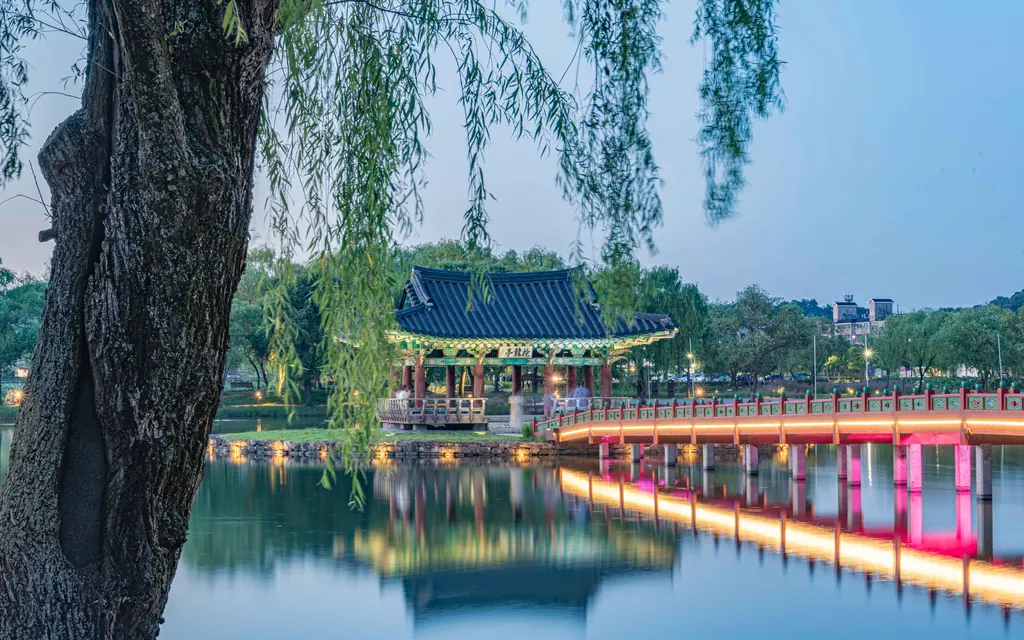
Poryongjeong pavilion and its lit wooden bridge at GungnamjiBuyeo, Chungnam

Poryongjeong pavilion and its lit wooden bridge at Gungnamji

Gungnamji Pond, Buyeo

A palace pond over a thousand years old, brimming with lotus.

Getting there●●○○○Easy on your own: about 2 hours by bus from Seoul to Buyeo, then a 20-minute walk.

Best timeJul

To see the old capital of Baekje, go to Buyeo.

On a summer morning lotus leaves carpet the pond, pink and white blossoms rising one after another, a faint fragrance in the air, and a red wooden bridge runs from the shore to a little pavilion in the middle. Buyeo was Sabi, the last capital of the Baekje kingdom, and together with sites in Gongju and Iksan it's part of the World Heritage Baekje Historic Areas. Gungnamji is a Baekje palace pond, considered one of Korea's earliest artificial gardens; on an islet in the middle stands the Poryongjeong pavilion, and the red bridge leads to it. In summer the pond fills with lotus flowers, with a lotus festival in July. Cross the red bridge, stand in the pavilion amid the lotus, and you'll feel that Baekje royals once watched this same summer here.

GETTING THEREAbout 2 hours by bus from Seoul Nambu Bus Terminal to Buyeo, then about a 20-minute walk from the Buyeo bus terminal.
GOOD TO KNOWJuly, when the lotus bloom, is the best time — the 2026 Buyeo Seodong Lotus Festival ran July 3–5, with night lighting from June 26 to July 19 making the pond even dreamier. Pair it with Busosanseong and the Jeongnimsa site. Check this year's dates first.
SAFETYThe pondside path is dim at night, and there are lots of mosquitoes in summer — bring repellent.
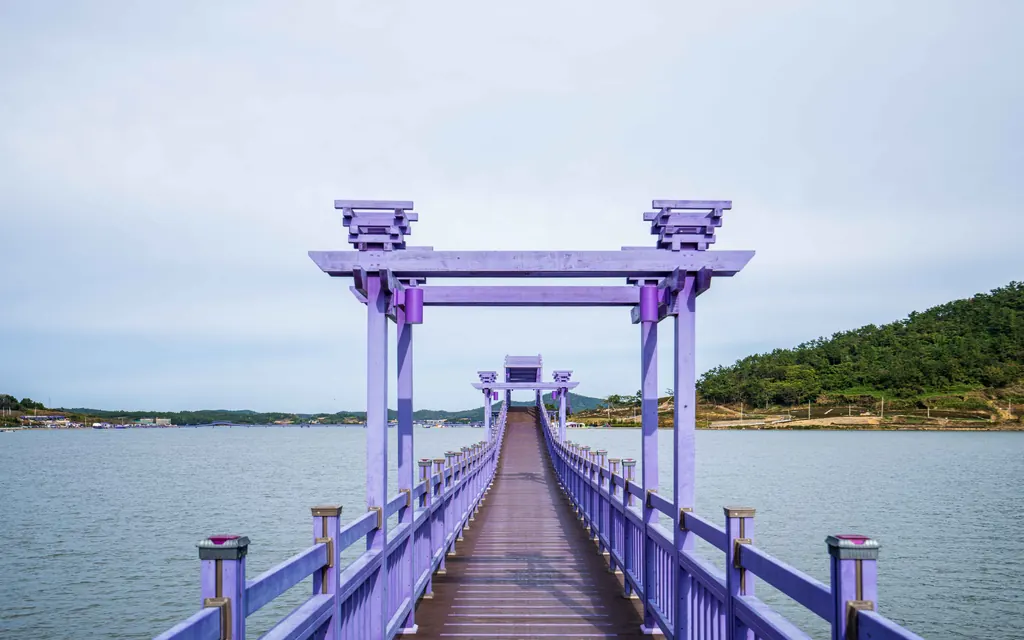
The purple Angel Bridge linking the islandsSinan, Jeonnam

The purple Angel Bridge linking the islands

Purple Island, Sinan

An entire island, painted purple.

Getting there●●●○○Fine on your own but slow: about 2.5 hours by KTX from Seoul to Mokpo, then over an hour by bus or taxi; buses are few, so a private driver is easier.

Best timeMay–Jun, Sep–Oct

To see an island painted entirely purple, head to the far southwest of Jeonnam.

A purple wooden bridge stretches across the sea, the sea breeze blowing, rooftops in the distance purple too, and as you walk you can't help smiling. Purple Island is Banwoldo and Bakjido in Sinan County. Once remote islands with only a few dozen households, they were inspired by the bellflowers that grow there to paint roofs, bridges and public facilities purple, and became a well-known tourist spot, even named a Best Tourism Village by UN Tourism. The photo shows the purple wooden Cheonsa (Angel) Bridge linking the islands. Walking through all that purple feels like stumbling into a picture book. A place this charming is a pity to miss.

GETTING THEREAbout 2.5 hours by KTX from Seoul's Yongsan Station to Mokpo Station, then just over 1 hour by bus or taxi to the island entrance. Public transport is limited, so hiring a car is easier.
GOOD TO KNOWPurple bridges, roofs and sea look best on a sunny day, and autumn asters make it even more purple. There's an entry fee, with a discount if you wear purple (rules on site). Shops are scarce, so bring water and snacks. It's remote and few people speak English or Chinese — first-timers may prefer a day tour from Mokpo.
SAFETYIt's very windy on the wooden bridge, so hold on to hats and belongings; the summer sun is strong, so wear sunscreen.
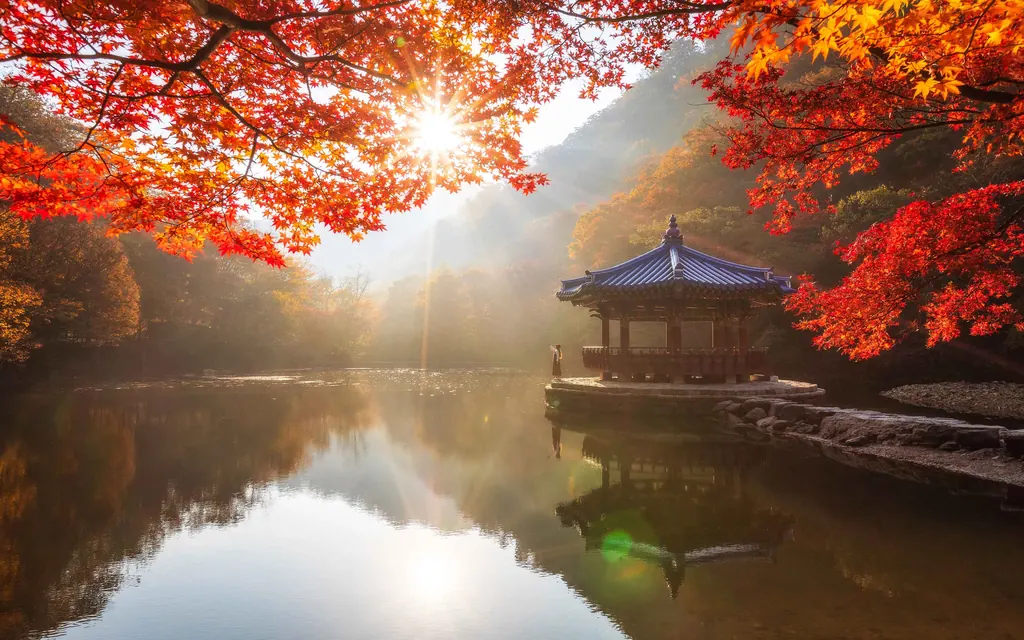
Uhwajeong pavilion amid red maples and morning lightJeongeup, Jeonbuk

Uhwajeong pavilion amid red maples and morning light

Naejangsan, Jeongeup

Maples in the morning light, the whole mountain ablaze.

Getting there●●○○○Easy on your own: 1.5–2 hours by KTX from Seoul to Jeongeup, then about 30 minutes by bus.

Best timeOct–Nov

In autumn in Jeolla, give Naejangsan a full day.

In the early morning, sunlight slants into the valley and the little pavilion by the pond is ringed with blazing red maples, the still water mirroring leaves and pavilion, the air cold and smelling of fallen leaves. Naejangsan National Park is one of Korea's most famous places for autumn leaves, with many maple species and especially vivid reds. The photo shows the Uhwajeong pavilion by the pond, framed by red leaves in morning light, Naejangsan's signature scene. Farther up the mountain is Naejangsa temple, founded in the Baekje era, and a cable car runs up for views over the foliage, where the whole mountain looks like it's on fire. The reds last only a short while; miss this season and you wait a whole year.

GETTING THEREAbout 1.5–2 hours by KTX from Seoul's Yongsan Station to Jeongeup Station, then about 30 minutes by bus to the Naejangsan entrance.
GOOD TO KNOWAutumn colour peaks around late October to early November, when the maple tunnels are breathtaking. Weekends bring huge crowds and traffic, so come early on a weekday. Check cable car times on the official site.
SAFETYThere are lots of mountain paths and stone steps — wear good shoes. Autumn mornings are very cold, so keep warm.
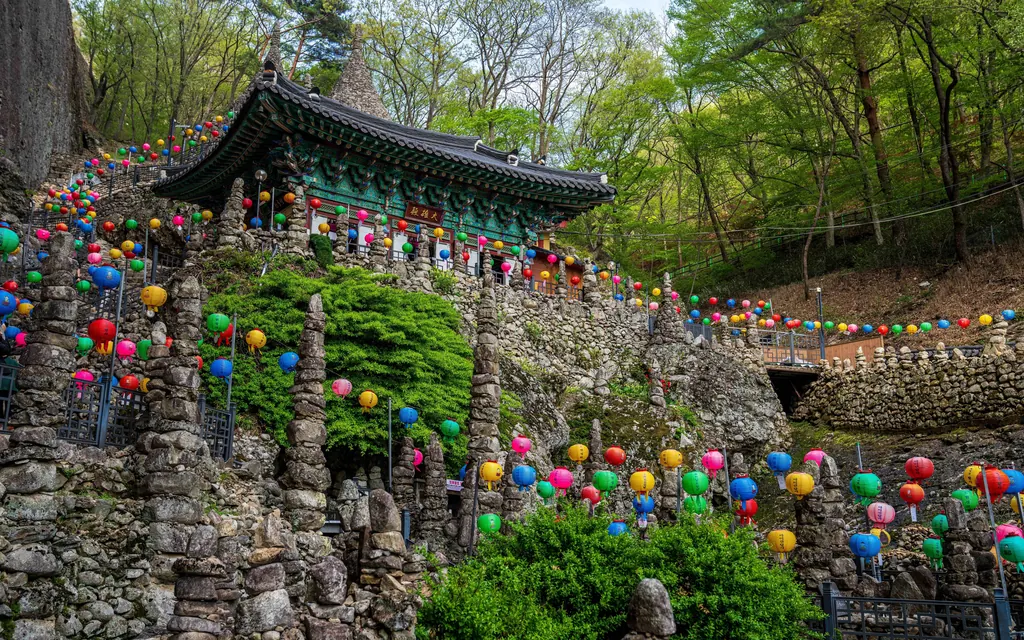
Tapsa's stone towers hung with colourful lanternsJinan, Jeonbuk

Tapsa's stone towers hung with colourful lanterns

Tapsa Temple, Maisan

Towers stacked stone by stone, standing firm against the wind.

Getting there●●●○○Doable on your own with changes: about an hour by bus from Jeonju to Jinan, then a bus or taxi and a 30-minute walk.

Best timeGood all year

To see a temple built of stacked stones, go to Maisan.

Walk into the valley and more than eighty stone towers rise before you one after another, some sharp and pointing at the sky, some round and stout, not a trace of cement between the stones; the wind sweeps through the valley, yet the towers stand steady, and all you hear is wind and wind chimes. Maisan gets its name from two peaks that look like a horse's ears. Tapsa temple at its foot is said to have been stacked one stone at a time over decades by an ascetic named Yi Gap-ryong in the late 19th century, with no cement or binding agent; the towers rarely fall even in strong winds, and are a designated regional cultural heritage. The photo shows the temple hung with lanterns around Buddha's Birthday, colorful lanterns swaying between the towers; spring cherry blossom season is lovely too. Stand before these towers, and you'll be moved by one man's decades of devotion.

GETTING THEREAbout 1 hour by bus from Jeonju to Jinan, then a bus or taxi to Maisan's south parking lot and about a 30-minute walk to Tapsa.
GOOD TO KNOWSpring blossoms and autumn are loveliest, and the stone towers feel most mystical in morning light. It's an active temple — keep quiet and don't touch or move the stones. Transport is sparse, so check return times.
SAFETYThe path to the temple has slopes and steps — wear good shoes.
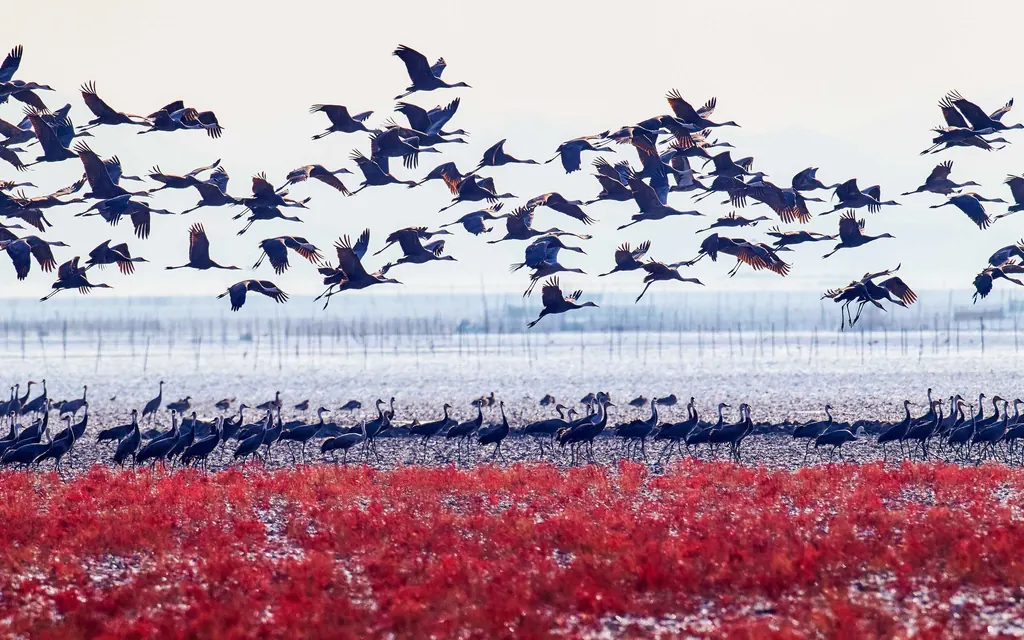
Flocks of cranes taking off above the reddened marsh plantsSuncheon, Jeonnam

Flocks of cranes taking off above the reddened marsh plants

Suncheon Bay Wetland

In autumn, the whole mudflat turns red.

Getting there●●○○○Easy on your own: about 2.5 hours by KTX from Seoul to Suncheon, then about 30 minutes by bus.

Best timeOct–Nov

In autumn or winter in Jeonnam, go to Suncheon Bay for reeds and migrating birds.

A path cuts through a vast reed bed, and when the wind blows, the golden reeds roll in waves, rustling on every side, while out on the mudflats waterbirds land one by one. Suncheon Bay is one of the best-preserved estuarine wetlands on Korea's south coast, with vast reed beds and tidal flats; it's a national Scenic Site and part of the World Natural Heritage “Getbol, Korean Tidal Flats.” In autumn the salt-marsh plant chilmyeonchho turns the mudflats red, and in winter hooded cranes and other migratory birds come to spend the season. Next door, Suncheon Bay National Garden, Korea's first national garden, fits easily into the same day. Walk slowly through the sound of the reeds, and you'll find that quiet can be magnificent.

GETTING THEREAbout 2.5 hours by KTX from Seoul's Yongsan Station to Suncheon Station, then about 30 minutes by city bus.
GOOD TO KNOWOctober–November, when the reeds turn gold, is the peak, and the S-shaped channels at sunset from the viewpoint are worth the climb; migratory birds come mostly in winter. The wetland has set hours. Check the official site.
SAFETYDon't walk onto the mudflats or into the reeds — stay on the boardwalks. The sea wind is cold in winter.
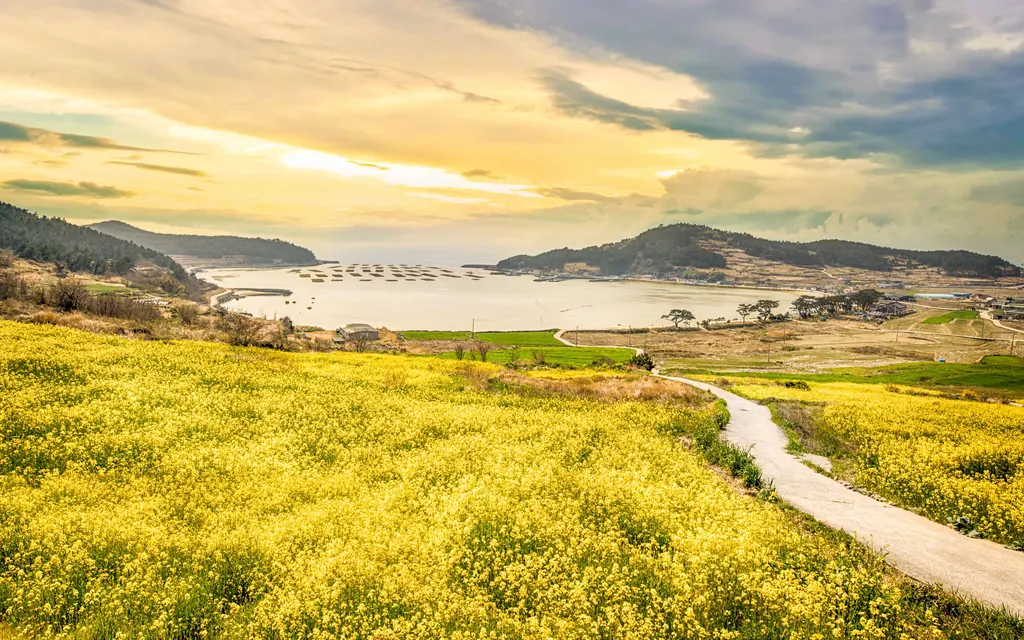
Canola fields above the bay on CheongsandoWando, Jeonnam

Canola fields above the bay on Cheongsando

Cheongsando, Wando

Asia's first slow city, where even the roads take their time.

Getting there●●●●○Remote: about 5 hours by bus from Seoul to Wando, then a 50-minute ferry.

Best timeApr

In spring in Jeonnam, take a boat to a slow-living island.

Wander slowly along the stone-walled lanes, yellow canola blooming along the path, a sea breeze carrying the scent of flowers, terraced paddies stepping down to the shore in the distance, so quiet you hear only the wind and your own footsteps. Cheongsando lies off Wando in South Jeolla, within Dadohaehaesang National Park, and was Asia's first certified “slow city.” The island keeps stone-based terraced rice paddies called gudeuljang-non and stone-walled lanes, linked into the Slow Road walking trails along the coast and villages. The film Seopyeonje was shot here; its long take of a family singing folk songs down a dirt road made the island famous. A Slow Walking Festival is held every April when the canola is in bloom. On this island, the slower you walk, the more beautiful it becomes.

GETTING THEREAbout 5 hours by bus from Seoul to Wando Bus Terminal, or KTX to Mokpo and then a bus; from Wando Port, the ferry to Cheongsando takes about 50 minutes.
GOOD TO KNOWApril, when the rapeseed blooms, is the best time — the 2026 Cheongsando Slow Walking Festival ran all month, April 1–30. Ferries may stop in rough seas, so follow the operator's notices. Few people speak English or Chinese; download a translation app and keep some slack, or take a local day tour. Confirm ferries before you go.
SAFETYIsland roads are narrow with slopes — watch for traffic on a bicycle or e-vehicle, and stay away from slippery rocks in big waves.
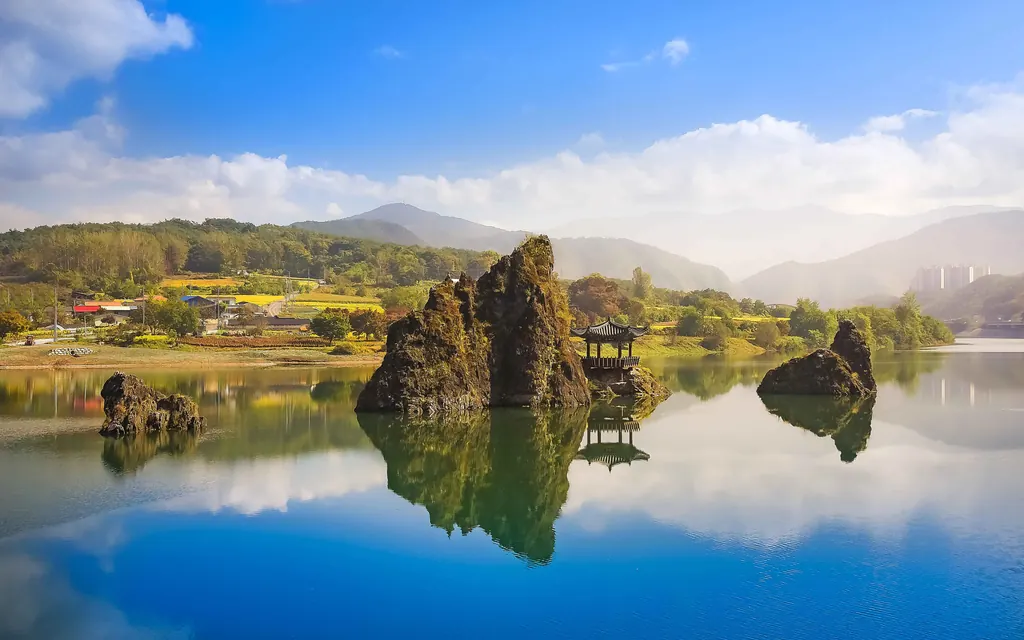
The three rock peaks of Dodamsambong in the Namhan RiverDanyang, Chungbuk

The three rock peaks of Dodamsambong in the Namhan River

Dodamsambong, Danyang

Three stone peaks in the river, so loved a scholar took their name.

Getting there●●○○○Easy on your own: about 2 hours by train from Seoul to Danyang, then about 10 minutes by taxi.

Best timeGood all year

In Danyang, see the three stone peaks on the Namhangang River.

The river lies as still as a mirror, three limestone peaks rising from the water, a small pavilion atop the tallest in the middle, morning mist slowly lifting off the surface, nothing to hear but water. Dodamsambong are three limestone peaks in the Namhangang River, first of the Eight Scenic Views of Danyang and a national Scenic Site. The tallest, middle peak is called the “husband peak” and is topped by the Samdojeong pavilion. The Joseon scholar Jeong Do-jeon loved this place and is said to have taken “Sambong” as his pen name because of it. Nearby is Seokmun, a natural limestone arch worth a short walk. A place a scholar loved so much he made it his own name is worth seeing for yourself.

GETTING THEREAbout 2 hours by train from Seoul's Cheongnyangni Station to Danyang Station, then about 10 minutes by taxi; buses also run from central Danyang.
GOOD TO KNOWEarly mornings and autumn are loveliest, when mist curls around the three peaks like an ink painting. In the summer rains, high water can affect views and paths; the nearby boats run per on-site notices.
SAFETYThe riverside path is slippery after rain — don't climb on the rocks.

Winter ski areas & events

Coming in winter? The region also has these. Full details (lessons, lodging, transport) are in the winter corner of your quiz results.

Ski areas

  • Muju Deogyusan: The best-known ski area in southern Korea

Not sure which to pick? Take the 4-minute travel-personality quiz and find the one that suits you.

Take the quiz