TOP-TIER TRAVEL中/EN

Malaysia

9 hidden gems in Malaysia

Mosques, Borneo rainforest & tin-mining towns. We picked 9 places in this region — some well known, some few visitors find. Browse at your own pace, then take the quiz when something catches your eye.

TOP-TIER TRAVEL › All hidden gems › Malaysia

Not sure which to pick? Take the 4-minute travel-personality quiz and find the one that suits you.

Take the quiz
Masjid Jamek
First time? Kuala Lumpur, Ipoh and Borneo are the classics

Malaysia comes in two parts: the Malay Peninsula, and Sabah and Sarawak on Borneo, across the South China Sea and reached by domestic flights. A first trip usually means three or four days in Kuala Lumpur plus a day or two in Ipoh or Putrajaya; with more time, fly to Borneo for the rainforest and Mount Kinabalu — about ten days is comfortable. English is widely spoken. The place below suits you best.

Spot details checked: November 2026

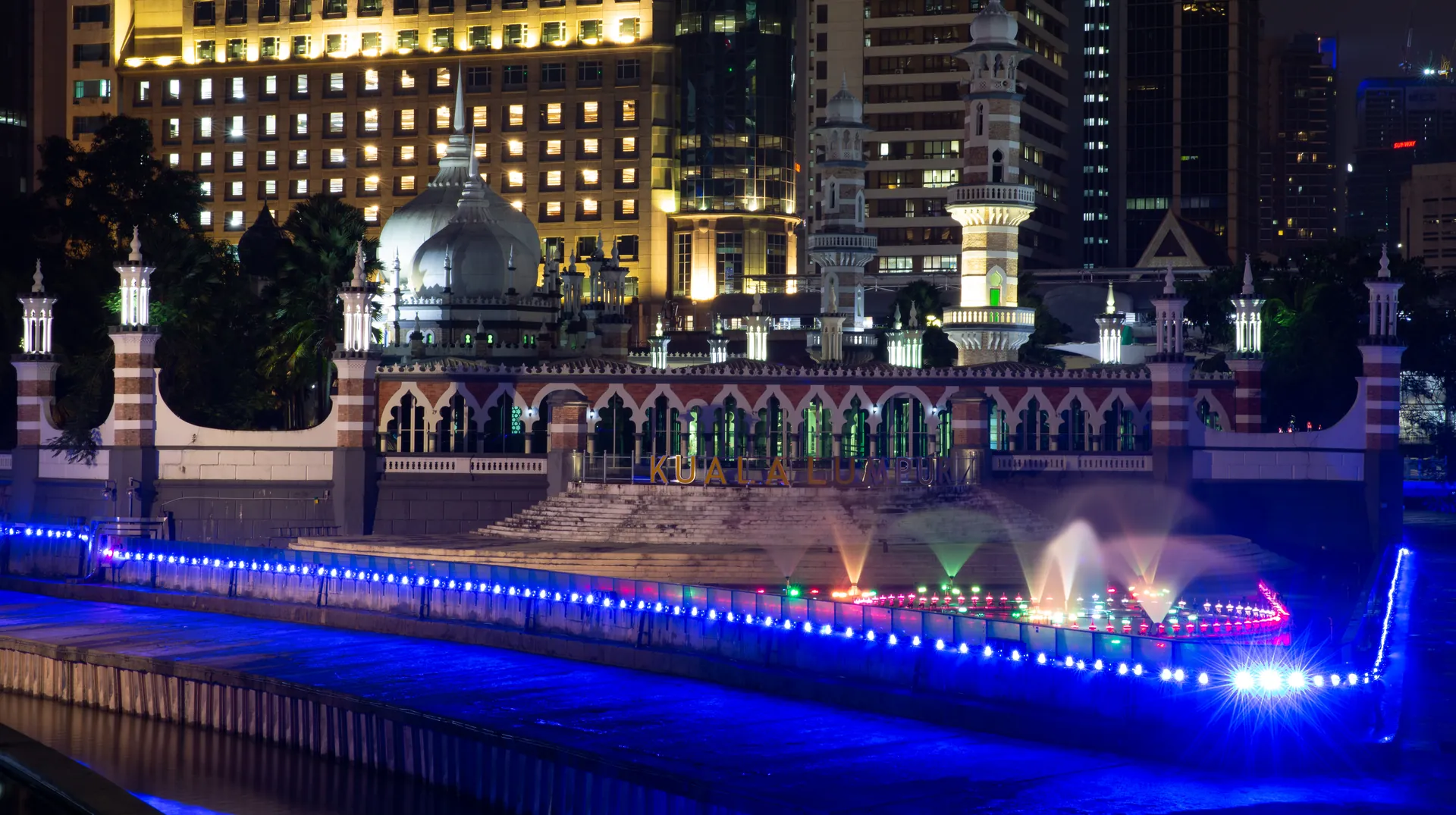
Masjid Jamek and the river confluence at night, Kuala LumpurCentral Kuala Lumpur

Masjid Jamek and the river confluence at night, Kuala LumpurShesmax / CC BY-SA 4.0 / cropped

Masjid Jamek & River of Life

Two rivers meet in front of a white dome — this is where Kuala Lumpur began.

Getting there●○○○○Very easy on your own: take the LRT to Masjid Jamek station and walk a few minutes.

Best timeGood all year

Where the name Kuala Lumpur comes from: two rivers meeting before a mosque.

Kuala Lumpur means 'muddy confluence' in Malay, and the city grew from the spot where the Klang and Gombak rivers meet. Masjid Jamek stands on the point between them; completed in 1909, it's one of the oldest mosques in the city, with white domes and red-and-white arcades in a Moorish style. The photo was taken at night: the riverbanks have been turned into the 'River of Life' promenade, lit blue after dark, with fountains during show times. Chinatown and Merdeka Square are a short walk away and the Petronas Towers aren't far, so one evening covers the city's signature night views. With a spare day, head out to Kuala Selangor to see the 'sky mirror' at low tide and take a small boat at night to see fireflies along the river.
GETTING THERETake the LRT to Masjid Jamek station and walk a few minutes. From KLIA, the KLIA Ekspres reaches KL Sentral in about 30 minutes; change there.
GOOD TO KNOWThe mosque is closed to visitors during prayers; cover arms and legs (robes are usually available to borrow). The blue lights and fountains run only during show times — check the official schedule. The Kuala Selangor sky mirror and fireflies depend on tides, weather and the moon, so a local day tour is easiest.
SAFETYThe riverside is busy at night, so watch your wallet and phone; traffic is heavy downtown, so use crossings.
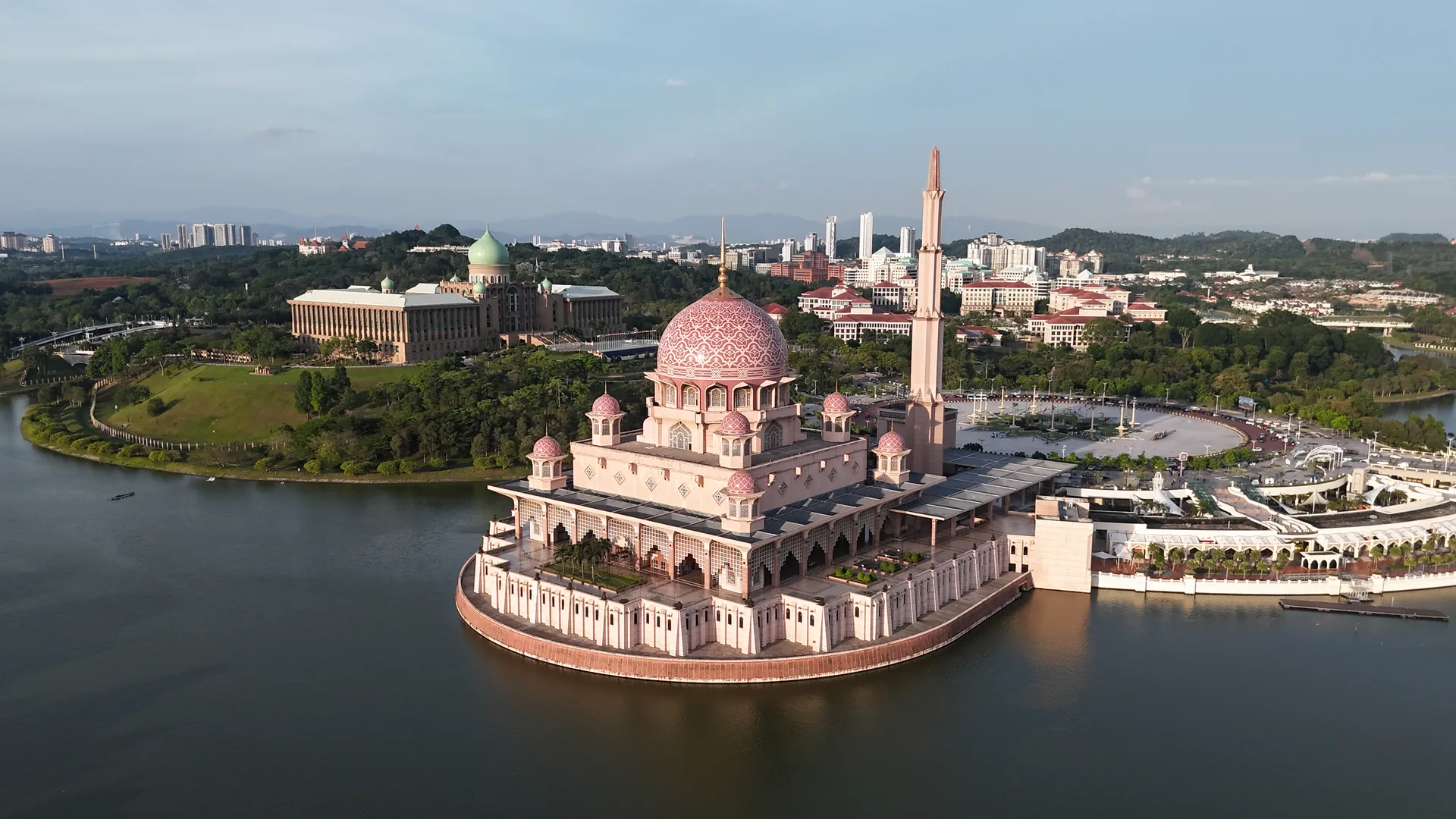
Putra Mosque on the lake, Putrajaya (aerial)Putrajaya

Putra Mosque on the lake, Putrajaya (aerial)Gaodanielbo / CC0

Putra Mosque, Putrajaya

A pink mosque standing quietly at the edge of a lake.

Getting there●○○○○Very easy on your own: about 20 minutes on the KLIA Transit from KL Sentral, then a bus or ride-hail.

Best timeGood all year

Malaysia's new administrative capital, with a pink mosque by the lake.

Putrajaya is the planned administrative centre the Malaysian government moved to from Kuala Lumpur, laid out around an artificial lake. The Putra Mosque, completed in 1999, sits on the lakeshore and is faced with rose-tinted granite, a soft pink from afar. The photo is an aerial shot, with the mosque reaching into the lake; the green-domed building beside it is the Prime Minister's Office, seen from outside only. You won't get this angle on foot, but a lakeside walk or a lake cruise shows the dome and minaret from different sides. As the light fades, the pink deepens.

GETTING THEREKLIA Transit from KL Sentral to Putrajaya station takes about 20 minutes, then about 15 minutes by bus or ride-hail; a ride-hail straight from KL takes about 40 minutes.
GOOD TO KNOWNon-Muslims can visit outside prayer times; robes and headscarves for women are provided. Hours and dress rules are on the official site. The Prime Minister's Office is outside view only.
SAFETYPutrajaya is spread out and very sunny, so use ride-hail between sights; the lakeside path has little shade, so bring water.
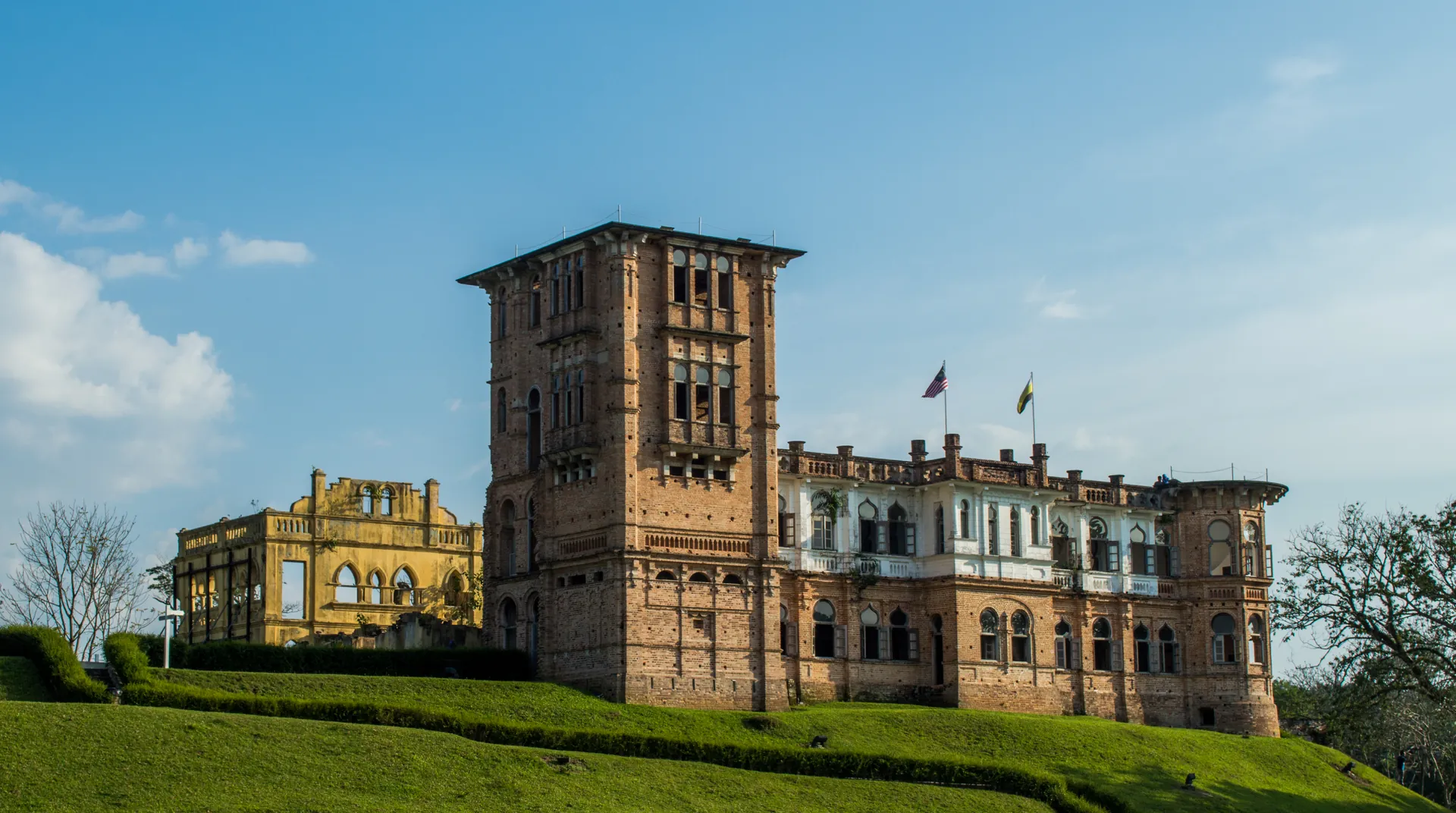
Kellie's Castle near IpohNear Ipoh, Perak

Kellie's Castle near IpohArtboyz / CC BY-SA 4.0 / cropped

Kellie's Castle

A castle that stopped mid-build a century ago and was never finished.

Getting there●●○○○Easy on your own: about 2.5 hours on the ETS train from KL to Ipoh, then 30 minutes by ride-hail.

Best timeGood all year

A Scottish planter's castle, abandoned when its owner died.

In the early twentieth century a Scottish rubber planter began building this castle outside Ipoh for his family, bringing in craftsmen from India. Before it was finished he died on a trip abroad, and work stopped for good, leaving unfinished rooms and long arcades. The red-brick tower and white main house in the photo are just as they were left a hundred years ago. Locals tell ghost stories and tales of secret tunnels, and the empty rooms have plenty of atmosphere. Nearby Tanjung Tualang still has a huge tin dredge from the mining days, and back in Ipoh the old-town shophouses, murals and a cup of white coffee round out the day.

GETTING THEREETS train from KL Sentral to Ipoh takes about 2.5 hours, then about 30 minutes by ride-hail to the castle.
GOOD TO KNOWOpening hours and tickets on the official site. Some stairs and upper levels have no railings, so watch your step when taking photos.
SAFETYSome rooms are dim with uneven floors — keep children close. Afternoon storms are common and the stairs get slippery.
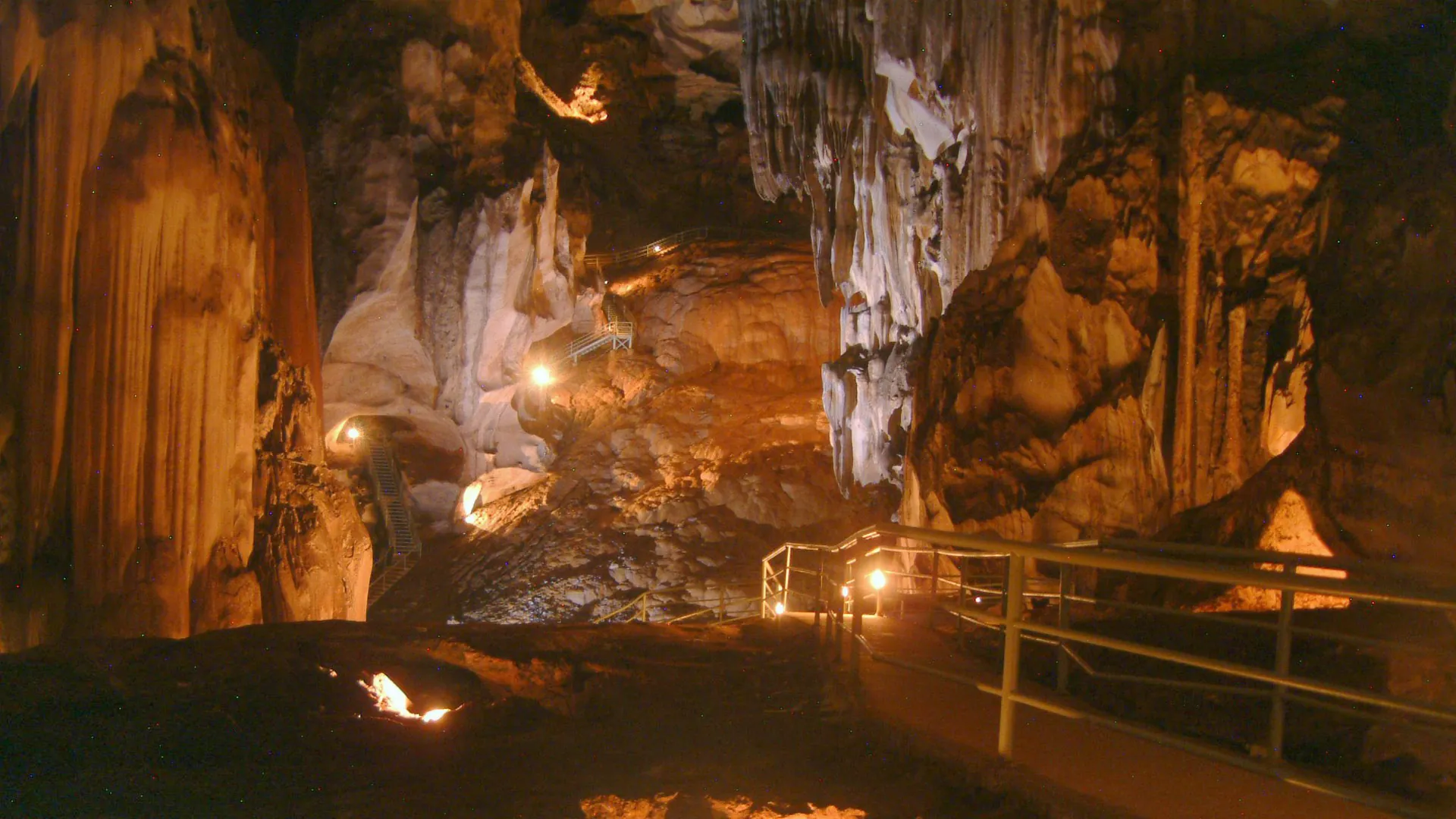
Stalactites inside Gua TempurungGopeng, Perak

Stalactites inside Gua TempurungCalvin Teo / CC BY-SA 2.5 / cropped

Gua Tempurung

Walk into the belly of a hill, where the lights turn the stalactites gold.

Getting there●●●○○Some planning: about 30 minutes by ride-hail from Ipoh; public transport is scarce.

Best timeGood all year

One of the largest limestone caves in Peninsular Malaysia, with an underground river.

Gua Tempurung is one of the largest limestone caves in Peninsular Malaysia, with an underground river running through it. The photo shows the inside, with stalactites and stalagmites lit gold and a space as big as an underground cathedral. There are two ways in: most visitors follow boardwalks and stairs and stay dry, while the adventurous go with a guide on a 'wet' route, wading and crawling through the river and coming out covered in mud. Nearby Gopeng is one of Malaysia's best-known rafting spots, so both fit in one day.

GETTING THEREAbout 30 minutes by ride-hail from Ipoh, or about 2.5 hours' drive from KL. It's beside the North–South Expressway; public transport is scarce.
GOOD TO KNOWWet routes must be booked ahead with a guide and have age and fitness limits; details from the operator. Routes may change for maintenance or weather, so check before you go. This photo is an older one, so lighting and walkways may look different now.
SAFETYIt's damp with lots of steps — wear non-slip shoes. Heavy rain raises the river and can cancel wet routes; follow your guide.
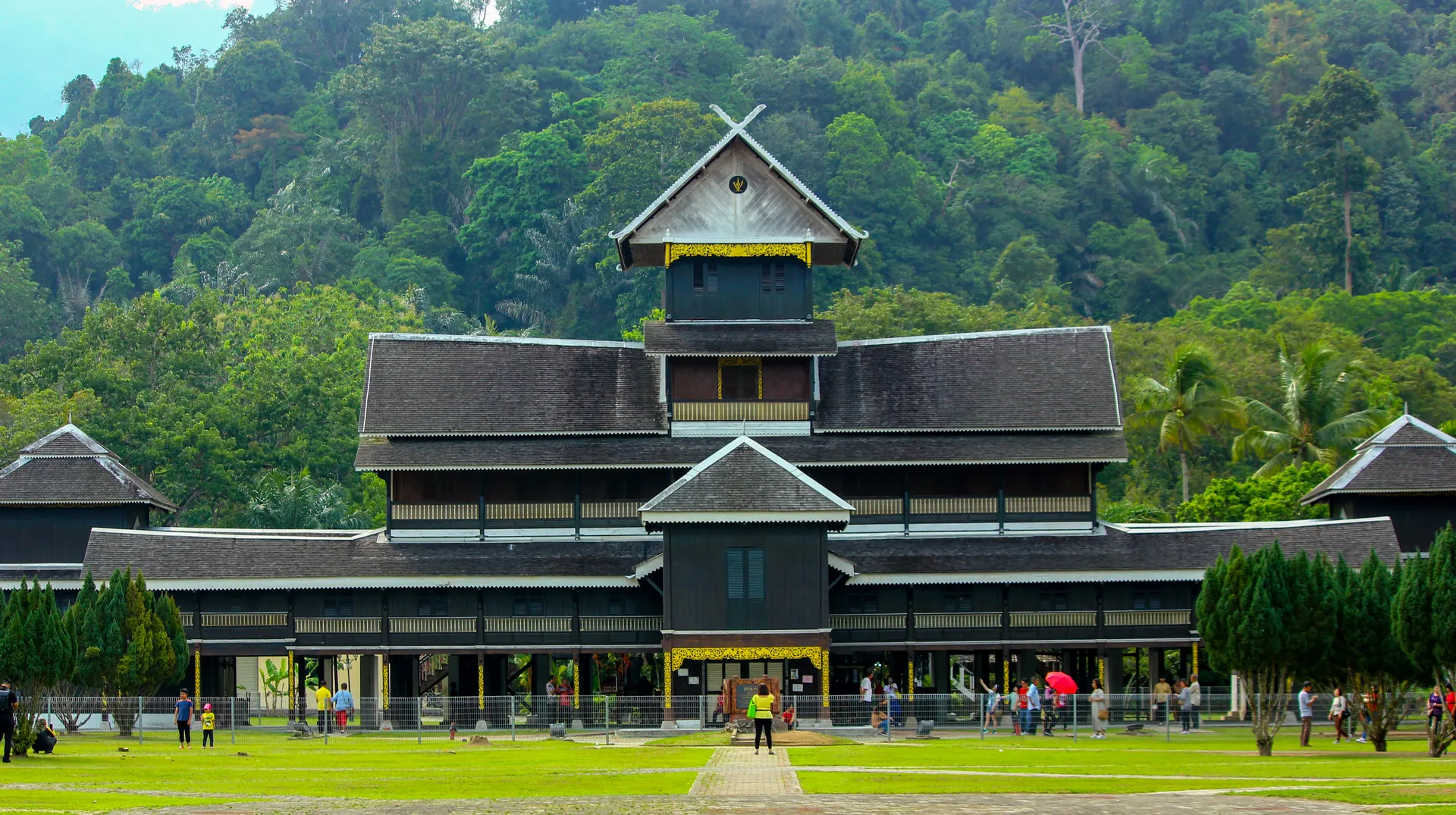
Istana Lama Seri Menanti, Negeri SembilanKuala Pilah, Negeri Sembilan

Istana Lama Seri Menanti, Negeri SembilanAdhmi / CC BY-SA 4.0 / cropped

Istana Lama Seri Menanti

A four-storey timber palace built without a single iron nail.

Getting there●●●●○Harder: about 1.5 hours' drive from KL; public transport takes several changes, so hire a driver or drive.

Best timeGood all year

A Minangkabau-style timber palace, now a royal museum.

Negeri Sembilan's royal family traces its roots to the Minangkabau of Sumatra, and its buildings carry their style, with roof peaks curving like buffalo horns. The old palace at Seri Menanti was begun in 1902 and finished in 1908: four storeys of durable hardwood on 99 pillars, joined, according to records, entirely with wooden pegs and no iron nails. The photo shows the front, with dark timber, long verandas and a central tower. It's now a royal museum where you can walk through the rooms of the former royal household. Around it are quiet valleys and lawns with few visitors — a place to slow down.

GETTING THEREAbout 1.5 hours' drive from KL, or 45 minutes from Seremban. By public transport, go to Kuala Pilah first then take a taxi; a hired driver is easier.
GOOD TO KNOWOpening hours, tickets and any closures for restoration are on the official site. You may need to remove your shoes indoors; please respect the rules for royal artefacts.
SAFETYWooden floors and stairs are slippery in socks. Country roads are dark at night, so travel by day.
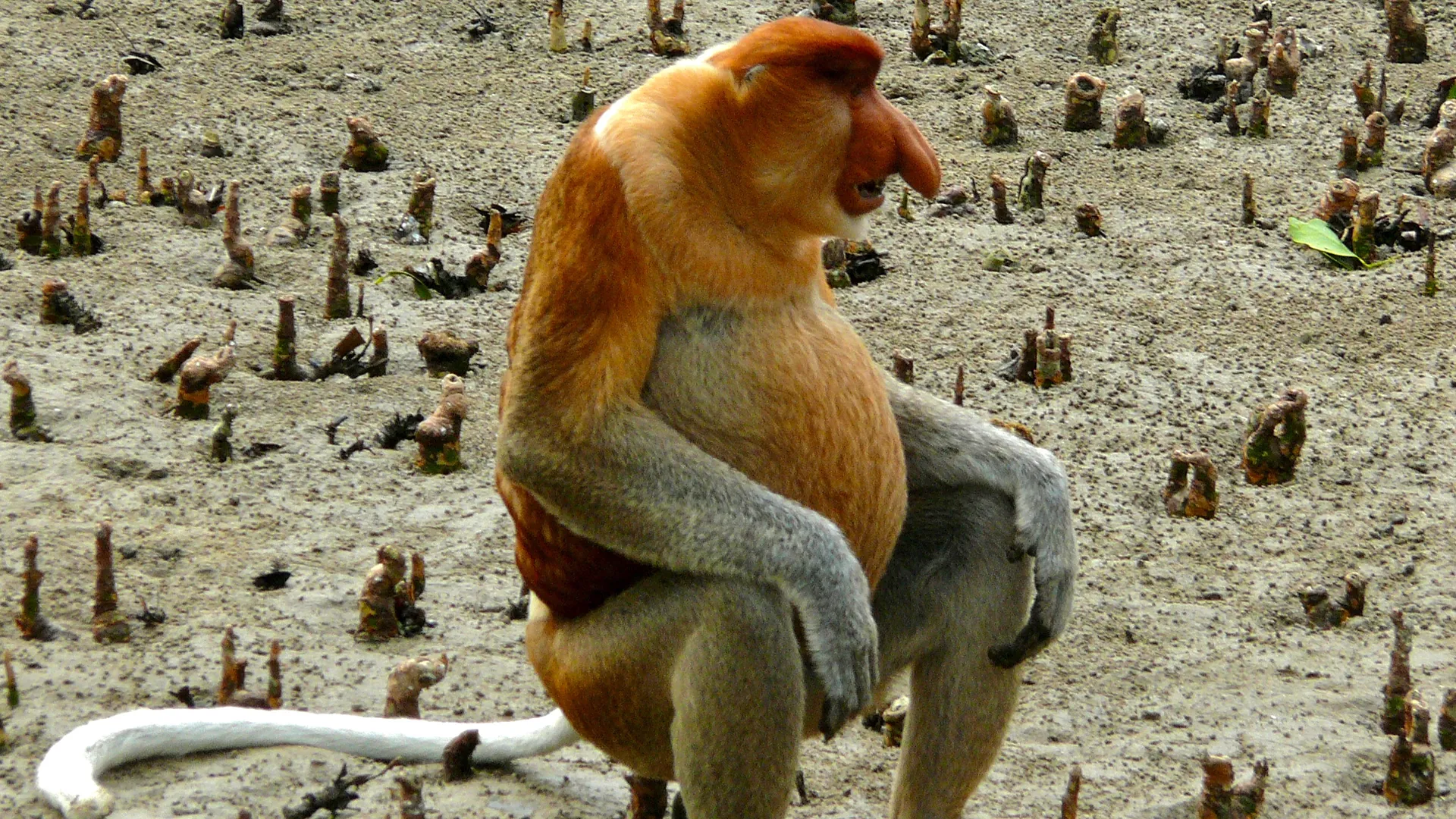
A proboscis monkey in Bako National ParkNear Kuching, Sarawak

A proboscis monkey in Bako National ParkBernard DUPONT / CC BY-SA 2.0 / cropped

Bako National Park

A long-nosed monkey sits on the mudflat, as if lost in thought.

Getting there●●●○○Some planning: about 40 minutes by bus or ride-hail from Kuching to the jetty, then about 20 minutes by boat; boats depend on the tide.

Best timeMar–Oct

Sarawak's oldest national park and the best-known place to see proboscis monkeys.

Bako is Sarawak's oldest national park. No road goes in: you take a boat from a small fishing village and land on the beach in the shallows. Proboscis monkeys live only on Borneo; males have a big nose hanging over the mouth and a round belly, like the one sitting on the mudflat in the photo. Trails run through mangroves, rainforest and clifftop scrub to beaches with sea stacks carved by the waves. Animals are most active early and late, so a night in the park shows you far more. From Kuching you can also spend a day at an inland longhouse to learn about Iban life.

GETTING THEREAbout 40 minutes by bus or ride-hail from central Kuching to the Kampung Bako jetty, then about 20 minutes by boat. Kuching has domestic flights from KL and Kota Kinabalu.
GOOD TO KNOWBoats both ways depend on the tide — at low tide they can't come in — so agree your return time before you go. Book park lodging early. Don't feed the animals; macaques will snatch food, so keep bags zipped.
SAFETYSome trails are steep and slippery: wear closed shoes and carry water. The park warns of crocodiles on beaches and river mouths — follow the signs and stay out of the water.
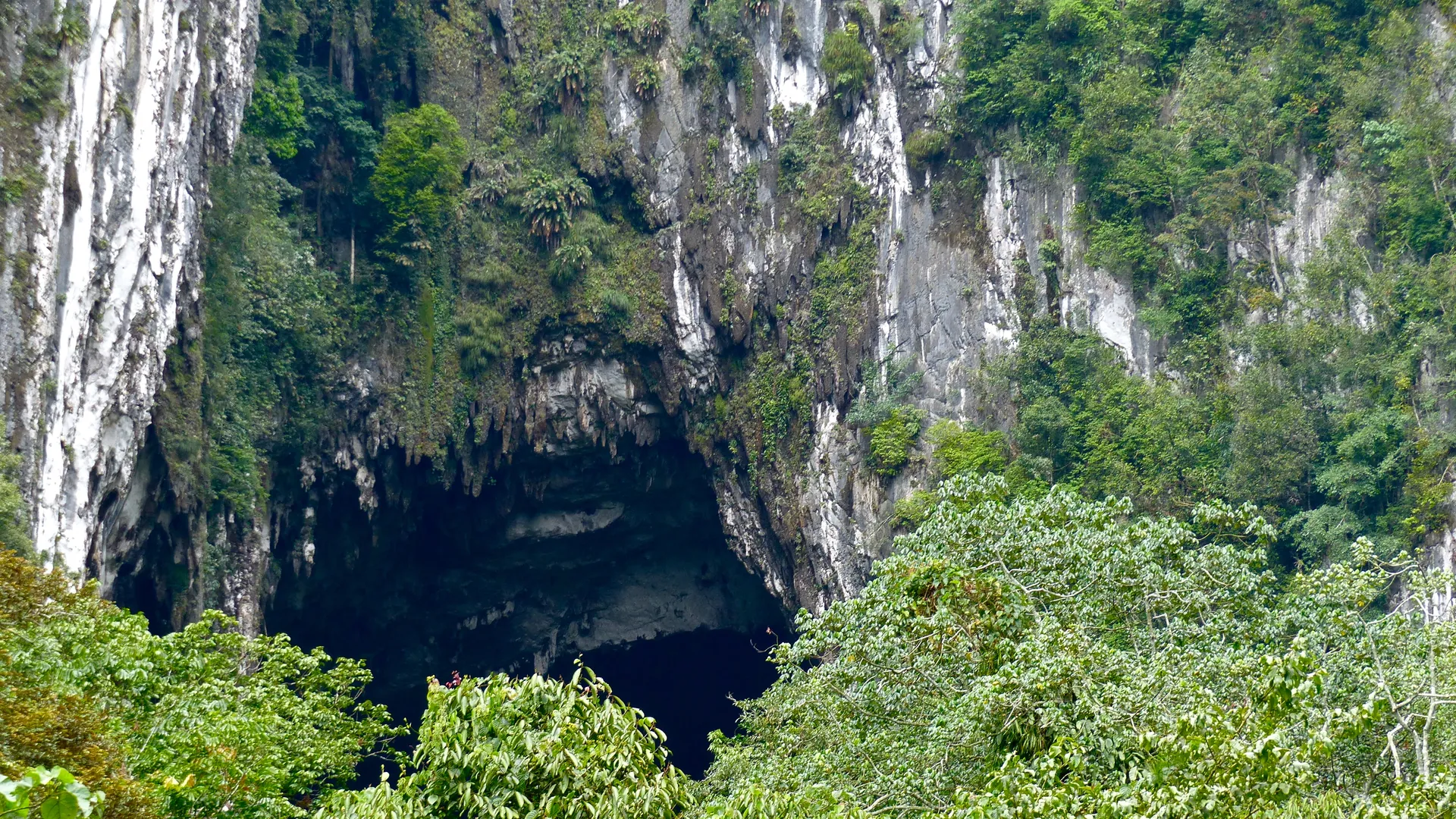
The mouth of Deer Cave, MuluMiri Division, Sarawak

The mouth of Deer Cave, MuluBernard Dupont / CC BY-SA 2.0 / cropped

Gunung Mulu National Park

A cave mouth like a hollowed-out mountain, with bats pouring out at dusk.

Getting there●●●●○Harder: no road goes there — fly in on a small plane from Miri or Kuching.

Best timeGood all year

A World Heritage site in Borneo's rainforest, with astonishingly large caves.

Gunung Mulu National Park lies deep in Sarawak's rainforest and was listed as a World Heritage site in 2000, with a chain of huge caves underground. The photo shows the mouth of Deer Cave; the trees in front look like grass beside it, and its passage is often listed among the largest cave passages in the world. On fine evenings the bats inside stream out in long dark ribbons across the sky. There's also a canopy skywalk and several more caves, and the fit can tackle a multi-day trail to the limestone Pinnacles.

GETTING THEREAbout 30 minutes on a small domestic flight from Miri, with flights from Kuching and Kota Kinabalu too; the park HQ is about 10 minutes from the airport.
GOOD TO KNOWMost caves can only be entered on park-guided tours; times and places are on the national park website and fill up in peak season. The bat exodus depends on the weather. Flights are few, so leave slack either side.
SAFETYCave walkways are long with many steps — wear non-slip shoes and bring a headtorch. It's hot and humid: carry water and repellent, and stay on the trails.
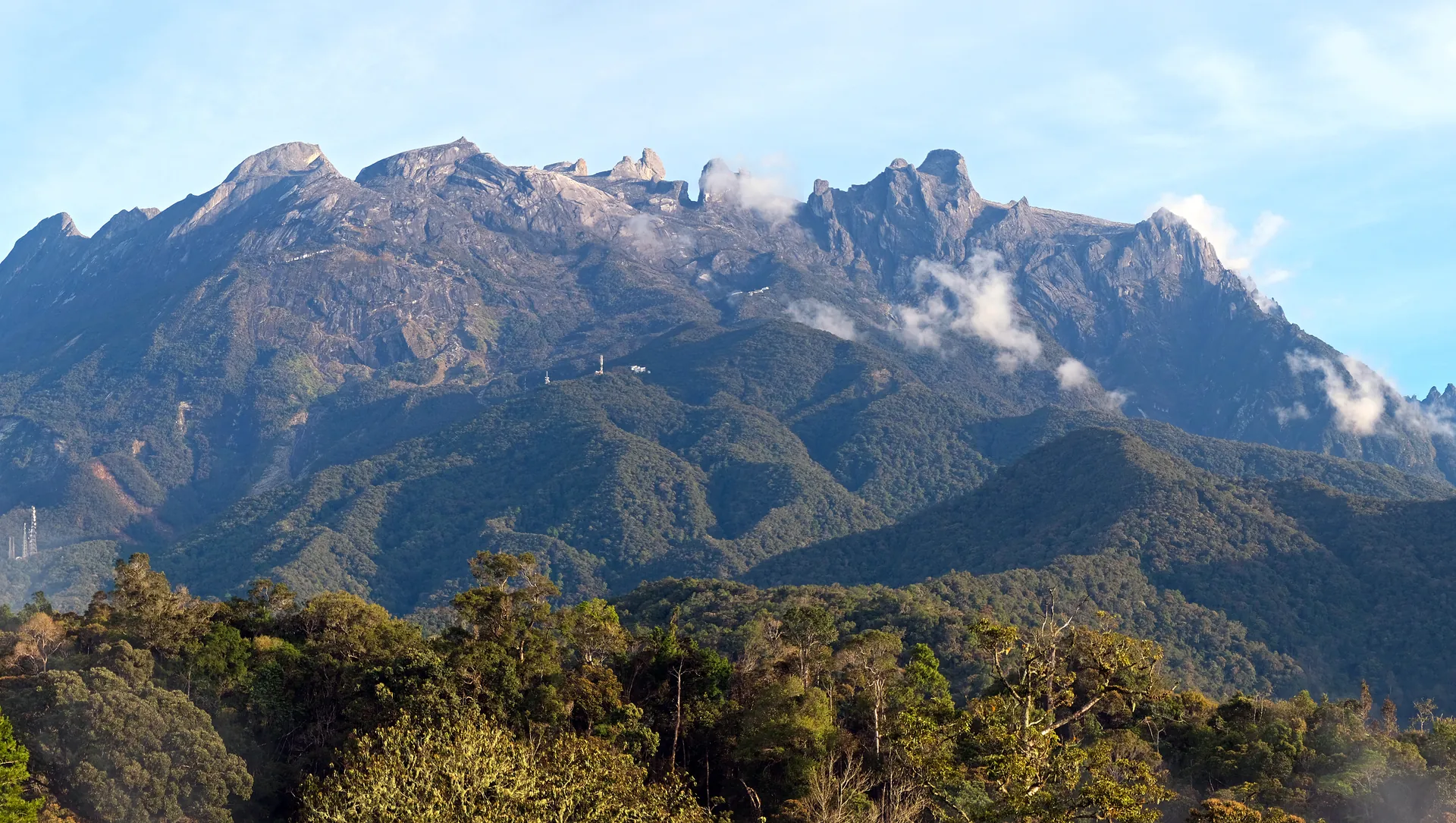
Sunrise over Mount Kinabalu, SabahKundasang, Sabah

Sunrise over Mount Kinabalu, Sabahkallerna / CC BY-SA 4.0 / cropped

Kinabalu Park

As the sun rises, the jagged summit lights up bit by bit.

Getting there●●○○○Easy on your own: about 2 hours by bus or hired car from Kota Kinabalu to Kundasang or the park.

Best timeMar–Sep

Malaysia's highest mountain, in a World Heritage park.

At over 4,000 metres, Mount Kinabalu is Malaysia's highest peak, and Kinabalu Park was listed as a World Heritage site in 2000. The photo is a sunrise from Kundasang at the foot of the mountain, the jagged summit lit up above layers of hills and villages. You don't have to climb: Kundasang's highland dairy farm is often called 'Sabah's New Zealand', cool morning and evening with the mountain overhead on clear days; the park HQ has easy forest trails; and Poring, a little east, has hot springs and a canopy walkway. Summit climbs usually take two days: up to the mountain hut on day one, then a pre-dawn push to the top for sunrise.

GETTING THEREAbout 2 hours by bus or hired car from Kota Kinabalu to the park HQ or Kundasang; KK has flights from KL and Taiwan.
GOOD TO KNOWSummit climbs need a permit, a booked hut and a licensed mountain guide; places are limited and sell out early in peak season — details from Sabah Parks. The weather changes fast, and early morning gives the best chance of a clear summit.
SAFETYTemperatures swing widely and the summit can be near freezing, so bring warm layers. Watch for altitude sickness and don't push on if you feel unwell.
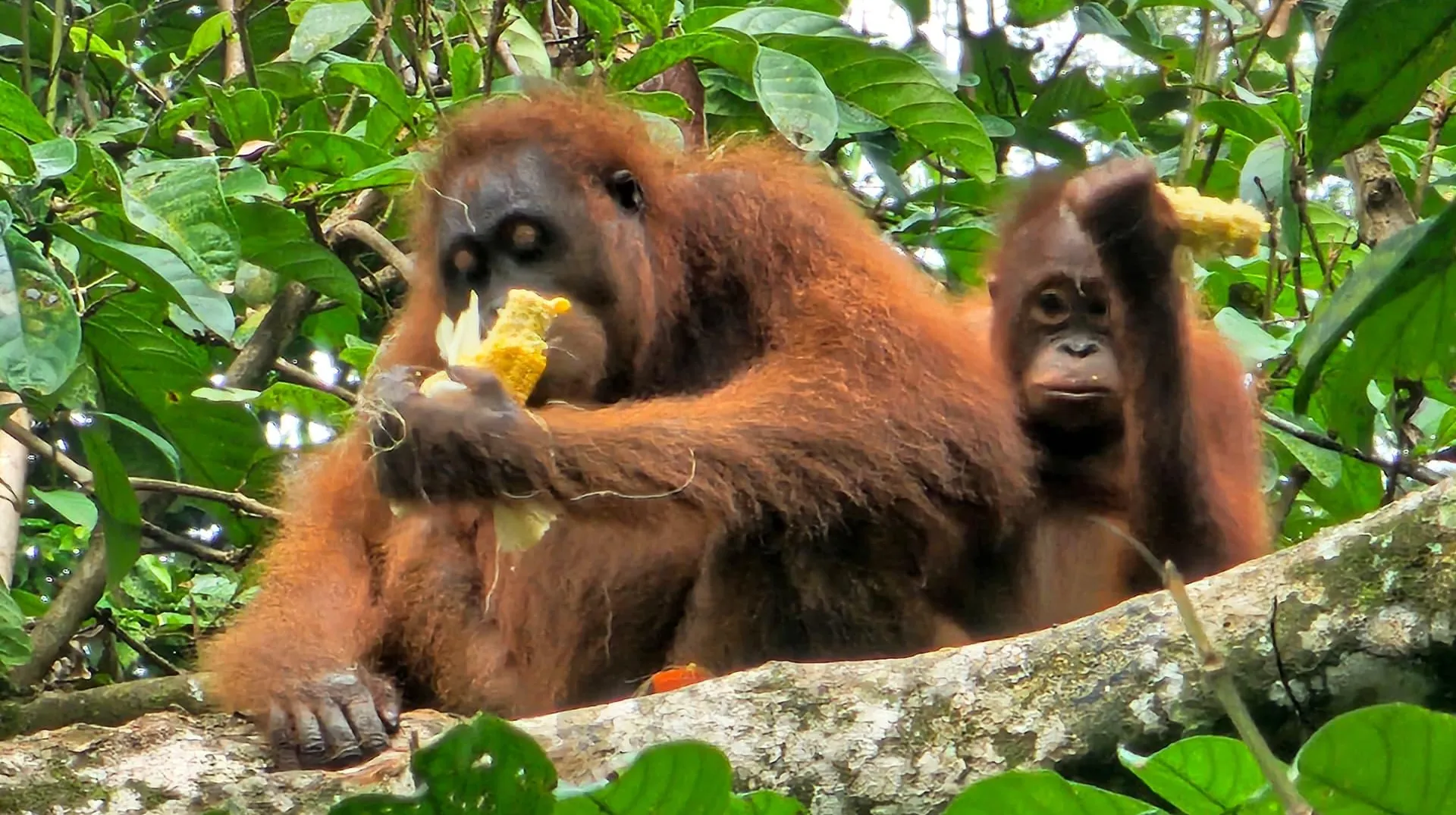
An orangutan mother and baby at SepilokNear Sandakan, Sabah

An orangutan mother and baby at SepilokCHELILIN ANAK KUDI / CC BY-SA 4.0 / cropped

Sepilok Orangutan Rehabilitation Centre

An orangutan mother, baby in her arms, climbs down slowly for breakfast.

Getting there●●○○○Easy on your own: about 45 minutes' flight from Kota Kinabalu to Sandakan, then 20 minutes by ride-hail.

Best timeGood all year

A home for orphaned orangutans, teaching them to return to the forest.

Sepilok lies in rainforest near Sandakan and takes in orphaned baby orangutans, teaching them to climb and forage until they can return to the forest. The forest beside the centre is their home; at set times bananas go out on a feeding platform and semi-wild orangutans swing slowly in from the trees. The photo shows a mother and baby eating on a branch. Next door is a sun bear conservation centre, and the nearby Rainforest Discovery Centre has a walkway at canopy height where hornbills sometimes appear. Trips to see proboscis monkeys also run from the Sandakan area.

GETTING THEREAbout 45 minutes' domestic flight from Kota Kinabalu to Sandakan, then about 20 minutes by ride-hail; buses run from Sandakan town.
GOOD TO KNOWFeeding times are posted by the centre. The orangutans are semi-wild and may not appear. No feeding, no touching, and keep your voice down.
SAFETYSepilok is near Sandakan in eastern Sabah; some governments advise extra caution for Sabah's east coast, so check your own government's travel advice. It's hot and humid with mosquitoes — bring repellent and water.

Things to do

Add these experiences to your time in Malaysia. Full details are in the Things to do section of your quiz results.

  • A night in an Iban longhouse: A whole village living under one long roof on stilts.
  • Rainforest birdwatching: hornbills: A red horn on its head and wingbeats that sound like a helicopter.

Not sure which to pick? Take the 4-minute travel-personality quiz and find the one that suits you.

Take the quiz