TOP-TIER TRAVEL中/EN

Morocco

12 hidden gems in Morocco

The Sahara, a blue town & ancient medinas. We picked 12 places in this region — some well known, some few visitors find. Browse at your own pace, then take the quiz when something catches your eye.

TOP-TIER TRAVEL › All hidden gems › Morocco

Travel warning

Taiwan’s Ministry of Foreign Affairs currently rates all of Morocco Level 3 orange (“avoid travel”, updated 2 October 2026), citing sporadic terrorism threats, poor security in big cities such as Casablanca and Marrakech, and harassment of women travellers; it also warns Taiwanese nationals of cross-border legal risk because of Morocco’s treaties with China. Your own government’s advice may differ, so please check it before you book. We keep these places here for reference, not as a push to go.

See the official notice (in Chinese) →

Not sure which to pick? Take the 4-minute travel-personality quiz and find the one that suits you.

Take the quiz
Jemaa el-Fnaa
First time? Marrakech and the desert are classics

A common first route lands in Casablanca and leaves from Fes or Marrakech, with Chefchaouen and the Sahara in between, eight to ten days in all. Souks, blue lanes, camels and stars are all on the way. To see which Morocco suits you best, look at the place below.

Spot details checked: November 2026

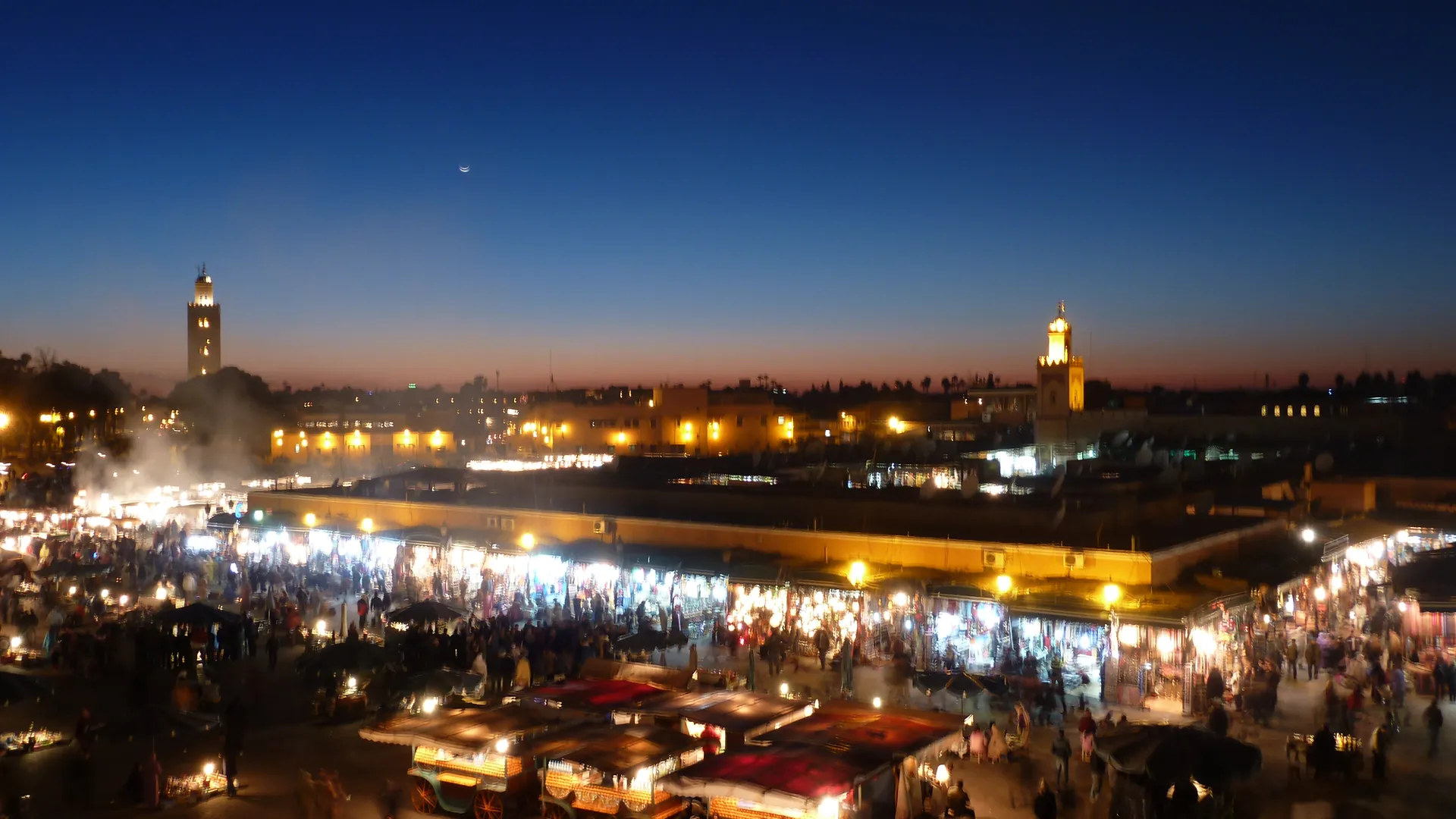
Marrakech · Jemaa el-Fnaa at duskMarrakech · heart of the medina

Marrakech · Jemaa el-Fnaa at duskYoTuT / CC BY 2.0

Jemaa el-Fnaa, Marrakech

When the sun goes down, the square starts to smoke, drum and tell stories.

Getting there●●●○○Harder: a visa and connecting flights for many; easy to get around once in Marrakech.

Best timeMar–May, Oct–Nov

A UNESCO-listed tradition of storytellers that turns into a giant open-air market each night.

At blue hour the Koutoubia minaret stands against the last of the light and smoke is already rising from the square. Juice sellers, musicians, storytellers and henna painters light up one after another, drums sounding from every side. The square’s oral traditions are on UNESCO’s intangible heritage list, and the medina is a World Heritage Site. Step into the souks next door and leather, spices and brass lamps press against your shoulders. Getting lost is normal.
GETTING THERE20–30 minutes by car from Marrakech Airport to the medina; about 3 hours by train from Casablanca. Cars can’t enter the old city, so walk the last stretch.
GOOD TO KNOWMarch–May and October–November are most comfortable. Ramadan 2027 falls around early February to early March, with fewer restaurants open by day. Before photographing performers or snake charmers, ask whether there’s a charge.
SAFETYTaiwan’s foreign ministry rates Morocco orange and names Marrakech for occasional robberies. Wear bags in front and beware fake guides and “free” directions. Avoid empty lanes at night; women are advised to go in pairs.
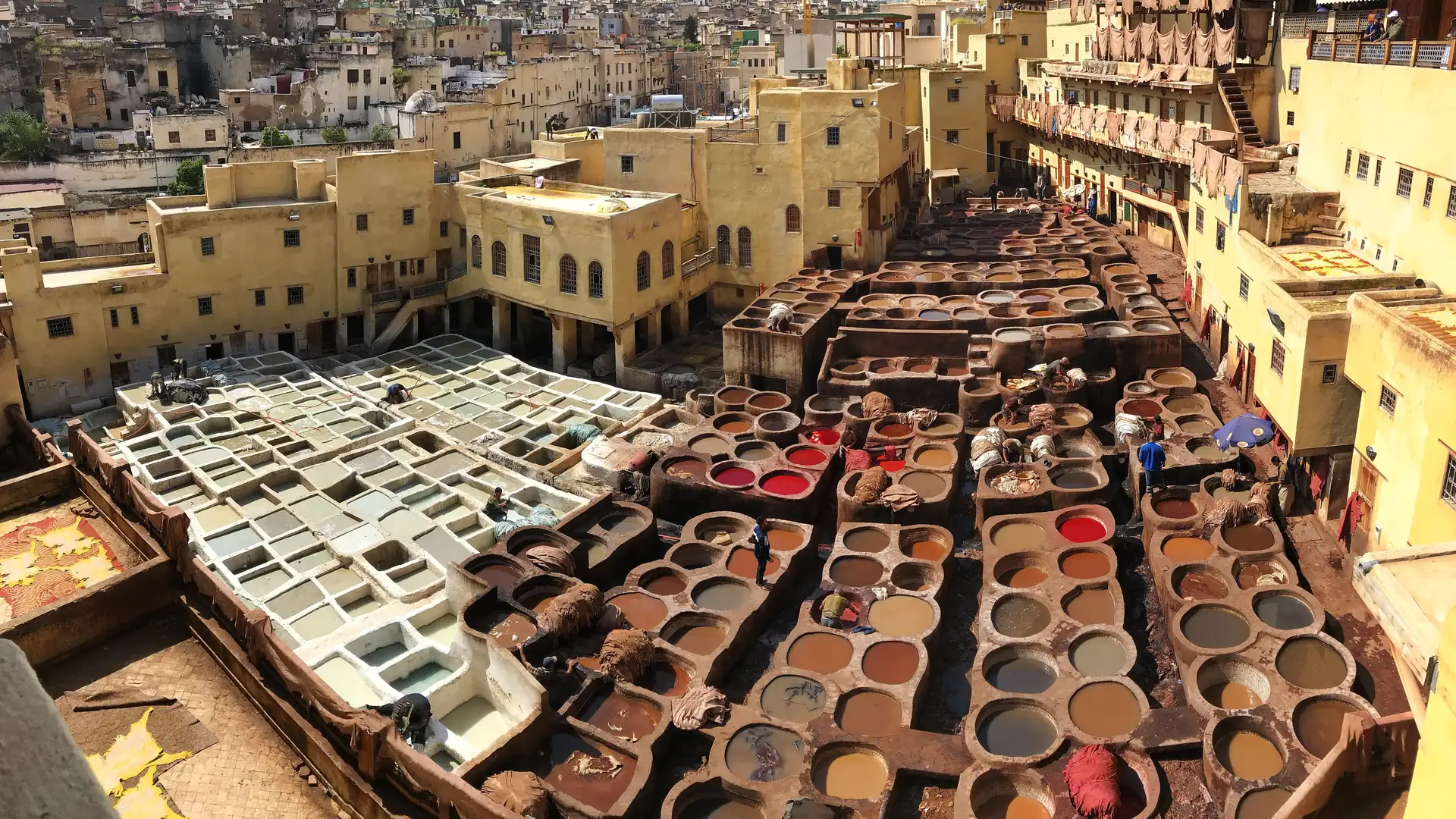
Fes · the dye vats of Chouara TanneryFes · old medina

Fes · the dye vats of Chouara TanneryUwe Brodrecht / CC BY-SA 2.0 / cropped

Chouara Tannery, Fes

From the rooftop, hundreds of dye vats look like a giant paint palette.

Getting there●●●○○Harder: about 4 hours by train from Casablanca, 7 from Marrakech.

Best timeMar–May, Sep–Nov

Medieval lanes that still work, and a tanning craft unchanged for centuries.

Climb to a leather shop’s terrace and someone hands you a sprig of mint, because the smell really is strong. Below, red, yellow and white stone vats spread out while workers stand inside them treading hides, by a method centuries old. The medina of Fes is among the largest medieval old towns in the world, its thousands of lanes still served by donkeys, its madrasas astonishing in carved plaster and wood. Maps don’t help much; follow the spices and the tap of brass instead.

GETTING THEREFes has an airport, mainly for European routes. By train it’s about 4 hours from Casablanca and 7 from Marrakech. Taxis wait near Bab Bou Jeloud, the Blue Gate.
GOOD TO KNOWMorning has the best light and less heat; mint is handed out for the smell. March–May and September–November are most comfortable. Shops may pitch leather goods — if you don’t want to buy, a small tip and a polite goodbye is fine.
SAFETYTaiwan’s foreign ministry rates Morocco orange. It’s easy to get lost, and people offering to lead you usually expect money. Avoid dark lanes alone at night and save your lodging on an offline map.
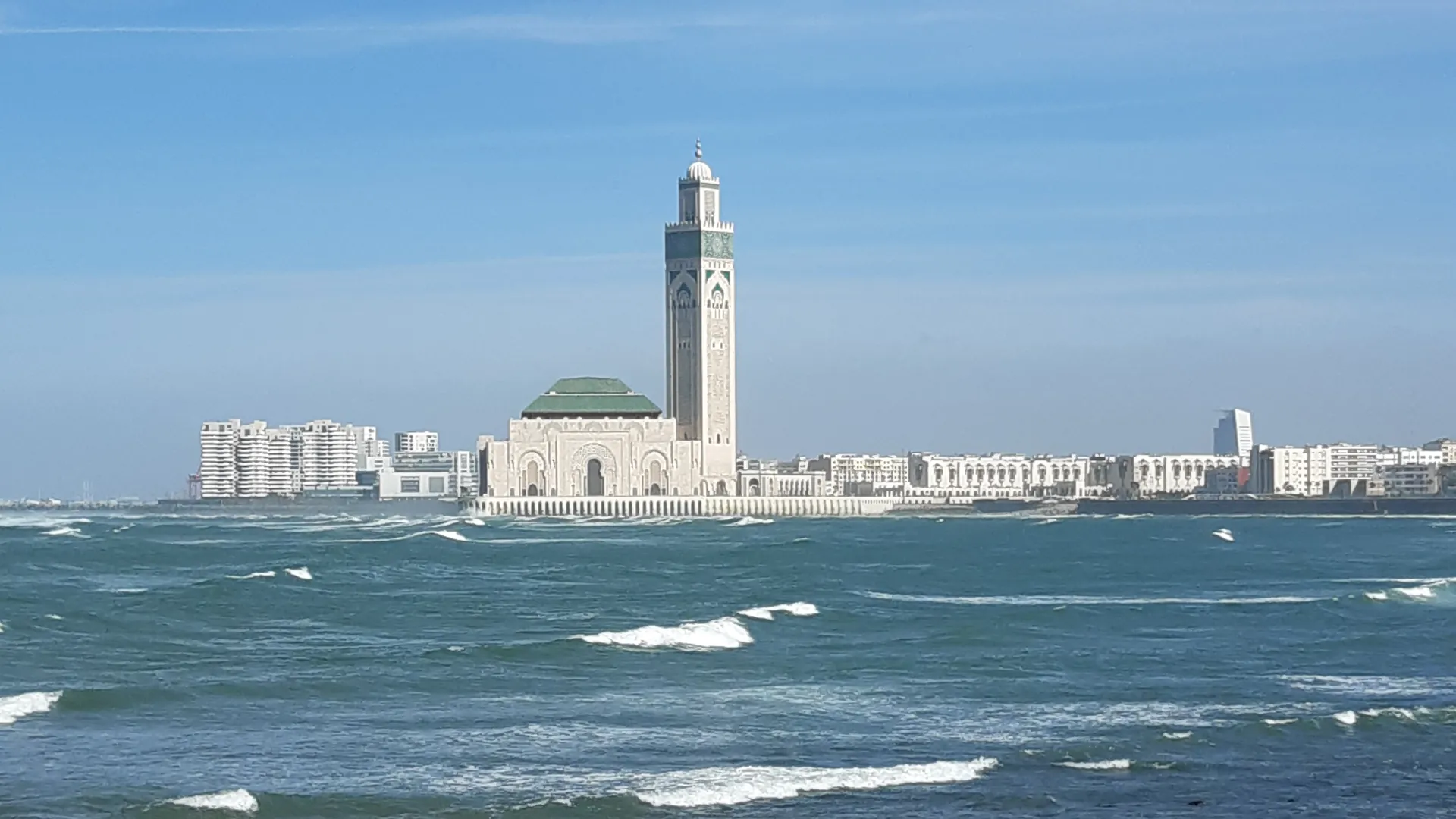
Casablanca · Hassan II Mosque by the seaCasablanca · seafront

Casablanca · Hassan II Mosque by the seaAgnus-ge / CC BY-SA 4.0 / cropped

Hassan II Mosque, Casablanca

A mosque built out over the Atlantic, its minaret towering above the shoreline.

Getting there●●●○○Harder: needs a visa for many, but Casablanca is the usual arrival city.

Best timeApr–Oct

One of the few mosques in Morocco that non-Muslims can enter.

Waves break at the foot of the mosque, and its minaret, about 210 metres high, can be seen from far across the city. Finished in 1993, part of the building stands over the Atlantic itself, its marble, mosaics and carved ceilings the work of Moroccan craftsmen. Most mosques are closed to non-Muslims, but parts of this one can be visited on a guided tour, the easiest way to see Moroccan craftsmanship. Afterwards walk along the seafront in the cool Atlantic evening.

GETTING THEREAbout 40 minutes by train from Casablanca Airport into the city, then a short ride. Rail links run to Rabat, Fes, Marrakech and Tangier.
GOOD TO KNOWInside visits are by guided tour only; see official times and Friday restrictions. Any season works — bring a layer for the sea wind.
SAFETYTaiwan’s foreign ministry rates Morocco orange and names Casablanca for poor security and robberies. Keep valuables out of sight, use a ride app at night and avoid quiet streets.
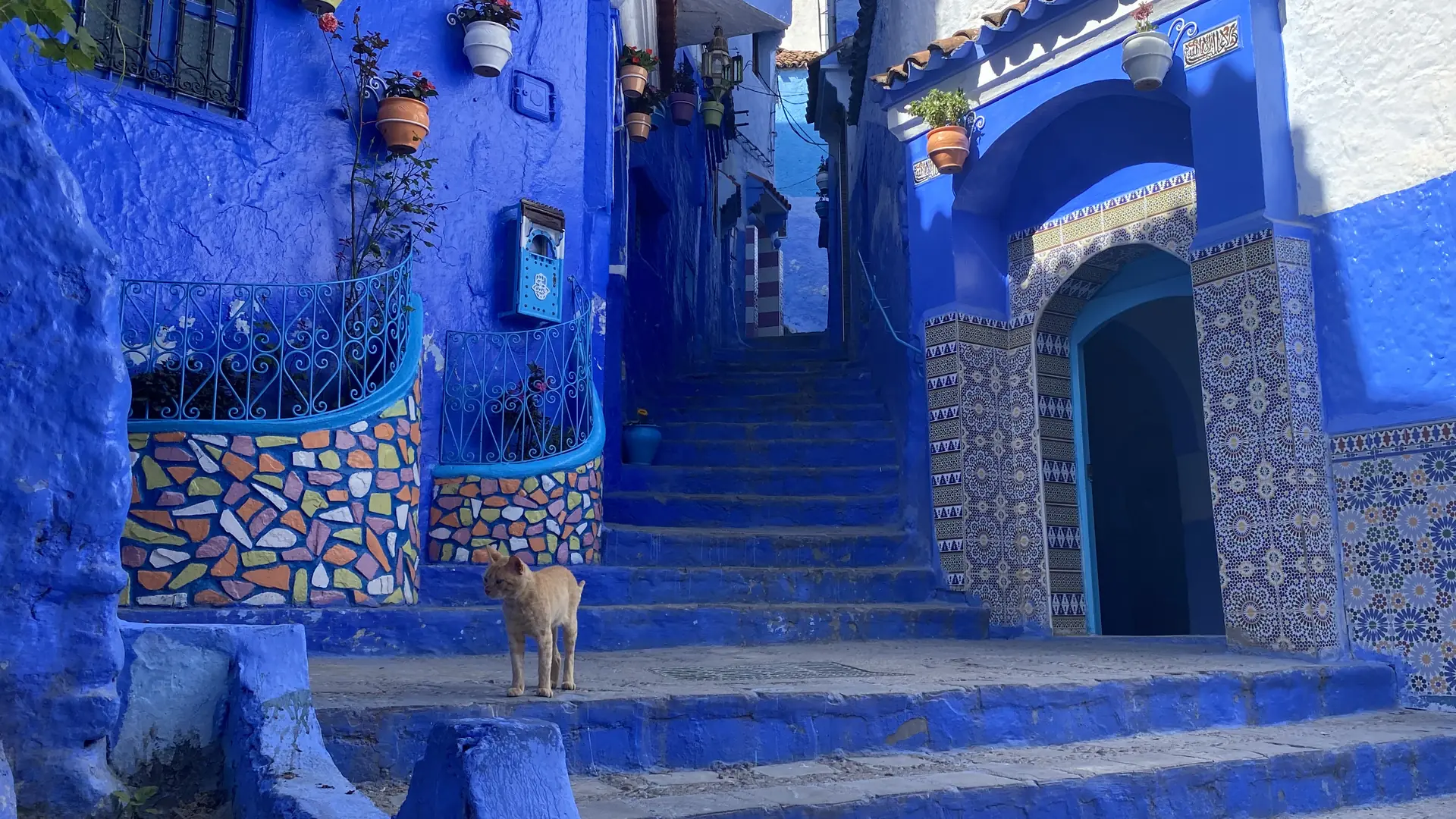
Chefchaouen · lanes of the blue townChefchaouen · Rif Mountains

Chefchaouen · lanes of the blue townGalanda23 / CC BY-SA 4.0 / cropped

Chefchaouen

Step into the mountain town’s lanes, where walls, stairs and shadows are all blue.

Getting there●●●○○Harder: about 4 hours by bus from Fes; no trains.

Best timeApr–Jun, Sep–Oct

A blue town at the foot of the Rif, far quieter than the big cities.

Stairs climb through lanes painted every shade of blue, colourful pots hanging by the doors and cats asleep on the steps. Chefchaouen is a small town in the Rif Mountains. Its old quarter takes two or three hours to walk, but many stay the night for the emptiness of evening and early morning. Climb to the Spanish Mosque on the eastern slope and watch the town light up in its valley. The blue in photos is a little deeper than in real life, but being inside it is just as special.

GETTING THEREAbout 4 hours by bus from Fes, 2½–3 from Tangier; no trains, though private cars are possible. About 5 minutes by taxi from the bus station to the old town.
GOOD TO KNOWApril–June and September–October are best; winter is cold and wet. These are people’s homes — don’t block doorways or walk in.
SAFETYTaiwan’s foreign ministry rates Morocco orange. Cannabis is often offered to tourists; ignore it, as buying is illegal. Use a licensed guide for mountain hikes.
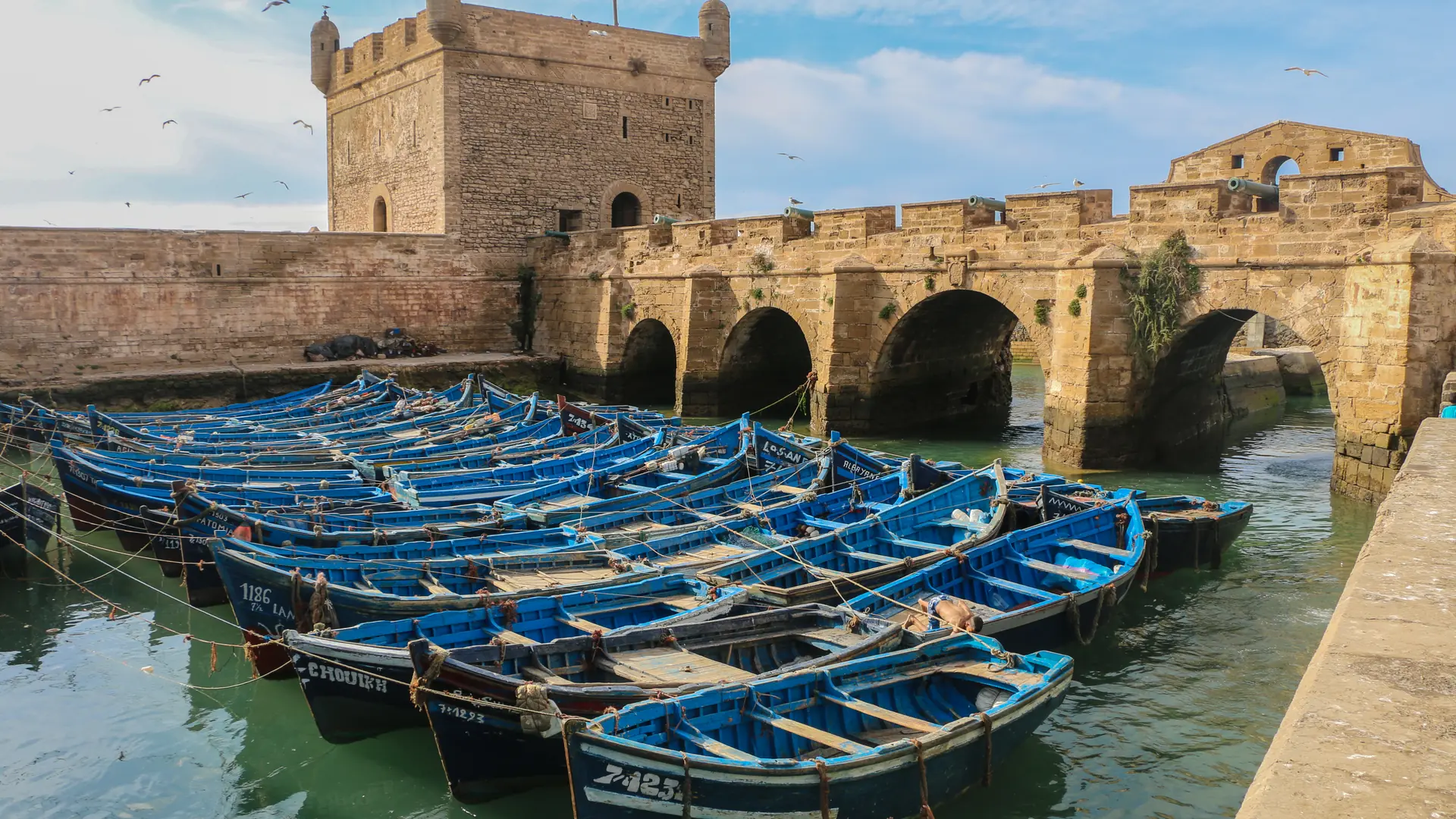
Essaouira · blue boats and the harbour fortEssaouira · Atlantic coast

Essaouira · blue boats and the harbour fortAhmed.magdy / CC BY-SA 4.0 / cropped

Essaouira

Blue fishing boats pack the harbour; gulls cry from the stone bastions.

Getting there●●●○○Harder: about 3 hours by bus from Marrakech.

Best timeApr–Jun, Sep–Oct

A breath of Atlantic air after Marrakech.

Rows of little blue boats lean against each other beside the Skala du Port, an 18th-century stone bastion where gulls watch you eat. Essaouira’s medina is a World Heritage Site of white walls and blue shutters, with craftsmen making boxes from local thuya wood and an easy-going mood rare in Morocco. The Atlantic wind blows all year, which also makes it a kite-surfing town. Order grilled seafood at the harbour stalls, then walk the ramparts at dusk as the waves crash in.

GETTING THEREAbout 3 hours by long-distance bus from Marrakech; there’s also a small airport. The old town is walkable and car-free.
GOOD TO KNOWApril–June and September–October are best; summer is cooler than inland but windy. Ask prices before ordering at seafood stalls. Harbour and fort access per the site.
SAFETYTaiwan’s foreign ministry rates Morocco orange. It’s more relaxed than the big cities, but seafront lanes are quiet at night — go with others. The harbour floor is slippery.
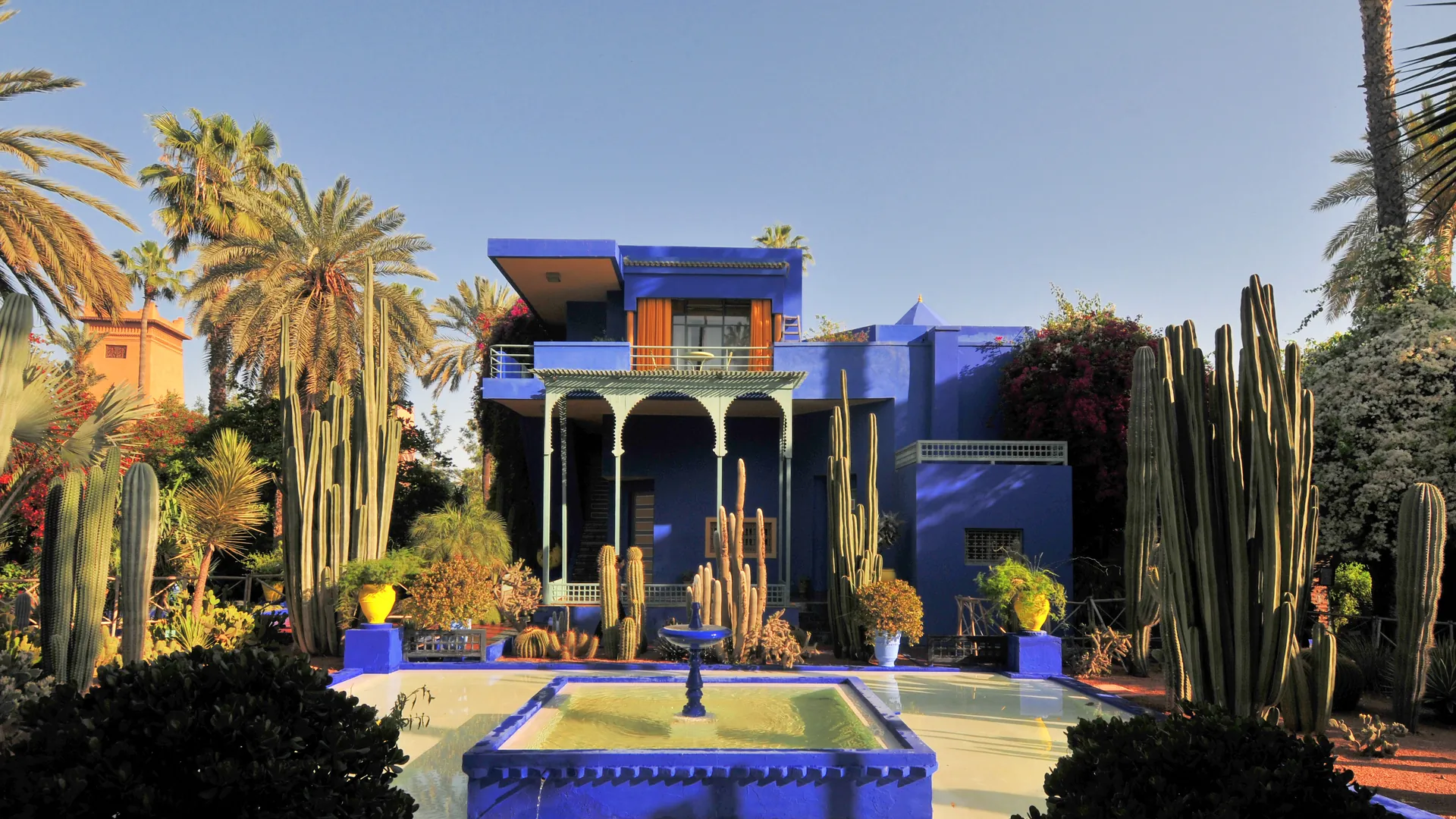
Marrakech · the blue villa at Jardin MajorelleMarrakech · new town

Marrakech · the blue villa at Jardin MajorelleViault / CC BY-SA 3.0 / cropped

Jardin Majorelle, Marrakech

A shade of blue, named after a painter.

Getting there●●●○○Harder: needs a visa for many; about 15 minutes by car from the medina.

Best timeMar–May, Oct–Nov

The garden Yves Saint Laurent rescued; its blue villa is now a Berber museum.

A deep blue villa with yellow doors and windows, cacti, palms and bamboo rising all around: French painter Jacques Majorelle spent decades on this garden, and the colour became known as Majorelle Blue. It fell into neglect after his death until Yves Saint Laurent and his partner bought it in 1980; the designer’s ashes were scattered here. The villa is now the Berber Museum, and the YSL museum next door is a separate building with its own ticket. After the medina’s noise, it feels like another country.

GETTING THEREAbout 15 minutes by car from the medina. Tickets are usually bought online in advance and may not be available at the gate — see the official site.
GOOD TO KNOWGo at opening time. The photo is empty, but paths queue in high season. March–May and October–November are best.
SAFETYTaiwan’s foreign ministry rates Morocco orange. The garden itself is safe; just mind your things in the queues.
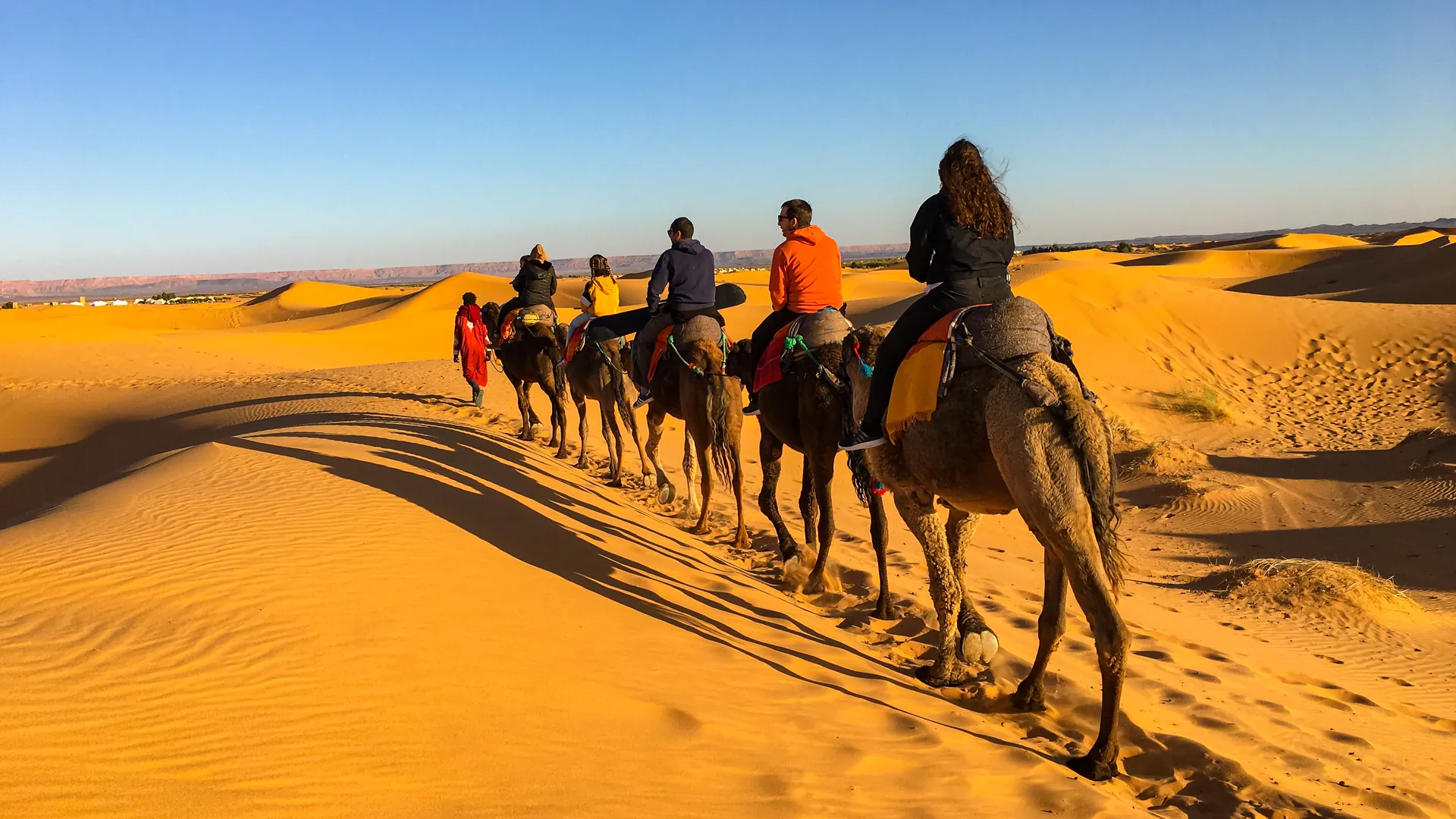
Merzouga · riding camels into the Sahara dunesErrachidia · Erg Chebbi dunes

Merzouga · riding camels into the Sahara dunescattan2011 / CC BY 2.0 / cropped

Merzouga Desert

Ride a camel into orange dunes, then nothing but stars.

Getting there●●●●○Tough: two days’ drive from Marrakech; a licensed desert tour is best.

Best timeOct–Apr

Among the finest dunes on the Sahara’s edge, worth doing once in a lifetime.

Camels tread the orange sand step by step, their long shadows stretching across the dune. Erg Chebbi is a sand sea on the edge of the Sahara, with dunes up to about 150 metres. Ride in at dusk and sleep in a Berber tent, listening to drums round the fire with the stars overhead. Climb a dune for sunrise, and on the way back pass through Todra Gorge: palm oases all along the road, then a narrow passage between red rock walls.

GETTING THEREDesert tours from Marrakech usually take three days and two nights, crossing the High Atlas, with long drives. Buses reach Merzouga, and Errachidia has an airport.
GOOD TO KNOWOctober to April is best; December and January nights are cold, so pack warm layers. Choose a licensed operator and ask about tents and vehicles. Stars are best around the new moon.
SAFETYTaiwan’s foreign ministry rates Morocco orange and says border areas with Algeria are the least safe, so don’t head further east or south, don’t self-drive into the desert, and always go with a licensed guide. Carry plenty of water.
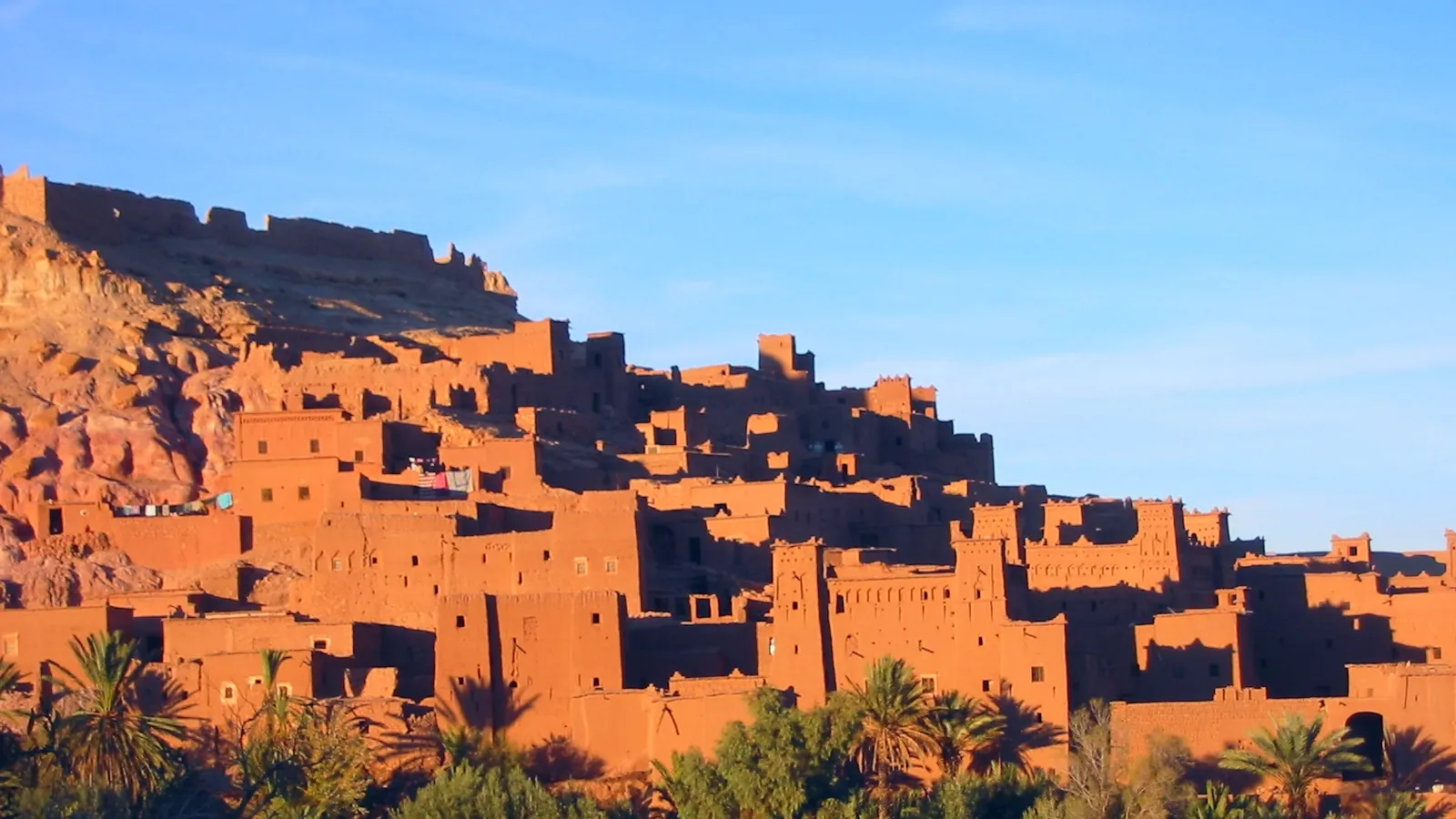
Aït Benhaddou · the mud-brick ksar at sunsetOuarzazate · south of the High Atlas

Aït Benhaddou · the mud-brick ksar at sunsetDonar Reiskoffer / CC BY 3.0 / cropped

Aït Benhaddou

Sunset hits the mud-brick fortress and the village turns gold and red.

Getting there●●●●○Harder: about 4 hours by private car from Marrakech over the mountains; common on desert tours.

Best timeMar–May, Oct–Nov

A UNESCO mud-brick village that’s starred in Gladiator and Game of Thrones.

Across the river, a wall of red-earth fortresses stacks up the hillside, tower beside tower, glowing unreal gold and red at sunset. Aït Benhaddou was a fortified village on the Saharan caravan route, now a World Heritage Site and a favourite film set for the likes of Gladiator. Only a few families still live inside. Cross the bridge and climb the narrow lanes to the old granary on top, with the High Atlas and empty plains beyond.

GETTING THEREAbout 4 hours by private car or desert tour from Marrakech over the Tizi n’Tichka pass; about 40 minutes from Ouarzazate Airport.
GOOD TO KNOWMarch–May and October–November are best; snow can close the pass in winter. It’s best at sunset, so consider staying a night. Shops will offer paintings and rugs — just smile and move on.
SAFETYTaiwan’s foreign ministry rates Morocco orange. Mountain roads wind, so don’t self-drive at night. The mud walls are fragile — don’t climb them.
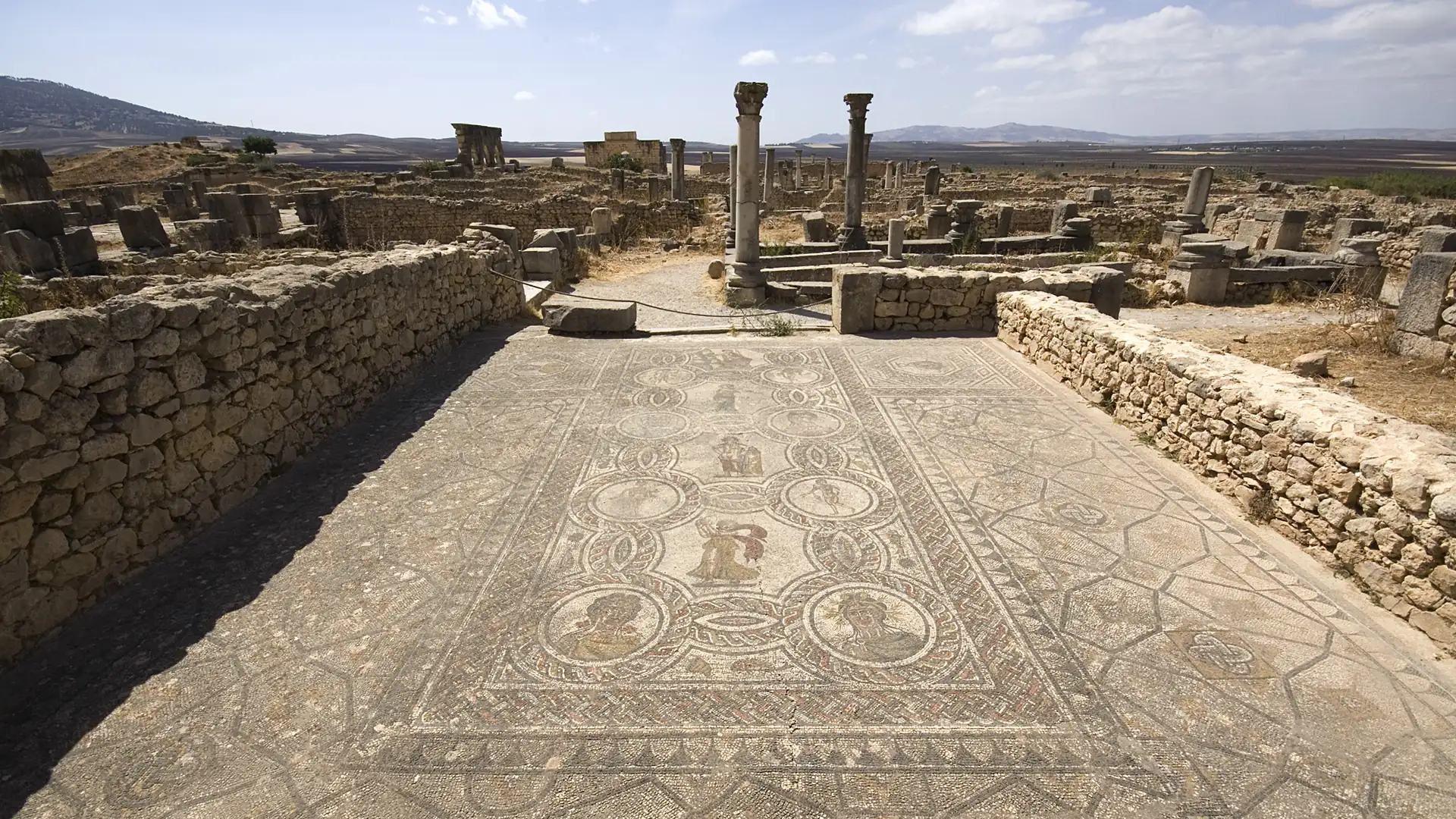
Volubilis · the Roman Four Seasons mosaicNear Meknes

Volubilis · the Roman Four Seasons mosaicPrioryman / CC BY-SA 3.0 / cropped

Volubilis

Roman mosaics, lying out on a North African hillside.

Getting there●●●○○Harder: 40 minutes to 1½ hours by private car from Meknes or Fes.

Best timeMar–May, Sep–Nov

A UNESCO Roman town with mosaics right at your feet.

You walk on 2,000-year-old paving, past low stone walls around a mosaic floor where the Four Seasons in the House of Hercules are still clear. Volubilis was a frontier city of the Roman Empire in North Africa. Its triumphal arch and temple columns still stand on the hillside, surrounded by olive groves and wheat. The site is small, two hours is enough, and there’s rarely a queue. Meknes’ old town, about 30 km away, makes a good add-on: Bab Mansour is among Morocco’s most impressive gates.

GETTING THEREAbout 1½ hours by private car from Fes, 40 minutes from Meknes. Public transport is poor, so hire a car and combine both in a day.
GOOD TO KNOWMarch–May and September–November are best. There’s no shade, so bring a hat and water. Mosaics are in the open — keep off the roped areas.
SAFETYTaiwan’s foreign ministry rates Morocco orange. Visitors are few, so go with others and keep cash and phone close. The paving is uneven, so wear good shoes.
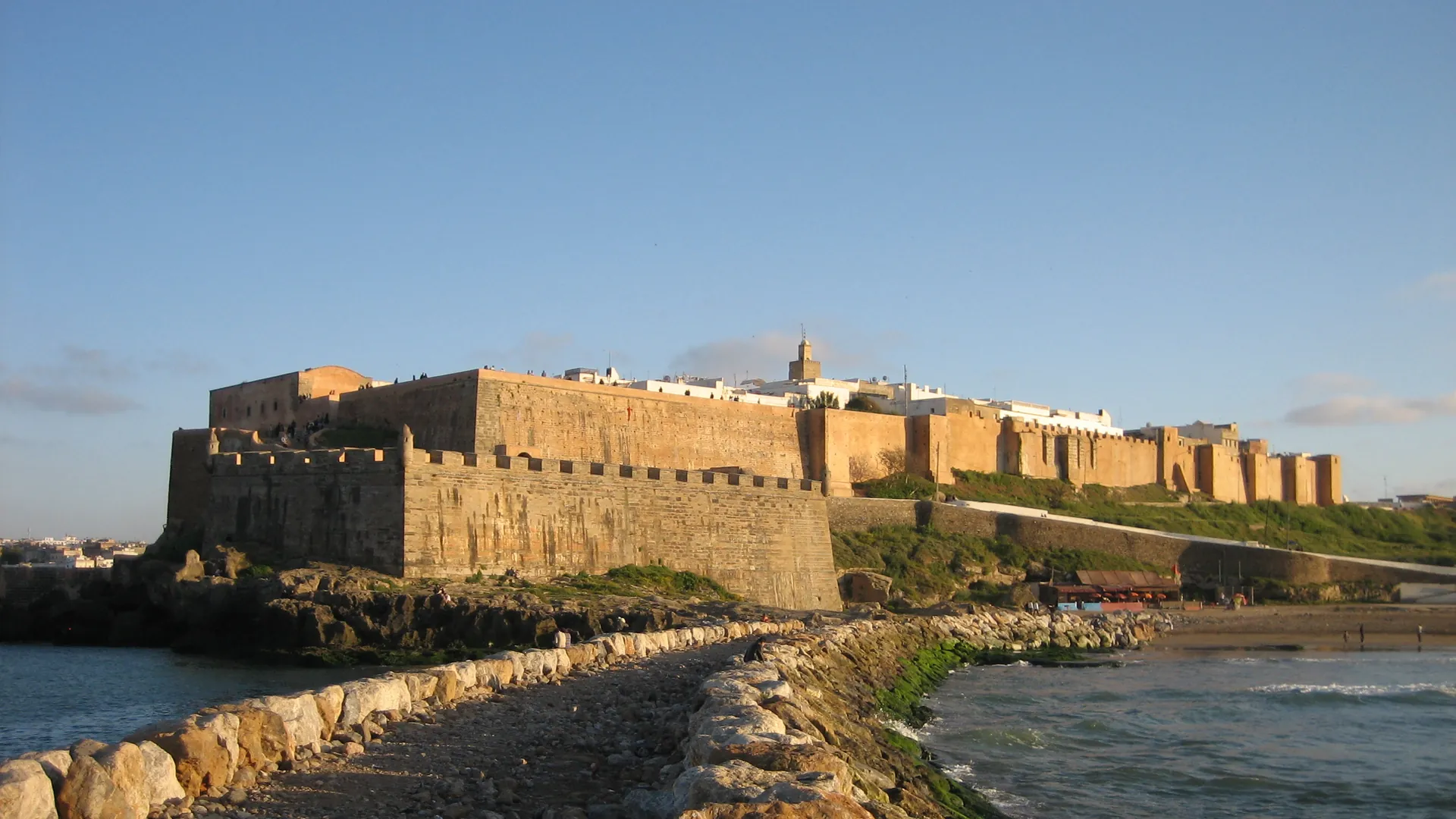
Rabat · the Kasbah of the Udayas on its headlandRabat · Bou Regreg estuary

Rabat · the Kasbah of the Udayas on its headlandBen Javelina / CC BY-SA 2.0 / cropped

Kasbah of the Udayas, Rabat

Inside an old fortress on the headland, a little white-and-blue lane.

Getting there●●●○○Harder: about 1 hour by train from Casablanca.

Best timeApr–Jun, Sep–Oct

Morocco’s capital, with a UNESCO-listed old town more relaxed than you’d expect.

On a headland at the river mouth, ochre walls guard the Atlantic. Pass through a heavily carved gate and suddenly you’re in white lanes edged with blue, so quiet you can hear the waves. The Kasbah of the Udayas is the oldest part of Rabat, dating to the 12th century, with an Andalusian garden and a sea terrace at the end of the lanes. Rabat’s old and new towns are both on the World Heritage list, the Hassan Tower and Mohammed V’s mausoleum are close by, and the pace is much slower than Marrakech.

GETTING THEREAbout 1 hour by train from Casablanca, 2 from Fes. Trams run in the city, and it’s a short walk or ride to the kasbah.
GOOD TO KNOWApril–June and September–October are best, and the walls glow at dusk. Garden and museum hours per the site.
SAFETYTaiwan’s foreign ministry rates Morocco orange. Rabat is calmer than the big cities, but people offer tours at the entrance — a polite no is fine. Sea rocks are slippery.
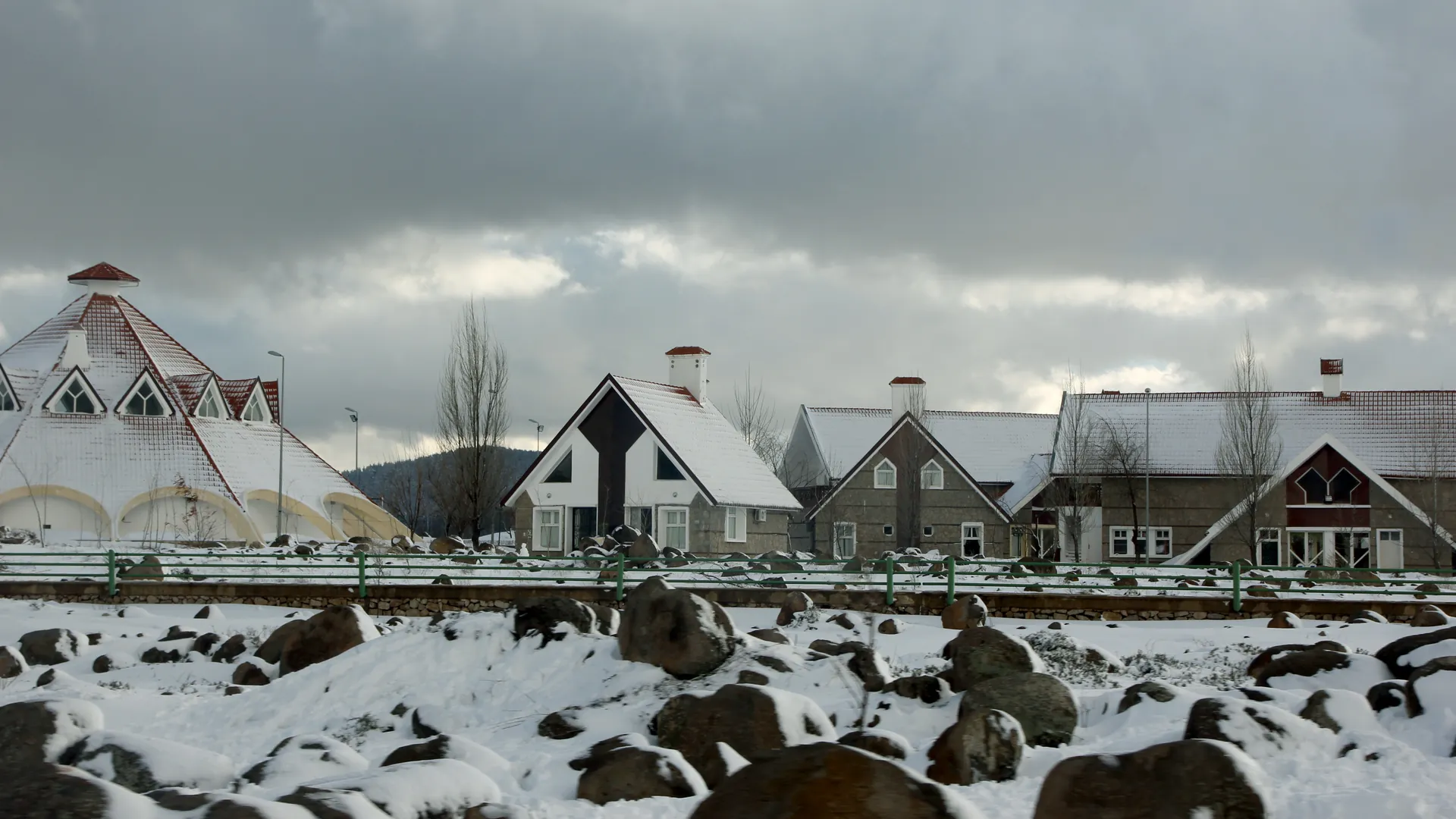
Ifrane · European-style roofs after snowIfrane · Middle Atlas

Ifrane · European-style roofs after snowTamaditi Mohamed / CC BY-SA 4.0 / cropped

Ifrane

Yes, it snows in Africa — on roofs straight out of the Alps.

Getting there●●●●○Harder: about 1½ hours by road from Fes.

Best timeDec–Feb, May–Jun

The “Switzerland of Morocco”, a highland town full of surprises.

Few people think of snow when they think of Africa. Ifrane sits at about 1,650 metres. In the 1930s the French built it with steep Alpine roofs, and in winter Moroccans drive up to play in the snow; Africa’s record low, about −23°C, was measured here. The cedar forests near Azrou are home to wild Barbary macaques, and Dayet Aoua lake is good for a walk. Michlifen is one of North Africa’s earliest little ski areas, but it has no snowmaking and opens only with enough snow — check first, as reports vary.

GETTING THEREAbout 1½ hours by bus or car from Fes; just over an hour from Meknes. Hire a car for the surrounding sights.
GOOD TO KNOWDecember to February brings a chance of snow, though not every day; May–June is greenest. Roads are poor in snow and weekends are busy.
SAFETYTaiwan’s foreign ministry rates Morocco orange. Ifrane itself is calm; don’t self-drive on icy roads, and don’t feed the wild macaques.
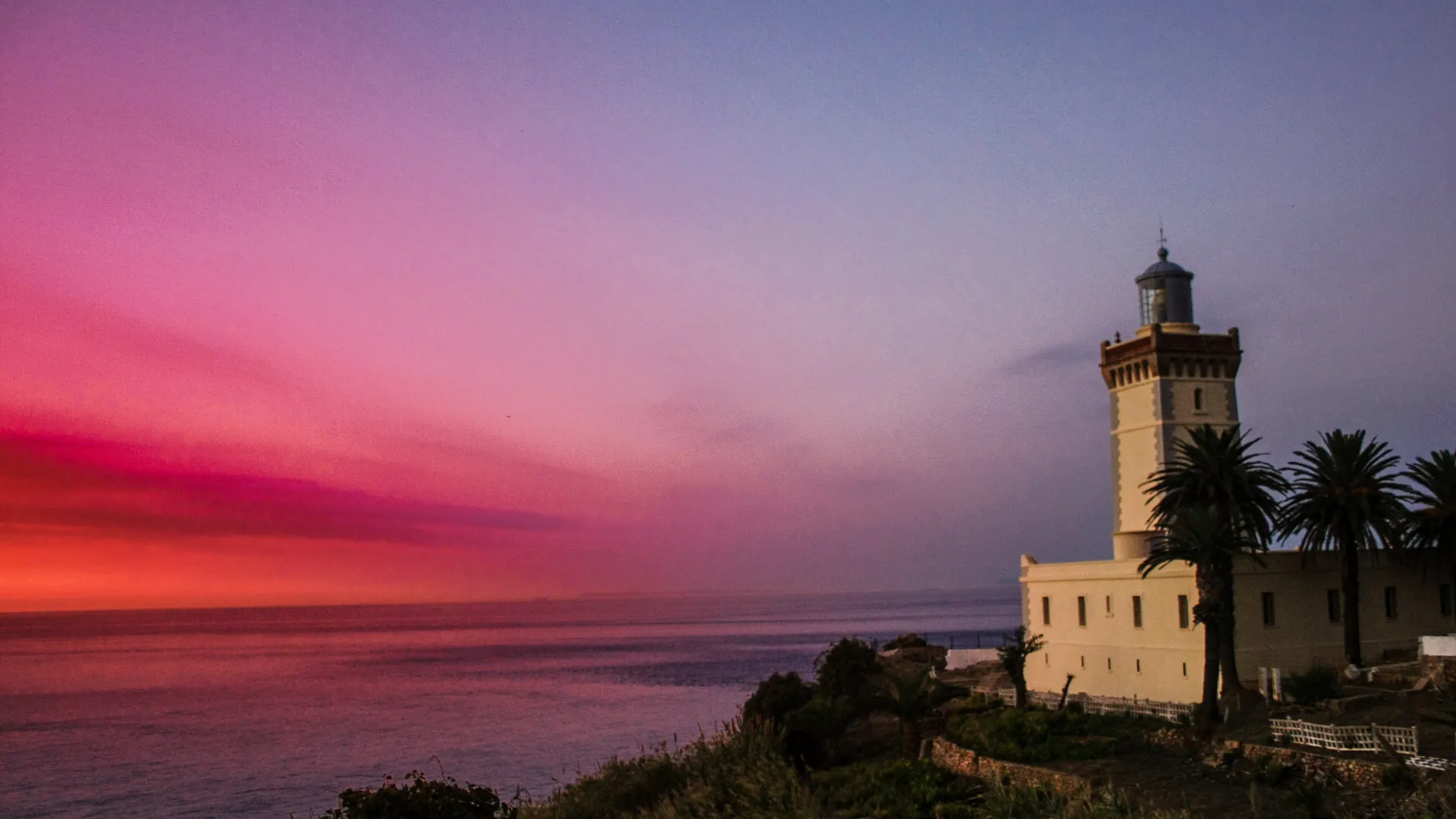
Tangier · dusk at Cape Spartel lighthouseTangier · entrance to the Strait of Gibraltar

Tangier · dusk at Cape Spartel lighthouseLkadi Adil / CC BY-SA 4.0 / cropped

Cape Spartel, Tangier

Where the Atlantic meets the Mediterranean, with Europe across the water.

Getting there●●●○○Harder: easy links from Europe; a little over 2 hours by high-speed train from Casablanca.

Best timeApr–Jun, Sep–Oct

Africa’s northwest corner, with the Atlantic on one side and the Mediterranean on the other.

At the northwest tip of Africa, the Atlantic lies to your left and the Strait of Gibraltar leads into the Mediterranean on your right, the dusk sky on fire behind a white lighthouse on the cliff. On a clear day Spain is right there. This isn’t just any headland, but the meeting of two seas and two continents. The nearby Caves of Hercules have an opening that looks like a map of Africa from inside. Tangier’s old town, once an international zone of writers and spies, is relaxed and a little mysterious.

GETTING THEREA little over 2 hours by high-speed train from Casablanca. About 30 minutes by car from Tangier to Cape Spartel, easily combined with the Caves of Hercules.
GOOD TO KNOWApril–June and September–October are best. Dusk is loveliest but windy, so bring a layer. Ask your driver to wait, as return rides can be hard to find.
SAFETYTaiwan’s foreign ministry rates Morocco orange. Touts are common around the port; a polite no will do. Stay behind the cliff barriers and don’t wander the cape alone after dark.

Not sure which to pick? Take the 4-minute travel-personality quiz and find the one that suits you.

Take the quiz