TOP-TIER TRAVEL中/EN

Namibia

9 hidden gems in Namibia

Red dunes, wildlife & a desert coast. We picked 9 places in this region — some well known, some few visitors find. Browse at your own pace, then take the quiz when something catches your eye.

TOP-TIER TRAVEL › All hidden gems › Namibia

Not sure which to pick? Take the 4-minute travel-personality quiz and find the one that suits you.

Take the quiz
Deadvlei
First time? Deadvlei and Etosha are classics

A common first route leaves Windhoek for Deadvlei and the red dunes, then Swakopmund on the Atlantic, and north to Etosha for wildlife — ten to fourteen days in all. Distances are huge, and you’ll mostly drive or join a tour, but every stretch is unlike anywhere else. The place below suits you best.

Spot details checked: November 2026

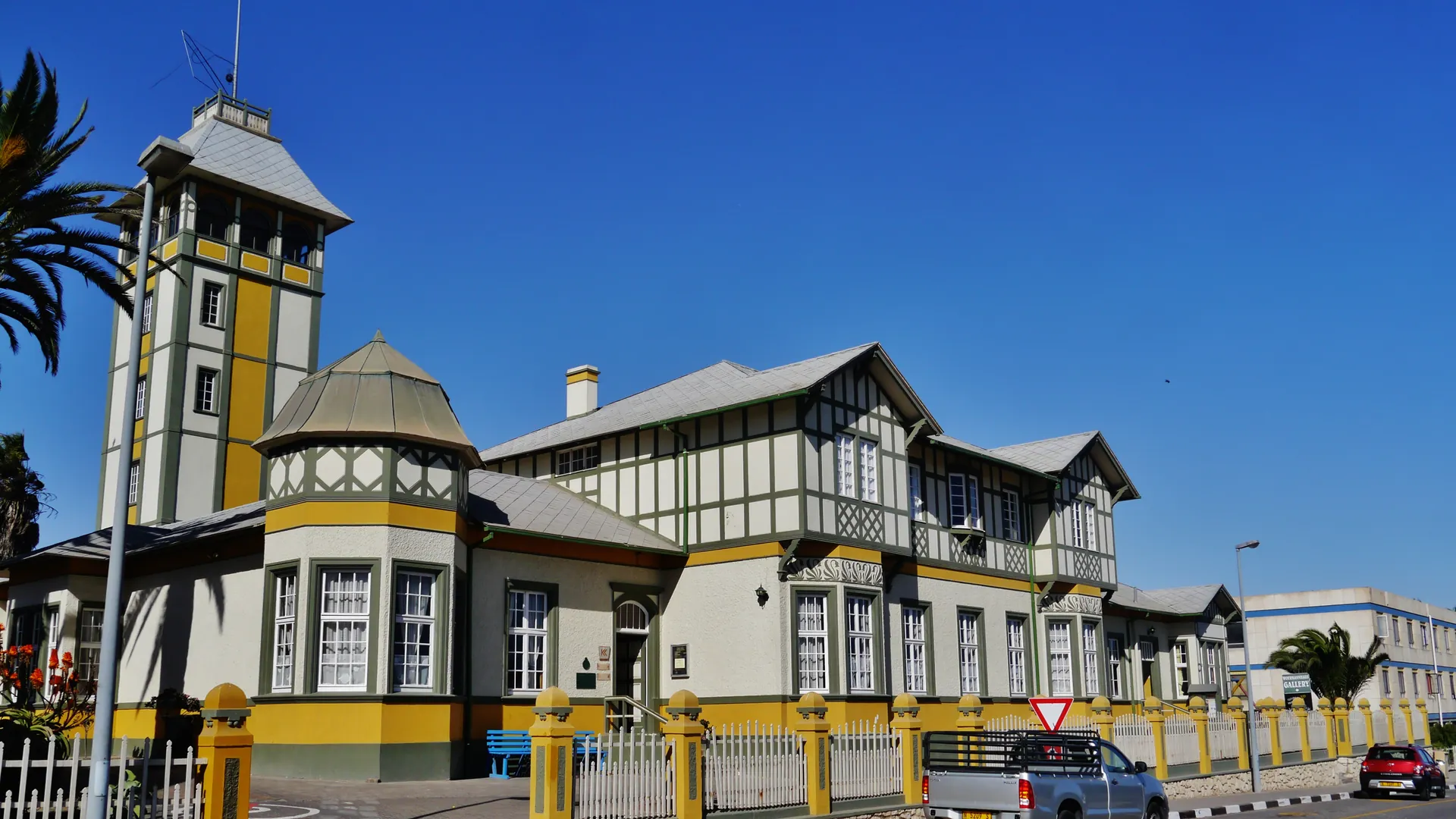
Swakopmund · a German-era building by the palmsErongo · Atlantic coast

Swakopmund · a German-era building by the palmsZairon / CC BY-SA 4.0 / cropped

Swakopmund

Between desert and Atlantic, a German town appears.

Getting there●●●●○Harder: about 4 hours from Windhoek by shuttle or car.

Best timeGood all year

Namibia’s adventure capital, with desert activities back to back.

Before the sea fog has lifted, half-timbered houses and towers appear behind the palms. It looks like Germany, until you notice the desert and the Atlantic. These are buildings from the German colonial period, when this was German South West Africa, from 1884 to 1915. The Woermann House in the photo was once a trading company’s office and warehouse and now holds a gallery. Today Swakopmund is the country’s adventure base for sandboarding, quad biking and skydiving, and in the evening you’re back in town with fresh oysters.
GETTING THEREAbout 4 hours from Windhoek by shuttle or car, 40 minutes from Walvis Bay Airport. The town is walkable.
GOOD TO KNOWGood all year, but the coast is often foggy and far cooler than inland, so bring a jacket. Book activities early, especially July–October and December.
SAFETYDon’t walk alone at night, leave nothing in your car, and be wary of strangers offering to watch your vehicle.
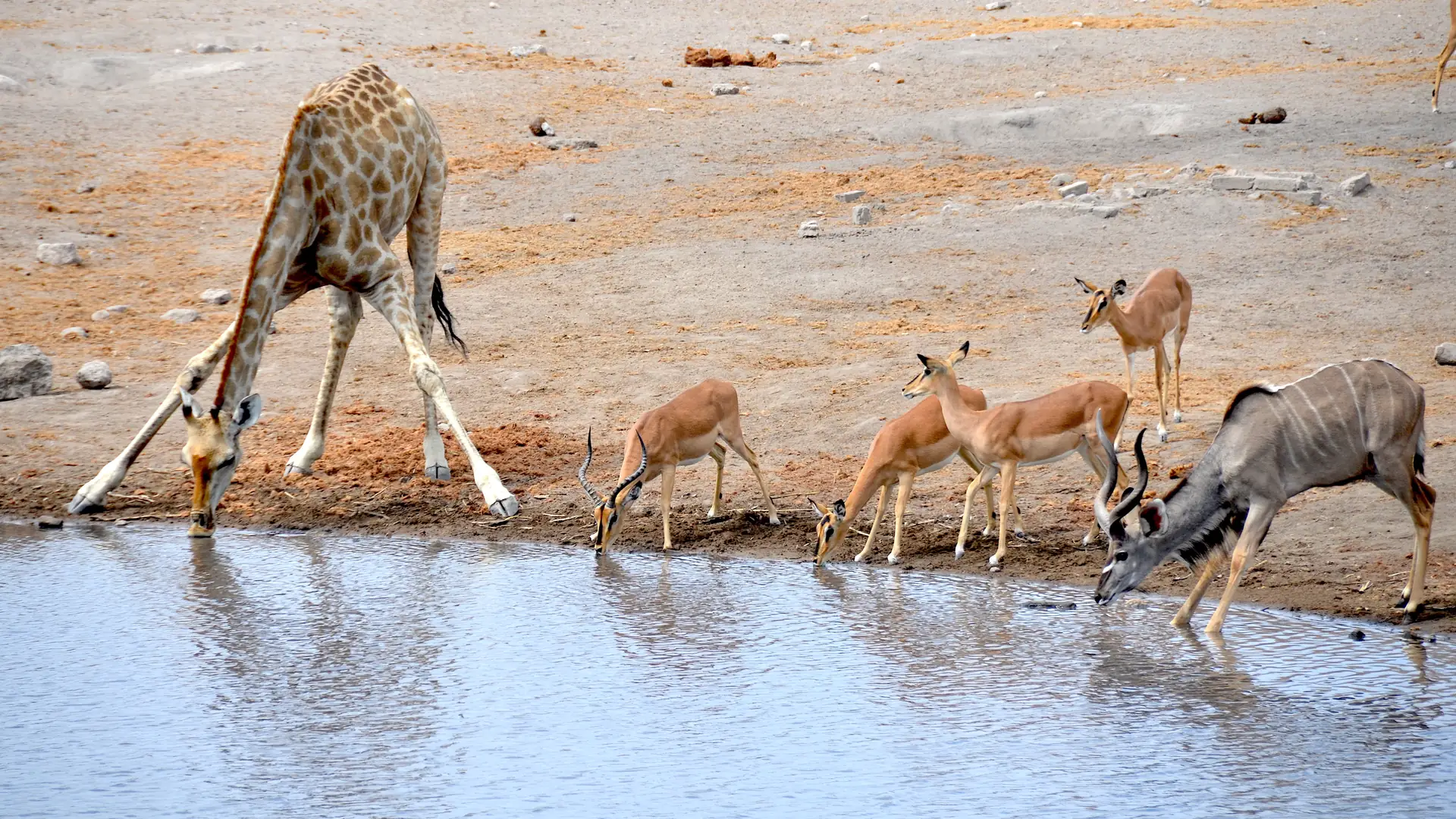
Etosha · a giraffe splaying its legs to drinkKunene · northern Namibia

Etosha · a giraffe splaying its legs to drinkOlga Ernst / CC BY-SA 4.0 / cropped

Etosha National Park

A giraffe splays its legs to drink, its eyes never leaving the bush.

Getting there●●●●○Harder: about 5 hours’ drive from Windhoek; self-drive or join a safari.

Best timeMay–Oct

One of Africa’s easiest parks for wildlife — elephants without leaving your car.

At a dry-season waterhole, a giraffe spreads its front legs to drink. It’s the moment it’s most vulnerable to lions, so it keeps looking round. Beside it, black-faced impala — found almost only in northwest Namibia and southern Angola — and kudu come to drink. Etosha centres on a vast white salt pan, with wildlife gathered round the waterholes, so you can simply drive slowly and find them. With luck you’ll see black rhino and oryx, the national animal. In the east, Namutoni camp has a white German-era fort.

GETTING THEREAbout 5 hours’ drive from Windhoek to the south gate. Inside, self-drive or join a safari; roads are mostly gravel.
GOOD TO KNOWMay to October, the dry season, is best as animals gather at waterholes; September–October are hot. December–March is green with newborns, but animals are spread out. Book camps long in advance. Gate times per the official site.
SAFETYDon’t leave your car except at camps and marked spots, don’t feed animals, and be in camp by dark. The north has malaria risk in the wet season — see a travel clinic. Drive slowly on gravel; rollovers are the commonest accident.
Sandwich Harbour · dunes dropping into the AtlanticErongo · south of Walvis Bay

Sandwich Harbour · dunes dropping into the AtlanticLidine Mia / CC BY-SA 4.0 / cropped

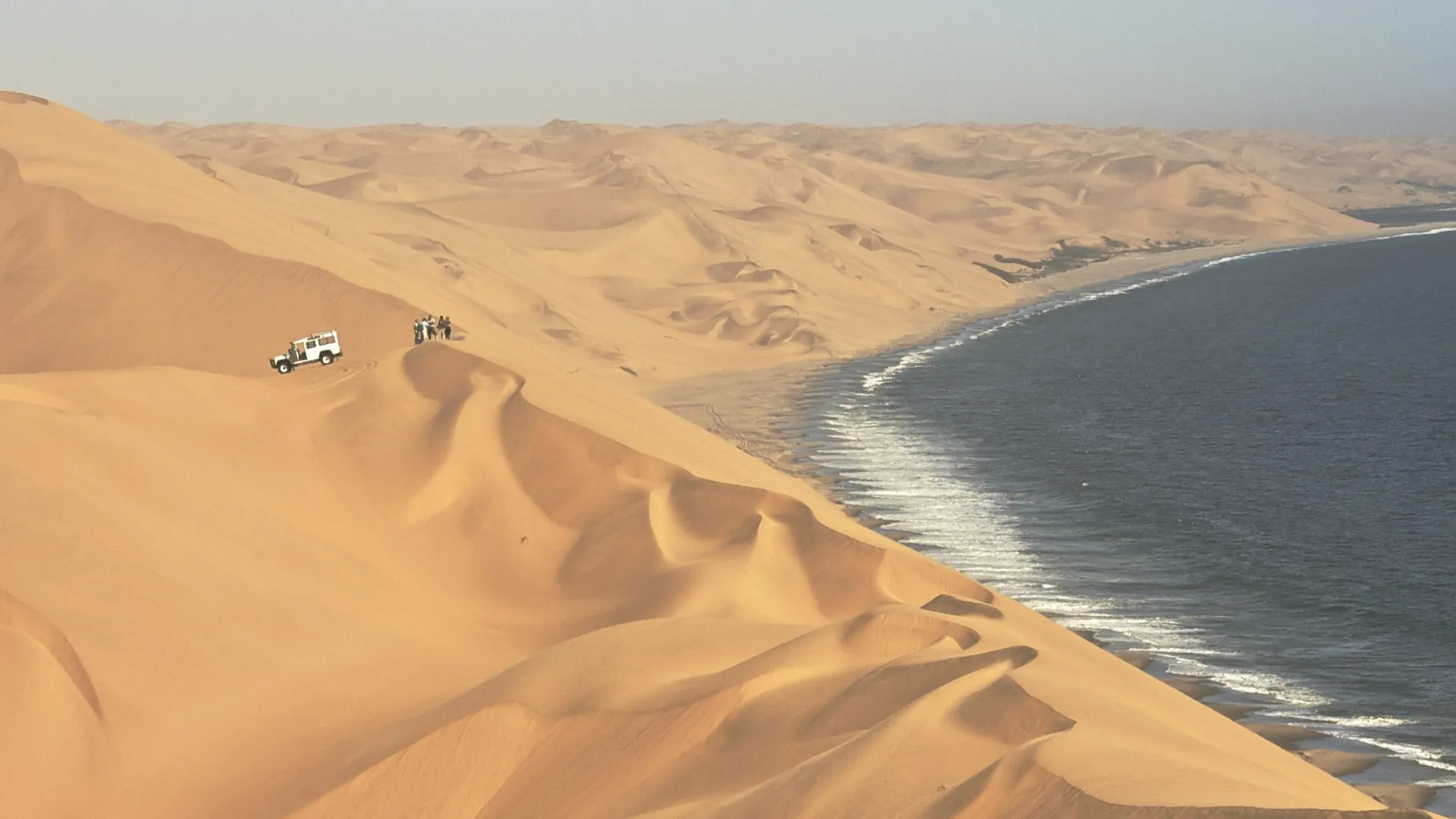
Sandwich Harbour, Walvis Bay

Giant dunes slide straight into the Atlantic, with no road between.

Getting there●●●●●Tough: only with an experienced 4×4 operator; no ordinary self-drive.

Best timeGood all year

One of the most spectacular meetings of sand and sea in the world.

The 4×4 climbs a dune crest, a sea of sand on one side, a line of big Atlantic rollers on the other, the dunes almost sliding into the ocean. There’s no road on this coast and it’s only passable at low tide, so you must go with an experienced 4×4 operator, usually with lunch on the dunes. Walvis Bay also has flocks of flamingos, and morning boat trips find seals and dolphins, with seals sometimes hopping aboard. It’s a full day, but watching the dunes change colour on the way back will leave you speechless.

GETTING THEREOperators collect you from Walvis Bay or Swakopmund; half a day to a full day.
GOOD TO KNOWTours run all year, though sea fog and tides affect the route. Book early, as schedules shift with the tide. Take something for motion sickness — the dunes are a thrill.
SAFETYOrdinary vehicles can’t go in and self-driving isn’t allowed; rising tides are very dangerous, so follow your driver. Stay on the permitted routes.
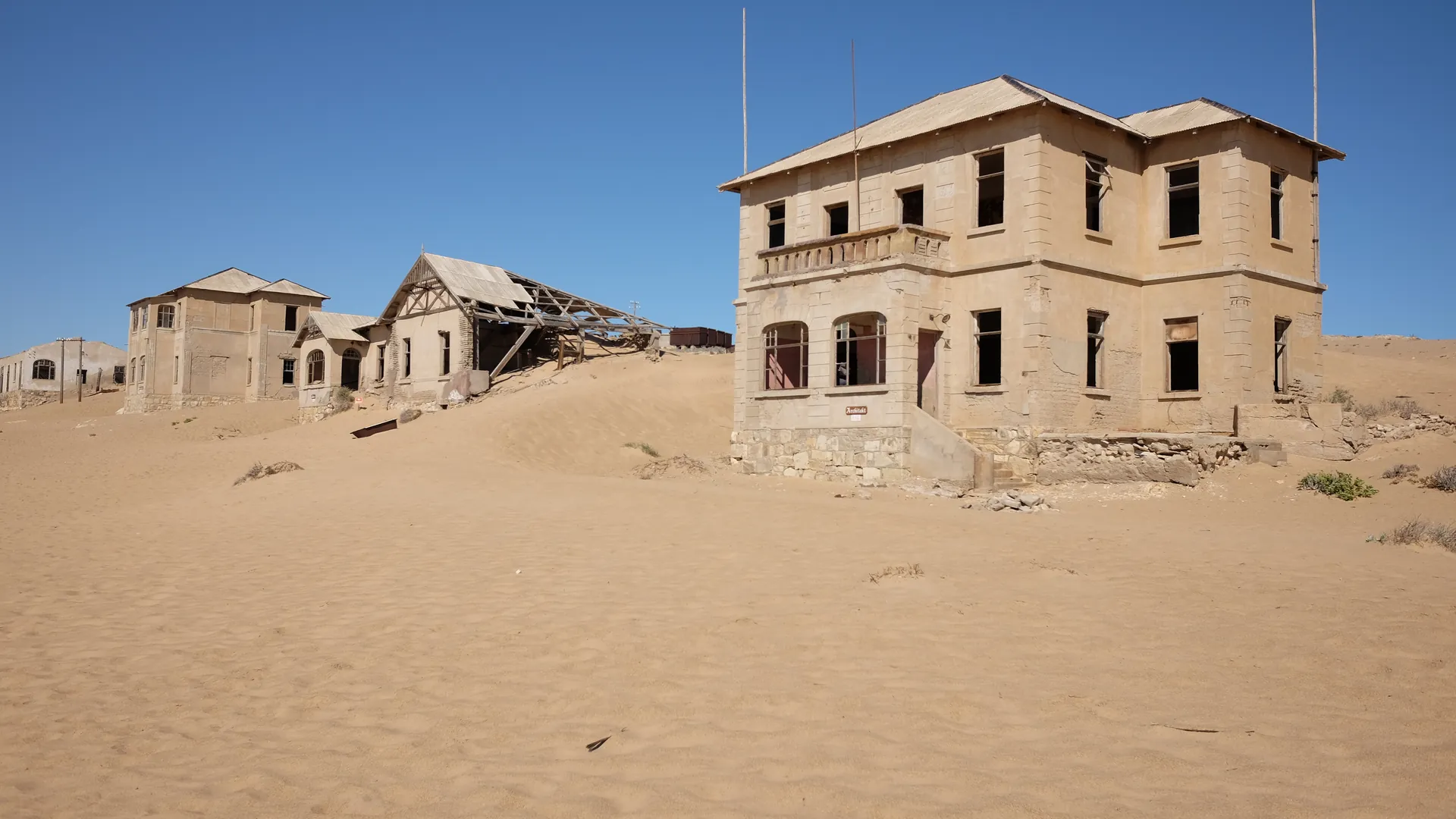
Kolmanskop · the abandoned diamond town in the desertKaras · Lüderitz

Kolmanskop · the abandoned diamond town in the desertJohan Jönsson (Julle) / CC BY-SA 4.0 / cropped

Kolmanskop Ghost Town

Sand creeps into the houses, and the windows look out on desert.

Getting there●●●●●Tough: about 8 hours’ drive from Windhoek; best on a southern loop.

Best timeApr–Oct

Born of a 1908 diamond rush, abandoned by the 1950s, and adored by photographers.

Push open a peeling door and sand is piled halfway up the window, blue wallpaper still on the wall. Diamonds were found here in 1908, and German settlers built a town in the desert with a hospital, ballroom and bowling alley. In the 1950s the mining moved south, the people left, and the desert slowly took the houses back. A row of buildings still stands in the sand; the one on the right was the architect’s house. Take the guided tour, then stay to photograph at your own pace — low morning light through the broken windows is best.

GETTING THEREAbout 8 hours’ drive from Windhoek to Lüderitz, then about 10 minutes out of town. The site borders the diamond restricted area, so stay on open routes.
GOOD TO KNOWApril to October is cooler. Afternoons are windy and sandy, so come in the morning. Tickets, tour times and photo permits per the site.
SAFETYThis is next to the diamond restricted area, so don’t stray. Old floors and stairs can be unstable — stay out of closed areas.
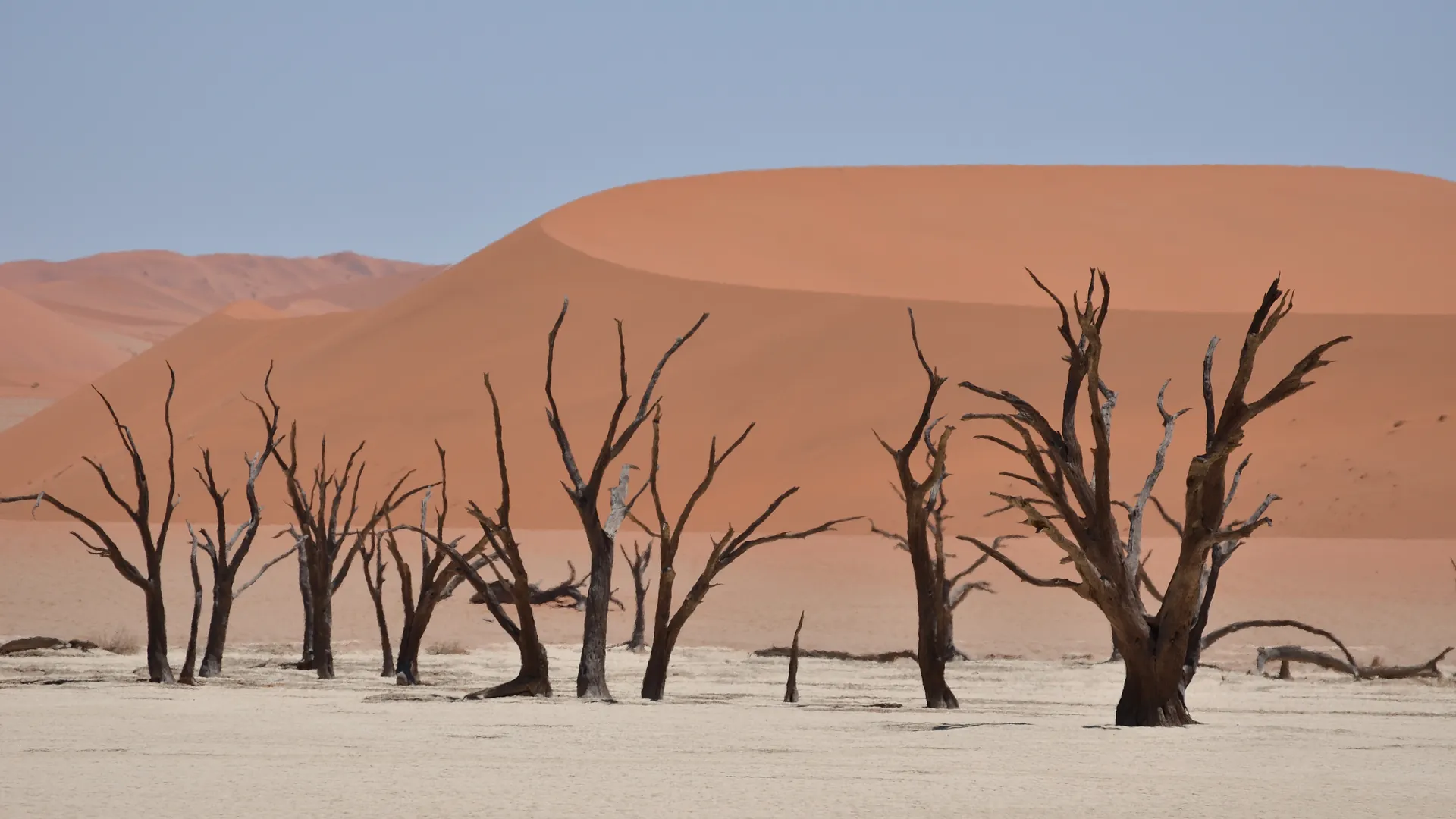
Deadvlei · dead trees below the red dunesHardap · Namib Desert

Deadvlei · dead trees below the red dunesPavel Špindler / CC BY 3.0 / cropped

Deadvlei, Sossusvlei

Black trees stand for centuries on white clay, beneath orange dunes.

Getting there●●●●○Harder: 5–6 hours’ drive from Windhoek, with deep sand at the end.

Best timeApr–Oct

One of the world’s most surreal landscapes, and Namibia’s signature image.

White clay cracks underfoot, a dozen or so black trees stand in the middle, and behind them rise some of the world’s tallest dunes, the colours almost too clean to be real. Centuries ago the river changed course and the trees died of thirst; the air is so dry they’ve never rotted. Come early: at sunrise the light rakes the dune crests and the reds are deepest. Dune 45 is on the same road, and a dawn balloon gives the full panorama. After dark this is an International Dark Sky Reserve, with the Milky Way overhead.

GETTING THERE5–6 hours’ drive from Windhoek to Sesriem gate. Tar runs to the 2WD car park; the last 5 km or so is deep sand, so take the 4×4 shuttle, then walk about 1 km.
GOOD TO KNOWApril to October is most comfortable; summer middays exceed 40°C. Enter around sunrise. Staying inside the park allows earlier entry, and camps book out far ahead. New moon is best for stars.
SAFETYCarry plenty of water and a hat, and avoid walking the sand at noon. Don’t drive an ordinary car into the deep sand. Please don’t touch or climb the ancient trees.
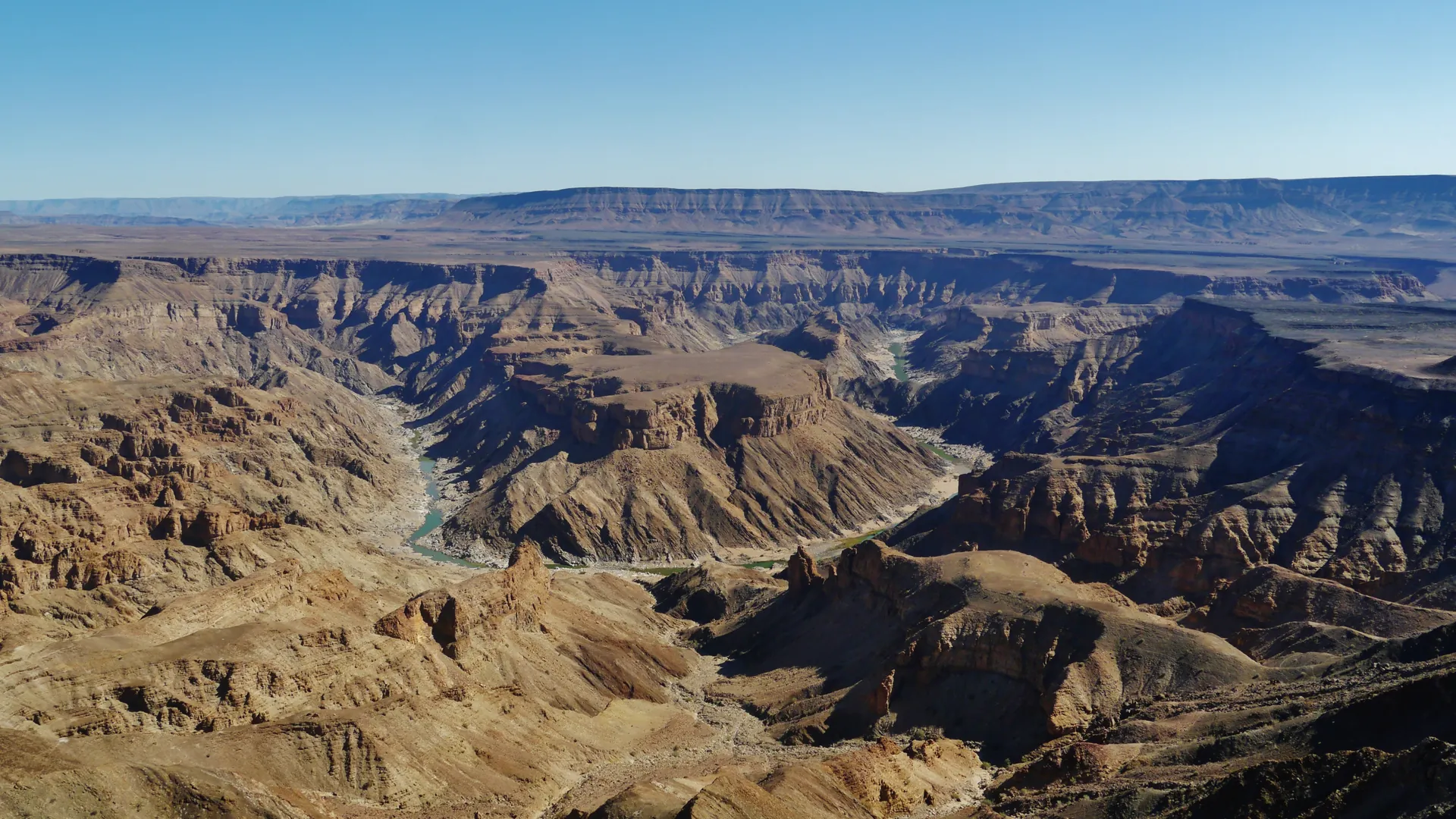
Fish River Canyon · a winding river-cut canyonKaras · southern Namibia

Fish River Canyon · a winding river-cut canyonZairon / CC BY-SA 4.0 / cropped

Fish River Canyon

A river has torn a winding gash through the desert.

Getting there●●●●●Tough: 7–8 hours’ drive from Windhoek, mostly on gravel.

Best timeMay–Sep

Africa’s largest canyon, with a fraction of the Grand Canyon’s crowds.

At the lookout the earth simply falls away, the river curling hundreds of metres below and the rock layers showing hundreds of millions of years. Fish River Canyon is Africa’s largest, about 160 km long and about 550 metres deep, with little but the sound of the wind. Fit hikers can tackle the roughly five-day trail, by permit and in the cool season only. Most people see it from the main viewpoint, then drive to the hot springs at Ai-Ais in the south. With luck, you may see meerkats along the way.

GETTING THERE7–8 hours’ drive from Windhoek via Keetmanshoop, mostly on gravel. Allow plenty of time and don’t drive at night.
GOOD TO KNOWMay to September is best and the only time the hiking trail normally opens — apply early. Dawn and dusk have the best light. Viewpoint facilities per the site.
SAFETYThe rim has no full railing, so stay back. Summer is extremely hot, so carry water. Fuel stations are few — fill up when you can. There’s no phone signal in remote areas.
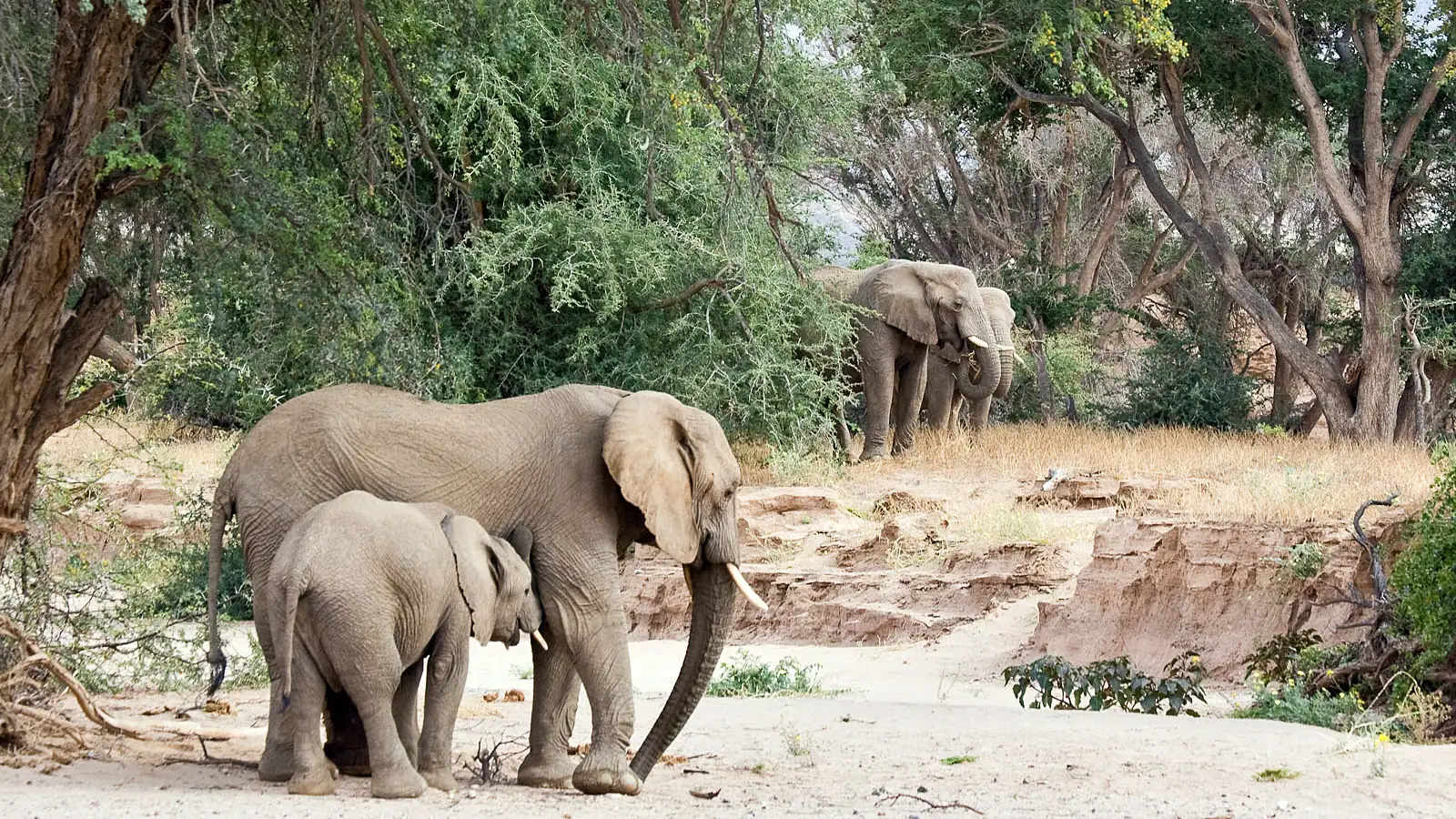
Damaraland · a desert elephant and calf on a dry riverbedErongo & Kunene · Huab River

Damaraland · a desert elephant and calf on a dry riverbedGreg Willis / CC BY-SA 2.0 / cropped

Damaraland · Desert Elephants

Elephants walking a dry riverbed, in one of the few places on earth you can see it.

Getting there●●●●●Tough: 6–7 hours’ drive, and a guide is needed to find the elephants.

Best timeApr–Oct

Unfenced wilderness and a very different elephant experience from Etosha.

Along a dry riverbed, a mother elephant leads her calf slowly towards you, the trees on either side surviving on water underground. Desert elephants aren’t a separate species, but African elephants adapted to the desert, able to walk great distances for water. Unlike Etosha, there are no fences here and you track them along the riverbeds, which feels like an expedition. Nearby Twyfelfontein has UNESCO-listed rock engravings of animals thousands of years old, and you can visit Himba communities on tours with a fair-benefit arrangement.

GETTING THERE6–7 hours’ drive from Windhoek, 4–5 from Swakopmund. Riverbeds need a 4×4, so go with a local guide or lodge.
GOOD TO KNOWApril to October is best, while riverbeds are dry; flash floods can come in the rains. Choose community visits that give back, and ask before photographing people.
SAFETYThese are wild elephants: keep your distance with a guide and don’t drive up to them. There’s no signal out here, so carry water and a spare tyre.
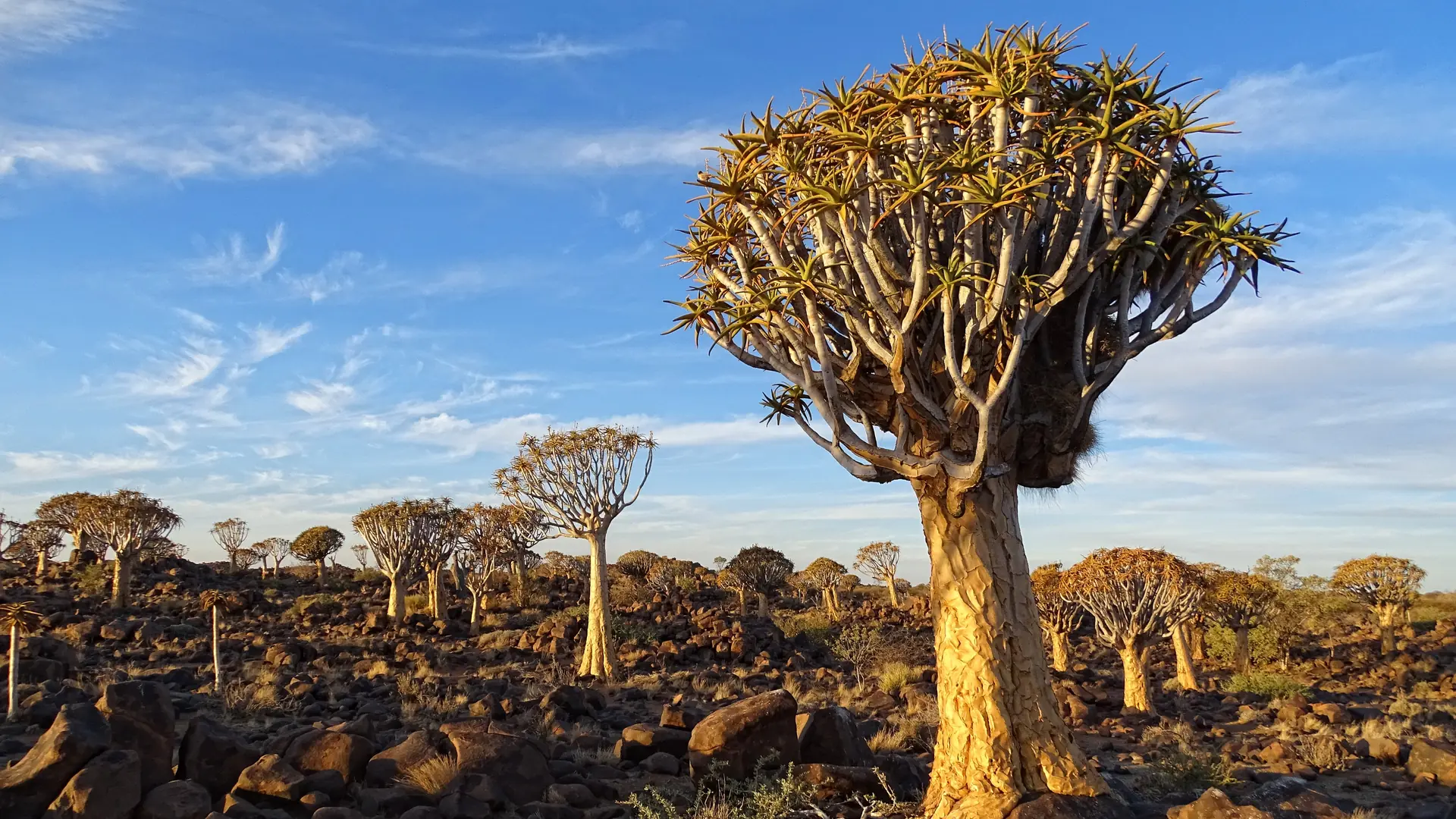
Quiver Tree Forest · giant aloes on black doleriteKaras · near Keetmanshoop

Quiver Tree Forest · giant aloes on black doleriteBjørn Christian Tørrissen (bjornfree.com) / CC BY-SA 4.0 / cropped

Quiver Tree Forest

Giant aloes rising from piles of black rock.

Getting there●●●●●Tough: 5–6 hours’ drive from Windhoek; a stop on the southern loop.

Best timeMay–Sep

A rare “forest” of giant aloes, and one of the best stargazing stops in the south.

A thick trunk and a crown like a flowering parasol: this isn’t really a tree but a giant aloe. The San used its branches as quivers for their arrows, hence the name. The forest stands on a private farm near Keetmanshoop, with about 250 of them, declared a national monument in 1955. The dark mass in the main tree’s crown is probably a sociable weaver nest. Next door, the Giant’s Playground has black boulders stacked like building blocks. At dusk the trees turn to silhouettes, and the night sky is superb.

GETTING THERE5–6 hours’ drive from Windhoek to Keetmanshoop, then about 15 minutes to the farm. There’s an entry fee; hours per the farm.
GOOD TO KNOWMay to September has pleasant days but cold nights. Sunset is best, so stay on or near the farm. It combines well with Fish River Canyon and Lüderitz.
SAFETYTake care on the rocks, and stay in the open areas of this private farm. Watch for animals if driving at night.
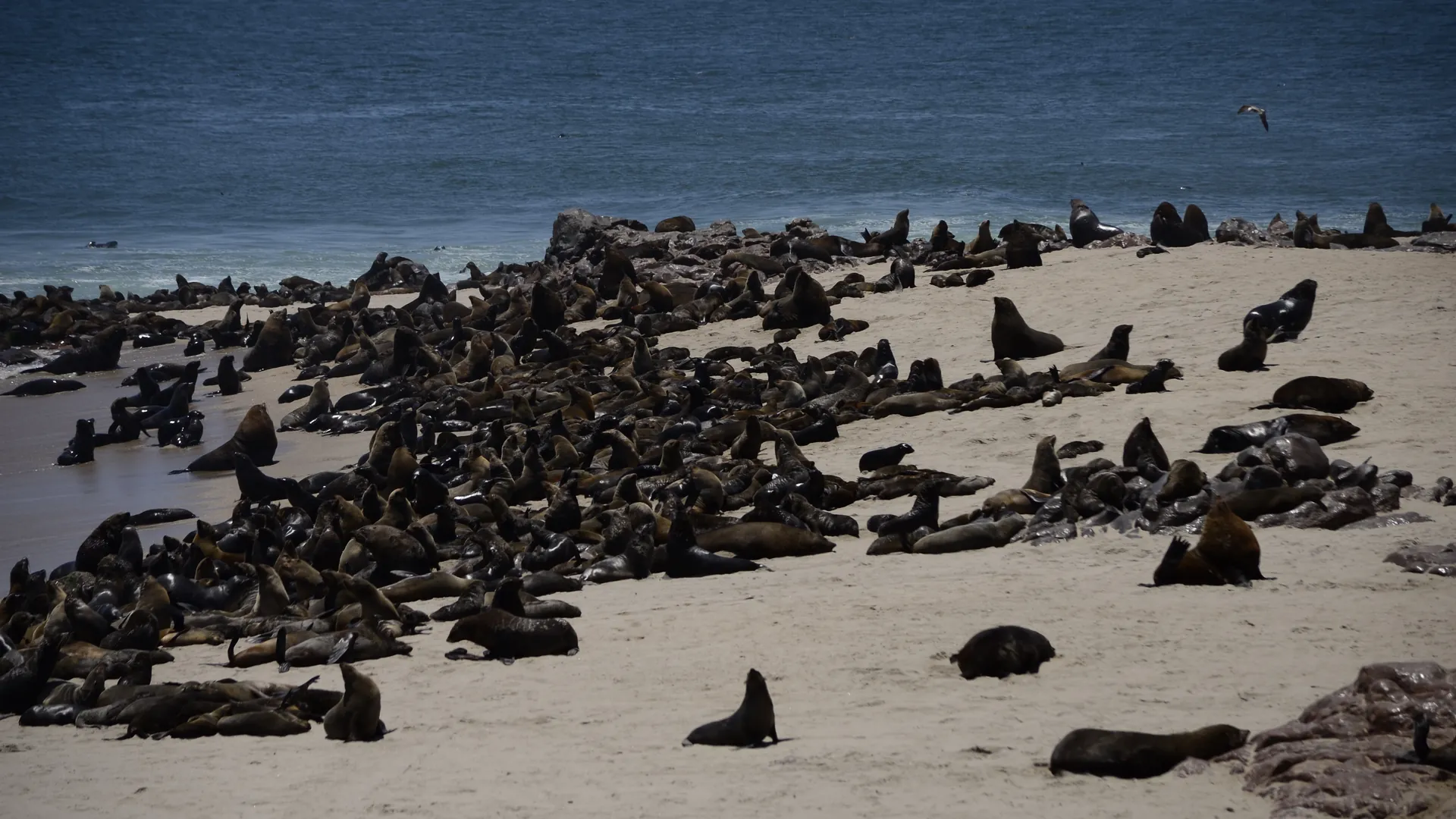
Skeleton Coast · seals packing Cape CrossErongo · Atlantic coast

Skeleton Coast · seals packing Cape CrossAna Raquel S. Hernandes / CC BY-SA 2.0 / cropped

Skeleton Coast · Cape Cross

Tens of thousands of seals pack the beach — the sound and smell arrive first.

Getting there●●●●○Harder: 1½–2 hours by car from Swakopmund.

Best timeGood all year

One of the world’s biggest seal colonies, where desert meets a fog-bound coast.

You hear them before you’re out of the car, the smell is strong, and then the beach is packed with seals piled on one another, pups rolling in the surf. Cape Cross is named after the stone cross raised here in 1486 by the Portuguese navigator Diogo Cão, with a replica on site. Further north, the desert meets the sea on the Skeleton Coast, where the cold current brings thick fog and many ships have run aground. The salt road runs dead straight as fog drifts across — the drive itself feels like a film.

GETTING THERE1½–2 hours north of Swakopmund on the coastal salt road. The Skeleton Coast Park north of Ugab Gate has permits and time limits.
GOOD TO KNOWSeals are here all year, with most pups in November–December. There’s a reserve entry fee; hours per the site. Salt roads get slippery, so drive slowly.
SAFETYDon’t touch, feed or take selfies with the seals: they bite, and there have been rabies outbreaks. Salt roads look smooth but skid easily, and rollovers happen.

Things to do

Add these experiences to your trip. Full details are on your quiz results page.

  • Sunrise climb of Dune 45: Climb in the footprints ahead as the sun comes up behind the sand sea.
  • Hot-air balloon over the Namib: As the sun rises, your balloon’s shadow slips across the red sand sea.
  • Waiting at the waterhole: You don’t have to do anything — the animals come to you.
  • Game drive in Etosha: An elephant and her calf walk right past the vehicle.
  • Quad biking in Swakopmund: Twist the throttle and the dunes become a playground.
  • Sandboarding: Slide all the way from the crest — worth the sand in your shoes.
  • Tandem skydiving: Jump out with desert on one side and the Atlantic on the other.

Not sure which to pick? Take the 4-minute travel-personality quiz and find the one that suits you.

Take the quiz