TOP-TIER TRAVEL中/EN

Northern Vietnam

9 hidden gems in Northern Vietnam

Ha Long, rice terraces & old Hanoi. We picked 9 places in this region — some well known, some few visitors find. Browse at your own pace, then take the quiz when something catches your eye.

TOP-TIER TRAVEL › All hidden gems › Northern Vietnam

Not sure which to pick? Take the 4-minute travel-personality quiz and find the one that suits you.

Take the quiz
Hoan Kiem Lake, Hanoi
First time? Start with Hanoi and Ha Long

Most first-timers spend two or three nights in Hanoi’s Old Quarter and a night on a boat in Ha Long Bay. Pho and egg coffee in the old streets, a dusk lap of Hoan Kiem Lake, then a thousand limestone islands, and you’ve done the classics. Stay longer and head to Ninh Binh or the northern mountains, and you’ll reach the place below that’s truly yours.

Spot details checked: November 2026

Hoan Kiem Lake · Ngoc Son Temple and The Huc BridgeHanoi · Old Quarter

Hoan Kiem Lake · Ngoc Son Temple and The Huc BridgeRadek Kucharski / CC BY 2.0 / cropped

Hoan Kiem Lake, Hanoi

Hanoi doesn’t really begin until the red bridge lights up.

Getting there●○○○○Very easy on your own: about 1 hour from the airport, then everything is walkable.

Best timeOct–Apr

Hanoi’s living room: on weekend nights the roads around the lake close and the whole city comes out to stroll.

Walk to the lake at dusk and the red The Huc Bridge lights up, leading to Ngoc Son Temple on its little island. Legend says Lê Lợi returned a magic sword to a golden turtle here — hence the name, Lake of the Returned Sword. Just north is the Old Quarter, where streets still follow the old one-street-one-trade pattern. Sit on a low plastic stool with a bowl of pho and an egg coffee while the motorbikes hum past your ear.

GETTING THEREAbout 1 hour from Noi Bai Airport by airport bus or Grab. The lake and Old Quarter are walkable.
GOOD TO KNOWOctober to April is most comfortable; bring a jacket in December and January. The streets around the lake usually go car-free on Friday to Sunday evenings — check local notices.
SAFETYCross the road slowly and steadily — don’t stop or step back, and the motorbikes will flow around you. Watch phones and bags in crowds.
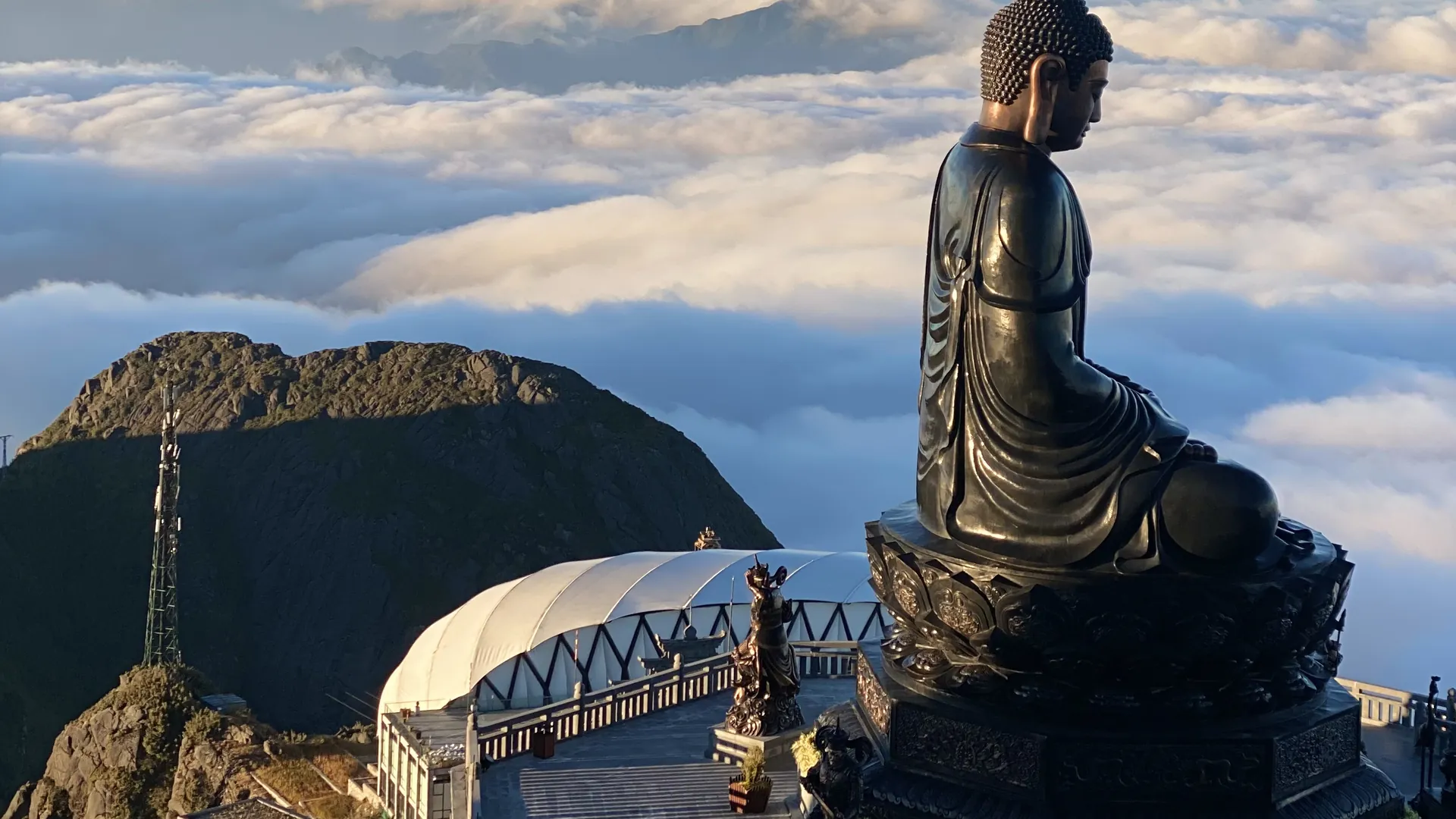
Sapa · the great Buddha above the clouds on FansipanLao Cai · Sapa

Sapa · the great Buddha above the clouds on FansipanFrancesco Galzerano / CC BY-SA 4.0 / cropped

Sapa · Mount Fansipan

Ride a cable car through the clouds to the top of Indochina.

Getting there●●○○○Easy on your own: 5–6 hours from Hanoi to Sapa by bus, then the cable car.

Best timeMar–May, Sep–Nov

At 3,143 metres, the “Roof of Indochina” — no climbing gear needed.

The cable car lifts out of the Sapa valley, the terraces shrinking below, until the whole cabin slips into cloud. Then you break through to a sea of white, a giant Buddha seated above it and temples and stone steps rising in tiers. Fansipan, at 3,143 metres, is Indochina’s highest peak; from the cable car you walk the steps or take a small funicular to the summit. Back in Sapa, walk down to the ethnic-minority villages among the terraces, and in the evening watch the mist drift into town.

GETTING THERE5–6 hours from Hanoi by sleeper bus, or night train to Lao Cai then about 1 hour by road. Sapa town has a mountain train or shuttles to the cable-car station.
GOOD TO KNOWMarch–May and September–November give the best chance of clear skies and a cloud sea. The summit is much colder than town, so bring a windproof jacket even in summer. The cable car can stop in bad weather; check official hours.
SAFETYThe air is thin at the top, so go slowly. Steps get slippery. Trekking up requires a qualified guide — don’t go alone.
Ha Long Bay · a traditional junk at duskQuang Ninh · Gulf of Tonkin

Ha Long Bay · a traditional junk at duskAndrew Crump / CC BY 2.0 / cropped

Ha Long Bay

Fall asleep on a junk and wake among a thousand limestone islands.

Getting there●●○○○Easy with a cruise: shuttles from Hanoi take about 2½ hours to the pier.

Best timeMar–May, Sep–Nov

A UNESCO seascape of stone pillars — stay overnight for the empty early-morning water.

More than a thousand limestone islets rise straight out of the sea while wooden junks drift between them. The way to do Ha Long is to sleep aboard: board in the afternoon, paddle a kayak through a rock arch, climb into a stalactite cave, then watch the sun drop between the islands from the deck. At dawn, when most people are still asleep, the water lies flat as a mirror — the bay day-trippers never see.

GETTING THERECruise companies run shuttles from Hanoi’s Old Quarter, about 2½ hours by expressway to the pier. Public buses also reach Ha Long city.
GOOD TO KNOWMarch to May and late September to November are the steadiest. Spring is often misty; summer is hot but clear. June to October is typhoon season and cruises can be cancelled at short notice by the maritime authorities — confirm with your operator before leaving.
SAFETYChoose a properly licensed boat and find the life jackets when you board. Always wear one in a kayak and stay with the group.
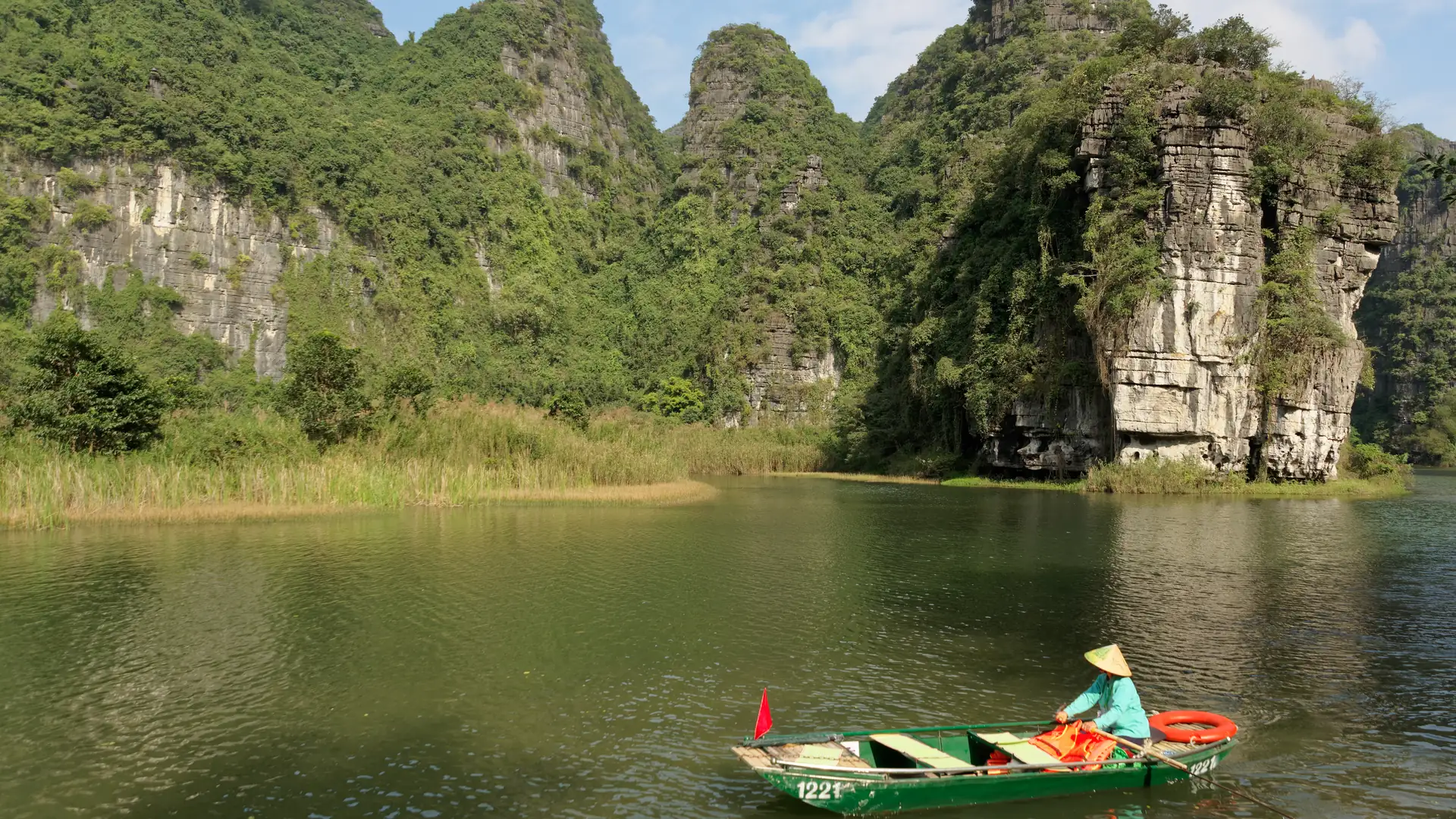
Trang An’s limestone peaks and a small boatNinh Binh · Trang An landscape

Trang An’s limestone peaks and a small boatJakub Hałun / CC BY 4.0 / cropped

Trang An, Ninh Binh

Glide through cave after cave — Ha Long Bay, but on land.

Getting there●●○○○Easy on your own: about 2 hours from Hanoi by bus or train.

Best timeJan–Jun, Sep–Oct

A rare mixed UNESCO site for both culture and nature — “Ha Long Bay on land”.

A rower in a conical hat poles you between green rice fields and waterways. A limestone wall blocks the way, the bow dips, and you slide into a pitch-black cave, coming out in another valley. Trang An is one of Vietnam’s few sites listed for both culture and nature. A boat trip takes 2–3 hours, and some rowers even paddle with their feet. Afterwards, rent a bicycle and ride the field paths to Tam Coc or nearby temples — the hills look best in the late afternoon.

GETTING THEREAbout 2 hours from Hanoi to Ninh Binh by bus or train, then a 20-minute ride to the Trang An pier. Day tours also run from Hanoi.
GOOD TO KNOWLate May to early June turns the rice gold, Tam Coc’s best moment. January to April is cool but often cloudy. Pilgrims crowd the piers after Lunar New Year, so start early.
SAFETYWear the life jacket and stay seated. Cave ceilings are low — duck when you’re told.
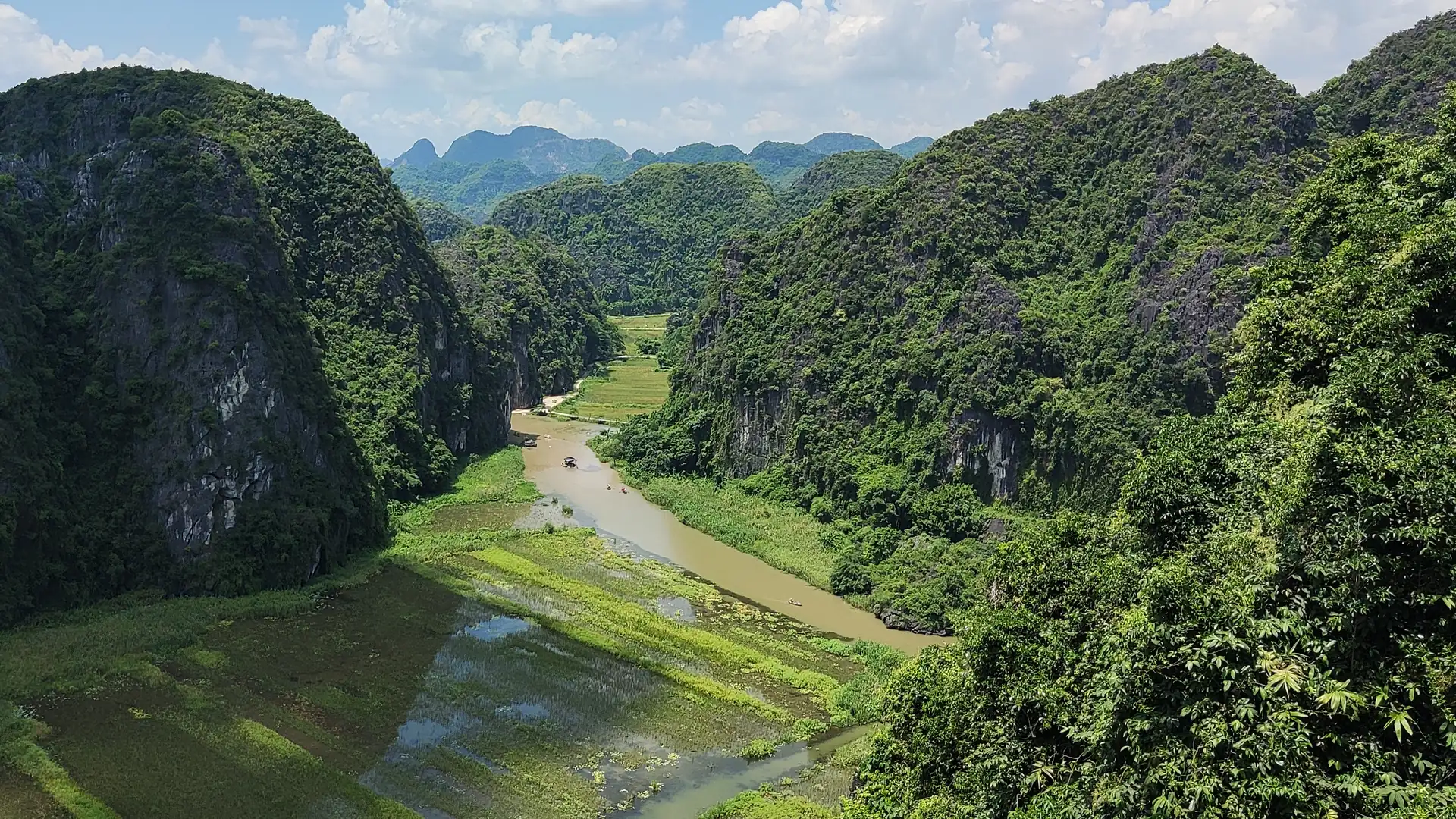
Looking down on the Tam Coc valley from Hang MuaNinh Binh · Tam Coc

Looking down on the Tam Coc valley from Hang MuaShyamal / CC BY-SA 4.0 / cropped

Hang Mua Viewpoint

Five hundred steps, and the whole Tam Coc valley opens beneath you.

Getting there●●○○○Easy on your own: about 15 minutes by bike or car from Tam Coc.

Best timeMay–Jun, Sep–Oct

Half an hour’s climb for the best view in Ninh Binh.

Stone steps follow the ridge past a long stone dragon sprawled along the rock, about five hundred of them to the top. Below, the river winds between limestone peaks and rice paddies stretch into the distance, with the Tam Coc you just boated through at your feet. The light is the thing here: mist in the valley at dawn, the hills turning gold at dusk. Come in late May or early June and the valley’s rice is turning — the moment everyone wants to see.

GETTING THEREAbout 15 minutes by car or bicycle from Ninh Binh city or Tam Coc to the entrance — easy to add to a Tam Coc day.
GOOD TO KNOWRice is gold from late May to early June; the second crop in September–October is lovely too. Summers are hot, so climb early or late and carry water. Opening times per the site.
SAFETYThe summit rocks are sharp and slippery with no full railing. Stay back from the edge for photos and skip it after rain.
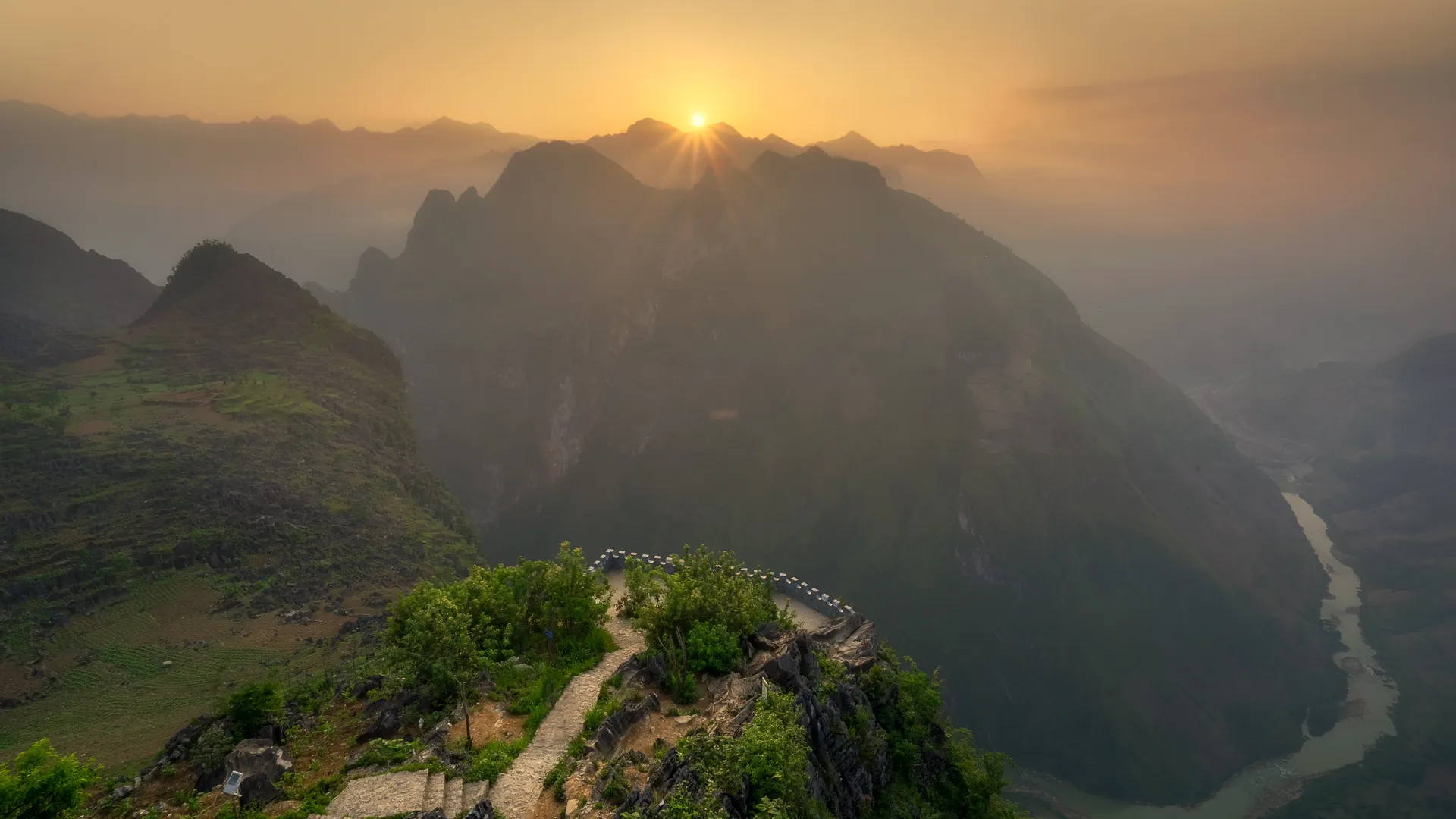
Sunrise at Ma Pi Leng Pass, Ha GiangTuyen Quang (formerly Ha Giang) · Dong Van plateau

Sunrise at Ma Pi Leng Pass, Ha GiangHoach Le Dinh / CC0

Ha Giang · Ma Pi Leng Pass

The road clings to the cliff, a thread of river hundreds of metres below.

Getting there●●●●○Challenging: 6–7 hours by sleeper bus from Hanoi; hire a car or licensed guide for the loop.

Best timeSep–Nov, Mar–May

Vietnam’s northernmost stone plateau, where the road itself is the attraction.

The sun climbs behind the valley as the road twists up the rock face of Ma Pi Leng Pass, the river below just a line. This is the Dong Van Karst Plateau, a UNESCO Global Geopark at Vietnam’s northern tip: grey limestone mountains in layer after layer, Hmong villages tucked between the rocks. Most people spend three or four days on the loop from Ha Giang city, passing Dong Van’s old street and highland markets. In October and November pink buckwheat flowers cover the slopes — worth waiting for.

GETTING THERE6–7 hours by sleeper bus from Hanoi to Ha Giang city, then join a loop tour. The province merged into Tuyen Quang in 2025, so you may see both names.
GOOD TO KNOWOctober–November brings the buckwheat flowers; March–May is also pleasant. December–January is cold and foggy, and June–August brings landslide risk. Little English is spoken — use a translation app and leave a spare day or two.
SAFETYThe roads are narrow and winding with heavy trucks, and the loop has seen serious crashes. Vietnam requires a locally recognised motorbike licence, and many international permits aren’t accepted, so insurance may not pay out. Hire a car, or ride with a licensed operator’s driver. Don’t climb over barriers for photos.
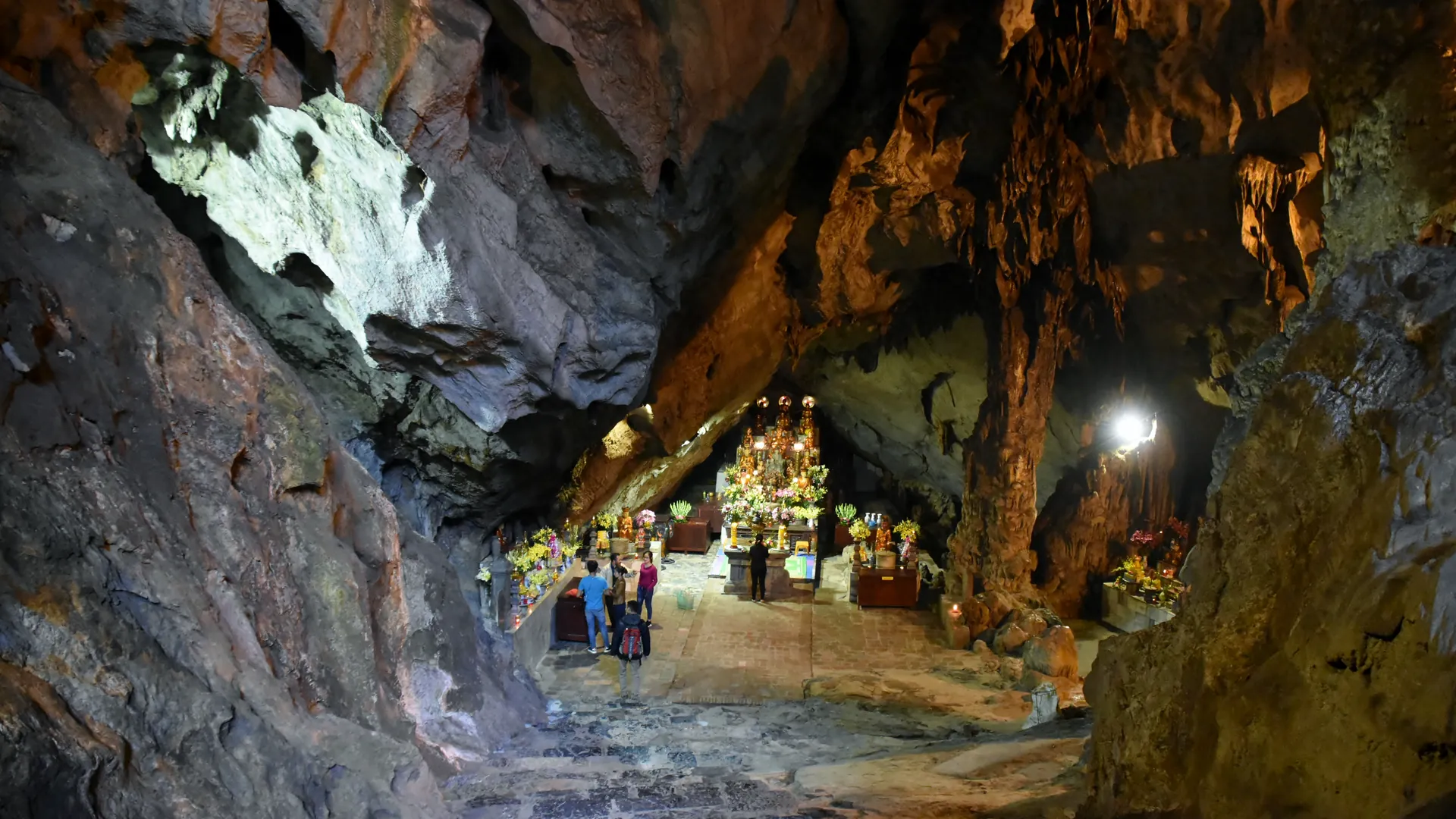
Perfume Pagoda · the shrine inside Huong Tich CaveHanoi · My Duc area

Perfume Pagoda · the shrine inside Huong Tich CaveRichard Mortel / CC BY 2.0 / cropped

Perfume Pagoda

An hour by rowing boat, then a temple inside a mountain cave.

Getting there●●○○○Easy with a tour: about 2 hours each way from Hanoi by car or day tour.

Best timeJan–Apr

One of northern Vietnam’s great pilgrimages, with a temple inside a stalactite cave.

A woman rows your little metal boat up the Yen stream, limestone hills and paddies on both sides, for about an hour before you reach land. Then you climb the mountain path or take the cable car, pass through a vast cave mouth, and find a temple built among the stalactites, incense smoke curling under the rock. Northern Vietnam’s Buddhists hope to come here once in their lives. The pilgrimage festival starts on the sixth day of the lunar new year — in 2027, roughly mid-February to early May. Come then for the atmosphere, or avoid it for the quiet.

GETTING THEREAbout 2 hours each way by car or day tour from Hanoi to the pier, then about 1 hour by boat. Walk or ride the cable car on the mountain.
GOOD TO KNOWDuring the festival (first to third lunar months) crowds are huge, especially at weekends, with queues for boats and the cable car. October to December is calmer. Times per local notice.
SAFETYThis is a place of worship: dress modestly and keep your voice down. Paths and cave steps are slippery, so wear shoes with grip.
Golden rice terraces in Mu Cang ChaiLao Cai (formerly Yen Bai) · Mu Cang Chai

Golden rice terraces in Mu Cang ChaiSasint / CC0

Mu Cang Chai Rice Terraces

Terrace above terrace, climbing from the valley floor into the sky.

Getting there●●●●○Challenging: 6–7 hours by road from Hanoi on mountain roads.

Best timeSep–Oct, May–Jun

Quieter than Sapa, with whole mountains turning gold at harvest.

Over generations the Hmong have carved entire mountains into steps. From mid-September to early October the rice ripens and the slopes turn from green to gold, little wooden huts sitting on the golden staircase; in May and June the flooded terraces become rows of mirrors. There’s no sight list here. Walk the village paths, watch the harvest and the children leading buffalo, then sit outside your homestay as the valley slowly darkens.

GETTING THERE6–7 hours from Hanoi by long-distance bus or private car on winding roads — take something for motion sickness. You can also hire a car from Sapa.
GOOD TO KNOWMid-September to early October is the gold season; May–June is the flooded season, and timing shifts a week or two each year. Yen Bai merged into Lao Cai in 2025. Little English is spoken, so book ahead and use a translation app.
SAFETYField edges are narrow and slippery; don’t walk into the rice. Rain can bring landslides, so ask your host about the road before leaving.
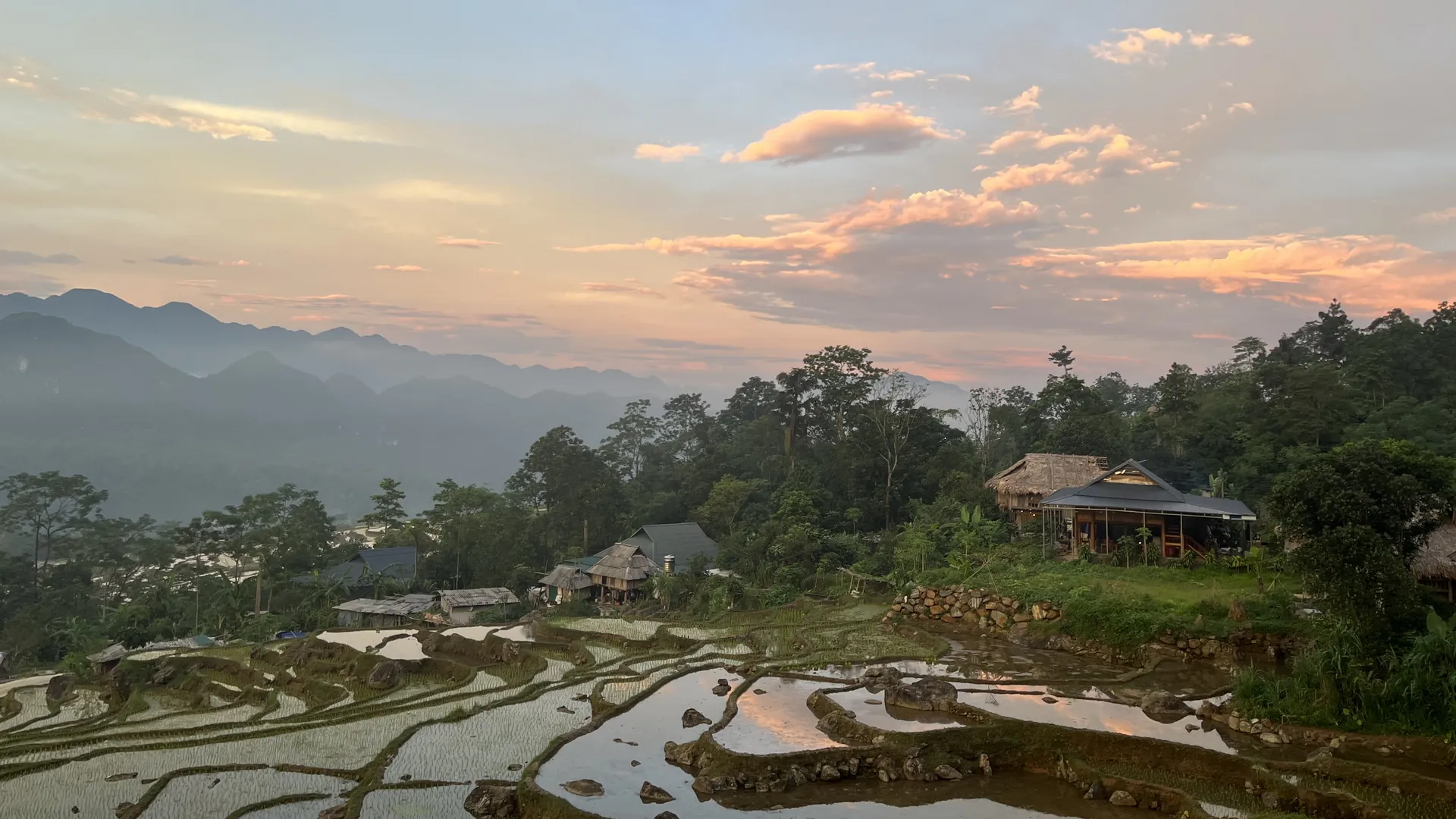
Pu Luong · terraces and stilt houses at duskThanh Hoa · Pu Luong

Pu Luong · terraces and stilt houses at duskWakada111 / CC BY-SA 4.0 / cropped

Pu Luong Nature Reserve

Stilt houses, paddies, a creaking waterwheel — and no signal till morning.

Getting there●●●○○Some planning: about 4 hours from Hanoi by car or lodge shuttle.

Best timeMay–Jun, Sep–Oct

The valley Hanoians escape to at weekends, still missed by the big tour groups.

Evening light falls on newly planted paddies, mist hangs on the far hills, and the stilt houses light up one by one. Pu Luong has been home to the Thai people for generations; by the streams stand big bamboo waterwheels creaking water up into the fields. The routine is simple: cycle or walk through the villages, feel the breeze on a bamboo bridge, come back to a home-cooked meal. It’s far quieter than Sapa and closer to Hanoi — ideal for two extra nights after Ninh Binh.

GETTING THEREAbout 4 hours from Hanoi by private car or a lodge shuttle; about 3 hours by car from Ninh Binh.
GOOD TO KNOWMay–June and September–October are best for the rice, shifting a week or two each year. Evenings are cool, so bring a light jacket. Book ahead and use a translation app.
SAFETYThe roads wind, so don’t ride at night. Ask locals before swimming in streams.

Not sure which to pick? Take the 4-minute travel-personality quiz and find the one that suits you.

Take the quiz