TOP-TIER TRAVEL中/EN

Japan · Okinawa

10 hidden gems in Okinawa

Islands & Ryukyu. We picked 10 places in this region — some well known, some few visitors find. Browse at your own pace, then take the quiz when something catches your eye.

TOP-TIER TRAVEL › All hidden gems › Japan › Okinawa

Not sure which to pick? Take the 4-minute travel-personality quiz and find the one that suits you.

Take the quiz
Shureimon Gate
First time? Start with the classics

You can't go wrong doing a first lap of Kokusai-dori, Shuri Castle, Churaumi Aquarium and Kouri Island. The main island is long — the northern sights are two hours' drive one way — and the outer islands need another flight or ferry, so save just a day or two for the place below that's truly yours.

Looking for a place to stay in this area? Start here:

Spot details checked: October 2026

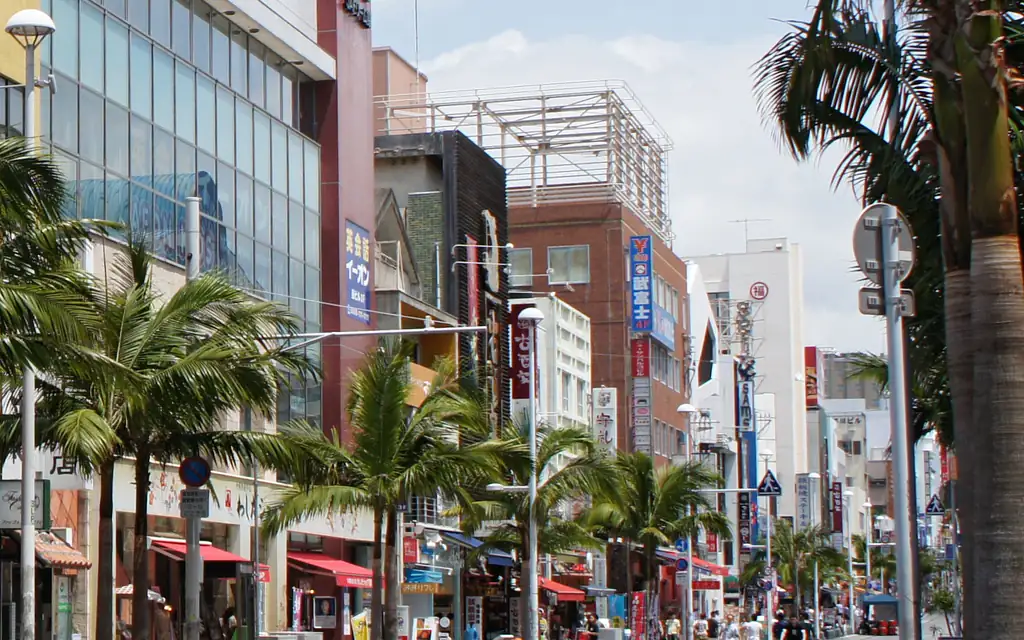
Palm trees and shops along Kokusai-dori in NahaNaha, Okinawa

Palm trees and shops along Kokusai-dori in Naha

Kokusai-dori, Naha

The Miracle Mile that grew out of the ruins.

Getting there●○○○○Very easy on your own: about 15 minutes by monorail from Naha Airport; the street is right outside the station.

Best timeGood all year

First time in Okinawa? Walk Kokusai-dori at least once.

Walk Kokusai-dori with music spilling from shop doorways, the sweet smell of purple sweet potato tarts and the spice of taco rice drifting past, crowds moving slowly in the subtropical sun. Kokusai-dori is a main street in central Naha, about 1.6 km long. Rebuilt from ruins after the war, it grew so fast it was nicknamed the “Miracle Mile.” Today it's lined with souvenir shops, restaurants and street food: buy purple sweet potato tarts, brown sugar and awamori, or try Okinawa soba and taco rice. Turn into the side lanes and you're in the arcades around Makishi Public Market, where you pick seafood downstairs and a restaurant upstairs cooks it and brings it to your table piping hot. From ruins to today's bustle, this mile deserves to be walked end to end.
GETTING THEREFrom Naha Airport, take the Yui Rail monorail to Kenchomae or Makishi station (about 15 minutes); Kokusai-dori is right outside.
GOOD TO KNOWIt's liveliest at night, with most shops open late — perfect for an evening stroll. There are many souvenir shops, so compare prices for the same item.
SAFETYThe street is busy with both people and cars — cross at crosswalks. The summer sun is strong; wear sunscreen and stay hydrated.
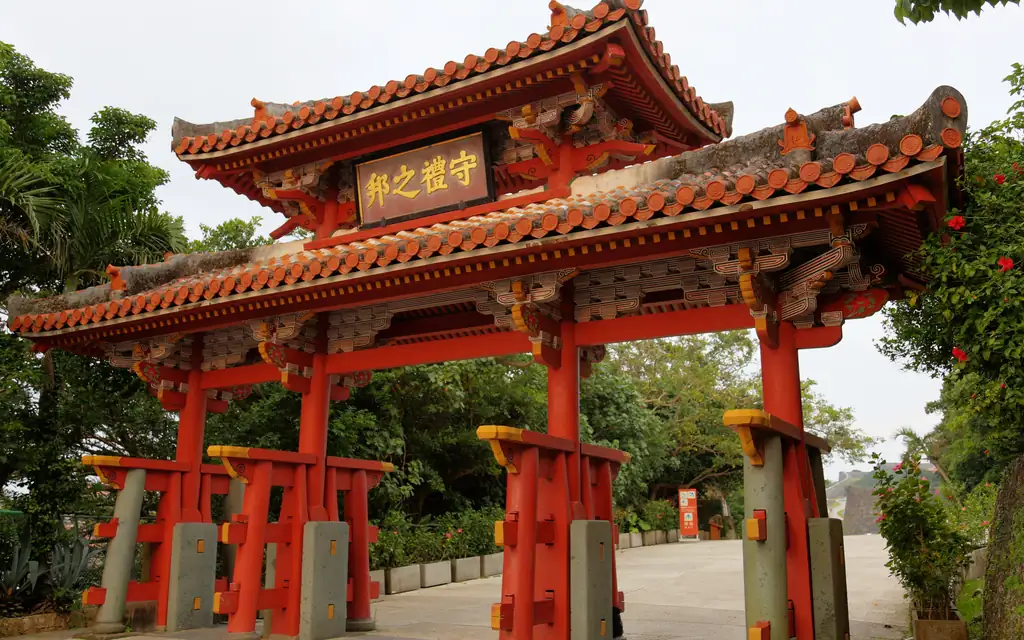
Shureimon gate at Shuri CastleNaha, Okinawa

Shureimon gate at Shuri Castle

Shureimon Gate, Shuri Castle

The gate of the Land of Propriety, waiting for its castle to return.

Getting there●○○○○Very easy on your own: about 30 minutes by monorail from Naha Airport, then a 15-minute walk.

Best timeGood all year

If you're in Naha, set aside half a day for Shuri Castle.

Climb the stone slope and the vermilion Shureimon gate appears, its plaque reading “Land of Propriety” hanging beneath the eaves as a southern breeze rustles the leaves. Shuri Castle was the royal seat of the Ryukyu Kingdom for about 450 years, blending Chinese and Japanese architecture. In 2000 the castle site was registered as a World Heritage Site together with other Ryukyu Kingdom sites. The Shureimon gate in the photo is the castle's emblem. The main hall burned down in a 2019 fire; restoration work is underway, with reopening expected in late November 2026. Shureimon itself was not damaged. After the castle grounds, walk the Kinjo-cho stone-paved road and visit Tamaudun, the royal mausoleum; on those stones it feels like stepping back into the kingdom. The moment the royal castle rises again is worth witnessing with your own eyes.

GETTING THEREFrom Naha Airport, take the Yui Rail monorail to Shuri station (about 30 minutes), then walk about 15 minutes or take a bus.
GOOD TO KNOWThe restored main hall of Shuri Castle is set to open to the public in late November 2026 — the first chance to see it whole since the fire, and well worth it. Expect crowds at first; check the official site for how visits work.
SAFETYThe castle grounds have many stone steps and paths that get slippery in the rain — wear comfortable shoes.
American Village in Chatan lit up at nightChatan, Okinawa

American Village in Chatan lit up at night

American Village, Chatan

In American Village, wait for the sun to sink into the western sea.

Getting there●●○○○Easy on your own: 40 minutes to an hour by bus from central Naha, or about 30 minutes by car.

Best timeGood all year

For a lively seaside evening in Okinawa, head to Chatan.

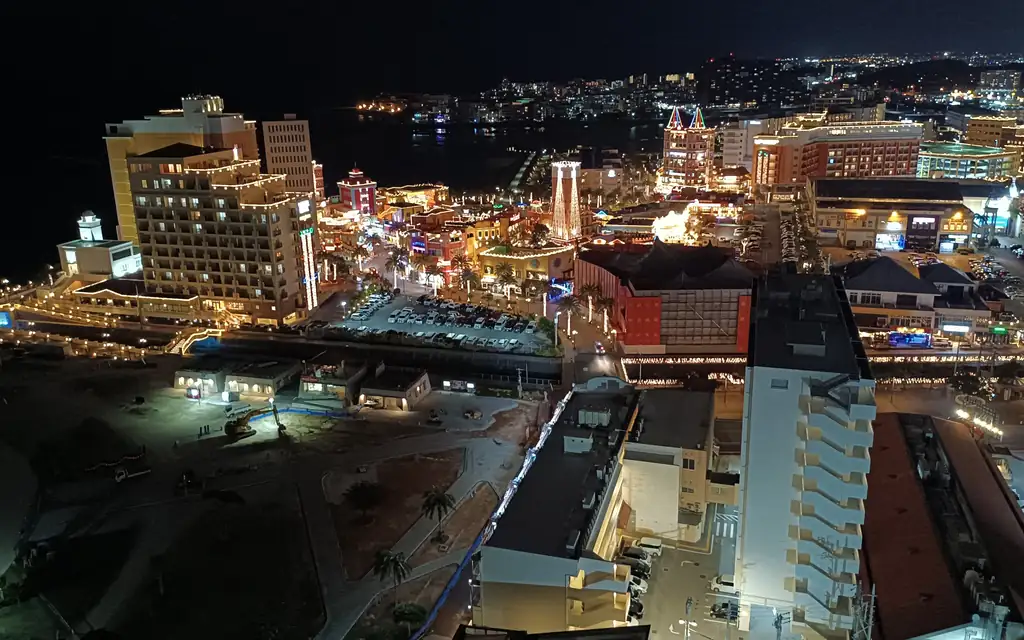
Toward evening, stroll the seawall promenade with a salty breeze off the water as the sun sinks slowly into the western sea, the sky turning from orange to pinkish purple and the buildings behind you lighting up one by one. Chatan sits next to a US military base. American Village is a shopping district built on reclaimed land, with architecture that mixes American and southern European touches; restaurants, clothing shops, general stores and hotels are all clustered here. Right next to it is a west-facing beach and seawall promenade, lovely at sunset, and at night the whole area lights up and stays lively until late. In Okinawa, wandering down to the sea for a sunset like this is the most luxurious kind of everyday.

GETTING THEREFrom central Naha, about 40 minutes to an hour by bus, or about 30 minutes by car.
GOOD TO KNOWSunset and the lit-up Ferris wheel at night are the most atmospheric times. Buses get stuck in traffic, so allow extra time from Naha, and check the last bus back.
SAFETYThe seawall is dim at night — don't sit on the unfenced edge, and don't go into the sea after drinking.
Irabu Bridge stretching across turquoise waterMiyakojima, Okinawa

Irabu Bridge stretching across turquoise water

Irabu Bridge, Miyako

Three and a half kilometers of road across Miyako blue.

Getting there●●●○○Some planning: you need to fly to Miyako, direct to Shimojishima Airport or via Naha; a rental car is easiest on the island.

Best timeApr–Oct

On Miyakojima, drive across Irabu Bridge at least once.

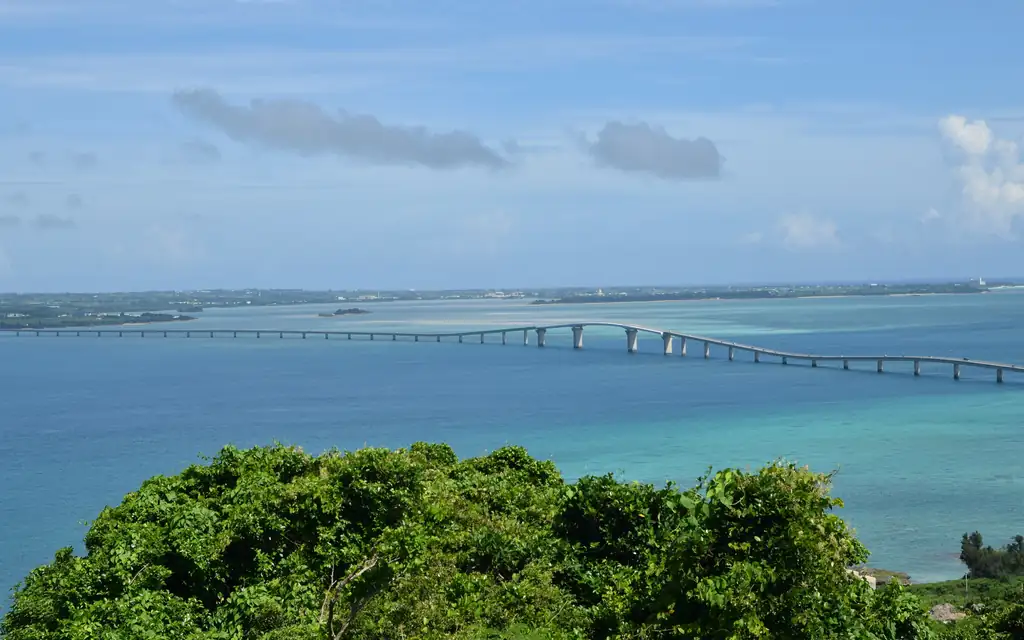
Drive onto the bridge and suddenly there's nothing on either side but sea, pale blue, emerald and deep blue laid out in layers, wind pouring through the windows as the road arches ahead as if heading into the sky. Irabu Bridge links Miyakojima and Irabujima. At about 3.5 km, it's one of the longest toll-free bridges in Japan. Its middle section arches high so boats can pass beneath, and on both sides lies the famous “Miyako blue” sea, its layers sharply defined on a clear day. Across the bridge, Irabujima and Shimojijima have several more spots for gazing at the sea. For those few minutes on the bridge, you'll want every window down, to keep this blue with you.

GETTING THERESome international flights land at Miyakojima's Shimojishima Airport, which is very close to Irabu Bridge. You can also fly to Naha and connect to Miyako Airport on a domestic flight. Renting a car is the easiest way to get around the island.
GOOD TO KNOWThe sea is bluest on sunny days with the sun high, most often from April to October. Buses on Miyako are rare, so rent a car. Stopping on the bridge is banned — use the car parks or viewpoints at either end for photos.
SAFETYIt's very windy on the bridge, so take extra care on a scooter or bicycle. The summer UV is intense — protect yourself from the sun.
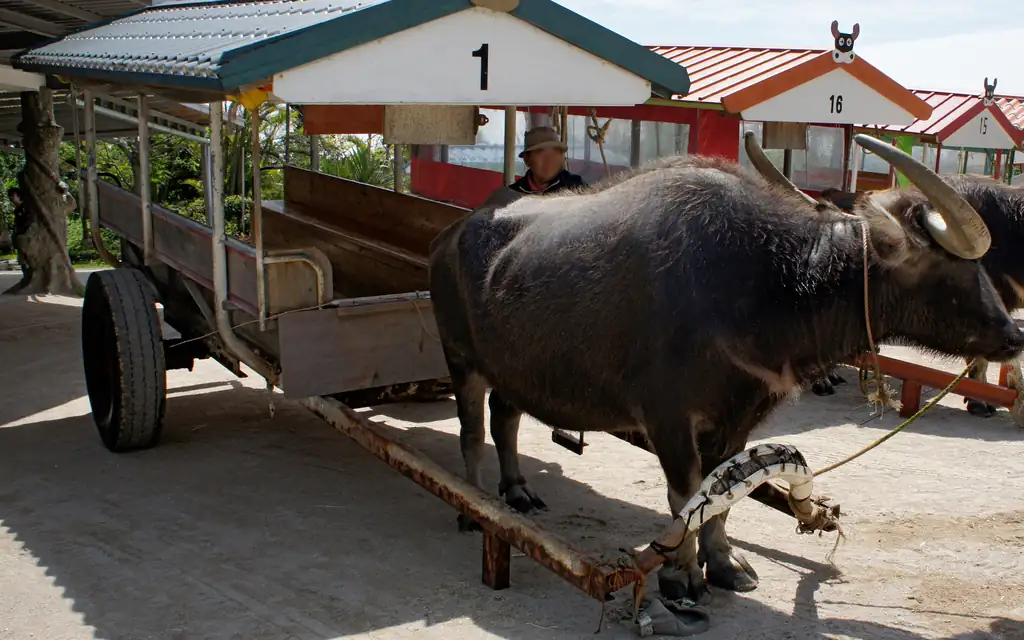
A water-buffalo cart waiting for passengersTaketomi, Okinawa

A water-buffalo cart waiting for passengers

Water-Buffalo Carts to Yubu Island

Cross the sea by buffalo cart, to the sound of a sanshin song.

Getting there●●●○○Some planning: about 40 minutes by boat from Ishigaki to Iriomote, then about 20 minutes by bus; many join a day tour from Ishigaki.

Best timeApr–Oct

When you visit Iriomote, take a buffalo cart over to Yubu Island.

The water buffalo steps slowly into the shallow sea, the cart's wheels parting the water, while the driver urges it on, picks up his sanshin and sings an Okinawan folk song that drifts out across the water. Yubu is a tiny island next to Iriomote, separated by about 400 m of shallow sea. At low tide the water is so shallow you can ride across in a water-buffalo cart, and drivers often play the sanshin and sing as they go. The whole island is a subtropical botanical garden with a butterfly garden and flower beds; a loop takes about an hour or two. The photo shows a buffalo cart waiting for passengers on Yubu. There are very few places in the world where you cross the sea slowly, in a buffalo cart, to a song.

GETTING THERETake a ferry from Ishigaki Port to Ohara Port on Iriomote (about 40 minutes), then a bus for about 20 minutes to the buffalo-cart stop. Many people join a day tour from Ishigaki that also includes the Nakama River mangroves.
GOOD TO KNOWCrossing the shallows by water-buffalo cart is loveliest on a sunny day. Carts run about every 30 minutes during the day, end before evening, and stop in typhoons or strong wind; boats to Iriomote may also be cancelled in rough seas. Few people speak English or Chinese — first-timers may prefer a day tour from Ishigaki; if going solo, check boats, download a translation app and keep some slack. Confirm before you go.
SAFETYThe southern sun is fierce — bring a hat and sunscreen. Don't feed or slap the buffalo.
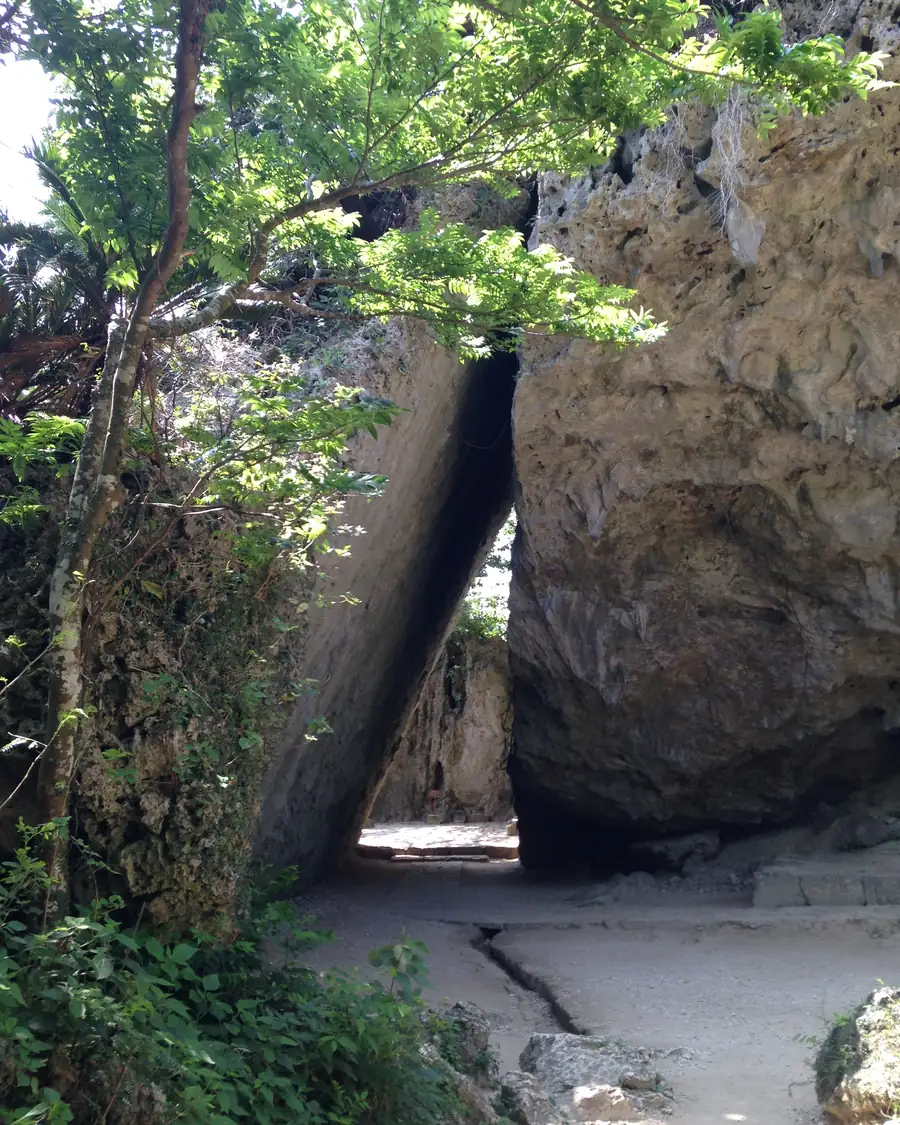
The triangular passage between two giant rocks at Sefa-utakiNanjo, Okinawa

The triangular passage between two giant rocks at Sefa-utaki

Sefa-utaki

Pass between two great rocks and see the island of the gods.

Getting there●●○○○Easy on your own: about an hour by bus or 40 minutes by car from Naha; buy tickets at the nearby visitor centre first.

Best timeGood all year

When you're in southern Okinawa, spend a quiet morning at Sefa-utaki.

The forest path grows quieter and quieter until all you hear is birdsong and the stones under your feet; round a bend and two enormous rocks lean against each other, leaving a triangular gap between them. An utaki is a sacred site where gods are worshipped in Ryukyuan belief, and Sefa-utaki is the highest-ranking of them all. During the Ryukyu Kingdom, state rituals were held here, and it's now a World Heritage Site. The photo shows its most famous spot, Sangui: pass through that triangular passage and you can see Kudaka Island, regarded as the island of the gods, the sea glinting between the trees. To this day, Okinawans still come here to pray. Stand beneath the rocks of Sangui and you'll feel that this land truly has its gods.

GETTING THEREAbout 1 hour by bus from Naha to the “Sefa-utaki Iriguchi” stop, or about 40 minutes by car. Buy your ticket first at the nearby Midori-no-yakata Sefa building, then walk to the entrance.
GOOD TO KNOWMornings are quietest, and the moment you see the sea through the triangular rock is unforgettable. It's still an active sacred site with a few closed 'rest days' each year — check the Nanjo city site first. Please stay quiet and don't touch or climb the rocks or incense burners.
SAFETYThe paths are stone and dirt and get slippery after rain — wear comfortable shoes.
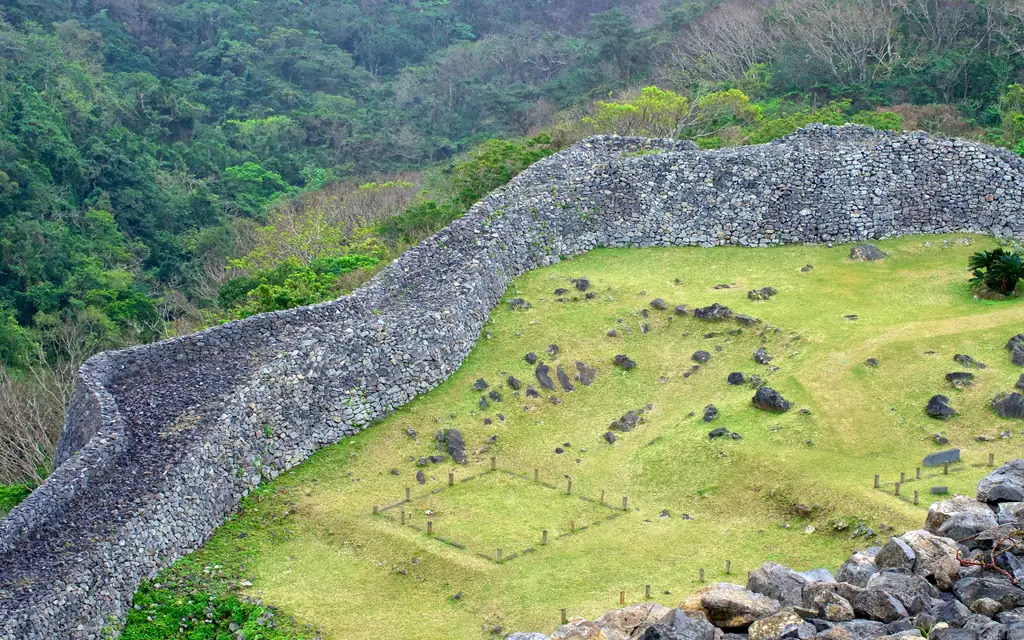
The winding stone walls of Nakijin Castle ruinsNakijin, Okinawa

The winding stone walls of Nakijin Castle ruins

Nakijin Castle Ruins

Japan's earliest cherry blossoms, on winding stone walls.

Getting there●●●○○Doable on your own, but it's a long way: about 2 hours' drive from Naha, or a bus plus a 15-minute walk.

Best timeJan–Feb

When you head to northern Okinawa, climb up to Nakijin Castle ruins on the way.

Climb along the limestone walls as they curve and rise with the land like a sleeping dragon, the breeze from the sea carrying the scent of grass and trees. Nakijin Castle was the seat of the King of Hokuzan before the Ryukyu Kingdom was unified. Its limestone walls, about 1.5 km long and built up layer by layer, make it one of Okinawa's most iconic castle sites, and it's a World Heritage Site along with Shuri Castle and others. From late January to early February, the castle's Taiwan cherry trees bloom, some of the earliest cherry blossoms in Japan, deep pink petals against pale gray stone; evening illuminations during the season show the walls and blossoms in another light. Cherry blossoms in an ancient castle before winter has even ended: a surprise only Nakijin can give.

GETTING THEREAbout 2 hours by car from Naha on the expressway, or take a bus toward Motobu and walk about 15 minutes. It pairs well with Churaumi Aquarium and the Bise Fukugi tree road on the same day.
GOOD TO KNOWLate January to early February is Japan's earliest cherry blossom season, and the castle walls framed by pink blossoms are stunning. The 2027 Nakijin Gusuku Cherry Festival is set for January 30 to February 7, with evening lights. Weekends are busy; buses up north are few, so a rental car is easiest. Check the official site.
SAFETYThe walls and stone steps have no handrails — don't climb on the walls. The stones are slippery in the rain.
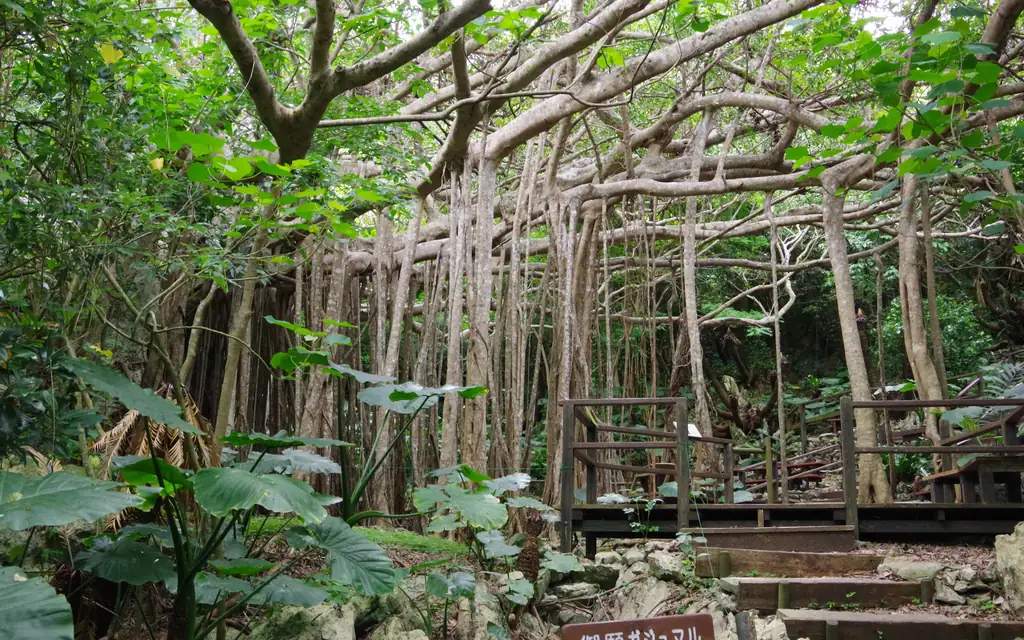
A giant banyan with hanging roots beside a trail at DaisekirinzanKunigami, Okinawa

A giant banyan with hanging roots beside a trail at Daisekirinzan

Daisekirinzan

Rain carved for ages, and a forest of stone appeared.

Getting there●●●●○Harder: 2.5–3 hours' drive from Naha and public transport is poor; rent a car or join a northern day tour.

Best timeGood all year

Drive all the way to the northern tip of Okinawa for a walk through a forest of strange rocks.

The trail weaves between sharp pale gray rocks, stone spires shooting up out of the green, the air thick with the damp smell of forest and your footsteps echoing off the rock. Daisekirinzan is in Kunigami Village at the northern end of Okinawa's main island, inside Yanbaru National Park and near the World Natural Heritage area. Years of rain have eroded the limestone into sharp spires known as tropical karst, a landscape rarely seen in Japan. Several trails of varying difficulty run through the park; the photo shows the “Ugan Banyan” on one of them, its aerial roots hanging down. On a clear day you can see Yoron Island across the sea from the observation deck. Nearby Cape Hedo is the northernmost point of the main island. Come this far and you'll discover Okinawa isn't only about the sea; it also has an ancient forest like this.

GETTING THEREAbout 2.5–3 hours by car from Naha. Public transport is very limited, so rent a car or join a northern Okinawa day tour.
GOOD TO KNOWOn a clear day, the summit looks out over the sea at Okinawa's northern tip. It's run as a tourist facility with set hours — check the official site. There's little food up north, so bring snacks and water.
SAFETYStick to the marked trails and don't go into the rock crevices. The area may have venomous habu snakes — don't put your hands into grass or rock gaps.
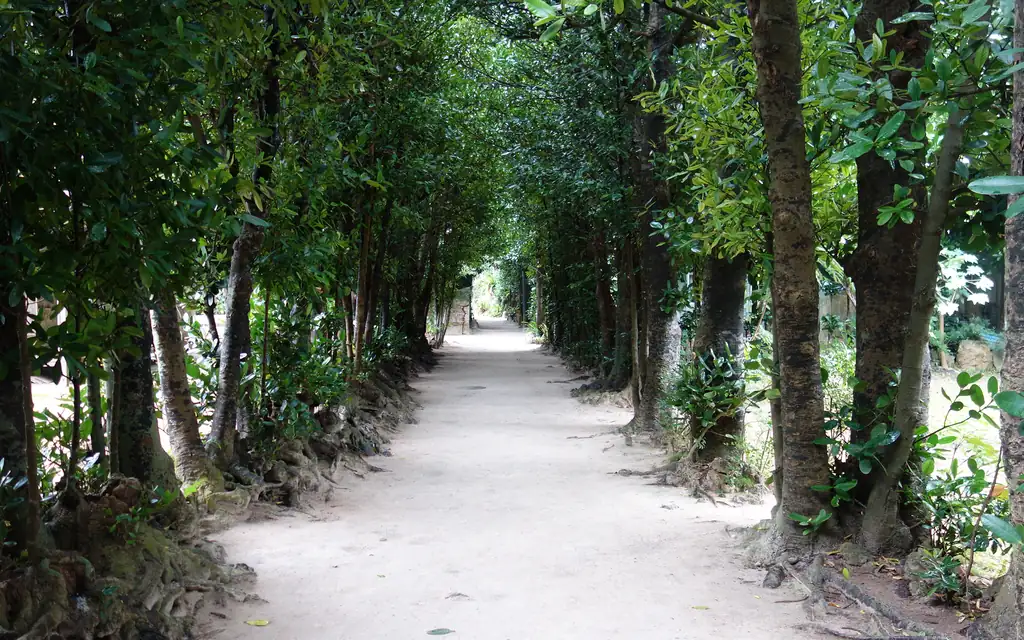
Bise's sandy lane under rows of Fukugi treesMotobu, Okinawa

Bise's sandy lane under rows of Fukugi trees

Bise Fukugi Tree Road

At the end of the fukugi tunnel, the sea.

Getting there●●●○○Doable on your own, but it's a long way: about 2 hours' drive from Naha, or a bus towards Churaumi Aquarium plus a 15-minute walk.

Best timeApr–Oct

When you visit Churaumi Aquarium, wander into the fukugi tree road next door.

Step into the fukugi grove and sunlight filters through the leaves, scattering dapples on the white sand path, so quiet you hear only your feet on the sand and the distant waves. Bise is a small village on the Motobu Peninsula where every household planted fukugi trees around their homes as windbreaks. Over hundreds of years they've grown into green tunnels, some trees said to be more than 300 years old. People still live in the village. The white sand paths run through the trees and end at a beach, where on a clear day you can see Ie Island across the water. You can walk, rent a bicycle, or take a slow ride on a buffalo cart. The moment you come out of the green tunnel and see the whole sea, you'll want to stop and stand there a long time.

GETTING THEREAbout 2 hours by car from Naha on the expressway, or take a bus toward Churaumi Aquarium and walk about 15 minutes.
GOOD TO KNOWWalk to the beach at the end of the lanes for sunset — the most beautiful time, and cooler under the Fukugi trees. People live here, so keep your voice down and stay out of gardens.
SAFETYCars do drive through the tree roads, so watch for traffic while taking photos. There are lots of mosquitoes in summer — bring repellent.
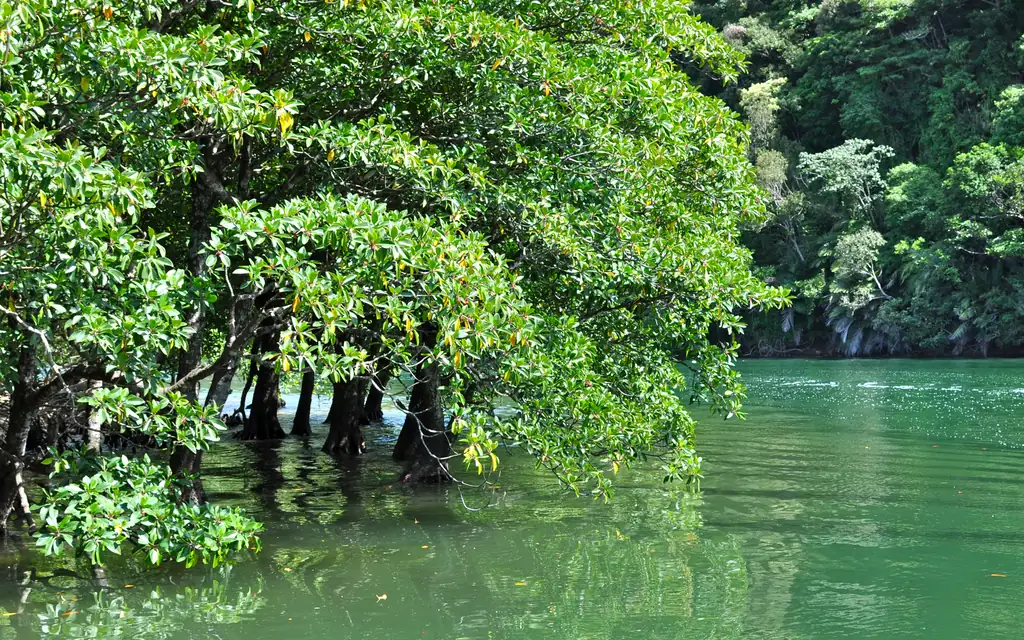
Mangroves along a river on IriomoteTaketomi, Okinawa

Mangroves along a river on Iriomote

Iriomote Mangroves

Nine-tenths forest, and the only home of the Iriomote cat.

Getting there●●●○○Some planning: about 40 minutes by boat from Ishigaki to Ohara Port on Iriomote, where the river cruises start.

Best timeApr–Oct

For Japan's largest mangrove forest, go to Iriomote.

The boat heads slowly upstream from the river mouth between banks of mangroves, tangled roots reaching into the water, and when the engine cuts out all that's left is birdsong and the flow of the river. About 90% of Iriomote is covered in subtropical forest. It became a World Natural Heritage Site in 2021 and is the only home of the Iriomote cat. The easiest way to see the mangroves is the Nakama River mangrove cruise from Ohara Port, which heads upstream through Japan's largest mangrove estuary; a round trip takes about an hour. To get closer, join a kayak tour into narrower side channels, where branches meet overhead. The photo shows Iriomote's mangroves. On an island that's nine-tenths forest, people are the guests.

GETTING THERETake a ferry from Ishigaki Port to Ohara Port on Iriomote (about 40 minutes); the Nakama River cruise departs from Ohara Port. It pairs well with the Yubu Island buffalo carts on the same day.
GOOD TO KNOWSummer is when the mangroves are greenest, and the Nakama River cruise into the jungle feels like an expedition. Boats run a few set times a day and stop in typhoons or heavy rain; ferries to Iriomote may also be cancelled in rough seas. Few people speak English or Chinese — first-timers may prefer a day tour from Ishigaki; if going solo, check boats, download a translation app and leave a day or two of slack. Confirm before you go.
SAFETYDrive slowly on the island and watch for Iriomote cats. The forests and riverbanks have venomous snakes and insects — don't wander off the trails.

Not sure which to pick? Take the 4-minute travel-personality quiz and find the one that suits you.

Take the quiz