TOP-TIER TRAVEL中/EN

Philippines

10 hidden gems in Philippines

Chocolate Hills, limestone lagoons & mountain terraces. We picked 10 places in this region — some well known, some few visitors find. Browse at your own pace, then take the quiz when something catches your eye.

TOP-TIER TRAVEL › All hidden gems › Philippines

Not sure which to pick? Take the 4-minute travel-personality quiz and find the one that suits you.

Take the quiz
Chocolate Hills, Bohol
First time? Cebu, Bohol and Palawan are the classics

The Philippines has more than seven thousand islands, and most journeys between cities mean a domestic flight or a boat. A common first trip is to fly into Cebu, take the ferry to Bohol for the Chocolate Hills and tarsiers, then fly to El Nido in Palawan for island hopping; seven to ten days is comfortable. English is spoken almost everywhere. The place below suits you best.

Spot details checked: November 2026

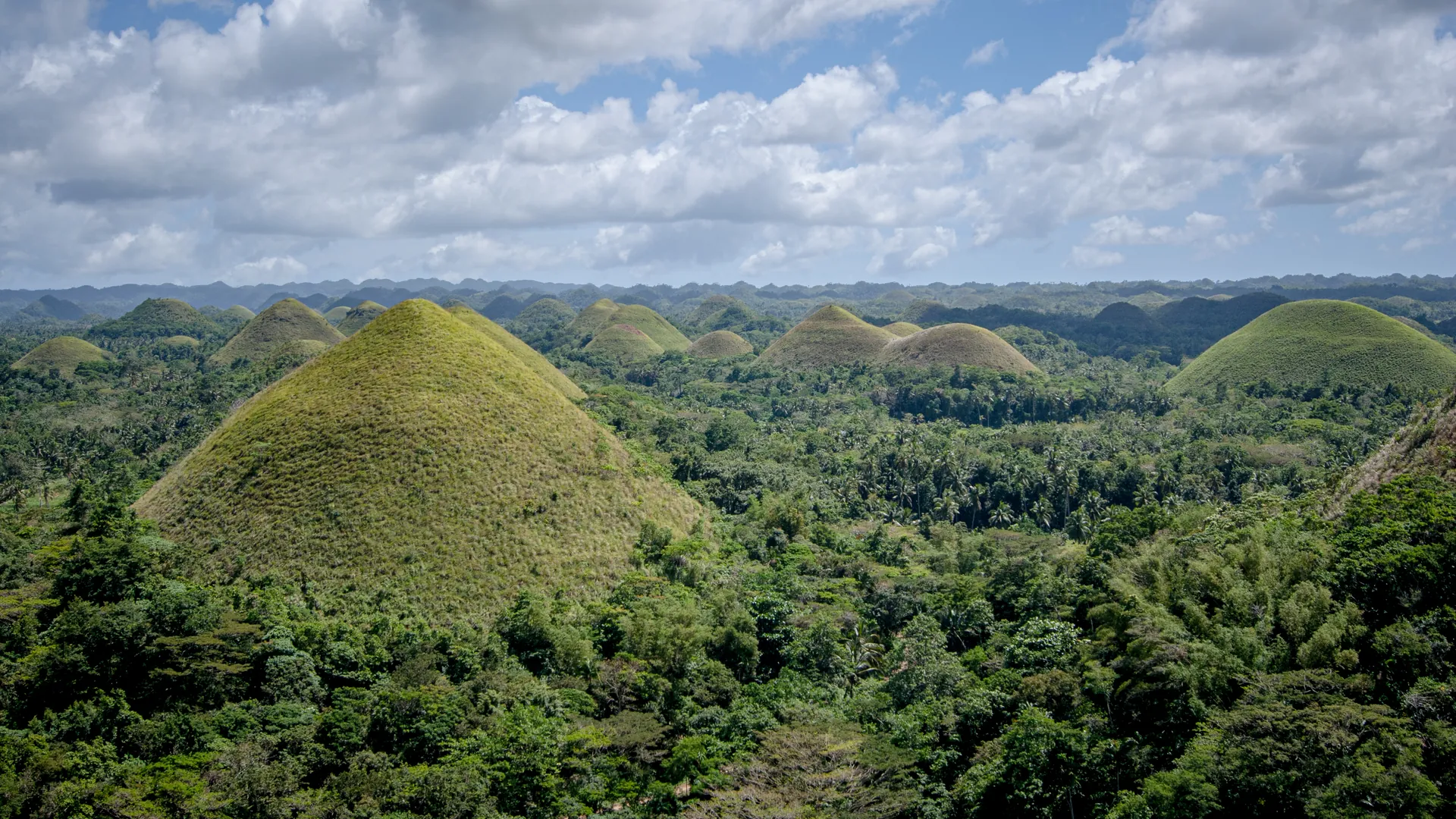
The Chocolate Hills, green in the rainy season, BoholCarmen, Bohol

The Chocolate Hills, green in the rainy season, BoholPhilip Nalangan / CC BY-SA 4.0 / cropped

Chocolate Hills, Bohol

More than a thousand small hills, one after another, turning chocolate-brown in the dry season.

Getting there●●○○○Easy on your own: 1.5–2 hours by hired car from Panglao or Tagbilaran; most people join a day tour.

Best timeFeb–May

The Philippines' most famous landscape: over a thousand cone-shaped hills.

The Chocolate Hills are more than a thousand cone-shaped hills in central Bohol, all roughly the same size, lined up as far as you can see. The photo was taken in the rainy season, when they're covered in green grass. In the dry season, roughly February to May, the grass dries out and turns brown, and the hills look like chocolates scattered on the ground — hence the name. The classic view is from the top of the two hundred-odd steps at the Carmen viewpoint. On the way back, stop to see tarsiers and drift down the Loboc River on a floating restaurant over lunch.


GETTING THEREAbout 2 hours by fast ferry from Cebu to Tagbilaran, or fly into Panglao; then 1.5–2 hours by hired car to the Carmen viewpoint.
GOOD TO KNOWThe hills only turn brown in the dry season; in the rainy season they're green — both are lovely. Midday is very hot, so go early or late. For tarsiers, choose a proper sanctuary, keep quiet and don't use flash.
SAFETYThe viewpoint steps are steep and slippery after rain. Mountain roads wind, so choose a well-reviewed driver.
A lagoon in Bacuit Bay, El NidoEl Nido, Palawan

A lagoon in Bacuit Bay, El Nido© Vyacheslav Argenberg / CC BY 4.0 / cropped

El Nido, Palawan

Black cliffs rise straight from the sea, and the boat slips into a green lagoon.

Getting there●●●○○Some planning: fly from Manila to Puerto Princesa, then 5–6 hours by road; small planes also fly direct to El Nido.

Best timeNov–May

One of the Philippines' most beautiful island areas, with limestone isles enclosing lagoons.

El Nido sits at the northern tip of Palawan, where dozens of limestone islands rise from the sea in black cliffs above clear green water. The photo shows a lagoon in Bacuit Bay, the cliffs on either side like a gateway the boat edges through. Island hopping is the main event: the popular routes are labelled A to D, each taking in three or four lagoons, beaches and snorkelling spots in a day, and you switch to a kayak for the Big and Small Lagoons, so quiet you only hear the paddles. With more days, take a boat north to Coron, where Kayangan Lake sits among limestone peaks, clear enough to see the stones on the bottom.

GETTING THEREFly from Manila or Cebu to Puerto Princesa, then 5–6 hours by road; there are also flights from Manila to El Nido's small airport. Boats run to Coron.
GOOD TO KNOWThere's an environmental fee, and routes, quotas and fees change — check the local tourism office. In the rainy season (roughly June to October) rough seas can cancel boats, so keep a spare day. ATMs often run out, so bring cash.
SAFETYAlways wear a life jacket when snorkelling. Rock edges are sharp, so don't climb barefoot; use reef-friendly sunscreen.
Mayon Volcano with a cloud cap, LegazpiAlbay, Bicol

Mayon Volcano with a cloud cap, LegazpiPatryk Reba / CC BY-SA 4.0 / cropped

Mayon Volcano

A perfectly symmetrical volcano wearing a hat made of cloud.

Getting there●●○○○Easy on your own: about an hour's flight from Manila to Bicol International Airport, where you can already see the volcano.

Best timeJan–May

Called the world's most perfect volcanic cone, and one of the most active in the Philippines.

Mayon is one of the most active volcanoes in the Philippines and is often called the world's most perfect volcanic cone, rising symmetrically straight from the plain. The white ring at the top in the photo isn't an eruption but a cloud that happens to sit on the summit, like a hat. The classic view is from the Cagsawa ruins at its foot: the great eruption of 1814 buried the church and the village around it, leaving only a bell tower and broken walls with the volcano behind. You can also take an ATV tour out to where lava once flowed.

GETTING THEREAbout an hour's flight from Manila to Bicol International Airport, then about 30 minutes by car to Legazpi; Cagsawa is about 30 minutes out of town.
GOOD TO KNOWVolcanic activity follows the alert level set by PHIVOLCS; the surroundings close when it rises. Mornings are usually clearest for the summit.
SAFETYDon't enter the permanent danger zone. On ATV tours wear a helmet and use licensed operators.
Batad's amphitheatre of terraces, BanaueBanaue, Ifugao

Batad's amphitheatre of terraces, BanaueRanieljosecastaneda / CC BY-SA 4.0 / cropped

Batad Rice Terraces

Terraces circle the valley, ring upon ring, like a green amphitheatre.

Getting there●●●●○Harder: 9–10 hours by overnight bus from Manila to Banaue, then a ride to the saddle and a 30–60 minute walk down.

Best timeFeb–May

Terraces built by hand over generations, part of a World Heritage site.

Batad is a village in the mountains of Ifugao, where the terraces rise ring upon ring around the valley like a green amphitheatre with the village at its centre. The Ifugao built them by hand over generations, watered by the forests and channels above, and the Batad terraces are part of the 'Rice Terraces of the Philippine Cordilleras' World Heritage site. The man standing on the terrace wall in the photo is wearing traditional Ifugao dress. No road reaches the village; you walk down, stay in a guesthouse by the fields, enjoy the silence at night and watch the mist drift off the terraces in the morning. With energy to spare, walk on to Tappiya Falls in the valley.

GETTING THEREOvernight bus from Manila to Banaue (9–10 hours), then jeepney or hired car to the Batad saddle and a 30–60 minute walk down to the village.
GOOD TO KNOWThe colour changes through the year: green after planting, gold before harvest, with timing varying each year. Please ask before photographing people.
SAFETYPaths are steep and terrace walls narrow and slippery after rain; wear good shoes. The waterfall round trip takes several hours, so start early.
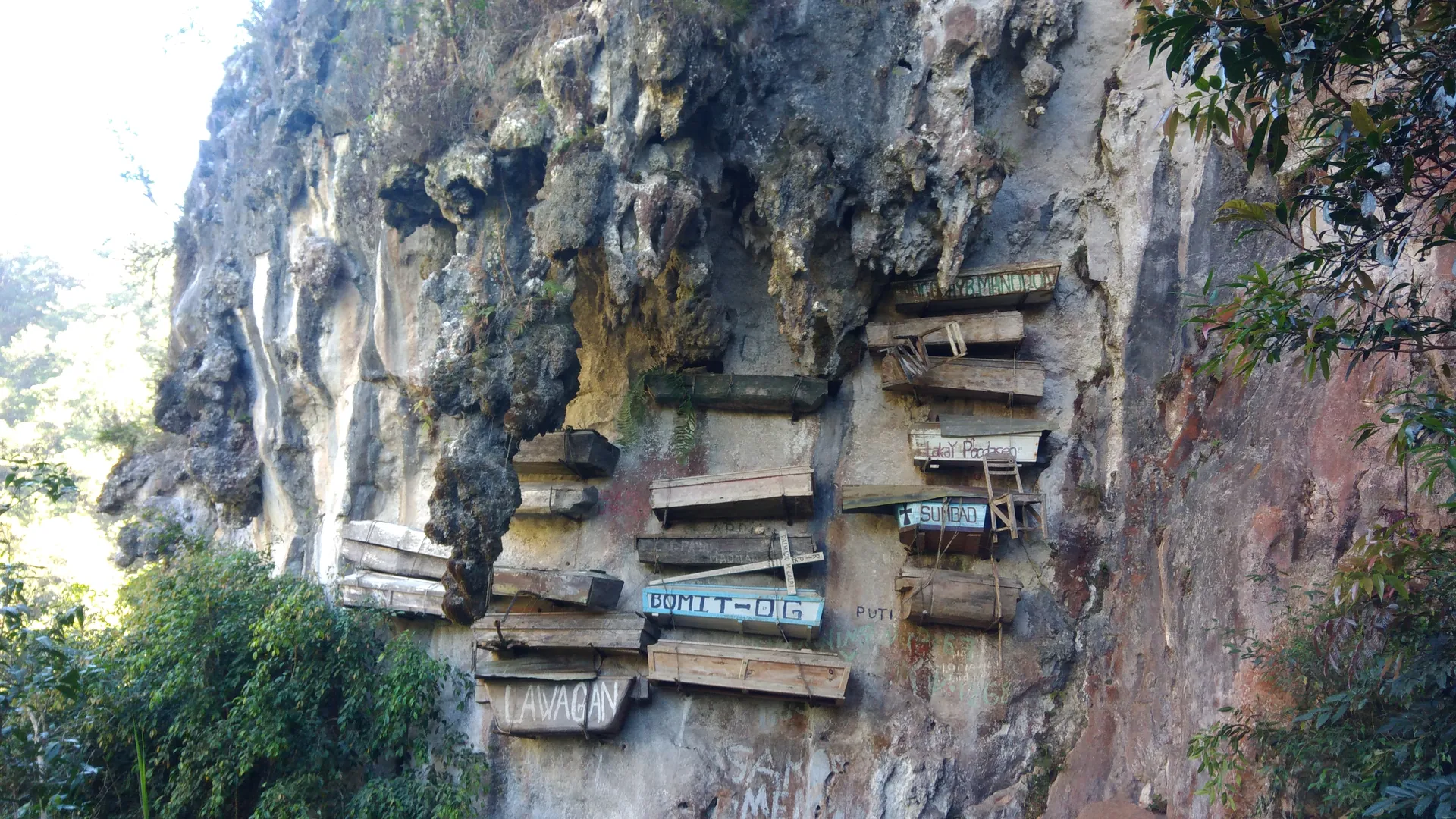
Hanging coffins on the cliffs of Echo Valley, SagadaSagada, Mountain Province

Hanging coffins on the cliffs of Echo Valley, SagadaLastithegreat / CC BY-SA 4.0

Hanging Coffins of Sagada

In a cool, pine-filled valley, rows of coffins hang on the cliff.

Getting there●●●●○Harder: about 12 hours by overnight bus from Manila, or connect via Banaue or Baguio on long mountain roads.

Best timeNov–May

A Cordillera town that keeps the ancient custom of hanging coffins on cliffs.

Sagada is a small town in the Cordillera mountains, surrounded by pine forest and limestone valleys, with cool air very unlike the tropical Philippines most people picture. The local Igorot have an ancient custom: the dead are placed in wooden coffins hung on valley cliffs, in the belief that the closer to the sky, the more peacefully the soul rests. The photo shows hanging coffins on a cliff in Echo Valley, some there for many years. Besides the coffins, there are limestone caves, and at dawn you can climb up for a sea of clouds. Further north, Buscalan in Kalinga keeps the tradition of hand-tapped tattoos.

GETTING THEREAbout 12 hours on a direct overnight bus from Manila, or go via Banaue or Baguio and change for the mountain road.
GOOD TO KNOWRegister at the tourist centre on arrival and hire a local guide for Echo Valley. This is where locals honour their ancestors: keep quiet, don't shout and don't touch the coffins.
SAFETYTrails are slippery with some scrambling down rocks. Nights in the mountains are cold, so bring a jacket. Always go into caves with a guide.
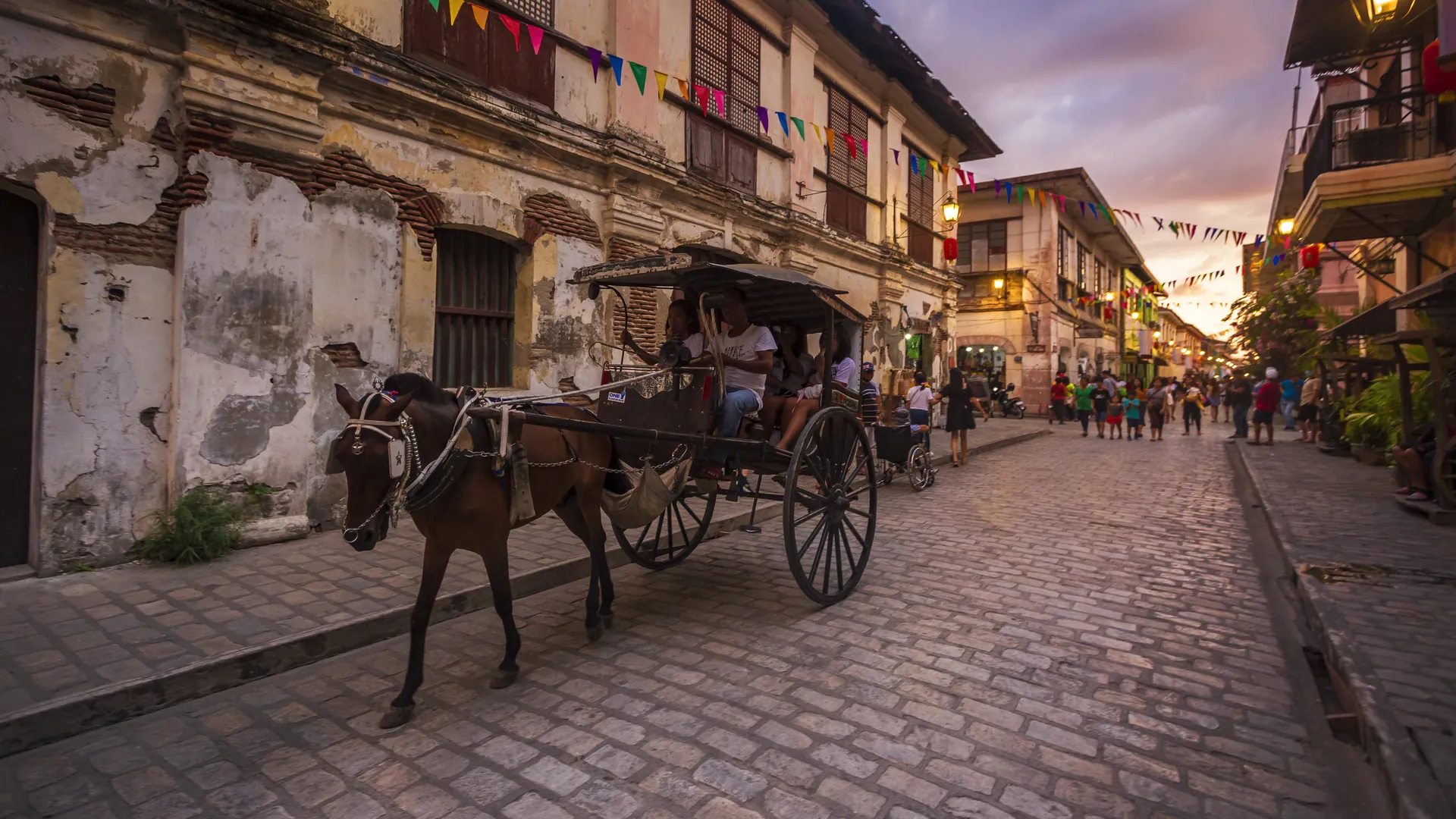
Calle Crisologo and a horse carriage at dusk, ViganVigan, Ilocos Sur

Calle Crisologo and a horse carriage at dusk, ViganJesse Alegre / CC BY-SA 4.0 / cropped

Vigan

Hooves ring on the cobbles between houses three centuries old.

Getting there●●●○○Some planning: 8–10 hours by overnight bus from Manila, or fly to Laoag and drive about 1.5 hours.

Best timeNov–Apr

One of Asia's best-preserved Spanish colonial towns, a World Heritage site.

Vigan in the northern Philippines is the country's best-preserved Spanish colonial town, listed as a World Heritage site in 1999. The photo shows Calle Crisologo at dusk: cobbles lined with two-storey houses, brick below and timber above, their windows set with thin capiz shell, and a local horse carriage in front. The houses blend Spanish, Chinese and Filipino styles, and many are now cafés and shops. At night the street lights up and hooves echo on the stones; when you're hungry, try a Vigan empanada, its orange crust filled with green papaya and egg.

GETTING THERE8–10 hours by overnight bus from Manila, or about an hour's flight from Manila to Laoag in Ilocos Norte and about 1.5 hours by car.
GOOD TO KNOWThe old street is cooler and most photogenic from late afternoon. Agree the price and route before a carriage ride. Fountain show times are posted locally.
SAFETYThe cobbles are uneven, so wear good shoes; step aside when carriages pass.
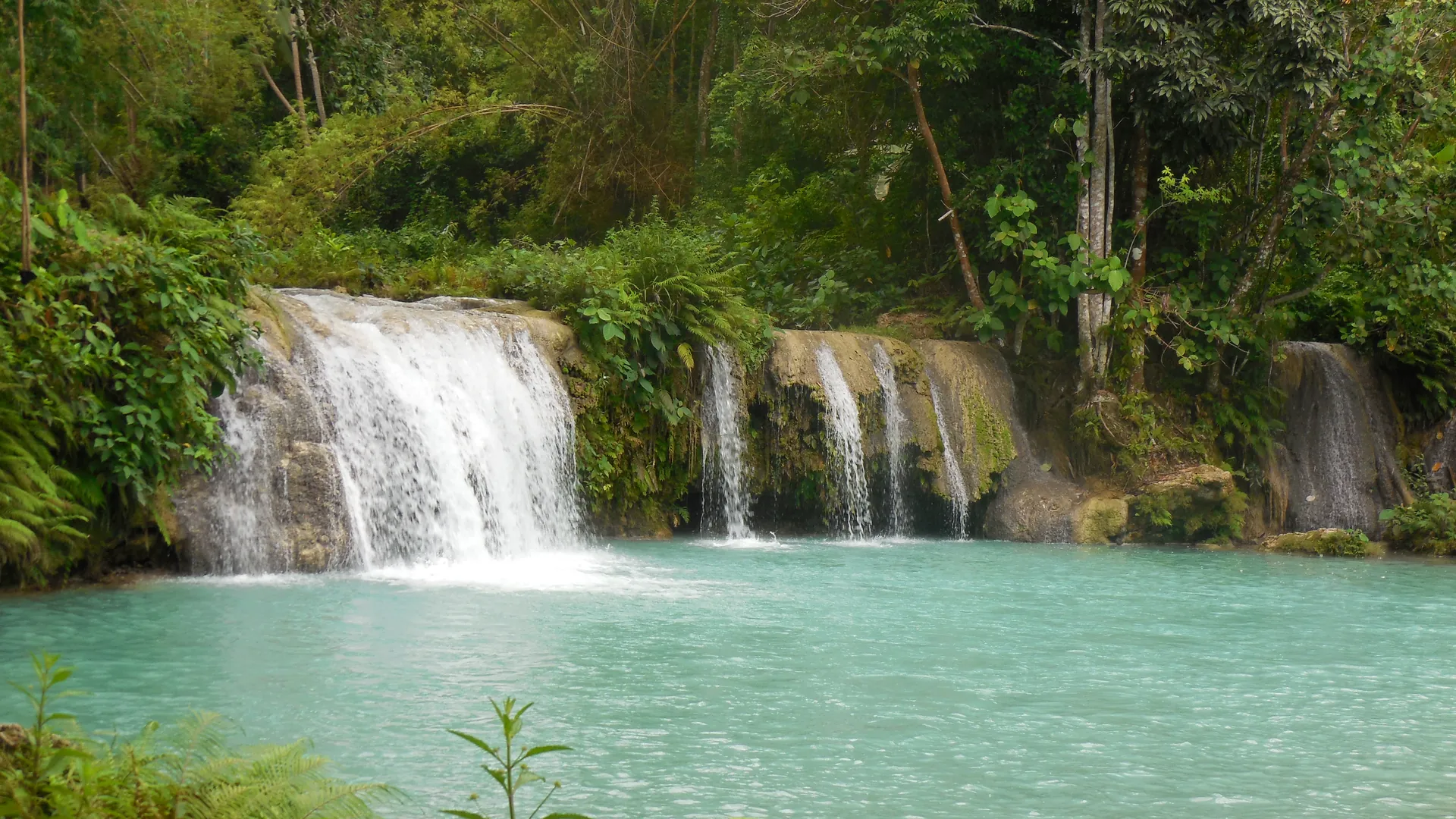
Cambugahay Falls, SiquijorSiquijor Province

Cambugahay Falls, SiquijorLawrence Ruiz / CC BY-SA 4.0 / cropped

Siquijor

A slightly mysterious island, where waterfalls step down into green pools.

Getting there●●●○○Some planning: just over an hour by boat from Dumaguete; boats also run from Cebu and Bohol.

Best timeDec–May

An island of folk healers and 'love potions', far quieter than its neighbours.

Siquijor is a small island in the central Philippines with a slightly mysterious reputation among Filipinos: it has many folk healers and herbalists, a Holy Week tradition of gathering herbs and preparing healing oils, and souvenir shops selling supposedly powerful 'love potions'. The photo shows its best-known waterfall, Cambugahay Falls, a few small cascades flowing into pool after pool where you can swim or swing into the water on a rope. On clear days the water is a pale green-blue; after rain it turns murky. Nearby is the Lazi Convent, a large building from the Spanish era.

GETTING THEREJust over an hour by boat from Dumaguete to Siquijor port; boats also run from Cebu and Bohol. Get around by hired tricycle or scooter.
GOOD TO KNOWTake the rope swing and jumps at your own pace; life jackets can be hired. The water colour depends on the weather and turns murky after rain. Boat times from the operators.
SAFETYThe rocks are slippery, so check the depth before getting in. If you don't ride scooters, hire a tricycle instead.
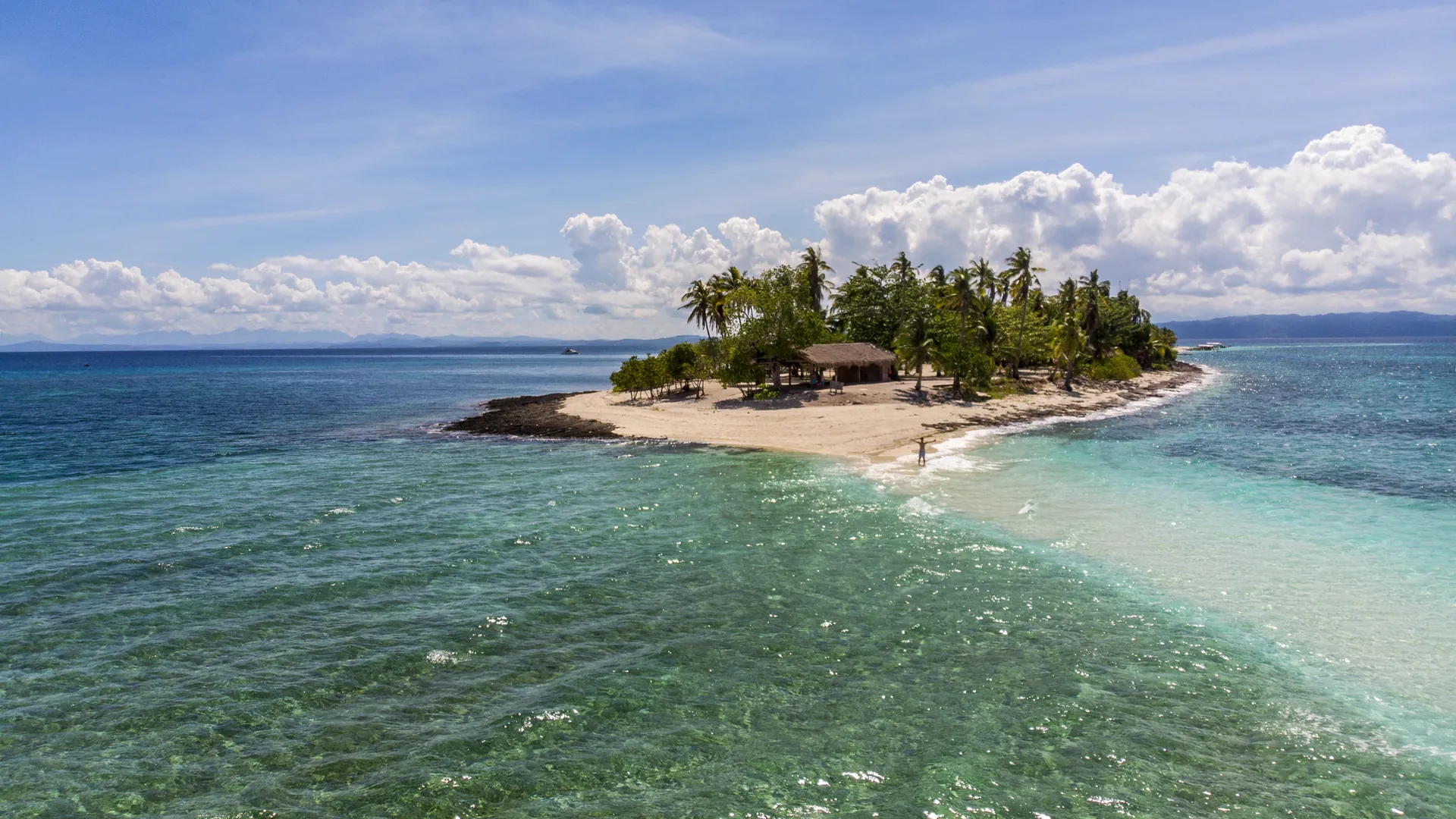
Kalanggaman Island's long sandbarsOff Palompon, Leyte

Kalanggaman Island's long sandbarsGcabig2024 / CC BY-SA 4.0 / cropped

Kalanggaman Island

A tiny island trailing two long white sandbars into the sea.

Getting there●●●●○Harder: about an hour by boat from Palompon on Leyte; most people join a day trip.

Best timeMar–Jun

A tiny island with no hotels and sandbars stretching into the sea.

Kalanggaman is a small island off Leyte that trails a long white sandbar from each end, so from above it looks like a bird spreading its wings. The photo is that aerial view, palms in the middle and sandbars surrounded by pale blue water. There are no hotels, just huts, a camping area and basic facilities: come by day to swim, snorkel and walk the sandbar, then boat back in the late afternoon — or pitch a tent and have the island to yourself and the waves at night.

GETTING THERETake a ferry from Cebu to Ormoc on Leyte, drive to Palompon port and take a boat of about an hour to the island.
GOOD TO KNOWThere's an entrance fee and a daily visitor cap; boats and overnight rules are set by Palompon. There are no shops, so bring water and food.
SAFETYCurrents off the sandbar are strong, so don't swim far out. There's almost no shade — sun protection is a must.
A sea turtle beside the coral, Apo IslandOff Dumaguete, Negros Oriental

A sea turtle beside the coral, Apo IslandAnna Varona / CC BY 4.0 / cropped

Apo Island

A sea turtle right beneath you, slowly grazing on seagrass.

Getting there●●●○○Some planning: about 40 minutes by car from Dumaguete to Malatapay, then 30–45 minutes by boat.

Best timeMar–Jun

A community-run marine sanctuary where you can snorkel with turtles.

Apo Island is a small volcanic island off the coast south of Dumaguete, surrounded by a marine sanctuary protected by the islanders themselves. Over decades its coral and fish have recovered well, and it's known as a turtle island. The photo, taken while diving, shows a turtle resting by the coral; snorkellers most often see turtles grazing in shallow seagrass beds, often gliding slowly right below you. It's an easy day trip from Dumaguete. Don't confuse it with Apo Reef, off Mindoro.

GETTING THEREFly to Dumaguete from Cebu or Manila, drive about 40 minutes to Malatapay port (near Dauin), then 30–45 minutes by boat.
GOOD TO KNOWThere's a sanctuary fee, and snorkelling and diving require a local guide. Keep your distance from turtles: no touching, chasing or feeding.
SAFETYBoats don't run in rough seas. Wear a life jacket when snorkelling and don't stand on coral.
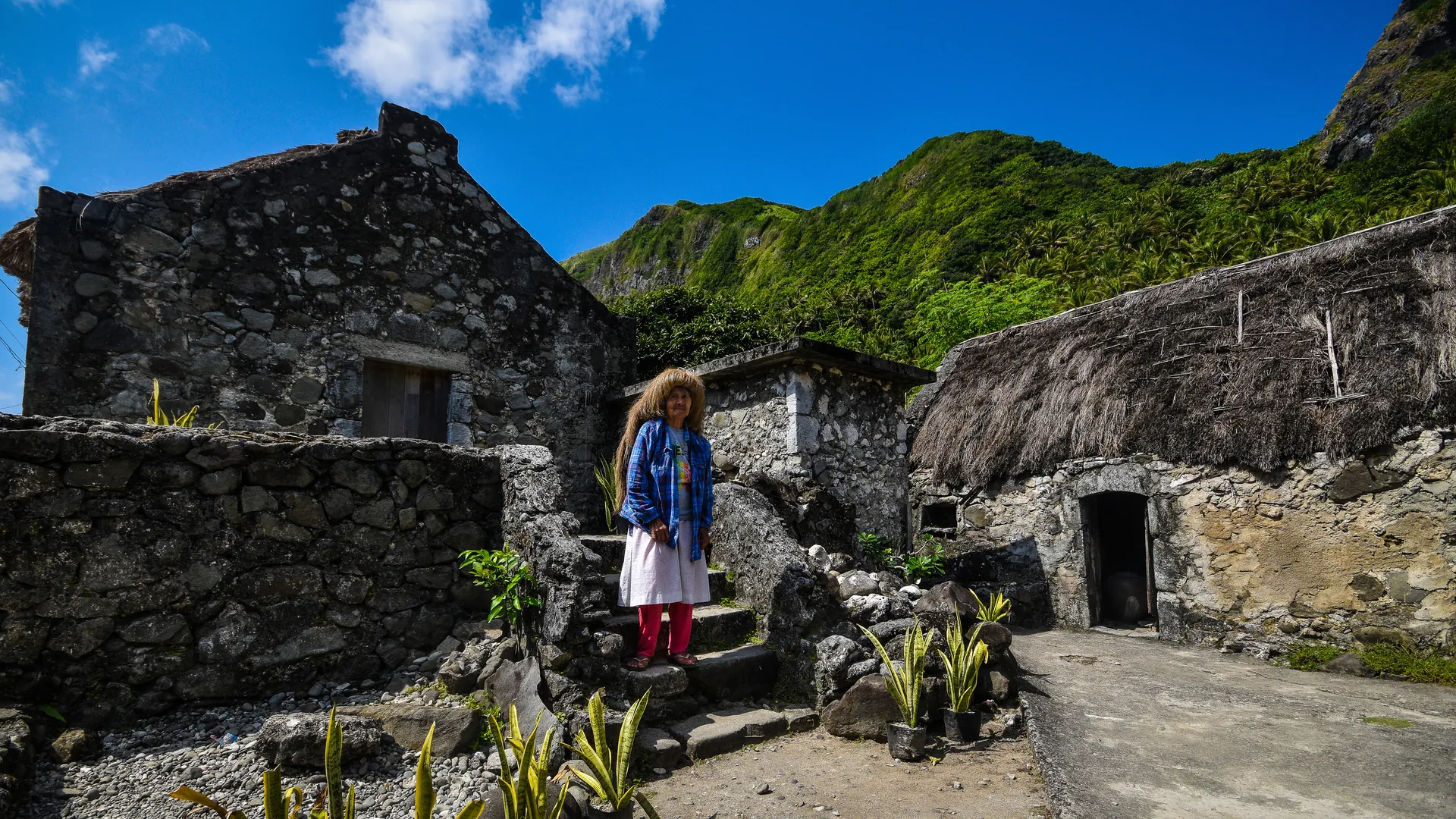
Stone houses in Chavayan village, BatanesSabtang Island, Batanes

Stone houses in Chavayan village, BatanesEMMAN A. FORONDA / CC BY-SA 4.0 / cropped

Batanes

Stone houses, green grassland and sea cliffs, like a tropical Ireland.

Getting there●●●●●Remote: about 1.5 hours' flight from Manila to Basco; flights are few and often cancelled for weather.

Best timeMar–Jun

The Philippines' northernmost islands, closer to Taiwan than to Manila.

Batanes is the northernmost island group of the Philippines, closer to Taiwan than to Manila, and the Ivatan language spoken here is related to that of the Tao people on Taiwan's Orchid Island. To withstand typhoons and strong winds, the Ivatan built thick walls of limestone and coral stone under thatched roofs. The photo shows stone houses in Chavayan village on Sabtang Island; the woman in front wears a traditional 'vakul' headdress woven from dried grass to keep off sun and rain. Rolling green grassland runs to sea cliffs and cattle graze below lighthouses — often compared to Ireland, but in the tropics.

GETTING THEREAbout 1.5 hours' flight from Manila to Basco, with few flights; to Sabtang, take a boat of 30–60 minutes from the port in southern Batan.
GOOD TO KNOWFlights are few, pricey and often cancelled for weather, so allow a day or two of slack either side. The Sabtang boat leaves in the morning and stops in rough seas. Please ask before photographing people.
SAFETYAvoid the typhoon season (roughly July to October) if you can. It's very windy on the cliffs — keep back from the edge.

Things to do

Add these experiences to your time in Philippines. Full details are in the Things to do section of your quiz results.

  • Snorkel with wild whale sharks in Donsol: A fish as long as a bus glides slowly past you.
  • Meet the tarsiers: A primate the size of your palm, with eyes bigger than its brain.
  • Island hopping by bangka: A little outrigger boat that takes you to four or five islands a day.
  • Moalboal sardine run: Millions of sardines swirl around you in a wall of silver.
  • Sinulog Festival, Cebu: A whole city dancing to the drums for a small image of the Holy Child.
  • Panagbenga Flower Festival, Baguio: Floats covered in fresh flowers roll slowly through a mountain city.

Not sure which to pick? Take the 4-minute travel-personality quiz and find the one that suits you.

Take the quiz