TOP-TIER TRAVEL中/EN

Poland

10 hidden gems in Poland

Old towns, castles & wild mountains. We picked 10 places in this region — some well known, some few visitors find. Browse at your own pace, then take the quiz when something catches your eye.

TOP-TIER TRAVEL › All hidden gems › Poland

Current situation (November 2026)

Poland is going through a political dispute. After the head of the Constitutional Tribunal was suspended in late October, the government and the president have been at odds, and protesters have gathered outside the court. It isn’t clear yet whether this will affect travel. Please check the latest news and your own government’s advice before you go, and if you come across a protest, keep your distance.

Not sure which to pick? Take the 4-minute travel-personality quiz and find the one that suits you.

Take the quiz
Wrocław
First time? Start with Kraków and Warsaw

Kraków's Main Market Square, Wawel Castle and the Wieliczka Salt Mine, and Warsaw's old town rebuilt brick by brick after the war — do these classics first and you can't go wrong. Poland is bigger than you'd think: Kraków is about 2½ hours from Warsaw by express train, Gdańsk about 3 hours. Then save two or three days for the place below that's truly yours.

Spot details checked: October 2026

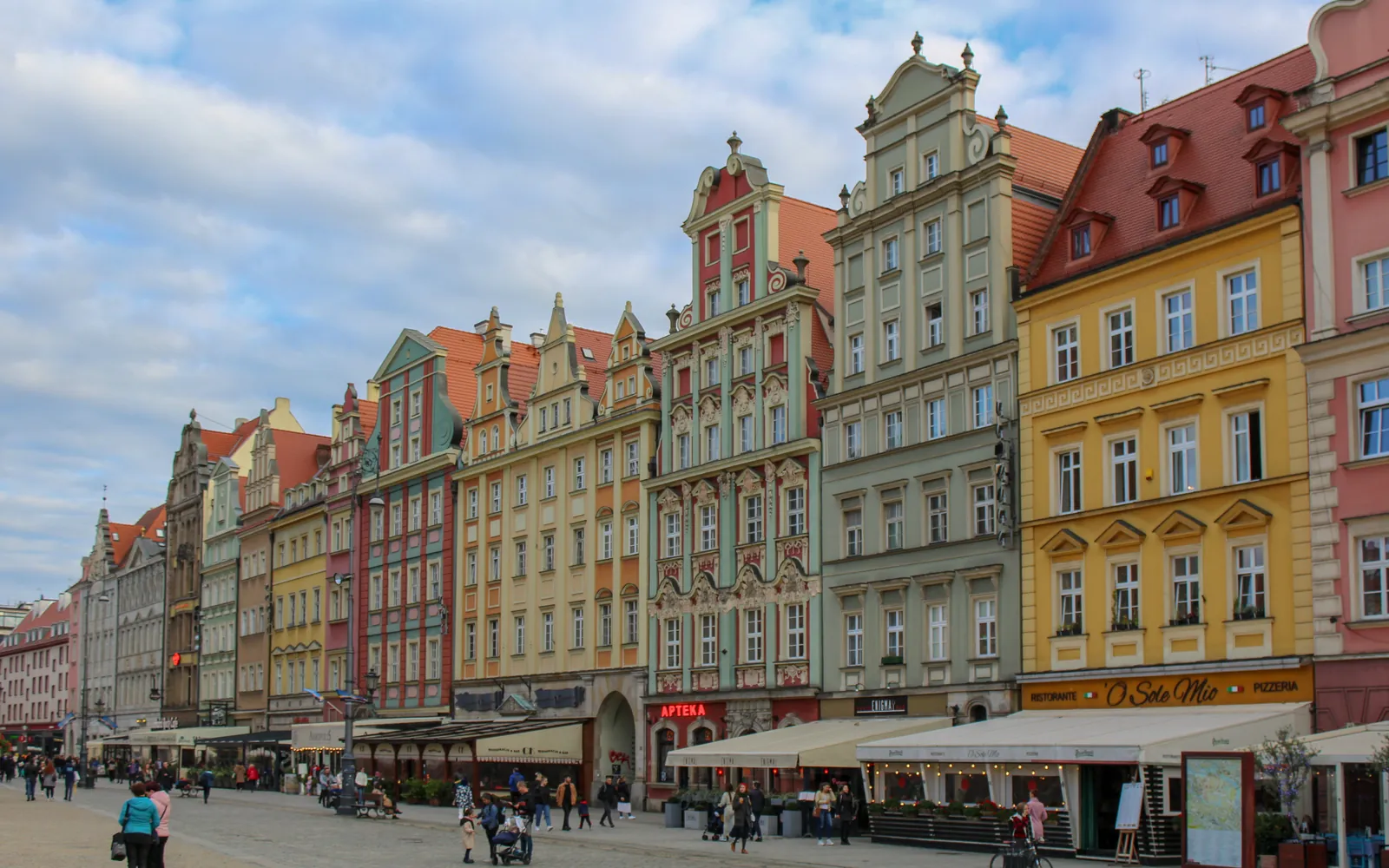
Colourful old houses on Wrocław's Market SquareLower Silesia

Colourful old houses on Wrocław's Market SquareSzczecinolog / CC BY-SA 4.0 / cropped

Wrocław

A colourful square, and hundreds of bronze dwarfs hiding on street corners for you to find.

Getting there●○○○○Very easy on your own: about 3 hours by train from Kraków, 3½ from Warsaw; the city has an airport.

Best timeGood all year

One of Poland's liveliest cities, full of students and cafés.

Wrocław's Market Square is one of Europe's largest old-town squares, with a spiky Gothic town hall in the middle and houses of every colour around it. Hundreds of palm-sized bronze dwarfs are scattered across the city — withdrawing cash, sleeping, doing laundry — with no set route; finding them as you wander is the fun. Cathedral Island to the north is the oldest part of the city, where every evening a lamplighter in a cloak lights the gas lamps one by one. Centennial Hall in the east, a vast early-20th-century concrete building, is also World Heritage.
GETTING THEREAbout 3 hours by train from Kraków and 3½ from Warsaw to Wrocław Główny, then a 20-minute walk to the Market Square. Buses run from the airport to the centre in 30–40 minutes.
GOOD TO KNOWGood all year; from late November to early January the Christmas market fills the square with wooden huts — well worth a winter trip. Dwarfs are spread across the old town; pick up a map at the tourist office.
SAFETYThe square is lively at night; mind your belongings near busy bars.
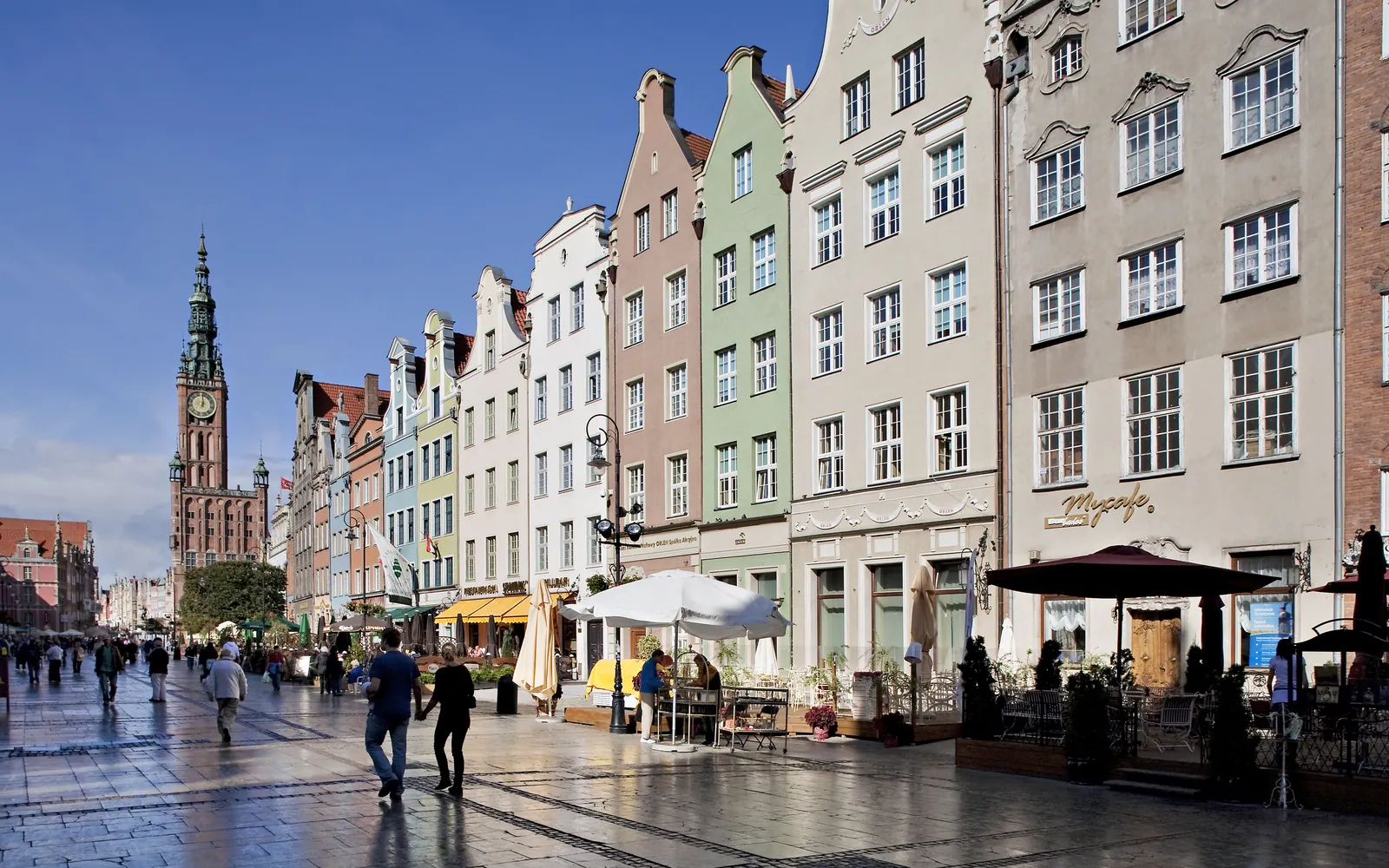
Colourful houses and the town-hall spire on Gdańsk's Long MarketPomerania · Baltic coast

Colourful houses and the town-hall spire on Gdańsk's Long MarketRichardmaackphotography / CC BY 4.0 / cropped

Gdańsk

A row of tall, narrow, colourful houses, with the town-hall spire at the end.

Getting there●○○○○Very easy on your own: 2 h 40 min to 3 hours by express train from Warsaw; the city has an airport.

Best timeMay–Sep

The prettiest port city on the Baltic — and where World War II began.

Gdańsk was one of the richest Hanseatic ports, and along its Long Market stand tall, narrow merchants' houses with ornate façades, the town-hall spire at the end and the Neptune Fountain in the street. Down by the river, a 15th-century wooden harbour crane was among the largest in medieval Europe. Nearby Mariacka Street is lined with amber shops. In 1939 the first shots of World War II were fired at Westerplatte north of the city, and in the 1980s the Solidarity movement that changed Poland was born in the shipyard here.

GETTING THERE2 h 40 min to 3 hours by express train from Warsaw to Gdańsk Główny, then about 10 minutes' walk to the old town. Trains and buses link the airport to the city in 30–40 minutes.
GOOD TO KNOWMay–September is most pleasant, with long summer days that stay light past 9pm; winter sea winds are cold, but December brings a Christmas market. Buy amber from shops that give certificates.
SAFETYThe old town is crowded in summer — watch for pickpockets. Don't swim when the sea is rough.
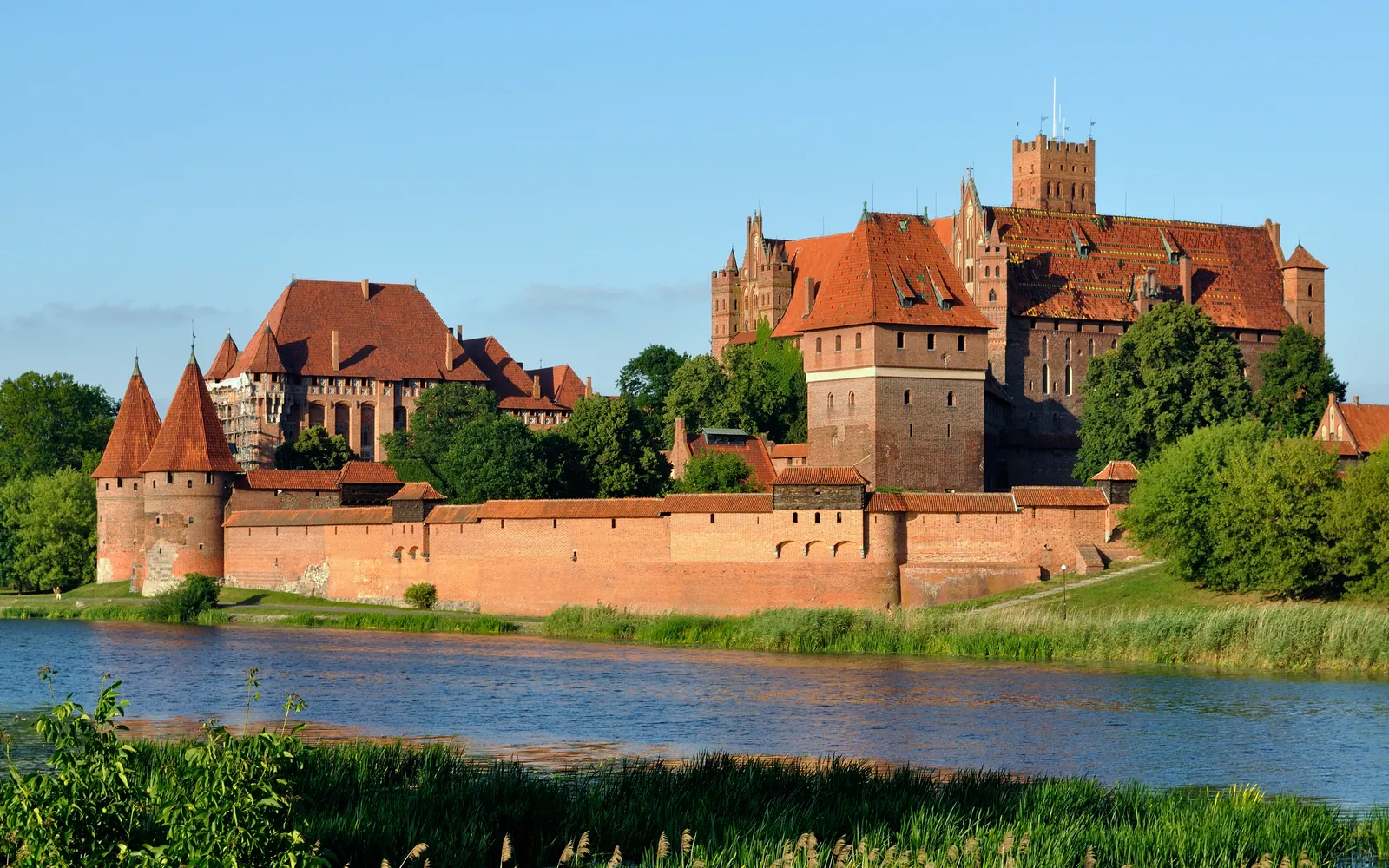
Malbork Castle across the Nogat riverPomerania · on the Nogat

Malbork Castle across the Nogat riverDerHexer; derivative work: Carschten / CC BY-SA 3.0 / cropped

Malbork Castle

The world's largest brick castle, from which the Teutonic Knights once ruled a state.

Getting there●○○○○Very easy on your own: 30 to 50 minutes by train from Gdańsk, then 15 minutes' walk.

Best timeGood all year

Europe's biggest medieval castle — add half a day from Gdańsk.

Malbork Castle was built from the late 13th century as the headquarters of the Teutonic Order. By area it's the largest castle in the world, built entirely of brick, and a UNESCO World Heritage Site since 1997. It's divided into the High, Middle and Low Castles, separated by moats and drawbridges, with the Grand Master's palace, a great refectory for hundreds, and the chapel. Much of it was destroyed in WWII and painstakingly rebuilt over decades. The best view is from across the Nogat, when the evening sun turns the whole castle red.

GETTING THERE30 to 50 minutes by train from Gdańsk Główny to Malbork, then about 15 minutes' walk. The visit comes with a multilingual audio guide, including English, and takes about 3 hours.
GOOD TO KNOWOpen all year, with more hours in summer; in winter hours are shorter and it closes on Mondays — check the official site. Summer weekends are busy; arrive at opening.
SAFETYStairs and floors are often uneven — wear good shoes.
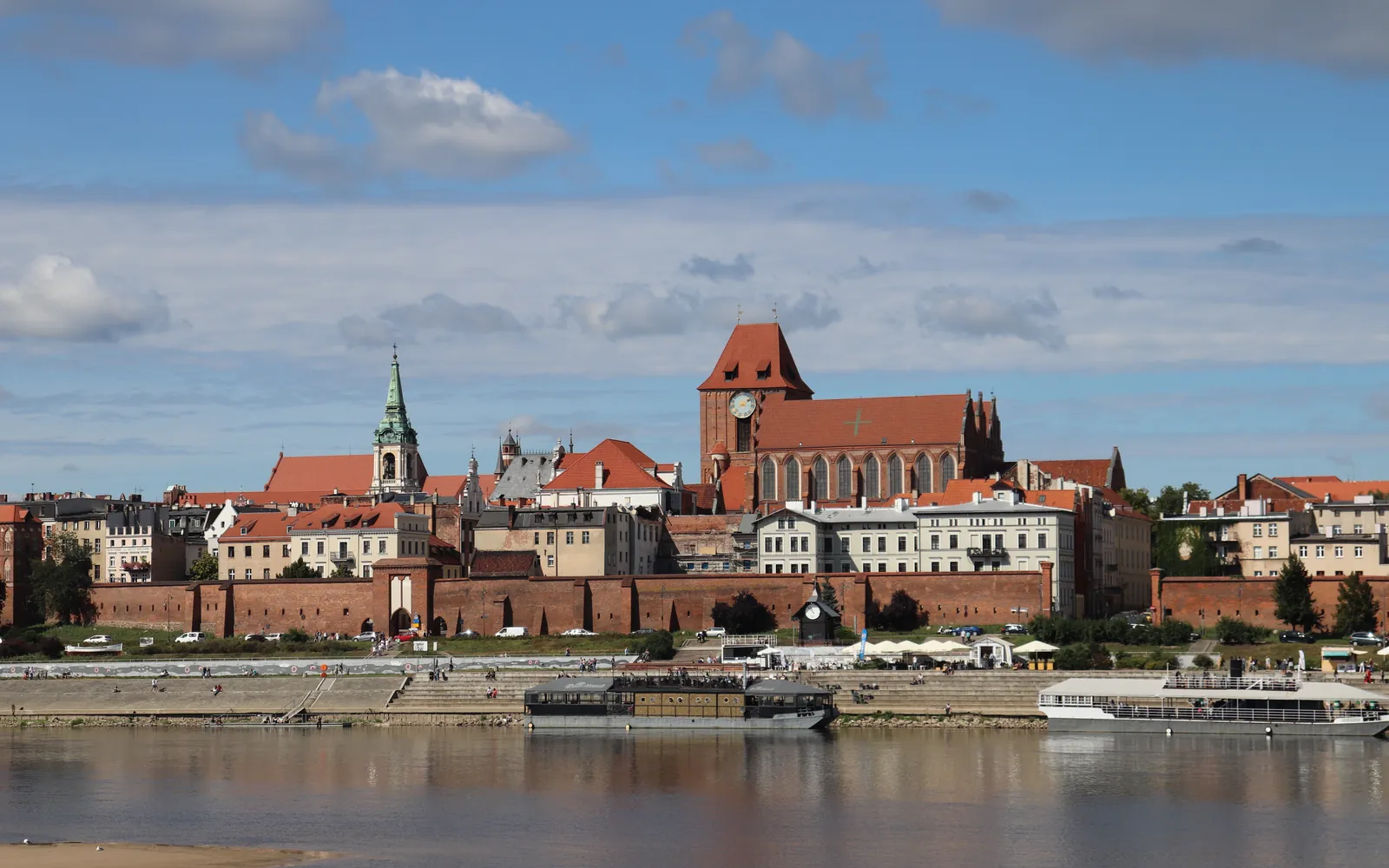
Toruń's red-brick old town from across the VistulaKuyavian-Pomeranian · on the Vistula

Toruń's red-brick old town from across the VistulaAndrzej Otrębski / CC BY-SA 4.0 / cropped

Toruń

Copernicus's red-brick hometown, with gingerbread in the air.

Getting there●○○○○Very easy on your own: 2½ to 3 hours by train from Warsaw; 2 to 3 hours from Gdańsk.

Best timeGood all year

One of Poland's favourite old towns — with surprisingly few foreign visitors.

Toruń was a Hanseatic trading town in the Middle Ages, and its old town came through the wars almost untouched — Gothic brick churches, city walls and merchants' houses all survive; it became a UNESCO World Heritage Site in 1997. The astronomer Copernicus was born here, and his family home is now a museum. Toruń is most famous for gingerbread, baked here for centuries; two gingerbread museums let you press your own with a traditional wooden mould. There's even a leaning tower at the edge of the old town, tilted by sinking foundations.

GETTING THERE2½ to 3 hours by train from Warsaw, 2 to 3 hours from Gdańsk, to Toruń Główny; the station is on the south bank, about 10 minutes by bus across the bridge to the old town.
GOOD TO KNOWGood year-round; May–September is most pleasant, with outdoor tables filling the old town at night. December brings a Christmas market and the most seasonal gingerbread workshops. Many museums close on Mondays.
SAFETYThe riverside path is poorly lit at night — walk in company if you can.
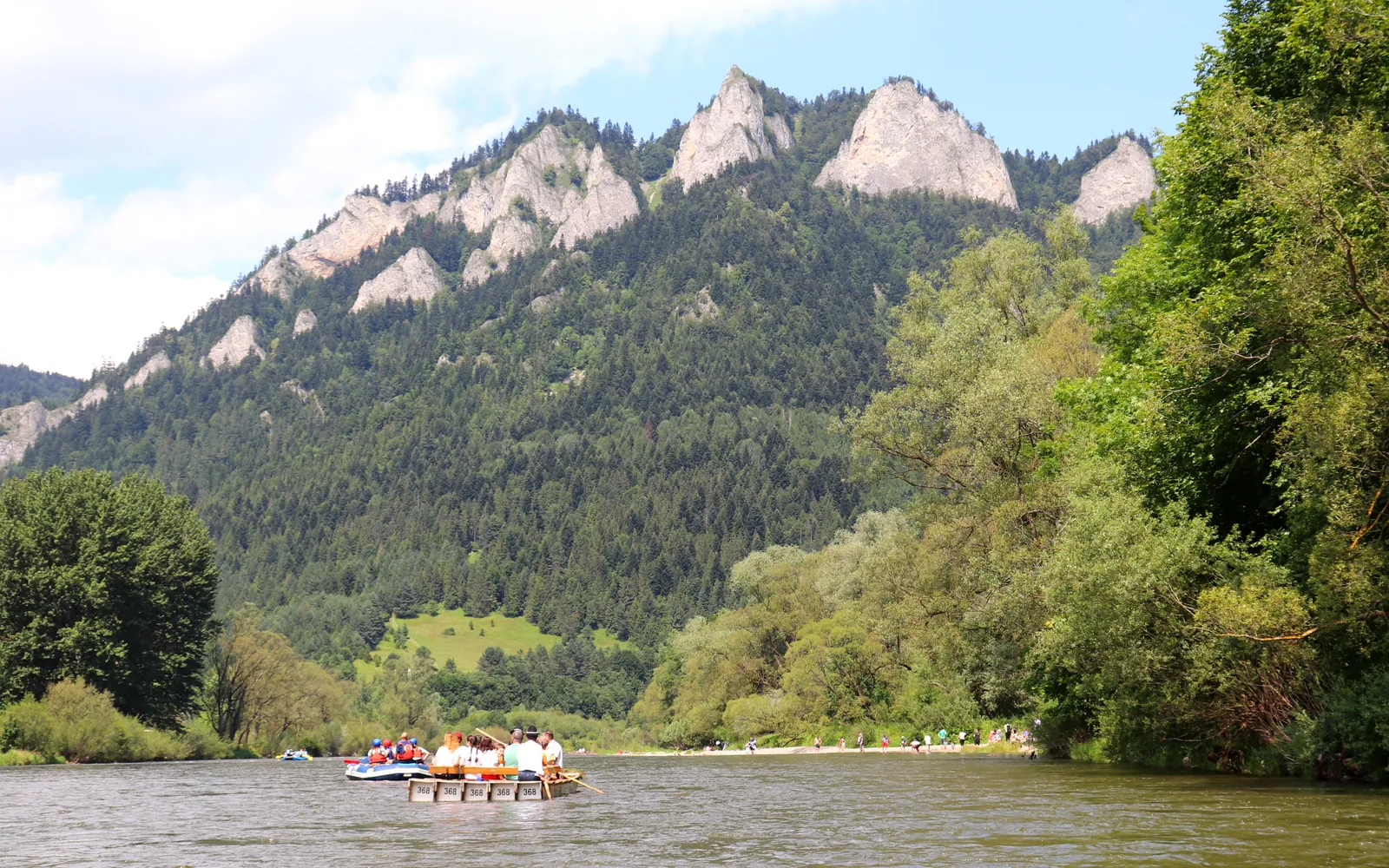
Rafts on the Dunajec with the Three Crowns behindLesser Poland · Pieniny National Park

Rafts on the Dunajec with the Three Crowns behindAndrzej Otrębski / CC BY-SA 4.0 / cropped, colour adjusted

Dunajec Raft Ride, Pieniny

Board a wooden raft and let a highland boatman pole you down a limestone gorge.

Getting there●●●○○Doable on your own: about 2½ hours by bus from Kraków to Szczawnica, then a bus to the raft station.

Best timeJun–Sep

A Polish classic everyone knows from childhood — and only possible half the year.

The Dunajec river cuts a winding gorge through the Pieniny mountains between white limestone walls, Poland on one side and Slovakia on the other. Local highland boatmen in traditional dress take visitors downstream on rafts made of several wooden boats lashed together, from Sromowce upstream to Szczawnica, about 18 km and a little over 2 hours. Before setting off you'll see the Three Crowns, Pieniny's most famous peak; keen walkers can climb it separately for a view down the whole gorge.

GETTING THEREAbout 2½ hours by bus from Kraków to Szczawnica, then a bus or taxi to the raft station at Sromowce-Kąty; you land in Szczawnica, so there's no backtracking. Drivers can leave their car at the start — the raftsmen arrange transport back to it.
GOOD TO KNOWRafts run only from about early April to late October; June–September is most pleasant, and September is quieter as the hills start to turn gold. Trips stop when the river is too high or low — check the official site. Tickets are sold on the spot; arrive early on high-season weekends.
SAFETYStay seated on the raft; don't set off when the river is swollen after heavy rain.
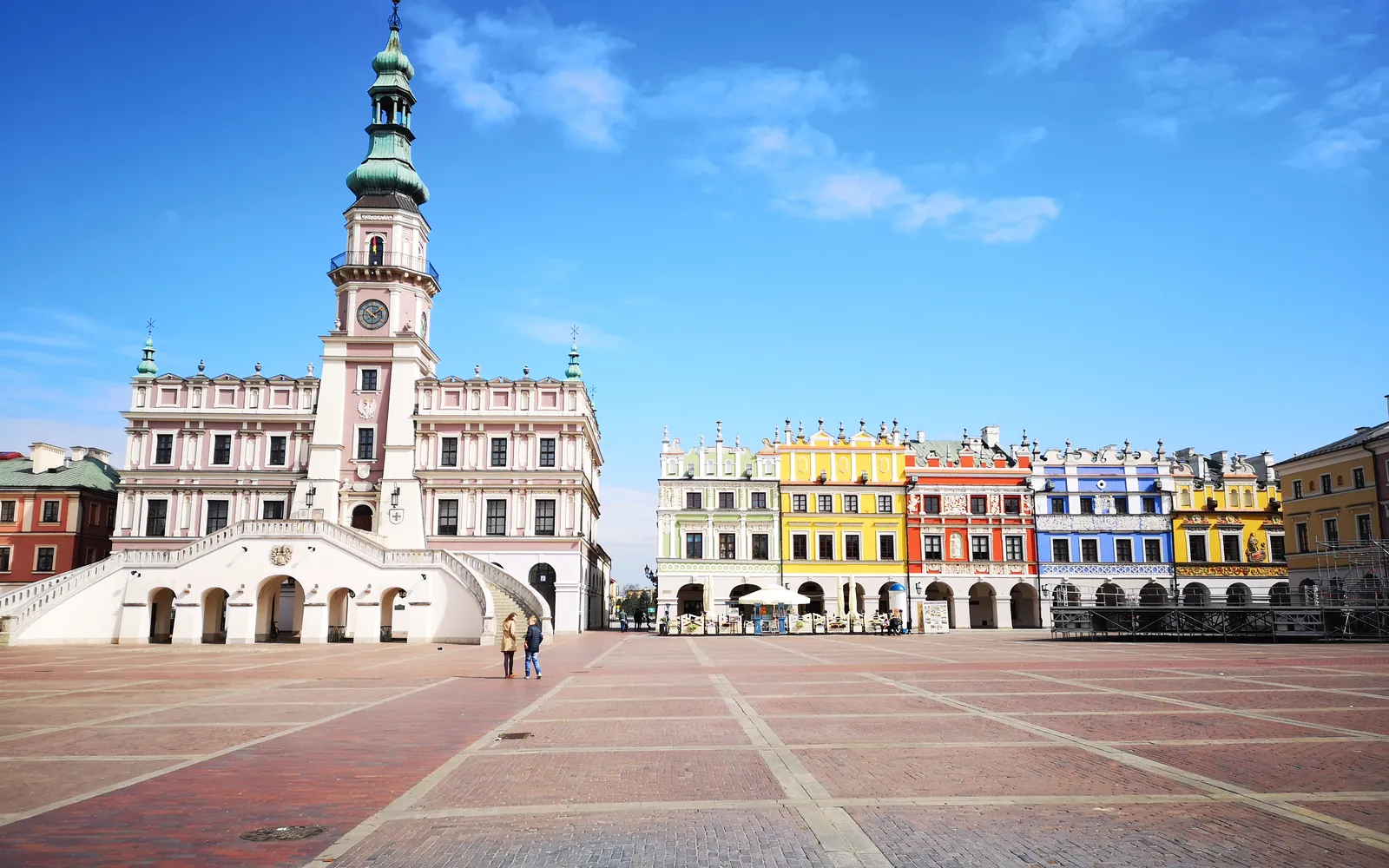
Zamość's town hall and Armenian merchants' houses on the Great Market SquareLublin Province

Zamość's town hall and Armenian merchants' houses on the Great Market SquareNiki4wiki / CC BY-SA 4.0 / cropped

Zamość

A Renaissance town drawn up as an Italian-style 'ideal city'.

Getting there●●●○○Doable on your own but far: about 1½ hours by bus from Lublin; 4 to 5 hours by bus from Warsaw.

Best timeMay–Sep

For a complete Renaissance 'ideal city', come to Zamość.

In the late 16th century a Polish nobleman hired an Italian architect to build this town from scratch on open land, following the 'ideal city' ideas of the time — streets, square, walls and gates all planned; it became a UNESCO World Heritage Site in 1992. On one side of the Great Market Square stands the town hall with its fan-shaped grand staircase; on another, a row of colourful Armenian merchants' houses with carved, patterned façades above a continuous arcade. The star-shaped fortress walls still survive outside the old town.

GETTING THEREAbout 1½ hours by bus from Lublin; 4 to 5 hours by bus from Warsaw or Kraków, so it's best combined with Lublin. The old town is walkable.
GOOD TO KNOWGood year-round; May–September, with tables out on the square, is most pleasant. Check town hall and museum hours on the official site. This is eastern Poland and services are sparser — check your return.
SAFETYParts of the walls and bastions have no railings — keep an eye on children.
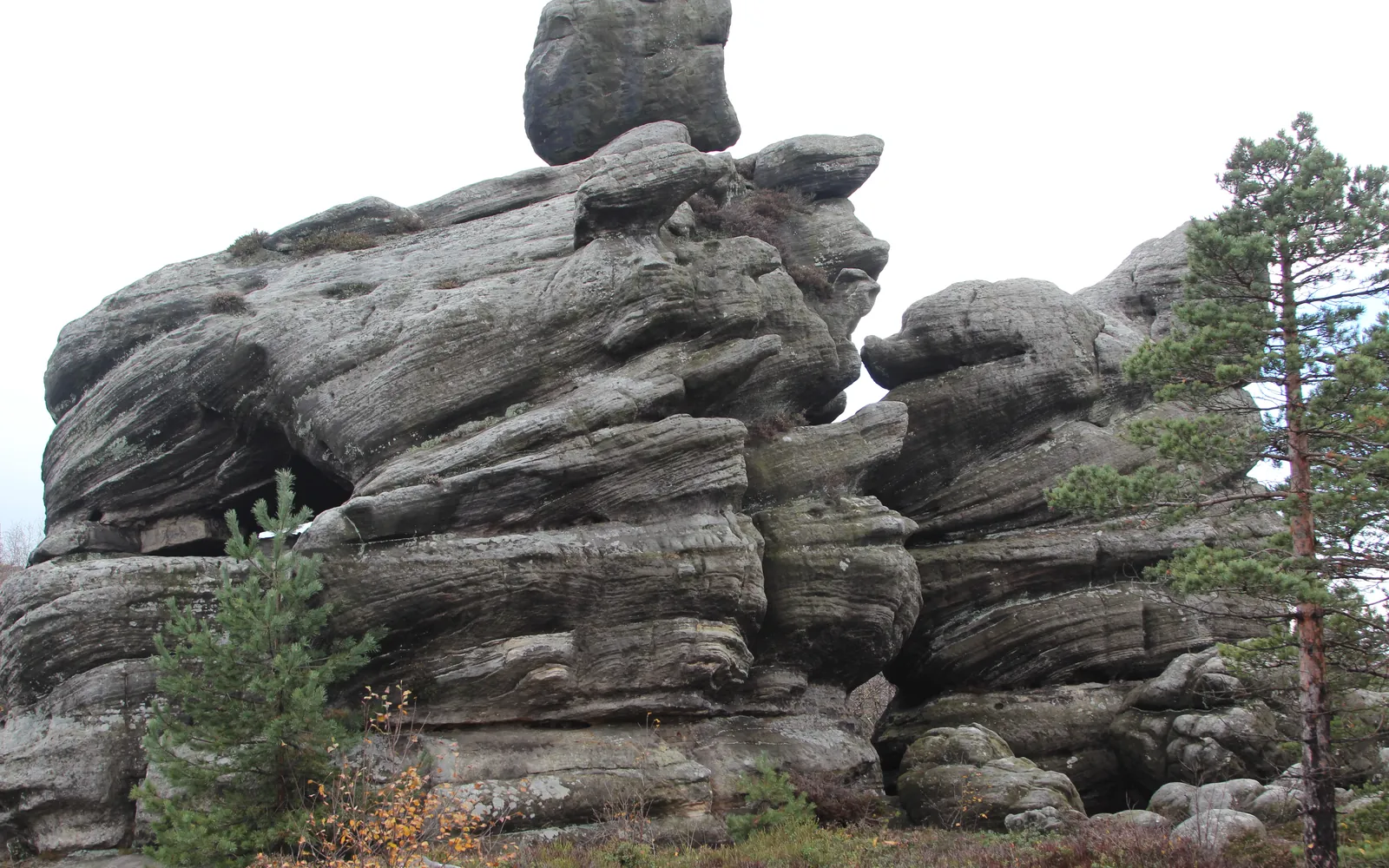
A sandstone rock called 'the Bear' on Szczeliniec WielkiLower Silesia · Czech border

A sandstone rock called 'the Bear' on Szczeliniec WielkiFallaner / CC BY-SA 4.0 / cropped

Table Mountains National Park

Squeeze through a sandstone maze — and turn a corner to meet a stone bear.

Getting there●●●○○Doable on your own with changes: about 2½ hours by train or bus from Wrocław to Kudowa-Zdrój, then a bus or taxi up.

Best timeMay–Oct

An almost alien sandstone landscape in Poland's southwest corner — and a Narnia film location.

The Table Mountains are named for their flat, table-like tops: layer upon layer of sandstone carved by wind and rain into strange shapes. The highlight is the highest, Szczeliniec Wielki: after more than 600 steps, the summit is a sandstone maze where the path dips in and out of crevices past rocks named the Bear, the Camel and the Monkey. Nearby Błędne Skały (the Errant Rocks) is another labyrinth, with gaps so narrow you go through sideways. Several scenes of The Chronicles of Narnia: Prince Caspian were filmed in the area.

GETTING THEREAbout 2½ hours by train or bus from Wrocław to Kudowa-Zdrój, then about 20 minutes by bus or taxi to Karłów at the foot of the mountain. Both labyrinths charge admission; private cars are restricted at Błędne Skały in summer, so follow the posted shuttle or walking rules.
GOOD TO KNOWMay–October is best, and October when the forest turns gold is loveliest; in winter the trails often close for ice and snow — check the national park site. Combine it with the Chapel of Skulls near Kudowa.
SAFETYSteps and crevices are narrow and steep, slippery after rain — wear grippy shoes and pack light. Keep back from the edge at the viewpoints if heights bother you.
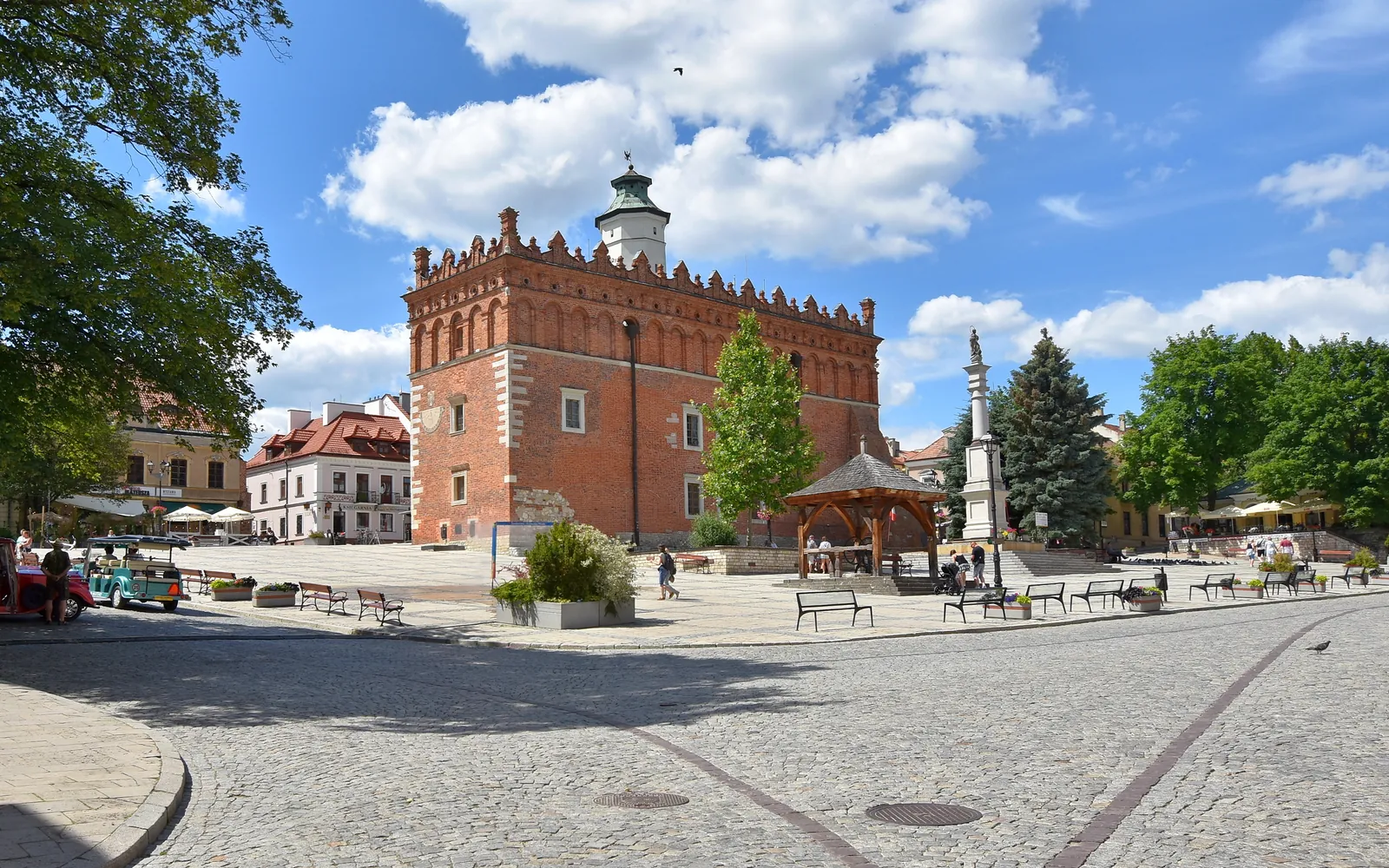
Sandomierz's market square and town hallŚwiętokrzyskie · on the Vistula

Sandomierz's market square and town hallHenryk Bielamowicz / CC BY-SA 4.0 / cropped

Sandomierz

A hilltop old town whose town hall wears a crown of Renaissance parapets.

Getting there●●●○○Doable on your own but slow: about 3 hours by bus from Kraków or Warsaw, infrequent.

Best timeMay–Sep

The small town many Poles most want to show foreign friends.

Sandomierz is one of Poland's oldest towns, its old town set on a hill above the Vistula around a sloping rectangular square, in the middle of which stands a town hall crowned with white Renaissance parapets. Beneath the old town runs an underground route of about 500 metres, linking the old merchants' cellars, which you can walk with a guide. Outside town, Queen Jadwiga's Gully runs between tall loess walls, tree roots growing out of the earth — cool even on hot days. The town is also the setting of a hugely popular Polish TV series, so Poles know it well.

GETTING THEREAbout 3 hours by bus from Kraków or Warsaw, infrequent — check times; about 2½ hours by car from Kraków. The old town and gully are walkable.
GOOD TO KNOWMay–September is most pleasant; orchards blossom around town in spring and the old-town vineyards are harvested in autumn. The underground route is by guided tour; check opening times.
SAFETYThe loess gully turns very muddy after rain — best avoided after wet weather.
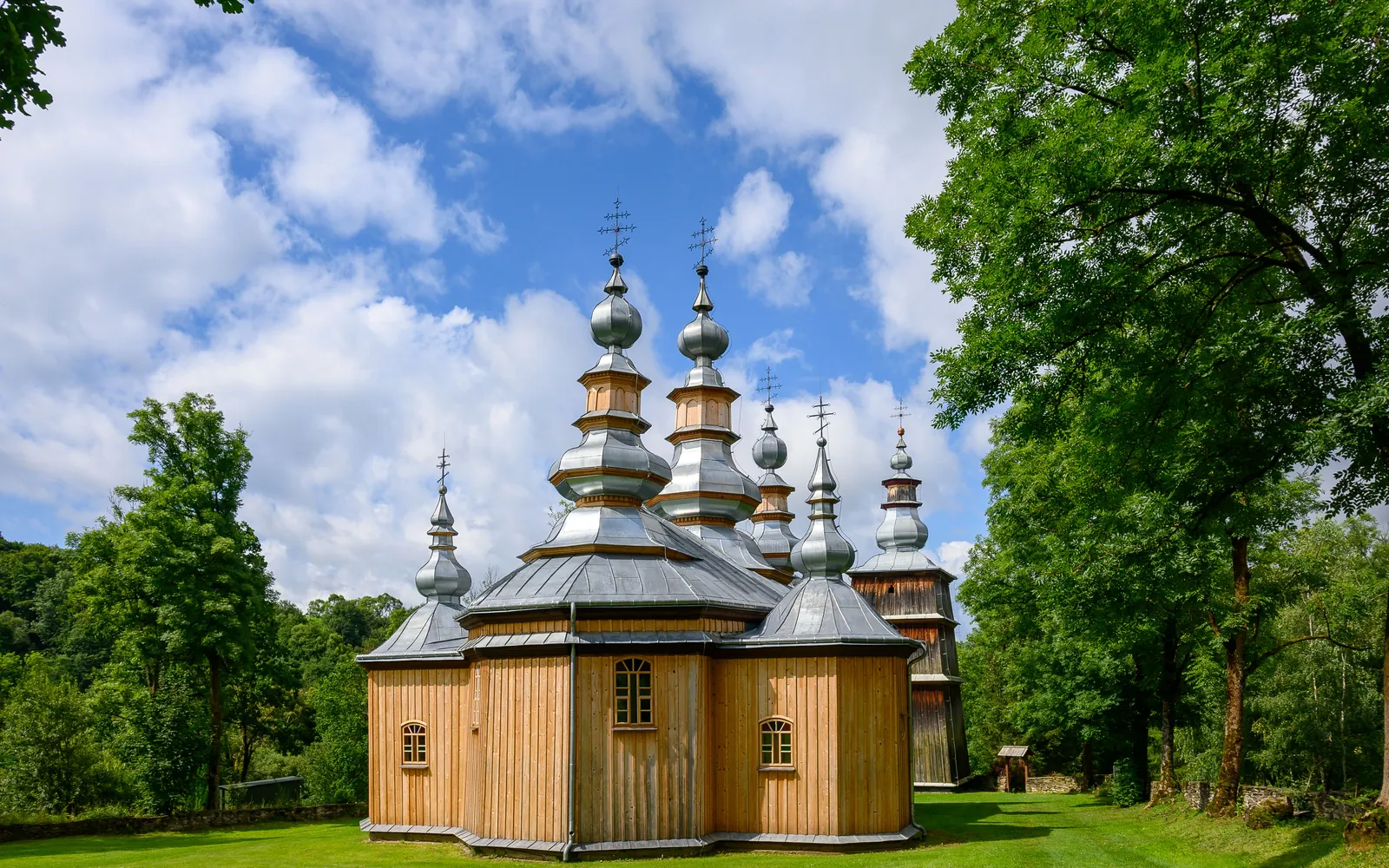
The wooden church at TurzańskSubcarpathia · Poland's southeast corner

The wooden church at TurzańskDaniel.zolopa / CC BY 4.0 / cropped

Bieszczady Mountains

Poland's wildest mountains, with wooden Orthodox churches hidden in the forests.

Getting there●●●●○Remote: 4 to 5 hours by bus from Kraków to Sanok or Ustrzyki Dolne; little public transport in the mountains — rent a car or join a local tour.

Best timeMay–Oct

To escape every tourist, head to Bieszczady in Poland's far southeast.

Bieszczady lies where Poland, Slovakia and Ukraine meet — Poland's most thinly populated, wildest mountains. The summits are high meadows called połoniny that turn gold across whole hillsides in autumn. Highlanders of Ukrainian heritage once lived here and left many wooden Orthodox churches; the Church of St Michael the Archangel at Turzańsk in the photo is part of a UNESCO World Heritage listing of wooden tserkvas in Poland and Ukraine. In summer you can also ride a narrow-gauge forest railway along an old logging line through the valleys.

GETTING THERE4 to 5 hours by bus from Kraków to Sanok or Ustrzyki Dolne; buses in the mountains are very sparse, so a rental car is easiest. Turzańsk is south of Sanok, about an hour's drive.
GOOD TO KNOWMay–October is best, and October when the meadows and forests turn gold is loveliest; the forest railway runs roughly May to October. Winter snow is deep and many roads and facilities close. Wooden churches are usually locked — ask about visiting times.
SAFETYThere are bears and wolves — stay on trails and leave no food out. Many areas have no phone signal: download offline maps and tell someone your plans. Few people speak English, so download Polish offline in your translation app; first-timers might consider a locally run day tour.
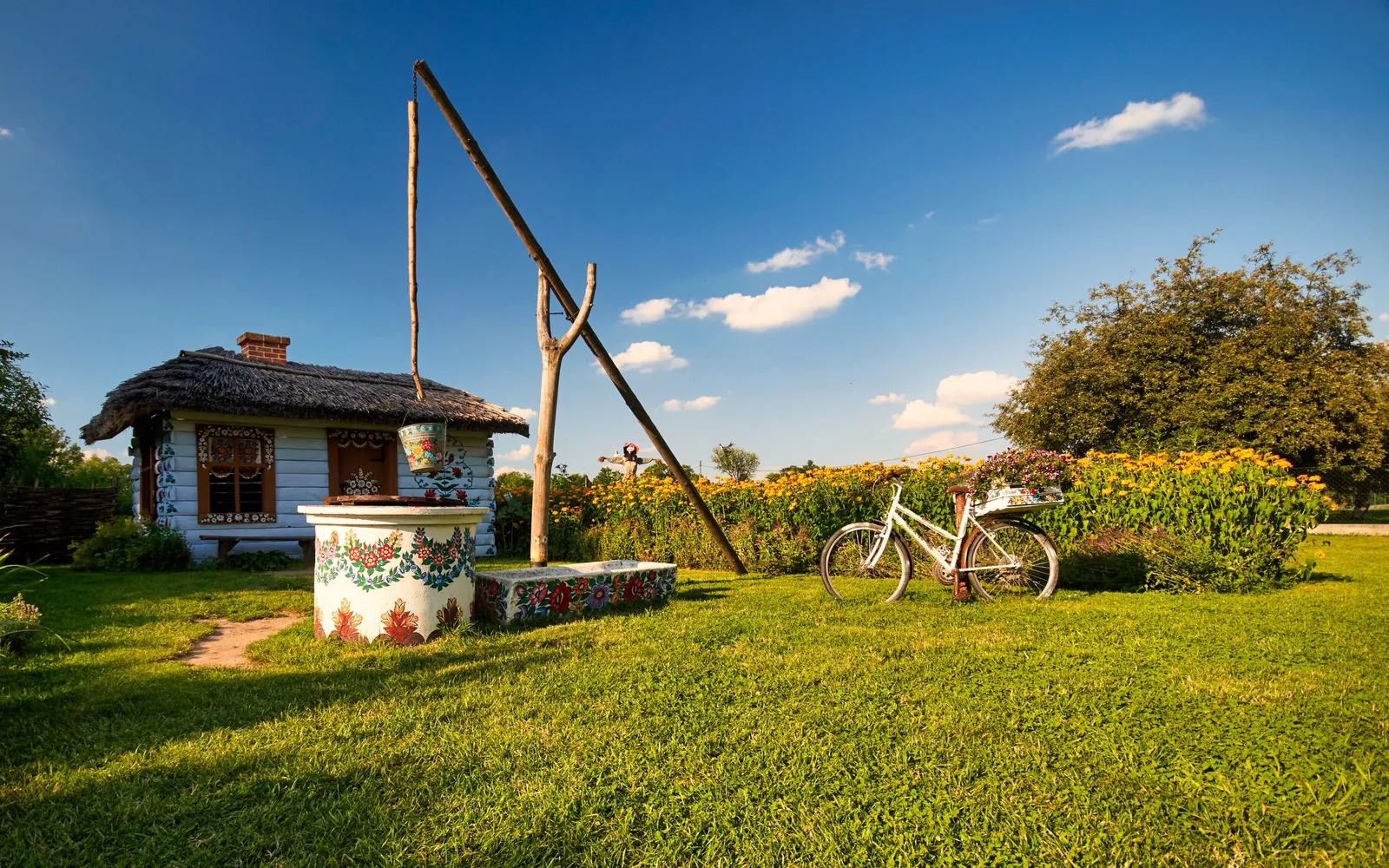
A painted well and old cottage in ZalipieLesser Poland · near Tarnów

A painted well and old cottage in ZalipieDaniel.Zolopa / CC BY-SA 4.0 / cropped

Zalipie, the Painted Village

Houses, wells — even dog kennels — painted all over with flowers.

Getting there●●●●○Remote: about 1½ hours by car from Kraków; by public transport you change in Tarnów or Dąbrowa Tarnowska and buses are few.

Best timeMay–Sep

A village turned into a garden by paintbrushes — still little known.

Over a century ago, women in Zalipie began painting flowers over the soot-darkened walls by their stoves to brighten their homes. It spread from inside to out, until wells, barns, bridges and even dog kennels were covered in flowers. A farmhouse museum, the home of the most famous painter, Felicja Curyłowa, is open to visitors, and the 'House of Painters' shows villagers' work — sometimes you can try painting yourself. Since 1948 a 'Painted Cottage' contest has been held every late spring or early summer, when the whole village is freshly repainted and at its prettiest.

GETTING THEREAbout 1½ hours by car from Kraków; by public transport take a train or bus to Tarnów, then a bus toward Dąbrowa Tarnowska — services are few, so first-timers should consider a private driver or day tour. The village is spread out; allow 1–2 hours to walk around.
GOOD TO KNOWMay–September is when flowers and paintings look best together; the 'Painted Cottage' contest is held around Corpus Christi each year (roughly June) — check local announcements for 2027 dates. Most houses are private homes: look from outside and don't enter yards.
SAFETYVillage roads have no pavements — watch for cars. Few people speak English, so download Polish offline in your translation app.

Winter ski areas & events

Coming in winter? The region also has these. Full details (lessons, lodging, transport) are in the winter corner of your quiz results.

Ski areas

  • Zakopane: Poland's winter capital — ski the Tatras, eat grilled cheese below
  • Białka Tatrzańska: Poland's most popular family ski area — straight into the thermal pools afterwards
  • Szczyrk: The big ski area easiest to reach from Kraków and Katowice
  • Szklarska Poręba: A Giant Mountains ski town, next door to a cross-country paradise
  • Karpacz: A ski town below Śnieżka — with a wooden church brought from Norway
  • Zieleniec: One of Poland's snowiest ski areas, with one of the longest seasons
  • Krynica-Zdrój: Forest skiing next to a spa town — finish with a glass of mineral water

Winter events

  • Wrocław Christmas Market: One of Poland's biggest Christmas markets, with a glowing giant tree by the town hall
  • Kraków Christmas Market: Mulled wine beside the Cloth Hall on a medieval square
  • Kraków Szopka Contest: All of Kraków shrunk into glittering foil-and-paper nativity scenes
  • A Gingerbread Day in Toruń: Press your own Toruń gingerbread in a centuries-old wooden mould
  • Zakopane Ski Jumping World Cup: Poland's wildest winter event — the whole valley roaring
  • Horse-Drawn Sleigh Ride in the Tatras: A horse-drawn sleigh through snowy woods, ending with sausages over a bonfire
  • A Cross-Country Day at Jakuszyce: No lifts, no steep slopes — just a whole day gliding through snowy forest

Not sure which to pick? Take the 4-minute travel-personality quiz and find the one that suits you.

Take the quiz