TOP-TIER TRAVEL中/EN

Slovakia

9 hidden gems in Slovakia

Castles, gorges & the Tatras. We picked 9 places in this region — some well known, some few visitors find. Browse at your own pace, then take the quiz when something catches your eye.

TOP-TIER TRAVEL › All hidden gems › Slovakia

Not sure which to pick? Take the 4-minute travel-personality quiz and find the one that suits you.

Take the quiz
Bratislava
First time? Start with Bratislava and the High Tatras

Bratislava’s old town, castle and Danube promenade, then a train to the foot of the High Tatras and a cable car up to the lakes and peaks — do these classics first and you can’t go wrong. Slovakia is long and narrow: Poprad is about 4 hours from Bratislava by train, Košice about 5. Many visitors fly via Vienna, just an hour from Bratislava. Then save two or three days for the place below that’s truly yours.

Spot details checked: October 2026

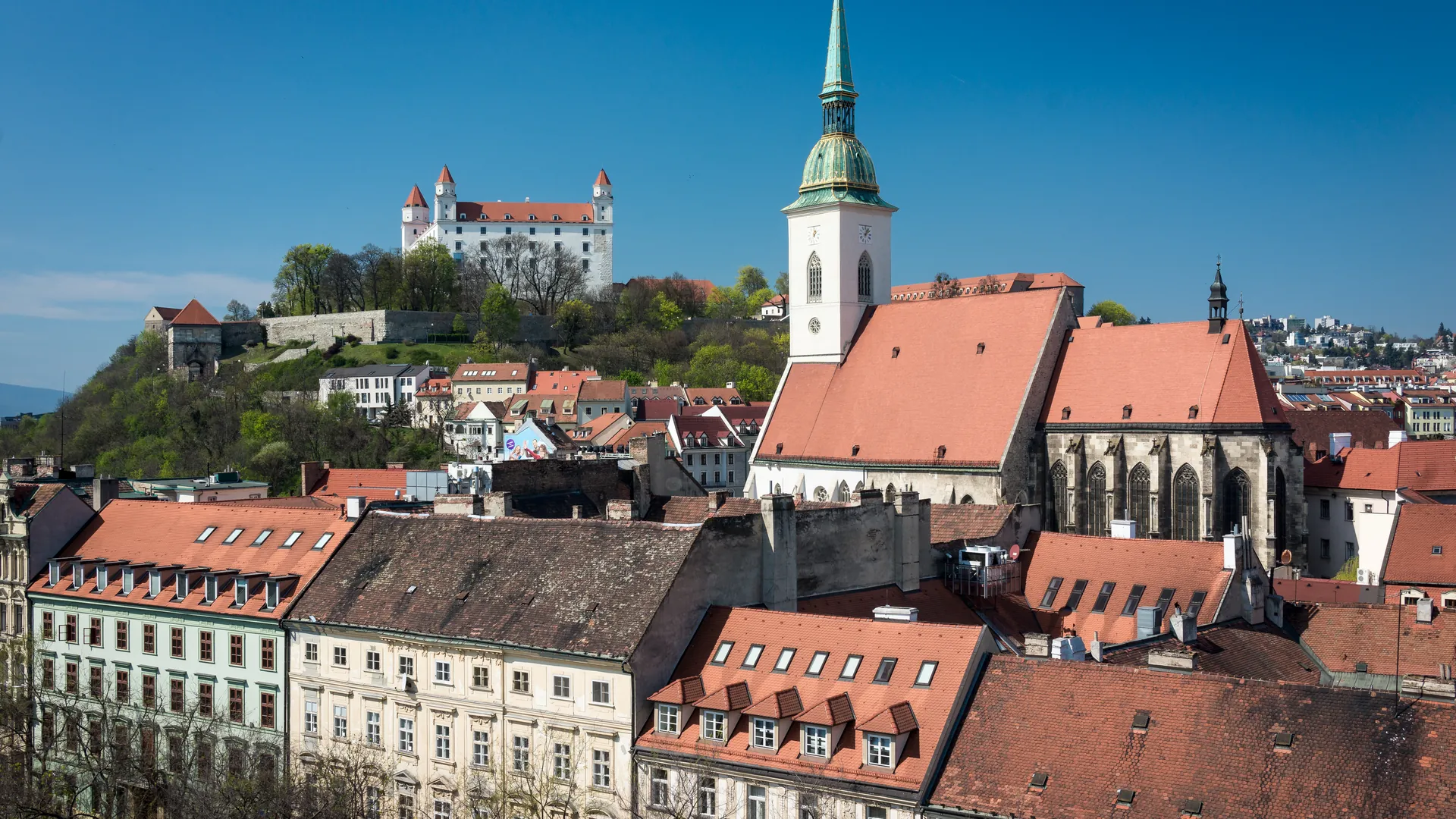
St Martin’s Cathedral and Bratislava Castle on the hillBratislava · on the Danube

St Martin’s Cathedral and Bratislava Castle on the hillJayphen / CC BY-SA 2.0 / cropped

Bratislava

A tiny capital, its castle on the hill and a golden crown on its cathedral spire.

Getting there●○○○○Very easy on your own: about 1 hour by train or bus from Vienna.

Best timeApr–Oct

One of Europe’s smallest capitals, just an hour from Vienna.

Bratislava, Slovakia’s capital, has an old town small enough to explore on foot. The square white building with a tower at each corner on the hill is Bratislava Castle, with views over the Danube. The spire topped with a gilded crown in the photo belongs to St Martin’s Cathedral: between 1563 and 1830 eleven kings of Hungary were crowned here, Maria Theresa among them. Fun bronze statues hide on old-town corners — most famously a workman peeking out of a manhole.
GETTING THEREAbout 1 hour by train or bus from Vienna Airport or central Vienna; Bratislava’s own airport has fewer flights. From the station, a bus or a 20-minute walk to the old town.
GOOD TO KNOWBest April–October, when summer evenings fill the old-town terraces; Christmas markets run from late November into December. Check the castle and cathedral’s official sites for hours.
SAFETYThe old town is generally safe; mind your belongings on the busy bar streets at weekends, and book taxis by app rather than taking touts.
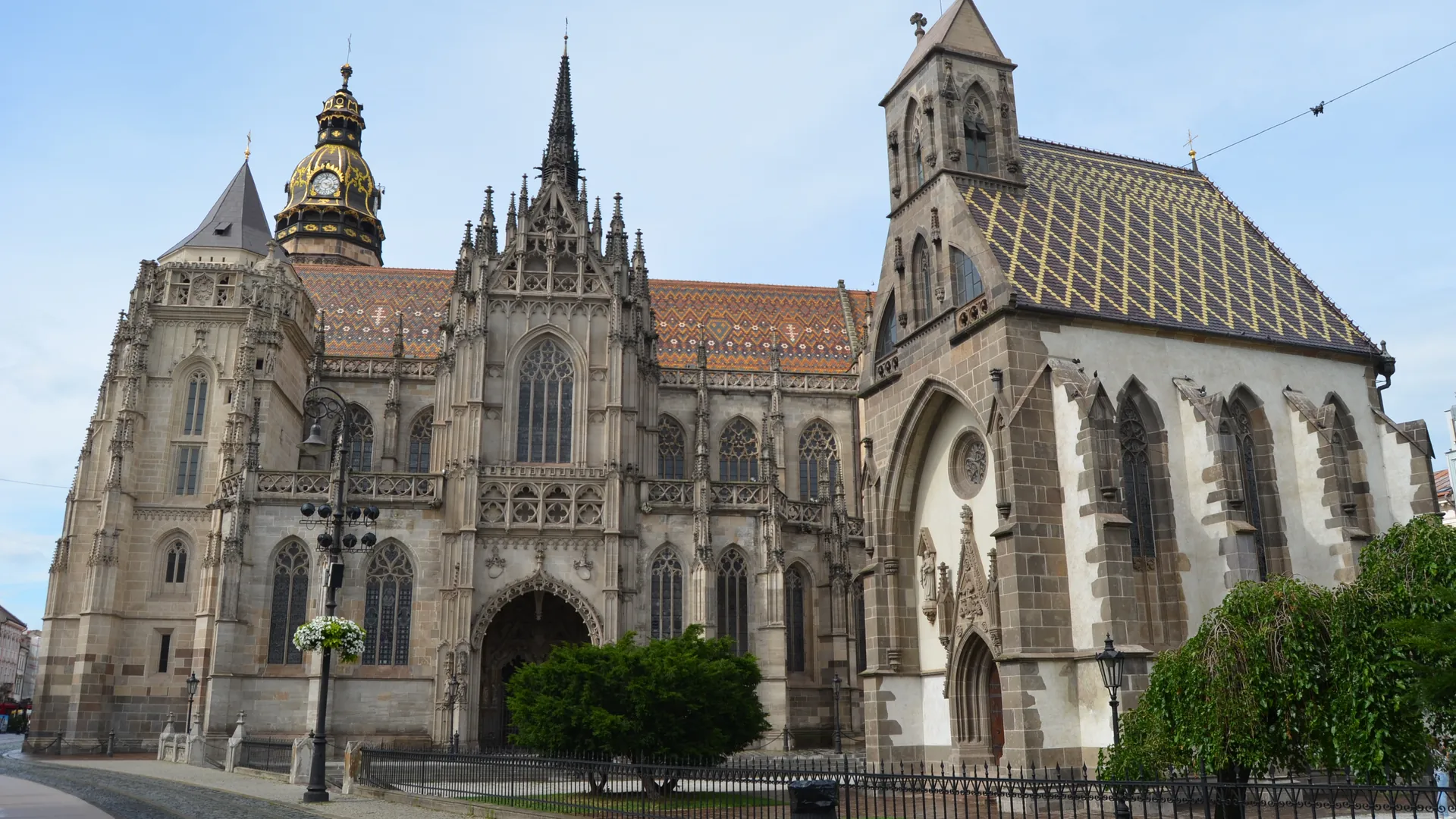
Košice’s St Elisabeth Cathedral and St Michael’s ChapelKošice · eastern Slovakia

Košice’s St Elisabeth Cathedral and St Michael’s ChapelPedro Nuno Caetano / CC BY 2.0 / cropped

Košice

Europe’s easternmost Gothic cathedral, its roof patterned in coloured tiles.

Getting there●○○○○Very easy on your own: about 5 hours by train from Bratislava, or a domestic flight.

Best timeApr–Oct

Slovakia’s second city and 2013 European Capital of Culture — with few tourists.

Košice is Slovakia’s second-largest city. Its long, broad main street is lined with colourful Baroque and Art Nouveau buildings. In the middle stands St Elisabeth Cathedral, the largest church in Slovakia and the easternmost Gothic cathedral in Europe, its roof laid in patterned coloured tiles — you can climb the bell tower for a view down the street. The smaller building beside it is St Michael’s Chapel. In summer a singing fountain dances to music on the main street, and Košice was European Capital of Culture in 2013.

GETTING THEREAbout 4½–5 hours by train from Bratislava; Košice also has an airport with domestic and European routes. About 10 minutes’ walk from the station to the main street.
GOOD TO KNOWBest April–October, when the singing fountain is liveliest; December brings a Christmas market. Check the cathedral tower’s hours on the official site. Košice is also a great place to catch an ice-hockey game in winter.
SAFETYThe centre is generally safe; take care around the station at night.
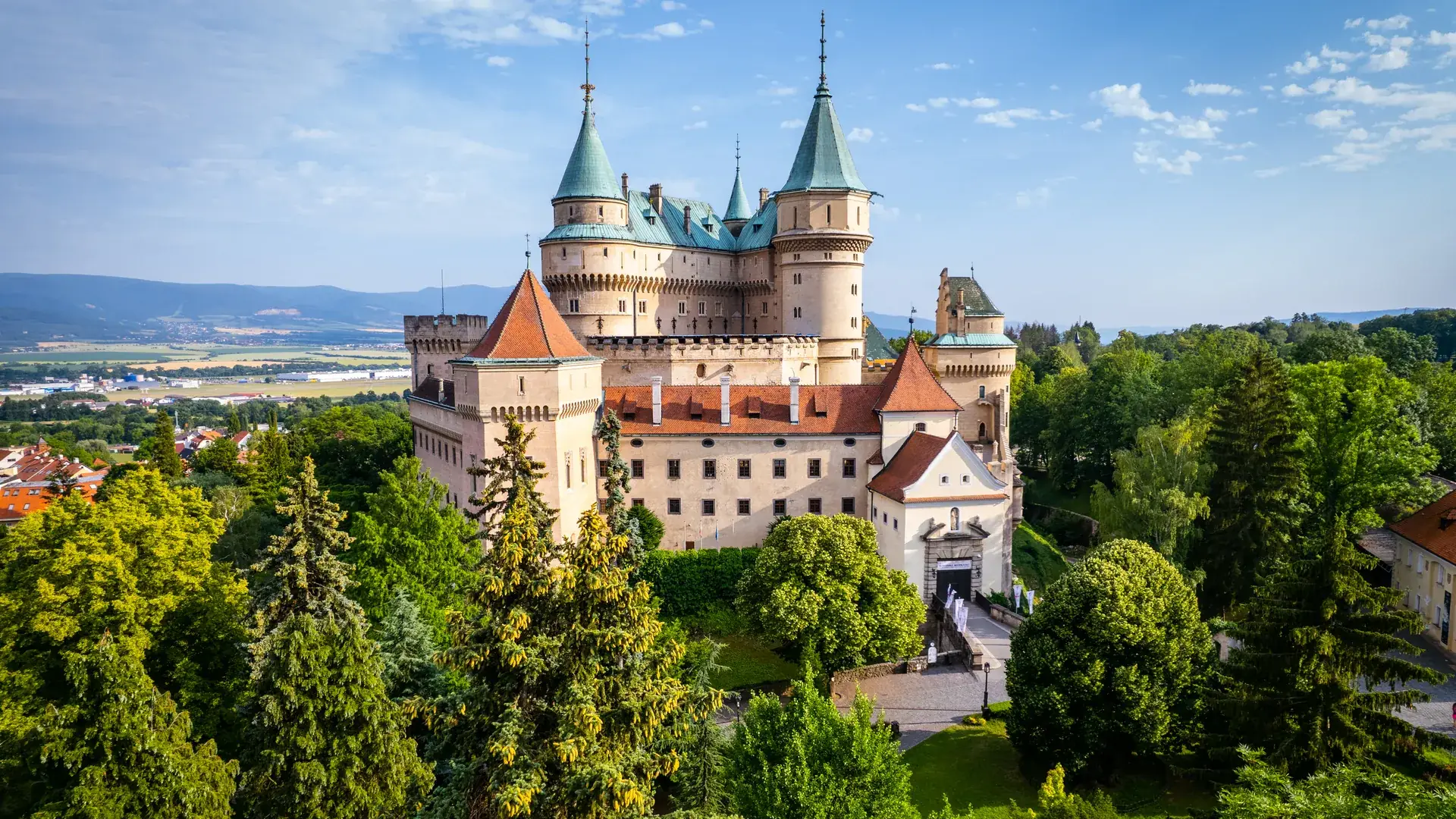
Bojnice Castle in its forest, from the airTrenčín · near Prievidza

Bojnice Castle in its forest, from the airStudiowacho / CC BY-SA 4.0 / cropped

Bojnice Castle

Spire after spire — a castle straight out of a storybook.

Getting there●●●○○Fine on your own but slow: about 3 hours by train or bus from Bratislava to Prievidza, then a 10-minute local bus.

Best timeApr–Oct

Slovakia’s most popular castle — yet hardly any foreign tourists.

Bojnice began as a medieval stone fortress. Between the late 19th and early 20th centuries Count Pálffy remodelled it in a romantic style inspired by the châteaux of France’s Loire Valley — spires, battlements and pointed roofs one after another — and it’s often used for films and fairy tales. Inside you visit with a guide, through ornate halls down to a cave beneath. Each spring the castle hosts the International Festival of Ghosts and Spirits, turning into a haunted house at night. Slovakia’s oldest zoo is next door, and the little town is a spa resort too.

GETTING THEREAbout 3 hours by train or bus from Bratislava to Prievidza, then a 10-minute city bus to Bojnice. About 2½ hours by car.
GOOD TO KNOWBest April–October; check the official site for the spring ghost festival dates. Visits are by guided tour and summer weekends are busy — arrive early.
SAFETYForest paths around the castle are unlit at night — get back to town before dark.
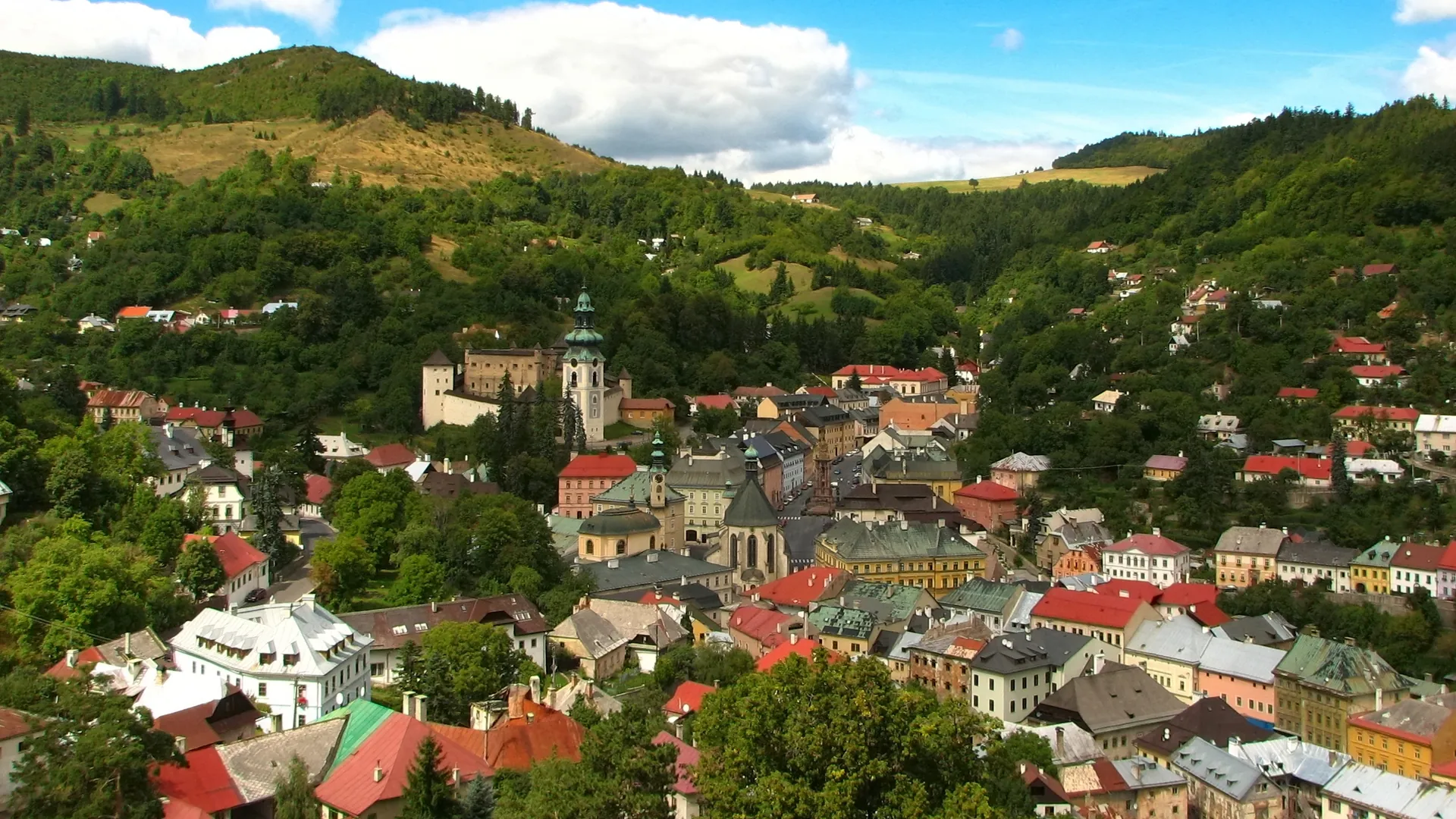
Banská Štiavnica’s old town from the New CastleBanská Bystrica · Štiavnica Mountains

Banská Štiavnica’s old town from the New CastleAdrian Tync / CC BY-SA 4.0 / cropped

Banská Štiavnica

A silver-mining town inside an old volcano, its houses stacked up the hillsides.

Getting there●●●○○Fine on your own but slow: about 3 hours by train from Bratislava (one change), about 2½ hours by car.

Best timeApr–Oct

Slovaks’ favourite weekend town, on the UNESCO list since 1993.

Banská Štiavnica sits in the caldera of an ancient volcano. Silver and gold mining made it rich in the Middle Ages — one of the Kingdom of Hungary’s most important mining towns — and one of Europe’s first mining academies was founded here in 1762. Its houses climb the slopes in tiers between an Old Castle and a New Castle, and in 1993 the town and surrounding mining sites became a UNESCO World Heritage Site. Dozens of artificial lakes dug to power the mines dot the hills — summer swimming spots — and an open-air mining museum outside town lets you put on a helmet and walk the tunnels.

GETTING THEREAbout 3 hours by train from Bratislava, changing at Hronská Dúbrava; about 2½ hours by car. The old town is steep but walkable.
GOOD TO KNOWBest April–October, with lake swimming in summer and the traditional Salamander procession in September; the mining museum’s tunnels may close in winter — check the official site.
SAFETYThe cobbled lanes are steep and slippery, especially in rain; it’s cold in the tunnels, so bring a jacket even in summer.
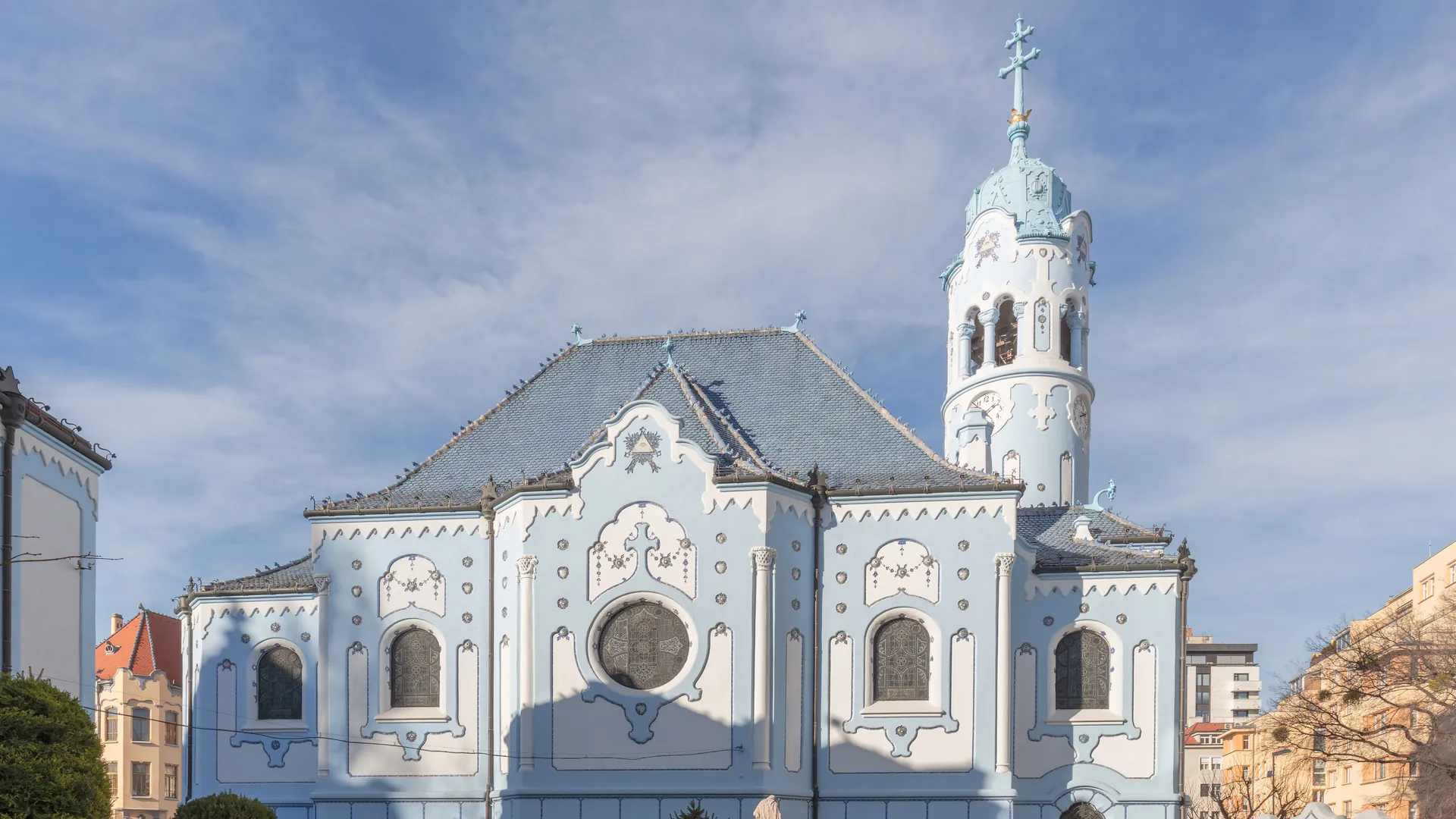
The Church of St Elizabeth (the Blue Church), BratislavaBratislava · east of the old town

The Church of St Elizabeth (the Blue Church), BratislavaDiego Delso, delso.photo, License CC BY-SA

The Blue Church, Bratislava

Walls, roof and bell tower — the whole church is a soft sky blue.

Getting there●○○○○Very easy on your own: 10–15 minutes’ walk from Bratislava’s old town.

Best timeGood all year

An Art Nouveau church like a frosted cake — many come just to photograph it.

The Blue Church is officially the Church of St Elizabeth, designed in the early 20th century by the Hungarian architect Ödön Lechner and a landmark of Art Nouveau. Almost everything — the walls, the blue glazed roof tiles, the round bell tower — is pale blue, wrapped in ribbon-like decoration, so from a distance it looks like a frosted cake. It’s small, and the interior is blue and white too.

GETTING THEREAbout 10–15 minutes’ walk east of Bratislava’s old town.
GOOD TO KNOWAny season — you can see the outside any time; the interior usually opens only around Mass, at irregular times, so check parish notices if you want to go in.
SAFETYIt’s a residential area and quiet at night — walk with others.
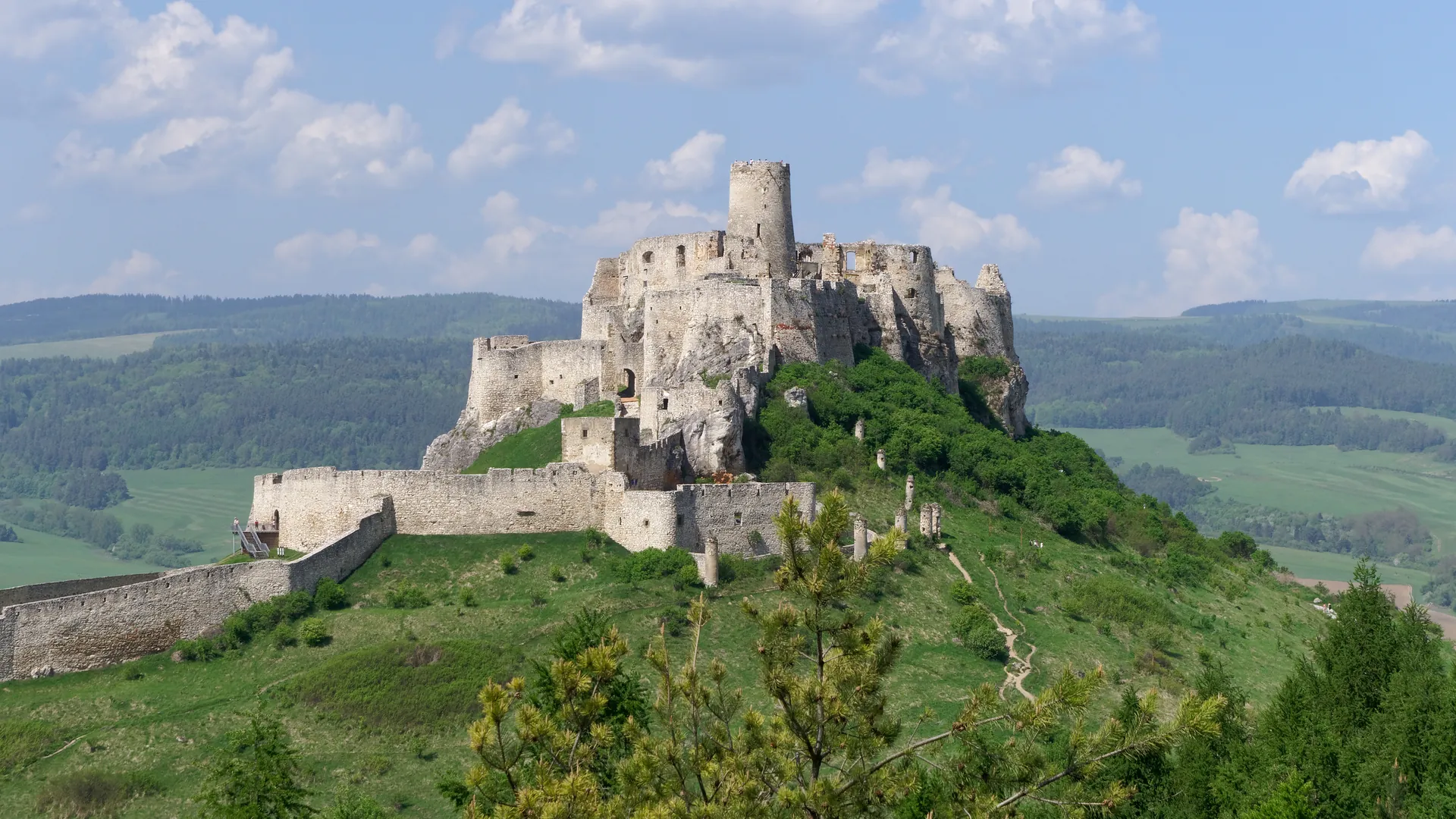
Spiš Castle ruins on their green hillKošice · Spiš region

Spiš Castle ruins on their green hillJakub Hałun / CC BY-SA 4.0 / cropped

Spiš Castle

A whole hilltop ringed by walls — one of Central Europe’s largest castle ruins.

Getting there●●●○○Fine on your own but slow: 40–60 minutes by bus from Poprad or Levoča, then about 30 minutes’ walk uphill.

Best timeApr–Oct

One of Central Europe’s biggest castle complexes, its walls covering a whole hilltop.

Spiš Castle sits on a limestone hill and grew ring by ring from the 12th century, its walls enclosing a vast area — one of the largest castle complexes in Central Europe. After an 18th-century fire it was abandoned, but its walls, keep and palace remains still stand, and from the top tower you see the whole Spiš plain and the Tatras beyond. In 1993 the castle, the church town of Spišská Kapitula below it and nearby Levoča became a UNESCO World Heritage Site together.

GETTING THERE40–60 minutes by bus from Poprad or Levoča to Spišské Podhradie, then about 30 minutes uphill on foot; by car you can park just below the castle.
GOOD TO KNOWOpen April–October, best in summer; from about November to March the castle is closed and you can only view it from outside — check the official site for dates. There’s no shade on the hill, so bring water and a hat in summer.
SAFETYSteps in the ruins are uneven and some spots have no railings — keep hold of children; the top of the tower is cold in the wind.
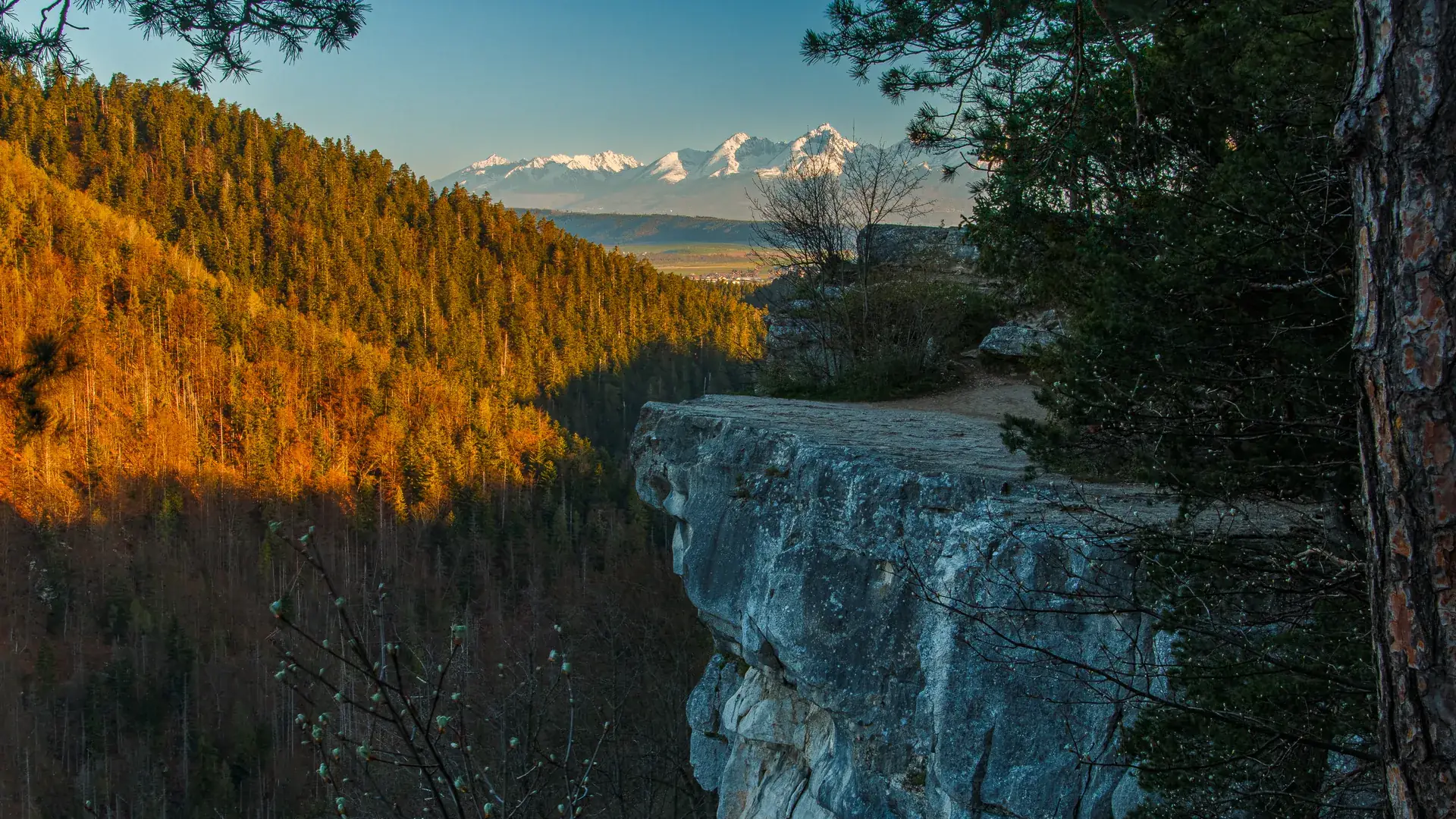
Tomášov Viewpoint, the High Tatras beyondKošice · Slovak Paradise National Park

Tomášov Viewpoint, the High Tatras beyondIvan Judak / CC BY-SA 4.0 / cropped

Slovak Paradise · Tomášov Viewpoint

Stand on a rock ledge above the drop, the snowy High Tatras lined up on the horizon.

Getting there●●●○○Fine on your own but slow: train from Poprad to Spišská Nová Ves, about 20 minutes by bus to Čingov, then about 45 minutes on foot.

Best timeMay–Oct

Slovakia’s most famous gorge national park, little known to most visitors.

Slovak Paradise is a limestone plateau carved by rivers into narrow gorges; trails climb beside the waterfalls on wooden ladders, iron steps and chains — some of Central Europe’s best-known hikes. Tomášov Viewpoint (Tomášovský výhľad) is the easy introduction: a rock platform jutting from the cliff above the forested Hornád valley, with the whole High Tatras range in view on clear days. It’s about 45 minutes’ walk from Čingov.

GETTING THEREAbout 20 minutes by train from Poprad to Spišská Nová Ves, then about 20 minutes by bus or taxi to Čingov and a 45-minute walk. By car, park at Čingov.
GOOD TO KNOWBest May–October. Most ladder routes in the gorges are one-way — follow the signs — and many close in winter because of ice. Some park trails charge a fee; check the official site.
SAFETYThe viewpoint ledge has no railing and drops straight off — don’t step out for a photo, and keep hold of children; rock is slippery after rain. The ladder gorges are strenuous — don’t push it if you dislike heights.
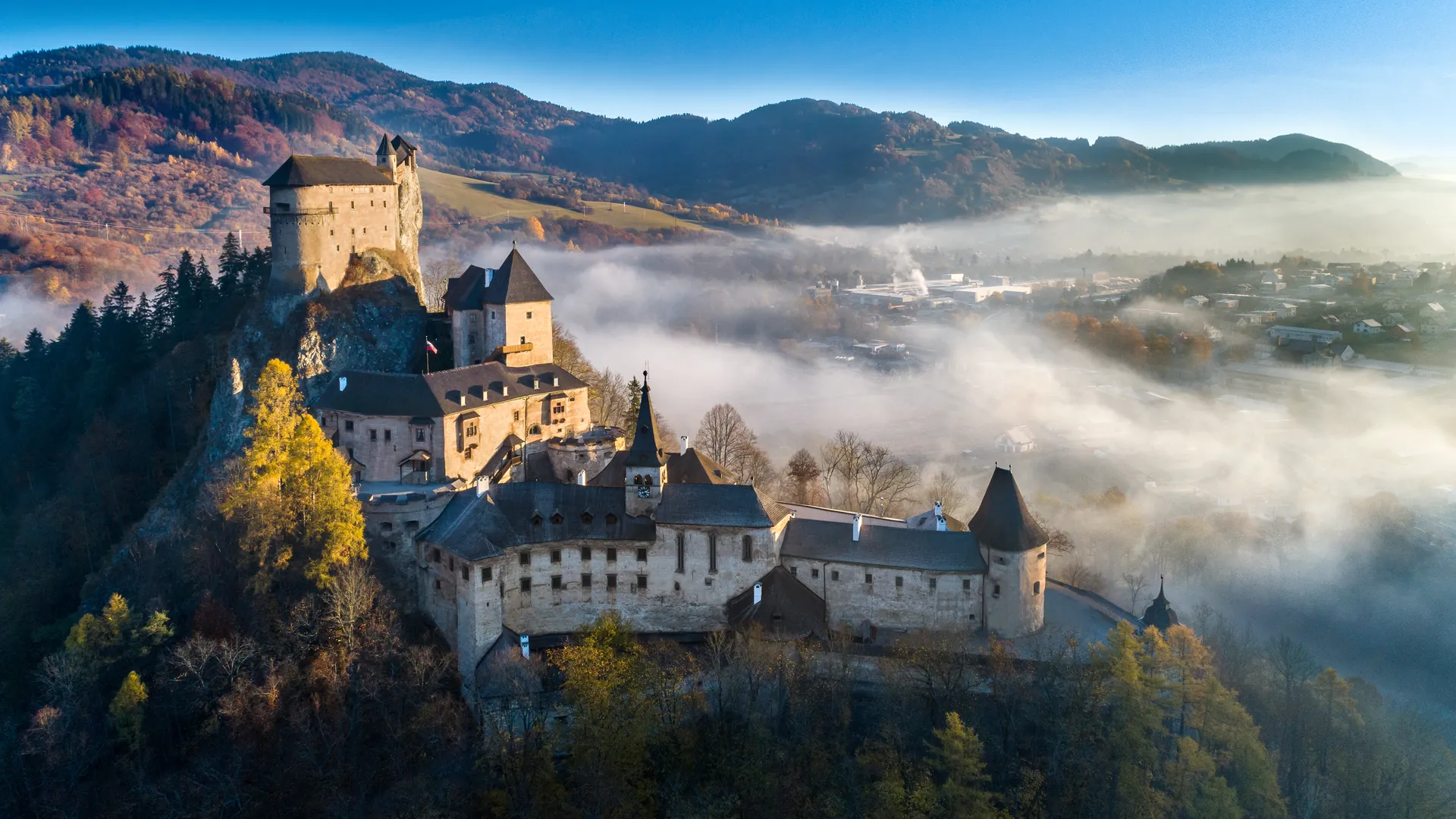
Orava Castle in autumn morning mistŽilina · Orava valley

Orava Castle in autumn morning mistM. Pišný / Oravské múzeum / CC BY-SA 4.0

Orava Castle

A castle growing out of a riverside cliff, wrapped in morning mist.

Getting there●●●○○Fine on your own but slow: about 1½ hours by train from Žilina to Oravský Podzámok, right at the foot of the castle.

Best timeMay–Oct

Where the 1922 horror classic Nosferatu was filmed — one of Slovakia’s most photogenic castles.

Orava Castle stands on a steep limestone crag above the Orava River, built upward tier by tier from the 13th century, its highest point over a hundred metres above the water. Part of the 1922 German silent classic Nosferatu was filmed here. Today it houses the Orava Museum, and a guided tour leads from the lower to the upper castle, through the Knights’ Hall, the chapel and folk exhibitions. On autumn mornings mist often fills the valley and the castle seems to float on cloud.

GETTING THEREAbout 1½ hours by train from Žilina, changing at Kraľovany for Oravský Podzámok — the station is at the castle’s foot; about 1 hour by car from Žilina.
GOOD TO KNOWBest May–October; visits are by guided tour and summer weekends queue. Few tours run in winter — check the official site. The Museum of the Orava Village nearby fits into the same day.
SAFETYThere are lots of steep steps between the lower and upper castle — wear good shoes; keep back from the upper walls if you dislike heights.
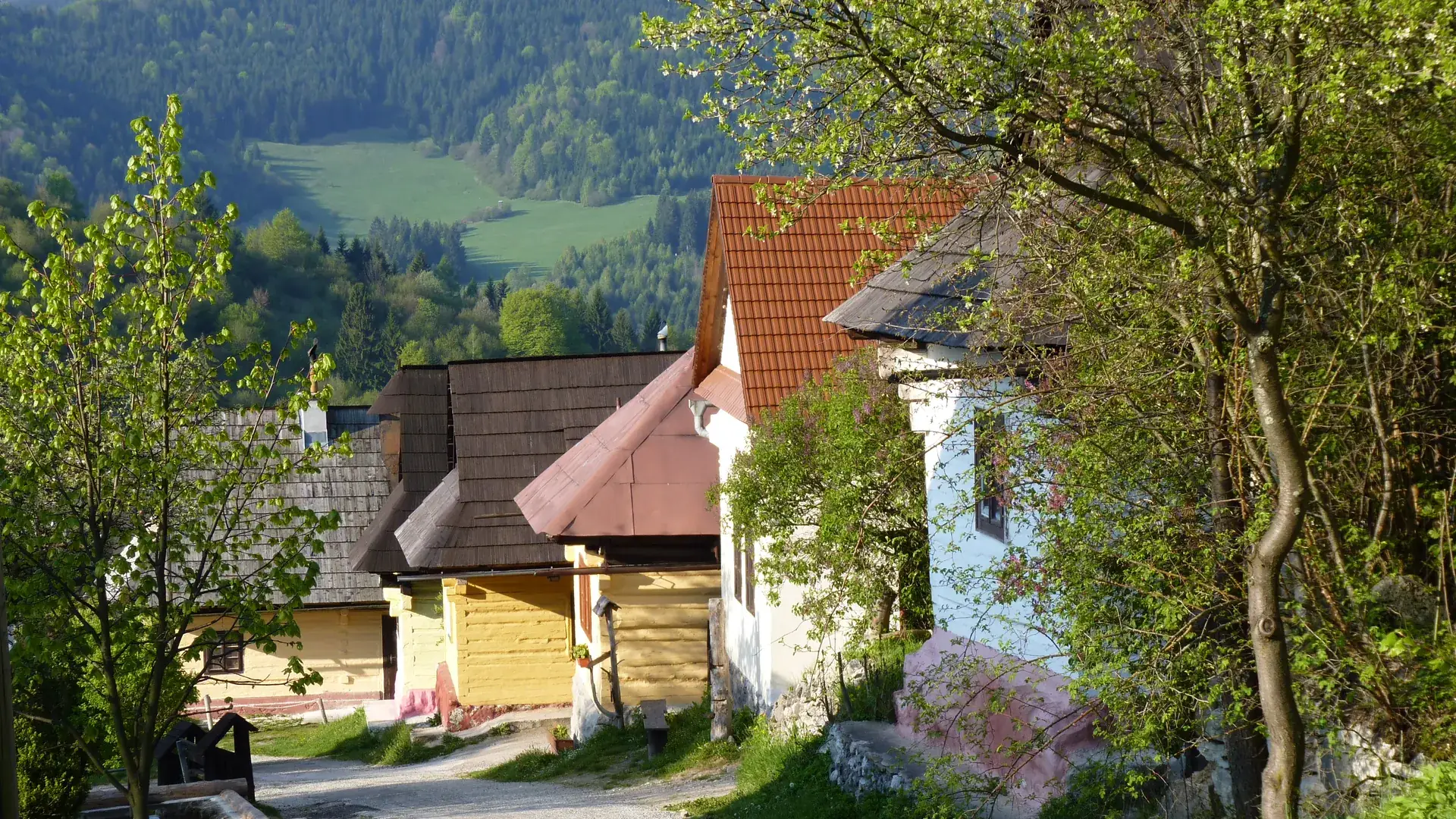
Vlkolínec’s painted log houses and cobbled laneŽilina · Veľká Fatra

Vlkolínec’s painted log houses and cobbled laneMichal Klajban / CC BY-SA 3.0 / cropped

Vlkolínec

Log cottages painted powder blue and butter yellow, and a single cobbled lane.

Getting there●●●●○Remote: about 20 minutes by taxi from Ružomberok, or about 1½ hours’ uphill walk; no regular bus.

Best timeMay–Oct

One of Slovakia’s best-preserved mountain villages, on the UNESCO list since 1993.

Vlkolínec is a tiny village tucked into the slopes of the Veľká Fatra, with over forty traditional log farmhouses painted powder blue, butter yellow and white under wooden-shingle roofs, and a wooden bell tower and old well at its centre. The whole village became a UNESCO World Heritage Site in 1993, and a few people still live here. One farmhouse is a small museum of mountain life.

GETTING THEREAbout 3 hours by train from Bratislava to Ružomberok, then about 20 minutes by taxi uphill, or about 1½ hours on the footpath from town. By car, park outside the village.
GOOD TO KNOWBest May–October, prettiest in late spring and autumn; in winter the road is snowy and needs winter tyres. People live here — look from outside and stay out of private yards.
SAFETYWear good shoes and bring water if you hike up; come down before dark — the mountain road is unlit.

Winter ski areas & events

Coming in winter? The region also has these. Full details (lessons, lodging, transport) are in the winter corner of your quiz results.

Ski areas

  • Jasná: Slovakia’s biggest ski area, north and south sides linked at the top
  • Tatranská Lomnica: Slovakia’s second-highest peak above the runs — and a cable car to its summit on clear days
  • Štrbské Pleso: Snowy peaks right behind a frozen lake — downhill and cross-country
  • Donovaly: Slovakia’s favourite family ski area, with a fairy-tale village and dog sledding
  • Vrátna: Ride up to the ridge and ski down from the top of the Malá Fatra
  • Bachledka: A wide, gentle family ski area beside a village of painted log houses
  • Veľká Rača: A snowy area with long runs near the Polish and Czech borders
  • Skalka: A plateau ski area nicknamed “the glacier” for its early, lasting snow
  • Roháče – Spálená: A small, quiet ski area deep in the Western Tatras
  • Táľe: A resort on the south side of the Low Tatras — skiing and spa in one

Winter events

  • An Ice-Church Day at Hrebienok: Ride a little funicular up the mountain and step into a church built of ice
  • A Horse-Sleigh Day at Štrbské Pleso: Tucked under blankets while two horses pull your sleigh through snowy woods
  • A Dog-Sled Day at Donovaly: A line of huskies yelping with excitement — then off across the snow
  • A Frozen-Waterfall Day in Slovak Paradise: A whole rock face hung with icicles, like a white waterfall frozen mid-fall
  • Bratislava Christmas Market: A little old-town square packed with wooden stalls, and a cup of hot mead in your hands
  • Ice Hockey in Slovakia: Ice hockey is Slovakia’s national sport — the whole arena stamps in time
  • A Snowshoe Day in the Malá Fatra: Strap on snowshoes and walk into a white, frosted forest
  • An Ice-Cave Day at Demänová: Walk down into a cave with a floor of ice and hanging icicles
  • A Winter Day in Painted Čičmany: Dark log houses painted with white patterns — like a woodcut once it snows
  • A Winter Day in Banská Štiavnica: Hills furred white with frost, chimney smoke rising from old-town roofs

Not sure which to pick? Take the 4-minute travel-personality quiz and find the one that suits you.

Take the quiz