TOP-TIER TRAVEL中/EN

Slovenia

10 hidden gems in Slovenia

Lakes, caves & a harbour town. We picked 10 places in this region — some well known, some few visitors find. Browse at your own pace, then take the quiz when something catches your eye.

TOP-TIER TRAVEL › All hidden gems › Slovenia

Not sure which to pick? Take the 4-minute travel-personality quiz and find the one that suits you.

Take the quiz
Lake Bled
First time? Start with Ljubljana and Lake Bled

Ljubljana's old town, riverbanks and castle, Lake Bled's island church and Postojna Cave — do these classics first and you can't go wrong. Slovenia is small: Bled is just over an hour from Ljubljana by bus, Piran on the coast about 2½ hours. Then save two or three days for the place below that's truly yours.

Spot details checked: October 2026

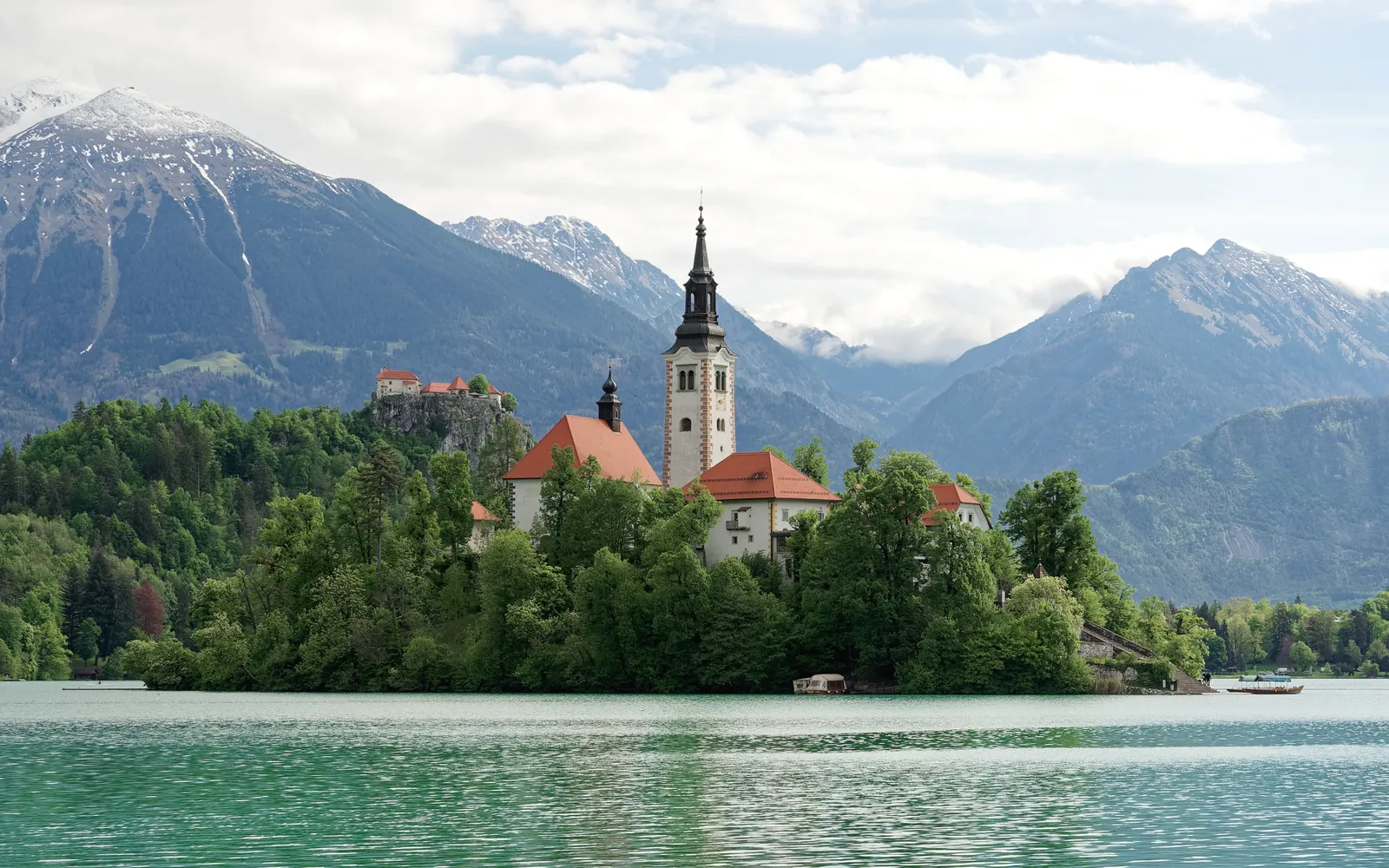
Bled Island's church, with Bled Castle on the cliff to the leftUpper Carniola · Bled

Bled Island's church, with Bled Castle on the cliff to the leftJakub Hałun / CC BY 4.0 / cropped

Lake Bled

A tiny island in a green lake, and a church bell that grants wishes.

Getting there●○○○○Very easy on your own: about 1¼ hours by bus from Ljubljana, then a few minutes' walk to the lake.

Best timeMay–Jun, Sep–Oct

Almost everyone's first stop in Slovenia.

In the middle of the emerald lake sits a small island, the spire of its Church of the Assumption reflected in the water with the Julian Alps behind. You reach it by pletna, a traditional hand-rowed boat, then climb 99 stone steps; inside hangs a wishing bell — ring it, the story goes, and your wish comes true. Bled Castle, on the cliff to the left, is one of Slovenia's oldest castles, and from its walls the lake and island lie at your feet. Don't leave without a slice of Bled cream cake — layers of pastry and vanilla custard, the local signature.
GETTING THEREFrequent buses run from Ljubljana bus station to Bled in about 1¼ hours. By train, get off at Lesce-Bled and take a bus or taxi for about 10 minutes. The lake loop is about 6 km — 1½ to 2 hours on foot.
GOOD TO KNOWLovely in every season; May–June and September–October bring mild weather and fewer people than midsummer. Pletna boats and the castle are busiest at summer middays — come before 9am. In winter the boats run depending on the weather, so check before you go.
SAFETYThe path up to the castle is steep and slippery in rain — wear grippy shoes. The lake sometimes freezes thinly in winter; never walk on it.
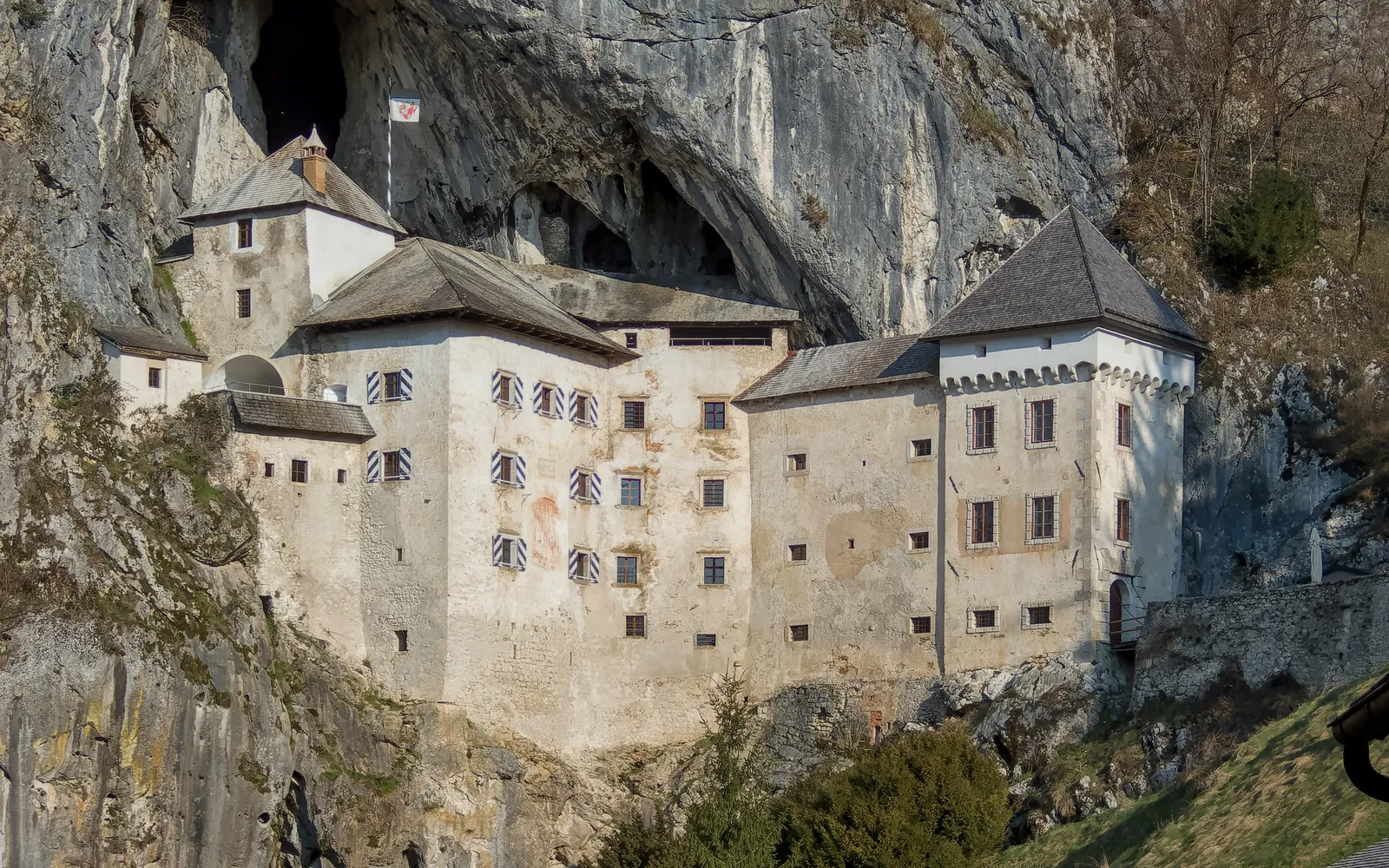
Predjama Castle set into its cliff-face caveInner Carniola · near Postojna

Predjama Castle set into its cliff-face caveAjznponar / CC0 / cropped

Predjama Castle

A castle built into a cave mouth halfway up a 123-metre cliff — never taken in 800 years.

Getting there●●○○○Easy on your own: about an hour by bus or train from Ljubljana to Postojna, then 15 minutes by taxi or summer shuttle.

Best timeApr–Oct

The world's largest cave castle — and still off most itineraries.

Predjama Castle is built halfway up a 123-metre cliff, its back half tucked into a natural cave, so from afar it seems to grow out of the rock. In the 15th century the knight Erazem defied the emperor and held out here under siege for more than a year, smuggling in supplies through secret cave passages — legend says he was finally hit by a cannonball while on the toilet. Inside you climb floor by floor through the kitchen, armoury and hideout cave. Combined tickets with nearby Postojna Cave make it easy to do both in a day.

GETTING THEREAbout an hour by bus or train from Ljubljana to Postojna; the castle is about 9 km northwest. In summer a shuttle runs from Postojna Cave; otherwise it's about 15 minutes by taxi or car.
GOOD TO KNOWOpen all year, but April–October is when it looks best, with green forest and more shuttles; winter days are short and hours shorter. The natural cave beneath the castle closes in winter while bats hibernate.
SAFETYThe wooden stairs inside are narrow and steep, with some low ceilings — wear good shoes.
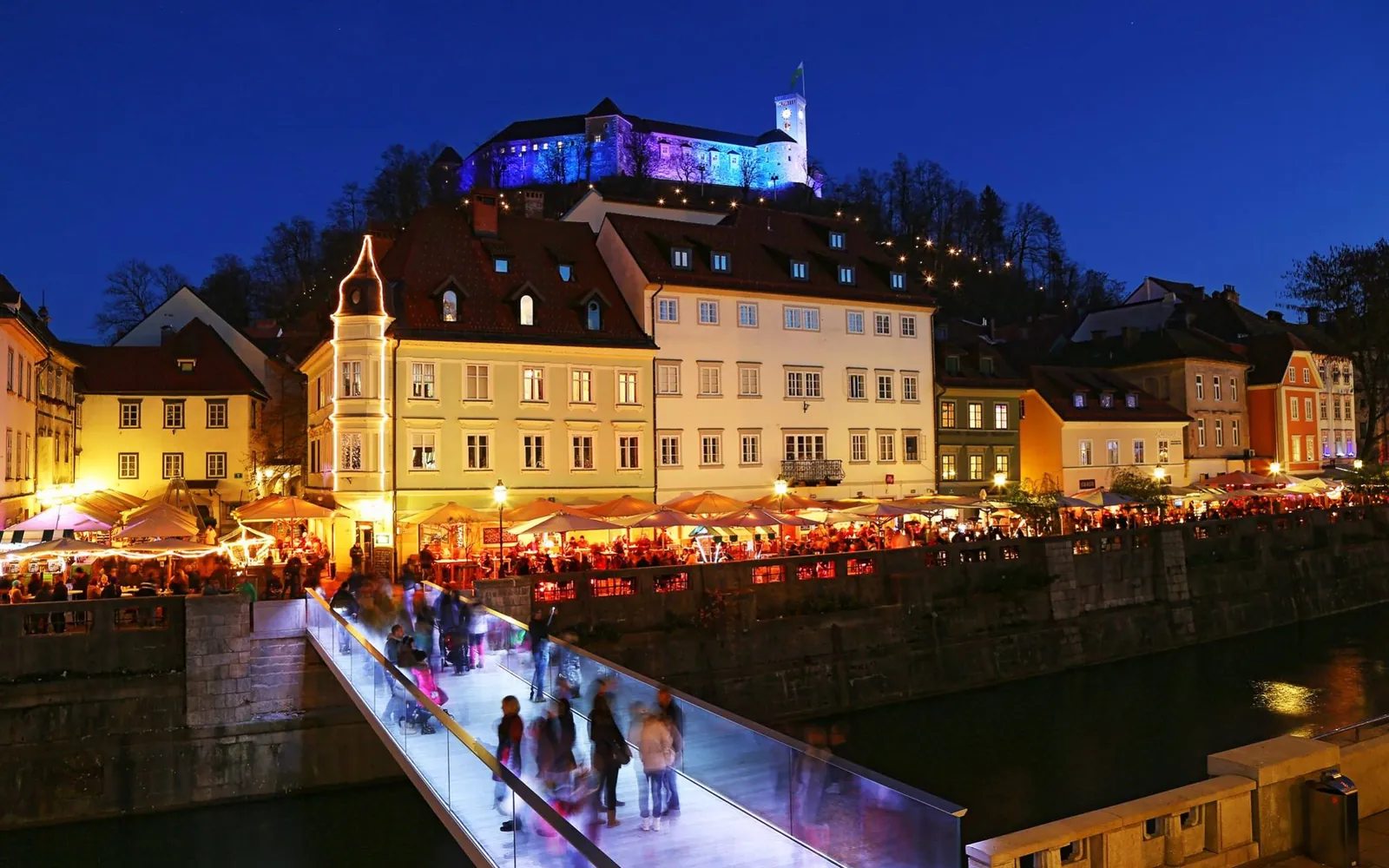
Ljubljana's riverbank at dusk, the castle lit on its hill and the Butchers' Bridge at lower leftCapital of Slovenia

Ljubljana's riverbank at dusk, the castle lit on its hill and the Butchers' Bridge at lower leftAleš Kravos / CC BY-SA 4.0 / cropped

Ljubljana

The riverbanks fill with people, the castle lights up on its hill, and the whole city slows down.

Getting there●○○○○Very easy on your own: 45 minutes to an hour by airport bus; the old town is small and walkable.

Best timeGood all year

Often called Europe's most walkable, relaxed capital.

The Ljubljanica river runs through the old town, both banks lined with cafés and restaurants; on sunny days locals sit by the water until dark. A funicular climbs to Ljubljana Castle on the hill, where the lookout tower shows a sea of red roofs. Each bridge has a story: the Triple Bridge is a signature work of architect Jože Plečnik, and the glass-floored Butchers' Bridge at lower left is hung with lovers' padlocks. Plečnik's many works across the city were listed together as a UNESCO World Heritage Site in 2021.

GETTING THEREThe airport bus takes 45 minutes to an hour to the central bus station, or book an airport shuttle to your hotel door. The old town, riverbanks and castle funicular are all walkable; city buses take the Urbana card only — no cash on board.
GOOD TO KNOWGood all year; May–September the riverbanks are liveliest and it's still light at 9pm. The December festive lights are famous — if you're coming in winter, see the winter events section. Many large shops close on Sundays, so stock up the day before.
SAFETYThe riverbanks are busy and safe at night, but watch for pickpockets in the summer crowds — wear your bag in front.
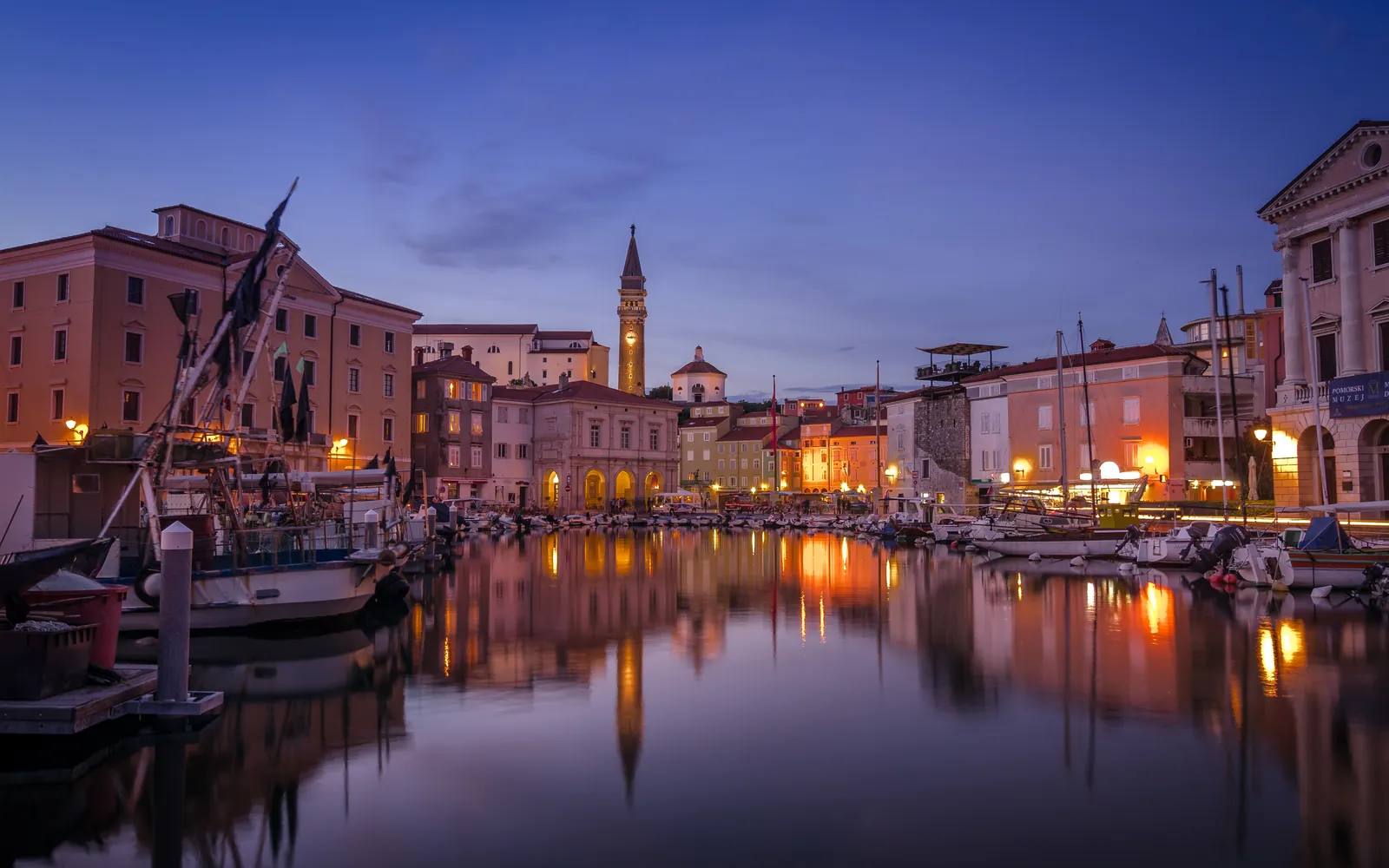
Piran's harbour at night, with St George's bell tower behindSlovenian coast · Istria

Piran's harbour at night, with St George's bell tower behindEtienne O. Dallaire / CC BY 4.0 / cropped

Piran

A Venetian-style harbour town — after dark, every old house is reflected in the water.

Getting there●●○○○Easy on your own: about 2½ hours by bus from Ljubljana; the old town is car-free.

Best timeMay–Sep

Slovenia has just over 40 km of coast — and Piran is the prettiest stretch.

Piran sits at the tip of the Istrian peninsula and was ruled by Venice for centuries — its houses, squares and bell tower still feel strongly Venetian. The oval Tartini Square at its heart is named after the violinist born here. Climb the bell tower of St George's on the hill and the red roofs run straight into the sea; on clear days you can see the Italian and Croatian coasts. The salt pans outside town have produced salt for centuries — a bag of Piran sea salt makes a perfect souvenir.

GETTING THEREAbout 2½ hours by bus from Ljubljana bus station; just over an hour from Trieste in Italy. The old town is closed to private cars — park outside town and take the free shuttle in.
GOOD TO KNOWMay–September is most pleasant; July and August are busiest, so book early. Winter is quiet and many seafront restaurants close. The bell tower has set hours and may close in strong wind.
SAFETYThe harbour and breakwater are dimly lit at night — watch your step. Watch for sea urchins if you swim off the rocks in summer.
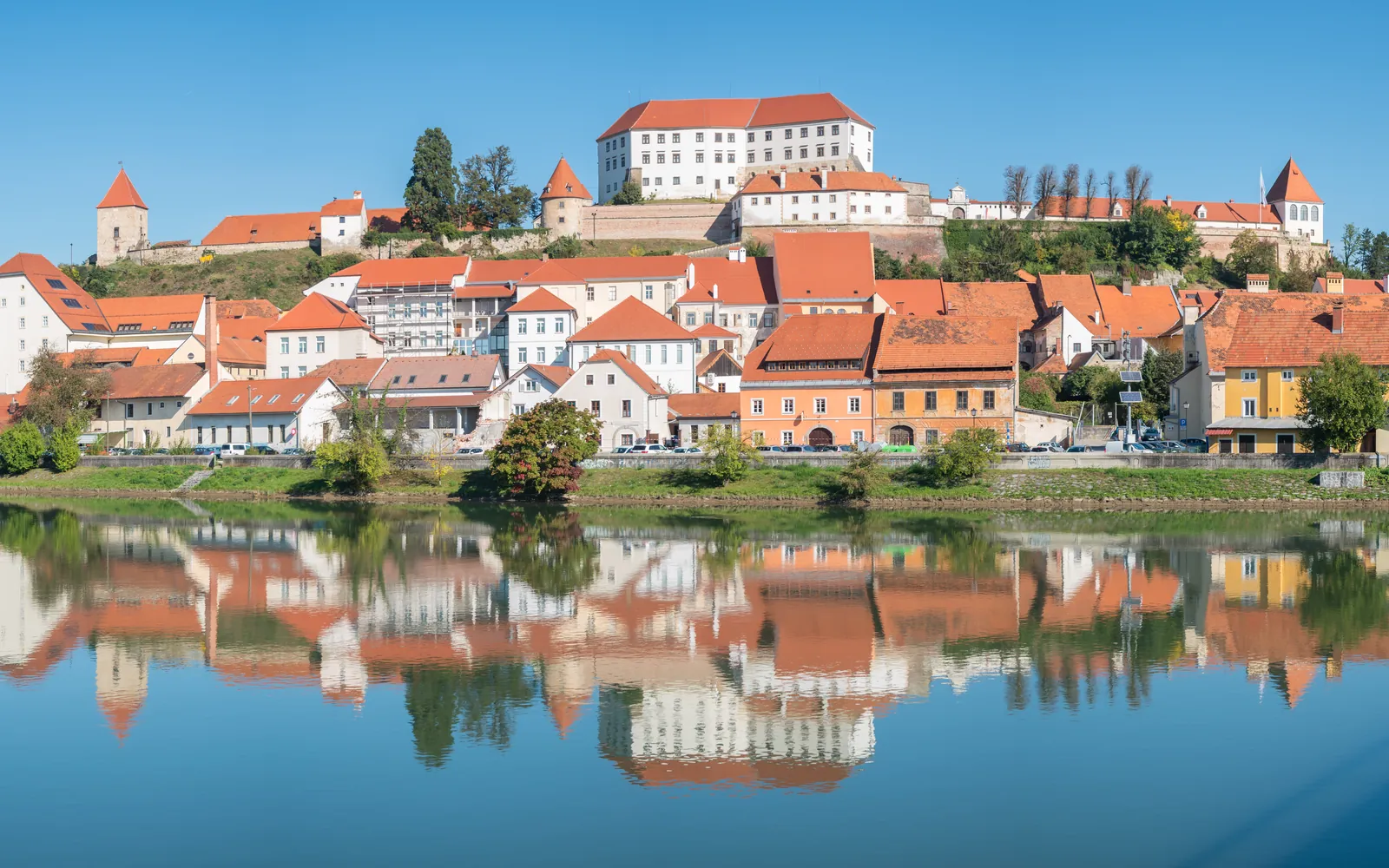
Ptuj's old town and hilltop castle across the DravaEastern Slovenia · on the Drava

Ptuj's old town and hilltop castle across the DravaKrzysztof Golik / CC BY-SA 4.0 / cropped

Ptuj

Slovenia's oldest town — and in winter, shaggy Kurenti dance through its streets.

Getting there●●○○○Easy on your own: about 2½ hours by train from Ljubljana; about 30 minutes by train or bus from Maribor.

Best timeFeb, May–Oct

For Slovenia's most storied small town, come to Ptuj.

Ptuj is Slovenia's oldest town, a Roman outpost 2,000 years ago. The old town follows the Drava, and the hilltop castle is now a museum of medieval armour, musical instruments and carnival masks. Beneath the old town lies one of Slovenia's oldest wine cellars, open for tours and tastings by booking. Across the river, a thermal spa resort has indoor and outdoor pools — and huts shaped like giant wine barrels you can sleep in. February's Kurentovanje carnival is the liveliest time, the town full of Kurenti in sheepskins and cowbells.

GETTING THEREAbout 2½ hours by train from Ljubljana, some with a change at Pragersko; about 30 minutes by train or bus from Maribor. The old town, castle and cellar are walkable; the spa is across the river, about 20 minutes on foot.
GOOD TO KNOWGood year-round; Kurentovanje in February is the liveliest (2027: expected from late January to 9 February), and rooms go early. May–October the vineyards are greenest — ideal for tastings. Castle museum hours vary by season; check the official site.
SAFETYThe cobbled lane to the castle is slippery in rain; don't drive after a tasting.
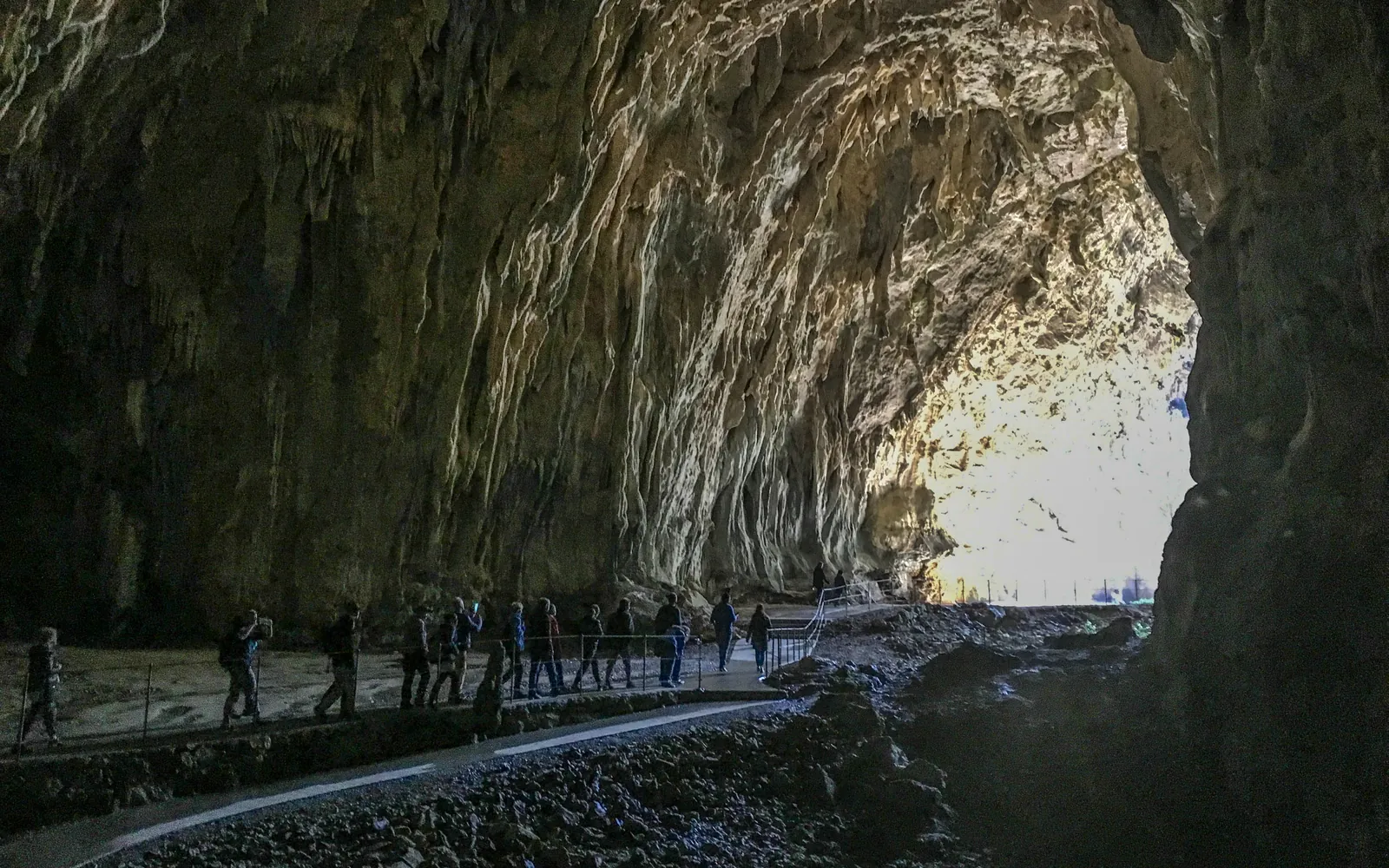
Near the exit of the Škocjan Caves, visitors walking toward the cave mouthThe Karst · near Divača

Near the exit of the Škocjan Caves, visitors walking toward the cave mouthAndrew Moore / CC BY-SA 2.0 / cropped

Škocjan Caves

Step underground and watch a river roar through a canyon more than 100 metres deep.

Getting there●●○○○Easy on your own: about 1½ hours by train from Ljubljana to Divača, then walk or shuttle to the ticket office; guided tours only.

Best timeGood all year

One of the world's largest underground canyons — worth a special trip.

The Škocjan Caves are an underground canyon carved by the Reka river beneath the limestone, with ceilings over 100 metres high in places; they've been a UNESCO World Heritage Site since 1986. The tour leads through halls of stalactites into the Silent Cave and then the canyon itself, its high point the Cerkvenik Bridge, about 45 metres above the river. You finally walk out through the huge opening in the photo, sunlight pouring down as if you're returning from another world.

GETTING THEREAbout 1½ hours by train from Ljubljana to Divača. The ticket office is in the hamlet of Matavun, about 3 km from the station — roughly a 40-minute walk, or a shuttle in high season; there's parking if you drive. Visits are by guided tour only, about 2 hours, with English tours.
GOOD TO KNOWOpen all year; inside it's around 12°C year-round, so bring a jacket even in summer. Tour times vary by season, with fewer in winter — check the official site. Photography isn't allowed in most of the cave.
SAFETYThe paths are damp with many steps — wear grippy shoes. If heights bother you, look ahead on the bridge.
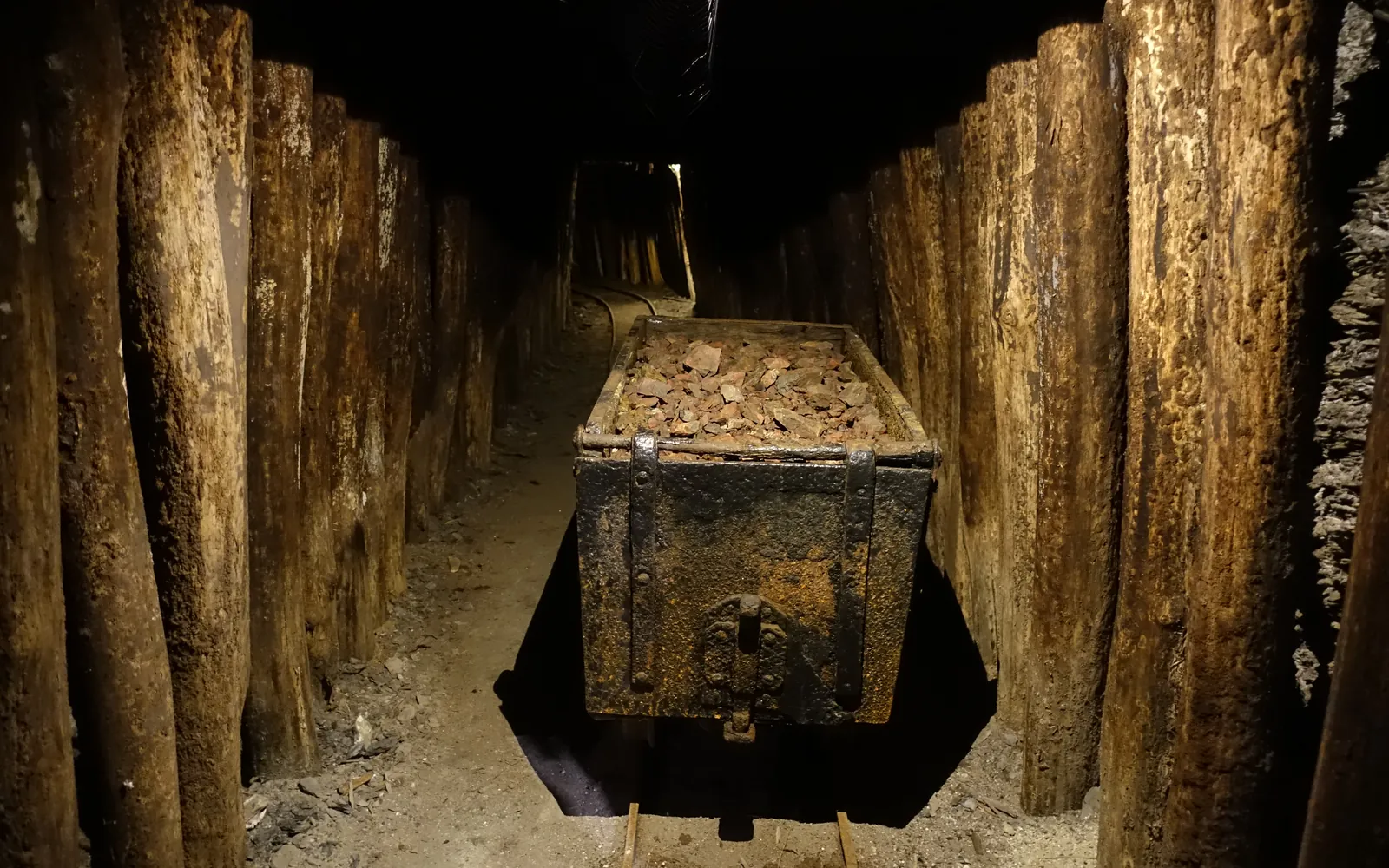
A tunnel and ore cart in the Idrija mercury mineWestern Slovenia · Idrija

A tunnel and ore cart in the Idrija mercury mineLuka Peternel / CC BY-SA 4.0 / cropped

Idrija

Walk into a 500-year-old mercury mine, carts still waiting in timber-propped tunnels.

Getting there●●○○○Easy on your own: 1 to 1½ hours by bus from Ljubljana; the mine is visited by guided tour.

Best timeGood all year

A mountain town that grew rich on mercury for 500 years.

In 1490, the story goes, a tub-maker found a flowing silver liquid in a stream — and Idrija became the world's second-largest mercury mine, worked for more than 500 years and listed as UNESCO World Heritage with Almadén in Spain in 2012. The favourite visit is the Anthony's Shaft (Antonijev rov) tour: helmet on, down a 16th-century gallery past ore carts, timber props and the miners' underground chapel. The town's other two signatures are fine Idrija bobbin lace and žlikrofi, little hat-shaped potato dumplings.

GETTING THERE1 to 1½ hours by bus from Ljubljana bus station, infrequent; about an hour by car. The mine, lace school and castle museum are all walkable in town.
GOOD TO KNOWOpen all year; the mine stays around 10-something °C, so bring a jacket. Tours run at set times — check English tours on the official site and book ahead.
SAFETYTunnels are low with uneven floors — keep your helmet on and stay with the guide.
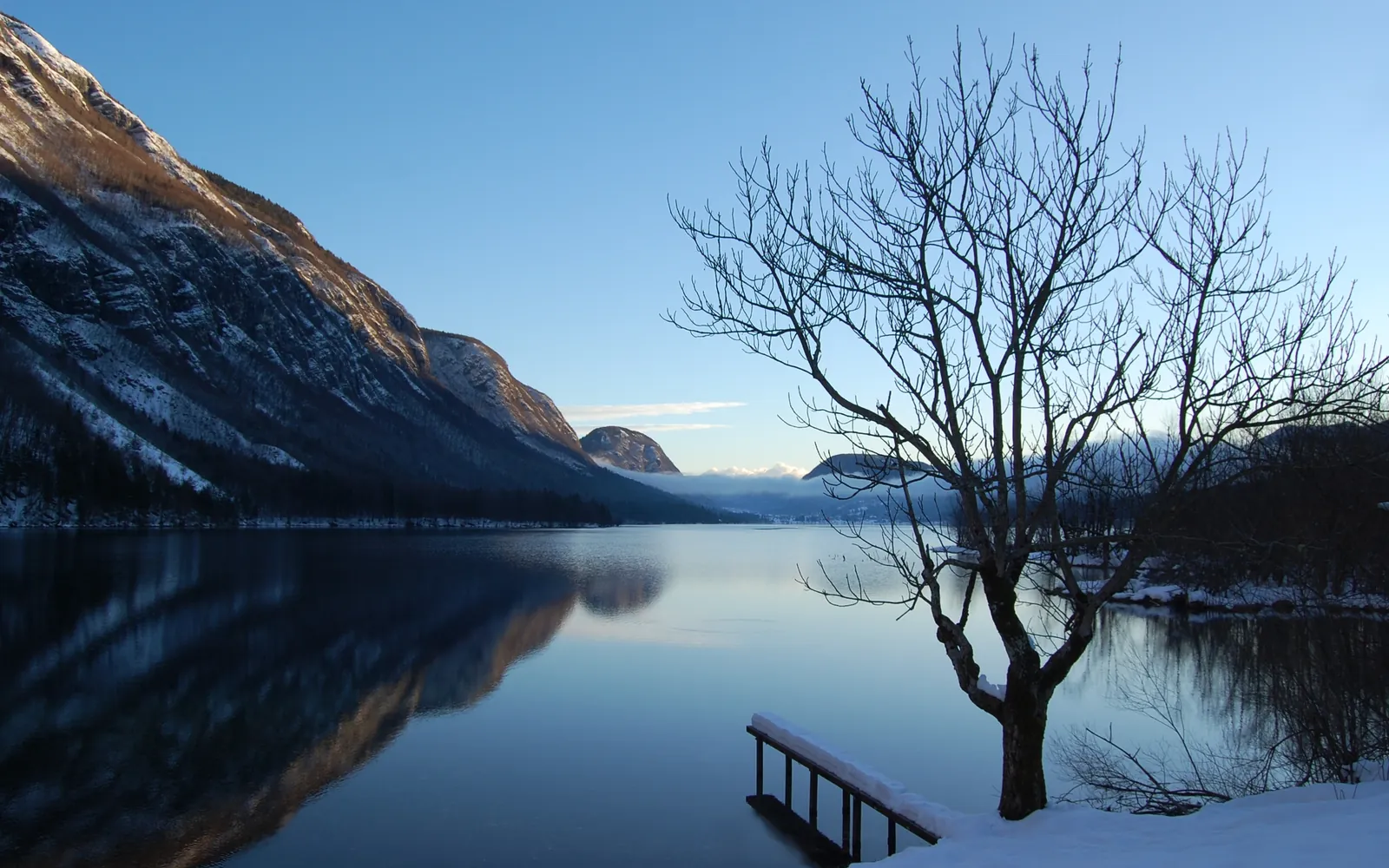
Lake Bohinj and a lakeside tree on a winter morningUpper Carniola · Triglav National Park

Lake Bohinj and a lakeside tree on a winter morningSmihael / CC BY-SA 3.0 / cropped

Lake Bohinj

Bigger and quieter than Bled — on winter mornings the lake breathes white mist.

Getting there●●○○○Easy on your own: about 2 hours by bus from Ljubljana, or 30 minutes from Bled.

Best timeJun–Sep, Jan–Feb

Bled's scenery without Bled's crowds.

Lake Bohinj is Slovenia's largest natural lake, inside Triglav National Park and ringed by mountains, its water so clear you can see the stones on the bottom. By the little stone bridge at the eastern end stands the Church of St John the Baptist, its walls covered in medieval frescoes; at the western end, a stone stairway climbs to Savica waterfall, bursting out of the rock face. A cable car beside the lake goes straight up Mount Vogel — lake views in summer, skiing in winter. The photo shows a winter morning, the shore under snow and the slopes behind already lit by the sun.

GETTING THEREBuses from Ljubljana bus station take about 2 hours to Ribčev Laz on the lake; from Bled about 30 minutes. Or take the train to Bohinjska Bistrica and a bus for about 10 minutes.
GOOD TO KNOWEach season has its own look: swimming and boating June–September, snowy shores and the loveliest morning mist in winter. The Savica waterfall path is ticketed and closes when icy. Buses around the lake are infrequent — check the last one back.
SAFETYLakeside paths ice over in winter — wear shoes with grip, and don't walk on the frozen lake.
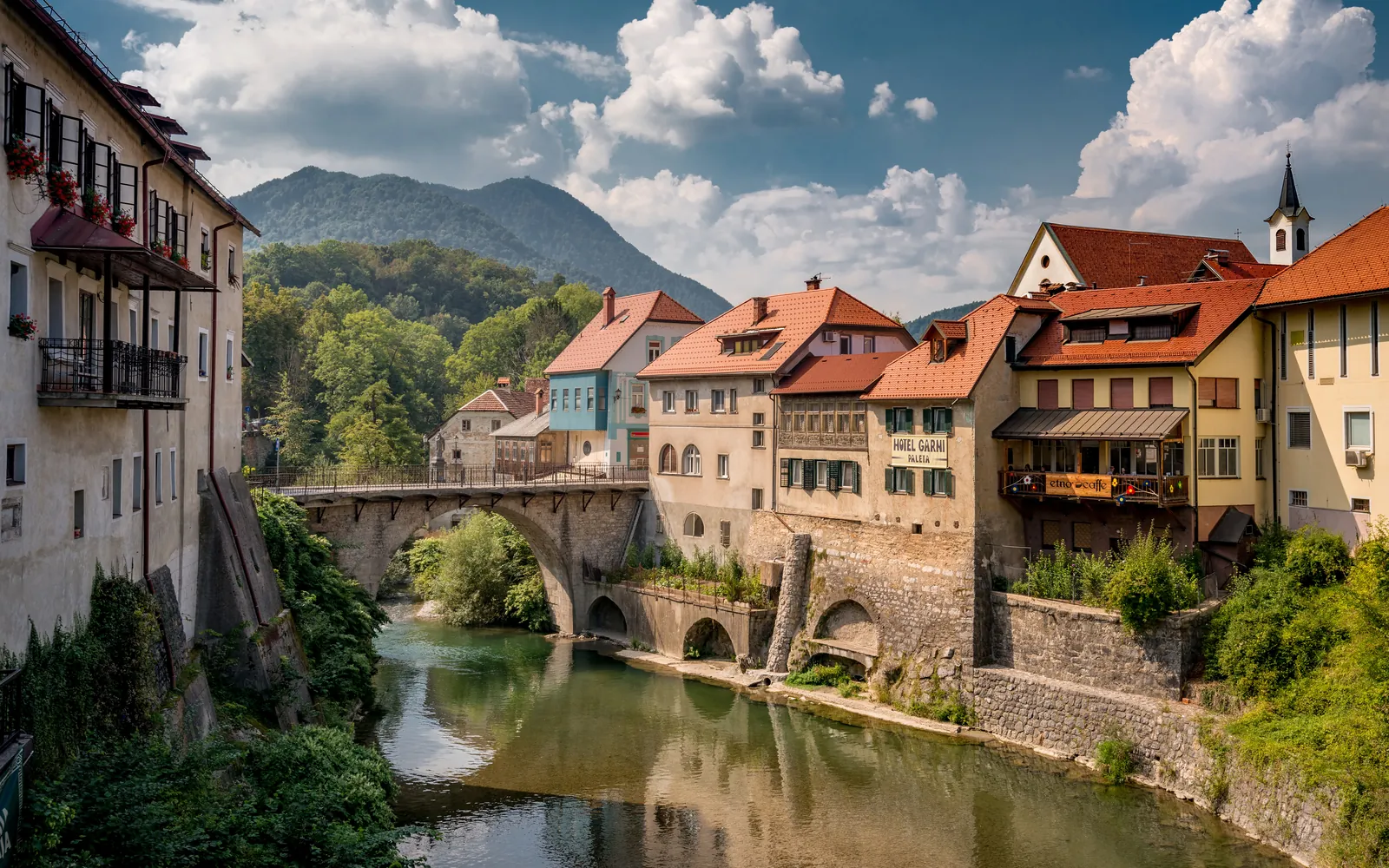
Škofja Loka's Capuchin Bridge and riverside housesUpper Carniola · northwest of Ljubljana

Škofja Loka's Capuchin Bridge and riverside housesBernd Thaller / CC BY 2.0 / cropped

Škofja Loka

A 14th-century stone bridge into Slovenia's best-preserved medieval town.

Getting there●○○○○Very easy on your own: 20–30 minutes by train from Ljubljana, then a 20-minute walk or a bus to the old town.

Best timeApr–Jun, Sep–Oct

Half an hour from Ljubljana, yet hardly any tourists.

Škofja Loka is one of Slovenia's best-preserved medieval towns, built on a hillside where two rivers meet. The Capuchin Bridge in the photo dates from the 14th century, with a statue of St John on it and colourful old houses beyond. Loka Castle on the hill is now a museum of local history and crafts. If you'd like a little skiing in winter, the small Stari Vrh ski area, good for beginners, is about 30 minutes' drive west.

GETTING THERE20–30 minutes by train from Ljubljana to Škofja Loka station, then a bus or a 20-minute walk to the old town; direct buses from Ljubljana take about 40 minutes.
GOOD TO KNOWGood year-round, best in spring and autumn. The castle museum closes on Mondays; check opening times. Many small shops close on Sundays.
SAFETYThe path to the castle is stony and slippery in rain — wear good shoes.
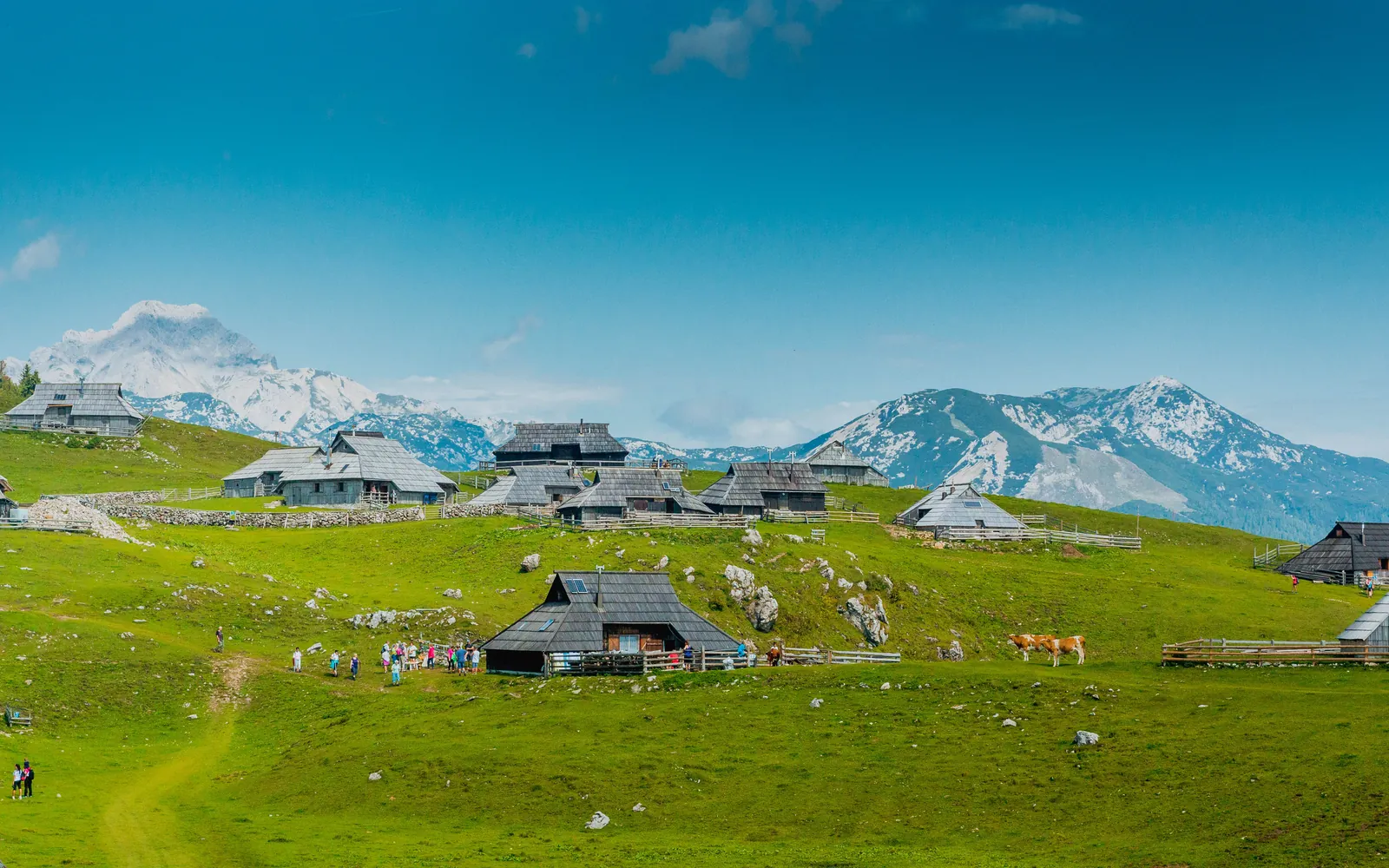
Velika Planina in summer, herders' huts dotting the pastureKamnik–Savinja Alps

Velika Planina in summer, herders' huts dotting the pastureJernej Furman / CC BY 2.0 / cropped

Velika Planina

A hilltop of pointed-roof huts, where herders and cows return every summer.

Getting there●●●○○Doable on your own with changes: bus from Ljubljana to Kamnik, another bus to Kamniška Bistrica, then cable car and chairlift.

Best timeJun–Sep

Slovenians' favourite alpine pasture — and few foreign visitors.

Velika Planina is a high pasture at around 1,600 m, dotted with more than a hundred herders' huts whose steep, low shingle roofs reach almost to the ground — a building style rarely seen in Europe. Each summer herders drive their cattle up for a few months and make cheese and sour milk in the huts, some selling to passing walkers. A tiny chapel, Our Lady of the Snows, stands on the meadow, and on clear days you can see the rock walls of the Kamnik–Savinja Alps to the north.

GETTING THEREAbout 45 minutes by bus from Ljubljana to Kamnik, then about 20 minutes by bus to the cable car at Kamniška Bistrica; ride the cable car and then a chairlift, and walk about 30 minutes to the herders' village. Buses are infrequent — check times. Drivers can also park higher up and walk in.
GOOD TO KNOWJune–September is when the herders are up, the meadow is greenest and you can buy fresh cheese; at other times most huts are empty. The cable car pauses for maintenance in spring and autumn; in winter it runs and the plateau becomes a small ski area — check the official site.
SAFETYThe plateau is exposed and the weather changes fast — bring a jacket and rain gear even in summer. In fog, follow the markers and stay on the path.

Winter ski areas & events

Coming in winter? The region also has these. Full details (lessons, lodging, transport) are in the winter corner of your quiz results.

Ski areas

  • Kranjska Gora: Slovenia's best-known ski village — and this lake is ten minutes' walk from the slopes
  • Vogel: Ride the cable car straight up from the lake and ski with Lake Bohinj below
  • Krvavec: The ski area closest to the airport — on clear days, a sea of clouds below
  • Mariborsko Pohorje: A gondola from the city straight to the slopes — and night skiing too
  • Rogla: Gentle, wide runs through spruce forest — and a thermal spa below
  • Cerkno: Ski above a sea of clouds — quiet and uncrowded
  • Soriška planina: A small family ski area with fairy-tale snow at the top
  • Kope: A small locals' weekend ski area with Alpine views from the top

Winter events

  • Ljubljana Festive Lights: The whole riverbank strung with lights — even the church looks like a sweet box
  • Lake Bled in Winter: A skin of ice on the lake, and a row of snowy peaks behind the island church
  • A Day at Postojna Cave: Ride a train deep underground — and at Christmas, watch a live nativity in the cave
  • Snowshoeing on Pokljuka: Strap on snowshoes and walk to herders' huts buried in the forest snow
  • A Day at Planica Nordic Centre: Stand beside one of the world's biggest ski jumps — then try cross-country skiing yourself
  • A Frozen-Waterfall Day in Mojstrana: See a cliff frozen into an ice curtain — then try ice climbing yourself
  • A Winter Day in Maribor: Ski the mountain by day; by night, ice drifts on the river under starry bridge lights
  • Kurentovanje Carnival, Ptuj: Shaggy Kurenti shake their cowbells to drive winter out of town

Not sure which to pick? Take the 4-minute travel-personality quiz and find the one that suits you.

Take the quiz