TOP-TIER TRAVEL中/EN

Spain

12 hidden gems in Spain

Gaudí, white towns & Andalusia. We picked 12 places in this region — some well known, some few visitors find. Browse at your own pace, then take the quiz when something catches your eye.

TOP-TIER TRAVEL › All hidden gems › Spain

Not sure which to pick? Take the 4-minute travel-personality quiz and find the one that suits you.

Take the quiz
Sagrada Família, Barcelona
First time? Barcelona, Madrid and Andalusia are the classics

The usual first trip flies into Barcelona and out of Madrid, with high-speed trains south to Seville, Córdoba and Granada in between; ten to fourteen days is about right. It’s busy, but every stop earns its place. For a different Spain, head north to the Basque Country or inland to the hill towns. The place below suits you best.

Spot details checked: November 2026

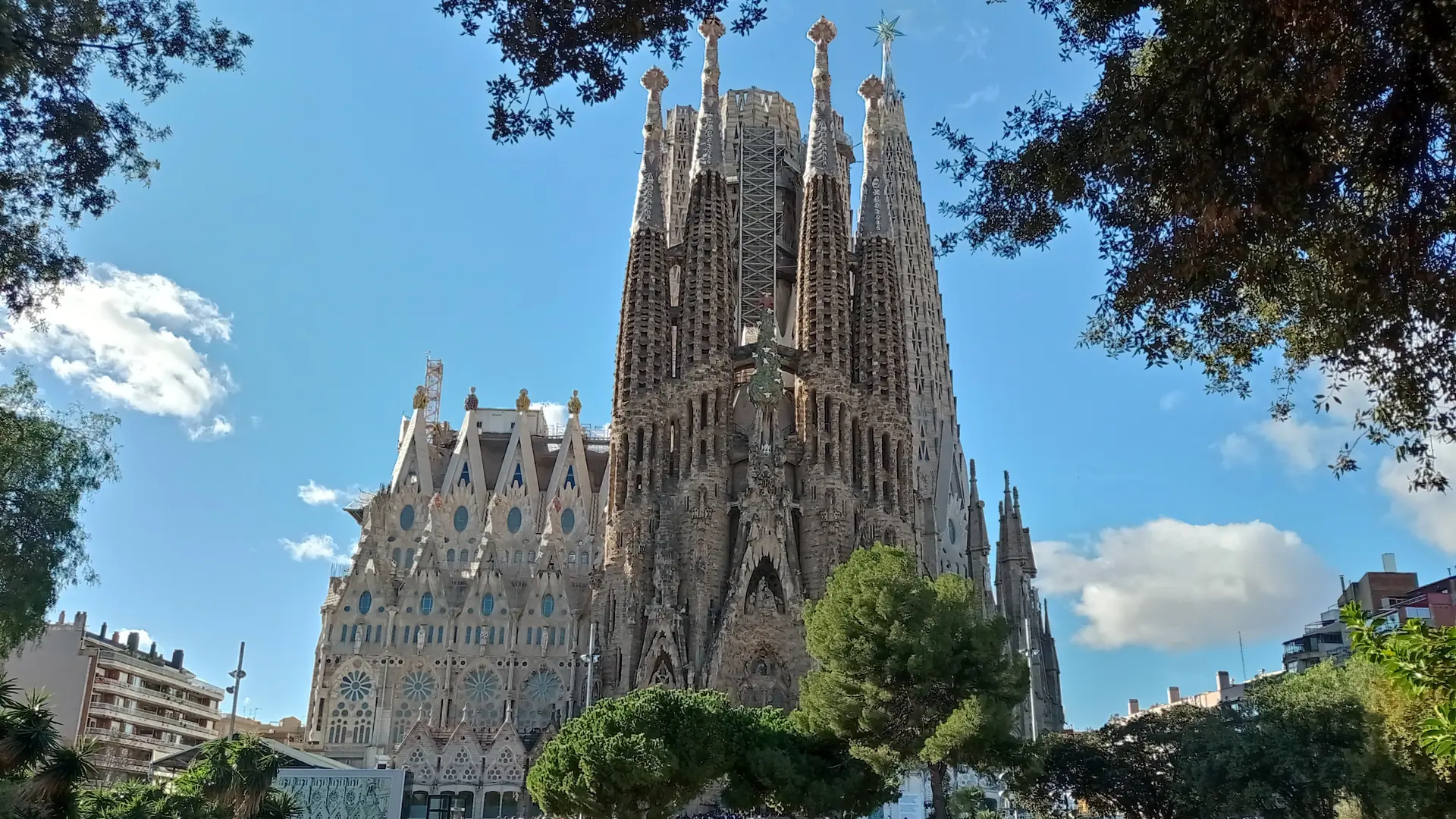
Sagrada Família · seen across the pond in Plaça de GaudíBarcelona, Catalonia

Sagrada Família · seen across the pond in Plaça de GaudíCanaan / CC BY-SA 4.0 / cropped

Sagrada Família, Barcelona

A church still unfinished after more than a century, with light pouring through coloured glass.

Getting there●○○○○Very easy on your own: Sagrada Família station on metro lines L2 and L5 is right outside.

Best timeApr–Jun, Sep–Oct

Gaudí’s life’s work and the face of Barcelona.

From outside it looks like a forest grown out of stone; step inside and you see that what Gaudí really wanted to build was light. Morning sun comes through the blue-green glass on the east side, evening sun through the reds and oranges on the west, and the same column changes colour several times a day. Gaudí took over the design in 1883 and worked on it for over forty years; only a small part was finished when he died, and generations since have kept building to his plans. It still isn’t quite complete. The photo was taken in 2021, and the central towers have risen since, so today it doesn’t look exactly like this.
GETTING THERESagrada Família station on metro lines L2 and L5 is right outside; about 10 minutes by metro from Plaça de Catalunya.
GOOD TO KNOWBook a timed entry on the official site in advance; tickets at the door are often gone. Tower access needs a ticket that includes it. It’s a working place of worship, so dress modestly.
SAFETYThe area and the metro are crowded, so watch for pickpockets and keep your bag in front. Many people live here too, so don’t block doorways or pavements for photos.
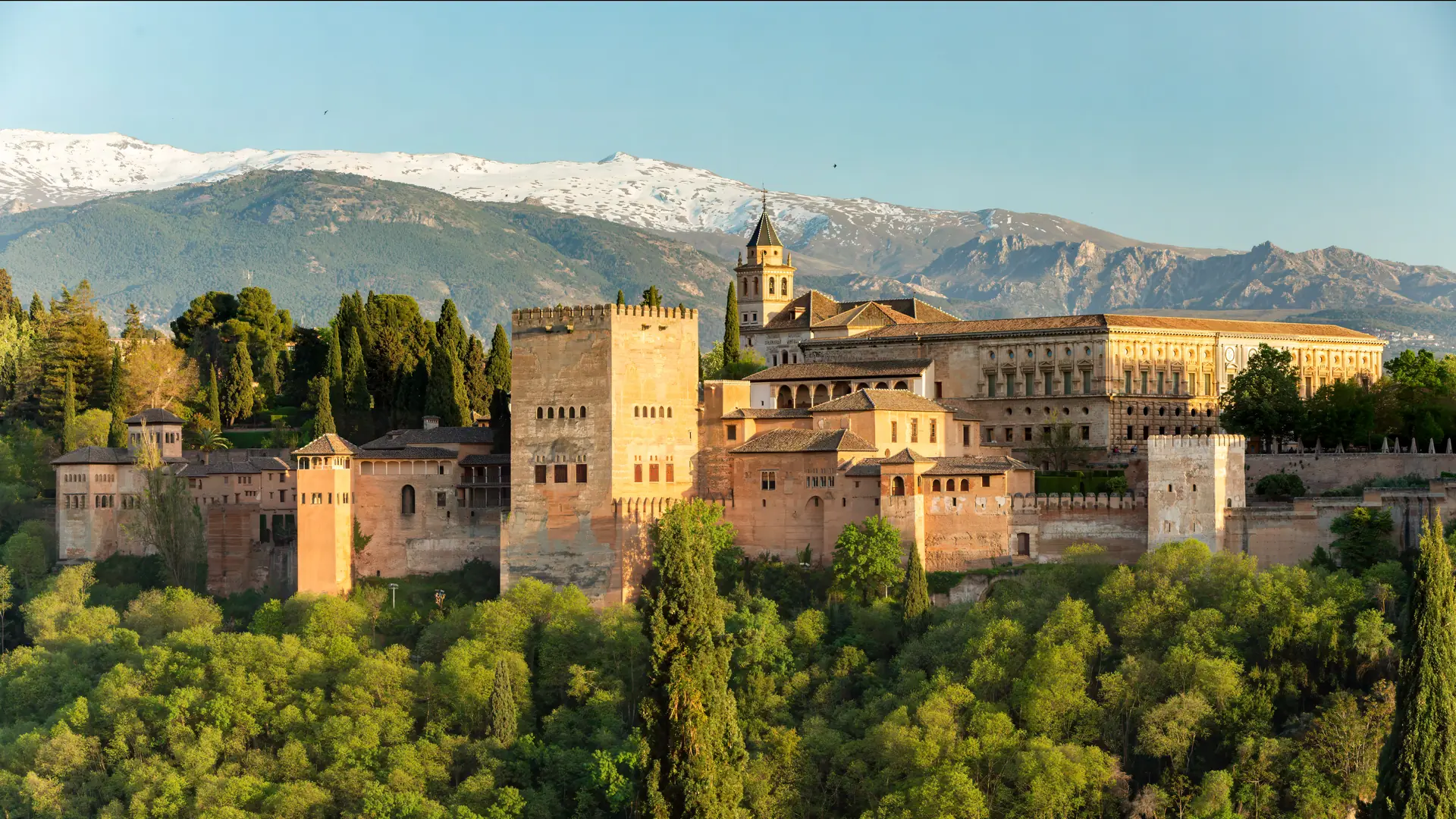
The Alhambra from the Mirador de San NicolásGranada, Andalusia

The Alhambra from the Mirador de San NicolásBenjamin Smith / Wikimedia Commons (processing: Diego Delso) / CC BY-SA 4.0

Alhambra, Granada

Sunset turns the walls red, with snow still on the mountains behind.

Getting there●●○○○Easy on your own: a little over 3 hours by high-speed train from Madrid, then a minibus up the hill.

Best timeMar–May, Sep–Nov

The last palace of Islamic rule in Europe, and one of Spain’s hardest tickets to get.

The photo was taken from the Mirador de San Nicolás on the opposite hill: red walls run along the ridge, the sunset turns them gold and red, and the Sierra Nevada behind still wears snow. That snow is only there in winter and spring; in summer the mountains are grey-brown. The Alhambra was the last royal palace of Islamic rule on the Iberian Peninsula, and inside its walls is another world: plasterwork as fine as lace, coffered wooden ceilings, pools reflecting the arcades, even the sound of running water designed. None of the interiors are in this photo — you have to walk in to see them.

GETTING THEREA little over 3 hours by high-speed train from Madrid Atocha to Granada; from central Granada, minibuses C30 and C32 go up to the Alhambra, or walk uphill from Plaza Nueva in about 20 minutes.
GOOD TO KNOWBook tickets well ahead on the official site; in high season they sell out weeks in advance. Tickets carry your name and ID is checked. You must enter the Nasrid Palaces at the time printed on your ticket; arrive late and you won’t get in.
SAFETYThe Albaicín lanes are narrow and steep. Coming down from the viewpoint at night, use the main streets or take a taxi rather than dark alleys alone. The viewpoint gets crowded, so mind your belongings.
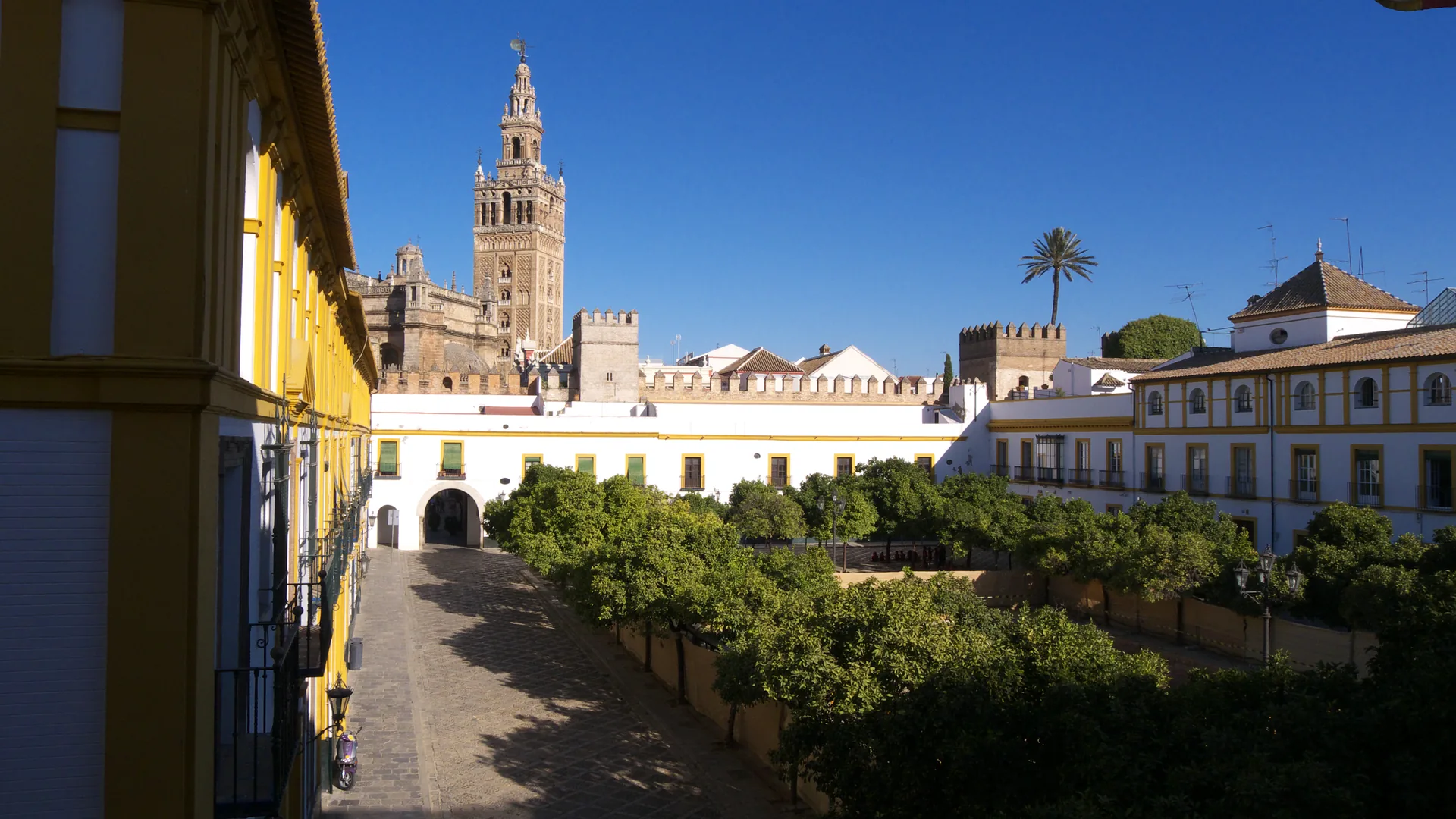
Seville · Patio de Banderas outside the Alcázar, with the Giralda beyondSeville, Andalusia

Seville · Patio de Banderas outside the Alcázar, with the Giralda beyondJosé Luis Filpo Cabana / CC BY 3.0

Royal Alcázar & the Giralda, Seville

Step into the courtyard and you smell the orange trees.

Getting there●●○○○Easy on your own: about 2½ hours by high-speed train from Madrid, and the old town is walkable.

Best timeMar–May, Oct–Nov

Andalusia’s most passionate city, with an old town from the days when Columbus set sail from here.

The photo shows the Patio de Banderas, outside the palace and free to walk into: a cobbled square planted with bitter orange trees, ringed by white walls and yellow window frames, with the cathedral’s Giralda tower in the distance. Those oranges are bitter, not for eating; locals make marmalade from them. A few steps away is the entrance to the Royal Alcázar, with Islamic-style courtyards and vast gardens that many call a smaller Alhambra. To climb the Giralda you buy a cathedral ticket; inside are ramps rather than stairs, so you walk slowly all the way up.

GETTING THEREAbout 2½ hours by high-speed train from Madrid Atocha to Sevilla Santa Justa, then about 15 minutes by bus or taxi to the old town.
GOOD TO KNOWBuy timed tickets for the Alcázar and the cathedral on the official sites. In July and August daytime temperatures often top 40°C, so plan for mornings and evenings and rest at midday.
SAFETYNear the cathedral people may press a sprig of rosemary on you and then ask for money; just walk away. Watch for pickpockets in tourist areas and drink plenty of water in summer.
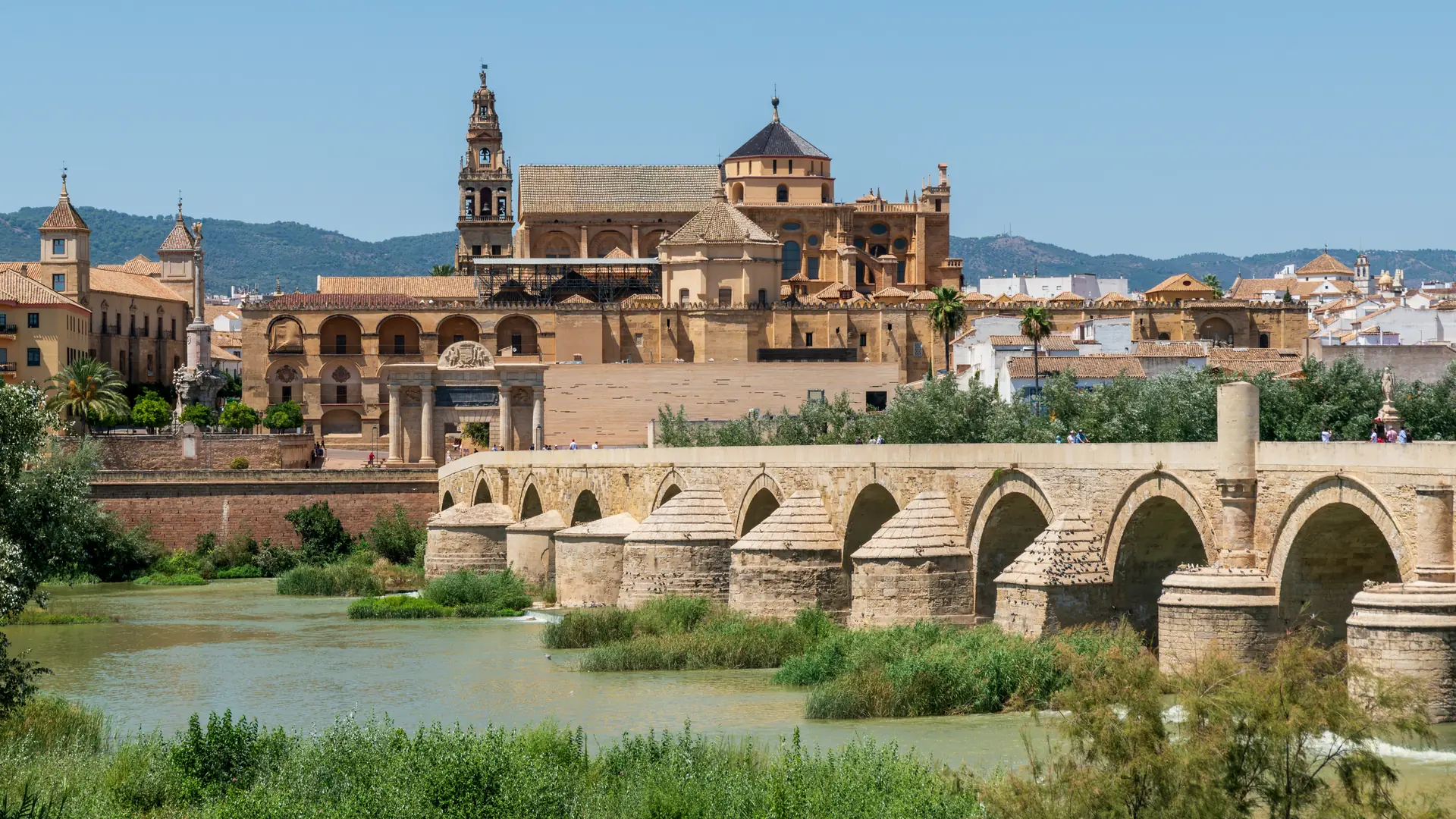
Córdoba · the Roman Bridge and the Mosque-CathedralCórdoba, Andalusia

Córdoba · the Roman Bridge and the Mosque-CathedralJose María Ligero Loarte / CC BY-SA 4.0

Mosque-Cathedral of Córdoba

Cross a bridge the Romans left behind to reach a cathedral inside a mosque.

Getting there●○○○○Very easy on your own: about 1 hour 45 minutes by high-speed train from Madrid, 45 minutes from Seville.

Best timeMar–May, Oct–Nov

Over a thousand years ago one of Europe’s largest cities, still marked by several faiths.

In front is the Roman Bridge over the Guadalquivir; the great mass behind is Córdoba’s famous Mosque-Cathedral. From outside it just looks big. Inside it stops you in your tracks: hundreds of columns carry row after row of red-and-white arches, a stone forest with no end in sight; then in the middle a Renaissance cathedral suddenly rises, because this was a mosque first and a Catholic cathedral later. The bridge has been repaired many times over the centuries, so it isn’t untouched for two thousand years, but standing on it at sunset is still hard not to be moved by.

GETTING THEREAbout 1 hour 45 minutes by high-speed train from Madrid Atocha, 45 minutes from Seville; about 25 minutes’ walk from the station to the old town, or take a bus.
GOOD TO KNOWGo to the Mosque-Cathedral early, when it’s quieter. It’s now a Catholic cathedral, so dress modestly; some areas close during Mass, so check the official site. In May the Patios Festival opens many private courtyards; check official dates.
SAFETYSummers are very hot, so stay indoors at midday. The old lanes are narrow and cars do come through, so stay alert.
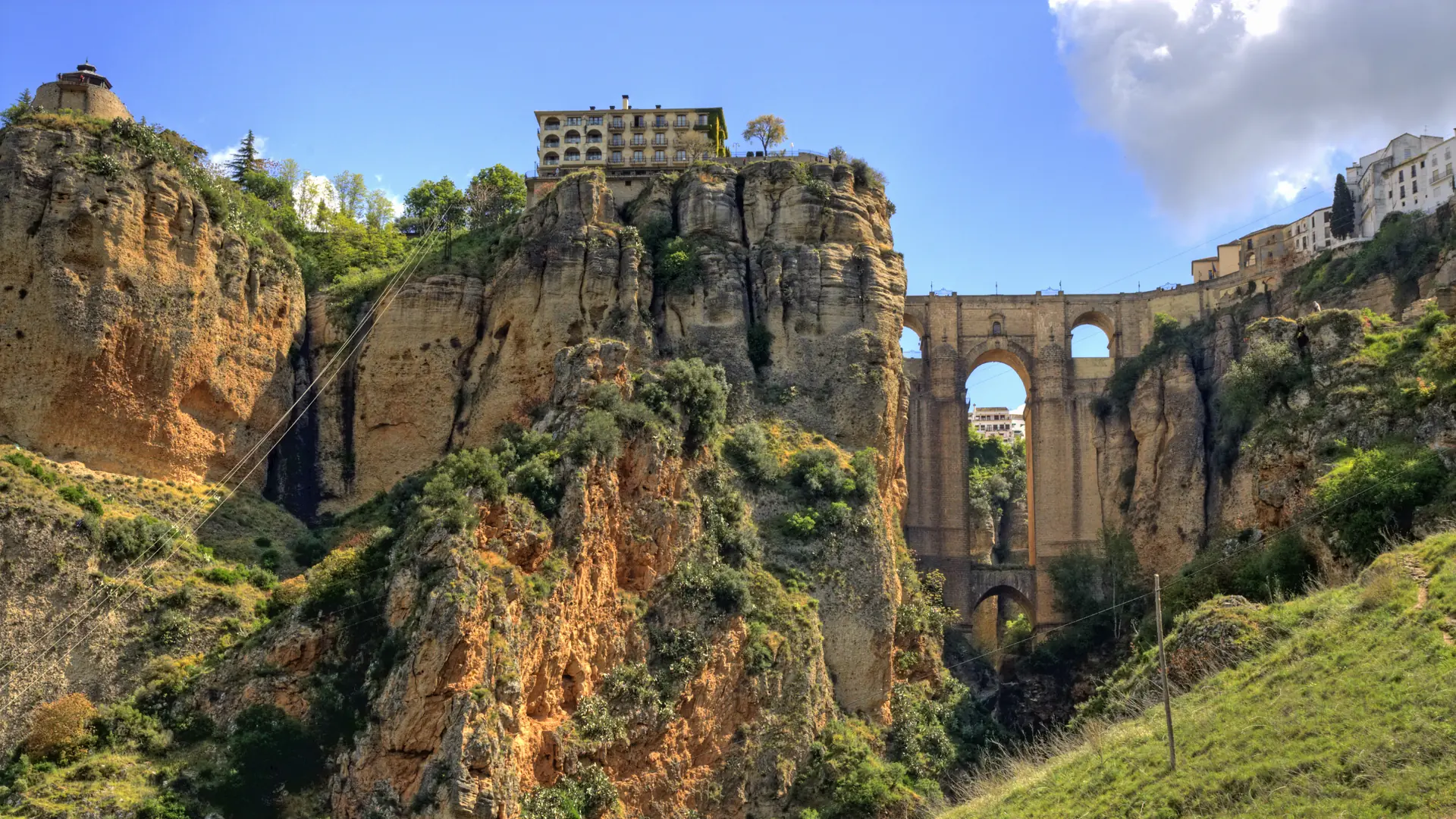
Ronda · the New Bridge across the gorgeMálaga province, Andalusia

Ronda · the New Bridge across the gorgeBert from Netherlands / CC BY 2.0 / cropped

Puente Nuevo, Ronda

A bridge spans a gorge a hundred metres deep and stitches the town together.

Getting there●●●○○Fine on your own but slow: about 2 hours by bus from Málaga; trains are few and may need a change.

Best timeApr–Jun, Sep–Oct

The most dramatic of Andalusia’s white towns, built on a cliff.

Ronda is split in two by a deep gorge, and the New Bridge, completed in the 18th century, joins the halves. Its piers rise from the bottom of the ravine, and only from below do you see how tall it is. By day a path leads down into the gorge for the view from underneath; at dusk, back at the clifftop viewpoints, the sunset turns the fields gold. The town also has one of Spain’s oldest bullring buildings. With a car you can continue to nearby white towns: Setenil, with houses built under the rock, and Zahara de la Sierra, with a hilltop castle above a lake.

GETTING THEREAbout 2 hours by bus from Málaga; trains run too but are few and may need a change. About 2½ hours by bus from Seville.
GOOD TO KNOWThe path into the gorge is downhill, so you’ll climb back up; wear good shoes. The bullring is a building visit only. Driving to the white towns means winding roads and very narrow lanes, so park outside the villages.
SAFETYSome viewpoints have low railings, so don’t climb on them for photos. The gorge path is exposed to the sun in summer; carry water.
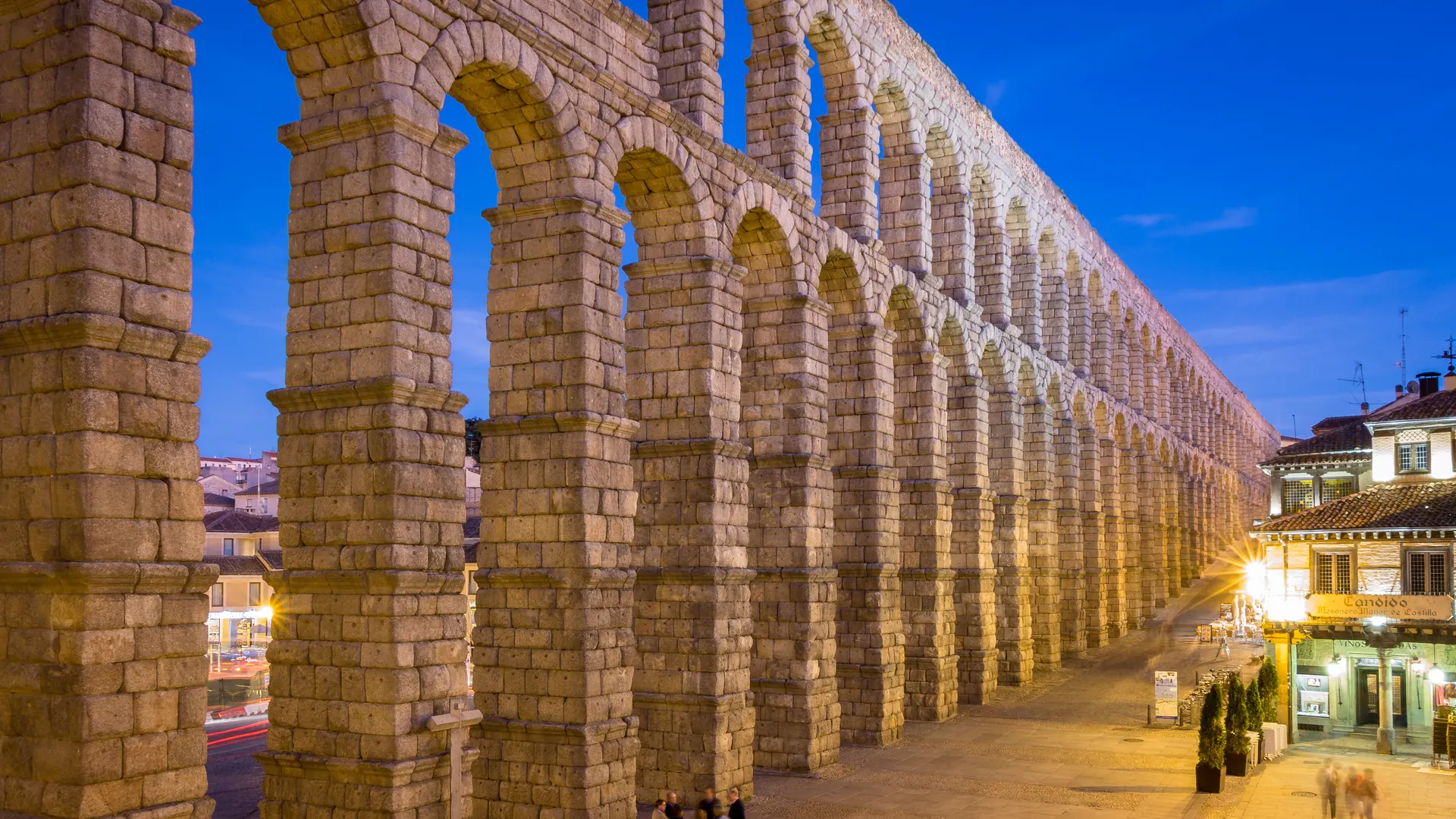
Segovia · the Roman aqueduct as the sky turns blueSegovia, Castile and León

Segovia · the Roman aqueduct as the sky turns blueRafa Esteve / CC BY-SA 4.0 / cropped

Aqueduct of Segovia

Stand beneath it as the sky turns blue, and two-thousand-year-old arches run out of sight.

Getting there●○○○○Very easy on your own: about 30 minutes by high-speed train from Madrid, then a bus to the old town.

Best timeApr–Jun, Sep–Oct

The classic day trip from Madrid: a whole old town in a day.

The Romans built this aqueduct about two thousand years ago to bring mountain water into the city. Granite blocks are stacked up into two tiers of arches, nearly thirty metres at the highest point, and it was still in use into modern times. The best moment is dusk, when the sky turns blue: stand in the square below, look up, and the floodlit arches march away one after another. By day, walk up the main street of the old town past the cathedral to the Alcázar on the cliff at the far end. You have to try roast suckling pig here; locals say the skin should be crisp enough to cut with a plate.

GETTING THEREAbout 30 minutes by high-speed train from Madrid Chamartín to Segovia-Guiomar, then a 15–20 minute bus to the aqueduct; or about an hour and a bit by bus from Madrid.
GOOD TO KNOWThe castle and cathedral each need a ticket; check opening hours on the official sites. Roast-pig restaurants fill up at weekends, so book. Winter evenings are cold; bring a jacket.
SAFETYThe square by the aqueduct is crowded, so mind your belongings; the old town’s cobbles are steep and slippery, so wear good shoes.
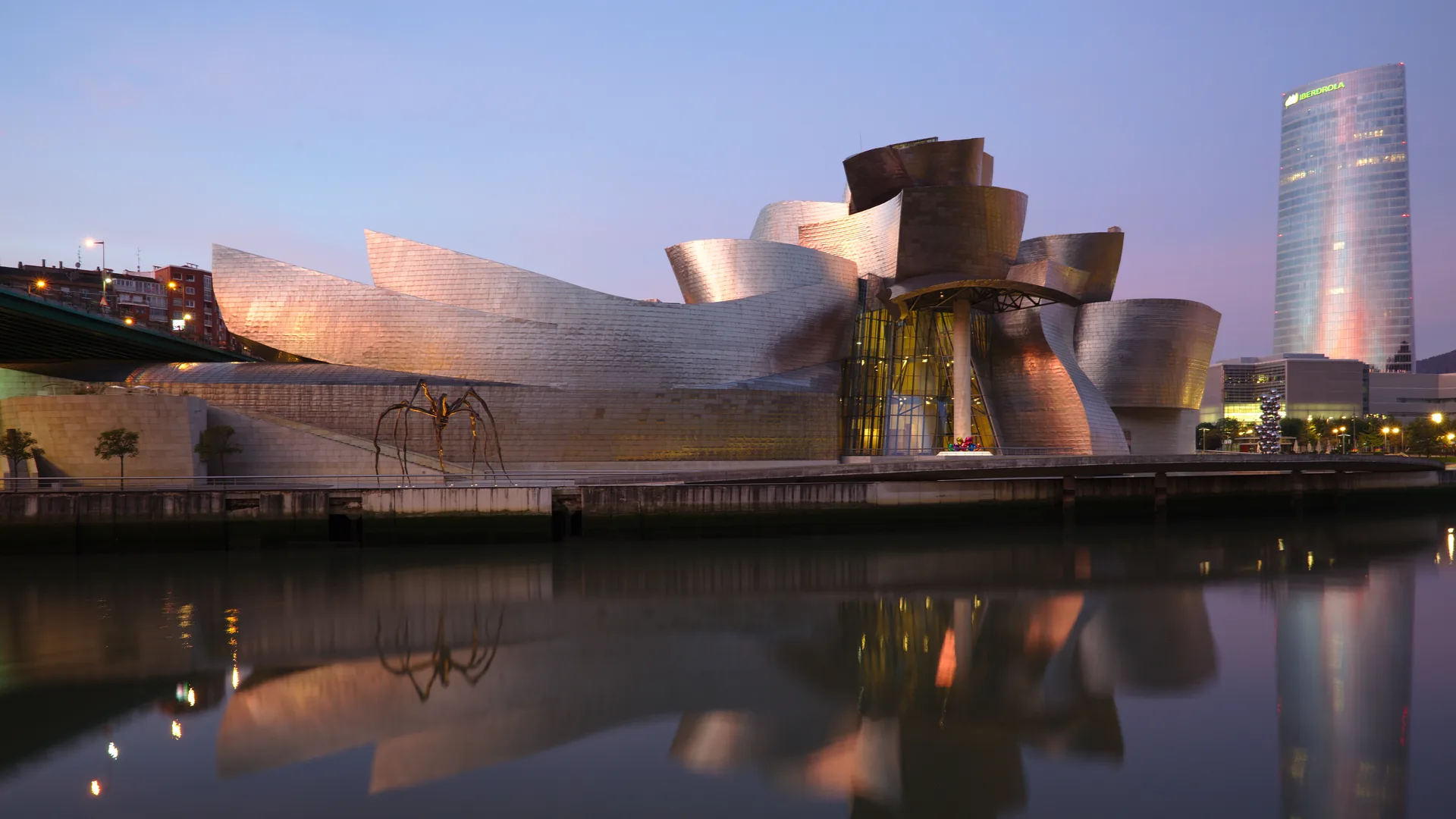
Bilbao · the Guggenheim at dawnBilbao, Basque Country

Bilbao · the Guggenheim at dawnPA / CC BY-SA 4.0 / cropped

Guggenheim Museum Bilbao

At dawn by the river, a titanium building like a ship or a flower slowly lights up.

Getting there●●○○○Easy on your own: about an hour’s flight from Madrid or Barcelona, then a bus into town.

Best timeMay–Oct

A museum that changed a city, and the gateway to Basque food.

The photo was taken at first light: the museum’s curving titanium walls reflect the river, and the giant spider in front is the sculpture Maman. The museum opened in 1997 and turned Bilbao from an industrial port into a place people travel to see. On the square at the other side sits a huge dog made of flowers, replanted each season. Afterwards, head to the old town for pintxos, the Basque snack of bread topped with all sorts, eaten standing at the bar as you move from place to place. With time to spare, San Sebastián is about an hour away by bus: La Concha beach, the old funfair on Mount Igueldo and even more pintxos bars.

GETTING THEREAbout an hour’s flight from Madrid or Barcelona; the airport bus takes about 20 minutes to the centre. About 5 hours by train from Madrid. San Sebastián is a little over an hour by bus.
GOOD TO KNOWExhibitions and hours change by season and the museum is often closed on Mondays; check the official site. Pintxos bars only get lively after about 8pm.
SAFETYBilbao is fairly safe, but mind your belongings in the busy old town at night. It rains a lot in the Basque Country, so pack an umbrella.
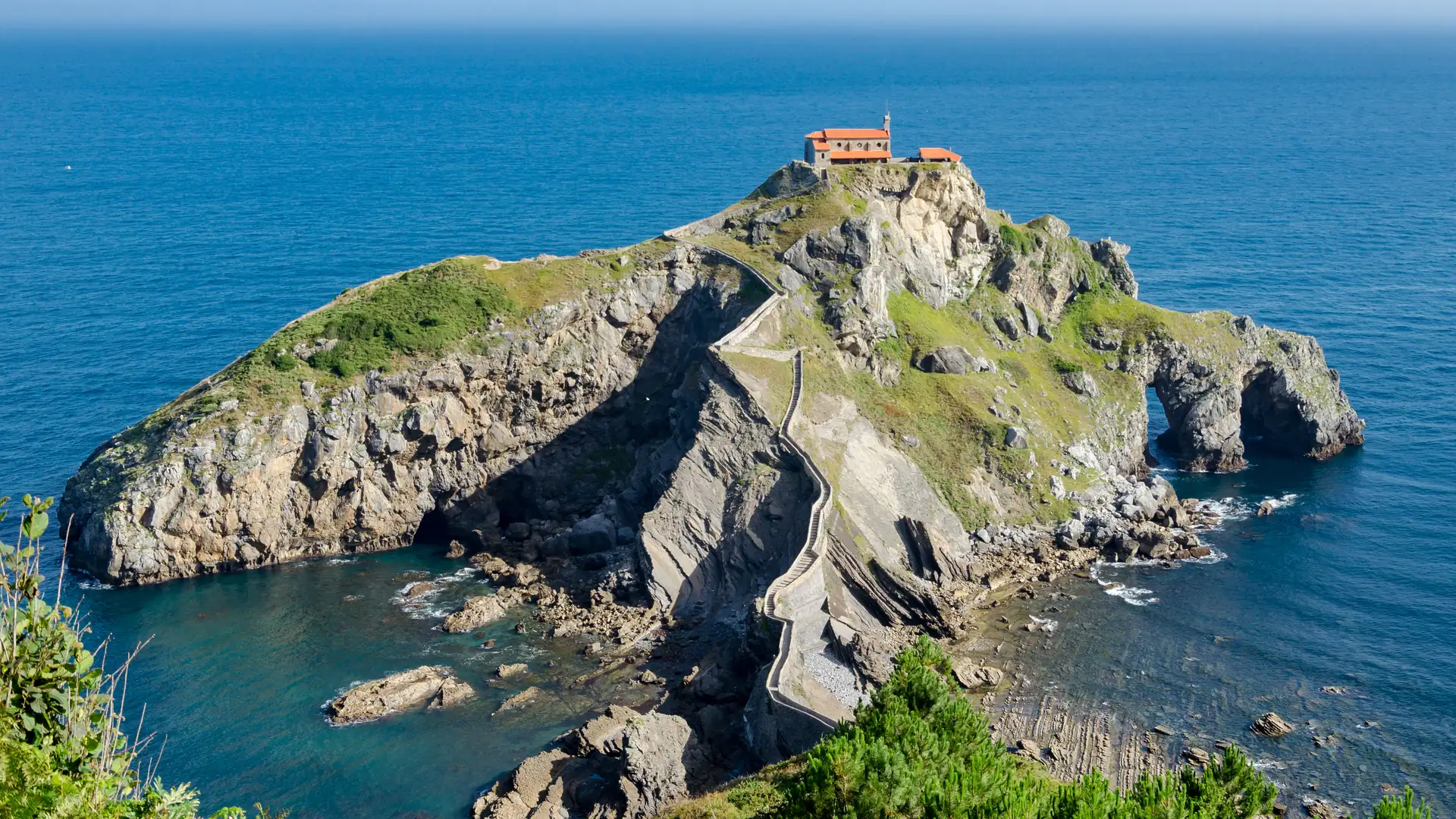
San Juan de Gaztelugatxe · the chapel on an island in the seaBermeo, Biscay, Basque Country

San Juan de Gaztelugatxe · the chapel on an island in the seaAnder Abadia Zallo / CC BY-SA 4.0 / cropped

San Juan de Gaztelugatxe

Stone steps zigzag up an island in the sea, with only a small chapel at the top.

Getting there●●●○○Some planning: about an hour by bus from Bilbao, then a walk down a hill path.

Best timeMay–Sep

The Basque coast’s most famous view, and a TV filming location.

A small island is joined to the shore by a stone bridge, and more than two hundred steps wind up its spine to a tiny chapel. At the top, locals ring the chapel bell three times and make a wish. A popular TV series filmed here, which made it much better known, but standing on the island you hear only wind and waves. From the entrance you first walk down a hill path, then climb the steps; the whole way back is uphill, so save some energy.

GETTING THEREAbout an hour by bus from Bilbao towards Bakio and Bermeo, then a walk to the entrance; driving or a private driver is easier, though parking is limited.
GOOD TO KNOWIn high season you need a free timed booking on the official site, and you may not get in without one; rules change each year, so check the official site. The chapel isn’t open every day.
SAFETYThe steps are steep and exposed, slippery in rain and tricky in strong wind, and the site may close in bad weather. Wear good shoes and bring water.
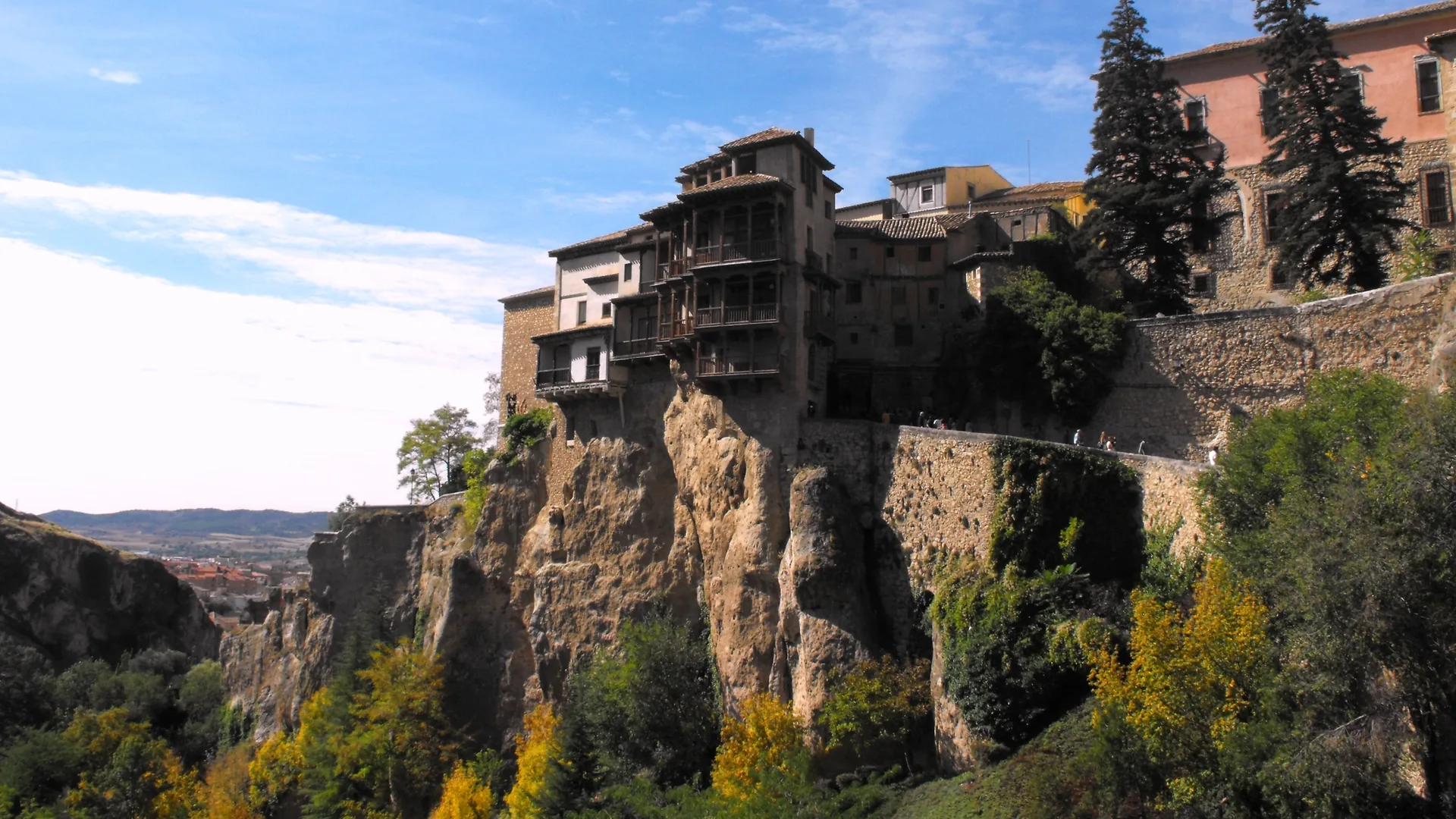
Cuenca · the Hanging Houses above the gorgeCuenca, Castilla–La Mancha

Cuenca · the Hanging Houses above the gorgediego_cue / CC BY-SA 3.0 / cropped

Hanging Houses of Cuenca

A row of houses hangs off a cliff, with the gorge right below the balconies.

Getting there●●○○○Easy on your own: about an hour by high-speed train from Madrid, then a bus up to the old town.

Best timeApr–Jun, Sep–Oct

A whole old town on a ridge between two rivers, a World Heritage Site.

Cuenca’s old town sits on a narrow ridge with gorges on both sides. The houses in the photo push their balconies right out over the cliff, and have hung above the ravine like this for centuries. Inside is now the Museum of Spanish Abstract Art, where you look at paintings in rooms suspended in mid-air with the gorge outside the window. For the full row of hanging houses, walk onto the San Pablo iron bridge opposite and look back. The old town is small enough for a day, but stay a night and the quiet mornings and evenings are something else.

GETTING THEREAbout an hour by high-speed train from Madrid Chamartín or Atocha to Cuenca’s high-speed station, then about 20 minutes by bus to the old town.
GOOD TO KNOWThe old town is on a hill with plenty of slopes, so wear good shoes. Check museum hours on the official site.
SAFETYThe San Pablo bridge is high; if heights bother you, the view from the end is enough. Don’t climb over railings at the cliff edge for photos.
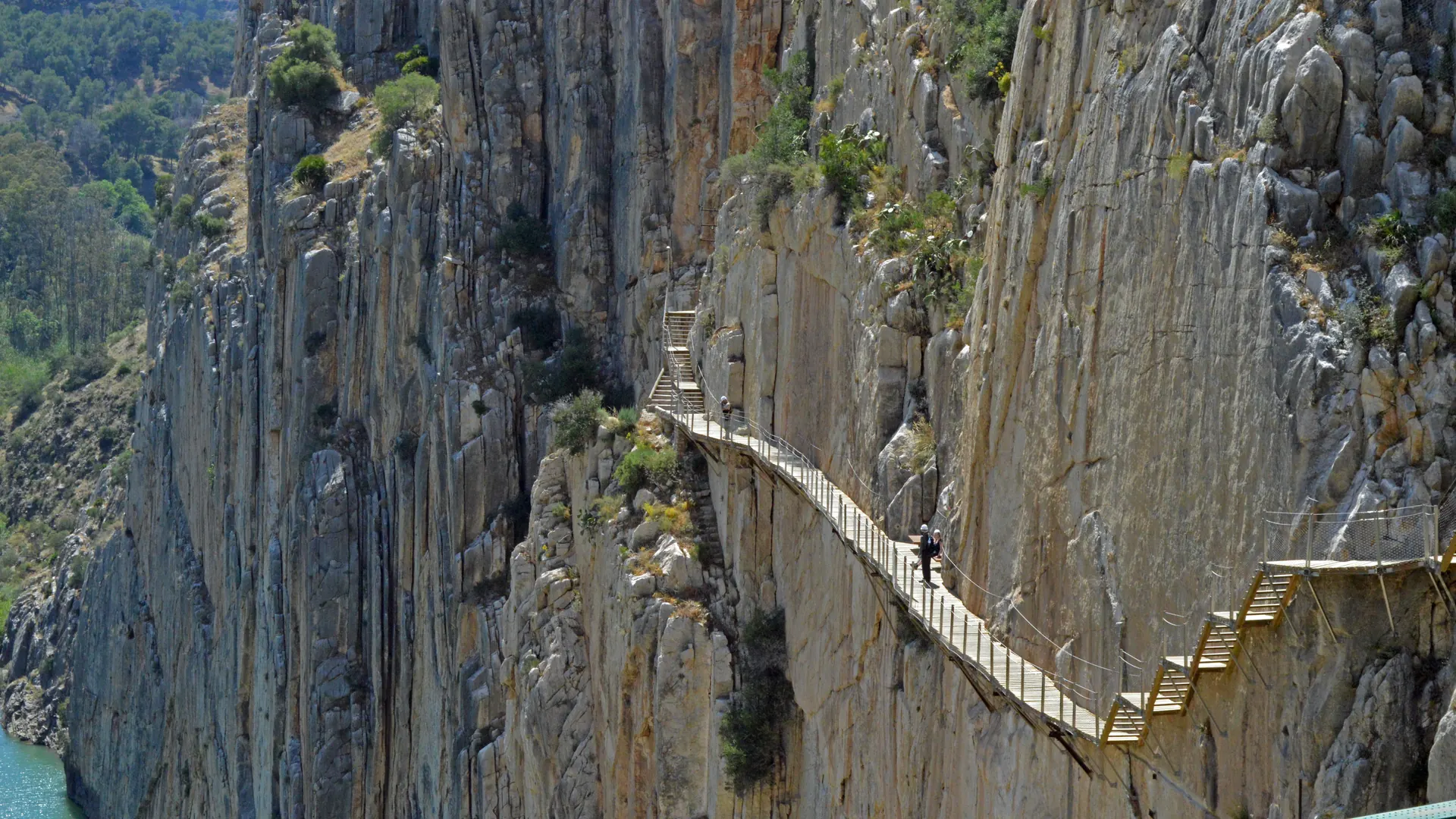
Caminito del Rey · the boardwalk along the rock faceEl Chorro, Málaga province, Andalusia

Caminito del Rey · the boardwalk along the rock faceMichiNerja / CC BY-SA 3.0 ES / cropped

Caminito del Rey

A boardwalk pinned to the cliff in mid-air, with a gorge over a hundred metres below.

Getting there●●●○○Some planning: about 40 minutes by train from Málaga to El Chorro, with few services, so plan your times.

Best timeMar–May, Oct–Nov

Once called the world’s most dangerous path, now rebuilt as a safe and spectacular walkway.

The path began in the early 20th century as a workers’ walkway for a hydroelectric scheme. It later fell into ruin and was once called the most dangerous path in the world. After restoration it reopened in 2015, with a new boardwalk built just above the old one, so as you walk you can still see the broken old path beneath your feet. The full route, including access paths, is about 7.7 km, nearly 5 km of it boardwalk on the rock face, and it’s one-way only. Where the gorge is narrowest the walls almost touch, with the river far below.

GETTING THEREAbout 40 minutes by train from Málaga to El Chorro; services are few, so check them first. The north entrance is near Ardales, and a shuttle bus runs from El Chorro. Day tours with transport also work.
GOOD TO KNOWBook on the official site in advance; tickets often sell out early. Be at the entrance at least 30 minutes before your time. Under-8s can’t enter; 8–17-year-olds need an adult and ID. A free helmet is provided and must be worn throughout. Closed Mondays and on 24, 25 and 31 December and 1 January, and in heavy rain or wind; check the official site. Large rucksacks, umbrellas, selfie sticks and drones aren’t allowed.
SAFETYThink carefully if heights bother you: the walkway is in mid-air all the way, and there’s nowhere to turn back. It’s hot in summer, so carry plenty of water and wear good shoes.
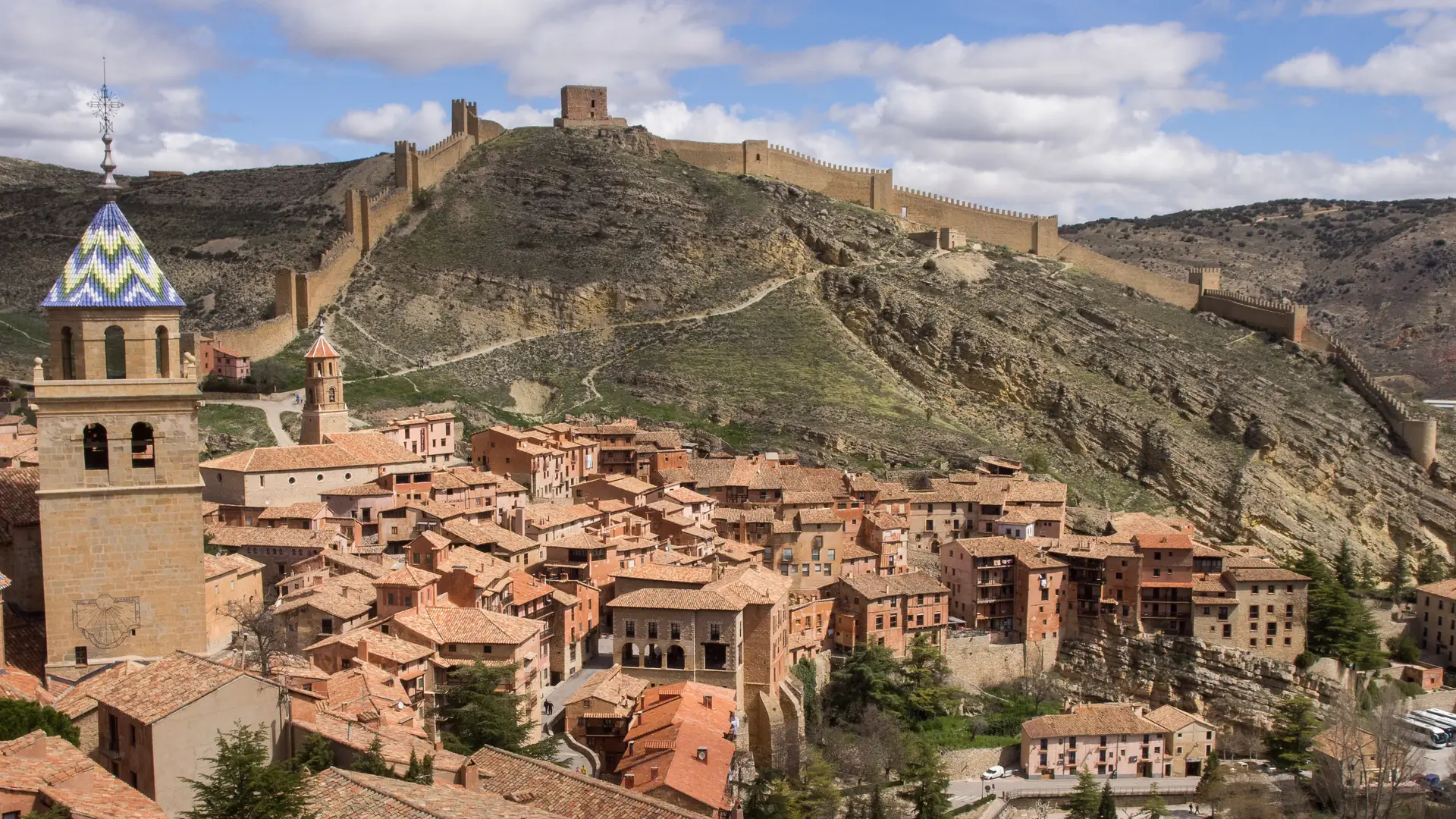
Albarracín · the ridge-top walls and the pink old townTeruel province, Aragon

Albarracín · the ridge-top walls and the pink old townFRANCIS RAHER / CC BY 2.0 / cropped

Albarracín

A pink hill town climbs the slope, with an entire old wall along the ridge.

Getting there●●●●○Harder: no train, and buses from Teruel are few; a car or private driver is more practical.

Best timeApr–Jun, Sep–Oct

A medieval hill town in inland Spain that few people know.

Almost every house in Albarracín is an earthy, faintly pink colour, stacked up the slope above the river valley, with wooden balconies leaning into lanes so narrow the eaves nearly touch. A complete medieval wall climbs along the ridge above, and you can walk up beside it to look down on the whole town and valley. It isn’t easy to reach, so day-trippers are few. Stay a night and at dusk and dawn the town feels almost yours alone.

GETTING THERENo train. About 40 minutes by bus from Teruel, with few services; about 3 to 3½ hours by car from Madrid or Valencia, so driving or a private driver is more practical.
GOOD TO KNOWThe lanes are narrow and steep; park outside town and walk in. Winters are cold up here and it may snow.
SAFETYThe wall path is steep and partly without railings, so keep away from the edges; stones are slippery after rain.
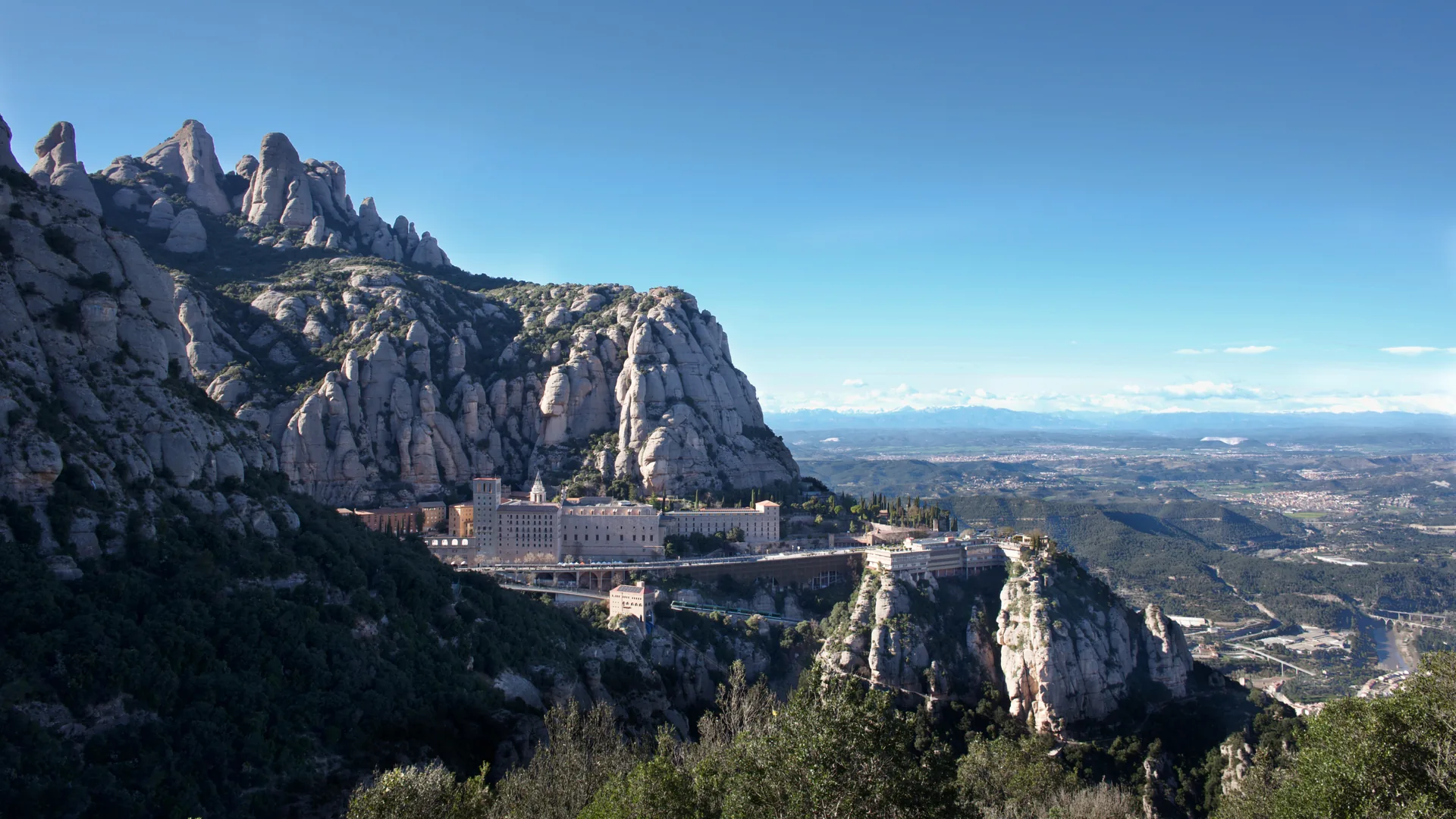
Montserrat · the monastery among the cliffsNear Barcelona, Catalonia

Montserrat · the monastery among the cliffsImaginepascal / CC BY-SA 4.0 / cropped

Montserrat

A saw-toothed mountain, with a monastery set into the middle of its cliffs.

Getting there●●○○○Easy on your own: about an hour by train from Barcelona, then a rack railway or cable car up.

Best timeMar–Jun, Sep–Nov

The most popular day trip from Barcelona, and Catalonia’s holy mountain.

Wind and rain have worn this mountain’s rock into rounded pillars, and from afar it looks like a row of saw teeth; the local name means ‘sawn mountain’. The monastery sits halfway up the cliffs and holds the Black Madonna, Catalonia’s patron, and many people queue just to touch the orb in her hand. The monastery has one of Europe’s oldest boys’ choirs; check performance times on the official site. Ride higher by funicular and follow the paths to viewpoints among the rocks; on a clear day the white range in the distance is the Pyrenees.

GETTING THEREAbout an hour on the R5 line from Barcelona’s Plaça Espanya, changing at Monistrol de Montserrat for the rack railway, or at Aeri de Montserrat for the cable car. Combined tickets including the train and the ride up are available.
GOOD TO KNOWThe queue for the Black Madonna is long at weekends, so go up early. The boys’ choir doesn’t sing every day; check the official site. It’s a place of worship, so dress modestly.
SAFETYSome mountain paths run near cliffs, so stick to marked routes; it’s windy and cooler up top, so bring a jacket.

Winter ski areas & events

Coming in winter? The region also has these. Full details (lessons, lodging, transport) are in the winter corner of your quiz results.

Ski areas

  • Sierra Nevada: Ski in the morning, see the Alhambra in Granada in the afternoon
  • Baqueira Beret: A big Pyrenean resort where Spain’s royal family skis too
  • Formigal: A big resort in the Aragonese Pyrenees, with a lively village at night
  • La Molina: A ski area you can reach by train from Barcelona

Winter events

  • A Christmas and New Year day in Madrid: A great tree made of light, standing at the very centre of Spain.
  • A Three Kings day in Jerez: As the floats go by, sweets rain down from the sky.
  • A Tamborrada day in San Sebastián: At midnight every drum in town starts at once and keeps going for twenty-four hours.
  • A carnival day in Tenerife: T-shirts in winter, dancing in the street with everyone till midnight and beyond.
  • A Barcelona Christmas market day: Among the market’s Christmas figures, one is squatting to relieve himself.
  • A flamenco day in Granada’s Albaicín: In a cave dug into the hill, the guitar starts and the dancer’s heels hit the floor.

Not sure which to pick? Take the 4-minute travel-personality quiz and find the one that suits you.

Take the quiz