TOP-TIER TRAVEL中/EN

Thailand · Sukhothai & Nan

6 hidden gems in Sukhothai & Nan

Ancient kingdoms & old towns. We picked 6 places in this region — some well known, some few visitors find. Browse at your own pace, then take the quiz when something catches your eye.

TOP-TIER TRAVEL › All hidden gems › Thailand › Sukhothai & Nan

Not sure which to pick? Take the 4-minute travel-personality quiz and find the one that suits you.

Take the quiz
Sukhothai Historical Park
First time? Start with Sukhothai

Few tourists make it to this region. On a first visit, put Sukhothai Historical Park on the list and cycle a loop to get a feel for the capital of Thailand's first kingdom. Distances are long, so give two or three days to the place below that's truly yours — don't rush.

Looking for a place to stay in this area? Start here:

Spot details checked: October 2026

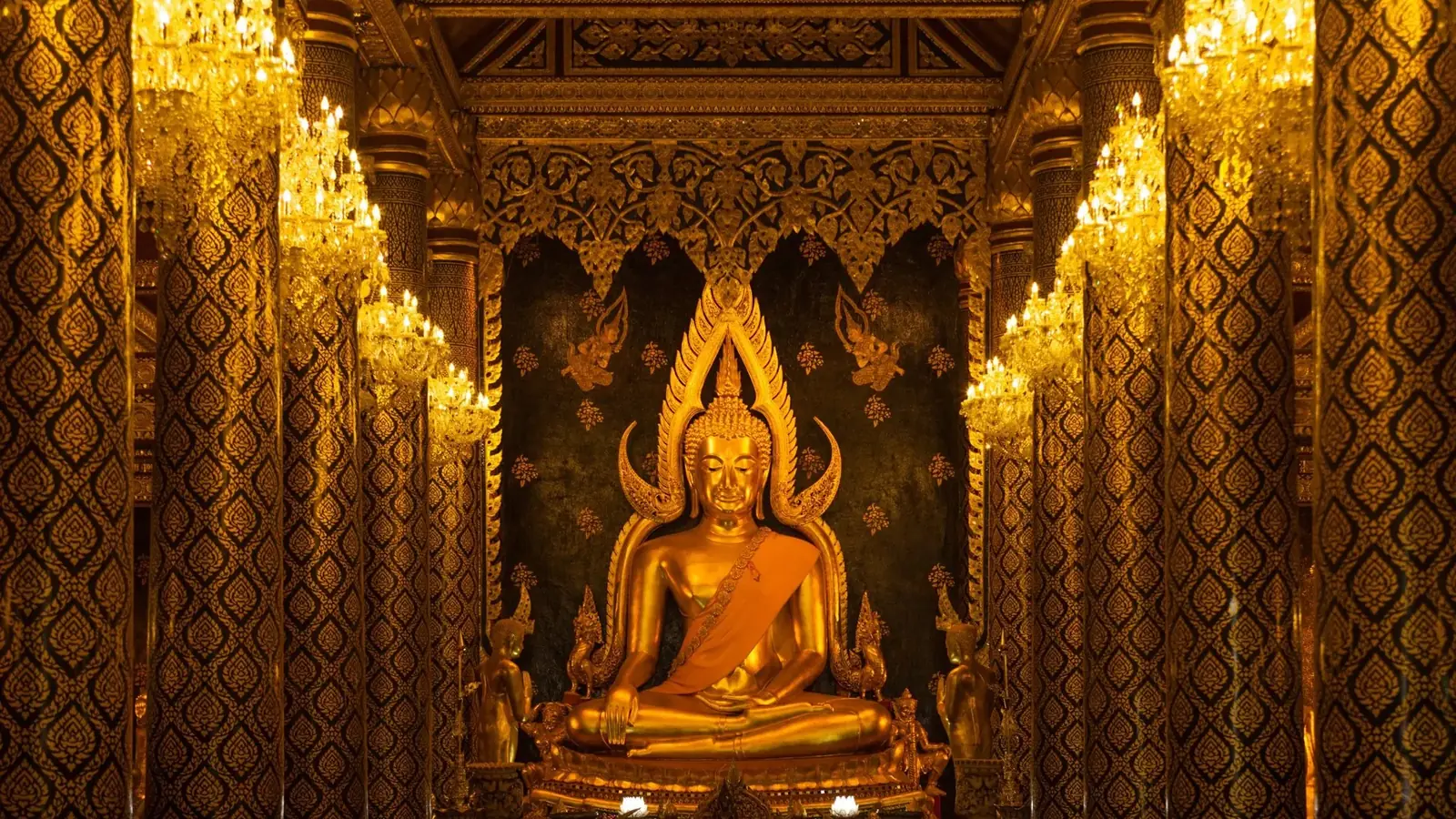
The Phra Phuttha Chinnarat Buddha inside the hallPhitsanulok

The Phra Phuttha Chinnarat Buddha inside the hall

Wat Phra Si Rattana Mahathat · Phra Phuttha Chinnarat

The Buddha many Thais call the most beautiful.

Getting there●●○○○Easy on your own: reach Phitsanulok from Bangkok by train, bus or domestic flight; the temple is in town.

Best timeNov–Feb

On the way to Sukhothai, stop in Phitsanulok to see Phra Phuttha Chinnarat.

Deep inside the hall sits a gleaming golden Buddha, framed by a halo that rises like flames. Phra Phuttha Chinnarat, at Wat Phra Si Rattana Mahathat in Phitsanulok, is considered by many Thais to be the most beautiful Buddha image in the country. Pillars and walls are covered in gold patterns that glow in the candlelight; worshippers murmur their prayers and incense hangs in the air. Standing here, you'll find yourself stepping more softly.

GETTING THEREReach Phitsanulok from Bangkok by train, bus or domestic flight. The temple is on the riverside in town, about 10 minutes by tuk-tuk from the railway station. Phitsanulok is also the transfer point for Sukhothai.
GOOD TO KNOWMornings, when worshippers come to pray, are when the Chinnarat Buddha feels most majestic. Dress modestly and remove shoes; in the hall, don't take photos standing up or selfies with your back to the Buddha.
SAFETYThe market and car park outside are busy, so mind your belongings and the traffic.
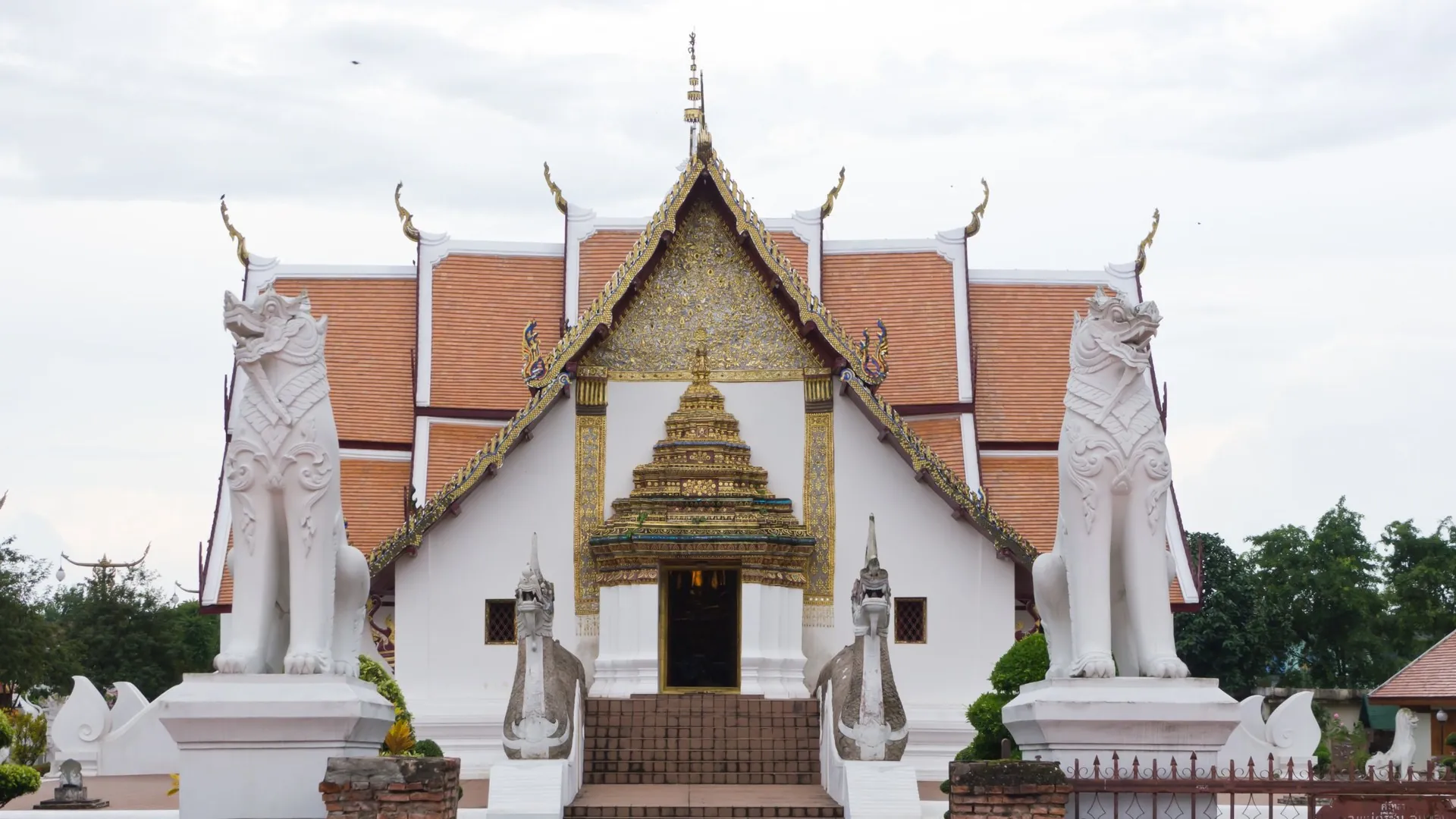
Wat Phumin's hall, guarded by white lionsNan

Wat Phumin's hall, guarded by white lions

Wat Phumin

A whisper from centuries ago, painted on a wall.

Getting there●●●○○Doable on your own, but it's a long way: fly or take an overnight bus from Bangkok to Nan; the temple is in town.

Best timeNov–Feb

Almost everyone who goes to Nan comes to Wat Phumin to see the 'Whispering Lovers'.

Walk into an old temple with doors on all four sides, where four Buddhas sit back to back facing the four directions. The walls show daily life in Nan centuries ago — people at work, people in love — and in one scene a man leans close to whisper in a woman's ear: the 'Whispering Lovers', a picture you won't forget. The murals are old and faded in places, and you view them from behind a railing. The best time is a weekend evening, when the square beside the temple becomes a walking street of northern Thai snacks and the temple lights up. Find the Whispering Lovers, wander the walking street, and have a bowl of northern curry noodles. Temple murals elsewhere in Asia often tell stories of gods; here they show ordinary people simply living well.

GETTING THEREAbout an hour-plus by domestic flight from Bangkok to Nan, or take an overnight bus. The temple is in the centre of Nan town, within walking distance.
GOOD TO KNOWSoft morning light is best for the famous 'whispering lovers' mural, and the cool season, November to February, is ideal for Nan. The murals are fragile — view from behind the rail and no flash. Dress modestly and remove shoes. You can add the Bo Kluea salt wells and Wat Phra That Chae Haeng nearby.
SAFETYThe town is generally safe; watch for dogs when out at night, and take care on wet floors when barefoot.
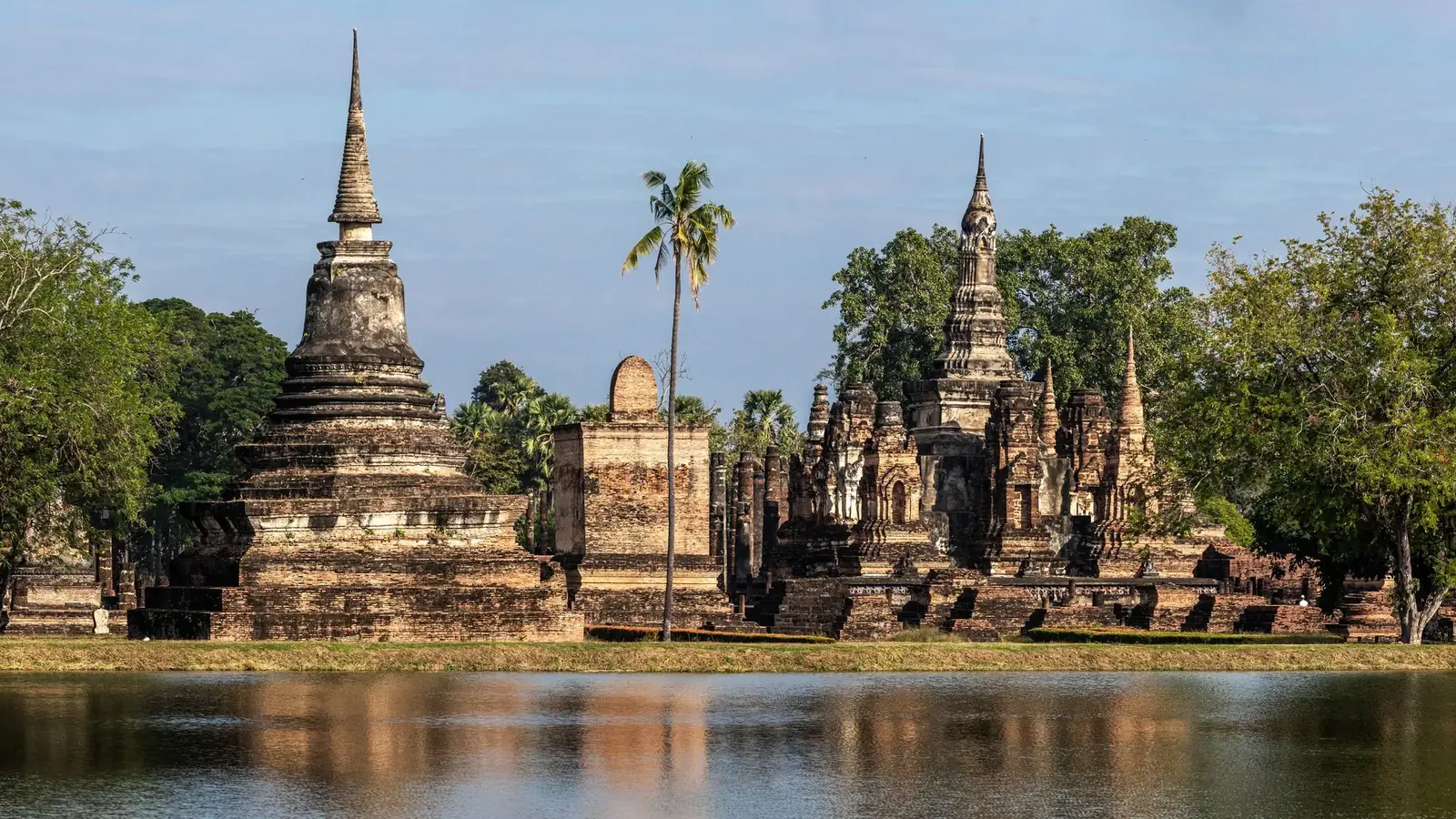
Ancient chedis beside a pond in Sukhothai Historical ParkOld Sukhothai

Ancient chedis beside a pond in Sukhothai Historical Park

Sukhothai Historical Park

Thailand's first kingdom, sitting beside a lotus pond.

Getting there●●●○○Doable on your own: take a bus or domestic flight from Bangkok to Sukhothai, then a songthaew to the old city.

Best timeNov–Feb

To see the capital of Thailand's first kingdom, Sukhothai is worth a night.

This was the capital of Thailand's first kingdom. Old temples, stupas and Buddhas lie scattered among lotus ponds and lawns, and cycling slowly between them is the loveliest way around. Mornings bring birdsong and bicycle bells; evenings carry the scent of grilled skewers and palm sugar. Early morning and late afternoon are most beautiful, when low sun falls across the Buddhas and the ponds hold the stupas' reflections. Each year during Loy Krathong, the park hosts light shows and the floating of krathong, and the ruins glow with candlelight; in 2026 it's scheduled for 15–24 November — check official Thai announcements for confirmed dates. Picture a heritage park big enough to need a bicycle, where the Buddhas simply sit out in the open on the grass.

GETTING THEREAbout 6–7 hours by bus from Bangkok, or fly to Sukhothai Airport. From New Sukhothai town, a songthaew to the old city takes about 30 minutes.
GOOD TO KNOWThe year's most magical time is Loy Krathong: in 2026 Sukhothai's festival ran November 15–24, with lit ruins, candles, fireworks and a light-and-sound show, ending on Loy Krathong night itself; in 2027 Loy Krathong falls around November 14. Any time of year, cycling the ruins is a joy. Each zone charges separately. Book early for the festival and check official announcements.
SAFETYMidday is very hot — bring water and wear a hat. Don't climb on ruins or Buddha images.
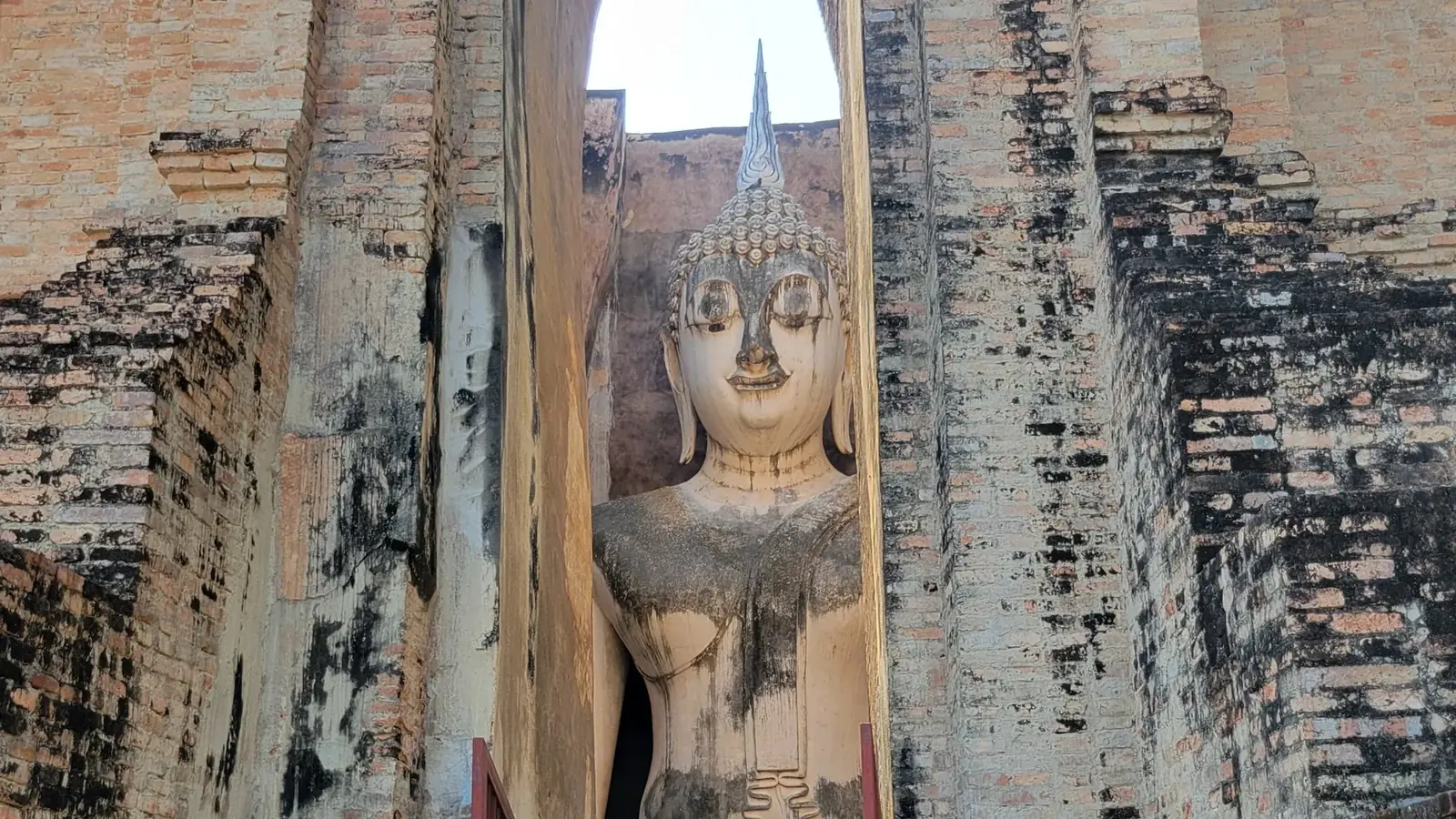
The great Buddha's face seen through the narrow opening at Wat Si ChumOld Sukhothai

The great Buddha's face seen through the narrow opening at Wat Si Chum

Wat Si Chum

Peer through the gap, and the great Buddha is looking back.

Getting there●●●○○Doable on your own: it's at the north end of Sukhothai Historical Park, an easy bike ride.

Best timeNov–Feb

In Sukhothai, look at the great Buddha of Wat Si Chum through the gap in the wall at least once.

Look through a narrow gap in a wall — and a giant Buddha face looks quietly back at you. Wat Si Chum lies at the north end of Sukhothai Historical Park; inside its tall square walls sits a Buddha so large it almost fills the space. Only as you walk closer do you grasp its true size. Worshippers often press gold leaf onto its fingers. Come in the morning, when the light is soft and the crowds are few.

GETTING THEREAbout 10 minutes by bike from the central zone of Sukhothai Historical Park.
GOOD TO KNOWIn the morning or late afternoon, slanting light through the narrow opening makes the giant Buddha's face most moving. It's in the park's northern zone with a separate ticket. Dress modestly and don't climb.
SAFETYWatch for traffic and uneven road when cycling; noon is hot, so bring water and a hat.
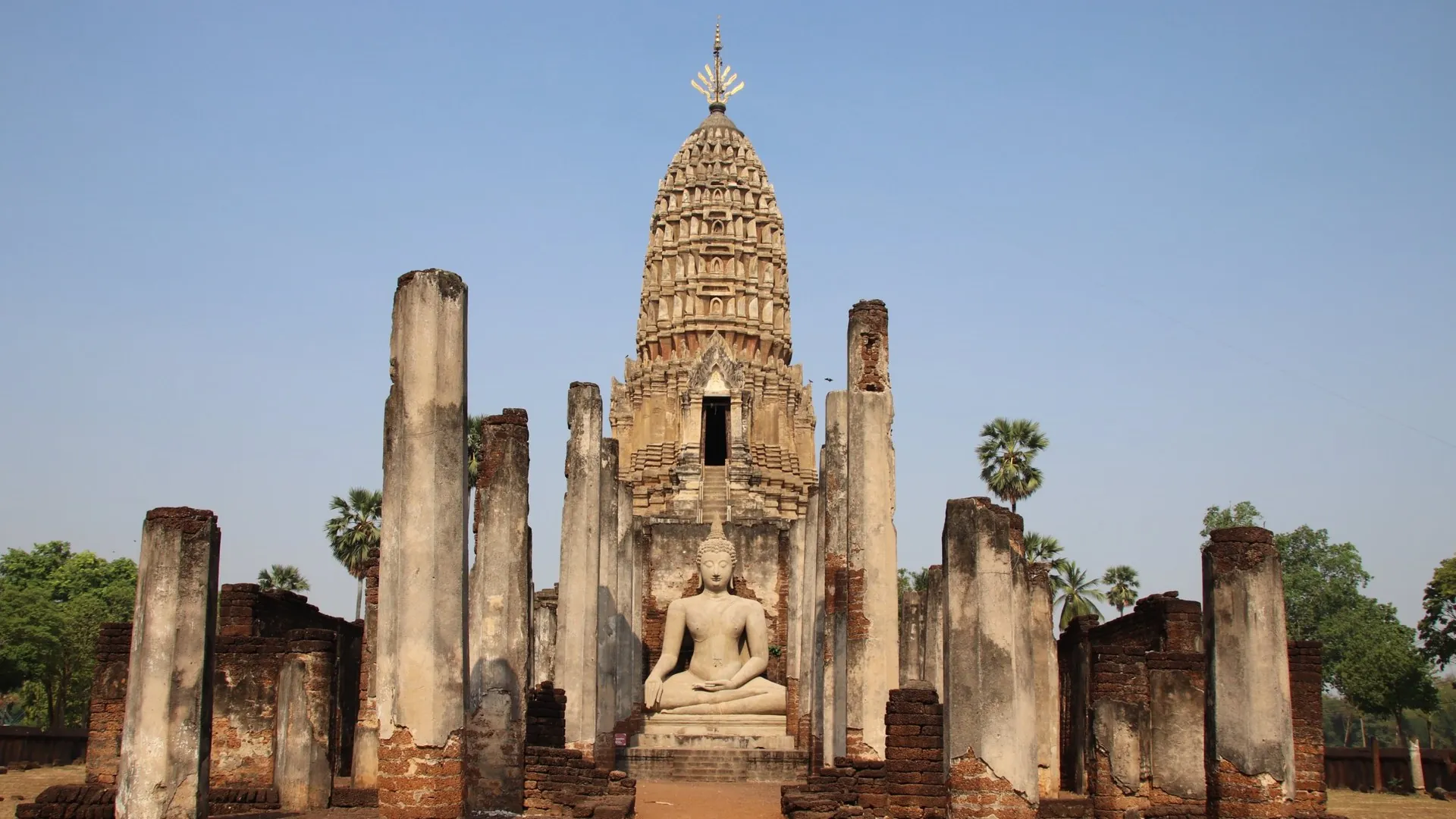
Si Satchanalai · Wat Phra Si Rattana Mahathat ChaliangSi Satchanalai, Sukhothai

Si Satchanalai · Wat Phra Si Rattana Mahathat Chaliang

Si Satchanalai

A whole afternoon, just you and the ancient city.

Getting there●●●●○Doable on your own, but transport is limited: about an hour-plus from Sukhothai by private car or bus.

Best timeNov–Feb

After Sukhothai, if you want an even quieter old city, go to Si Satchanalai.

An ancient city even quieter than Sukhothai, its ruins tucked among trees and along the river — you may meet only a handful of people all afternoon. Si Satchanalai was another important city of the Sukhothai Kingdom. At Wat Phra Si Rattana Mahathat Chaliang, in the photo, rows of stone columns surround a seated Buddha with a tall Khmer-style prang behind, and the wind moves quietly between the pillars. Rent a bicycle, take your time, and let the old city be yours alone.

GETTING THEREAbout an hour-plus from New Sukhothai by private car or bus; bikes are available for rent at the park.
GOOD TO KNOWFar quieter than Sukhothai — cycling among the ruins in the morning is wonderfully peaceful. It's spread out, and Wat Chao Chan is outside the main zone, so bike or hire a car. Please don't climb the ruins.
SAFETYThe park is quiet, so go with company and leave before dark.
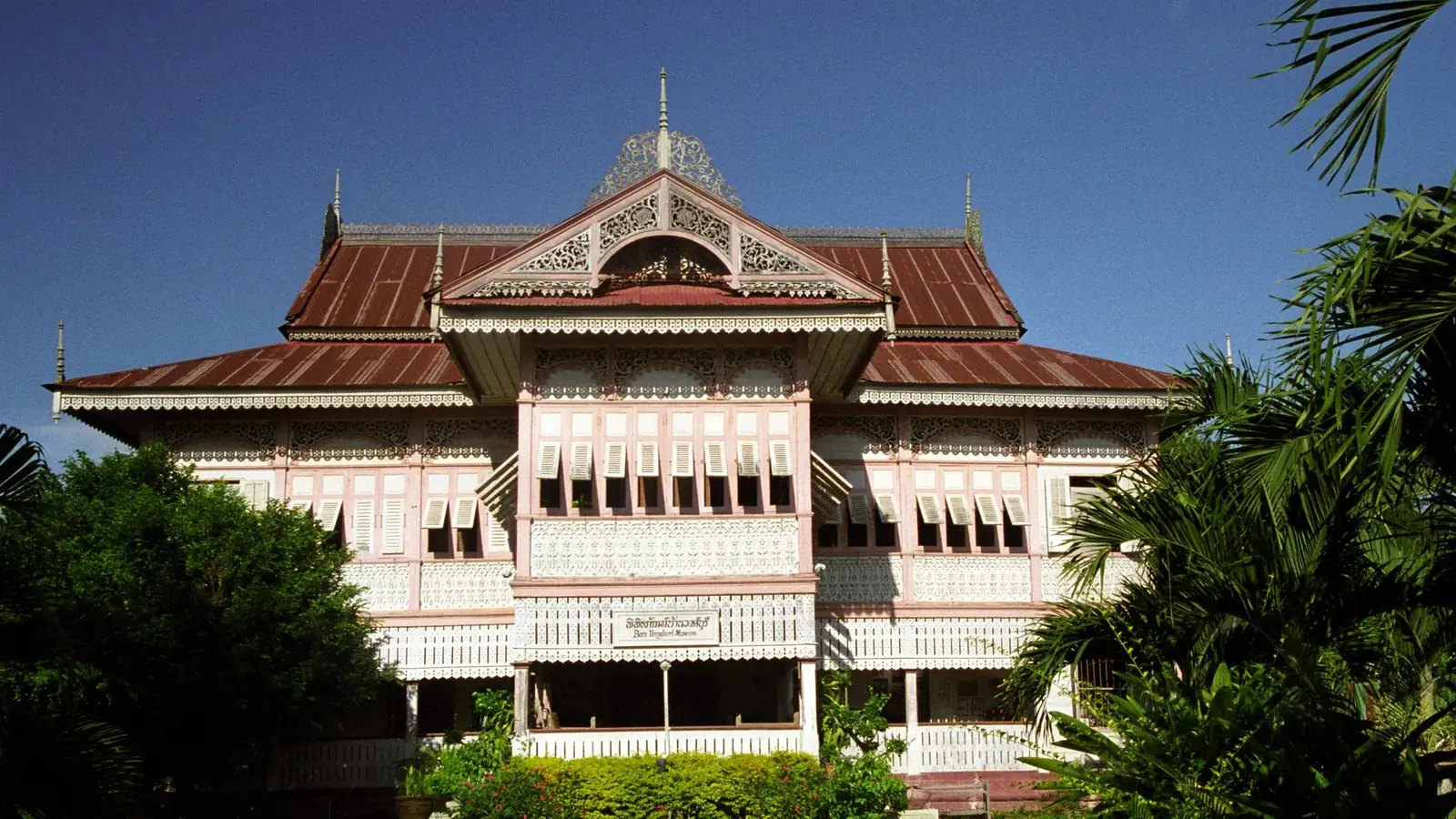
Vongburi House's pink teak mansionPhrae

Vongburi House's pink teak mansion

Vongburi House

An old teak house dressed in lace.

Getting there●●●○○Doable on your own, but it's a long way: take a bus or train from Bangkok to Phrae, then a tuk-tuk.

Best timeNov–Feb

In the small northern town of Phrae, there's a teak mansion that looks like lace.

A pink teak mansion, its eaves and window frames hung with delicate carved fretwork, looks from a distance like a lace dress. Vongburi House was the home of a local governor's family in Phrae, and inside, the furniture and everyday objects of the time remain, showing how prosperous Phrae was in the days of the teak trade. The floorboards creak underfoot and the air carries a faint scent of wood. Spot the different carvings on the eaves, then walk to the old streets and temples nearby. Imagine a grand family mansion built entirely of teak, Thai and Western styles woven together. Mornings are best, when sunlight falls on the pink walls. Outside town, add Phae Mueang Phi, a 'ghost town' of rock pillars straight out of a fantasy film, and the hilltop Phra That Cho Hae on the same day.

GETTING THEREAbout 8 hours by bus from Bangkok to Phrae, or take the train to Den Chai and change; from central Phrae, a tuk-tuk takes about 10 minutes.
GOOD TO KNOWA quiet weekday afternoon is ideal for taking in the carved wooden windows. It's a privately run museum — stay quiet and follow the photo rules.
SAFETYThe old wooden stairs are steep, so hold the rail; the town is generally safe.

Not sure which to pick? Take the 4-minute travel-personality quiz and find the one that suits you.

Take the quiz