TOP-TIER TRAVEL中/EN

Switzerland

10 hidden gems in Switzerland

Lakes, snowy peaks & castles. We picked 10 places in this region — some well known, some few visitors find. Browse at your own pace, then take the quiz when something catches your eye.

TOP-TIER TRAVEL › All hidden gems › Switzerland

Not sure which to pick? Take the 4-minute travel-personality quiz and find the one that suits you.

Take the quiz
Lucerne
First time? Start with Lucerne and the Jungfrau

Zurich's old town, Lucerne's Chapel Bridge and the Jungfrau — do these classics first and you can't go wrong. Swiss trains run like clockwork: Zurich to Lucerne takes about 45 minutes, to Interlaken about 2 hours. Then save two or three days for the place below that's truly yours.

Spot details checked: October 2026

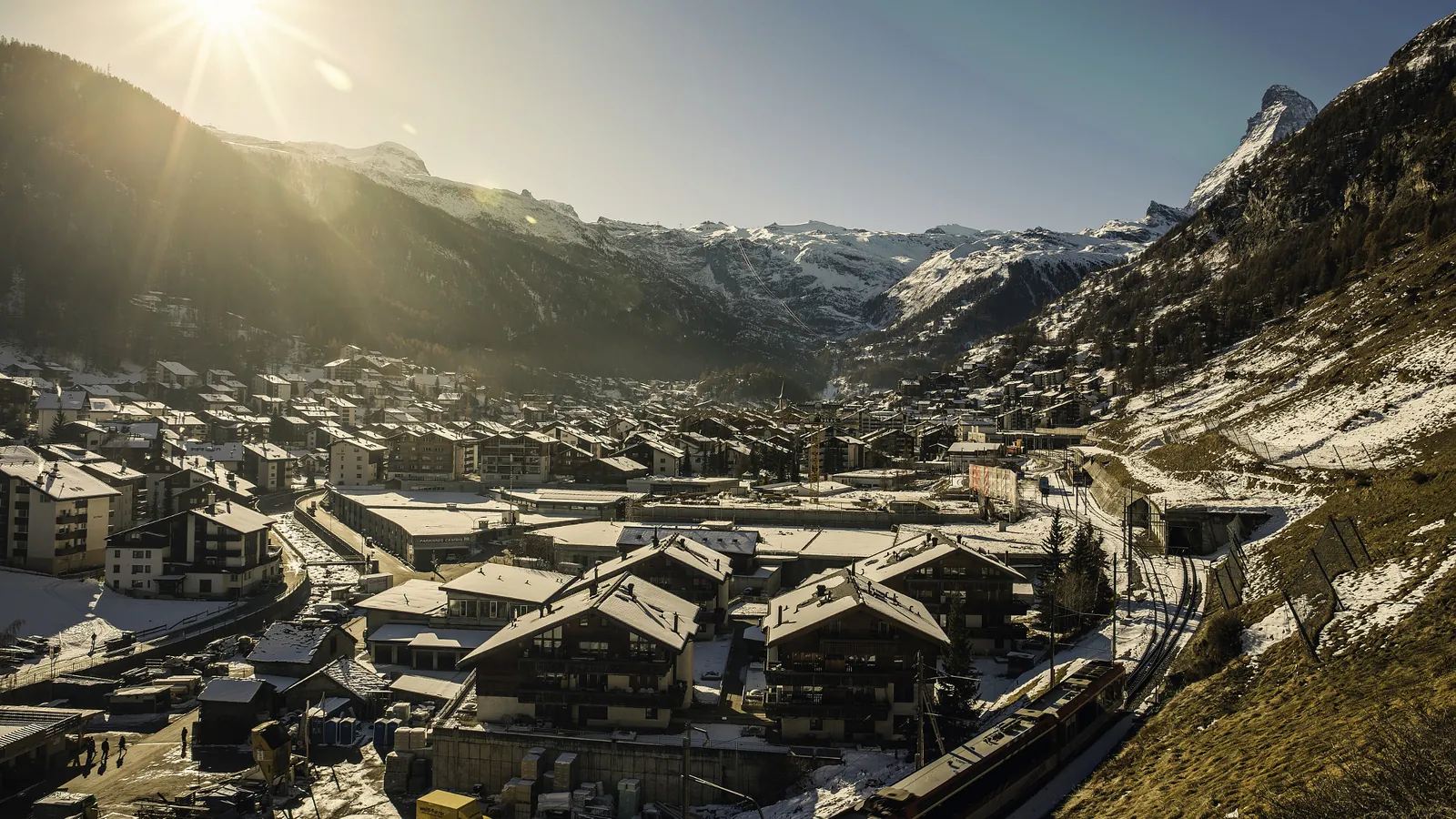
Zermatt village and its valley from the hillsideCanton of Valais · foot of the Matterhorn

Zermatt village and its valley from the hillsideRaphael Andres / CC BY 3.0 / cropped

Zermatt

A car-free mountain village where everyone waits for the Matterhorn to show itself.

Getting there●●○○○Fine on your own: about 3½ hours by train from Zurich, changing at Visp; ordinary cars are banned in the village.

Best timeJul–Sep, Jan–Mar

Plenty of people come to Switzerland just to see the Matterhorn with their own eyes.

Zermatt sits at the foot of the Matterhorn, and ordinary cars are banned — only small electric vehicles and horse carriages. From much of the village you can see the 4,478-metre peak, pointed like a pyramid. The big draw is the Gornergrat cog railway, opened in 1898, which climbs to a viewpoint at about 3,089 metres facing the Matterhorn and a ring of glaciers; on the other side, cable cars rise to the Matterhorn Glacier Paradise at about 3,883 metres.
GETTING THERETake the train from Zurich or Geneva to Visp and change to the Matterhorn Gotthard Bahn to Zermatt (about 3½ to 4 hours in total). Drivers must park in Täsch, the stop before, and take the 12-minute shuttle train.
GOOD TO KNOWMornings give the best chance of a clear Matterhorn, and sunrise turning the summit gold is unforgettable. Clouds often hide it, so check the live webcams on the official site. Mountain trains and cable cars are expensive — compare the Swiss Travel Pass and Half Fare Card first.
SAFETYGornergrat and the Glacier Paradise are above 3,000 metres, where you may feel dizzy or short of breath — move slowly, and stay on marked routes on the glacier.
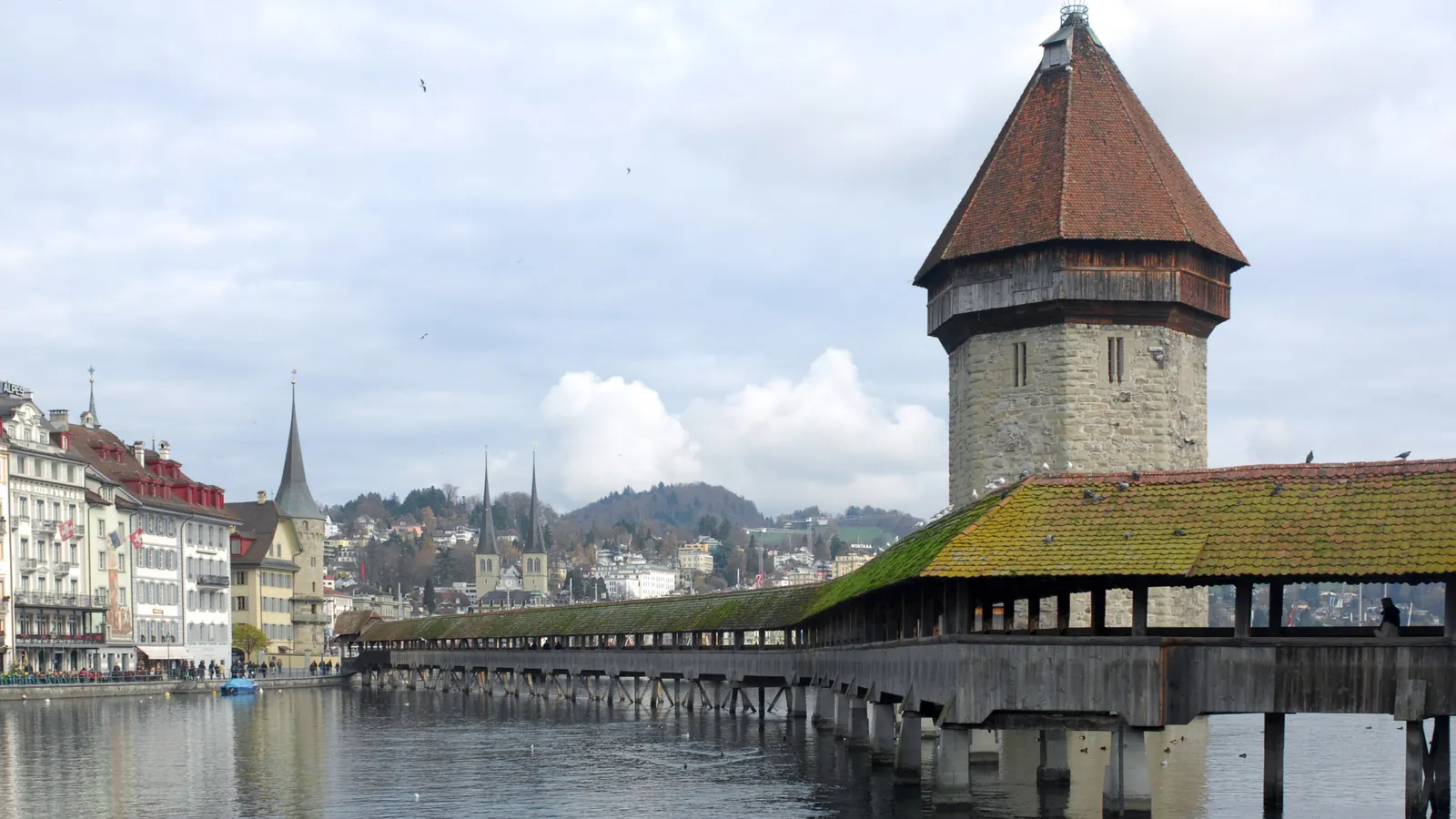
Lucerne's Chapel Bridge and Water TowerCanton of Lucerne · Lake Lucerne

Lucerne's Chapel Bridge and Water TowerAndrew Shiva / Wikipedia / CC BY-SA 4.0 / cropped

Lucerne

A wooden bridge slants across the river, with centuries-old paintings under its roof.

Getting there●○○○○Very easy on your own: about 45 minutes by train from Zurich, and the old town is walkable.

Best timeGood all year

On a first trip to Switzerland, many people put Lucerne on the list.

The Chapel Bridge is a covered wooden bridge running diagonally across the River Reuss. It dates to the 14th century and is often called one of Europe's oldest covered wooden bridges; triangular panels under its roof show 17th-century scenes of Lucerne's history and patron saints. A fire in 1993 destroyed much of the bridge and many paintings, so a good part of what you see is reconstructed. The octagonal Water Tower beside it once served as a prison and treasury. Across the old town, the Lion Monument — a dying lion carved into the rock — honours the Swiss Guards killed in Paris in 1792.

GETTING THERETake the train from Zurich HB to Lucerne (about 45 minutes); the Chapel Bridge is a 5-minute walk from the station and the Lion Monument about 15 minutes. For Pilatus or Rigi, take a lake boat and then a mountain railway or cable car.
GOOD TO KNOWEarly morning is when the Chapel Bridge is quietest and best for photos; summer is perfect for a lake cruise. The paintings are historic artefacts — don't touch. Weekends and summer are busy.
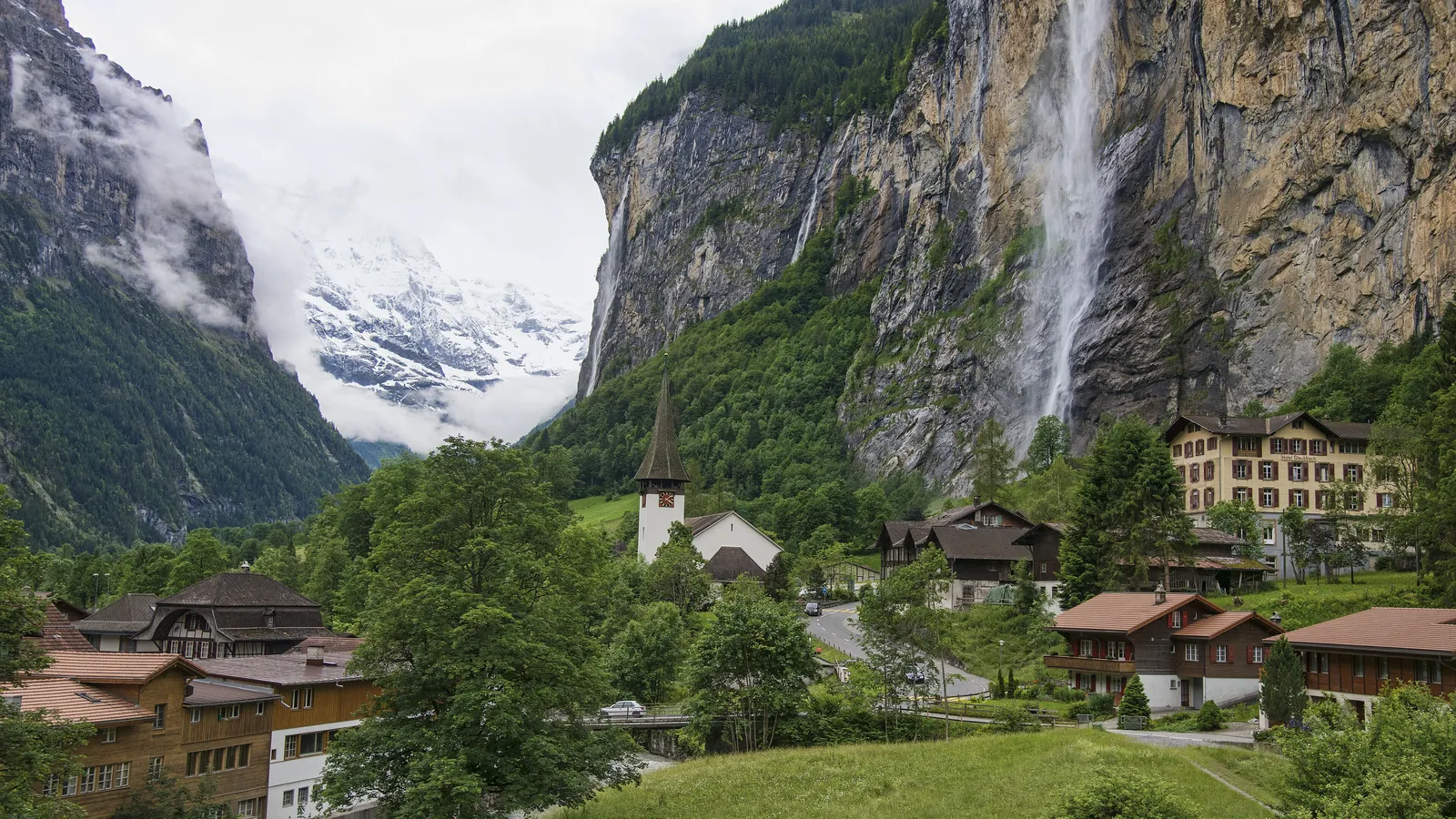
Lauterbrunnen village and the Staubbach FallsCanton of Bern · Jungfrau region

Lauterbrunnen village and the Staubbach Fallschensiyuan / CC BY-SA 4.0 / cropped

Lauterbrunnen

A valley of more than seventy waterfalls — the most famous one drops off a cliff right beside the village.

Getting there●○○○○Very easy on your own: about 20 minutes by train from Interlaken Ost.

Best timeJun–Sep

Many people call this Switzerland's most fairy-tale valley — you'll see why.

Lauterbrunnen is a U-shaped glacial valley enclosed by sheer cliffs, with about 72 waterfalls along its sides. The best known, the Staubbach Falls, drops nearly 300 metres right next to the village, and a path leads to its foot. Deeper in the valley, the Trümmelbach Falls are hidden inside the mountain: a tunnel lift takes you in to see glacier meltwater thundering through the rock. Lauterbrunnen is also where you change for Wengen, Mürren and the Jungfrau.

GETTING THERETake the train from Interlaken Ost to Lauterbrunnen (about 20 minutes); the Staubbach Falls are about 10 minutes' walk from the station. For the Trümmelbach Falls, take the bus towards Stechelberg (about 10 minutes).
GOOD TO KNOWEarly summer snowmelt makes the falls fullest and most dramatic; Trümmelbach Falls only opens from spring to autumn (about April to November). In winter Staubbach Falls thins and often freezes — a different kind of beauty. Check the official site.
SAFETYPaths near the falls are wet and slippery, and the spray is heavy — protect your camera and phone.
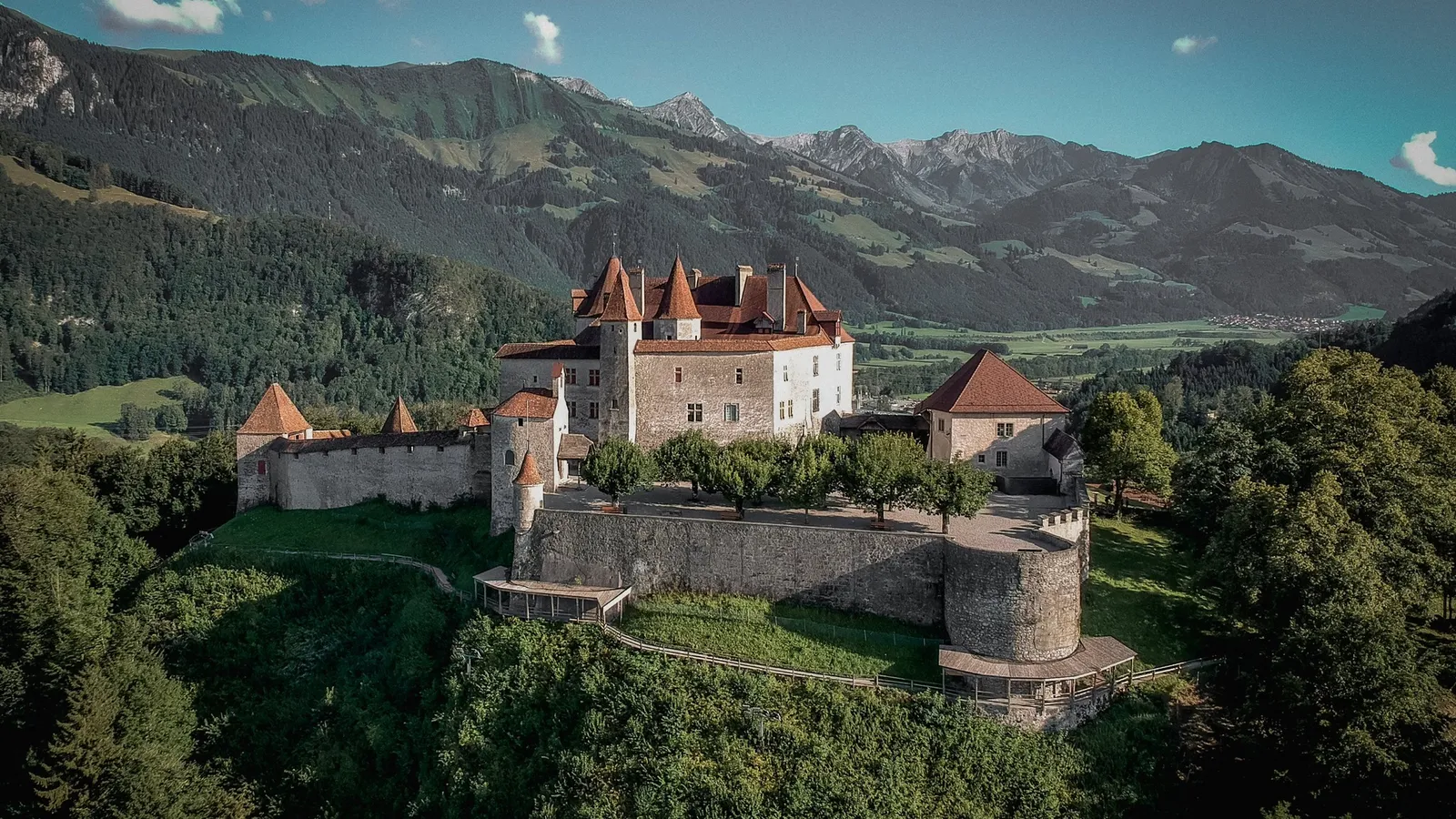
Gruyères Castle and the old town on their hillCanton of Fribourg · Gruyères

Gruyères Castle and the old town on their hillChristian David / CC BY-SA 4.0 / cropped

Gruyères

A cobbled hilltop town with a castle at the top of the street and cheese made at the foot of the hill.

Getting there●●○○○Fine on your own: about 1 hour 15 minutes by train from Bern via Fribourg and Bulle, then a 15-minute walk uphill.

Best timeGood all year

Cheese lovers rarely leave Switzerland without a detour to Gruyères.

Gruyères is a medieval town on a green hill. The old town is car-free; walk to the end of its cobbled main street and you reach Gruyères Castle, begun in the 11th century, with ramparts overlooking meadows and distant mountains. This is the home of Gruyère cheese: at La Maison du Gruyère, the dairy beside the station, cheese is made every day except Sundays and public holidays, and you can watch through the glass. At the entrance to the old town, a museum of H.R. Giger — designer of the creature in the film Alien — makes a striking contrast with the pastoral scenery.

GETTING THERETake the train from Bern or Lausanne to Fribourg or Bulle and change to the regional train to Gruyères (about 1 hour 15 minutes to 1½ hours in total). From the station it's about 15 minutes uphill on foot, or take the shuttle bus. The cheese dairy is right by the station.
GOOD TO KNOWWeekdays before 10 am or after 4 pm are the best times — summer weekends are very busy, and autumn colours are loveliest. The castle and museums are ticketed; check opening times.
SAFETYThe old town's cobbles are steep and slippery in the rain; wear good shoes.
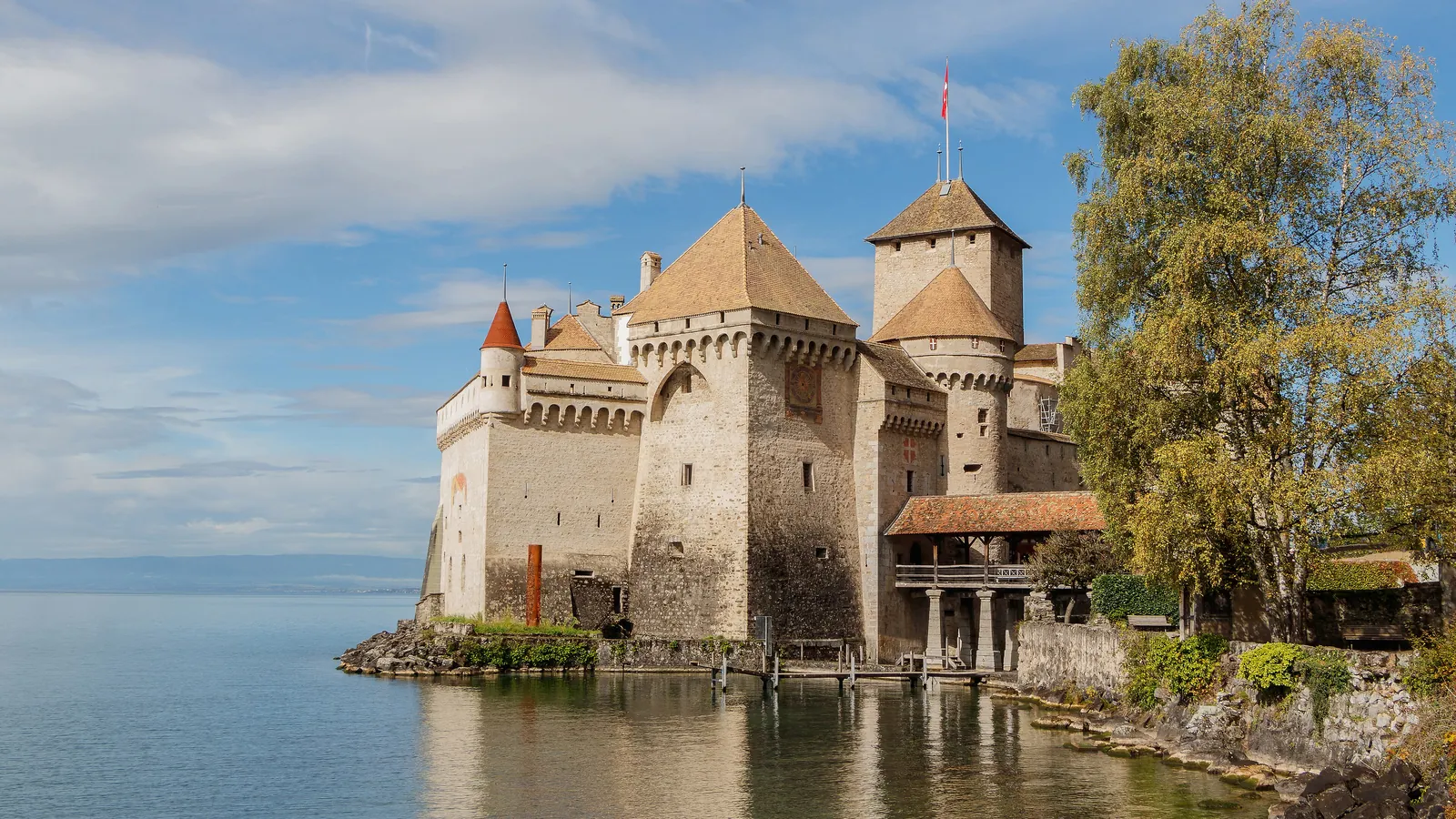
Chillon Castle on the shore of Lake GenevaCanton of Vaud · Lake Geneva

Chillon Castle on the shore of Lake GenevaLlez / CC BY-SA 3.0 / cropped

Chillon Castle · Montreux

A castle rising straight out of Lake Geneva, with Byron's name said to be carved in its dungeon.

Getting there●○○○○Very easy on your own: about 10 minutes by bus from Montreux, or a 45-minute lakeside walk.

Best timeGood all year

Lake Geneva's most famous view is this castle on the water.

Chillon Castle stands on a small rocky island at the edge of Lake Geneva, joined to the shore by a bridge, so from the water it seems to float. Nearly a thousand years old, it was a palace of the Counts of Savoy and also a prison. The English poet Lord Byron visited in 1816 and wrote The Prisoner of Chillon; his name is said to be carved on a pillar in the dungeon. Nearby Montreux is home to the famous jazz festival, and its lakefront has a statue of Queen's Freddie Mercury.

GETTING THEREFrom Montreux station, bus 201 reaches the Chillon stop in about 10 minutes, or walk along the lakeside path (about 45 minutes). In summer, Lake Geneva boats from Montreux and Vevey stop at Chillon.
GOOD TO KNOWArrive right at opening for a calmer visit. In winter, pair it with the Montreux lakeside Christmas market — November 20 to December 24 in 2026, with the 'flying Santa' crossing the sky. The castle is ticketed and busy in peak season and on weekends. Check the official site.
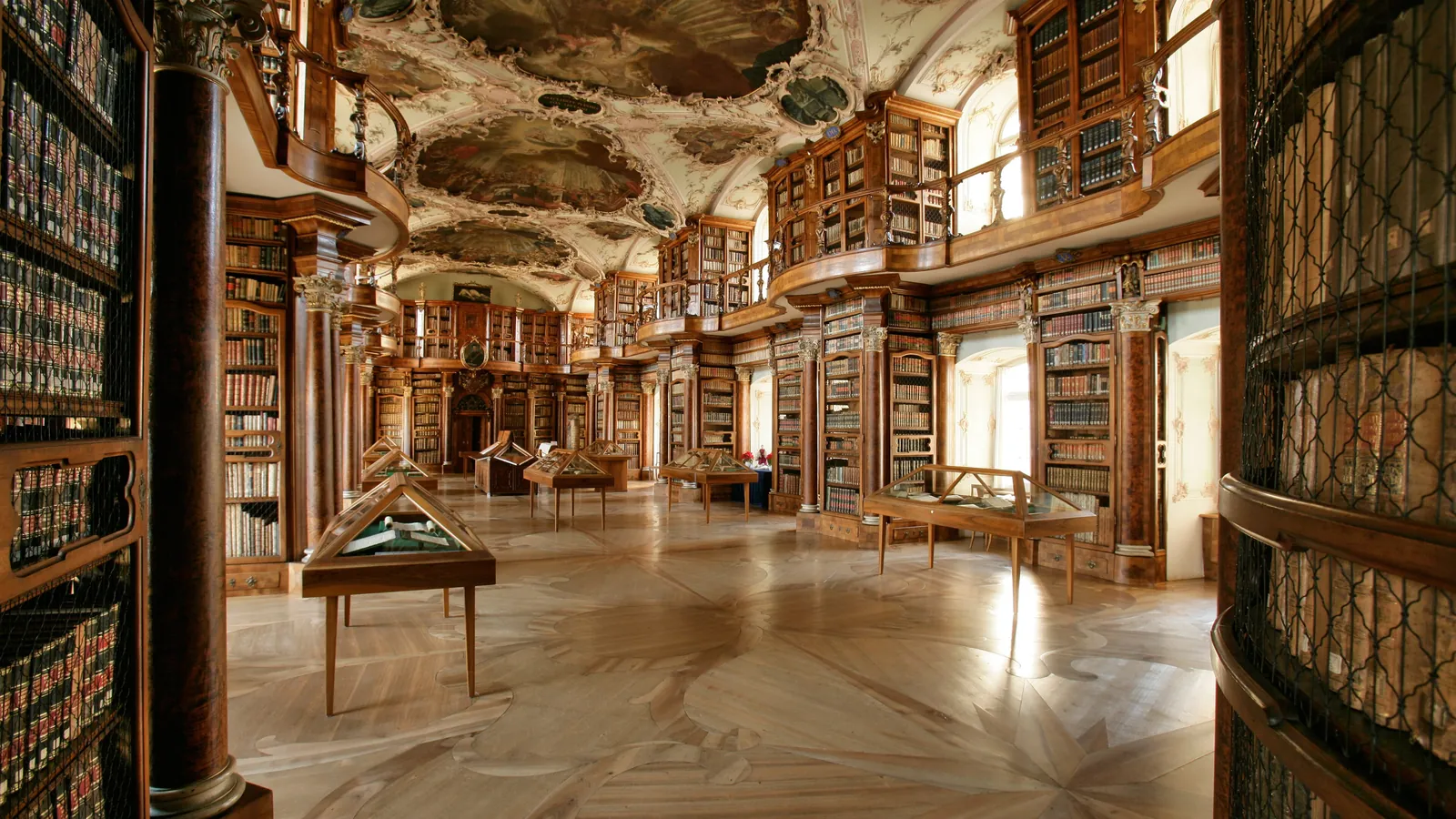
The baroque hall of the Abbey Library of St. GallenCanton of St. Gallen · St. Gallen

The baroque hall of the Abbey Library of St. Gallen© Martin Thurnherr / cc-by-sa-4.0 / Commons.wikimedia.org / cropped

Abbey Library of St. Gallen

Slip on felt overshoes and step into more than a thousand years of books.

Getting there●○○○○Very easy on your own: about 1 hour by train from Zurich, then a 10-minute walk.

Best timeGood all year

If you love books and old buildings, St. Gallen is worth a special trip.

From the 8th century the Abbey of St. Gall was a major centre of learning in Europe, and the whole abbey district became a UNESCO World Heritage Site in 1983. Its library is one of the oldest surviving monastic libraries in the world, with around 170,000 volumes including many medieval manuscripts. The highlight is the 18th-century baroque hall, with curving wooden bookcases, carved balustrades and ceiling paintings; to protect the floor you put on felt overshoes before going in. The library also displays an ancient Egyptian mummy.

GETTING THERETake the train from Zurich HB to St. Gallen (about 1 hour), then walk about 10 minutes to the abbey district. To continue to Appenzell, change in St. Gallen to the Appenzell railway (about 50 minutes).
GOOD TO KNOWWinter gives the library its most scholarly atmosphere — but the hall is unheated, so dress warmly. Photos inside the Baroque hall need prior permission. Check opening hours on the official site.
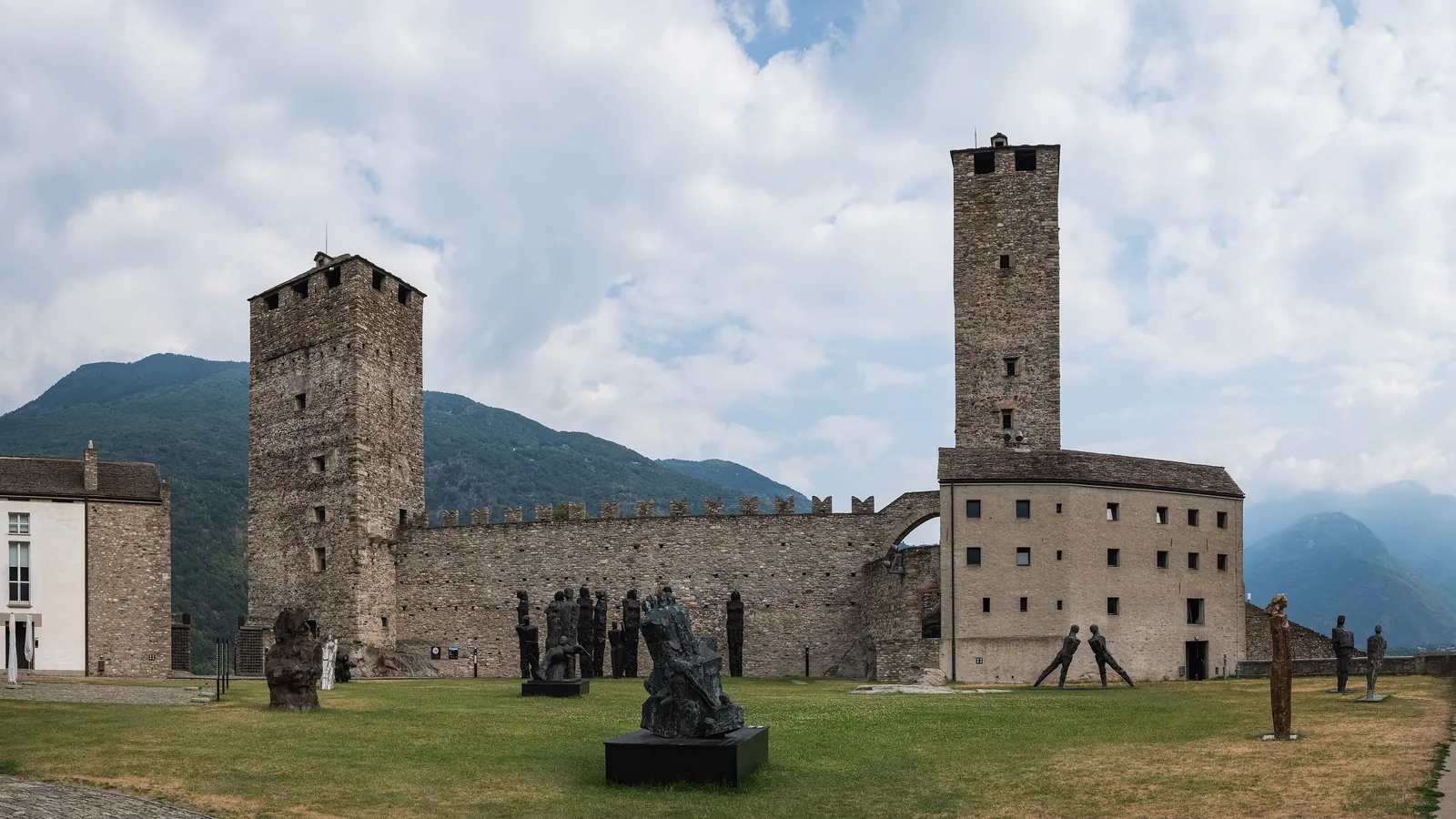
The black and white towers of CastelgrandeCanton of Ticino · Bellinzona

The black and white towers of CastelgrandeChristian David / CC BY-SA 4.0

Bellinzona

Three medieval castles guard the valley, and here they speak Italian.

Getting there●○○○○Very easy on your own: about 1 hour 40 minutes by train from Zurich through the Gotthard Base Tunnel.

Best timeApr–Oct

To see Switzerland's Italian-speaking side, Bellinzona is a great first stop.

Bellinzona sits south of the Alps on the main route to Italy. In the Middle Ages the Duchy of Milan sealed off the valley here with three castles and a wall — Castelgrande, Montebello and Sasso Corbaro — listed together as a UNESCO World Heritage Site in 2000. Castelgrande stands on a rock beside the old town, with a lift to take you up. Bellinzona is the capital of Ticino and Italian-speaking, and its arcades, squares and cafés feel like a small Italian town.

GETTING THERETake the train from Zurich HB (about 1 hour 40 minutes) or from Lugano (about 30 minutes). The old town is a 10-minute walk from the station; take the lift up to Castelgrande from Piazza del Sole. The other two castles are reached on foot uphill or by tourist train.
GOOD TO KNOWSpring to autumn, when all three castles are open, is best, and the walls look beautiful lit at dusk; there's a market in the old town on Saturday mornings. Outdoor areas are free, while museums and some towers are ticketed. Some castles shorten hours or close in winter — check the official site.
SAFETYThe paths up to the higher castles are steep and hot in summer — bring water.
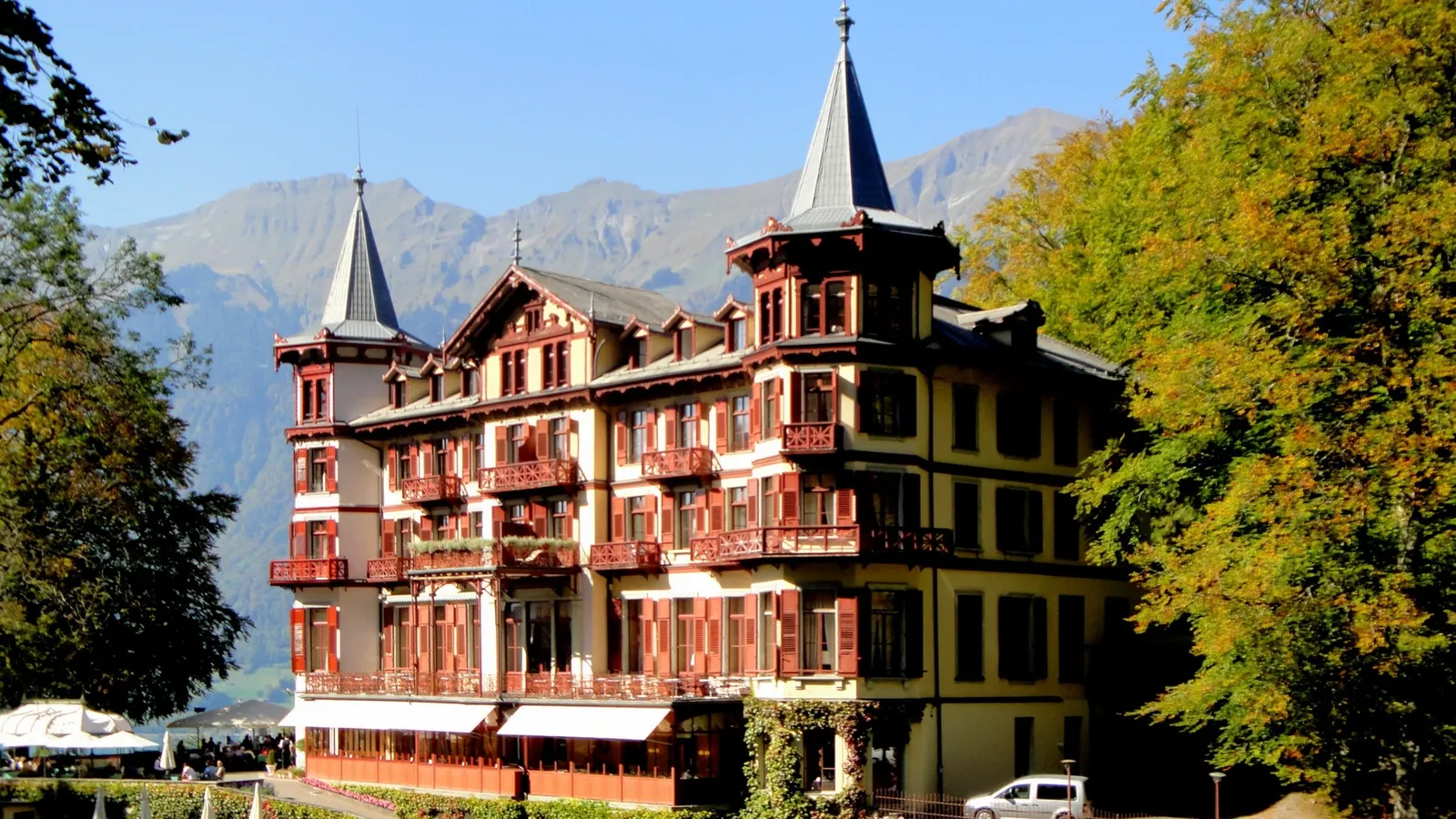
Grandhotel Giessbach, the funicular and the boat landingCanton of Bern · Lake Brienz

Grandhotel Giessbach, the funicular and the boat landingJoachimKohler-HB / CC BY-SA 4.0 / cropped

Giessbach

A waterfall tumbling into the lake in stages, and a funicular that has carried visitors since 1879.

Getting there●●●○○Fine on your own, but seasonal: about 20 minutes by train from Interlaken to Brienz, then a short summer boat and the funicular; in winter the boat and funicular mostly don't run.

Best timeJun–Sep

For a quiet corner of the Jungfrau region where you can hear water, come to Giessbach.

The Giessbach Falls drop down the mountainside in a series of cascades into turquoise Lake Brienz. A trail climbs beside them, and one stretch takes you right behind the falling water. The lakeside funicular has carried visitors since 1879, lifting you in a few minutes to the Grandhotel Giessbach, a 19th-century hotel in the forest whose terrace looks straight over the lake — you can stop in for a coffee even if you're not staying.

GETTING THERETake the train from Interlaken Ost to Brienz (about 20 minutes). In summer (roughly April to October), the boat from Brienz pier reaches Giessbach See in just over 10 minutes, and the funicular takes a few minutes up to the hotel; there's also a direct boat from Interlaken (about 1 hour). A footpath from the pier is an alternative to the funicular.
GOOD TO KNOWSummer is the time: take the lake boat, then the century-old funicular up to the hotel with the falls right before you. Boats, funicular and hotel mostly run only in summer, so winter trips are tricky — check seasons and timetables on the official site.
SAFETYThe trail by the falls is slippery; watch your step behind the waterfall and stay inside the railings.
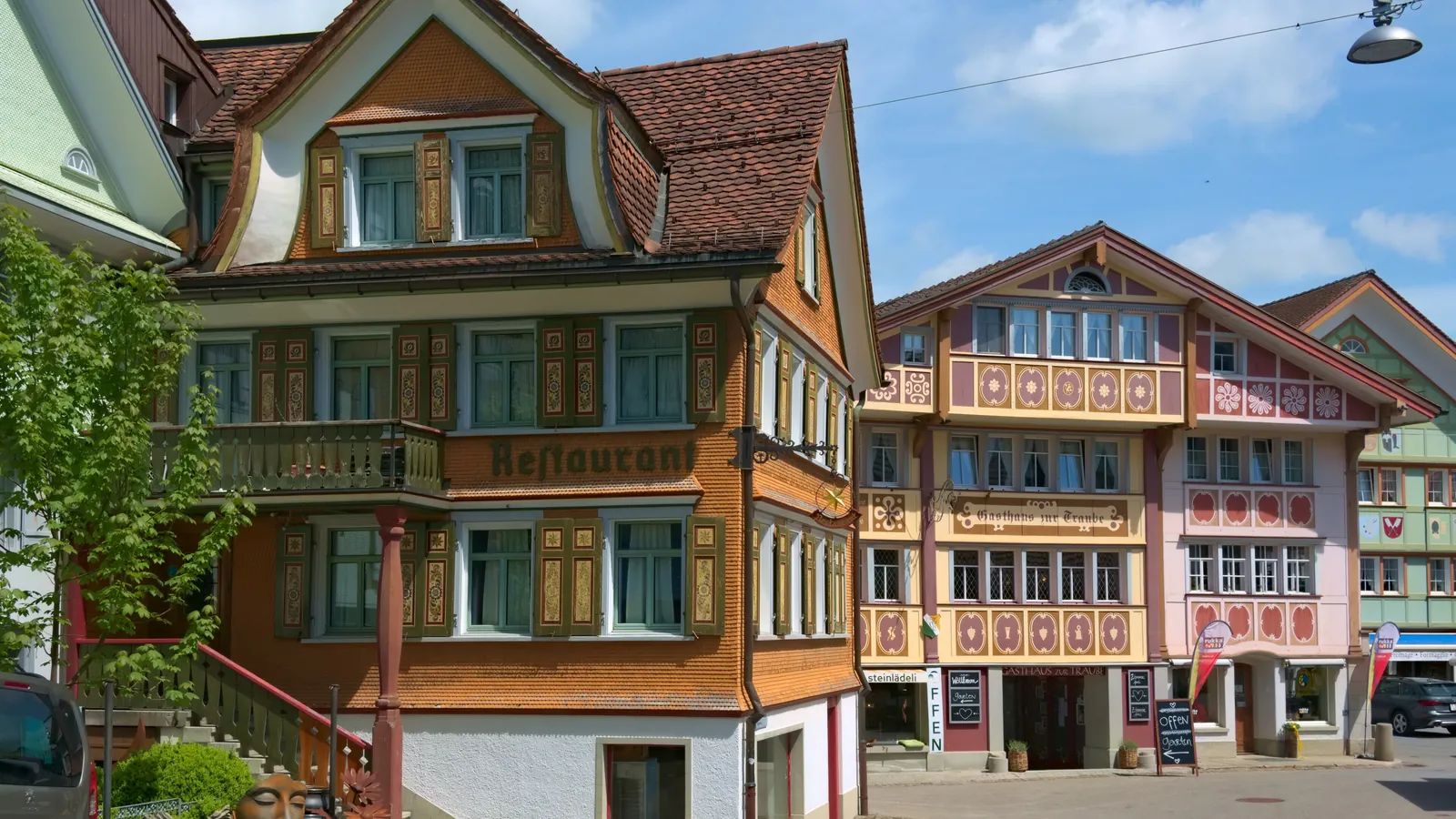
Painted wooden houses in AppenzellCanton of Appenzell Innerrhoden · Appenzell

Painted wooden houses in AppenzellDaniel Kraft / CC BY-SA 3.0 / cropped

Appenzell

Every house front is painted with flowers and patterns.

Getting there●●○○○Fine on your own: about 1 hour by train from Zurich to St. Gallen, then about 50 minutes on the Appenzell railway.

Best timeMay–Oct

For Switzerland at its most rural and traditional, Appenzell is a great pick.

Appenzell is the capital of one of Switzerland's smallest cantons and keeps many traditions alive. The wooden houses on the main street have brightly painted façades, and every shop sign has its own character. The town's best-known custom is the open-air Landsgemeinde on the last Sunday of April, when citizens gather in the square and vote by show of hands. Nearby, from Wasserauen a cable car climbs to Ebenalp, and a short walk leads to the Aescher, a mountain inn built under a rock face.

GETTING THERETake the train from Zurich to St. Gallen (about 1 hour), then the Appenzell railway to Appenzell (about 50 minutes). For Ebenalp, continue by train to Wasserauen (about 15 minutes) and take the cable car.
GOOD TO KNOWSummer, when the mountain inn is open, is the best time — take the cable car up Ebenalp and walk to the cliffside Aescher. The cable car pauses for maintenance in winter, and the inn usually opens only in summer. Many shops close on Sundays. Check the official site.
SAFETYThe path to the Aescher runs along a cliff and gets very slippery in rain or ice; wear shoes with grip.
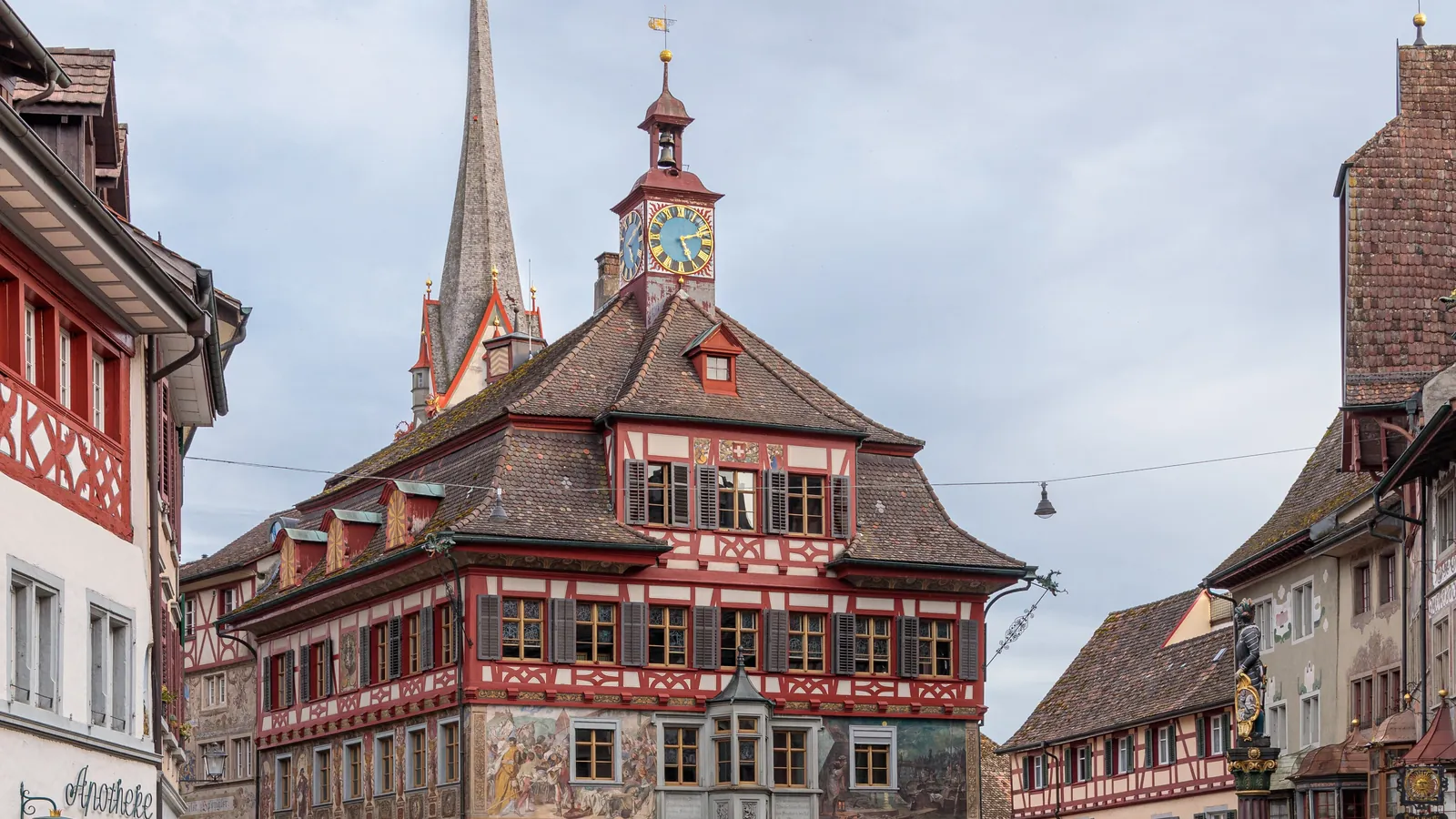
Stein am Rhein's town-hall square and painted housesCanton of Schaffhausen · on the Rhine

Stein am Rhein's town-hall square and painted housesJoachimKohler-HB / CC BY-SA 4.0 / cropped

Stein am Rhein

Every house on the square is a painting — like stepping into an open medieval picture book.

Getting there●●○○○Fine on your own: about 1 hour by train from Zurich, or 25 minutes from Schaffhausen.

Best timeMay–Sep

For a beautifully preserved Swiss medieval town, come here.

Stein am Rhein lies just downstream of where the Rhine leaves Lake Constance, and its old town is remarkably intact. The houses around the town-hall square are covered in murals, many dating from around the 16th century, showing Bible stories, historical events and the owners' family tales, and many have carved wooden oriel windows. Hohenklingen Castle on the hill above looks over the town and the river. The Rhine Falls aren't far, so you can combine them in one day.

GETTING THERETake the train from Zurich HB (about 1 hour) or from Schaffhausen (about 25 minutes). The station is on the south bank; cross the bridge and walk about 10 minutes to the old town. In summer you can also arrive by Rhine boat from Schaffhausen.
GOOD TO KNOWSummer by the Rhine among the painted houses is the nicest, and half a day covers it. To add the Rhine Falls, change trains at Schaffhausen.

Winter ski areas & events

Coming in winter? The region also has these. Full details (lessons, lodging, transport) are in the winter corner of your quiz results.

Ski areas

  • Zermatt · Matterhorn Ski Paradise: Ski facing the Matterhorn — and all the way into Italy
  • Grindelwald · Jungfrau Ski Region: Ski beneath the Eiger North Face
  • Engelberg · Titlis: Glacier skiing less than an hour from Lucerne
  • Verbier · 4 Vallées: Four linked valleys, famous for off-piste and steeps
  • St. Moritz · Corviglia: One of the birthplaces of winter holidays, and two-time Winter Olympics host
  • Davos Klosters: Home of the World Economic Forum, ringed by big ski areas
  • Wengen · Mürren: Two car-free villages you reach only by mountain train or cable car
  • Laax Flims Falera: A snowboard and freestyle mecca with park after park
  • Saas-Fee: A glacier village ringed by a dozen-plus 4,000-metre peaks
  • Andermatt · Sedrun: A Glacier Express stop that's grown into a big ski area
  • Crans-Montana: A sunny plateau with a panorama of the whole Alpine chain
  • Gstaad: A discreet celebrity favourite with picture-perfect chalets
  • Arosa Lenzerheide: Two areas joined by a cable car, with long intermediate runs
  • Aletsch Arena: Ski alongside the longest glacier in the Alps
  • Villars: The closest family ski area to Lake Geneva — and a school lists Chinese

Winter events

  • Christmas market at Zurich HB: A Christmas market inside the station — rain or snow, no problem
  • Glacier Express: About 8 hours end to end — the "slowest express train in the world"
  • Jungfraujoch – Top of Europe: Europe's highest railway station — snow without skis
  • Montreux Christmas Market: A kilometre of Christmas chalets by the lake — and Santa flying overhead
  • Bernina Express: A UNESCO railway from glaciers down to Italian palm trees
  • Olympia Bob Run St. Moritz: The world's only natural-ice bob run — and you can ride it
  • Igloo Village Davos: Fondue in a snow house at 2,570 metres — or stay the night
  • Lauberhorn World Cup, Wengen: The longest downhill on the World Cup circuit — a whole weekend of racing
  • Skating on Arosa's Obersee: When it's cold enough, the whole lake becomes an ice rink
  • Sledging & tubing: Can't ski? Hop on a sledge and slide down the mountain
  • Snowshoe hiking: Strap on snowshoes and walk into a forest where all you hear is snow underfoot
  • Leukerbad thermal baths: Soak in hot springs beneath towering cliffs and snowy peaks
  • Snow Polo World Cup St. Moritz: Polo on a frozen lake
  • White Turf St. Moritz: Horse racing on a frozen lake for over a century — including skiers towed by horses
  • Basel Carnival: At 4am the city lights go out, and lanterns, piccolos and drums fill the old town
  • Engadin Skimarathon: More than ten thousand cross-country skiers racing across frozen lakes

Not sure which to pick? Take the 4-minute travel-personality quiz and find the one that suits you.

Take the quiz