TOP-TIER TRAVEL中/EN

Japan · Tohoku

10 hidden gems in Tohoku

Hot springs & festivals. We picked 10 places in this region — some well known, some few visitors find. Browse at your own pace, then take the quiz when something catches your eye.

TOP-TIER TRAVEL › All hidden gems › Japan › Tohoku

Not sure which to pick? Take the 4-minute travel-personality quiz and find the one that suits you.

Take the quiz
Yamadera
First time? Start with the classics

You can't go wrong doing a first lap of Sendai, Matsushima, Hiraizumi, Kakunodate and the Oirase Stream. Tohoku is huge — getting between prefectures often means a shinkansen and then a local train or bus — so save just a day or two for the place below that's truly yours.

Looking for a place to stay in this area? Start here:

Spot details checked: October 2026

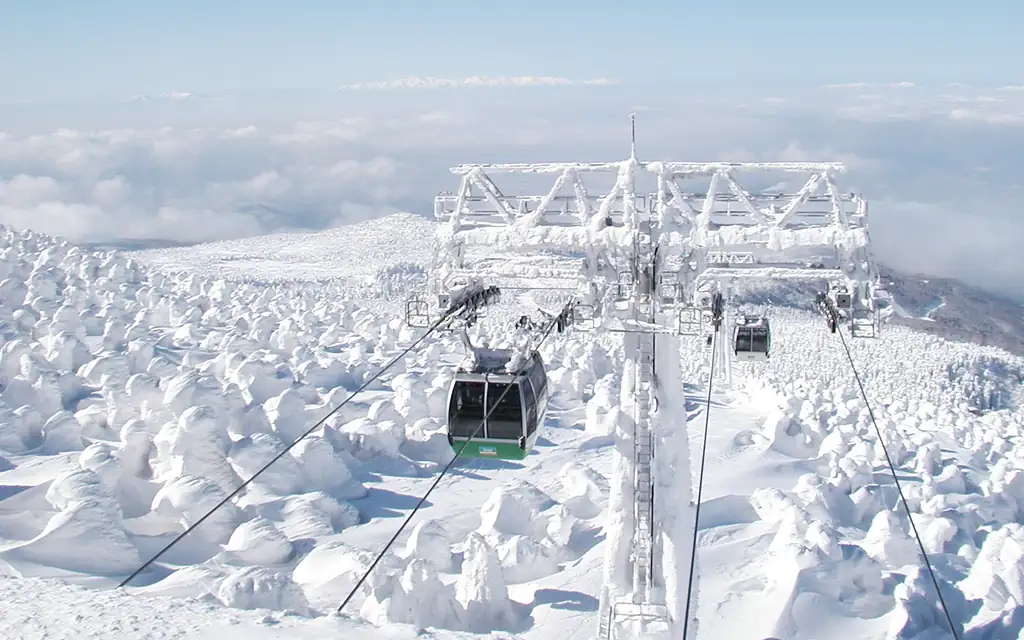
The Zao ropeway above slopes of frost-covered treesYamagata, Yamagata

The Zao ropeway above slopes of frost-covered trees

Zao Snow Monsters

On the summit, an army of snow monsters.

Getting there●●○○○Easy on your own: about 40 minutes by bus from Yamagata Station to Zao Onsen, then up by ropeway.

Best timeJan–Feb

In winter in Tohoku, spend a day up Zao seeing the snow monsters.

The ropeway climbs and the trees outside grow whiter and whiter, until at the summit a whole crowd of giant ice-wrapped figures stands before you, wind-blown snow rattling against your face. These are Zao's juhyo, or rime-ice trees: strong winds coat the mountain's Maries' firs in supercooled water droplets and snow, layer upon layer, until each tree becomes a giant block of ice and snow. Locals call them “snow monsters.” They only form with the right tree species, wind direction and temperature, so there are very few places in the world to see them. They start forming in January, peak in February, and slowly melt in March. Ride the Zao Ropeway from Zao Onsen up to the summit of Mount Jizo and walk among them. Back down, Zao Onsen at the foot of the mountain has strongly acidic sulfur springs, and sinking a frozen body into that hot water is pure bliss. It only lasts these few months; miss it, and you wait another winter.
GETTING THEREAbout 40 minutes by bus from Yamagata Station to Zao Onsen, then the Zao Ropeway up the mountain. Yamagata Station is about 2.5 hours from Tokyo on the Yamagata Shinkansen, or about 1 hour by bus from Sendai.
GOOD TO KNOWJanuary and February are your best chance to see the giant snow monsters. Evening illuminations only run on set dates — in 2025–26, 36 nights between December 27 and February 22, 5–9 pm; the 2026–27 dates aren't out yet. Their size varies by year and they're smaller in warm winters; bad weather cancels, and strong winds stop the ropeway, so check the Zao Ropeway official site.
SAFETYThe summit is often below minus 10°C and very windy — bring a hat, gloves, snow boots and a windproof jacket. Stick to the marked route and stay off the ski runs.
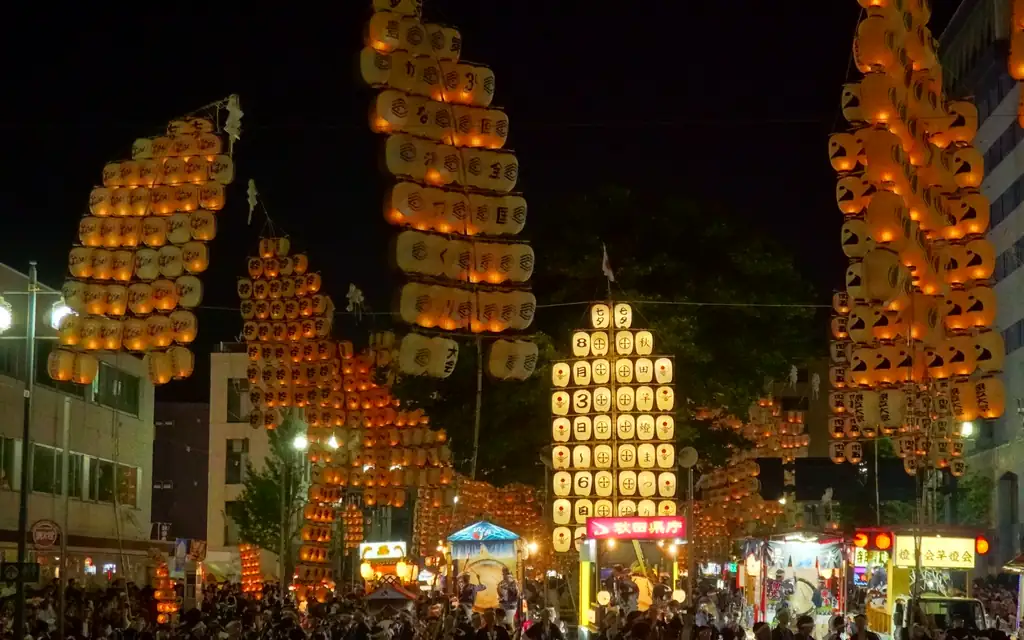
Kanto poles of glowing lanterns raised high at nightAkita, Akita

Kanto poles of glowing lanterns raised high at night

Akita Kanto Festival

About 280 lantern poles, raising the night into a golden rice field.

Getting there●●○○○Easy on your own: about 4 hours by Akita Shinkansen from Tokyo; the venue is about 15 minutes' walk from Akita Station.

Best timeAug

For the most spectacular summer-night festival, come to Akita in early August.

Flutes and taiko strike up, chants rise from the whole avenue, and about 280 kanto poles go up at once, dozens of lanterns swaying gently against the night sky. The Kanto Festival is Akita's summer festival praying for a good harvest and warding off misfortune, and it's an Important Intangible Folk Cultural Property. Each pole is hung with dozens of lanterns; the biggest are about 12 m tall and weigh about 50 kg. Performers balance them on their palms, foreheads, hips and shoulders, passing them from one person to the next, and when a pole bends, the whole street holds its breath. From a distance, Kanto Odori avenue looks like heavy golden ears of rice; by day there's a skills competition too. See that golden night sky, and you'll understand that Akita prays for its harvest with every ounce of strength it has.

GETTING THEREAbout 4 hours from Tokyo on the Akita Shinkansen to Akita Station. The Kanto Odori venue is in the city center, about 15 minutes' walk from the station.
GOOD TO KNOWIt's only four nights a year, August 3–6, when hundreds of lantern poles rise at once. Akita's hotels fill up early, so book far ahead or stay in a nearby town and take the train. Paid seats along the main street can be reserved. Check the official site before you go.
SAFETYThe crowds are huge and poles occasionally topple — stay inside the viewing area and away from the performance zone. Summer nights are humid, so drink plenty of water.
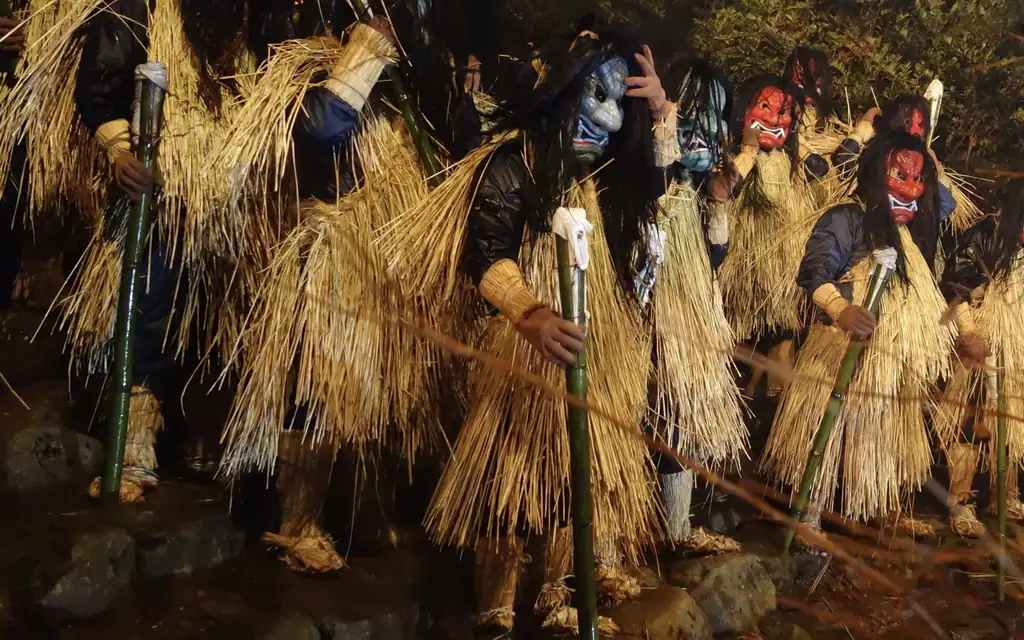
Namahage in straw capes and demon masksOga, Akita

Namahage in straw capes and demon masks

Namahage Sedo Festival, Oga

Torches come down through the forest. The demons are at the door.

Getting there●●●○○Some planning: about an hour by JR from Akita to Oga, then a festival shuttle bus up to the hillside venue.

Best timeFeb

To see a festival of demons on a snowy night, come to Oga in February.

A bonfire blazes on the snow, and in its glow namahage carrying torches come one by one down the forest's stone steps, their demon masks flickering in the flames, low roars echoing through the trees. Namahage is a New Year's Eve custom on the Oga Peninsula: young villagers put on demon masks and straw capes and go house to house shouting, “Any crybabies here? Any lazy people?”, urging everyone to work hard and praying for a safe new year. It's an Important Intangible Folk Cultural Property and part of UNESCO's Intangible Cultural Heritage “Raiho-shin” rituals. The Sedo Festival, held every February at Shinzan Shrine, began in 1964 as a winter festival combining shrine rites and the namahage custom, with a namahage dance choreographed by a modern dancer plus taiko drumming. The photo shows namahage walking down the forest steps during the festival. Get a fright from a namahage once, and somehow the new year feels a little safer.

GETTING THEREAbout 1 hour from Akita Station on the JR Oga Line to Oga Station; shuttle buses run to the venue during the festival. The venue is up a mountain — if you're driving, take extra care on snowy roads.
GOOD TO KNOWOnly three days a year, the second Friday to Sunday of February — in 2027, February 12–14. Recently it requires advance registration with a daily cap. In 2027 it falls on the same weekend as the Yokote Kamakura Festival, so you can make it a two-day Akita winter trip. Outside the festival, the Namahage Museum shows masks from each village. Check the official site first.
SAFETYThe night venue is on a mountain, cold and slippery — wear anti-slip snow boots and dress warmly. Namahage roar when they come close, so be prepared if you have small children.
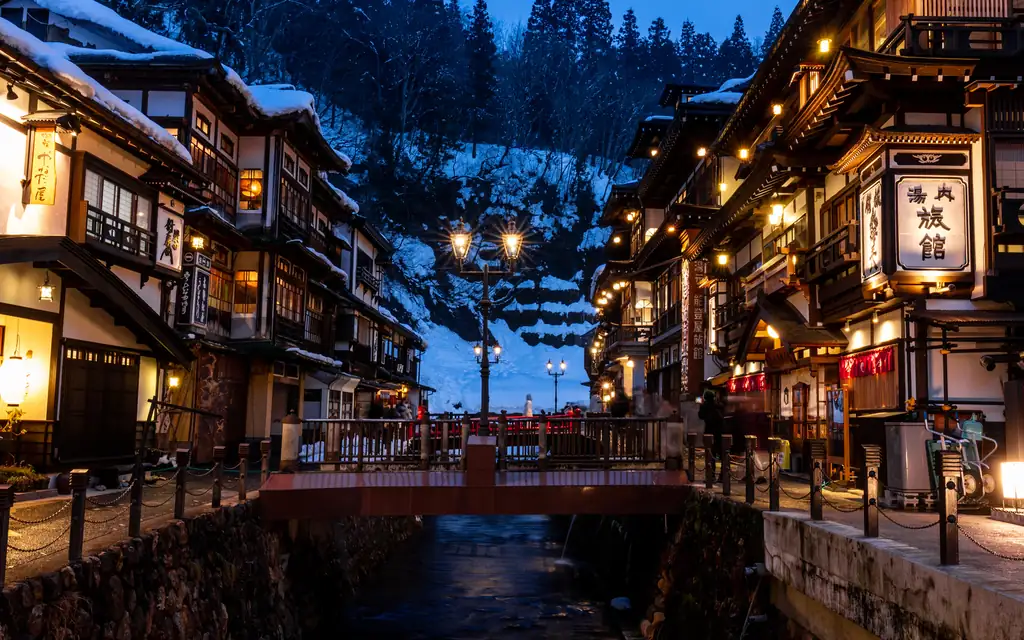
Ginzan Onsen's wooden inns lit up on a snowy eveningObanazawa, Yamagata

Ginzan Onsen's wooden inns lit up on a snowy evening

Ginzan Onsen

The gas lamps glow, and a Taisho-era street wakes in the snow.

Getting there●●●○○Some planning: about 40 minutes by bus from Oishida Station; in winter, entry is restricted and you need a designated bus, taxi or package.

Best timeDec–Feb

To stay a night in the most Taisho-era snowy hot-spring street, choose Ginzan.

As dusk falls, the gas lamps under the eaves come on one by one, warm yellow light spilling onto the snow and the river, and the Ginzan River babbles beneath the bridges. Ginzan Onsen sits in a valley in Obanazawa, Yamagata. It boomed in the Edo period thanks to a silver mine, then became a hot-spring resort. Today, multi-story wooden inns from the Taisho to early Showa eras line both banks, and at night the whole street lights up; it's at its most atmospheric under winter snow. The street is small and a walk around doesn't take long, and when your legs tire there's a free foot bath along the way: slip your feet into the hot water and watch the snow drift down. A night like this is worth coming for at least once in your life.

GETTING THEREAbout 40 minutes by bus from Oishida Station on the Yamagata Shinkansen. During winter entry restrictions, use a bus, taxi or tour plan with guaranteed entry.
GOOD TO KNOWGinzan Onsen is at its most magical on a snowy night under the gas lamps — staying overnight is the way to feel it. In winter, day visitors face entry restrictions and private cars can't drive in; overnight guests aren't affected. Dates and details are posted each year on the official site, so check before you go. Inns on the street are very hard to book — reserve far ahead.
SAFETYIn winter the roads are snowy and icy and the stone paving is slippery. Don't linger on the bridges blocking others while taking photos, and don't walk into the inns to film.
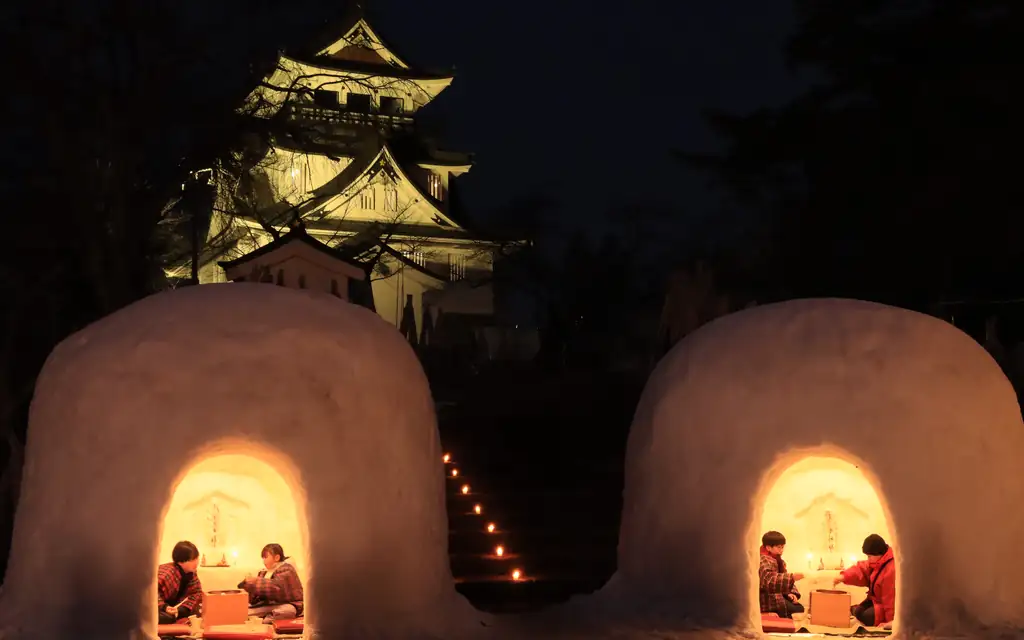
Lit kamakura snow huts, with Yokote Castle behindYokote, Akita

Lit kamakura snow huts, with Yokote Castle behind

Yokote Kamakura Festival

From inside a snow hut, a child calls: come on in.

Getting there●●○○○Easy on your own: about 3.5 hours from Tokyo by shinkansen and JR; the venue is in central Yokote.

Best timeFeb

To duck into a snow house for a cup of hot amazake, come to Yokote in February.

Dome-shaped huts glow across the snow, warm candlelight spilling from inside, and a child pokes their head out and calls with a smile, “Come on in!” (haitte-tanse). Kamakura is a long-standing Little New Year custom in Yokote: people pile snow into dome-shaped huts and set up an altar inside to worship the water god, praying for abundant water. During the festival, dozens of large snow houses are built around the city, and children sitting inside offer passersby amazake and mochi; sit inside for a while with a hot cup of amazake and the cold outside doesn't matter. Remember to leave a small offering at the water god's altar. At night, the riverbanks and parks fill with mini snow huts lit by candles, a field of tiny lights like stars fallen on the snow. The Yokote Castle in the background of the photo is a reinforced-concrete observation keep built in 1965, not an original castle. The moment a stranger's child invites you into a snow hut is one you'll remember for a long time.

GETTING THEREAbout 3.5 hours from Tokyo on the Tohoku Shinkansen to Kitakami, then the JR Kitakami Line to Yokote Station. The venues are in the city; walk or take a shuttle bus from the station.
GOOD TO KNOWJust two nights a year, the Friday and Saturday in mid-February — expected to be February 12–13 in 2027. The snow huts light up in the evening, so arrive around dusk. In 2027 it shares a weekend with the Oga Namahage festival, making an easy two-day Akita winter trip. Confirm the official dates on the Yokote tourism association site.
SAFETYNights are often below freezing and roads are icy — wear anti-slip snow boots. There are candles inside the snow houses, so keep your clothes away from them.
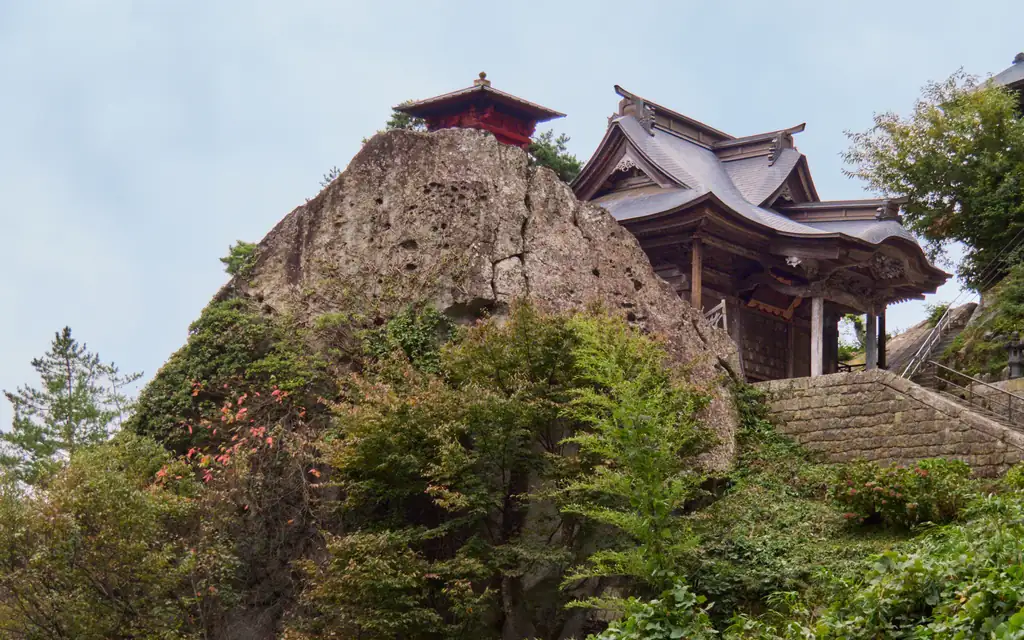
Kaisando hall and the small red Nokyodo on Yamadera's rockYamagata, Yamagata

Kaisando hall and the small red Nokyodo on Yamadera's rock

Yamadera (Risshakuji)

Over a thousand steps, up to where Basho heard the cicadas.

Getting there●○○○○Very easy on your own: about 20 minutes by JR from Yamagata, then a few minutes' walk to the start of the steps.

Best timeMay–Jun, Oct–Nov

When you're in Yamagata, save half a day to climb Yamadera.

The stone steps climb one by one between moss-covered rock and old cedars, so quiet you can hear your own breathing, and in summer the cicadas rise and fall in waves. Risshakuji is an old temple founded in 860, built all the way up a rocky mountain and usually just called Yamadera, “mountain temple.” From the trailhead to the Okunoin at the top there are 1,015 stone steps, passing the spot where Matsuo Basho wrote his famous haiku about the cicadas' voices seeping into the rocks. The small red hall perched on the rock in the photo is the Nokyodo, with the Kaisando beside it; a little farther on, the Godaido is the best place to look out over the valley, and when the wind comes up from below, every breathless step is worth it. That view, earned with over a thousand steps, is only yours if you climb.

GETTING THERETake the JR Senzan Line to Yamadera Station — about 20 minutes from Yamagata or about 1 hour from Sendai. The trailhead is a few minutes' walk from the station.
GOOD TO KNOWIt's loveliest in autumn colour and winter snow, and the view from Godaido is worth every step. Allow about 1.5 hours up and back on many stone steps — wear good shoes. In snow the steps get slippery, so check conditions before climbing.
SAFETYThe steps are steep and uneven, especially slippery with rain or snow — go slowly and hold the handrails. If you feel unwell, don't push yourself to reach the top.
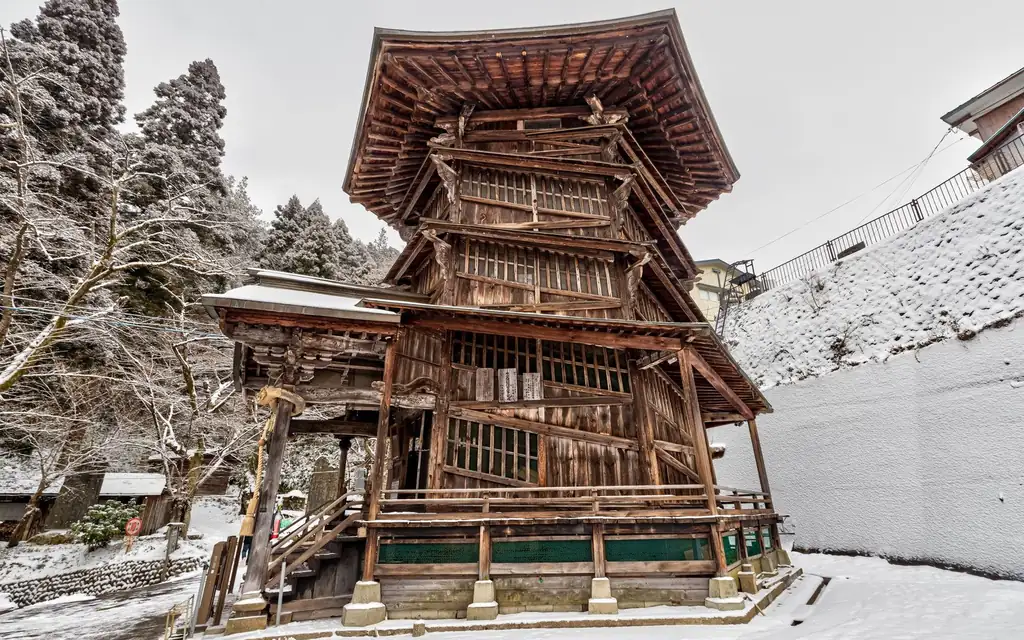
Aizu Sazaedo in the snowAizuwakamatsu, Fukushima

Aizu Sazaedo in the snow

Aizu Sazaedo

Spiral all the way up, and come down without meeting a soul.

Getting there●●○○○Easy on your own: about 3 hours from Tokyo to Aizu-Wakamatsu by shinkansen and JR, then a town loop bus.

Best timeGood all year

When you're in Aizu, walk through this double-spiral hall.

Push open the door and a wooden ramp spirals upward beneath your feet, creaking softly as you walk, and before you know it you're at the top. Aizu Sazaedo, officially the Entsu Sansodo, was completed in 1796 and stands about 16.5 m tall. Instead of stairs it has a double-spiral wooden ramp: you wind up to the top on one path and down on another, so people going up and down never cross, a structure very rare in the world and designated an Important Cultural Property. It once housed thirty-three statues of Kannon, so one loop was like making a pilgrimage to thirty-three Kannon temples. It's on Mount Iimori in Aizuwakamatsu. Step out and look back, and it's hard to believe someone dreamed up such a clever path over two hundred years ago.

GETTING THEREAbout 3 hours from Tokyo on the Tohoku Shinkansen to Koriyama, then the JR Ban'etsu West Line to Aizu-Wakamatsu Station. From there, take the city loop bus to “Iimoriyama-shita” and walk about 5 minutes.
GOOD TO KNOWOpen all year, and Aizu in the snow has its own charm. From December to March hours are shorter, so arrive before late afternoon. Check opening hours on the official site.
SAFETYThe ramp is wooden, fairly steep and narrow — walk slowly. Shoes slip easily in rain or snow, and the approach to Mount Iimori is snowy in winter.
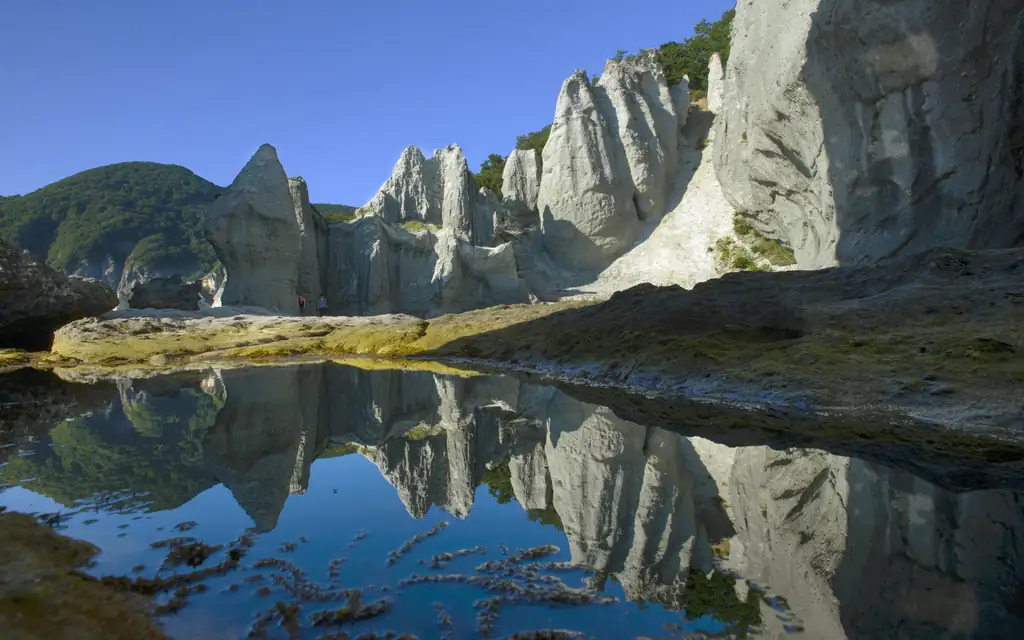
Hotokegaura's white rock pinnacles reflected in a poolSai, Aomori

Hotokegaura's white rock pinnacles reflected in a pool

Hotokegaura, Shimokita

Waves carved for ages, until a row of Buddhas stood on the shore.

Getting there●●●●○Harder: at the northern tip of the Shimokita Peninsula, over 2 hours from Aomori by JR and bus, or by boat; stay at least a night.

Best timeJun–Sep

To see coastal rocks that look like a gathering of Buddhas, go to the Shimokita Peninsula in summer.

The sightseeing boat rocks across the water, spray slapping its sides, until a row of pale-green giant rocks appears in the distance, each taller than the last, like Buddha statues standing by the sea. Hotokegaura is on the west coast of the Shimokita Peninsula in Aomori. Volcanic tuff from an undersea eruption has been carved by waves and weather into a row of strange rocks, some nearly 100 m tall. Early people thought they looked like Buddha statues, hence the name “Hotokegaura” (Buddha Bay); it's a national Place of Scenic Beauty and Natural Monument. The usual way to visit is a sightseeing boat from Sai Port, about 30 minutes, which lets you walk among the rocks after landing; look up and you feel as small as a grain of sand. The two tiny figures in the photo show how huge the rocks are. Stand at the foot of these giants and you'll understand why people once saw Buddhas here.

GETTING THERESai is at the northern tip of the Shimokita Peninsula and isn't easy to reach: from Aomori take JR to Shimokita Station, then about 2 hours by bus to Sai. Boats also run from Aomori Port to Sai. Staying at least one night on the peninsula is recommended.
GOOD TO KNOWSightseeing boats only run from about May to the end of October, and early summer has the bluest water. Booking is required; in bad weather or rough seas, sailings may be cancelled or unable to dock, so leave a day or two of slack. Few locals speak English or Chinese — first-timers may prefer a local day tour; if going solo, download a translation app and check boat and bus times. Confirm sailings before you go.
SAFETYThere's a risk of bears on the land trail, so going by boat is recommended. After landing, stay on the path and don't climb the rocks.
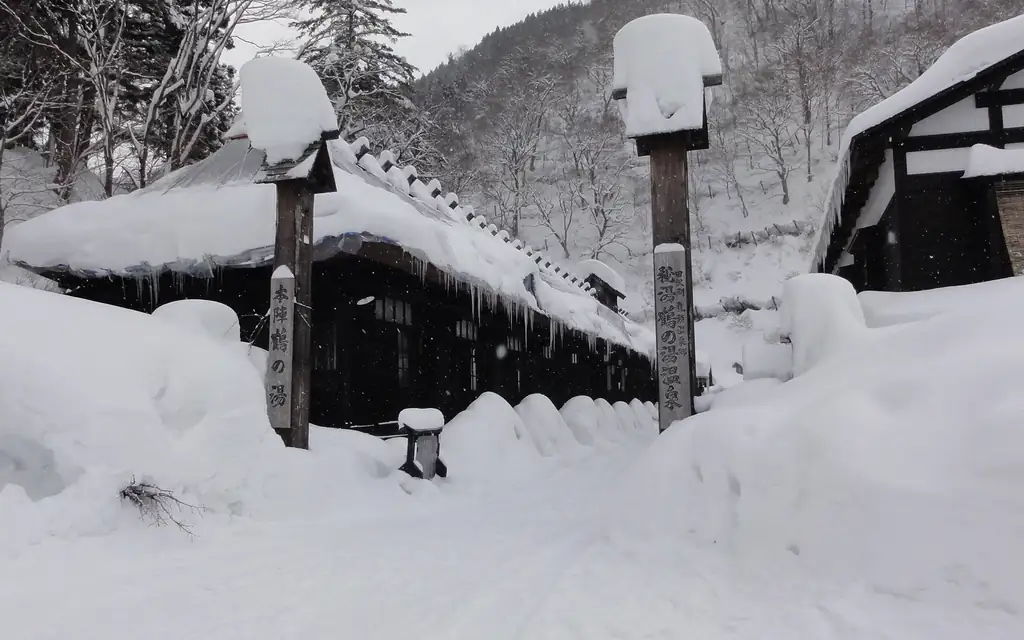
A wooden onsen lodge buried in deep snowSemboku, Akita

A wooden onsen lodge buried in deep snow

Nyuto Onsen

Snow falling into milky-white water. This is a secret spring.

Getting there●●●○○Some planning: about 45 minutes by bus from Tazawako Station, roughly one an hour; driving isn't advised in winter.

Best timeDec–Mar

To soak once in a milky-white hot spring in deep mountain snow, come to Nyuto Onsen.

Snowflakes fall silently into milky-white water, steam billowing upward, beech forest and old snow-laden wooden buildings all around, so quiet all you hear is the flow of the spring. Nyuto Onsen lies north of Lake Tazawa in Akita, in the forests of Towada-Hachimantai National Park. Seven inns are scattered here, each with its own source, different in mineral content and color; the most famous are the milky-white springs. Winter snow gets very deep, and old wooden buildings, beech forests and open-air baths in the snow make it many people's idea of a “secret hot spring.” Overnight guests can buy a Yumeguri-cho pass to bathe at all seven inns; day visitors can buy a Yumeguri map, ride the loop bus between the inns, and pay bathing fees separately. Soaking in hot water in the middle of the snow, it feels like the whole world has shrunk to this one pool.

GETTING THEREAbout 3 hours from Tokyo on the Akita Shinkansen to Tazawako Station, then about 45 minutes by bus, roughly once an hour, with a different winter timetable. Winter roads are snowy — if you're not used to snow, don't drive.
GOOD TO KNOWA snowy outdoor bath in winter is unforgettable — staying a night is best. Buses are few and run on a winter timetable, so check return times. Most baths ban photos, so please follow the rules. Check the official site before you go.
SAFETYThe temperature difference between open-air baths and outside is huge — keep warm going in and out. Snowy paths are slippery, so walk slowly.
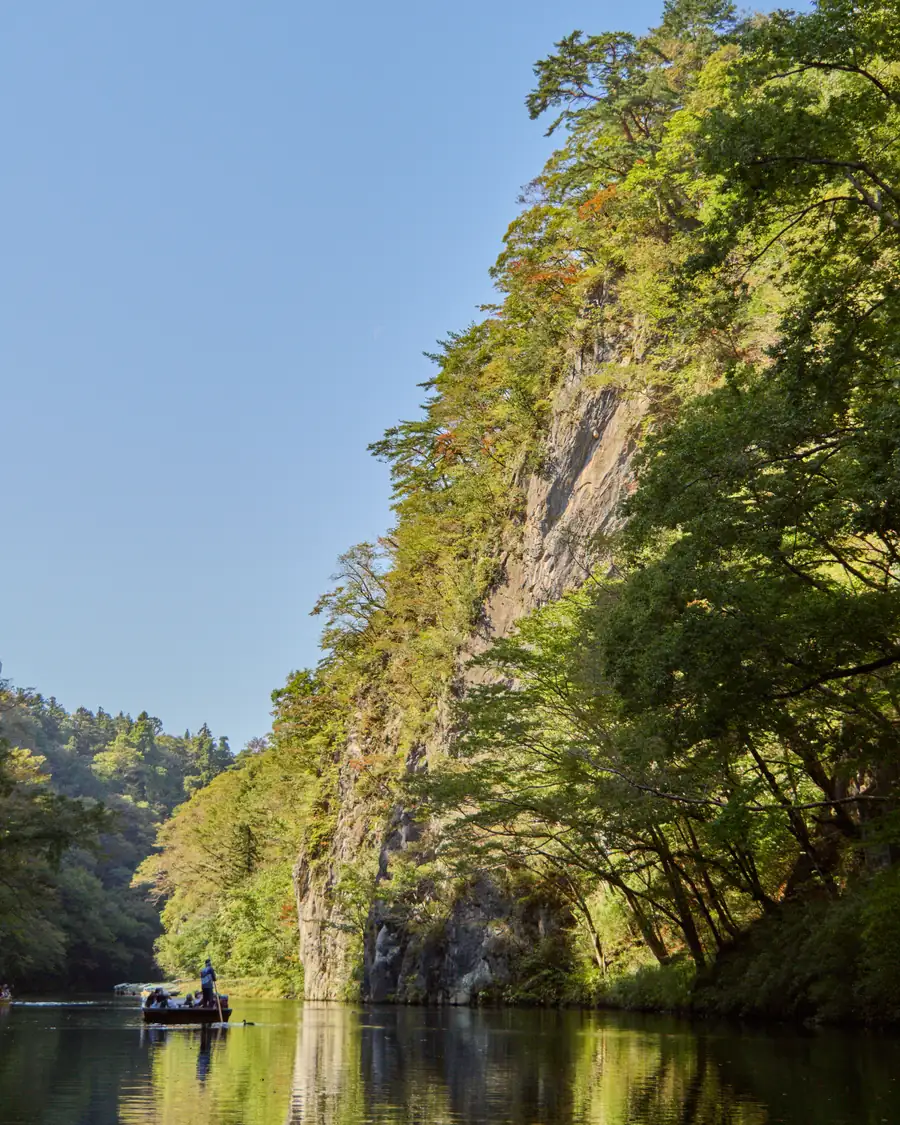
A punt drifting below the cliffs of Geibikei GorgeIchinoseki, Iwate

A punt drifting below the cliffs of Geibikei Gorge

Geibikei Gorge Boat Ride

One bamboo pole, one folk song, deep into a limestone gorge.

Getting there●●○○○Easy on your own: about 30 minutes by JR from Ichinoseki, then a few minutes' walk to the boats.

Best timeGood all year

When you visit Hiraizumi, take a boat ride through the gorge on the way.

The bamboo pole dips into jade-green water and the boat edges upstream, the limestone walls on both sides rising higher and higher, the only sound the pole entering the river. Geibikei is a gorge cut by the Satetsu River through limestone, and it's a national Place of Scenic Beauty. The boatman pushes the boat upstream with a single bamboo pole; at the end you can get off and walk a short way to see the Daigeibiiwa cliff, about 124 m high, then return on the same boat, about 90 minutes round trip. On the way back the boatmen often sing local folk songs, and as the voice echoes off the cliffs the whole gorge seems to fall quiet and listen. In winter the boats have kotatsu heated tables. That song echoing through the gorge stays in your ears long after you step off the boat.

GETTING THEREAbout 30 minutes from Ichinoseki on the JR Ofunato Line to Geibikei Station; the boarding point is a few minutes' walk away. Ichinoseki is about 2.5 hours from Tokyo on the Tohoku Shinkansen. It pairs well with the World Heritage sites of Hiraizumi on the same day.
GOOD TO KNOWBoats run all year, but the kotatsu boats from December to the end of February are the cosiest — snow outside, heated table inside. No booking needed (except hot-pot plans). Heavy rain or high water can stop sailings, so check the official site.
SAFETYThe boat rocks when you get on and off, so hold the side and move slowly. Don't stand up while the boat is moving.

Winter ski areas & events

Coming in winter? The region also has these. Full details (lessons, lodging, transport) are in the winter corner of your quiz results.

Ski areas

  • Appi Kogen: One of Tohoku's biggest ski areas, with long runs
  • Shizukuishi: Ski down with Mt. Iwate in front of you
  • Zao Onsen: Ski, then go straight to the hot springs
  • Nekoma Mountain: One mountain, two sides, different snow

Not sure which to pick? Take the 4-minute travel-personality quiz and find the one that suits you.

Take the quiz